

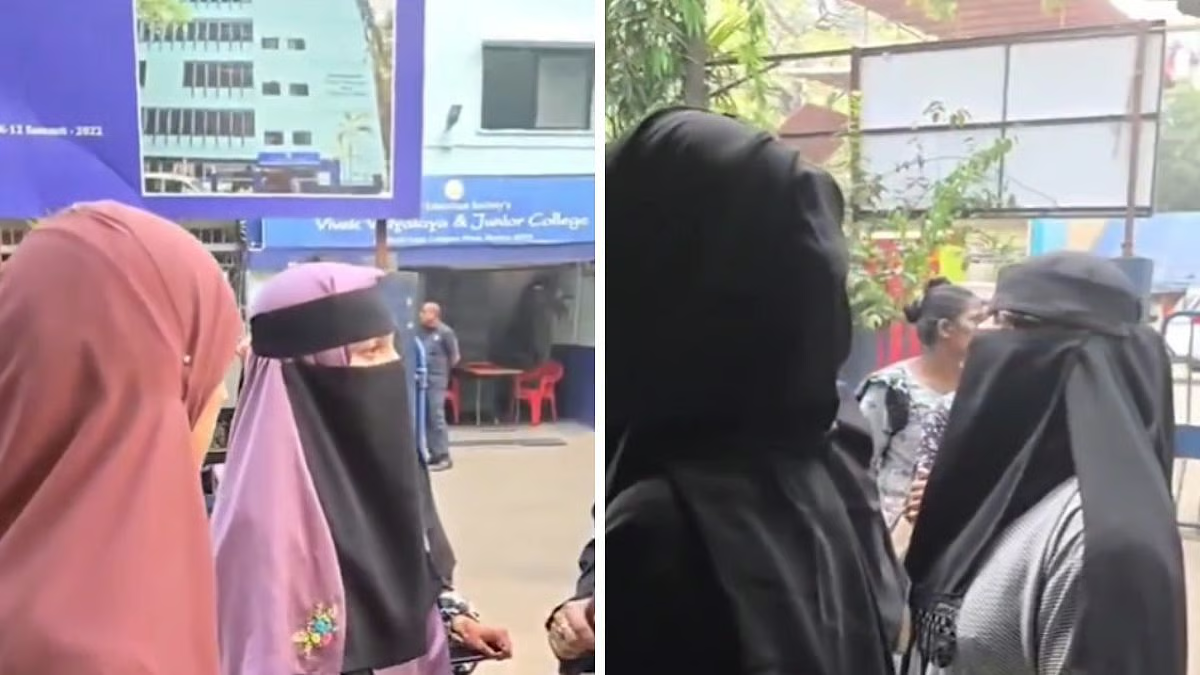
New Delhi, December 3, 2025: A significant controversy has erupted at a prominent Mumbai college after a new circular was allegedly issued enforcing a ban on the burqa and hijab within the college premises, leading to immediate student protests. A subsequent viral video, claiming that students were explicitly told to cancel their admission if they refused to comply with the mandate, has intensified the public debate surrounding religious freedom and institutional dress codes in educational settings.
The Burqa Ban Sparks Demonstration
The dispute began after students at Vaze College in Mulund were allegedly informed that all forms of religious attire, including the burqa and hijab, would no longer be permitted inside the classrooms and academic areas. This decision, reportedly enforced by the college management, was met with instant opposition from female students.
A protest was immediately organized on the college campus. Students were observed gathering outside the main buildings, where concerns were loudly raised about the infringement upon their right to religious expression. The management’s ruling was widely criticized by the students as being discriminatory and unnecessarily punitive against a specific religious community.
Also Read: SBI SCO Recruitment 2025: Registration Active for 996 Specialist Officer Posts;
Viral Video Alleges Admission Threat
The tension was dramatically escalated by a short video that quickly circulated across social media. The clip featured students and onlookers recounting an alleged confrontation with the college principal or administrative staff. In the video, it was explicitly claimed that the students were given an ultimatum: either adhere to the revised dress code by removing the burqa, or their admission should be considered canceled for the academic year.
While the college administration has yet to formally confirm or deny the exact ultimatum captured in the viral claims, the footage instantly provoked a wider reaction from political bodies and civil rights groups. The alleged threat of academic exclusion was interpreted by many as a coercive attempt to force religious compliance.
Legal and Political Scrutiny Ensues
The controversy quickly drew the attention of local political leaders and educational rights activists. The college management has been placed under intense scrutiny regarding the legality and ethical justification of enforcing such a restrictive dress code. Questions were immediately raised about whether the policy violates constitutional rights protecting freedom of religion and expression in educational environments.
The incident at Vaze College mirrors similar, highly contentious dress code debates that have occurred in educational institutions across Karnataka and other states in recent years. The current situation continues to be closely monitored by police and local authorities to prevent the dispute from escalating further.