

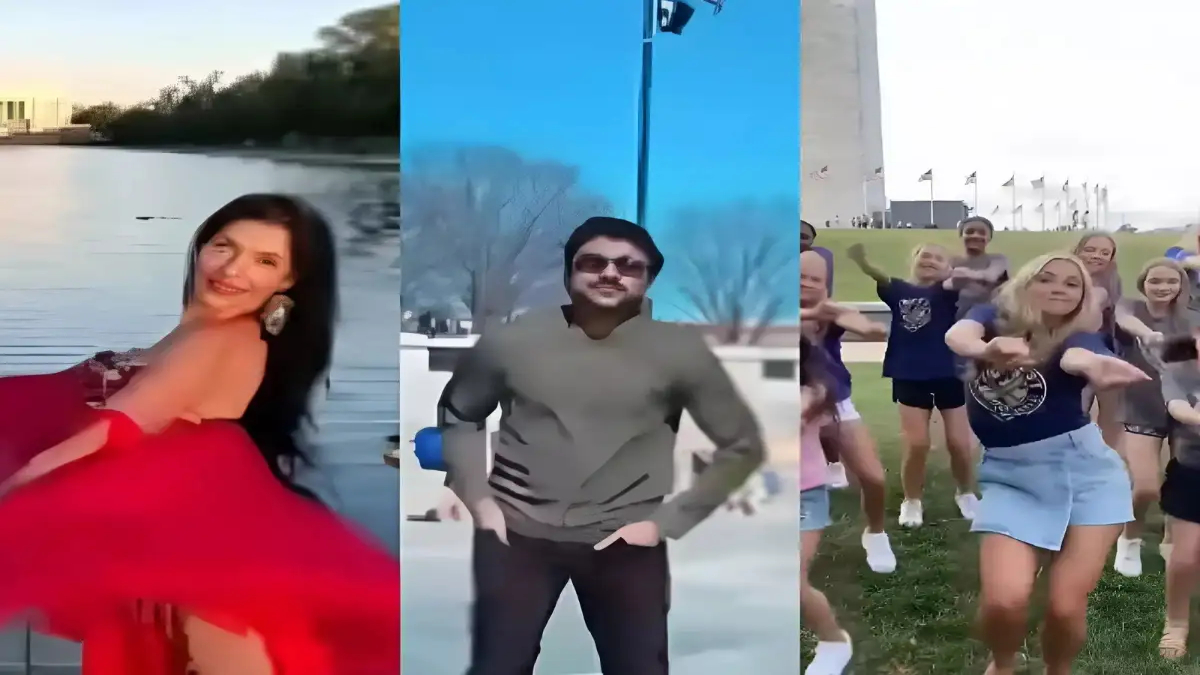
New Delhi, March 9, 2026: — A short video clip filmed at one of the United States’ most solemn landmarks has ignited a firestorm of controversy, transcending beyond a simple debate on etiquette to expose deep-seated tensions over race, immigration, and digital accountability.
The viral video features an Indian-origin man, identified by online sleuths as Madhu Raju, and a female companion performing the popular “Don’t Rush Challenge” at the National World War II Memorial. What began as a routine attempt at social media engagement has spiraled into a international discussion about why certain demographics appear to face harsher scrutiny for “mainstream” influencer behavior.
The Incident: A Clash of Content and Commemoration
The World War II Memorial, situated on the National Mall, serves as a site of quiet reflection for the 16 million Americans who served and the 400,000 who died. The video shows the duo performing choreographed dance moves against the backdrop of the memorial’s granite columns.
Almost immediately, the clip was met with a wave of condemnation. Critics on X (formerly Twitter) and Instagram labeled the act an “absolute disgrace,” arguing that the site is a “place of sacrifice and silence, not a stage for TikTok dances.”
“My grandfather took a bullet in his leg during WWII. This memorial is a place of remembrance, not a set for the IT department to make socially awkward reels,” one viral comment read.
The Backlash: Doxxing and Deportation Threats
The reaction quickly escalated from criticism of the act to personal targeting. Online users tracked down Raju’s professional details, alleging he works as a Cloud Network Security Engineer in Texas. Calls for his termination were sent to his alleged employer, and many users tagged US immigration authorities, demanding his H-1B visa be revoked.
Raju has since deactivated his LinkedIn and Instagram accounts, and a dance studio in Dallas reportedly linked to him has also scrubbed its online presence.
The “Selective Outrage” Debate
As the backlash grew, a counter-narrative emerged. Many within the Indian diaspora and social media observers began asking: “Why only Indians?”
Supporters of the couple pointed out that the National Mall is frequently used as a backdrop for all manner of non-solemn activities—from elaborate wedding photoshoots and fitness influencer videos to other “dance challenges” performed by creators of various ethnicities.
Key points raised in the debate include:
- Double Standards: Some users shared clips of white American influencers filming similar content at national monuments without facing calls for deportation or job loss.
- The “H-1B” Label: Critics noted that the moment the dancers were identified as Indian-origin, the conversation shifted from “disrespect” to “immigration status,” suggesting a latent xenophobia.
- Historical Context: Others reminded critics that India sent over 2.5 million soldiers to fight in World War II—the largest volunteer army in history—arguing that Indian-origin people have a historical connection to the memorial’s legacy.
A Growing Climate of Scrutiny
The intensity of the reaction comes at a sensitive time in the United States. With heightened political rhetoric regarding immigration and a rise in digital vigilantism, a single “cringe” video can now have life-altering consequences.
While the National Park Service (NPS) maintains guidelines requiring visitors to preserve the “atmosphere of peace and respect,” the line between “harmless self-expression” and “disorderly conduct” remains a gray area that social media users are now policing with increasing fervor.
Conclusion: The End of the “Apolitical” Influencer?
This incident serves as a stark reminder that in 2026, the “global” nature of social media does not exempt creators from “local” cultural sensitivities. For the Indian-American community, the debate has become a rallying cry against what many see as a “cherry-picking” of South Asian creators for public shaming.