

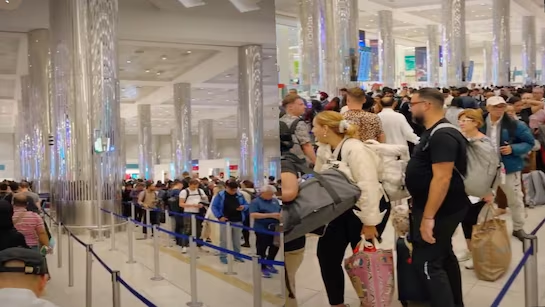
New Delhi, March 19, 2026: A significant wave of digital intrigue and traveler debate has been triggered across social media platforms following the emergence of a striking video from Dubai International Airport (DXB). In the footage, which gained massive traction on March 18, 2026, thousands of passengers are observed navigating through immense immigration queues in the arrivals section. It is noted that the visual of a bustling terminal stands in stark contrast to online rumors labeling the hub a “ghost town.” This startlingly crowded visual has been widely shared as a primary example of Dubai’s enduring status as a global crossroads, even as geopolitical concerns dominate headlines.
The Mechanics of Regional Disruption
The specifics of the bottleneck and the underlying causes of the congestion are being meticulously discussed by aviation analysts and transit passengers. It is observed in the viral reports that while the airport remains fully operational, recent temporary airspace closures and missile alerts in the Gulf have caused a “ripple effect” on flight scheduling. It is reported by several digital observers that the crowding is largely a result of “recovery waves,” where multiple delayed flights arrive simultaneously after precautionary grounding. The visual of weary travelers waiting for hours at immigration has provided a grounding narrative for the logistical challenges faced by mega-hubs during periods of regional instability.
Also Read: Life Under the Iron Dome: The Indian Ground Reality in Israel Conflict Zone
Social Media Reacts: A Symphony of Support and Safety Fears
A massive conversation regarding “travel safety” and “operational transparency” has been ignited by this digital revelation. It is noted that the original video, shared by user Fahad Naim, was met with an outpouring of diverse comments, ranging from praise for the airport’s resilience to deep anxiety over the ongoing US-Iran conflict. The airport administration is being widely discussed for its priority on clearing departures to stabilize flow, which reportedly left arrival halls temporarily overwhelmed. Thousands of analytical comments have been left by users who expressed their surprise, stating that such videos serve as a stark reminder of how essential the Middle East remains to the world’s travel veins.
Impact on Global Connectivity and Security Protocols
The impact of this viral event has extended beyond simple travel vlogging to influence a broader discussion on the resilience of the UAE’s aviation infrastructure in 2026. It is frequently mentioned by industry experts that despite drone incidents and minor damage reported at some concourses earlier in the month, DXB has managed to absorb the shocks and resume services. A renewed sense of vigilance is being observed among international carriers, many of whom are now reportedly being urged to coordinate more closely with the General Civil Aviation Authority. It is believed that the viral nature of this specific “Arrivals Queue Video” will prompt a dialogue on the necessity of high-capacity emergency processing during regional crises.
A Stark Reminder of a World in Motion
As the footage continues to circulate in late March 2026, it serves as a powerful and resilient reminder that the global desire for connectivity remains stronger than the fear of disruption. It is believed that the story of the “Busy Arrivals” will remain a primary highlight of the month’s most discussed and socially significant international news features. The legacy of this viral event is expected to be a heightened public appreciation for the staff and systems that keep the world’s busiest airport moving against the odds. Until the regional situation fully stabilizes, this video remains a stark testament to the fact that Dubai does not sleep—and it certainly does not close.