Home Blog Page 3

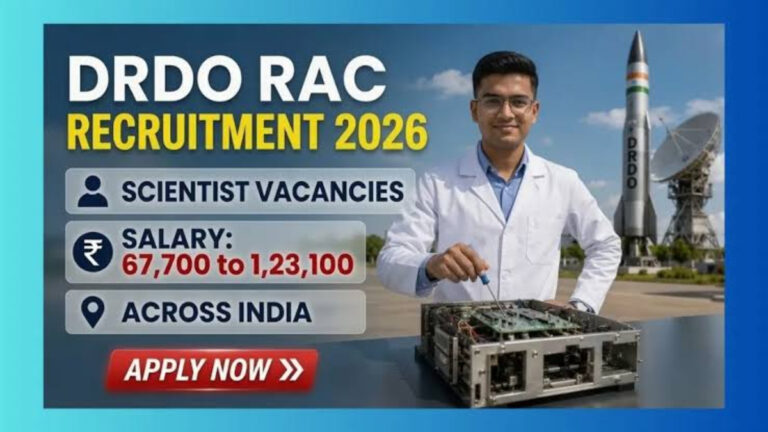
DRDO Scientist Recruitment 2026: Application Window Closes Today for 33 Strategic Positions

0

New Delhi, June 19, 2026 — The countdown has officially begun for high-caliber engineers and researchers aiming to secure a prestigious career in India’s premier defense research wing. The Defence Research and Development Organisation (DRDO) is closing its online application window today, June 19, 2026, for the direct lateral recruitment of 33 scientist positions. Eligible professionals have until 4:00 PM to finalize and submit their applications through the Recruitment and Assessment Centre (RAC) portal at rac.gov.in.

This specialized recruitment drive, structured under Advertisement Number 157, targets experienced scientific minds capable of driving India’s next generation of defense engineering, strategic systems, and indigenous defense technologies. With the clock ticking, officials have urged candidates to complete their payments and document uploads early to avoid the inevitable last-minute server bottlenecks associated with major government hiring deadlines.

A Lateral Push for Aatmanirbhar Bharat

Unlike entry-level scientist hiring which heavily pulls from raw academic pools or standardized graduate entrance exams, this lateral recruitment focuses entirely on mid-to-senior professionals who bring verified industry or research experience. The objective is directly aligned with the Union Government’s ongoing Aatmanirbhar Bharat (Self-Reliant India) initiative. As regional security dynamics shift rapidly, DRDO requires a fresh injection of technical leadership to head specialized projects ranging from advanced radar configurations and Unmanned Aerial Vehicles (UAVs) to quantum computing, computational imaging, and missile technologies.

The selected candidates will find themselves placed across a vast network of highly specialized DRDO laboratories situated throughout the country. Rather than spending years navigating institutional hierarchies, lateral entrants will step into critical development cycles immediately, collaborating alongside the country’s leading defense technologists on high-impact projects vital to national security.

Breakdown of Vacancies and Pay Scales

The 33 premium vacancies are meticulously distributed across three distinct senior hierarchical tiers within the Defence Research and Development Service (DRDS) cadre. All announced positions currently fall under the unreserved category, opening the floor to highly competitive national selection criteria.

Beyond the attractive base pay frameworks provided under the 7th Central Pay Commission (CPC), chosen officers are eligible for standard central government allowances. These include Dearness Allowance (DA), House Rent Allowance (HRA), transport provisions, and distinct medical benefits. More importantly, the roles provide elite intellectual incentives, including government-sponsored research grants, opportunities for international technological exchange, and substantial institutional backing for experimental projects.

Strict Eligibility and Age Criteria

Because these roles bypass basic foundational training, the eligibility matrix demands a flawless match of academic pedigree and long-term hands-on experience.

1. Scientist C

This tier acts as the primary stepping stone for young professionals transitioning from private tech giants or private aerospace labs into core defense structures. The upper age limit is strictly capped at 35 years as of the closing date. Academically, applicants must hold a First Division Bachelor’s Degree in Engineering or Technology, or a First Division Master’s degree in specific scientific disciplines. Additionally, a minimum of 3 years of post-qualification industrial, design, or research and development experience is mandatory.

2. Scientist D

Designed for senior mid-level researchers, the maximum age limit for this rank is 45 years. Candidates are required to hold a first-class professional degree along with a minimum of 7 years of relevant, high-level scientific experience. Core disciplines targeted in this tier include Mechanical Engineering, Electronics & Communication, and specialized Physics fields such as Medical or Radiation Physics.

3. Scientist E

The most senior tier available in this notification allows for a maximum age of 45 years (with specific, legally mandated relaxations up to 56 years for central government employees or ex-servicemen under strict clauses). Applicants must bring an extensive track record containing at least 11 years of pioneering research, experimental design, or production leadership in strategic domains like digital communication networks or advanced aeronautical systems.

Critical Steps for Final Submission

For candidates racing against the 4:00 PM cutoff, the application flow must be executed flawlessly to prevent immediate automated rejection. The RAC has outlined a highly systematic submission path:

  • Official Portal: Navigate only to the verified Recruitment and Assessment Centre platform at rac.gov.in.
  • Profile Verification: Ensure that the generated login credentials match your active mobile number and email ID, as all upcoming communication regarding test schedules or interview venues will be strictly automated through these channels.
  • Document Authenticity: Scanned copies of your passport-size photographs, digital signatures, first-division degree certificates, and most crucially, unambiguous experience certificates detailing the exact duration of employment must be clear. Blurry or incomplete uploads will cause the application to be filtered out during basic sorting.
  • Application Fees: A nominal fee of ₹100 is applicable for male candidates belonging to the General, OBC, and EWS categories. Meanwhile, all female applicants, alongside candidates from Scheduled Castes (SC), Scheduled Tribes (ST), and Persons with Disabilities (PwD), are completely exempted from payment.

The Road Ahead: Selection Process

Filing the application is merely the first phase of an intensely competitive vetting process. Given the technical nature of these lateral positions, the RAC does not rely on generic screening. Initial shortlisting will occur based on the quality, depth, and relevance of the candidates’ past experience and academic publications.

Those who survive the preliminary document screening will be summoned for an exhaustive, in-person Personal Interview conducted by a high-level selection board at the RAC headquarters in New Delhi. The authorities have explicitly clarified that no virtual or online interviews will be accommodated, emphasizing the rigorous psychological and technical screening required for individuals handling sensitive national defense secrets.

As the application window closes this afternoon, the focus shifts to the screening boards. For 33 chosen professionals, this recruitment marks the beginning of an exceptional chapter—one where their everyday engineering decisions directly fortify the strategic sovereignty of the nation.

You can learn more about the deep eligibility requirements, specific engineering streams, and interview structures by watching the DRDO Scientist Recruitment Breakdown Video, which outlines the key career progression metrics for these positions.
Akshay Kumar Visits Mata Vaishno Devi Ahead of ‘Welcome to the Jungle’ Release

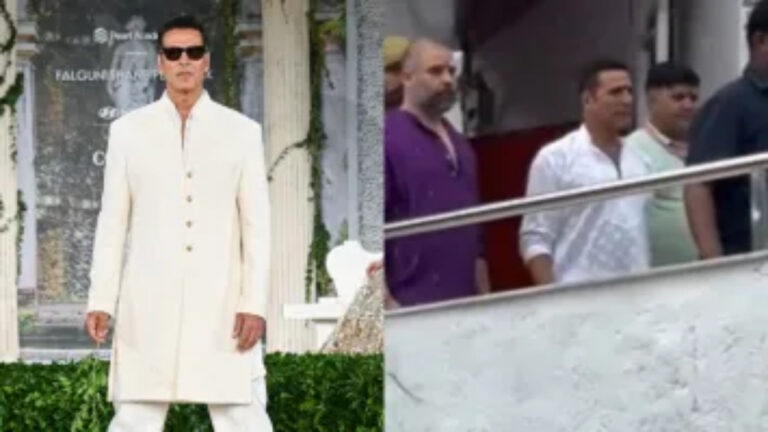
New Delhi, June 19, 2026: Bollywood superstar Akshay Kumar visited the holy cave shrine of Mata Vaishno Devi in the Trikuta Hills of Jammu and Kashmir on Thursday, June 18, 2026. The high-profile spiritual pilgrimage comes just days before the highly anticipated release of his massive action-comedy entertainer, Welcome to the Jungle, scheduled to hit theaters nationwide on June 26, 2026.

Videos and photographs of the actor’s visit quickly went viral across various social media networks. These clips sparked massive fan engagement and heightened the pre-release buzz surrounding one of Bollywood’s biggest projects of the year.

The Spiritual Journey and Fan Frenzy in Katra

Akshay Kumar arrived at Jammu before boarding a special helicopter that transported him directly to the Panchhi helipad in Katra, the foundational base camp for the globally renowned pilgrimage. Upon his arrival, representatives from the Shri Mata Vaishno Devi Shrine Board (SMVDSB) and local administrative authorities officially received the actor.

To complete the journey toward the main cave complex, Akshay opted to travel via a battery-operated eco-vehicle, a standard mode of transport managed by the board to maintain structural and environmental integrity across the mountainous terrains.

Despite a heavy security shield, news of the actor’s arrival spread rapidly among the pilgrims, tourists, and local residents. Viral videos captured crowds of enthusiastic onlookers lining up along the pathways, chanting slogans, and trying to capture selfies or videos of the star. Akshay, dressed in a traditional white kurta, handled the sudden crowd with characteristic warmth. He smiled, waved to fans, and briefly paused to interact with those waiting along the path.

Rituals at the Cave and Bhairav Valley

Once inside the cave shrine, Akshay Kumar participated in a series of traditional Vedic prayers and performed formal rituals to seek the goddess’s blessings for the personal health of his family and the commercial success of his upcoming film. Following his darshan (holy viewing), temple priests presented the actor with a sacred chunri (a traditional red decorative cloth symbolizing divine grace) and holy prasad.

Never one to cut his spiritual journeys short, Akshay extended his pilgrimage beyond the primary cave. He boarded the high-altitude cable ropeway system to travel directly to Bhairav Valley. He paid his respects at the iconic Bhairavnath Temple, fulfilling the traditional belief that a pilgrimage to Vaishno Devi is only complete after visiting Baba Bhairavnath. After spending some time taking in the serene mountain views and completing his prayers, the actor took a helicopter back to Jammu around noon.

A Lifelong Connection to the Goddess

For Akshay Kumar, this trip was far more than a standard pre-release promotional stunt. The actor has often spoken about his deep, personal, and lifelong spiritual ties to the Vaishno Devi shrine. In a media interview, Akshay shared a personal family story about his first connection to the holy place.

He revealed that when he was just a one-year-old infant, his parents had taken him on a pilgrimage to Katra. Upon arriving, he suddenly developed a dangerously high fever of 103–104 degrees Fahrenheit. Instead of turning back out of fear, his parents placed their complete trust in the goddess and carried him up the mountain while chanting prayers. Miraculously, by the time they reached the holy cave, his fever completely vanished without any medical assistance. This specific childhood memory cemented a lifetime of faith, prompting the actor to return to the Trikuta Hills whenever he faces major milestones in his life.

The Road to ‘Welcome to the Jungle’

The divine intervention sought by the actor comes at a critical juncture for his film career. Directed by Ahmed Khan and produced under the banners of Base Industries Group, Cape of Good Films, and Star Studio, Welcome to the Jungle (also colloquially referenced as Welcome 3) has faced a long, complex journey to the silver screen.

Production originally commenced back in 2023, but the movie encountered numerous logistical hurdles, scheduling conflicts, and production delays that repeatedly pushed back its theatrical launch. Now firmly locked into its June 26, 2026 release date, the film is carrying high industry expectations.

The movie’s plot revolves around a chaotic comedy-of-errors structure. Akshay Kumar portrays a struggling, down-on-his-luck actor whose latest film production takes a wild, unpredictable turn when the entire cast and crew travel to a remote village located near the border. Due to a series of comedic misunderstandings, the local villagers mistake the eccentric actors for real, elite military soldiers. The cast is suddenly drawn into a high-stakes, real-world conflict against a dangerous international gang led by a ruthless antagonist (played by Jackie Shroff).

Marketing Chaos and Music Success

The marketing campaign for the film has intensified over the past few weeks. While the initial theatrical trailer drew a polarizing, mixed response from critics and online audiences regarding its chaotic visual effects and crowded narrative, the film’s soundtrack has performed exceptionally well.

Coinciding with his visit to Jammu, the filmmakers released their latest musical track, a high-energy dance anthem titled Deewane Hain. Akshay took to his personal Instagram account to share the track with his millions of followers, captioning it with.

The combination of successful track drops and the organically viral footage of Akshay’s genuine interactions at Vaishno Devi has effectively re-centered public attention on the movie. For an industry heavily dependent on opening-weekend box office numbers, this sudden surge of positive, organic publicity could provide the exact momentum Welcome to the Jungle needs to become a major summer blockbuster.

Shraddha Kapoor’ Leaked Eetha Teaser Sparks ‘Film of the Year’ Hype

New Delhi, June 19, 2026: Bollywood is buzzing with excitement after the highly anticipated first teaser for Shraddha Kapoor’s biographical drama, Eetha, leaked online. Originally attached exclusively to the theatrical screenings of Cocktail 2, the short clip quickly found its way onto social media, immediately setting platforms like X (formerly Twitter) and Instagram ablaze. Witnessing Kapoor’s drastic physical and emotional transformation, fans and movie critics are already hailing the upcoming Vithabai Narayangaonkar biopic as a strong contender for the “Film of the Year.”

The leaked footage highlights a profound performance by Shraddha Kapoor, capturing a career-defining turn for the actress who last dominated the box office with the blockbuster horror-comedy Stree 2. Driven by intense fan hype, the snippet has amplified expectations for the project, which is being spearheaded by producer Dinesh Vijan’s Maddock Films and directed by hitmaker Laxman Utekar.

A Shocking, Powerful First Glimpse

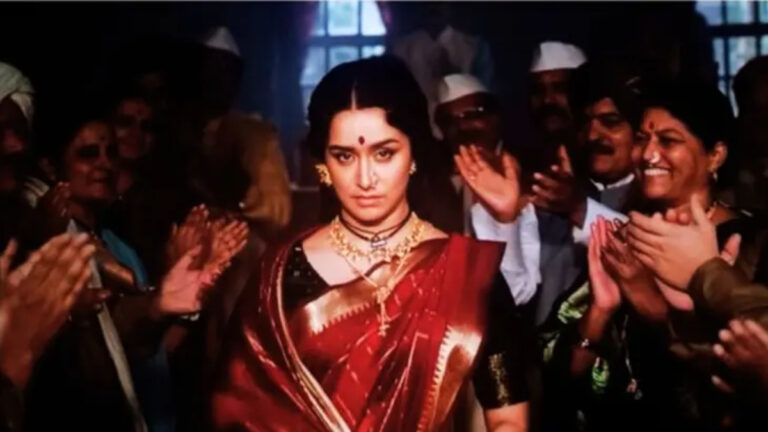
The one-minute-long teaser introduces the audience to the rich, gritty world of mid-20th-century Marathi folk theatre. The clip begins with Kapoor portrayed with a prominent nine-month baby bump, beautifully adorned in a traditional Nauvari saree and backstage jewelry. It immediately drops viewers into a high-stakes, emotionally charged situation: her character goes into labor right as she prepares for a stage performance.

The highlight of the teaser—which has sparked massive conversation online—revisits one of the most legendary, jaw-dropping chapters from Vithabai’s real life. In the sequence, she goes backstage mid-show, delivers her child, cuts the umbilical cord herself, and swiftly returns to the stage within minutes to honor her commitment to her art and audience. The background audio features intense, heated arguments regarding her health and her unyielding resolve to perform, capturing a striking display of resilience. Theater recordings floating around the internet show audiences erupting into loud whistles, cheers, and applause at this exact sequence.

Who Was Vithabai Narayangaonkar?

For audiences unfamiliar with the cultural history of Western India, Eetha is an ambitious attempt to chronicle the life of Vithabai Bhau Mang Narayangaonkar (1935–2002), a towering icon of Tamasha (a traditional Marathi folk art form combining music, dance, and theater) and Lavani. Born into a family of nomadic artists, Vithabai spent her life elevating folk theatre despite facing intense social discrimination and harsh poverty.

She wasn’t just a dancer; she was a fierce pioneer who ran her own theatre troupe and used her art to captivate generations. Recognizing her profound cultural contributions, the President of India honored her with prestigious national medals in 1957 and 1990. Eetha aims to map her grand journey across five decades, spanning from 1940 to 1990, charting her monumental rise to fame, her artistic triumphs, and the deep financial and personal hardships she suffered in her later years.

Fans Predict a Masterpiece

The sudden leak of the trailer has thrown Shraddha Kapoor’s massive fan base into a frenzy. Social media platforms are flooded with praise regarding her fierce screen presence and the film’s rich, immersive visual palette. Many believe this author-backed role will propel her straight into national award conversations.

Other fans echoed similar sentiments, stating that the sheer intensity of the childbirth-to-stage sequence is enough to cement Eetha as a historic cinematic achievement. Words like “masterpiece,” “mind-blown,” and “Film of the Year” have trended consistently since the clip leaked.

Behind the Scenes and Production Scale

Director Laxman Utekar, fresh off the massive success of his historical epic Chhaava, has reportedly pulled out all the stops to ensure absolute historical authenticity. The production wrapped up its exhaustive shooting schedule in May, following 60 days of rigorous filming across various authentic locations in Maharashtra, including Solapur, Satara, Nashik, and Madh Island.

The scale of the movie is massive. The production concluded with a grand, sprawling montage song sequence filmed in Bhor, Maharashtra, choreographed by the legendary Vaibhavi Merchant. This specific sequence features Kapoor alongside a massive crowd of over 800 background artists, visually tracking Vithabai’s sweeping evolution from a young, hopeful dancer to a celebrated icon, and eventually to her tragic fall into hard times. Kapoor’s dedication to the role was highly apparent through production, with reports surfacing earlier that she even pushed through a toe fracture on set to keep the shoot on schedule.

The Powerhouse Ensemble and Box Office Outlook

Beyond Shraddha Kapoor’s anchoring performance, Eetha boasts a stellar ensemble cast featuring some of Indian cinema’s finest actors:

  • Randeep Hooda
  • Nana Patekar
  • Mohammed Zeeshan Ayyub
  • Siddharth Jadhav

The project also marks another high-profile collaboration between producer Dinesh Vijan and Shraddha Kapoor, a duo that holds an incredible track record with the Stree universe.

Eetha is officially locked to hit theaters worldwide on August 28, 2026, strategically timing its release with the festive holiday of Raksha Bandhan. Given the massive box-office potential of the holiday weekend and the immense momentum generated by this leaked teaser, trade analysts are predicting a colossal opening. However, it won’t be a completely clear runway; Eetha is set to face a notable box-office clash with Vvan – Force of the Forest, an upcoming action-drama starring Sidharth Malhotra and Tamannaah Bhatia.

While the leak was undoubtedly unplanned by Maddock Films, it has inadvertently served as an explosive marketing trigger. Audiences are now eagerly waiting for the official high-definition digital launch of the teaser, ready to see the full glimpse of a film that is already positioning itself as a cultural milestone.

Shivani’ “Main Soyi Khol Kiwad”: The Latest Dehati Dance Sensation

New Delhi, June 19, 2026: In the fast-evolving landscape of digital entertainment, regional folk music and traditional dance formats continue to dominate social media platforms. Highlighting this trend, the renowned dehati (rural) and folk artist Shivani has taken the internet by storm with her latest viral dance production. Released under the prominent regional music label Trimurti Cassettes, her brand-new video, “Main Soyi Khol Kiwad” (also titled “Main To Soyi Khol Kiwad”), has rapidly climbed trending charts, garnering thousands of views within days of its premiere and securing its place as a viral sensation across Northern and Central India.

The Artistic Context of “Main Soyi Khol Kiwad”

“Main Soyi Khol Kiwad” is deeply rooted in the traditional “Dehati Rasiya” folklore, a genre historically native to the Braj region and widely celebrated across Uttar Pradesh, Haryana, Rajasthan, and Madhya Pradesh. While the song relies on familiar, culturally resonant regional idioms, this iteration infuses modern electronic arrangements to appeal directly to younger digital consumers. Professionally repackaged as a “Rasiya DJ Remix,” the track merges dense electronic sub-bass, heavy percussion loops, and high-tempo dance beats with conventional harmonium and dholak structures, creating a potent modern-folk crossover.

Shivani serves a dual role in this production, acting as both the primary screen artist and the lead vocalist. This dual execution showcases her unique vocal styling, tailored to the raw, unfiltered presentation that characterizes dehati pop music. The lyrical framework, written by popular regional songwriter Lokesh Prajapati, utilizes everyday rural metaphors to depict structural themes of longing and domestic playfulness. The musical composition, developed by Surya Panchal under the Sonotek GRP Bros banner, balances digital electronic elements with traditional melodies, preventing the modern production from overshadowing the track’s folk identity.

Choreography and Screen Performance

The visual centerpiece of the viral release is Shivani’s performance, which adheres closely to the fast-paced, improvisational nature of regional stage dance. Known throughout the regional industry for her high-energy footprint, her choreography in “Main Soyi Khol Kiwad” features a blend of traditional floor steps, dramatic expressions (thumkas), and rhythmic hand movements. Unlike highly structured Bollywood routines, regional dehati dance relies on immediate synchronization with the DJ remix beats, requiring intense physical stamina and a continuous connection with the camera.

The video employs direct lighting, standard multi-angle tracking shots, and a vibrant color palette, common to Sonotek-managed releases. Behind the scenes, the final product was shaped by industry veterans.

Digital Distribution and Cultural Impact

The rapid proliferation of “Main Soyi Khol Kiwad” underscores a broader macroeconomic shift in the Indian music industry: the massive digitization of rural markets. Distributed simultaneously across standard video platforms and mainstream streaming networks—including YouTube Music, Spotify, JioSaavn, Gaana, and Apple Music—the song bypasses old regional distribution bottlenecks.

Historically confined to local festive gatherings, weddings, and community cassette markets, Dehati Rasiya and Lokgeet have transitioned into major digital revenue drivers. For platforms like Trimurti Cassettes, which boasts a subscriber base exceeding 10 million users, content fronted by established names like Shivani guarantees massive programmatic ad impressions and algorithmic recommendations. Social media engagement metrics indicate that the song is being heavily integrated into short-form content ecosystems, notably via Instagram Reels and YouTube Shorts audio tracks, accelerating its lifecycle across urban and rural demographics alike.

The critical and commercial reception of the video points to an enduring demand for hyper-local content. Fans have flooded the comment streams with praise for Shivani’s expressive presentation and her choice to preserve native dialects amidst a highly Westernized mainstream music market. As the summer wedding and cultural festival season progresses across northern India, “Main Soyi Khol Kiwad” is firmly positioned to remain a dominant track on local DJ setups, further cementing the commercial viability of modern dehati music.

Asian Games 2026 Manika Batra Dropped; Appeals to PM Modi Over Selection Rules

0

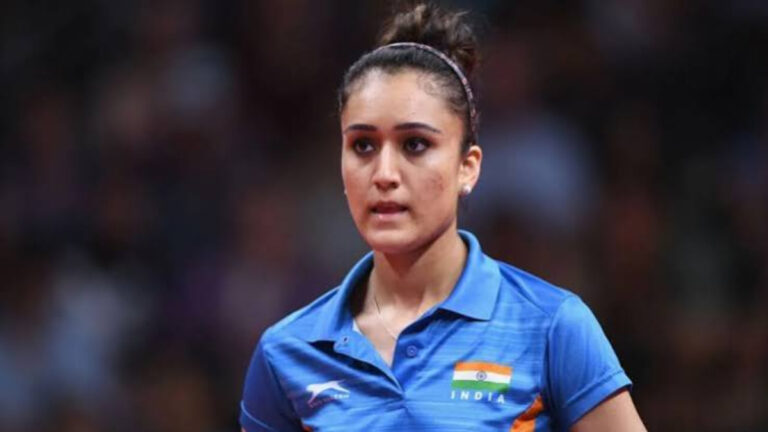
New Delhi, June 19, 2026: An administrative storm has hit Indian table tennis ahead of the 20th Asian Games in Aichi-Nagoya, Japan. Celebrated paddler Manika Batra has been omitted from the main 5-member women’s squad, relegated instead to the reserve list. On Friday, June 19, 2026, a day after the Table Tennis Federation of India (TTFI) announced the official continent, the 31-year-old Olympian took to social media to publicly voice her deep disappointment, appealing directly to Prime Minister Narendra Modi, Sports Minister Mansukh Mandaviya, and the Indian Olympic Association (IOA) to intervene.

Batra’s exclusion has reignited a fierce debate over the transparency, consistency, and fairness of domestic selection policies. Her primary grievance centers on a perceived lack of consistency, as she claims different thresholds and considerations were applied during previous selection cycles compared to her current situation.

Understanding the Selection Matrix

To comprehend how one of India’s most decorated table tennis players missed out on the main roster, it is essential to look at the mathematical framework used by the TTFI selection committee. Introduced in 2023, the selection policy employs a rigid, point-based formula divided into three distinct criteria:

  • National Rankings (50% Weightage): Performance across domestic ranking tournaments.
  • World Rankings (40% Weightage): Performance on the International Table Tennis Federation (ITTF) global circuit.
  • Committee Discretion (10% Weightage): Subjective evaluation by the 9-member selection panel.

Under these regulations, any player positioned inside the world’s top 50 on the designated cut-off date (June 2, 2026) earns automatic qualification for major multi-sport events, bypassing the domestic evaluation. However, the margins for Batra were incredibly cruel. On the cut-off date, she was ranked World No. 51—falling just short of automatic inclusion by a mere three ranking points.

Because she did not cross the top-50 threshold, the 50% weightage allocated to national rankings came into full effect. Due to a combination of personal and medical reasons over the past year, Batra had limited participation in domestic tournaments. Consequently, her lack of a robust national ranking dragged down her cumulative score, causing her to lose out on a main spot to other domestic performers.

Outlining the Squad Layout

In defending its roster selection, the TTFI asserted that the process was strictly data-driven to ensure India is represented by its most consistent active performers. The women’s squad will be spearheaded by World No. 45 Sreeja Akula, who has steadily risen to become India’s top-ranked female singles player.

The Core of the Controversy

The decision to relegate Batra has exposed deep rifts within the Indian sporting ecosystem. Reports indicate that the 9-member selection committee was far from unanimous in its decision, with intense internal deliberations taking place alongside inputs from national coach Massimo Costantini before the final list was rubber-stamped.

Batra’s coach, Aman Balgu, highlighted the extenuating circumstances the player faced over the previous year, suggesting that a rigid algorithmic approach lacks empathy for real-world athletic hardships. Batra was sidelined for nearly two months following the sudden demise of her father and simultaneously managed a serious physical injury that restricted her competitive travel. Balgu pointed out that according to future point projections, Batra is expected to regain her status as India’s top-ranked female paddler as early as next month, making her exclusion from a tournament happening in September particularly difficult to swallow.

Furthermore, Batra’s public statement raises procedural questions. If the TTFI intends to stand firmly by its 2023 policy, she argues, it needs to explicitly clarify how discretionary points were distributed and why exceptions or safety nets utilized in previous Asian Games cycles were unavailable this time around.

A Legacy at Stake

The urgency behind Batra’s appeal is underscored by her historic contributions to the sport in India. She was the cornerstone of India’s historic breakthrough at the 2018 Asian Games in Jakarta, where she partnered with veteran Sharath Kamal to clinch a monumental bronze medal in mixed doubles. That medal, alongside a men’s team bronze in the same edition and a dramatic women’s doubles bronze by the Mukherjee sisters in Hangzhou, represents the absolute pinnacle of Indian table tennis achievements on the continental stage.

With the table tennis events at the Aichi-Nagoya Asian Games scheduled to take place from September 20 to September 28, 2026, the clock is ticking. While the TTFI maintains that the selection process rewards active consistency, the sporting community is divided on whether a system should rigidly exclude an athlete of Batra’s caliber over a microscopic deficit in international ranking points and domestic scheduling conflicts.

As the Ministry of Youth Affairs and Sports and the IOA review her formal appeal, Indian sports fans await a resolution to see whether administrative rules will hold absolute, or if an intervention will pave the way for the veteran paddler to make the main contingent.

Aprilia SR 175 Tribute Edition Launched in India at Rs 1.21 Lakh

0

New Delhi, June 19, 2026: Italian two-wheeler giant Piaggio has officially expanded its premium performance scooter lineup in India with the launch of the Aprilia SR 175 Tribute Edition. Priced attractively at Rs 1.21 lakh (ex-showroom), this special edition machine is designed to turn heads while celebrating a powerful cause. The new variant serves as a direct aesthetic nod to the courage and selflessness of the Indian Armed Forces, blending Italian racing heritage with a deep-rooted sense of patriotic pride.

A Striking New Aesthetic: Patriotic Pride Meets Racing DNA

The standout feature of the Aprilia SR 175 Tribute Edition is its distinctive visual identity. Moving away from standard glossy tracks, the Tribute Edition embraces a rugged Matte Green camouflage paint scheme. The bodywork beautifully weaves together olive green, earthy khaki, and muted brown tones, mirroring classic military fatigues.

However, because this is an Aprilia, the rugged army theme is perfectly balanced with the brand’s high-visibility racing identity. To break up the matte camouflage panels, Aprilia has added striking fluorescent orange and yellow accents. This high-contrast pairing is splashed across the front apron and side body panels via oversized “Aprilia” and “SR” decals. The final touch of sportiness comes from matching fluorescent orange rim tapes on the blacked-out alloy wheels, making the scooter look aggressive even when stationary.

Punchy Performance: The 175cc High-Performance Core

While the exterior gets a dramatic patriotic makeover, the mechanical soul of the scooter remains identical to the highly acclaimed standard SR 175 line-up. It continues to position itself as one of India’s quickest and most engaging petrol scooters.

At the heart of the Tribute Edition is the 174.7cc, single-cylinder, 4-stroke, SOHC, 3-valve High-Performance Efficiency (hp-e) engine. Fuelled by an electronic fuel injection system, this engine delivers impressive performance figures that easily outperform 90% of the scooters in its price segment.

The CVT (Continuously Variable Transmission) is meticulously tuned for quick, instantaneous throttle responses. Whether you are slicing through tight city gaps during your morning commute or chasing open-road thrills on the weekend, the SR 175 offers linear power delivery with a strong mid-range pull.

Cycle Parts and Handling: Razor-Sharp Control

True to the Aprilia racing DNA, the SR 175 Tribute Edition doesn’t just go fast in a straight line; it is built to carve corners. The scooter is structured around a rigid steel frame that ensures high-speed chassis stability.

Up front, suspension duties are managed by conventional telescopic forks, while the rear features a sturdy monoshock absorber. This stiffly-sprung suspension setup setup behaves more like a motorcycle than a traditional scooter, offering minimal body roll and exceptional road feedback.

Crucial to its commanding road presence are the massive 14-inch 10-spoke alloy wheels wrapped in thick, tubeless all-terrain tyres. These larger-than-average wheels provide incredible stability at its 95 km/h top speed. Braking is safely handled by a reassuring front disc brake paired with a rear drum brake, supported by a standard Anti-lock Braking System (ABS) to ensure skid-free emergency stops on unpredictable Indian roads.

Tactical Intelligence: Advanced Tech and Features

Aprilia has made sure that the Tribute Edition isn’t just about raw muscle and camouflage paint; it brings modern technology to the rider’s fingertips.

The crown jewel of the cockpit is the crisp 5-inch full-colour TFT display. This advanced dashboard features seamless Bluetooth connectivity to link with your smartphone. Once paired via the dedicated application, riders can access:

  • Live turn-by-turn navigation data
  • Call and SMS notifications
  • Music playback controls
  • Comprehensive trip details and ride-data tracking

For night-time dominance, the scooter features a signature Full-LED headlight assembly with daytime running lights (DRLs) that slice through pitch-black conditions, accompanied by sharp LED taillights. Practicality is also kept in mind with a spacious under-seat storage compartment that includes a handy courtesy light and an integrated USB charging port to keep your electronics powered up on the move.

Bookings for the Aprilia SR 175 Tribute Edition are officially open at all authorized Motoplex dealerships across India, with deliveries scheduled to commence shortly. For riders looking to stand out with a rugged, military-inspired machine without sacrificing top-tier performance, this tribute scooter hits the sweet spot perfectly.

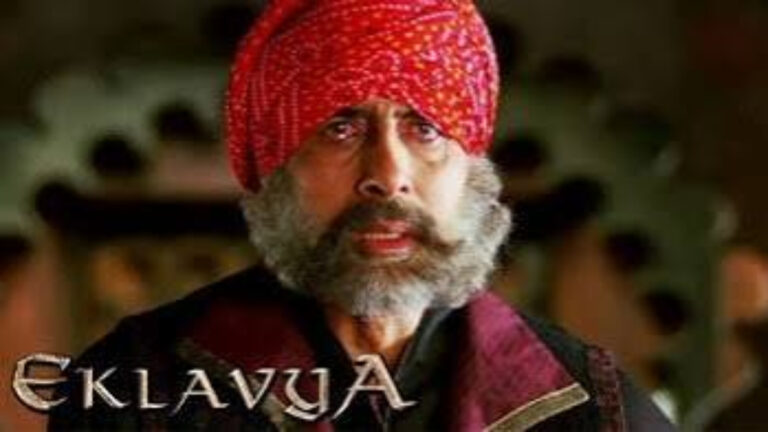
How Amitabh Bachchan Starred in Eklavya Without Charging a Single Rupee

New Delhi, June 19, 2026: The fascinating dynamics of Bollywood film production often hide behind the glitz and glamour seen onscreen. Among the industry’s most legendary tales of dedication and creative friction is the making of the 2007 cinematic drama Eklavya: The Royal Guard. Directed and produced by the notoriously uncompromising filmmaker Vidhu Vinod Chopra, the film brought together an ensemble cast led by the ultimate megastar of Indian cinema, Amitabh Bachchan. Years after its release, Chopra shared an extraordinary revelation that stands as a staggering testament to Bachchan’s unparalleled discipline and financial grace: the legendary actor did not charge a single rupee for his title role, and instead dipped into his own pocket to cover production constraints.

The Budget Crisis in Rajasthan

When Eklavya entered production, Vidhu Vinod Chopra was determined to create a highly atmospheric, meticulously crafted cinematic experience on a tightly controlled budget. Filming was planned for a swift 37-day schedule across real palace locations in Rajasthan. To maintain production efficiency and equity on set, Chopra chose not to extend extravagant, asymmetrical perks to individual stars, ensuring the financial resources stayed directly onscreen.

The production structure faced its first logistical test when Amitabh Bachchan’s administrative team requested a premium hotel suite in Rajasthan. The cost of the accommodation exceeded the film’s strict per-day lodging budget by ₹65,000. Rather than making an exception and risking a budget overspread that would impact co-stars Saif Ali Khan or Sanjay Dutt, Chopra held his ground. He directly informed Bachchan’s team that the production could not absorb the additional cost.

Demonstrating a level of humility rarely seen among top-tier stars, Bachchan chose not to compromise the director’s financial vision or throw a tantrum. Instead, the veteran actor quietly chose to bridge the difference entirely out of his own pocket.

Charting Private Flights on a Personal Dime

The star’s willingness to absorb logistics costs did not stop at hotel rooms. Once the rigorous shooting schedule wrapped up in Jodhpur, Bachchan required a private charter flight to return swiftly to Mumbai. Recognizing the absolute ceiling of the movie’s tight post-production numbers, Chopra again explained that stretching the budget for a chartered plane was out of the question.

Without missing a beat, Bachchan personally chartered a private aircraft from Jodhpur using his own financial resources. In a final twist of generosity, the megastar did not fly back alone; he invited Vidhu Vinod Chopra and his wife, prominent film critic Anupama Chopra, to hitch a ride back to Mumbai with him. Reflecting on this in his co-authored book Unscripted: Conversations on Life and Cinema, Chopra remarked with fond irony that despite not paying the legendary actor an upfront acting fee, it was Bachchan who ultimately gifted him one of his very first rides in a private jet.

Jaya Bachchan’s Prophecy and On-Set Fireworks

The sheer grace Bachchan displayed off-camera stood in sharp contrast to the high-voltage creative friction that unfolded during the shoot. Before filming even began, Bachchan’s wife, Jaya Bachchan, had predicted that two of the industry’s most headstrong personalities would inevitably clash. When Bachchan arrived in Rajasthan for the month-long schedule carrying incredibly light luggage, a curious Chopra asked him why he traveled so light. Bachchan dryly responded that Jaya was convinced the two would fight within a week and that he would be sent packing back home ahead of schedule.

That prophecy almost came true within the first three days. Known for his legendary punctuality, Bachchan unexpectedly arrived late to the set on day one, causing Chopra to miss the highly critical “magic hour” morning light. When the same delay happened on the second and third days, Chopra—furious at the disappearing light—completely lost his temper. Descending from a camera crane, he shouted outside Bachchan’s room, demanded to know how much money had been spent on the film so far, and told his line producer to completely write off the ₹1 crore loss because he was replacing Bachchan with Sanjay Dutt.

The brewing storm was defused by pure wit. Just as Chopra was fuming, Bachchan emerged from his room, walked past the director, and playfully asked Anupama Chopra, “How do you live with this madman? He is crazy.” The entire set broke into laughter, dissolving the immense tension.

Bachchan then explained the actual cause of the delay: the complex prosthetic beard required for his character was taking hours to apply, and the makeup room’s environment was highly uncomfortable. Chopra’s signature direct solution was to instruct the makeup staff to thoroughly sanitize with Dettol. The next morning, a dryly amused Bachchan was on set a full hour early, stating he simply wanted to play it safe to avoid being shouted at again.

A ₹4.5 Crore Token of Gratitude

While Eklavya: The Royal Guard received significant critical praise and was ultimately chosen as India’s official entry to the Academy Awards (Oscars) that year, it struggled to set the box office on fire. However, the financial outcome did not change Chopra’s profound gratitude for his leading man’s immense patience and economic concessions.

Years later, when Chopra found solid financial footing through subsequent blockbuster productions, he decided to properly honor Bachchan’s graceful handling of the Eklavya budget. He purchased a brand-new luxury Rolls-Royce Phantom worth ₹4.5 crore and drove to Bachchan’s residence to surprise him with the keys.

Chopra beautifully summarized the gesture by explaining that the multi-crore car was a token of appreciation because a star of Bachchan’s unparalleled stature had tolerated his intense working style, accommodated the production’s hard financial lines, and stayed committed to delivering a stellar performance without ever letting ego get in the way.

CSIR UGC NET June 2026: Registration Ends Today; Apply Now at csirnet.nta.nic.in

0

New Delhi, June 19, 2026: As the deadline approaches, applicants are strongly advised to complete their submissions immediately to avoid unexpected technical glitches or heavy server traffic on the official website. Below is a comprehensive guide containing all the crucial details, timelines, fees, and steps needed to successfully lock in your application today.

Key Deadlines & Examination Schedule

While the application registration portal closes tonight, the NTA has built in a brief cushion for fee payments and corrections. Keeping track of these specific timestamps is vital to ensuring your registration remains valid:

Direct Link & Step-by-Step Registration Process

Candidates can directly access the application portal via the official web address link: csirnet.nta.nic.in.

To minimize the chances of errors during the final hours of the registration window, follow this sequence meticulously:

1.Register on Portal:Step 1.

Visit the official portal at csirnet.nta.nic.in. Click on the registration link designated for the June 2026 session and choose to sign up by entering basic details like name, email ID, and mobile number to generate a unique Application Number.

2.Fill Out the Form:Step 2.

Log back into the system using your newly created credentials. Carefully fill in your personal, contact, and academic qualification data. This includes selecting your preferred exam center cities and your choice of subject.

3.Upload Required Documents:Step 3.

Upload clear, scanned copies of your passport-sized photograph and your signature. Ensure these files match the specific size and format requirements outlined in the information bulletin to prevent processing delays.

4.Complete the Fee Payment:Step 4.

Navigate to the payment gateway. Pay the category-specific examination fee through an accepted online payment method (Credit Card, Debit Card, Net Banking, or UPI).

5.Download Confirmation:Step 5.

Once payment is processed successfully, a confirmation page will generate. Download, save, and print this page, as it serves as vital proof of your successful submission for future stages.

Application Fee Structure

The application fee varies depending on the category a candidate falls under. All payments must be completed electronically using secure online gateways:

  • General Category: ₹1,150
  • General-EWS / OBC-NCL: ₹600
  • SC / ST / PwD / Third Gender: ₹325

Core Subjects and Test Structure

The CSIR UGC NET focuses specifically on core scientific and mathematical fields. The June 2026 session will cover five distinct disciplines:

  1. Chemical Sciences
  2. Earth, Atmospheric, Ocean, and Planetary Sciences
  3. Life Sciences
  4. Mathematical Sciences
  5. Physical Sciences

The exam features a multi-part single paper containing multiple-choice questions (MCQs), split into general aptitude, subject-specific foundational concepts, and higher-level analytical scientific questions. The total number of questions to attempt varies by subject. For example, in Earth and Chemical Sciences, candidates attempt up to 75 questions out of a broader selection pool. The overall question paper is completely bilingual, offered in both English and Hindi.

Crucial Reminders Before You Submit

Because the registration window ends tonight, there are a few final adjustments and precautions every applicant should take:

  • Verify Your Contact Info: Ensure that the email address and phone number provided are correct and active. The NTA sends all primary updates, city intimation slips, and admit card download notifications via these channels.
  • Correction Limitations: While a correction window will open from June 22 to June 23, not all fields are editable. Major fields like candidate names, permanent email IDs, and primary exam core subjects are generally locked after final submission. Take a few extra minutes to proofread your inputs right now.
  • The Single Form Rule: Submission of more than one application form per candidate is strictly forbidden by the NTA. Doing so may result in the summary rejection of all your applications.

Following the close of registration tonight and the subsequent fee window tomorrow, the NTA will begin processing test allocations. Announcements regarding specific exam city slips, printable admit cards, and subsequent provisional answer keys will be published sequentially on the official web portal. Be sure to bookmark the official site and check back regularly as the exam dates on July 17 and July 18 approach.

Rajasthan’s Star Brothers: One Army Lieutenant, One CISF Officer

0

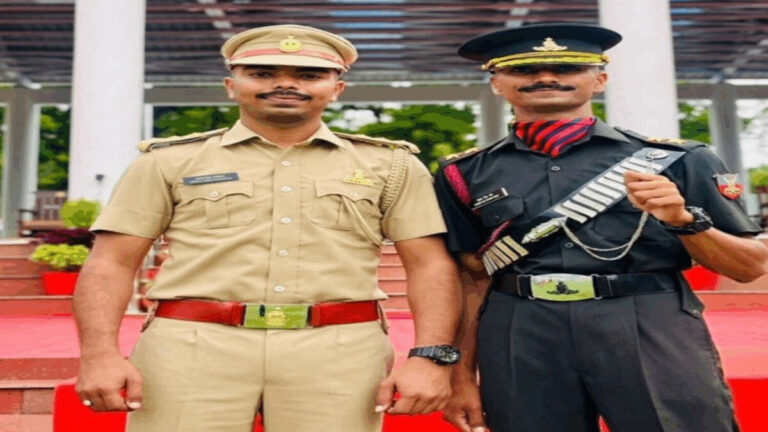
The historic Marwar region of Rajasthan, known for its deep-rooted legacy of valor and sacrifice, has added a spectacular new chapter to its modern folklore. In Jalore district, a single household is celebrating a rare double triumph that has captured the imagination of the entire state. Two brothers, Pritam Singh and Sanjay Singh, have simultaneously scaled the peaks of public service, turning their childhood dreams of donning the uniform into an inspiring reality.

While Pritam Singh has successfully joined the Indian Army as a commissioned Lieutenant, his brother Sanjay Singh has simultaneously secured a prestigious officer-level rank in the Central Industrial Security Force (CISF). This dual achievement has not only brought immense pride to their family but has also turned their native village into a beacon of inspiration for thousands of competitive exam aspirants across rural India.

From Small-Town Classrooms to National Uniforms

The journey of the Singh brothers began in the modest surroundings of Jalore. Unlike many who migrate to major educational hubs early in life, Pritam and Sanjay completed their fundamental schooling locally. Growing up in Rajasthan—a state deeply interconnected with the armed forces—the sight of personnel in uniform left an indelible mark on both brothers during their formative years.

Family sources note that the values of discipline, love for the motherland, and an unwavering work ethic were quietly instilled in them from childhood. Instead of pursuing divergent professional paths, both brothers shared a singular, laser-focused objective: to dedicate their youth and careers to the internal and external security of the nation.

Path to the Indian Army: Lieutenant Pritam Singh

Pritam Singh’s trajectory toward the officer cadre of the Indian Army is a testament to rigorous physical endurance and exceptional intellectual capability. Securing a spot in the military elite requires clearing one of the nation’s most competitive selection frameworks, followed by intense physical testing at the Services Selection Board (SSB).

Upon selection, Pritam underwent 18 months of brutal military training at a premier officers’ training academy. The curriculum designed to transform young cadets into military leaders tests the absolute limits of physical stamina, tactical strategy, psychological resilience, and crisis management. After successfully completing this grueling regime, Pritam formally graduated, with his shoulders bearing the prestigious stars of an Army Lieutenant. His entry into the armed forces continues Rajasthan’s legendary tradition of sending its finest to lead on the borders.

Securing the Nation’s Infrastructure: Officer Sanjay Singh

While Pritam focused on the conventional defense forces, his brother Sanjay Singh directed his ambitions toward the Central Armed Police Forces (CAPFs). Sanjay channeled his efforts into securing a spot as an officer within the Central Industrial Security Force (CISF).

The CISF plays a critical role in safeguarding India’s vital infrastructure, ranging from high-security aerospace installations, nuclear power plants, and major seaports to internal networks like the Delhi Metro. The selection process demands an exceptional grasp of general studies, analytical reasoning, and stringent physical efficiency tests. Sanjay’s successful appointment to an officer rank highlights his strategic acumen and readiness to manage complex civil-security operations across the country.

A Shared Vision with Distinct Paths

Though the Jalore brothers chose different organizations and branches of governance, their core motivation remains identical. The pairing of their selections provides a unique balance to the family’s contribution to national security:

  • Lieutenant Pritam Singh serves on the front lines, managing territorial defense and external security dynamics.
  • Officer Sanjay Singh operates within the vital internal security apparatus, protecting the industrial wealth and critical assets that keep the nation functioning.

The simultaneous celebrations in their village underscore a deeper societal trend in rural Rajasthan, where success in central civil and defense services is viewed as the highest form of community honor. Local leaders, administrative officials, and community elders have continuously visited the family home to congratulate the parents who supported both brothers through years of demanding preparation.

The Broader Impact: Motivating Rural Youth

The success story of Pritam and Sanjay Singh goes far beyond individual or familial pride. In regions like Jalore, which often face structural and geographic challenges, a double achievement of this magnitude acts as a major catalyst for structural shift among the youth. It dismantles the myth that premium coaching centers in metropolitan cities are an absolute prerequisite for clearing elite national examinations.

By relying on local schooling, structured self-study, and mutual peer support, the Jalore brothers have provided a realistic blueprint for success. Their journey emphasizes that clarity of purpose, paired with consistent execution, can bypass geographical limitations.

As Lieutenant Pritam Singh prepares to join his assigned regiment and Officer Sanjay Singh steps into his role within the industrial security framework, the legacy of the Jalore brothers is firmly established. They stand as a shining example of how shared determination within a single household can yield double the glory for the nation.

‘Pataudi Princess x Superman’: Sara Ali Khan and Henry Cavill Take Over Royal Ascot

New Delhi, June 19, 2026: The internet is currently witnessing one of the most unexpected and glamorous cross-cultural moments of the year. Bollywood actress Sara Ali Khan and Hollywood heavyweight Henry Cavill sent social media into an absolute frenzy after photos of them posing together at the prestigious Royal Ascot horse racing festival in Berkshire, England, went viral.

Fans immediately dubbed the encounter as the ultimate crossover event, flooding comment sections with the phrase “Pataudi princess x Superman.”

When Bollywood Royalty Met the Man of Steel

The surprising meeting took place at the five-day annual British event, which is famous not just for its horse racing, but for its ultra-strict, high-fashion formal dress codes. Sara Ali Khan, who belongs to the royal Pataudi lineage through her father Saif Ali Khan, attended the event as a global brand ambassador for the Swiss luxury watchmaker Longines. Coincidentally, Henry Cavill, famously known for his iconic portrayal of Superman in the DC Extended Universe, is also a global face for the same heritage brand.

Sara took to her Instagram account to share a carousel of glimpses from her time in the English countryside, captioning her post simply: “A royal affair with @longines.”

While the first few pictures highlighted her stunning solo look, the absolute showstopper of the collection was a slide featuring her standing side-by-side with Cavill. Longines later shared official pictures of the duo on their corporate channels, describing their joint appearance as “an expression of timeless elegance at Royal Ascot.”

Decoding the Royal Ascot Fashion

Both actors leaned heavily into the traditional, highly refined aesthetic required by the Royal Ascot’s strict Royal Enclosure guidelines.

  • Sara Ali Khan: The Bollywood star embraced classic British race-day styling, opting for an elegant ivory-toned tailored midi silhouette. She layered the structured dress with a matching cape-style jacket draped across her shoulders. Adhering to the timeless tradition of the event, she completed her look with a white netted fascinator (a formal headpiece), a sleek clutch purse, pointed-toe stilettos, and a delicate watch from Longines’ PrimaLuna collection.
  • Henry Cavill: The British actor looked every bit the traditional English gentleman. He wore a flawless morning suit consisting of a black tailcoat, a light-colored waistcoat, a crisp white dress shirt, and a coordinating tie. He tied the look together with grey striped trousers, highly polished oxfords, and a structured black top hat. Cavill was seen sporting a timepiece from Longines’ rugged yet sophisticated Spirit Zulu Time collection.

Internet Reactions: “Is This AI?”

Because a crossover between the worlds of Bollywood and Hollywood is rare at such specific cultural events, many fans initially thought the images were fake. Comment sections were filled with users double-checking if they had been tricked by artificial intelligence.

“Is that… Henry Cavill???” asked one shocked Instagram follower, while others jumped in to confirm that it was indeed the Hollywood star.

Once the reality settled in, the comments exploded with playful puns and mashup nicknames. The most popular sentiment by far became “Pataudi princess x Superman!” due to Sara’s royal heritage and Cavill’s legendary superhero mantle.

Another fan playfully commented on Cavill’s sharp look, saying, “This is what a proper gentleman should look like. I hope he has his Superman suit on underneath.” Others pointed out his incredible style, noting that he looked remarkably like his character Humphrey from the 2007 fantasy film Stardust, but with a modern, sharper update.

A Tale of Two Generations in England

While Sara Ali Khan was turning heads and making international fashion headlines at Berkshire, her father, Saif Ali Khan, was occupied with a deeply emotional family event just a short distance away in Hampshire.

Saif was visiting Winchester College—his own alma mater—to attend a special ceremony honoring his late father, the legendary Indian cricket captain Mansoor Ali Khan Pataudi (fondly remembered as Tiger Pataudi). A commemorative plaque was officially unveiled at the college’s historic cricket pavilion, the Hunter Tent, marking the spot where Tiger Pataudi’s legendary cricketing journey began as a young student.

The parallel events created a beautiful narrative for the family across the United Kingdom: while Saif spent his day honoring the enduring sporting and cultural ties of the Pataudi history, Sara was expanding that very same legacy into the modern, global pop-culture space.

What is Next for Both Stars?

Aside from their high-profile brand collaborations, both actors have incredibly busy slates coming up in their respective film industries.

Sara Ali Khan

Sara is coming off a busy phase with recent projects like Sky Force, Metro In Dino, and Pati Patni Aur Woh Do. Up next, she is diving into the espionage genre with Udta Teer, a highly anticipated spy comedy where she stars alongside Ayushmann Khurrana. The film is directed by Akash A. Kaushik and jointly produced by Karan Johar’s Dharma Productions and Guneet Monga’s Sikhya Entertainment. Industry rumors also suggest she may soon collaborate on a film project directly with her father, Saif Ali Khan, though an official announcement is still awaited.

Henry Cavill

Cavill recently wrapped up Guy Ritchie’s action-thriller In The Grey. While his time as Clark Kent has officially concluded—with the character being taken over by David Corenswet—Cavill remains a massive anchor for major franchises. Fans can look forward to seeing him return to the small screen for Netflix’s Enola Holmes 3, alongside starring roles in the upcoming big-budget reboots of Voltron and the fantasy action-epic Highlander.

As both actors return to their busy filming schedules, their brief, elegant meeting under the British sun will remain one of the most memorable internet crossovers of the year.