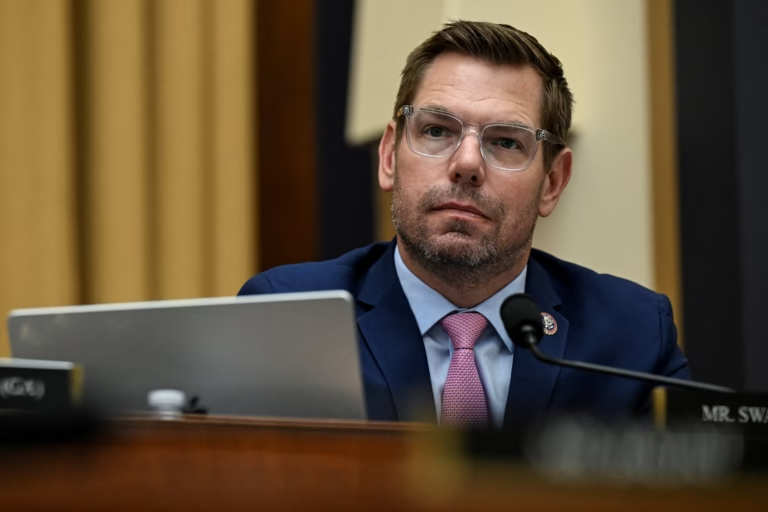
New Delhi, April 15, 2026: The political landscape of 2026 has been rocked by the sudden resignation of U.S. Representative Eric Swalwell, following a series of explosive allegations and a viral video that has dominated social media discourse. A video depicting a man resembling the former congressman in a private setting has led to intense public scrutiny and calls for legal accountability. It is reported by several political figures that forensic evaluations of the footage are being conducted to determine its authenticity and legal implications.
The controversy reached a fever pitch this week when Swalwell officially resigned from his seat in Congress on April 14, 2026. This move followed the suspension of his campaign for California governor, a race in which he was previously considered a frontrunner. It is understood that the decision to step down was influenced by mounting pressure from his own party and the looming threat of a formal expulsion from the House of Representatives.
Allegations and Legal Inquiries
Beyond the viral footage, Swalwell is facing serious criminal allegations, including accusations of sexual assault and rape brought forward by a former staffer and other women. These claims are currently being investigated by multiple authorities, including the Manhattan District Attorney’s Office and the House Ethics Committee. It is frequently mentioned by legal analysts that the severity of these charges could potentially lead to incarceration if a conviction is secured.
In his defense, Swalwell has forcefully denied the most serious allegations, labeling them as “flatly false” in various social media statements. However, he has also issued apologies for what he described as “mistakes in judgment” regarding his private conduct. The transition from a prominent gubernatorial candidate to a figure facing potential jail time has been described by many as one of the most rapid falls from grace in modern political history.
The scandal has had a profound impact on Swalwell’s private life, with reports surfacing of significant death threats directed toward him and his family. During recent congressional hearings, the former representative revealed that he and his loved ones have been targeted by violent rhetoric, illustrating the dark side of the digital age’s viral culture. It is noted that the safety of his wife and children has become a primary concern as the legal and social storm intensifies.
As the investigations progress, the focus remains on the veracity of the evidence and the testimony of the accusers. The viral “kiss video” continues to be a focal point of the narrative, serving as a catalyst for deeper inquiries into his past behavior. It is concluded by political observers that the outcome of these cases will likely define Swalwell’s legacy and serve as a landmark moment for accountability in high-level politics.
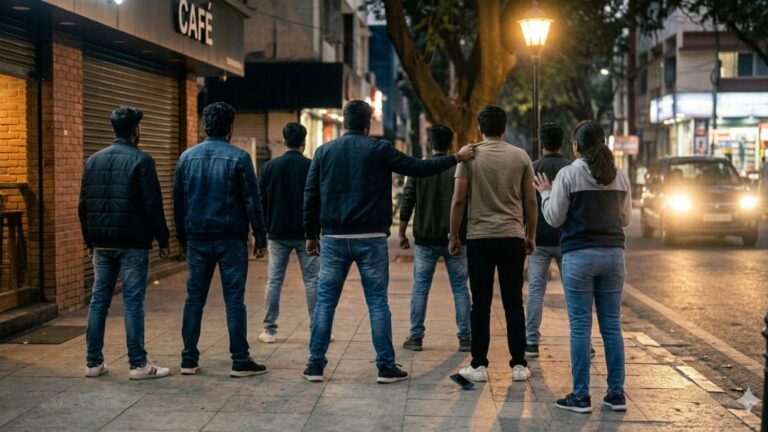
New Delhi, April 15, 2026: A shocking incident of mob violence was witnessed in the Kanaka Nagar area of Bengaluru recently, where a woman and two men were subjected to a physical assault by a group of local youths. The altercation is reported to have originated when the trio was observed smoking outside a cafe during the late hours of Sunday night. A viral video of the confrontation has since been widely circulated, depicting the group of seven to eight assailants chasing the victims onto the road and attacking them.
The footage, which was recorded by a nearby resident and shared on social media, shows the situation escalating rapidly from a verbal dispute to physical hooliganism. It is noted that the victims’ mobile phones were also allegedly smashed during the scuffle to prevent the recording of the event. This act of “moral policing” has sparked an intense debate regarding the safety of citizens and the limits of public interference in personal habits.
Police Intervention and Legal Action
Despite the absence of a formal complaint from the victims, a suo motu case was registered by the DJ Halli police on Monday following the widespread outrage triggered by the video. It is understood that the authorities are utilizing CCTV footage from the surrounding area to identify the individuals involved in the assault. The woman accompanying the two men was reportedly slapped during the chaos, though it is clarified that no serious injuries were sustained by the trio.
The police have emphasized that violence cannot be justified under the pretext of public decorum or religious sentiment. Efforts are currently being made to trace the accused, who are believed to be residents of the local neighborhood. The incident has been classified by law enforcement as a clear case of assault and criminal intimidation, regardless of the initial provocation cited by the mob.
The viral nature of the clip has highlighted a significant divide in public opinion across various digital platforms. While the majority of users have condemned the brutality of the mob, it is observed that a section of the internet has attempted to justify the assault as a necessary measure against public smoking. These conflicting views have further fueled the conversation regarding the rise of vigilantism in urban spaces.
As the investigation progresses, the recovered electronic evidence is expected to provide a clearer sequence of the night’s events. The streets of Bengaluru, often regarded as a hub of modern values, are being scrutinized once again for the safety of its nightlife. It is concluded that while public smoking may be a matter of regulatory debate, the resort to mob violence remains an inexcusable violation of law and order.
New Delhi, April 15, 2026 — The Indian equity markets witnessed a spectacular “relief rally” on Wednesday, April 15, 2026, as the benchmark BSE Sensex surged by over 1,400 points in intraday trade. This sharp rebound comes after a period of intense volatility, primarily driven by optimism that the United States and Iran are returning to the negotiating table to prevent a full-scale energy crisis.
The market sentiment was further bolstered by a significant cool-off in global crude oil prices, which had recently breached the psychological $100 mark. For an oil-dependent economy like India, the prospect of de-escalation in the Middle East is a major macro-economic tailwind.
Market Performance at a Glance
By mid-morning, the indices showed broad-based buying across sectors:
BSE Sensex: Up 1,422.85 points (approx. 1.85%) to hit an intraday high of 78,270.42.
NSE Nifty 50: Climbed 438.25 points to reclaim the 24,200 level.
India VIX: The “fear gauge” cooled down by nearly 8%, indicating reduced investor anxiety.
The rally wasn’t limited to blue-chip stocks. The Nifty MidCap and Nifty SmallCap indices outperformed the benchmarks, trading 2.16% and 2.36% higher, respectively, as retail investors rushed back into the broader market.
The Catalyst: A “Second Chance” for Peace
The primary driver for today’s market exuberance is the reported resumption of diplomatic engagement between Washington and Tehran. Earlier this week, markets had plummeted after the first round of talks in Islamabad collapsed, leading to fears of a naval blockade in the Strait of Hormuz—a chokepoint responsible for 20% of the world’s oil supply.
However, fresh reports of a “second round” of high-level discussions have shifted the narrative from war to diplomacy.
“The market was pricing in a worst-case scenario on Monday. Today’s jump is a classic case of ‘short-covering’ and renewed hope. If the US and Iran find a middle ground, the biggest risk premium on global inflation disappears,” says a senior equity strategist at a leading brokerage.
Crude Oil: The $100 Relief
India imports nearly 85% of its crude oil requirements, making the Sensex highly sensitive to Brent crude prices. After surging past $103 per barrel following the breakdown of talks on Monday, Brent crude fell back below the $100 per barrel mark today.
The drop in oil prices has several positive implications for India:
Inflation Control: Lower fuel prices reduce transportation costs, helping to cool down food and FMCG prices.
Fiscal Health: A lower oil import bill strengthens the Indian Rupee, which had recently touched a record low of ₹92 per USD.
Corporate Margins: Sectors like Aviation, Paints, and Chemicals—where oil is a primary input—are seeing their stock prices surge as margin pressure eases.
Sectoral Gainers: Who is Leading the Charge?
The rally was visible across almost all sectors, but a few stood out:
1. Banking & Financials (Bank Nifty)
Banks led the recovery, with heavyweights like HDFC Bank, ICICI Bank, and SBI seeing gains of 2–3%. Stability in the Middle East reduces the risk of interest rate hikes, which is a positive for the credit environment.
2. Metal & Industrial Commodities
Hindustan Copper shares rallied over 7% today. While oil fell, industrial metals like copper and nickel hit six-week highs. Investors are betting that if a war is avoided, global manufacturing and electrification themes (EVs and Power Grids) will accelerate.
3. Information Technology (IT)
After a weak start to the week, IT giants like TCS and Infosys found buyers at lower levels. Positive cues from the Nasdaq and a stabilizing global macro outlook provided the necessary cushion.
4. Auto & Consumer Discretionary
With fuel prices potentially stabilizing, auto stocks like Maruti Suzuki and Tata Motors rebounded. Investors expect that lower “pain at the pump” will prevent a slowdown in car sales during the current quarter.
Timeline of a Volatile Week
To understand today’s 1,000-point jump, one must look at the roller-coaster events of the past few days:
Date
Event
Market Reaction
April 10 (Fri)
Hopes of a ceasefire begin.
Sensex jumps 918 points.
April 13 (Mon)
Islamabad talks fail; US blockade rumors.
Sensex crashes 700 points (1,600 intraday).
April 14 (Tue)
Ambedkar Jayanti (Market Holiday).
Global markets stabilize on talk of new negotiations.
April 15 (Wed)
Today’s Relief Rally.
Sensex jumps over 1,000 points in early trade.
The “Double Whammy” Risk Still Lingers
While today is a day for celebration on Dalal Street, analysts warn that the underlying issues are not yet fully resolved. The Indian economy has been facing a “double whammy” of high oil prices and a weakening Rupee.
LPG & LNG Crisis: India remains vulnerable to supply disruptions from Qatar, which provides nearly 50% of India’s Liquified Natural Gas (LNG). While talks are a positive sign, the physical supply chains through the Gulf remain tense.
The “Trump Factor”: The second Trump administration’s stance on global energy—prioritizing US production while remaining indifferent to price spikes—adds a layer of unpredictability to global oil markets.
What Should Investors Do?
Market experts suggest a “cautious optimism” approach. While the 1,000-point jump is a welcome sign of resilience, the market remains “event-driven.”
Key levels to watch:
Nifty Support: 23,770 remains a crucial floor.
Nifty Resistance: A decisive close above 24,500 would signal a return to a long-term bull market.
Expert Take:“Investors should focus on stock-specific opportunities in the banking and cyclical sectors. While the geopolitical news is currently positive, the earnings season is just around the corner. Quarterly results will eventually take over as the primary driver of stock prices,” notes Ajit Mishra, SVP of Research at Religare Broking.
Conclusion
Today’s market performance is a testament to the “buy on dips” mentality of the Indian investor. The 1,000-point surge in the Sensex has wiped out the losses of the previous session, bringing a sense of calm to the financial capital. However, all eyes remain fixed on the diplomatic cables between Washington and Tehran. For now, Dalal Street is betting on peace—and a cheaper barrel of oil.
New Delhi, April 15, 2026: A disturbing case of serial exploitation has been brought to light following the arrest of a man accused of trapping young women in fraudulent romantic relationships. It is reported that the suspect utilized social media and personal interactions to win the trust of his victims under the guise of love. Once a sense of intimacy was established, private moments were secretly recorded by the accused without the consent of the women involved.
These videos were subsequently used as leverage to extort money and maintain control over the victims. The calculated nature of the “love trap” has sent shockwaves through the community, highlighting the dangers of digital and emotional manipulation. It is noted by investigators that many of the affected individuals remained silent for months due to the fear of social stigma and the threat of their private content being leaked online.
The Crackdown on Digital Extortion
The arrest was made possible after a brave victim approached the local police station to report the ongoing harassment. A specialized team was immediately formed to track the suspect’s digital footprint and physical whereabouts. It is understood that several electronic devices, including mobile phones and storage drives containing objectionable material, were seized during the raid.
Upon further interrogation, it was revealed that the accused had targeted multiple women using the same modus operandi. The pattern of behavior suggests a predatory intent aimed at financial gain through psychological warfare. The police have emphasized that the identities of the complainants will be kept strictly confidential to encourage more victims of such “honey traps” to come forward.
The legal proceedings against the accused are currently underway under the relevant sections of the Bharatiya Nyaya Sanhita and the IT Act. It is argued by legal experts that such cases necessitate stringent punishment to serve as a deterrent for potential offenders. The public is being urged by authorities to exercise caution while sharing personal information or engaging in intimate digital interactions with individuals met online.
As the investigation continues, the recovery of more data from the seized devices is expected to reveal the true scale of the operation. This incident serves as a grim reminder of the vulnerabilities inherent in the digital age. It is concluded that while the suspect is now in custody, the emotional recovery of the survivors remains a primary concern for local support groups and counselors.
New Delhi, April 15, 2026: A poignant and beautiful moment was recently shared on social media by Zanai Bhosle, the granddaughter of the late legendary playback singer Asha Bhosle. In a video that has since achieved viral status, the young artist is seen lip-syncing to one of her grandmother’s most iconic and timeless melodies. The clip has resonated deeply with fans across the globe, serving as a heartfelt tribute to the Queen of Indipop, who passed away on April 12, 2026.
The performance was praised by thousands of viewers for its grace and emotional depth. It is often remarked that the resemblance between the two generations is striking, not just in appearance but in the delicate nuances of their expressions. The video has been viewed as a bridge between the golden era of Indian music and the emerging talent of the current generation.
Carrying Forward a Glorious Legacy
The emotional weight of the video is amplified by the close bond that was shared between Zanai and Asha Bhosle. It is noted that the legendary singer was not just a grandmother but also a mentor to Zanai, who began her own musical journey at a very young age. This digital tribute is being interpreted as a promise by the younger Bhosle to keep the family’s artistic flame burning brightly.
Public reaction to the post has been overwhelmingly supportive, with many celebrities and music enthusiasts leaving heartfelt comments. It is argued that such gestures are essential in keeping the legacy of India’s musical icons alive in the hearts of the youth. The choice of the song, which remains unnamed but instantly recognizable to fans, was lauded for its ability to evoke nostalgia and admiration simultaneously.
Beyond her viral social media presence, Zanai is also being prepared for a significant professional transition. It is reported that her big-screen debut has been scheduled for the historical epic The Pride of Bharat – Chhatrapati Shivaji Maharaj, where she will portray Rani Sai Bhonsale. This upcoming project, combined with her musical background, positions her as a versatile talent to watch in the coming years.
The fascination surrounding the lip-sync video serves as a testament to the enduring power of Asha Bhosle’s voice. As the footage continues to be shared across platforms, it is concluded that the “Bhosle magic” is far from fading. Instead, it is being reimagined through the eyes and voice of a granddaughter who clearly holds her heritage in the highest regard.
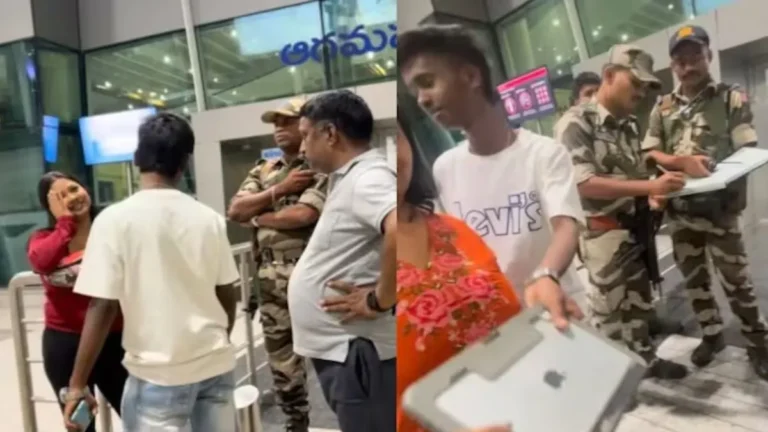
New Delhi, April 15, 2026: A moment of intense panic was experienced recently by a traveler at Tirupati Airport when she realized her valuable iPad had been left behind. The incident, which has gained significant traction online, unfolded after the passenger, identified as Rimjhim, had already exited the terminal and traveled nearly four kilometers away. It was only then that the absence of the electronic device was noticed, sparking an immediate sense of distress and concern.
The realization that a primary communication and work tool might be lost for good is a nightmare for any modern traveler. In the viral footage shared on social media, the initial anxiety felt by the passenger is vividly recounted. It is often remarked that losing high-value items in crowded transit hubs can be a hopeless situation, yet this story took a remarkably positive turn.
The CISF Steps into Action
Upon discovering the loss, the traveler and her companions quickly returned to the airport to report the missing device to the Central Industrial Security Force (CISF). The request for assistance was met with immediate professionalism and urgency by the personnel on duty. It is documented that a search was initiated promptly, utilizing the security protocols established for lost and found items within the terminal premises.
To the passenger’s immense surprise and relief, the iPad was successfully recovered within just ten minutes of being reported. The swiftness of the recovery has been highlighted as a testament to the vigilance and efficiency of the airport’s security staff. The moment the device was returned to the traveler, her expression was captured transitioning from worry to sheer joy, a scene that has warmed the hearts of many viewers.
The video has served as a platform for the traveler to express her deep gratitude toward the CISF team. It was stated by her that the helpfulness and quick response of the officers turned a potential disaster into a minor inconvenience. This heartwarming interaction has resonated with thousands of social media users, many of whom have shared similar stories of assistance provided by Indian airport security forces.
As the clip continues to circulate, the professionalism of the CISF is being widely applauded across digital platforms. The incident serves as a reassuring reminder of the safety and support available to passengers at major Indian transit points. It is concluded that while items may occasionally be forgotten, the dedication of the security personnel ensures that they are rarely lost forever.
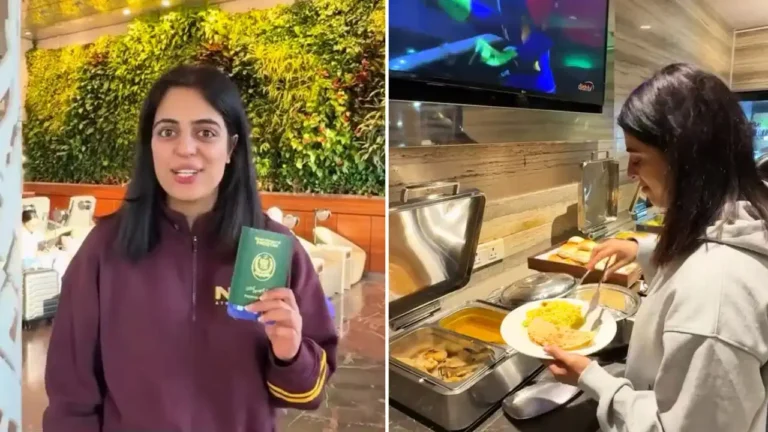
New Delhi, April 15, 2026: An insightful travel account has been shared by a Pakistani woman who recently documented her 10-hour layover at Mumbai’s Chhatrapati Shivaji Maharaj International Airport. The video, which has achieved significant viral status, features the traveler, identified as Wanzipa, during her journey from London to Nepal. It was admitted by her that a considerable amount of anxiety was felt initially due to the historical complexities associated with traveling on a Pakistani passport through India.
The digital community was captivated as she described the moment she realized her connection point was Mumbai. It is frequently noted that such transit experiences are often viewed with apprehension, yet the footage depicts a scene of calm and professional efficiency. The video has been hailed by viewers as a refreshing bridge between two neighboring nations, highlighting personal experiences over political narratives.
Seamless Security and Unexpected Calls
The arrival at the international terminal was described by the traveler as surprisingly straightforward. It was clarified that no immigration check was required as she remained within the transit area for the duration of her stay. Despite her initial fears, the security process was characterized as smooth and uneventful, allowing her to settle into the airport’s facilities without delay.
A brief moment of concern was recounted when a WhatsApp call was received from an Indian number regarding a “suspicious item” in her luggage. It was later revealed that the item in question was merely a power bank, which she was politely asked to remove from her checked bag. This interaction was praised by her for the professional and lovely manner in which it was handled by the airport staff.
A significant portion of the layover was spent within an airport lounge, where the traveler managed to rest and dine. It was mentioned in the post that she left the lounge feeling “stuffed” and well-cared for, contradicting her initial expectations of a difficult transit. The airport staff were collectively commended for their kindness and supportive behavior throughout the ten-hour period.
The viral video has prompted a surge of positive responses from Indian social media users, many of whom extended warm welcomes and encouraged her to visit the country as a tourist in the future. It is concluded by the traveler that transiting through India is indeed a viable and pleasant experience for Pakistani nationals. The footage remains a testament to the power of personal storytelling in reshaping cross-border perceptions.
New Delhi, April 15, 2026: For over a year, the Indian film industry and audiences worldwide have been buzzing with a single word: Ramayana. Directed by Nitesh Tiwari and backed by the ambitious vision of Namit Malhotra’s Prime Focus, the project is being hailed as the most significant cinematic retelling of the ancient Indian epic. However, a recent update has left fans feeling a mix of excitement and a tiny bit of “FOMO” (fear of missing out).
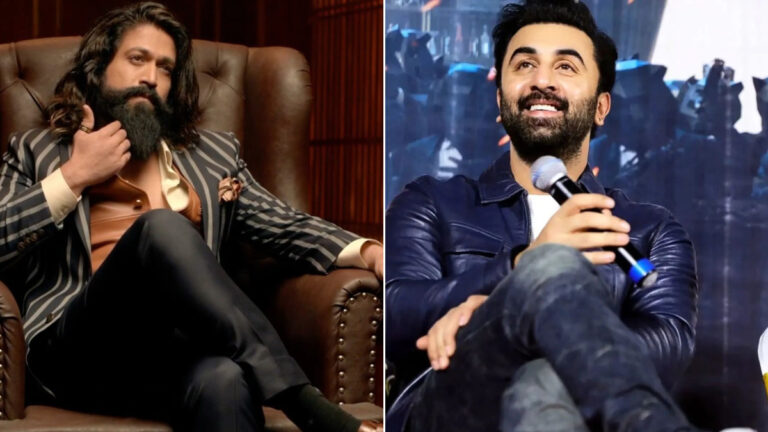
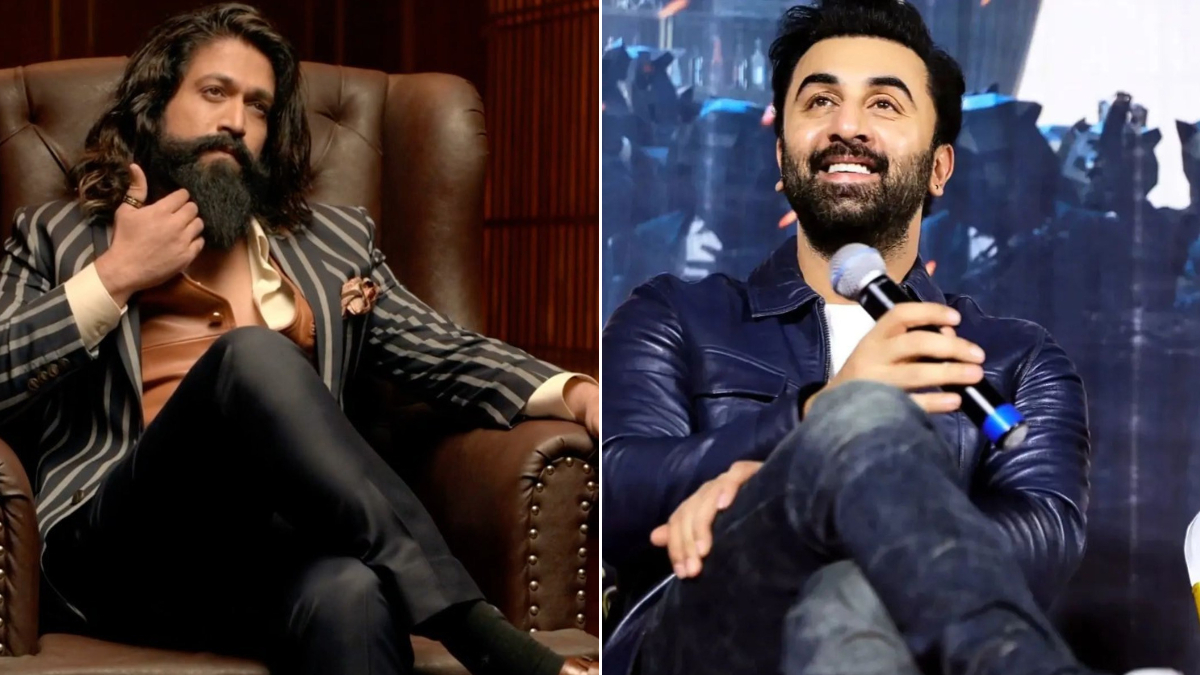
In a major revelation during a promotional event at CinemaCon 2026 in Las Vegas, Kannada superstar Yash, who portrays the formidable Ten-Headed King Ravana, confirmed that he and Ranbir Kapoor (playing Lord Rama) will not share a single frame in the first installment of the franchise.
While the news might be a tough pill to swallow for those eager to see the two titans clash, the decision highlights a deliberate and grand narrative strategy. Here is everything you need to know about the current status of the film, the reasoning behind this creative choice, and what to expect from this magnum opus.
The Story Behind the Split
The logic behind keeping the protagonists apart in Ramayana: Part 1 is rooted in the structure of the original Valmiki Ramayana. Traditionally, the early chapters of the epic focus on the parallel lives of the characters before their paths collide.
Speaking to the press, Yash explained:
“Interestingly, we both have never come together on screen in this film. As you all know, it’s a two-part film. In the first part, as Ravana, I have my own kingdom, and Rama has his own. Our stories run parallel as the foundation is being built.”
The first film is expected to cover the Bala Kanda and Ayodhya Kanda, focusing on Rama’s birth, his training under Vishwamitra, his marriage to Sita (played by Sai Pallavi), and his subsequent exile. Simultaneously, the film will delve into the rise of Ravana in Lanka, establishing him not just as a “villain” but as a complex, multifaceted ruler—a scholar, a warrior, and a devotee.
Building the “Yash-Ranbir” Dynamic
Despite the lack of shared screen time in the first part, the chemistry between the two stars is reportedly electric behind the scenes. Yash was quick to dismiss any concerns about their on-screen dynamic being affected by the separation.
“We have met a couple of times, and Ranbir is such a fabulous actor,” Yash noted. “There is a deep mutual respect. When you are out to do something as ambitious as this, chemistry isn’t even an issue because our visions are completely aligned.”
Insiders suggest that this “distance” is actually a calculated move by Nitesh Tiwari to build unbearable tension. By the time Part 2 arrives in Diwali 2027, the audience will be so invested in both characters’ individual journeys that their eventual confrontation will feel like a historic event rather than just another action sequence.
A Global Stage: Ramayana at CinemaCon 2026
The film’s presence at CinemaCon in Las Vegas marks a turning point for Indian cinema. Standing shoulder-to-shoulder with Hollywood giants like Dune: Part Three and Avengers: Doomsday, Ramayana is being marketed as a global IMAX spectacle.
Key Highlights from the Showcase:
Visual Grandeur: The VFX is being handled by DNEG, the 8-time Oscar-winning studio. Attendees at CinemaCon were treated to private previews showing the sheer scale of the Ayodhya and Lanka sets.
Musical Powerhouse: The soundtrack is a historic collaboration between legendary Indian composer A.R. Rahman and Hollywood titan Hans Zimmer.
Character Artworks: Posters displayed at the venue revealed a first look at Ranbir Kapoor’s “Maryada Purushottam” Rama—radiating calm and divinity—contrasted with Yash’s Ravana, which is being described as “regal, intimidating, and deeply philosophical.”
The Massive Ensemble Cast
While the focus remains on the Rama-Ravana dynamic, Ramayana boasts one of the most expensive and talented casts ever assembled in India:
Actor
Role
Ranbir Kapoor
Lord Rama / Parshurama (Dual Role)
Sai Pallavi
Goddess Sita
Yash
Lankesh (Ravana)
Sunny Deol
Lord Hanuman
Ravi Dubey
Lakshman
Lara Dutta
Kaikeyi
Kunal Kapoor
Indra
Reports also suggest that Ranbir Kapoor will be seen in a dual role, portraying both Lord Rama and Lord Parshurama. This addition suggests that the film will explore the deeper mythological connections within the Vishnu avatars, adding another layer of depth to Ranbir’s performance.
Why “Part 1” is Crucial
Some fans might wonder: If they don’t fight until Part 2, is Part 1 just a buildup? According to director Nitesh Tiwari, the goal is authenticity. Previous cinematic adaptations often rushed through the early years to get to the war. Tiwari’s version aims to let the audience live through the emotional weight of Rama’s exile and the political complexities of Ravana’s Lanka.
By the time the credits roll on Ramayana: Part 1, the stage will be set for the Aranya Kanda (the forest years) and the eventual abduction of Sita, which will serve as the explosive cliffhanger leading into the second film.
Release Timeline
The wait is officially on a countdown. The makers have locked in the following dates:
Ramayana: Part 1 – Diwali 2026
Ramayana: Part 2 – Diwali 2027
The strategy of a one-year gap mirrors the release patterns of global franchises like Dune or Spider-Verse, ensuring that the momentum stays high without exhausting the audience.
The Verdict: Is it worth the wait?
While it may be disappointing that we won’t see Ranbir and Yash “face-off” this year, the confirmation of their separate storylines suggests a film that values character development over cheap thrills. Yash’s Ravana is not being portrayed as a cardboard-cutout villain; he is being given the space to be the protagonist of his own story in Part 1.
When these two finally meet on the battlefield of Lanka in 2027, it won’t just be a fight between two actors—it will be the culmination of two epic journeys. For now, fans can look forward to the “Rama” teaser, which is slated for a worldwide digital premiere soon.
New Delhi, April 15, 2026: A wave of indignation has been triggered across social media following the emergence of a viral video from an IPL 2026 match. In the footage, a cricket fan is observed peeling back a localized price sticker from a standard packet of chips. It was discovered that a label for ₹100 had been strategically placed over the original Maximum Retail Price (MRP) of ₹50, effectively doubling the cost for the unsuspecting consumer.
This specific incident is reported to have occurred during the clash between Royal Challengers Bengaluru and Rajasthan Royals at the Barsapara Cricket Stadium. The clip has since been circulated by thousands, serving as a catalyst for a broader debate regarding the exploitation of spectators within sports venues. It is argued by many that such pricing tactics represent a blatant disregard for consumer rights and fair trade practices.
Public Outcry and the Stadium Experience
The term “scam” has been frequently utilized by the online community to describe the inflated costs of snacks and beverages inside the stadiums. It is noted that outside food is strictly prohibited at most venues, leaving fans with no alternative but to purchase from official vendors. This captive market dynamic is being criticized for allowing sellers to impose predatory prices on essential items like water and snacks.
Similar grievances have been aired by attendees of other matches, including those at the Ekana Stadium in Lucknow. Reports have surfaced of ₹20 water bottles being sold for ₹100, while modest snack packets are routinely marked up by 300% to 400%. The sentiment that “the future of live sports is becoming unaffordable” is being echoed by frustrated fans who feel that their loyalty to the game is being monetized unfairly.
As the controversy gains momentum, demands are being made for stricter monitoring of food stalls by the IPL governing body and local authorities. It is suggested that transparent pricing models should be enforced to ensure that the excitement of the game is not overshadowed by the sting of overcharging. The discrepancy between the printed MRP and the final sale price is viewed as a legal loophole that requires immediate closure.
Ultimately, the viral video has highlighted a significant friction point in the modern fan experience. While the high-octane matches of 2026 continue to draw massive crowds, the sustainability of such commercial practices is being questioned. Until reforms are implemented, it is expected that the “chip scam” will remain a focal point of discussion for every cricket enthusiast heading to the stands.
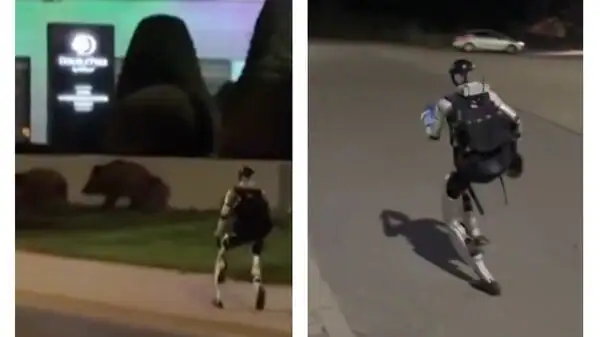
New Delhi, April 15, 2026: A surreal spectacle was captured on video recently in Warsaw, where a high-tech robot was witnessed chasing a group of wild boars through the city streets. The footage has been shared widely across social media, where it quickly achieved viral status among global audiences. This peculiar encounter is being hailed as a sign that the “wild future” of urban management has finally arrived.
The mechanical unit was observed navigating the pavement with precision as it steered the startled animals away from busy intersections. It is reported that no injuries were sustained by the boars or the onlookers during the operation. This event marks a significant shift in how human-wildlife conflicts are being handled in modern metropolitan environments.
The Evolution of Municipal Wildlife Control
Traditional methods of animal control are being replaced by autonomous solutions in several European districts. In the Warsaw incident, the robot was utilized to provide a non-violent deterrent to the boars, which have become a common sight in Polish residential areas. These machines are designed to be operated remotely or programmed with advanced AI to manage unexpected biological intrusions.
Public reaction to the video has been characterized by a mix of fascination and mild concern. It is argued by many netizens that the sight of a robot patrolling for wildlife feels like a scene extracted directly from a futuristic film. Despite the humor found in the “robot vs. boar” narrative, the efficiency of the machine is being praised by local authorities who seek to minimize human-animal contact.
The integration of robotics into public safety is being accelerated by the success of such deployments. It is expected that more autonomous units will be commissioned to handle tasks that were previously deemed too unpredictable for machines. The data collected during this pursuit is likely being analyzed to refine the movement patterns of future urban drones and ground units.
As the video continues to circulate, the conversation has shifted toward the ethics and practicalities of an automated society. The streets of Warsaw are now being viewed as a testing ground for the coexistence of nature and high-level technology. It is concluded by many that while the future may indeed be “wild,” it will also be meticulously monitored by the machines we create.