Home Blog Page 199

2026 Hyundai Verna Facelift Launched: New Look, More Tech

0

New Delhi, March 10, 2026: The sedan segment in India is witnessing a renewed spark as Hyundai Motor India has officially launched the 2026 Hyundai Verna facelift. With a starting price of ₹10.98 lakh (ex-showroom), the updated Verna aims to solidify its position against fierce rivals like the Volkswagen Virtus, Skoda Slavia, and Honda City.

This mid-life refresh brings a more mature design, a restructured variant lineup, and several first-in-segment features that elevate the cabin experience.

Exterior Design: Shaper and More Sophisticated

The current generation of the Verna was known for its “Parametric Dynamics” and polarizing looks. The 2026 facelift addresses this with subtle yet impactful tweaks:

  • Front Fascia: The most prominent change is the updated black chrome radiator grille, which now feels wider and better integrated with the bumper. The LED projector headlamps have been redesigned with a cleaner glass housing for a more premium look.
  • Profile & Wheels: While the iconic fastback silhouette remains, the car now rides on new 16-inch diamond-cut alloy wheels that add to its athletic stance.
  • Rear Aesthetics: The rear bumper has been revised with a new silver-finished diffuser element. The signature connected LED taillamps remain but are now complemented by a more pronounced spoiler on higher trims.
  • New Colors: Hyundai has introduced two sophisticated paint options: Classy Blue and Titan Grey Matte.

Interior & Technology: A Digital Leap

Inside, the 2026 Verna moves closer to Hyundai’s global design language seen in models like the Ioniq 5.

  • New Control Center: The cabin features a new three-spoke D-cut steering wheel featuring the updated “Morse Code” Hyundai logo. The dashboard continues to house the impressive dual 10.25-inch screens for infotainment and the digital instrument cluster.
  • Segment-First Features: Hyundai has packed the sedan with convenience, including an 8-way power-adjustable driver seat with memory and “welcome retract” function, and a 4-way power-adjustable co-driver seat with a unique “electric walk-in” device for rear-seat passengers.
  • Comfort Upgrades: For the first time, the Verna offers rear window sunshades and an in-built dashcam as part of the factory package.

Performance: Proven Powerhouses

Mechanically, the Verna remains unchanged, continuing to offer the most powerful engine in its class:

EngineDisplacementPowerTorqueTransmissions
1.5L MPi Petrol$1497\text{ cc}$$115\text{ PS}$$144\text{ Nm}$6-speed MT / IVT
1.5L Turbo GDi$1482\text{ cc}$$160\text{ PS}$$253\text{ Nm}$6-speed MT / 7-speed DCT

The Turbo GDi remains the enthusiast’s choice, offering a $0$ to $100\text{ km/h}$ sprint in approximately 8.1 seconds.

Safety First: 7 Airbags and Level 2 ADAS

Safety has been a major focus for this update. Along with its 5-star Global NCAP rating, the 2026 Verna now offers:

  • 7 Airbags (standard on higher trims, 6 on others).
  • 360-degree Camera with a Blind View Monitor.
  • SmartSense Level 2 ADAS featuring over 17 functions, including Forward Collision Warning, Lane Keeping Assist, and Smart Cruise Control with Stop & Go.

Variant-Wise Pricing (Ex-Showroom)

Hyundai has renamed the trims to align with its new global nomenclature:

  • HX2 (Base): ₹10.98 Lakh
  • HX4: ₹12.24 Lakh
  • HX6 / HX6+: ₹13.19 Lakh – ₹15.02 Lakh
  • HX8 (Mid-High): ₹14.88 Lakh – ₹17.62 Lakh
  • HX10 (Top): ₹17.15 Lakh – ₹18.25 Lakh (Turbo DCT)
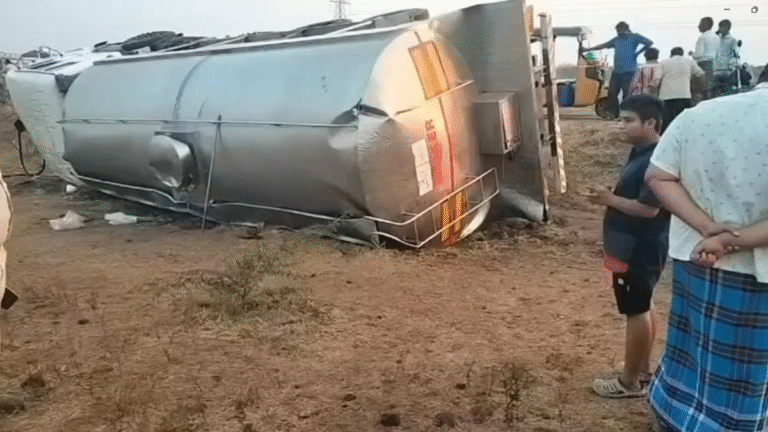
Ghee Tanker Overturns Near Alipiri; Supply to Tirumala Temporarily Disrupted

0

New Delhi, March 10, 2026 – A major traffic disruption occurred on the arterial road leading to the Tirumala hills early Tuesday morning after a tanker carrying thousands of liters of pure ghee overturned near the Alipiri forest check post. The ghee, intended for the preparation of the world-famous Srivari Laddu prasadam, spilled across the roadway, making the stretch dangerously slick for pilgrims and local commuters.

Details of the Incident

The incident took place around 5:30 AM when the heavy vehicle, traveling from a dairy processing unit in neighboring Tamil Nadu, was negotiating a sharp curve. According to preliminary reports from the local police, the driver lost control of the vehicle, causing it to veer off the path and flip onto its side.

Fortunately, no fatalities were reported. The driver and the cleaner sustained minor injuries and were immediately rushed to the Ruia Government General Hospital for treatment. They are currently reported to be in stable condition.

Impact on Traffic and Pilgrims

The spill created an immediate hazard for two-wheelers and pedestrians heading toward the foot of the hills.

  • Road Closures: Police cordoned off the affected stretch for several hours to prevent skidding accidents.
  • Diversions: Traffic was diverted through alternate internal roads, causing significant delays for pilgrims scheduled for early morning darshan.
  • Cleanup Operations: The Tirumala Tirupati Devasthanams (TTD) fire department and municipal workers arrived promptly, using sawdust and high-pressure water jets to clear the viscous residue from the tarmac.

TTD Response and Supply Chain Concerns

The TTD, which manages the hill shrine, was quick to address concerns regarding the potential shortage of ghee for the temple’s massive kitchen operations.

“While the loss of the consignment is significant, we have sufficient buffer stocks in our marketing godowns to ensure that the production of Laddus remains unaffected. We are working to ensure the road is safe for pilgrims as a priority,” a senior TTD official stated.

The authorities have ordered an inquiry into the incident to determine if mechanical failure or driver fatigue was the primary cause. This mishap comes at a time when the TTD has been under the spotlight regarding the quality and sourcing of ghee, following recent administrative shifts and quality control reforms.

Current Status

By late morning, the overturned tanker was uprighted using heavy-duty cranes, and the road was partially reopened to light vehicles. Officials have urged devotees traveling by road to exercise caution and adhere to speed limits, especially during the early morning hours when visibility and road grip can be unpredictable.

Quiet Luxury & Maharashtrian Roots: The Arjun-Saaniya Wedding Story

New Delhi, March 10, 2026: The union of cricketer Arjun Tendulkar and entrepreneur Saaniya Chandhok, which took place on March 5, 2026, has been hailed as a masterclass in “subtle grandeur.” While the guest list featured the crème de la crème of Indian society—from the Ambanis and Bachchans to cricketing legends like MS Dhoni—the planners behind the scenes have revealed that the heart of the wedding was surprisingly grounded and intimate.

Vismay Chokshi and Gehna Alimchandani, the creative minds behind Eternity by Trinity, shared exclusive insights into how they brought this high-profile vision to life by balancing heavy security with a warm, family-first atmosphere.

A Vision of “Restraint and Roots”

According to the planners, the brief from the Tendulkar and Chandhok families was Refreshingly clear: honour tradition without being excessive. > “From our first conversation, the family was firm. They wanted a celebration rooted in their cultural identities, not something that felt performative,” the planners shared.

The strategy was to divide the celebrations into two distinct cultural chapters:

  • The Punjabi Mehendi: A vibrant “Carnival Bazaar” held at Gallops, Mahalaxmi Racecourse, reflecting Saaniya’s roots.
  • The Maharashtrian Wedding: A serene, traditional ceremony at The St. Regis, Mumbai, honoring Arjun’s heritage.

The “SaaJ” Wedding: A 270-Degree Experience

The wedding ceremony, themed “SaaJ” (a portmanteau of Saaniya and Arjun), was designed to be immersive. Instead of a traditional stage, the planners installed a 270-degree center mandap. This allowed the 1,200 guests to feel like active participants in the rituals rather than mere spectators.

Decor and Atmosphere

The aesthetic leaned away from flashy gold and toward “quiet luxury”:

  • Florals: Expanses of baby’s breath layered with blush pinks, off-whites, and fresh greens.
  • Lighting: Muted gold accents created a dreamlike, “cloud-like” environment.
  • Music: The sanctity of the rituals was heightened by live performances from Harshdeep Kaur (for the bride’s entry) and Shankar Mahadevan (for the Mangalashtak).

The Traditional “Pangat”

One of the most non-negotiable elements for the Tendulkar family was the Maharashtrian Pangat—a traditional sit-down feast where guests are served in rows. Coordinating this for over a thousand high-profile guests was a logistical feat, featuring delicacies like Ukdiche Modak, Puran Poli, and Aamras.

Security Meets Hospitality

Planning a wedding for the son of “The God of Cricket” required Fort Knox-level security without making guests feel restricted. The planners implemented several modern protocols:

  • QR Code Entry: Each guest received a personalized QR code for seamless, secure access.
  • Strict NDAs: Every vendor and staff member was bound by non-disclosure agreements to protect the couple’s privacy.
  • Guest Journey: Despite the scale, the planners focused on the “guest journey,” ensuring that from the moment a dignitary arrived, they felt the warmth of a family home rather than a corporate event.

Who is Saaniya Chandhok?

While Arjun is a household name as a left-arm pacer (recently traded to the Lucknow Super Giants), Saaniya Chandhok brings her own impressive legacy. A graduate of the London School of Economics, she is a successful entrepreneur in the pet-care industry and the founder of Mr. Paws, a luxury pet spa. She is also the granddaughter of Ravi Ghai, the chairman of the Graviss Group (the powerhouse behind Baskin-Robbins India).

A Partnership of Families

The wedding planners noted that the Tendulkar family was deeply involved in every decision, from approving color palettes to discussing the exact texture of the food.

“It wasn’t about creating ‘wow’ moments for the media,” Chokshi reflected. “It was about creating meaningful ones for the family. The chemistry was immediate because they were so grounded and knew exactly what they wanted: a celebration of two cultures joining as one.”

The Inspiring Journey of Tawseef Ahmad Ganie, Pulwama First IAS Officer

0

New Delhi, March 10, 2026: The story of Tawseef Ahmad Ganie is not just a tale of academic success; it is a narrative of resilience, quiet determination, and the breaking of long-standing glass ceilings. By securing All India Rank (AIR) 254 in the Union Public Service Commission (UPSC) Civil Services Examination, Tawseef has etched his name in history as the first resident of Pulwama district, Jammu & Kashmir, to join the prestigious Indian Administrative Service (IAS).

In a region often defined by its challenges, Tawseef’s achievement serves as a beacon of hope for thousands of aspirants in the Valley.

A Humble Beginning in Chittrigam

Tawseef hails from Chittrigam, a small village in the Pulwama district. Growing up in a modest household, his upbringing was rooted in the values of hard work and perseverance. Unlike many who flock to elite coaching hubs in Delhi or Chandigarh, Tawseef’s foundation was built on local soil.

His journey began in government schools, where he displayed an early aptitude for learning. He later pursued his higher education at the University of Kashmir, specializing in Political Science. It was during his post-graduation that the seed of civil services was planted—not just as a career path, but as a means to bring tangible change to his community.

The Strategy Behind AIR 254

Cracking the UPSC exam—widely considered one of the toughest in the world—requires more than just intelligence; it requires a surgical approach to the syllabus. Tawseef’s strategy was built on three pillars:

  • Consistency over Intensity: Rather than burning out with 18-hour study days, Tawseef focused on maintaining a steady rhythm of 8 to 10 hours of quality study.
  • Political Science Expertise: Leveraging his academic background, he chose Political Science and International Relations (PSIR) as his optional subject. This allowed him to bridge his university knowledge with the UPSC requirements.
  • Limited Resources, Maximum Revision: In an age of information overload, Tawseef stuck to standard textbooks and current affairs journals. He believed in reading one book ten times rather than ten books once.

Overcoming the “Valley Challenges”

The path to the IAS is difficult for anyone, but for a candidate from Pulwama, the hurdles are often unique. From frequent internet shutdowns that hampered digital learning to the general socio-political volatility of the region, the distractions were many.

However, Tawseef remained undeterred. When the internet was down, he turned to his physical library. When the world outside was loud, he found silence in his books. His success is a testament to the fact that geographic location and external circumstances do not dictate one’s destiny.

Impact on the Community

Tawseef’s feat has triggered a wave of celebration across South Kashmir. For Pulwama, a district that has often made headlines for different reasons, Tawseef has provided a new narrative—one of intellectual excellence and administrative leadership.

He is now a local hero, proving to the youth that the “steel frame” of Indian administration is accessible to those who are willing to put in the sweat. His entry into the IAS is expected to inspire a surge in civil service coaching and interest within the district.

Key Takeaways for UPSC Aspirants

Tawseef’s journey offers several lessons for future candidates:

  1. Start Early, Stay Focused: Build a strong foundation during your graduation.
  2. Choose the Right Optional: Pick a subject you are passionate about, not just what is “trending.”
  3. Self-Belief: Confidence is half the battle won in the personality test (interview) stage.

As Tawseef Ahmad Ganie prepares to take on his responsibilities as a civil servant, he carries with him the dreams of a village and the pride of a district. His story confirms a simple truth: Hard work, when paired with a clear vision, eventually finds its reward.

Smart Habits: Why Driving Less is the Ultimate Fuel-Saving Strategy

0

New Delhi, March 10, 2026: In an era of fluctuating energy prices and increasing environmental consciousness, the mantra “drive less to save more has transitioned from a suggestion to a financial necessity. While vehicle efficiency has improved significantly over the last decade, the most effective way to slash your monthly overhead remains a simple reduction in total mileage.

The Financial Ripple Effect

Reducing your time behind the wheel offers benefits that go far beyond the gas pump. When you choose to leave the car in the garage, you are effectively:

  • Extending Vehicle Longevity: Less mileage means slower depreciation and fewer trips to the mechanic for oil changes, tire rotations, and brake replacements.
  • Lowering Insurance Premiums: Many insurance providers offer “low-mileage discounts.” By staying under certain thresholds, drivers can negotiate significantly lower monthly rates.
  • Mitigating Market Volatility: Global oil markets are notoriously unstable. Driving less provides a personal “buffer,” making you less vulnerable to sudden price spikes at the station.

Practical Alternatives for the Modern Commuter

Adopting a “less is more” approach doesn’t mean sacrificing mobility. Strategic planning can make the transition seamless:

  1. Trip Chaining: Instead of three separate errands throughout the week, consolidate them into a single loop. This reduces “cold starts,” which are the least fuel-efficient moments for an internal combustion engine.
  2. The “Micro-Mobility” Shift: For trips under two miles, consider e-bikes or scooters. These methods are often faster in heavy traffic and eliminate the stress of parking.
  3. Active Commuting: Walking or cycling to local destinations serves a dual purpose: saving fuel and improving cardiovascular health.

Ultimately, the decision to drive less is a vote for both your wallet and the planet. By rethinking our relationship with the car, we can reclaim our time and our finances.

Diplomatic Breakthroughs: Signs That the War is Nearing Its End

After months of intense geopolitical tension and humanitarian concern, a series of strategic shifts and diplomatic signals suggest that the current conflict may finally be nearing its conclusion. While the path to peace is rarely a straight line, international observers are noting a distinct change in the atmospheric pressure of the negotiations.

Shifting Tides on the Ground

Warfare is as much about endurance as it is about strategy. Reports from the front lines indicate a mutual exhaustion of resources, leading to what analysts call a “strategic plateau.” Neither side currently possesses the momentum for a total decisive victory, which historically serves as the primary catalyst for serious seating at the peace table.

Key Indicators of an Approaching Resolution

Several factors are converging to suggest a ceasefire or a formal treaty may be on the horizon:

  • Third-Party Mediation: Influential neutral nations have stepped up their involvement, moving from rhetoric to tangible frameworks for a peaceful transition.
  • Economic Pressures: The global cost of the conflict—manifested in supply chain disruptions and energy shortages—has placed immense internal pressure on the warring parties to find an exit strategy.
  • Humanitarian Corridors: The recent success in establishing and maintaining stable corridors for aid is often a “litmus test” for the cooperation required for a permanent peace deal.

The Challenges of the “Final Mile”

While the end may be in sight, the final stages of a conflict are often the most delicate. Negotiators are currently grappling with the complexities of territorial integrity, reparations, and long-term security guarantees.

“Peace is not merely the absence of war, but the presence of a sustainable framework for the future,” notes a senior diplomatic correspondent.

As the world watches with bated breath, the hope is that the current de-escalation leads to a lasting stability that allows for the long process of reconstruction and healing to begin.

JEE Advanced 2026: IIT Roorkee Announces Exam Date; Registration Starts April 23

0

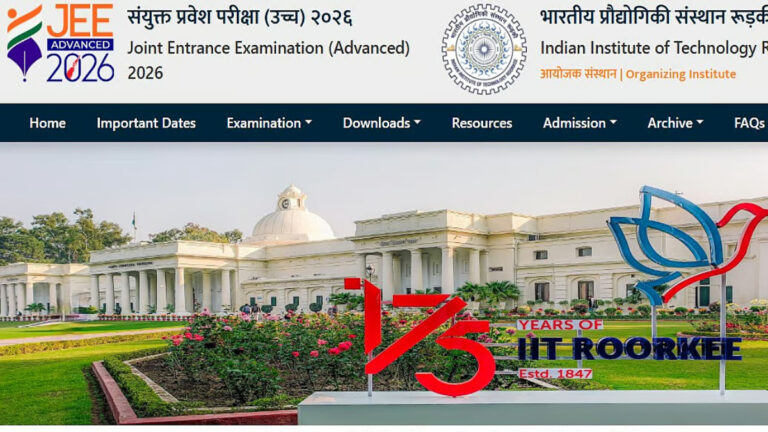
New Delhi, March 9, 2026: The roadmap to India’s most prestigious engineering institutions is now clear. IIT Roorkee, the organizing institute for the JEE Advanced 2026, has officially released the complete examination schedule. Aspirants aiming for a seat in the Indian Institutes of Technology (IITs) can now mark their calendars for the big day: Sunday, May 17, 2026.

The announcement brings a sense of urgency and clarity to the lakhs of students currently preparing for the JEE Main sessions. Here is a comprehensive breakdown of the key dates, eligibility rules, and application details you need to know.

Key Dates for Your Calendar

The registration process is strictly time-bound, and candidates are advised to complete their applications well before the deadline to avoid technical glitches.

EventDate
Registration for Foreign NationalsApril 6, 2026
Registration for Indian NationalsApril 23 – May 2, 2026
Last Date for Fee PaymentMay 4, 2026
Admit Card Download WindowMay 11 – May 17, 2026
JEE Advanced 2026 Exam DateMay 17, 2026 (Sunday)
Result DeclarationJune 1, 2026 (10:00 AM)

Eligibility Criteria: The “Top 2.5 Lakh” Rule

Not every student who clears JEE Main can sit for the Advanced stage. To be eligible for JEE Advanced 2026, candidates must meet the following criteria:

  • Performance in JEE Main: Only the top 2,50,000 successful candidates (including all categories) from JEE Main 2026 Paper 1 are eligible.
  • Age Limit: Candidates should have been born on or after October 1, 2001. SC, ST, and PwD candidates receive a 5-year relaxation (born on or after October 1, 1996).
  • Number of Attempts: A candidate can attempt JEE Advanced a maximum of two times in two consecutive years.
  • Class 12 Marks: Students must have appeared for their Class 12 (or equivalent) exams for the first time in either 2025 or 2026. They must also secure at least 75% aggregate marks (65% for SC/ST/PwD) or be in the top 20 percentile of their respective boards.

Examination Pattern

The exam will be conducted in Computer-Based Test (CBT) mode and consists of two mandatory papers. Both papers will feature sections on Physics, Chemistry, and Mathematics.

  • Paper 1: 9:00 AM to 12:00 PM
  • Paper 2: 2:30 PM to 5:30 PM

How to Apply

Once the portal opens on April 23, eligible candidates can follow these steps:

  1. Visit the official website: jeeadv.ac.in.
  2. Log in using your JEE Main 2026 Application Number and password.
  3. Fill in additional details, including choice of examination cities (you can select up to eight).
  4. Upload required documents (Class 10/Birth Certificate, Class 12 Marksheet, and Category Certificates).
  5. Pay the registration fee (₹3,200 for General/OBC-NCL; ₹1,600 for Female/SC/ST/PwD candidates).

With JEE Main Session 2 concluding on April 9, students will have roughly five and a half weeks of dedicated time to pivot their strategy toward the more complex, multi-concept problems that define the JEE Advanced.

US Memorial Dance Trend Sparks Global Debate Over Selective Criticism

0

New Delhi, March 9, 2026: — A short video clip filmed at one of the United States’ most solemn landmarks has ignited a firestorm of controversy, transcending beyond a simple debate on etiquette to expose deep-seated tensions over race, immigration, and digital accountability.

The viral video features an Indian-origin man, identified by online sleuths as Madhu Raju, and a female companion performing the popular “Don’t Rush Challenge” at the National World War II Memorial. What began as a routine attempt at social media engagement has spiraled into a international discussion about why certain demographics appear to face harsher scrutiny for “mainstream” influencer behavior.

The Incident: A Clash of Content and Commemoration

The World War II Memorial, situated on the National Mall, serves as a site of quiet reflection for the 16 million Americans who served and the 400,000 who died. The video shows the duo performing choreographed dance moves against the backdrop of the memorial’s granite columns.

Almost immediately, the clip was met with a wave of condemnation. Critics on X (formerly Twitter) and Instagram labeled the act an “absolute disgrace,” arguing that the site is a “place of sacrifice and silence, not a stage for TikTok dances.”

“My grandfather took a bullet in his leg during WWII. This memorial is a place of remembrance, not a set for the IT department to make socially awkward reels,” one viral comment read.

The Backlash: Doxxing and Deportation Threats

The reaction quickly escalated from criticism of the act to personal targeting. Online users tracked down Raju’s professional details, alleging he works as a Cloud Network Security Engineer in Texas. Calls for his termination were sent to his alleged employer, and many users tagged US immigration authorities, demanding his H-1B visa be revoked.

Raju has since deactivated his LinkedIn and Instagram accounts, and a dance studio in Dallas reportedly linked to him has also scrubbed its online presence.

The “Selective Outrage” Debate

As the backlash grew, a counter-narrative emerged. Many within the Indian diaspora and social media observers began asking: “Why only Indians?”

Supporters of the couple pointed out that the National Mall is frequently used as a backdrop for all manner of non-solemn activities—from elaborate wedding photoshoots and fitness influencer videos to other “dance challenges” performed by creators of various ethnicities.

Key points raised in the debate include:

  • Double Standards: Some users shared clips of white American influencers filming similar content at national monuments without facing calls for deportation or job loss.
  • The “H-1B” Label: Critics noted that the moment the dancers were identified as Indian-origin, the conversation shifted from “disrespect” to “immigration status,” suggesting a latent xenophobia.
  • Historical Context: Others reminded critics that India sent over 2.5 million soldiers to fight in World War II—the largest volunteer army in history—arguing that Indian-origin people have a historical connection to the memorial’s legacy.

A Growing Climate of Scrutiny

The intensity of the reaction comes at a sensitive time in the United States. With heightened political rhetoric regarding immigration and a rise in digital vigilantism, a single “cringe” video can now have life-altering consequences.

While the National Park Service (NPS) maintains guidelines requiring visitors to preserve the “atmosphere of peace and respect,” the line between “harmless self-expression” and “disorderly conduct” remains a gray area that social media users are now policing with increasing fervor.

Conclusion: The End of the “Apolitical” Influencer?

This incident serves as a stark reminder that in 2026, the “global” nature of social media does not exempt creators from “local” cultural sensitivities. For the Indian-American community, the debate has become a rallying cry against what many see as a “cherry-picking” of South Asian creators for public shaming.

RRB Group D Recruitment 2026: Today is the Last Date to Apply!

0

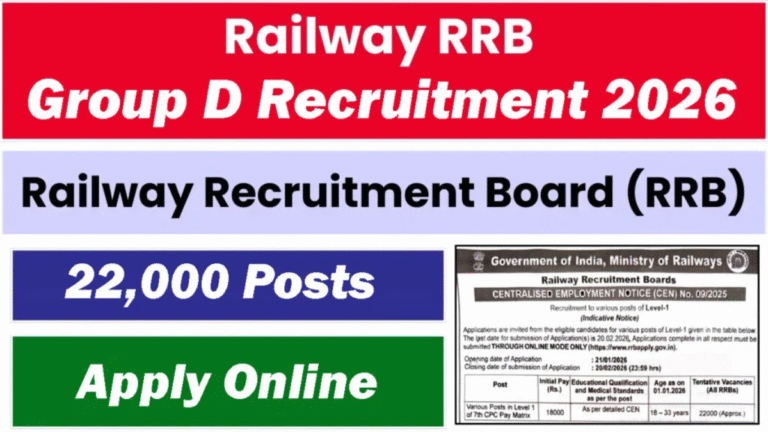
New Delhi, March 9, 2026: The Railway Recruitment Boards (RRBs) are set to conclude the application process for the massive RRB Group D (Level-1) Recruitment 2026 today. With over 22,195 vacancies up for grabs across various railway zones, this is a golden opportunity for 10th-pass candidates looking to secure a stable career in the Indian Railways.

If you haven’t submitted your form yet, now is the time to act. The online portal will close at 11:59 PM tonight, March 9, 2026.

RRB Group D Recruitment 2026: Key Highlights

The current recruitment drive (CEN 09/2025) targets several Level-1 positions within the 7th CPC Pay Matrix. Major roles include:

  • Track Maintainer Grade IV
  • Pointsman-B
  • Assistant (Signal & Telecommunication)
  • Assistant (Workshop/Loco Shed)
  • Assistant Pointsman

Important Dates at a Glance

EventDate
Last Date to Apply OnlineMarch 9, 2026 (Until 11:59 PM)
Last Date for Fee PaymentMarch 11, 2026
Application Correction WindowMarch 12 – March 21, 2026
Tentative Exam Month (CBT)May 2026

Eligibility Criteria

To be eligible for these central government positions, candidates must meet the following requirements:

  1. Educational Qualification: Applicants must have passed Class 10 (Matriculation) from a recognized board. Alternatively, those with an ITI or a National Apprenticeship Certificate (NAC) granted by NCVT are also eligible to apply.
  2. Age Limit: As of January 1, 2026, candidates should be between 18 and 33 years old.
    • Note: Standard government age relaxations apply (3 years for OBC-NCL and 5 years for SC/ST candidates).

Application Fee & Refund Policy

The Railway Recruitment Board maintains a transparent fee structure that includes a refund policy for those who attend the first stage of the exam:

  • General/OBC/EWS: ₹500 (₹400 is refunded after appearing in the CBT).
  • SC/ST/Ex-Servicemen/Female/Transgender/Minorities: ₹250 (Full amount is refunded after appearing in the CBT).

How to Apply Before the Deadline

Follow these steps to ensure your application is submitted correctly before the server experiences heavy traffic:

  1. Visit the Official Portal: Go to rrbapply.gov.in or your respective regional RRB website.
  2. Registration: Click on the “New Registration” link for CEN 09/2025 and enter your basic details (Name, Email, Mobile Number).
  3. Fill the Form: Log in with your new credentials to complete the application, including educational details and post preferences.
  4. Upload Documents: Upload a scanned copy of your photograph, signature, and category certificate (if applicable) in the prescribed format.
  5. Payment: Pay the application fee using UPI, Net Banking, or Debit/Credit cards.
  6. Final Submission: Review all details and submit. Don’t forget to download or print the confirmation page for your records.

Selection Process

The selection journey consists of four major stages:

  • Computer-Based Test (CBT): A national-level exam covering Science, Mathematics, Reasoning, and General Awareness.
  • Physical Efficiency Test (PET): Candidates must pass physical tasks (running and weight carrying) based on gender-specific standards.
  • Document Verification (DV): Thorough checking of original certificates.
  • Medical Examination: Final clearance based on the medical standards of the opted post.

The Spirit of ‘Atithi Devo Bhava’: Anand Mahindra Salutes Dhiraj Jain’s Heroism in Dubai

0

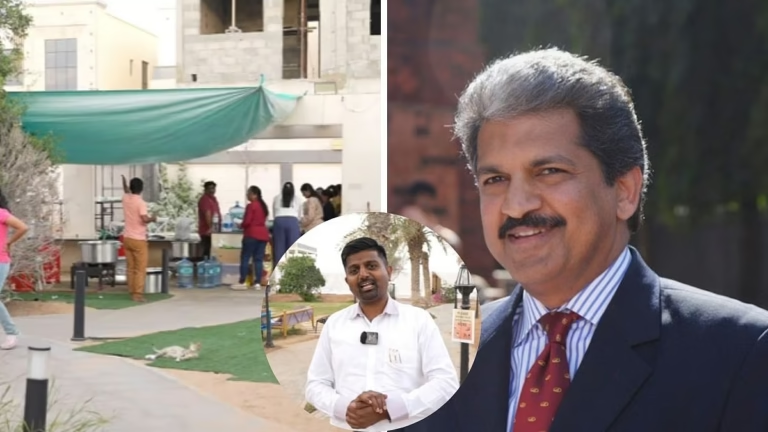
In an era where digital feeds are often cluttered with cynicism, industrialist Anand Mahindra has once again used his “Monday Motivation” slot to shine a spotlight on the extraordinary heights of human empathy. This week, the Chairman of Mahindra Group shared the moving story of Dhiraj Jain, an Indian expatriate in Dubai who transformed his private residence into a sanctuary for over 200 stranded compatriots.

Describing the act as the purest embodiment of the ancient Indian ethos Atithi Devo Bhava (The Guest is God), Mahindra’s tribute has sparked a global conversation on the power of individual initiative during a crisis.

A Sanctuary Amidst the Storm

The story unfolded during a period of significant travel disruptions in the UAE, leaving hundreds of Indian travelers—many of them transit passengers or low-wage workers—stranded at airports with nowhere to go. Faced with mounting hotel costs and the exhaustion of sleeping on terminal floors, these travelers found an unlikely savior in Dhiraj Jain.

Rather than offering mere sympathy from a distance, Jain opened the doors of his own home. What started as a gesture for a few quickly scaled into a massive logistical operation:

  • Shelter for All: Jain managed to accommodate over 200 people within his property, ensuring everyone had a roof over their head.
  • Provisioning: Beyond just space, he and his team organized meals, water, and essential supplies for the crowd.
  • Emotional Support: In a foreign land, the psychological comfort of a “home-like” environment proved as vital as the physical necessities.

Mahindra’s Take: Beyond Business and Bottom Lines

Anand Mahindra, known for his keen eye for “everyday heroes,” emphasized that Jain’s actions represent the true brand of India. Taking to X (formerly Twitter), Mahindra noted that while governments and corporations have their roles, the spontaneous kindness of a single individual often provides the fastest relief.

“This is not just about providing a bed; it’s about providing dignity,” the post suggested. Mahindra highlighted that Jain didn’t wait for a committee or a fund to be set up—he simply saw a need and filled it.

Why This Resonates

The story has gained immense traction for several reasons:

  1. The Scale of Altruism: It is rare to see a private citizen take on the responsibility of 200 people simultaneously.
  2. Cultural Pride: For the Indian diaspora, Jain’s actions serve as a proud reminder of cultural values that prioritize hospitality over personal convenience.
  3. A Call to Action: The “Monday Motivation” serves as a reminder to the corporate world and individuals alike that leadership is defined by service, not just status.

The Global Impact of Small Acts

Dhiraj Jain’s selflessness has earned him accolades not just from business moguls, but from the very people he rescued. Many of the stranded Indians have since returned home, carrying with them a story of a “brother in Dubai” who didn’t let them fall through the cracks.

As the world continues to navigate various geopolitical and logistical challenges, the story of Dhiraj Jain stands as a testament to the fact that when we open our doors, we often find our greatest purpose.

Jaskirat Singh Sidhu: The Final Legal Battle Over Humboldt Broncos Tragedy

0

New Delhi, March 9, 2026 — As of March 2026, Jaskirat Singh Sidhu, the driver at the center of the 2018 Humboldt Broncos bus tragedy, is facing the imminent reality of deportation to India. After years of legal maneuvering, Sidhu is making a final stand on humanitarian grounds, a case that has once again divided a nation still healing from one of its darkest days.

The Intersection of Tragedy

The 2018 crash near Armley, Saskatchewan, remains etched in the Canadian consciousness. Sixteen people—including young hockey players, coaches, and staff—lost their lives, and 13 others were left with life-altering injuries when Sidhu, a rookie trucker, drove his semi-trailer through a flashing stop sign and into the path of the team’s bus.

The Deportation Orders

Under Canadian law, any permanent resident convicted of “serious criminality”—offenses carrying a potential sentence of 10 years or more—is typically subject to deportation.

  • May 2024: The Immigration and Refugee Board (IRB) officially revoked Sidhu’s permanent resident status and ordered his removal.
  • February 2026: Sidhu’s legal team received a significant blow when a Pre-Removal Risk Assessment (PRRA) was rejected. The assessment concluded that Sidhu would not be in personal danger if returned to India.
  • Present Day: The Canada Border Services Agency (CBSA) has reportedly requested Sidhu’s travel documents, a procedural step that often precedes a removal date within four to six weeks.

A Family Under Pressure

Sidhu’s defense is now anchored in an application to remain in Canada on humanitarian and compassionate grounds. His lawyer, Michael Greene, argues that deportation would cause “disproportionate hardship” to Sidhu’s family.

Sidhu lives in Calgary with his wife and two young children, both of whom are Canadian citizens. His nearly three-year-old son suffers from a rare and severe lung disorder. Medical professionals have warned that India’s air quality could be life-threatening for the child, forcing Sidhu’s wife to choose between keeping the family together in India or staying in Canada to ensure their son’s survival.

“I want to fight for my family,” Sidhu recently told reporters. “Nobody wants to be separated from their family. I am living with the consequences of my mistake every day.”

Public Sentiment: Forgiveness vs. Accountability

The case continues to polarize the families of the victims. For some, Sidhu’s deportation is a necessary step toward justice and closure.

“This is the only thing that might give us a little bit of peace,” said Chris Joseph, whose son Jaxon died in the crash. Other families have expressed that Sidhu has served his time and that further punishment via deportation is unnecessary.

What Happens Next?

The CBSA is under a legal obligation to carry out the deportation “as soon as possible.” However, Sidhu’s legal team is seeking a deferral of removal until his humanitarian application is fully processed—a process that could take up to two years.

If the deferral is denied, Sidhu could be deported within weeks. Even from India, he could continue his humanitarian application; if successful, he would be granted an Authorization to Return to Canada (ARC). For now, the driver whose name is synonymous with a national tragedy remains in a state of legal limbo, waiting to see if Canada will grant him the second chance he is fighting for.