Home Blog Page 198

The 1,000 kg Threshold: Iran Strategic Shift in Missile Warfare

0

New Delhi, March 10, 2026: The landscape of Middle Eastern security has undergone a seismic shift as Iran enters a new tactical phase, characterized by the deployment of high-yield ballistic missiles capable of carrying 1,000 kg explosive warheads. This development marks a transition from “harassment” tactics to “strategic destruction,” signaling a more aggressive posture in the ongoing regional conflict.

A New Era of High-Explosive Payloads

For years, Iran’s missile doctrine focused on precision and mobility, often utilizing warheads in the 450–600 kg range. However, recent operational updates from the Islamic Revolutionary Guard Corps (IRGC) highlight a pivot toward heavier payloads.

  • The Power Factor: A 1,000 kg (1-tonne) warhead significantly increases the “kill radius” of a missile. While a 500 kg warhead can damage a building, a 1,000 kg explosive payload is capable of leveling entire fortified structures, destroying deep underground bunkers, and causing catastrophic damage to critical infrastructure like oil refineries or airbases.
  • Tactical Resilience: By increasing the destructive power of individual missiles, Tehran can achieve its strategic objectives with fewer successful strikes. In an environment where air defenses like the Iron Dome and Patriot systems are highly effective, Iran is betting that even a single “heavy” missile penetrating the shield can inflict the damage of five smaller ones.

The “Castle Busters” and Solid-Fuel Technology

Central to this new phase is the deployment of advanced delivery systems such as the Kheibar Shekan (meaning “Castle Buster”) and variants of the Khorramshahr family.

  1. Rapid Deployment: The shift toward solid-fuel technology allows these heavy-payload missiles to be fueled and ready for launch in under 15 minutes. This minimizes the window for “pre-emptive” strikes by adversary forces.
  2. Maneuverability: Newer models are equipped with Maneuverable Re-entry Vehicles (MaRVs). These allow the 1,000 kg warhead to change its trajectory during the terminal phase of flight, making it nearly impossible for traditional “hit-to-kill” interceptors to predict its impact point.
  3. Hypersonic Capabilities: With the introduction of the Fattah-2, Iran is combining high-yield explosives with hypersonic speeds, creating a weapon system designed to bypass the world’s most sophisticated radar networks.

Strategic Implications for the Region

The introduction of 1,000 kg warheads has forced a total re-evaluation of regional defense strategies.

  • Infrastructure at Risk: The primary targets for these high-yield weapons are no longer just military outposts, but “hardened” targets. This includes command-and-control centers, energy hubs, and major logistics ports across the Gulf.
  • The Cost of Defense: Analysts suggest a “cost-asymmetry” problem. While Iran spends thousands to produce a missile, defenders spend millions on interceptors. The threat of a 1,000 kg warhead forces defenders to fire multiple interceptors at a single incoming target to ensure a 100% kill rate, rapidly depleting expensive stockpiles.
  • Regional Deterrence: This tactical phase is a clear message of deterrence. By showcasing the ability to deliver “massive” conventional destruction, Tehran aims to discourage any large-scale ground or air campaign against its territory.

Expert Insight: “We are seeing a move away from the ‘saturation’ logic of the past—where hundreds of small drones were used to swarm—and toward a ‘precision-heavy’ logic. They aren’t just looking to hit the target anymore; they are looking to erase it.”

Conclusion

The 2026 conflict has revealed that Iran’s missile program is no longer just about quantity; it is about devastating quality. The move to 1,000 kg explosives represents a matured military industrial base and a leadership willing to escalate the stakes of regional engagement. As these “heavy hitters” become the backbone of the IRGC’s arsenal, the margin for error in Middle Eastern diplomacy and defense has never been thinner.
Kanika Mann Experiences Spiritual Bliss at Mahakaleshwar Bhasma Aarti

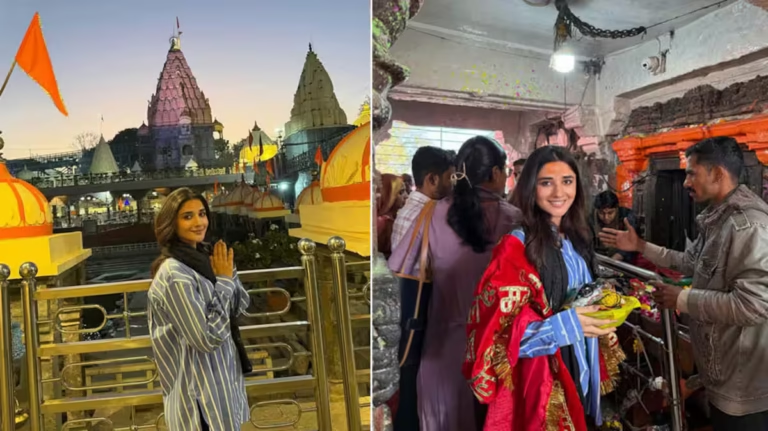
New Delhi, March 10, 2026: Popular television actress Kanika Mann, widely recognized for her roles in hit shows like Guddan Tumse Na Ho Payega, recently embarked on a spiritual journey to the holy city of Ujjain. The actress visited the world-renowned Mahakaleshwar Temple to witness the legendary Bhasma Aarti, an experience she described as deeply transformative and unforgettable.

Taking to her social media to share the experience with her followers, Kanika posted a series of glimpses from her visit, capturing the serene atmosphere of the temple complex.

A Soul-Stirring Experience

The Bhasma Aarti, performed during the Brahma Muhurta (predawn hours), is a unique ritual dedicated to Lord Shiva. It involves the application of sacred ash (Bhasma) to the Jyotirlinga. For Kanika, being present during this powerful ceremony was clearly a moment of profound connection.

Sharing her emotions with her fans, Kanika wrote:

Adhering to Tradition

In the spirit of the temple’s long-standing traditions, Kanika was seen dressed in a simple, elegant traditional outfit. Devotees attending the Bhasma Aarti follow a strict dress code, and the actress embraced the Vedic customs with grace.

Followers and colleagues from the industry flooded her comments section with “Har Har Mahadev” and “Jai Mahakal,” praising her for taking time out of her busy shooting schedule to seek spiritual solace.

Why the Bhasma Aarti is Significant

The Mahakaleshwar Temple in Ujjain is one of the twelve Jyotirlingas in India and is the only one where the deity faces south, earning Lord Shiva the name Dakshinamurti. The Bhasma Aarti is considered the most auspicious ritual at the temple, symbolizing the cycle of life, death, and the eternal nature of the soul.

Key highlights of Kanika’s visit:

  • Spiritual Rejuvenation: The actress spent time meditating within the temple premises.
  • Cultural Connection: She engaged with local priests to understand the historical significance of the rituals.
  • Fan Interaction: Despite the early hours, she briefly greeted fans who recognized her at the temple complex.

Balancing Fame and Faith

Kanika Mann has always been vocal about her belief in staying grounded. Amidst her rising career in the digital space and television, her pilgrimage to Ujjain serves as a reminder of her penchant for finding balance through faith.

After her spiritual break, the actress is expected to return to Mumbai to resume her upcoming projects, carrying with her the “unforgettable” energy of Ujjain.

Prakash Raj Sparks Firestorm Over LPG Crisis in Bengaluru, Mumbai, and Chennai

0

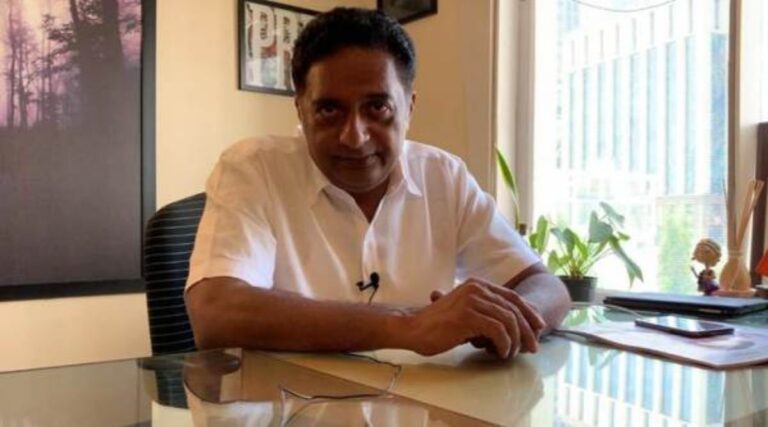
March 10, 2026: National Award-winning actor and outspoken activist Prakash Raj has once again stirred the political pot, this time taking aim at the government over the crippling Liquefied Petroleum Gas (LPG) shortage currently paralyzing major Indian metros.

As of March 10, 2026, residents and business owners in Bengaluru, Mumbai, and Chennai are grappling with a severe supply crunch. Taking to social media, Raj didn’t mince words, directly challenging supporters of the ruling administration with a provocative query: “Let’s see how bhakts react.”

The Crisis: Empty Stoves and Closed Shutters

The situation on the ground has escalated rapidly over the past 48 hours. What began as a price hike—with domestic cylinders jumping by ₹60 and commercial ones by ₹115 last Saturday—has morphed into a full-blown supply vacuum.

  • Bengaluru: The Bangalore Hotels Association has warned of mass closures, stating that many eateries have already run out of commercial gas.
  • Mumbai: Reports suggest nearly 20% of restaurants in areas like Dadar and Andheri have suspended operations or limited their menus to avoid slow-cooking dishes.
  • Chennai: Hotel associations have petitioned the Prime Minister’s Office, describing the situation as “critical” as distributors report zero stock.

The shortage is largely attributed to escalating geopolitical tensions in West Asia, which have disrupted key shipping routes through the Strait of Hormuz. While the government has prioritized domestic supply for households, the commercial sector has been left in the lurch.

Prakash Raj’s Scathing Critique

Prakash Raj, known for his “Just Asking” campaign, used the crisis to highlight the plight of the common man. In a viral post, he noted that the shortage isn’t just affecting luxury; it is hitting homes, small hotels, and even crematoriums.

“Dear citizens, as we see… homes, hotels and even crematoriums are affected. Let’s see how Gobhi bhakts react,” Raj wrote on X (formerly Twitter).

His comments serve as a direct jab at the narrative of “Aatmanirbharta” (self-reliance), suggesting that the government’s planning has failed to shield the public from global volatility.

A Divided Digital Battlefield

The actor’s remarks have, as expected, triggered a polarized response:

  1. The Critics: Many users accused Raj of “politicizing a global tragedy.” Supporters of the administration pointed out that the crisis stems from an external war and that the government is actively scouting alternative suppliers like the US and Australia.
  2. The Supporters: Conversely, many frustrated citizens echoed Raj’s sentiments. Critics of the government, including leaders from the Congress party who have dubbed the PM “Inflation Man,” argue that the suddenness of the shortage proves a lack of strategic reserves.

Government Response and Road Ahead

The Ministry of Petroleum and Natural Gas has moved to calm the nerves of the public. A high-level committee has been formed to review commercial LPG distribution. To prevent hoarding, the government has also extended the mandatory interval between domestic cylinder bookings from 21 to 25 days.

While officials claim India has enough reserves for 40 days, the hospitality industry remains skeptical. “If the supply isn’t restored in 48 hours, half of Mumbai’s restaurants could go dark,” warned a spokesperson for the Mumbai Hotels and Restaurants Association (AHAR).

As the “gas war” continues both in the kitchens and on social media, Prakash Raj’s comments have ensured that the LPG crisis remains at the center of the national conversation.

OPTCL Recruitment 2026: 50 Vacancies for Engineers & Grads

0

New Delhi, March 10, 2026: The Odisha Power Transmission Corporation Limited (OPTCL), a premier State Power Utility in Odisha, has officially announced its 2026 recruitment drive. Under Advertisement No. MPP&R–08/2025-26, the corporation is seeking young, dynamic, and qualified individuals for various trainee positions.

If you hold a degree or diploma in engineering, or specialized qualifications in law or management, this is a prime opportunity to build a career in the power transmission sector.

OPTCL Recruitment 2026: Vacancy Overview

A total of 50 vacancies have been released for this recruitment cycle. The roles cover engineering, legal, and administrative departments.

Post NameTotal Vacancies
Management Trainee (Civil)05
Management Trainee (Law)03
Junior Management Trainee (Civil)04
Office Assistant Grade-III Trainee38

Eligibility Criteria

Candidates must ensure they meet the specific educational and age requirements before applying.

1. Educational Qualifications

  • Management Trainee (Civil): A Degree in Civil Engineering with at least 60% aggregate marks (50% for SC/ST/PwBD) from a recognized university.
  • Junior Management Trainee (Civil): A Diploma in Civil Engineering with a minimum of 60% marks (50% for SC/ST/PwBD).
  • Management Trainee (Law): A Degree in Law from a recognized institution.
  • Office Assistant Grade-III: A Bachelor’s Degree in any discipline with at least 60% marks (50% for SC/ST/PwBD).

2. Age Limit (As of Feb 1, 2026)

  • Minimum Age: 21 Years
  • Maximum Age: 32 Years
  • Age Relaxation: Standard government relaxations apply (5 years for SC/ST/SEBC and Women; 10 years for PwBD).

Salary and Remuneration

The selected candidates will undergo a training period, during which they will receive a consolidated monthly stipend. Upon successful completion of training, they will be absorbed into the regular pay matrix.

  • Management Trainee: ₹50,000 (Stipend) $\rightarrow$ ₹56,100 – ₹1,77,500 (Pay Scale)
  • Junior Management Trainee: ₹30,000 (Stipend) $\rightarrow$ ₹44,900 – ₹1,42,400 (Pay Scale)
  • Office Assistant Gr-III: ₹20,000 (Stipend) $\rightarrow$ ₹29,300 – ₹92,400 (Pay Scale)

Selection Process

The selection will be conducted in two main phases:

  1. Computer-Based Test (CBT): A comprehensive online exam testing subject knowledge, numerical ability, reasoning, and English.
  2. Personal Interview / Skill Test: Depending on the post, shortlisted candidates from the CBT will be called for an interview (MT/JMT) or a computer skill test (Office Assistant).

How to Apply

The online application portal will be active on the official OPTCL website.

  1. Visit the official website: optcl.co.in.
  2. Navigate to the “Careers” section and select “Current Openings.”
  3. Click on the link for Advt No. MPP&R-08/2025-26.
  4. Register with a valid email and mobile number.
  5. Fill out the application form, upload the required documents, and pay the application fee.

Important Dates

  • Online Application Starts: March 16, 2026 (05:00 PM)
  • Last Date to Apply: April 15, 2026 (11:59 PM)
  • CBT Exam Date: To be announced soon.

Note: Candidates are advised to read the detailed official notification carefully regarding the service bond requirements (₹3,00,000 for MT and ₹1,80,000 for JMT) before submitting their application.

KMC Delhi Recruitment 2026: 57 Non-Teaching Jobs Open

0

New Delhi, March 10, 2026: Kirori Mal College (KMC), a prestigious constituent college of the University of Delhi (DU), has officially released its 2026 recruitment notification for various non-teaching positions. The college is looking to fill a total of 57 vacancies across multiple administrative, technical, and laboratory departments.

For candidates seeking a stable career within the Delhi University ecosystem, this recruitment drive offers a significant opportunity. The application window is currently open and will remain active until March 27, 2026.

KMC Delhi Recruitment 2026: Vacancy Breakdown

The recruitment covers a wide range of roles, from entry-level positions to senior technical posts. Below is the distribution of the 57 available seats:

Post NameNumber of VacanciesPay Level (7th CPC)
Laboratory Attendant34Level 01
Laboratory Assistant10Level 04
Library Attendant07Level 01
Junior Assistant01Level 02
Assistant01Level 04
Senior Assistant01Level 06
Senior Technical Assistant (Computer)01Level 06
Senior Personal Assistant01Level 07
Cartographer Assistant (Geography)01Level 05

Eligibility Criteria & Age Limits

Eligibility varies significantly depending on the technical nature of the post. While the specific requirements are detailed in the official PDF, the general standards are as follows:

  • Educational Qualifications: * Attendant Posts: Generally require a 10th or 12th pass (Science stream for Lab Attendants) with relevant certificates where applicable.
    • Assistant/Junior Assistant: A Bachelor’s degree from a recognized university. Proficiency in typing (35 w.p.m. in English or 30 w.p.m. in Hindi) is mandatory for Junior Assistants.
    • Senior/Technical Posts: Post-graduation or a Bachelor’s degree in a relevant field with 2-3 years of professional experience.
  • Age Limit: * The upper age limit generally ranges between 32 and 35 years.
    • Relaxations: Age relaxations apply for SC/ST/OBC/PwBD and women candidates as per University of Delhi and Government of India norms.

Application Fee

Candidates must pay a non-refundable application fee through the online portal:

  • General / OBC / EWS: ₹1,000
  • SC / ST: ₹500
  • Women & PwBD Candidates: Exempted (No Fee)

Selection Process

The selection will be strictly merit-based, following a multi-stage process:

  1. Written Examination: A competitive test covering General Awareness, Reasoning, Mathematical Ability, and English/Hindi language skills.
  2. Skill/Typing Test: Mandatory for posts like Junior Assistant and Senior Personal Assistant (Qualifying in nature).
  3. Laboratory/Practical Test: Required for specific technical or laboratory-based roles to assess hands-on knowledge.
  4. Document Verification: Final stage to authenticate the candidate’s eligibility and credentials.

How to Apply for KMC Non-Teaching Posts

Interested candidates should follow these steps to ensure their application is submitted correctly:

  1. Visit the official Kirori Mal College website: www.kmc.du.ac.in.
  2. Navigate to the Careers” or “Announcements” section and click on the recruitment link for Non-Teaching Positions 2026.
  3. Register yourself on the Delhi University recruitment portal (dunt.uod.ac.in) using a valid email ID and mobile number.
  4. Fill in the application form with accurate personal and educational details.
  5. Upload scanned copies of required documents (Photograph, Signature, Caste Certificate, etc.).
  6. Pay the application fee and submit the form.
  7. Deadline: Ensure the process is completed by March 27, 2026.

Note: If you wish to apply for more than one post, you must submit separate applications and pay the relevant fees for each position.

Kuldeep Yadav to Wed Vanshika After T20 World Cup Triumph

0

New Delhi, March 10, 2026: It is a season of double celebration for Indian cricket. Just days after the Indian team’s triumphant victory in the ICC Men’s T20 World Cup 2026, star spinner Kuldeep Yadav is all set to exchange vows with his fiancée, Vanshika, in a ceremony that promises to be as magical as his googlies.

Here is everything you need to know about the upcoming wedding of India’s premier “Chinaman” bowler.

From World Cup Glory to Wedding Vows

After playing a pivotal role in India’s T20 World Cup success—where the Men in Blue defeated New Zealand in a high-octane final in Ahmedabad—Kuldeep Yadav is shifting his focus from the pitch to the pavilion of matrimony.

The spinner, who has been a consistent match-winner for India across all formats, originally planned the wedding for November 2025. However, showing his dedication to the national side, he postponed the nuptials to ensure he was fully available for the T20 World Cup campaign. The wait proved worth it, as he now heads to the altar with a World Cup winner’s medal around his neck.

The Wedding Schedule & Venue

The wedding festivities are spread across two scenic locations, blending the tranquility of the hills with the grandeur of his home state, Uttar Pradesh.

  • Pre-Wedding Festivities (March 13, 2026): The celebrations will kick off with traditional Haldi and Mehndi ceremonies. These will be held at a private luxury resort in the picturesque hill station of Mussoorie, Uttarakhand.
  • The Wedding (March 14, 2026): Kuldeep and Vanshika will tie the knot in an intimate ceremony in Mussoorie, attended by close family and friends.
  • The Grand Reception (March 17, 2026): A star-studded reception is scheduled to take place at the Hotel Centrum in Lucknow. This event is expected to be a massive affair with teammates, BCCI officials, and political dignitaries in attendance.

Meet the Bride: Who is Vanshika?

While Kuldeep often keeps his personal life away from the limelight, fans have been curious about his better half.

Vanshika is a resident of Shyam Nagar, Kanpur, and is a childhood friend of the cricketer. Their friendship blossomed into love over the years, leading to an engagement on June 4, 2025, in Lucknow.

Vanshika comes from a grounded background; her father, Yogendra Singh Chadha, is an official with the Life Insurance Corporation (LIC) of India. She is highly educated, having studied in Melbourne, Australia, and is also professionally associated with LIC. Those close to the couple describe her as a stabilizing force in Kuldeep’s life, staying by his side through the highs and lows of his international career.

A Guest List of Champions

The wedding is expected to see a “who’s who” of Indian cricket. From his teammates in the World Cup squad to legendary figures who have mentored him, the reception in Lucknow will likely be one of the biggest social events of the year.

Earlier this week, Kuldeep’s father, Ram Singh Yadav, personally visited Uttar Pradesh Chief Minister Yogi Adityanath to extend a formal invitation, highlighting the significance of the event in the cricketer’s hometown.

“Stability off the field often reflects in clarity on it,” says cricket analysts, noting that this new chapter could provide the 31-year-old spinner with even more focus as he enters the peak years of his career.

As Kuldeep Yadav prepares to start this new innings, fans from across the globe are flooding social media with congratulatory messages, celebrating both his professional success and his personal milestone.

Box Office Storm: Dhurandhar 2 Set for Record Opening

New Delhi, March 10, 2026: The fever for Aditya Dhar’s spy thriller Dhurandhar 2: The Revenge has officially reached a boiling point. As advance bookings open for the much-anticipated sequel, ticket prices in major metros have skyrocketed to unprecedented levels, yet fans are undeterred, with shows selling out within minutes of going live.

In Mumbai’s premium multiplexes, particularly the INOX Megaplex at Sky City Mall, Borivali, tickets for the “Recliner Prime” category have touched a staggering ₹3,100. Similarly, in Delhi-NCR, luxury seats at PVR Select City Walk are being snatched up at ₹2,400. Despite these eye-watering prices, the demand for the paid previews scheduled for March 18—a day before the official release—is so high that many prime-time slots are already “housefull.”

A Box Office Juggernaut in the Making

The sequel, starring Ranveer Singh as the elite Indian spy Jaskirat Singh Rangi (undercover as Hamza Ali Mazari), is riding on the massive success of its predecessor. Trade analysts are predicting a record-breaking start that could dwarf recent blockbusters.

  • Advance Sales: The film has already sold over 3 lakh tickets for its paid previews alone, generating an estimated ₹21 crore (including block bookings).
  • The “Stree 2” Record: Dhurandhar 2 has already comfortably surpassed the paid preview record previously held by Stree 2 (₹10 crore gross).
  • Pan-India Appeal: Unlike the first installment, the sequel is a true pan-India release, dubbed in Tamil, Telugu, Kannada, and Malayalam.

Ticket Pricing Breakdown

While the luxury segment is grabbing headlines, the makers have maintained a wide pricing spectrum to ensure accessibility across different markets.

City / RegionPremium Price (Recliner)Standard / Budget Price
Mumbai₹3,100₹400 – ₹900
Delhi-NCR₹2,400₹450 – ₹800
Chennai₹200 – ₹300₹59 (AGS Cinemas)
National Average₹418 (Hindi 2D)₹759 (Dolby Cinema)

Why the Hype is Real

The trailer, which dropped on March 7, has intensified the buzz by showcasing Ranveer Singh’s character taking control of Karachi’s Lyari district as the new “Badshah.” The film also features a powerhouse cast including Sanjay Dutt, R. Madhavan, and Arjun Rampal, who plays the antagonist, Major Iqbal.

With no major competition following the postponement of Yash’s Toxic, Dhurandhar 2 is perfectly positioned to dominate the box office during the festive window of Gudi Padwa, Ugadi, and Eid. Trade experts like Taran Adarsh and Joginder Tuteja suggest the film is selling tickets at a rate of nearly 7,500 per hour on platforms like BookMyShow, putting it on track for a potential ₹100 crore opening day (including previews).

Pankaj Kapur Reflects on Son Shahid Journey: “He Made It Completely on His Own”

New Delhi, March 10, 2026: In an industry often scrutinized for the advantages of “starkids,” veteran actor Pankaj Kapur has voiced a perspective that highlights a different side of the narrative. Speaking on the success of his son, Shahid Kapoor, the legendary performer expressed immense pride, emphasizing that Shahid’s stature in Indian cinema today is a result of personal grit rather than inherited privilege.

A Self-Made Path in a Competitive Industry

While many might assume that being the son of a powerhouse performer like Pankaj Kapur would open every door in Bollywood, Kapur insists that Shahid chose the difficult route.

“Wherever he is today, he has reached there through his own hard work and perseverance. He made it completely on his own,” Kapur noted in a recent reflection on his son’s two-decade-long career.

Shahid’s entry into the industry wasn’t a grand launch by a major studio. Instead, he started as a background dancer in films like Dil To Pagal Hai and Taal, and a face in music videos and commercials, before finally making his debut in the 2003 sleeper hit Ishq Vishk.

The Evolution of a Performer

Pankaj Kapur, known for his methodical approach to acting in classics like Maqbool and Ek Doctor Ki Maut, believes Shahid’s versatility is his greatest strength. Over the years, Shahid has successfully transitioned from a “chocolate boy” romantic lead to a serious performer capable of carrying complex, dark characters.

Key Career Milestones Noted by Fans and Critics:

  • The Romantic Beginning: Ishq Vishk and Vivah established his charm.
  • The Creative Shift: Jab We Met redefined his career, showcasing his ability to play a nuanced, understated lead.
  • The Transformation: Performances in Kaminey, Haider, and Udta Punjab proved his range as a world-class dramatic actor.
  • The Commercial Powerhouse: Kabir Singh and his digital debut in Farzi solidified his hold on the modern box office and streaming era.

A Relationship Built on Mutual Respect

Despite their shared profession, Pankaj and Shahid have maintained a professional boundary that favors artistic growth. They have shared the screen in films like Shaandaar and Jersey, where the chemistry between father and son was evident, yet the competitive spirit of two dedicated actors remained at the forefront.

For Pankaj Kapur, the joy isn’t just in Shahid’s fame, but in the authenticity of his journey. He believes that by not leaning on his father’s legacy, Shahid earned the industry’s respect and developed a unique identity that is entirely his own.

Conclusion: A Legacy of Merit

In an era where the debate over nepotism remains heated, Shahid Kapoor stands as an example of an actor who utilized his talent to bridge the gap between being a “son of an actor” and a “respected artist.” As Pankaj Kapur aptly puts it, Shahid’s success belongs to Shahid alone—a sentiment that resonates with fans who have watched him evolve from a young dancer into one of the most versatile stars of his generation.

NCERT Apologizes to Supreme Court Over Textbook Controversy

0

New Delhi, March 10, 2026 — In a significant development following a high-profile institutional standoff, the National Council of Educational Research and Training (NCERT) has issued an “unconditional and unqualified” public apology for a controversial chapter in its Class 8 Social Science textbook. The apology, released on March 10, 2026, comes just 24 hours before a scheduled hearing in the Supreme Court regarding a suo motu case titled “In Re: Social Science Textbook for Grade–8 (Part-2) published by NCERT.”

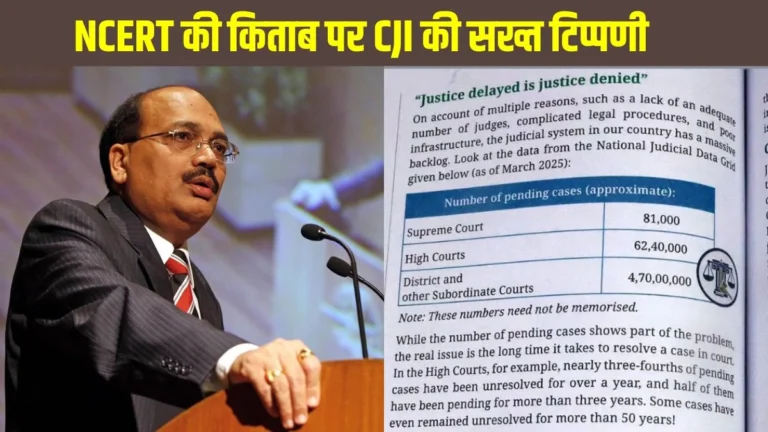
The controversy centers on Chapter IV of the textbook Exploring Society: India and Beyond, titled The Role of Judiciary in our Society.” The chapter contained a sub-section discussing “corruption in the judiciary” alongside systemic challenges like case backlogs and judge vacancies.

The Anatomy of the Controversy

The legal storm began in late February 2026, when the Supreme Court took suo motu cognisance of the textbook’s contents. A three-judge bench, led by Chief Justice of India (CJI) Surya Kant, expressed “shock” and profound displeasure over the narrative presented to young students.

Key points of contention included:

  • Selective Criticism: The court noted that while the textbook highlighted corruption within the judiciary, it reportedly omitted similar discussions regarding the executive or legislative branches.
  • Pedagogical Impact: The bench observed that exposing “impressionable minds” to such a “biased narrative” at a formative stage could cause “irreversible damage” to the public’s trust in the judicial institution.
  • Constitutional Omissions: CJI Kant remarked that the text failed to adequately highlight the judiciary’s role in upholding constitutional morality and the Basic Structure doctrine.

“Heads Must Roll”: The Court’s Hardline Stance

During the previous hearing on February 26, the apex court rejected an initial “statement of regret” from the NCERT, calling it inadequate. The court then issued show-cause notices for contempt to the NCERT Director and the Secretary of the Department of School Education.

The bench was particularly vocal about accountability, with the CJI stating, “If there is more than one [person responsible], heads must roll. I am not going to close these proceedings until I am satisfied.” The government, represented by the Solicitor General, subsequently assured the court that the individuals involved in drafting the chapter would be barred from future ministerial or educational projects.

NCERT’s Full Retreat

In its latest press release, the NCERT has moved from “regret” to a complete surrender of its earlier position. The Council stated:

“The Director and Members of NCERT hereby tender an unconditional and unqualified apology for the said Chapter IV. The entire book has been withdrawn and is not available.”

The NCERT further clarified that its objective is to strengthen “constitutional literacy” and that the inclusion of the offending material was “purely unintentional.” To ensure compliance with the court’s “blanket ban,” the Council has:

  1. Withdrawn all physical and digital copies of the textbook.
  2. Removed all related content from its official website.
  3. Directed school principals and state education departments to seize any remaining copies in circulation.

What Lies Ahead?

The Supreme Court is set to resume the hearing on March 11, 2026. While the NCERT has complied with the demand for a public apology and book withdrawal, the court will still determine whether the apology is a “genuine purge of contempt” or merely a strategic move to evade legal consequences.

The Council has committed to rewriting the chapter in consultation with “appropriate authorities” for the 2026–27 academic session, ensuring that the revised text aligns with the high esteem in which the judiciary is held under the Indian Constitution.

POCO X8 Pro Max: Specs, Price, and Launch Date

0

New Delhi, March 10, 2026: The smartphone market is abuzz as POCO officially gears up to redefine the “Flagship Killer” segment. The POCO X8 Pro Max, the most powerful entry in the upcoming X8 series, is scheduled for a grand unveiling on March 17, 2026.

Positioned as a performance beast with an unprecedented battery capacity, this device is expected to be a rebranded and enhanced version of the Redmi Turbo 5 Max. Here is everything we know about the POCO X8 Pro Max ahead of its official launch.

Design and Display: Bigger, Brighter, and Bolder

The POCO X8 Pro Max is set to feature a massive 6.83-inch 1.5K AMOLED display. Unlike the curved trends of previous years, POCO is opting for a refined flat-screen aesthetic with ultra-slim, uniform bezels.

  • Peak Brightness: A staggering 3,500 nits, ensuring perfect visibility even under direct sunlight.
  • Refresh Rate: A silky-smooth 120Hz (with some leaks even suggesting up to 144Hz for gaming).
  • Durability: Protected by Gorilla Glass 7i, the device also boasts an elite IP68/IP69 rating, making it resistant to high-pressure water jets and deep submersion.

A standout design element is the “Dynamic Ring”—a set of multicolored LED rings around the rear camera lenses that serve as notification lights and charging indicators.

Performance: The Debut of Dimensity 9500s

Under the hood, the X8 Pro Max will be one of the first smartphones to feature the MediaTek Dimensity 9500s chipset. Built on a cutting-edge 3nm process, this processor is designed to bridge the gap between mid-range pricing and flagship performance.

Camera: Precision Over Numbers

POCO is moving away from “filler” lenses, focusing instead on a powerful dual-camera system on the rear.

Camera TypeSpecificationFeatures
Primary50MP Light Fusion 600Optical Image Stabilization (OIS), ƒ/1.5 Aperture
Ultra-Wide8MP ƒ/2.2118° Field of View
Selfie20MP Samsung OV20B1080p @ 60fps support

Battery: The 9,000mAh Game Changer

The most talked-about feature of the POCO X8 Pro Max is its colossal 9,000mAh battery. Utilizing new high-density silicon-carbon technology, POCO has managed to fit this massive capacity into a body that remains just 8.38mm thick.

To complement this, the phone supports 100W wired fast charging, allowing users to top up this giant cell in a fraction of the time usually required for such capacities.

Expected Price and Availability

The POCO X8 Pro Max will launch globally on March 17, 2026. In India, it will be available primarily through Flipkart.

  • Base Variant (12GB/256GB): Expected around ₹45,000 – ₹57,000 (Approx. €529).
  • High-End Variant (12GB/512GB): Expected around ₹62,000 (Approx. €579).