Home Blog Page 24

Why the Internet Still Trolls Janhvi and Ananya

New Delhi, June 11, 2026: The conversation surrounding Bollywood’s “nepo kids” is a fixture of social media culture, but recently, the spotlight has burned brighter than ever for Janhvi Kapoor and Ananya Panday. Despite both actresses making strides in their respective careers and attempting to carve out unique paths, they have once again found themselves at the center of the internet’s collective trolling machine.

From viral dance sequences to heavy criticisms of their on-screen performances, the wave of backlash highlights a deep-seated fatigue among audiences regarding industry privilege, even as the starlets continue to pull in major projects.

The Sparks That Reignited the Fire

The latest wave of online trolling stems from recent releases that put both actresses back under the public microscope. For Ananya Panday, the criticism peaked with her performance in the romantic drama Chand Mera Dil. A specific promotional clip featuring her attempting a classical Bharatanatyam fusion dance move went viral for all the wrong reasons. Netizens ruthlessly dubbed the performance “Nepo Natyam,” contrasting her execution with classic clips of legendary dancers like Sridevi and modern powerhouses like Sai Pallavi. Despite seasoned choreographers and family members jumping to her defense to explain the context of the scene, the internet had already run away with the meme.

On the other side, Janhvi Kapoor found herself facing immense scrutiny over her role in the massive commercial project Peddi, co-starring Ram Charan. While the film achieved massive commercial success—crossing the ₹150 crore mark globally within its opening days—audiences heavily critiqued the writing and portrayal of her female lead. The box office triumph did little to shield Janhvi from critics who argued that her performance lacked the nuance required for such a high-profile role, sparking familiar debates about whether she has truly earned her place at the top of major pan-Indian cinema.

“Seekh Lo Acting”: The Critique from Within

The public discourse reached a boiling point when veteran actor Lalit Parimoo, widely recognized for his iconic roles in Shaktimaan and Haider, weighed in on the star-kid phenomenon during a viral podcast appearance. When asked about the constant criticism faced by actors like Janhvi, Ananya, and Shanaya Kapoor, Parimoo delivered a blunt, unfiltered piece of advice: “Seekh lo acting” (Learn acting).

Parimoo’s commentary struck a massive chord online because it gave a voice to what many audiences feel. He noted that while modern star kids excel at staying relevant through social media presence, high-end fashion choices, and physical appearance, none of those things can substitute for true artistic development. This validation from an industry insider essentially added fuel to the internet’s critical fire.

Why the Trolling Keeps Loop-Cycling

The recurring nature of this trolling highlights a deeper systemic conflict between Bollywood’s casting habits and audience expectations.

  • The Exposure Versus Experience Gap: Emerging star kids are often handed demanding, emotionally heavy lead roles right at the start of their careers. While an outsider spends years in theater or minor roles honing their craft away from the spotlight, star kids have to do their “learning on the job” in front of millions of people. Every mistake is magnified, and every sub-par performance is viewed as a wasted opportunity that could have gone to a trained theater actor.
  • The Social Media Paradox: Both Janhvi and Ananya boast massive social media followings, regularly sharing glamorous snippets of their lives, brand endorsements, and runway walks. This hyper-visibility creates a double-edged sword. When their off-screen presence looks flawlessly curated but their on-screen performances feel unpolished, audiences feel a disconnect, leading to harsher trolling.
  • Selective Praise: Ironically, the internet’s amnesia is part of the problem. Just a short while ago, Ananya Panday received widespread critical acclaim for her grounded, sharp performances in projects like CTRL and Call Me Bae. Yet, a single divisive dance step or an awkward scene can instantly erase that goodwill, resetting the public narrative back to the “untalented nepo kid” stereotype.

The Path Forward

The dynamic between star kids and the audience has fundamentally shifted. Box office numbers alone no longer grant immunity from critique, and a strong Instagram presence cannot mask a weak performance.

While veteran actors like Parimoo point out that stars of the past—like Sanjay Dutt and Abhishek Bachchan—also faced severe criticism early on and eventually evolved through experience, the modern internet age allows less room to breathe. For Janhvi Kapoor and Ananya Panday, breaking free from the “favorite to troll” cycle will likely require a continuous, undeniable string of powerhouse performances that force the internet to focus on their craft rather than their surnames.
Narrow Escape: 350 Saved from Nagrota Temple Blaze

0

New Delhi, June 11, 2026: A major tragedy was averted in the lower hills of Himachal Pradesh through a swift and highly coordinated rescue operation. Around 350 devotees, including women, young children, and elderly persons, were successfully evacuated on Tuesday night after a fierce forest fire rapidly advanced and surrounded the prominent Naina Devi Temple. The temple, located on a dense hilltop in the Patiyalkar (Dhalun) area under the Nagrota Bagwan subdivision of Kangra district, became an immediate danger zone as flames cut off all primary exit routes.

The panic began on Tuesday evening during a large-scale religious event. The temple premises were bustling with local worshippers who had gathered for a traditional bhandara (community feast) and jagran (overnight prayer vigil). The peaceful gathering quickly turned into an emergency when the dry, surrounding pine forest caught fire. Fanned by strong summer winds, the blaze spread with alarming speed, creeping up the hillside and completely engulfing the three-kilometer stretch of the single access road that connects the shrine to the main highway.

A Sudden Ring of Fire

The fire reportedly began around 3:00 PM on Tuesday but initially appeared to be under control. However, as temperatures stayed high, the dry pine needles covering the forest floor acted as a natural tinderbox. By 7:30 PM, the fire flared up again with newfound intensity, spreading across an estimated 10-kilometer swath of the forest.

As the flames moved toward the temple’s parking area, thick, suffocating smoke filled the air, cutting off visibility. With the main road blocked by roaring flames on both sides, the 350 worshippers found themselves completely trapped on the hilltop. Local authorities noted that if the fire had spread any further unchecked, it could have threatened nearby residential pockets, potentially putting up to 5,000 lives at risk.

Creating a Safe Corridor

When emergency calls started coming in, local administrative bodies, the fire brigade, the state police, and the forest department launched a joint rescue mission. Nagrota Bagwan Sub-Divisional Magistrate (SDM) Munish Kumar Sharma arrived quickly to coordinate the effort on the ground.

The primary challenge was the blocked road. Because the access route was trapped in a wall of fire, emergency vehicles could not reach the temple, and the devotees could not safely walk down. Firefighters focused all initial energy on creating a safe corridor along the road. Working under intense heat, teams battled the flames right along the pavement to tame the fire enough to allow vehicles through.

The firefighting teams fought the roadside blaze for over five hours. By 9:00 PM, the road was declared reasonably safe for a controlled evacuation.

The Evacuation Phase

The systematic rescue of the trapped devotees began at exactly 9:10 PM. Because of the lingering smoke and the potential for the wind to shift, the rescue teams prioritized vulnerable groups first, ensuring women, children, and elderly worshippers were loaded into waiting vehicles.

Local youth and village volunteers played a crucial role alongside official rescue services, guiding people through the smoke to the transport vehicles. The operation wrapped up by 10:45 PM, with every single trapped devotee accounted for and brought safely down to the base area. Remarkably, local authorities confirmed there were zero casualties or serious injuries during the multi-agency operation.

Official Response and Growing Concerns

Nagrota Bagwan MLA RS Bali monitored the crisis closely, keeping in constant communication with the Kangra district administration and the rescue teams. In a social media update following the rescue, he praised the quick reaction of the emergency services and thanked the community volunteers who risked their safety to help clear the path.

While a major tragedy was avoided at the Naina Devi Temple, the incident highlights a larger environmental crisis affecting the region. This year’s summer heatwave and extended dry spells have sparked a massive wave of forest fires across Himachal Pradesh. Forest officials report that over 441 individual forest fire incidents have already broken out during this dry season alone.

The Mandi forest circle has been hit hardest with 141 separate fires, followed closely by the Dharamshala forest circle—which encompasses Kangra—with 113 recorded incidents. Highly flammable chir pine forests cover large swathes of the lower Himalayan foothills, making the terrain incredibly vulnerable to fast-moving wildfires when temperatures spike.

An official investigation into the exact cause of the Nagrota Bagwan fire has been launched by the Forest Department and local police. Meanwhile, the district administration has issued a fresh advisory urging residents and tourists visiting hilltop shrines to remain vigilant, report early signs of smoke immediately, and strictly avoid lighting open fires near forest boundaries.

Aparshakti Khurana on How Marriage Finally Jumpstarted His Bollywood Career

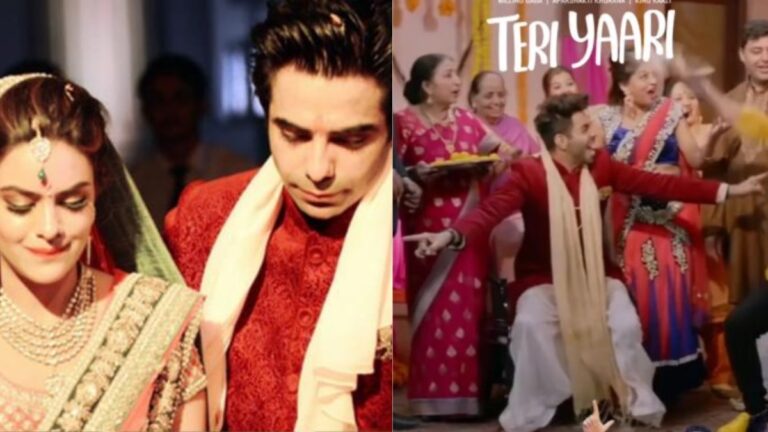
New Delhi, June 11, 2026 — Breaking into Bollywood is a notoriously steep climb, even when your sibling is already a household name. Actor, singer, and television host Aparshakti Khurana recently pulled back the curtain on his grueling early days in the entertainment industry, making a surprising and heartwarming revelation. Despite years of persistent networking, sending out countless cold emails, and working odd jobs to survive in Mumbai, his career didn’t see a single breakthrough until the exact day he married his wife, Aakriti Khurana.

Appearing on the talk show Double Date alongside Aakriti, hosted by celebrity couple Neha Dhupia and Angad Bedi, Aparshakti got incredibly candid about his unconventional path to fame. Before he became a recognized face through blockbusters like Dangal and the Stree franchise, his life was a cycle of unreturned text messages and unanswered casting calls.

The Unseen Years of Hustle

Long before he was commanding the silver screen or walking glamorous red carpets, Aparshakti was trying every possible angle just to establish a base in Mumbai. The actor revealed that he didn’t start his journey with scripts in hand; instead, he worked behind the scenes just to get his foot in the door.

Even during his time working as a radio jockey and handling smaller media assignments, Aparshakti spent his nights relentlessly pitching himself to the industry’s decision-makers. He took to his phone and email, directly messaging directors, casting heads, production companies, and television channels. The response to his endless hustle? Absolute silence. For months on end, not a single person replied to his inquiries or acknowledged his talent.

The Turning Point: The Magic of “Lady Luck”

The stagnation in his career took a dramatic, almost cinematic turn the moment he tied the knot with Aakriti. For an industry that often operates on unpredictable timelines and tight networks, what happened next defied logic and left the actor utterly stunned.

The sudden influx of opportunities from long-forgotten, three-year-old messages completely shifted his perspective on destiny. Laughing about his initial skepticism regarding cosmic timing and superstitions, the actor admitted, “I didn’t believe in lady luck at all. But then I realised aisa bhi kuch ho sakta hai (something like this can also happen).”

A Look Back at a Growing Legacy

While marriage may have unlocked the doors of opportunity, it was Aparshakti’s raw talent and unique comic timing that ensured those doors stayed wide open. Once the hosting offers rolled in, he quickly caught the attention of major film casting directors.

Over the past decade, Aparshakti has successfully shed the label of just being “Ayushmann Khurrana’s younger brother,” carving out a distinct identity in Hindi cinema.

His most recent cinematic appearance includes the romantic comedy-drama Jab Khuli Kitaab, written and directed by veteran artist Saurabh Shukla, where he shared the screen with legendary actors Pankaj Kapur and Dimple Kapadia.

Future Aspirations: From Set to Stitching

Aside from the emotional trip down memory lane, the interview featured lighter, unexpected moments regarding Aparshakti’s long-term future goals. Despite his current success on screen and behind a microphone, the actor hinted that his passions extend far beyond the parameters of the camera.

Reflecting on his early days as a stylist, he confessed to harboring a deep, quiet desire to master a traditional craft later in life. “Slowly, slowly, I will say goodbye to whatever I am doing now,” he revealed with a smile. “Mera bohat mann hai (I really want), after 10-12 years, to learn tailoring. Kapda kaise kaatna hai kaise silna hai (How to cut the fabric, how to stitch it).”

The episode also struck a deeply resonant chord with viewers as Aparshakti paused to remember his late father, sharing nostalgic, emotional stories about his roots in Chandigarh and the family values that keep him grounded despite the glitz and glamour of showbiz.

Ultimately, Aparshakti’s revelation serves as an inspiring reminder to thousands of aspiring artists in Mumbai’s brutal audition circuits. It highlights that success in the entertainment world relies heavily on preparation and persistence—but sometimes, a little bit of cosmic timing and the right life partner can finally tip the scales in your favor.

Miracle on Badrinath Highway: Bus Driver Averts Major Tragedy

0

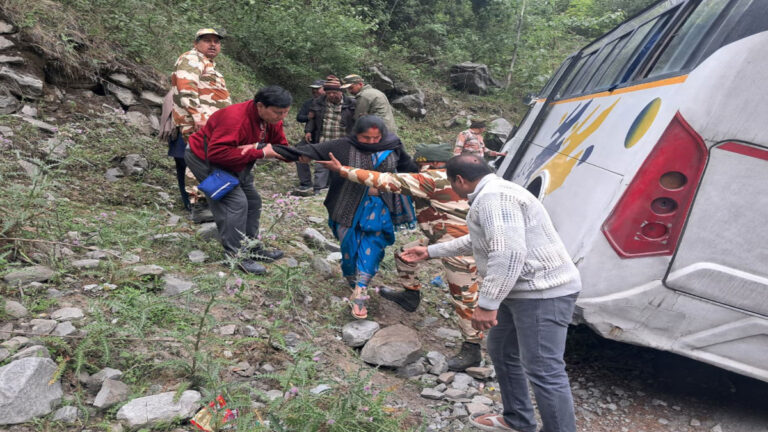
June 11, 2026 — A major catastrophe was averted on the highly sensitive Badrinath National Highway in Uttarakhand’s Chamoli district when a bus packed with pilgrims experienced a total brake failure while navigating a steep mountain descent. Thanks to the extraordinary alertness and prompt actions of the driver, the vehicle was deliberately guided into a hillside crash barrier, preventing it from plunging into a deep, rocky gorge just inches away.

All passengers on board escaped without major injuries, turning what could have been a horrific disaster into a miraculous story of survival.

A Sudden Crisis on Mountain Roads

The incident occurred during peak hours on the Badrinath Highway, a route currently heavily trafficked due to the ongoing Char Dham Yatra. The bus, carrying a full load of devotees returning from the Badrinath shrine, was traversing a narrow, winding stretch of road flanked by solid rock walls on one side and a sheer drop into a deep mountain valley on the other.

According to eyewitnesses and initial reports from local authorities, as the vehicle began descending a particularly steep incline, the driver realized the brakes had become entirely unresponsive. In mountainous terrains, brake failure is one of the most perilous mechanical glitches a heavy vehicle can encounter. The steep slopes cause vehicles to rapidly gain momentum under gravity, making them nearly impossible to steer safely around sharp, blind bends.

Realizing that the bus was accelerating out of control and heading straight toward the edge of the cliff, the driver kept his calm. Instead of panicking or swerving erratically, he utilized the heavy iron crash barriers lining the valley side of the highway. He deliberately steered the bus flush against the barrier, using the intense friction between the vehicle’s body and the metal structure to forcibly slow it down. The bus eventually came to a grinding halt, heavily tilted but firmly grounded, right on the brink of the deep gorge.

Swift Emergency Response by Security Forces

The sound of screeching metal and the cries of alarmed passengers immediately alerted locals and nearby security detachments. Personnel from the 23rd Battalion of the Indo-Tibetan Border Police (ITBP), who were stationed nearby for highway security and traffic management, sprang into action under the leadership of Inspector Gyan Prakash.

The ITBP rescue team, well-trained in high-altitude disaster response, arrived at the spot within minutes. The position of the bus was highly precarious, as any sudden shift in weight could have destabilized it further. Working carefully but swiftly, the jawans secured the vehicle and began evacuating the terrified passengers through the emergency exits and windows.

Local residents also ran to the site, creating human chains to help move the older pilgrims and children away from the edge of the road to a safe assembly point. The ITBP personnel administered basic first aid to a few passengers who sustained minor cuts and bruises during the sudden impact, but miraculously, no severe casualties or fatalities were reported.

Passengers Recount the Terrifying Ordeal

For the pilgrims on board, the experience was nothing short of a nightmare followed by a divine intervention. Many were resting or looking out at the scenic valleys when they suddenly felt the bus lurch violently and accelerate down the slope.

“We heard the driver pumping the brakes repeatedly, and then he shouted to the conductor that the system had failed,” said one of the rescued passengers, still visibly shaken. “Everyone started praying aloud. It felt like the end. But the driver stayed incredibly calm. He slammed the side of the bus into the barrier. The noise was terrifying, but it saved our lives. If those metal barriers weren’t there, or if the driver had lost his nerve, we would have been at the bottom of the valley.”

The swift arrival of the ITBP was also highly praised by the survivors, who noted that the security personnel handled the evacuation with immense care, ensuring that nobody panicked while climbing out of the tilted vehicle.

Growing Concerns Over Highway Safety Metrics

While this specific incident ended safely, it has brought public focus back to the ongoing challenges of road safety on Uttarakhand’s Himalayan routes. The Char Dham circuit sees hundreds of thousands of vehicles traveling every season, placing massive strain on local infrastructure and regional transport resources.

Local transport experts emphasize that drivers navigating these routes need specialized training in “engine braking”—using lower gears to control the vehicle’s descent speed rather than relying solely on the foot brakes.

Administration Steps Up Vigilance

Following the close call, the Chamoli district administration and state transport authorities took formal notice of the event. A technical team has been ordered to conduct a comprehensive mechanical inspection of the involved bus to determine whether the brake failure was caused by a sudden component rupture or negligence in routine maintenance.

The administration has also instructed highway patrol teams and regional transport officers (RTOs) to set up random mechanical check-posts along key points of the Badrinath and Gangotri highways. These check-posts will evaluate commercial fitness certificates, inspect the braking systems of incoming tourist coaches, and ensure drivers are taking mandatory rest breaks to combat fatigue.

The government has also stated it will review the structural integrity of crash barriers along high-risk zones of the highway, as the strength of the barrier in this specific incident proved to be the literal line between life and death for nearly three dozen people. Meanwhile, alternative transport arrangements were promptly made by the authorities to ensure that all the stranded pilgrims reached their final destinations comfortably and safely.

POVA 8 5G Debuts with 8,000mAh Battery and “Alive Matrix Display”

0

New Delhi, June 11, 2026 — Pushing the boundaries of mid-range smartphone design and hardware, the POVA 8 5G has officially launched in India. Operating with a distinct standalone brand identity, the POVA series continues to capture the tech-savvy crowd by offering an aggressive blend of futuristic aesthetics and heavy-duty internals. Starting at ₹29,999, the new device targets gamers, power users, and anyone tired of standard rectangular glass slabs, introducing an innovative rear LED notification interface and a battery large enough to comfortably last for days.

A Futuristic Visual Statement: The Alive Matrix Display

The standout feature of the POVA 8 5G is its highly customized rear panel. Moving away from traditional smooth or gradient backs, it features a sci-fi-inspired, semi-transparent layout built with sharp geometric detailing.

Integrated directly next to the rear camera module is the brand’s new Alive Matrix Display—a dotted LED array reminiscent of a retro-futuristic grid. Unlike standard single-LED indicators, this system behaves as a dynamic lighting setup. It breathes, flashes, and pulses in distinct, customizable patterns depending on incoming calls, application notifications, and real-time charging status. Gamers can also sync the lighting to shift rhythmically with in-game actions, giving the device an undeniable cyberpunk charm that visually mimics premium, niche design phones on the market.

Untamed Endurance: Breaking Records with 8,000mAh

While the outer shell makes a bold stylistic claim, what rests underneath ensures absolute reliability. The POVA 8 5G introduces a massive 8,000mAh battery, a substantial 1,000mAh leap over its predecessor. To give context to that capacity.

Managing such an enormous reservoir requires specialized safety and thermal protocols. The phone features a multi-layered, 14,689 square millimeter cooling system designed to disperse internal heat evenly during intensive tasks. When it is time to plug in, the device utilizes 45W wired fast charging via a standard USB Type-C port, bringing the massive cell back to operational levels efficiently without causing dangerous heat spikes.

Smooth Performance and Specialized Hardware

On the hardware front, the device upgrades to a MediaTek Dimensity 7100 chipset, a 6-nanometer architecture mid-range processor that brings robust 5G capabilities across 20 distinct bands. This chip features an octa-core layout running at up to 2.4GHz, striking a calculated balance between heavy multitasking and power management.

To prevent network drops or performance stutters, the POVA 8 5G includes dedicated G1 and SE1 independent signal chipsets. These secondary chips act as hardware-level boosters, optimizing cellular reception and Wi-Fi stability when holding the phone horizontally while gaming.

Display, Optics, and Modern Software

Navigating the user interface feels exceptionally fluid thanks to a 6.76-inch Full HD+ (1080×2344 pixels) IPS flat display supporting a 144Hz refresh rate. It boasts a 91.29% screen-to-body ratio with an instantaneous touch sampling rate of 1500Hz, ensuring that gaming inputs are registered immediately. For outdoor legibility, the high brightness mode hits up to 950 nits.

For photography, the rear primary camera relies on a 50-megapixel Sony LYT-600 sensor featuring an f/1.8 aperture. It supports up to 2K video recording at 30 frames per second and pairs with an auxiliary light sensor to enhance low-light computational photography via Super Night Mode. Selfies are handled by a clean 13-megapixel punch-hole camera embedded at the top of the display.

Crucially, the phone shifts away from outdated software dependencies by shipping with Android 16 right out of the box, customized under the HiOS 16 skin. This ensures the phone stays future-ready with the latest security protocols, privacy dashboards, and smoother background app retention algorithms.

Built to Last

Despite housing an 8,000mAh battery, the engineers managed to keep the physical thickness to a manageable 8.8mm, though it carries a substantial heft at 225 grams. To ensure the futuristic chassis survives real-world accidents, it comes with a certified IP64 rating for dust and splash resistance alongside tough MIL-STD-810H military-grade durability certification, meaning it can withstand moderate drops, vibrations, and environmental stress.

The POVA 8 5G is available in three striking finishes: Terminal Green, 16-Bit White, and Plasma Orange. The base 6GB RAM with 128GB storage model enters the market at ₹29,999, while the 8GB RAM option is priced at ₹31,999, with retail sales officially opening via Flipkart on June 18, 2026.

UP D.El.Ed Admission 2026: Official Notification Out, Apply Online From June 15

0

June 11, 2026 — The Uttar Pradesh Examination Regulatory Authority (Pariksha Niyamak Adhikari – PNP), Prayagraj, has officially released the detailed notification and schedule for the Diploma in Elementary Education (D.El.Ed) 2026 session. Aspiring primary school teachers can submit their applications online starting June 15, 2026 (afternoon onwards).

Formerly known as the Basic Training Certificate (BTC), the 2-year professional diploma is a mandatory prerequisite for anyone aiming to secure a government primary teaching job (Classes 1 to 5) across Uttar Pradesh.

Direct Merit Admissions: No Entrance Exam

In a massive relief for thousands of teaching aspirants across the state, the PNP has confirmed that there will be no entrance examination for the 2026 academic cycle. Admissions into both state-run District Institutes of Education and Training (DIET) and private elementary education colleges will be determined strictly on a merit-based system.

The combined merit rank (State Rank) will be automatically formulated by calculating the aggregate percentage marks obtained by the candidate in their Class 10 (Matriculation), Class 12 (Intermediate), and Graduation examinations.

Key Dates and Deadlines

Candidates must adhere to the timeline strictly, as the authority has clarified that no offline modes or late submissions will be entertained under any circumstances.

Total Seats and Academic Seat Matrix

For the 2026 academic session, a total of 2,39,500 seats are up for grabs across the state. This expansive structural framework includes:

  • Government Seats (DIETs): 10,600 seats distributed across 67 elite state-run institutions.
  • Private & Minority College Seats: 2,28,900 seats operating under 3,304 self-financed educational facilities.

Eligibility Criteria & Qualifications

Before jumping into the application portal, candidates must fulfill the strict foundational benchmarks outlined below.

1. Educational Qualifications

A candidate must have finished their primary, higher secondary, and tertiary education through legitimate institutions.

  • Completion of Class 10th and 12th from a recognized state or central education board.
  • A valid Bachelor’s Degree (BA, BSc, BCom, BTech, BBA, BCA, etc.) from a university recognized by the UGC.
  • Minimum Marks in Graduation: General and OBC candidates must possess at least 50% aggregate marks in their degree, while a 5% relaxation is given to SC, ST, and PwD applicants, bringing their threshold down to 45%.

2. Age Limits

  • Minimum Age: 18 years (as of the defining date mentioned in the upcoming prospectus).
  • Maximum Age: 35 years.
  • Relaxation: Upper age relaxations apply to reserved categories (OBC, SC, ST, and physically handicapped individuals) as per the existing Uttar Pradesh government mandates.

Comprehensive Step-by-Step Selection & Choice Allocation Process

The transition from an applicant to a student follows a sequential administrative layout designed to ensure total transparency.

1.Online Registration:June 15 to July 8.

Log onto the official portal at updeled.gov.in. Create a candidate profile by providing authentic basic details (Name, Date of Birth, Email, Mobile number) to obtain a unique system-generated registration number.

2.Application Fee Remittance:Deadline: July 9.

Pay the non-refundable registration fee via the secure integrated payment link using Net Banking, Debit/Credit cards, or UPI. The fee structure stands at ₹700 for General/OBC, ₹500 for SC/ST, and ₹200 for PwD candidates.

3.Completing Educational & Personal Data:By July 11.

Log back in to load detailed educational scores (10th, 12th, and Graduation marks). Upload clearly scanned digital formats of a recent colored photograph and signature matching the specific system pixel resolutions. Download and save the final application printout.

4.State Merit Rank Declaration:Tentatively August.

The authority compiles all educational index values across UP and publishes an absolute State Rank List. Every valid candidate receives an individual rank order.

5.Choice Filling & Advance Fee Payment:August – September.

Candidates log in based on their rank slabs to fill their preferences of DIETs and private colleges. A nominal non-refundable counseling holding choice fee of ₹5,000 is processed to lock selections.

6.Seat Allotment & Document Verification:October 2026.

The portal rolls out formal seat allotment allocations based on ranks and locked choices. Candidates must report directly to the allotted college for strict physical document validation, fee settlement, and final admission locking.

Essential Documentation Checklist

Candidates should compile and verify their physical paperwork in advance to secure hassle-free seat locking during the final verification rounds:

  • Printed copy of the Online UP D.El.Ed Application Form and Payment Receipt.
  • Original Marks sheets and Certificates of Class 10th, 12th, and all Graduation semesters.
  • Valid Domicile Certificate proving residency in Uttar Pradesh.
  • Category Certificate (OBC / SC / ST / EWS) issued by an authorized competent authority, if applicable.
  • Valid Government-issued Identity Card (Aadhaar Card, PAN Card, Voter ID, or Passport).
  • Recent passport-sized photographs (it is recommended to use the exact image uploaded in the online form).

Candidates are strongly encouraged to cross-check their aggregate graduation details with their physical marks sheets before final confirmation on the portal, as the board does not offer a correction window post-submission, and discrepancies lead to outright disqualification during counselling.

For a detailed visual guide covering the newly released notification, eligibility details, and a breakdown of the merit-based selection system, watch this informative video update on UP D.El.Ed Admission 2026 Notification Details. This video walks you through the entire application timeline and clarifies who is eligible to apply for this academic cycle.

“Pehle Heroine Thi”: Why Akshay Kumar’ Viral Remark Misses the Mark on Raveena Tandon

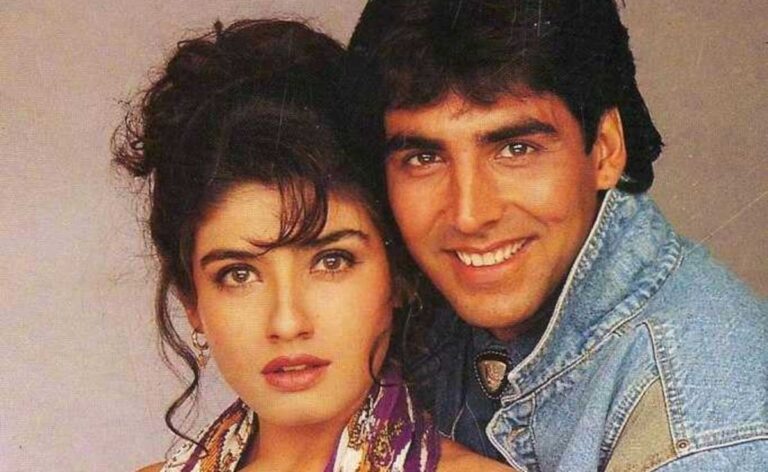
New Delhi, June 11, 2026: The dynamics of Bollywood have always been a fascinating blend of changing cinematic trends, complex personal histories, and evolving public sensibilities. Recently, an old comment by action star Akshay Kumar regarding his iconic 90s co-star Raveena Tandon went viral, sparking a wide-ranging conversation across social media platforms. Akshay’s remark—“Pehle heroine thi, ab heroine ki maa hai” (First she was a heroine, now she plays a heroine’s mother)—has thrown a sharp spotlight on the glaring contrast between how male and female actors age in the Hindi film industry, and how audiences perceive these generational shifts.

The comment itself traces back to a promotional event where Akshay was asked about his experience of reuniting with Raveena for their multi-starrer comedy Welcome to the Jungle. While delivered with his signature, off-the-cuff humor, the phrase captured something far deeper than a simple joke. It highlighted a long-standing double standard in Bollywood: while male superstars from the 1990s routinely continue to play romantic leads opposite women half their age, their female contemporaries are often systematically transitioned into maternal or supporting roles.

A History of Fireworks and Changing Roles

To understand the weight behind the words, one has to look back at the explosive chemistry Akshay Kumar and Raveena Tandon shared in the 1990s. They were one of cinema’s most defining pairs, delivering blockbusters like Mohra (1994) and Khiladiyon Ka Khiladi (1996). Songs like “Tu Cheez Badi Hai Mast Mast” and “Tip Tip Barsa Paani” became permanent fixtures in pop culture history. Beyond their sizzling on-screen presence, the duo shared a highly publicized real-life romance and engagement that eventually ended, leading them down completely separate personal and professional paths for over two decades.

Their casting in Welcome to the Jungle marked a historic reunion that fans had anticipated for nearly twenty-five years. However, the nature of their reunion emphasizes the very shift Akshay joked about. In the upcoming film, their roles are drastically reconfigured from the romantic pairings of their youth, reflecting the industry’s rigidity when it comes to casting veteran actresses.

The Evolution of the 90s Leading Lady

Despite the humorous tone of Akshay’s comment, the reality of Raveena Tandon’s career trajectory tells a completely different, much more empowering story. Raveena has not simply transitioned into playing “the heroine’s mother”; she has actively reinvented herself as a powerhouse performer on her own terms.

Rather than fading into the background of mainstream commercial cinema, Raveena chose to adapt and conquer new media. Her transition to digital streaming platforms showcased a depth of acting that standard 90s commercial roles rarely allowed.

  • Aranyak (2021): She made a striking OTT debut as Kasturi Dogra, a fierce, flawed, and deeply dedicated cop navigating small-town politics and a brutal murder investigation.
  • K.G.F: Chapter 2 (2022): She commanded the screen as Ramika Sen, a powerful and unyielding Prime Minister, proving that her screen presence remained unmatched.
  • Karmma Calling (2024): She stepped into the shoes of an ultra-glamorous, cold, and calculating high-society matriarch, earning immense praise for her nuanced performance.

Through these projects, Raveena proved that while the traditional definition of a “commercial Bollywood heroine” might have a strict shelf life, the longevity of a true artist does not.

Shifting Audience Expectations

The resurfacing of Akshay’s comment comes at a time when modern moviegoers are increasingly critical of ageism and the male gaze in cinema. Contemporary audiences are no longer satisfied with watching aging male actors paired with significantly younger actresses while senior female actors are sidelined.

There is a growing demand for multi-dimensional narratives where women over forty are central characters with independent agency, rather than narrative plot devices used to complement a male protagonist’s journey. Film critics note that the industry is gradually being forced to acknowledge this shift, as streaming platforms continue to greenlight female-led projects that achieve massive commercial success.

Ultimately, Akshay Kumar’s comment reflects an older, traditional Bollywood mindset—one where a woman’s value on screen was directly tied to her youth and her proximity to the leading man. However, the modern response to his statement shows how much the landscape has evolved. Raveena Tandon’s ongoing success is living proof that a modern actress doesn’t have to settle for being just “the mother.” She can be the anchor, the hero, and the driving force of the story.

Odisha Train Scare: Major Collision Averted Near Bhubaneswar

0

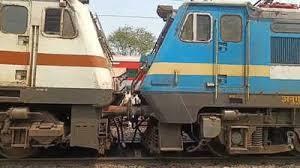
New Delhi, June 11, 2026: A potentially catastrophic railway accident was narrowly avoided on Thursday morning near the busy Bhubaneswar Railway Station in Odisha. In an incident that triggered widespread panic among railway personnel and nearby residents, two empty train rakes ended up on the exact same track, moving directly toward one another.

The tense situation unfolded on the critical track stretch near the Jharpada overbridge. Fortunately, due to timely intervention, sharp signaling awareness, and immediate coordination by alert ground staff, both trains were brought to a halt just in time, averting a major collision.

The Sequence of Events: How the Incident Unfolded

According to preliminary reports from railway officials and technical teams at the site, the incident took place during regular operational hours on Thursday morning. An empty passenger train rake had just departed from Bhubaneswar Railway Station, heading toward the Mancheswar coach maintenance depot for scheduled upkeep. Concurrently, another empty train rake was moving in the opposite direction, travelling from the Mancheswar depot back toward the main Bhubaneswar station.

As the two massive iron structures neared the Jharpada bridge area, monitoring systems and ground personnel realized that both rakes had been routed onto Track Number 2. Moving at slow speeds typical of shunting and local depot transfers, the operators managed to apply the emergency brakes, bringing the trains to a standstill a short distance from each other.

Because both train rakes were completely empty at the time of the incident, there were no passengers on board, and absolutely no casualties or injuries have been reported.

Official Response from East Coast Railway (ECoR)

Following the scare, senior railway officials, technical experts, and safety teams rushed to the Jharpada bridge area to secure the rolling stock, inspect the tracks, and assess the structural positioning of the trains.

The East Coast Railway (ECoR) later issued a clarifying statement to address the growing public concern and viral videos of the incident. According to ECoR, the situation occurred during a “slow-speed shunting movement” intended to transition the empty rakes for routine maintenance activities.

The railway administration confirmed that since the incident occurred on a secondary line specifically utilized for shunting and coaching depot transfers, the primary tracks remained clear. As a result, express trains and local passenger schedules running through the main Bhubaneswar division suffered zero delays or cancellations.

Safety Concerns and High-Level Inquiry Ordered

While the prompt braking prevented a disaster, the incident has raised severe questions regarding signaling infrastructure, track-allocation protocols, and human error. Given Odisha’s recent history with devastating rail accidents—most notably the tragic triple-train collision in Balasore—any event involving overlapping tracks triggers massive anxiety among commuters and experts alike.

Independent railway analysts are questioning how two trains traveling in completely opposite directions were simultaneously cleared to enter the exact same section of Track Number 2. Early indications point toward a potential track-changing error or a communication breakdown between the station control room and the shunting operators.

To determine the exact sequence of events, the Ministry of Railways has ordered a comprehensive, high-level technical inquiry into the lapse. A dedicated safety committee will examine:

  • The Electronic Interlocking System: Technical logs will be reviewed to check if a digital glitch incorrectly signaled that the track segment was unoccupied.
  • Point-Switching Operations: Investigators will inspect the physical track points near the Jharpada bridge to see if a mechanical failure caused a wrong route alignment.
  • Human Protocols: Communication logs between the station masters, cabin crew, and shunting drivers will be audited to identify any deviations from standard operating procedures (SOPs).

Railway authorities have firmly stated that strict disciplinary action will be taken against any employees or technical managers found guilty of negligence once the final investigation report is submitted.

The Role of Technology in Preventing Rail Collisions

This near-miss underscores the critical importance of modern collision-avoidance technology across the Indian Railways network. Across the country, the government has been progressively deploying Kavach—an indigenously developed Automatic Train Protection (ATP) system.

Kavach is explicitly engineered to prevent accidents by automatically applying brakes if the system detects another train on the same track, or if a driver passes a signal at danger (SPAD). It also manages train speeds in dense fog or challenging terrain.

While full network-wide implementation of Kavach is still actively underway across various zones, incidents like the one at Bhubaneswar emphasize why accelerating the rollout of automated safety nets is vital. Relying solely on manual oversight and traditional shunting protocols leaves a margin for error that modern rail systems simply cannot afford.

Current Site Status and Restoration

By Thursday afternoon, technical teams successfully managed to safely push back and separate the two stranded train rakes, clearing Track Number 2 for technical testing. The rolling stock has been moved to the yard for structural integrity checks to guarantee no damage was sustained during the emergency braking sequence.

Local authorities and railway police cleared the crowds that had gathered near the Jharpada overbridge after videos of the face-to-face trains began circulating widely on social media platforms. The East Coast Railway has urged the public not to succumb to panic or spread unverified rumors, reiterating that the main lines are operating at 100% capacity with rigorous safety checks strictly enforced.

Further updates regarding the specific findings of the signaling probe are expected to be made public by the Commissioner of Railway Safety (CRS) in the coming days.

The “Grandma Revolution”: How a 58-Year-Old Grandmother of 14 Defies Aging Through Weight Lifting

0

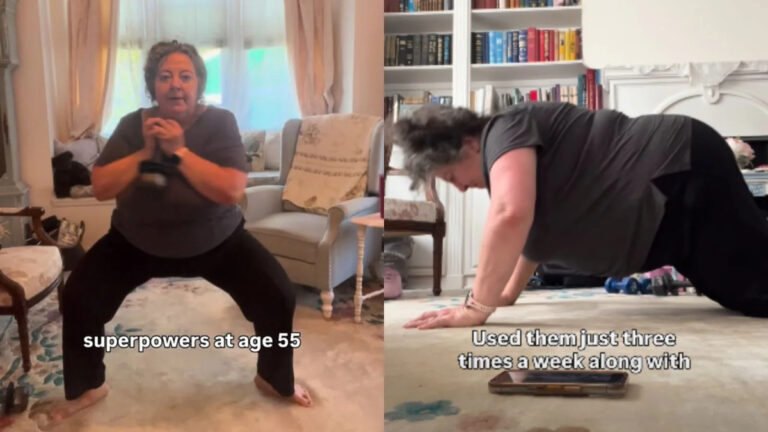
New Delhi, June 11, 2026: A viral video taking social media by storm has completely shattered traditional stereotypes about aging, fitness, and grandmotherhood. Meet Eileen White, a vibrant 58-year-old grandmother of 14 children, who has captured the hearts of millions online by sharing her remarkable transformation story. What makes her journey truly remarkable is that she did not spend her life as an elite athlete. In fact, she picked up weight lifting completely “by accident” just three years ago at the age of 55. Today, she is using her viral platform to spark a health revolution, proving to women worldwide that it is never too late to reclaim their strength and vitality.

An Accidental Discovery of Strength

Before her fitness journey began, Eileen’s daily reality was a heavy physical struggle. She lived with multiple chronic health conditions, including hypothyroidism, Hashimoto’s thyroiditis (an autoimmune disorder attacking the thyroid), and lupus. These conditions left her constantly dealing with intense fatigue, low stamina, and a sluggish metabolism—symptoms that many mistakenly accept as unavoidable side effects of getting older.

Her path to physical fitness began entirely by chance. Eileen did not join an expensive gym or buy high-tech workout equipment. Instead, she started small in her own home using a simple $2 resistance band she found on clearance at Walmart. Soon after, she stumbled upon a set of old dumbbells that her sons had abandoned in the house. Deciding to put them to use, she began working out just three times a week, combining basic weight training with a focused effort to eat nutrient-rich, real foods.

The physical response to her new routine was almost immediate, motivating her to stay consistent. Within a short time, Eileen noticed that her chronic fatigue began to lift. She no longer needed a nap in the middle of the day just to function. Everyday tasks that used to frustrate her suddenly became effortless—like opening a notoriously stubborn, cranky window in her house or walking up and down the stairs without losing her breath.

From Personal Triumph to Online Sensation

As the months rolled by, Eileen’s body underwent a profound composition shift, replacing lost muscle mass and burning fat. One day, after catching a glimpse of herself in a photograph, she was stunned by the visible changes. Her muscles were toned, her posture was upright, and she possessed an undeniable glow of health. In her viral Instagram post, she joyfully refers to this newfound physical strength as her personal “superpower,” describing it as a literal way to turn back the hands of time.

In the viral video clip that has now been shared across multiple platforms, Eileen can be seen confidently nailing a variety of intense strength-training movements that many assume are too difficult or dangerous for older adults. She gracefully executes weighted sumo squats, one-arm kettlebell rows, weighted lunges, push-ups, standing shoulder presses, and weighted arm dips. Her perfect form and bright energy serve as a direct contradiction to the cultural narrative that women should become fragile as they approach their sixties.

Now entering her third year of training, Eileen has successfully turned her personal victory into a career. She has become a certified fitness coach dedicated to guiding other women through their own midlife health revolutions. Her message to her rapidly growing community is simple, direct, and rooted in science.

The Medical Science Behind the “Superpower”

While Eileen’s story feels miraculous, medical professionals point out that her results are entirely backed by exercise science. For decades, older adults—particularly women—were warned to avoid heavy lifting out of fear of joint injuries or bone fractures. However, modern sports medicine has completely reversed this stance. Doctors now know that a lack of physical challenge, rather than aging itself, causes the rapid physical decline often seen in later decades.

When women go through menopause and enter their fifties, they naturally experience a sharp drop in estrogen levels, which accelerates the loss of bone mineral density and muscle mass—a condition known as sarcopenia (the gradual loss of muscle tissue due to aging). Resistance training acts as the ultimate counter-strategy to this process.

  • Rebuilding Bone Density: When muscles pull against bone during a lift, it signals the body to deposit more calcium, effectively reversing bone thinning and drastically lowering the risk of osteoporosis.
  • Boosting Metabolism: Muscle tissue is highly active, meaning it burns calories even when the body is at rest. By building muscle, Eileen naturally boosted her metabolism, helping her manage the weight gain caused by her thyroid conditions.
  • Joint Protection: Lifting weights with correct form strengthens the ligaments and muscles surrounding major joints, reducing chronic pain and protecting the body against accidental falls.

Redefining What It Means to Grow Old

Eileen White is part of a growing, global movement of “silver lifters” who are actively rewriting the rules of aging. Across social media, older fitness influencers are proving that the human body remains incredibly adaptable and capable of building new muscle well into its seventies and eighties.

What resonates most with Eileen’s millions of viewers is her ultimate goal. She isn’t working out to achieve an impossible aesthetic standard or to compete with twenty-year-olds; she is lifting to secure her personal freedom. She emphasizes that her “grandma revolution” is entirely about maintaining independence, moving without pain, and having the energy to run around with her 14 grandchildren.

Her accidental discovery serves as a beautiful reminder to anyone sitting on the sidelines of fitness. You do not need a lifetime of athletic experience, an expensive gym membership, or a perfectly healthy body to take control of your well-being. By starting exactly where you are, using what you have, and moving consistently, it is entirely possible to rewrite your health narrative and live a life defined by strength rather than age.

Thane Road Rage: Cab Driver Arrested for Brutal Assault on Senior Citizen

0

New Delhi, June 11, 2026: A shocking incident of civic road rage unfolded outside Jupiter Hospital near Viviana Mall in Thane West, Maharashtra. What began as a routine objection to a common civic offense escalated into a horrifying physical assault.

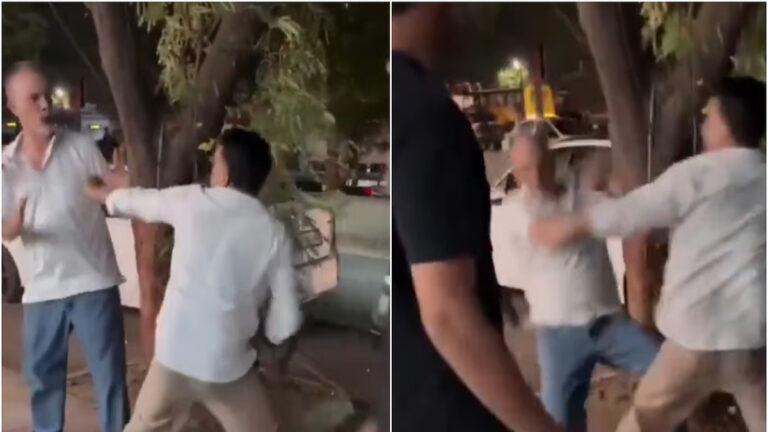
An aggregator cab driver brutally beat a senior citizen who had simply asked him to stop spitting on the public road. The violent encounter, which was captured on camera and widely circulated on social media, has ignited intense public fury and prompted direct, top-level political intervention from the state government.

The Incident: A Confrontation Over Public Hygiene Turns Violent

The confrontation took place on a Tuesday evening around 7:00 PM. The victim, identified as 70-year-old Sarosh Dastur—a member of the local Parsi community—was walking near the mall alongside his elderly wife, Radhika Dastur, who is in her early 70s. During their walk, Mr. Dastur observed an app-based cab driver gargling water and repeatedly spitting onto the road from his vehicle.

Concerned about public hygiene and community cleanlines, the elderly resident approached the vehicle and politely reprimanded the driver, asking him to refrain from littering and spitting in a public space.

Instead of acknowledging the mistake, the driver, identified as 40-year-old Nishant Dhar Shukla, instantly lost his temper. The verbal argument quickly turned into a physical attack. According to eyewitness accounts and police releases, Shukla exited his vehicle and began aggressively hurling verbal abuses at the elderly couple.

The situation rapidly turned critical when the driver lunged at the senior citizen, punching him severely in front of his helpless wife. The violence reached a dangerous peak when the driver picked up heavy objects from the roadside—including a large stone and tree branches—attempting to strike Mr. Dastur on the head.

The sheer force of the physical assault knocked the 70-year-old man heavily to the ground, leaving him with a fractured leg and multiple traumatic body injuries that required urgent medical stabilization.

Viral Footage Triggers Mass Outrage and Retaliation

The entire episode was recorded by a passerby and uploaded online, where it instantly went viral across platforms like X (formerly Twitter). The footage of a vulnerable senior citizen being violently shoved and attacked with stones for advocating basic civic manners caused an outpouring of shock and anger from residents across the Mumbai Metropolitan Region.

Netizens strongly condemned the driver’s behavior, pointing out a troubling increase in aggressive road rage and a widespread lack of basic civic discipline in public urban spaces.

As the digital outrage reached a boiling point, local political activists took matters into their own hands before the police could formally step in. Workers from the local Shinde-led Shiv Sena party, spearheaded by local Shakha chief Nitesh “Aau” Patole, launched an active search to locate the driver.

They tracked down Nishant Shukla in the Thane locality, cornered him, and subjected him to vigilante justice—physically thrashing him to “teach him a lesson”—before marching him directly to the Vartak Nagar Police Station to hand him over to law enforcement.

Government Intervention and Stringent Legal Action

The severity of the footage caught the direct attention of the state’s top leadership. Chief Minister Devendra Fadnavis labeled the incident as exceptionally serious and confirmed that strict, uncompromised directives had been delivered to the Thane Police Commissioner to deal with the perpetrator firmly.

Concurrently, Deputy Chief Minister Eknath Shinde, whose central political stronghold is Thane, personally intervened after reviewing the viral media. Visibly disturbed by the vulnerability of the elderly couple, Shinde contacted Thane Police Commissioner Ashutosh Dumbre to enforce the maximum applicable legal charges. Shinde stated:

Initially, police encountered a delay because the traumatized victim was reluctant to step forward and file an official complaint. To ensure the attacker did not evade justice, the local Shiv Sena representative filed the First Information Report (FIR) on behalf of the community.

The Broader Discourse: Road Rage and Civic Accountability

The Vartak Nagar Police are currently analyzing the viral video frame-by-frame and collecting additional eyewitness statements from passersby who witnessed the assault near the hospital. A senior police official confirmed that the use of dangerous weapons like stones against a defenseless elderly citizen heavily justifies the invocation of the attempt to murder charge, and the case will be fast-tracked to ensure a strong deterrent effect.

This distressing case has reopened critical debates regarding the safety of senior citizens in public urban spaces and the enforcement of anti-spitting laws across major cities. While municipal corporations regularly implement nominal fines for public littering and spitting, the lack of consistent ground-level enforcement frequently leaves conscious citizens exposed to hostility when they try to intervene.

Community groups and resident welfare associations in Thane are now calling for a strict background screening process for app-based aggregator drivers, along with harsher penalties for public health violations to prevent minor civic arguments from turning into life-threatening acts of road rage.