Home Blog Page 5

Samantha Returns: ‘Maa Inti Bangaram’ Twitter Review

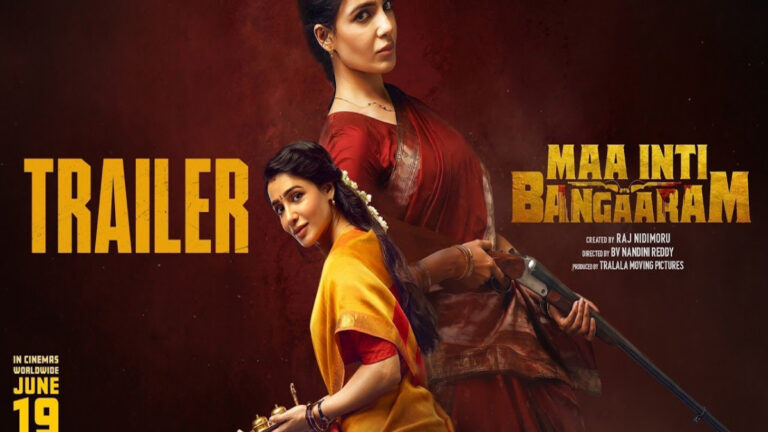
New Delhi, June 19, 2026: The long wait for Samantha Ruth Prabhu’s return to the silver screen is finally over. Her highly anticipated Telugu film, Maa Inti Bangaram (also spelled Maa Inti Bangaaram), officially debuted in theatres on June 19, 2026. Directed by B.V. Nandini Reddy—who previously collaborated with Samantha on the massive hit Oh! Baby—the action-comedy family drama arrived amidst monumental expectations from fans and industry insiders alike. As the first-day, first-show screenings concluded across the globe, social media, particularly X (formerly Twitter), erupted with instant reviews, breakdowns, and emotional commentary. Early word of mouth presents a classic cinematic split: while fans are passionately hailing Samantha’s powerhouse performance and coronation as a “Lady Superstar,” a section of the audience and critics feel let down by the film’s predictable writing and sluggish second half.

A Strong Box Office Foundation Pre-Release

Even before the first reel ran in theatres, Maa Inti Bangaram had achieved a rare milestone for female-led cinema in the South Indian film industry. Produced under the banner of Tralala Moving Pictures by Himank Duvvuru, Raj Nidimoru, and Samantha herself, the film recovered its entire budget before its release. With production costs estimated between ₹25 crore to ₹30 crore, intense competition for theatrical, satellite, and digital streaming rights ensured that the project turned profitable days ahead of its release date.

Producer Himank Duvvuru expressed great satisfaction with the pre-release response, noting that early deals were structured carefully to guarantee win-win scenarios for distributors. Director Nandini Reddy also promised fans that they would see “the Sam you like, times 10.” This financial cushion alleviated box office pressure, leaving the focus entirely on how the audience would receive the narrative content.

The Plot: A Hidden Past Meets Traditional Family Values

At its core, Maa Inti Bangaram is designed as a commercial family entertainer with a sharp twist. The story follows a woman (played by Samantha) with a deeply buried, action-heavy past who marries into a highly traditional household. As she fights to earn her place and belong within a conservative family structure, a sudden danger from her former life catches up with her. The narrative engine revolves around her attempts to fiercely defend the very family that doubts her, all while desperately trying to keep the truth of her lethal skill set hidden from them.

The movie co-stars Diganth Manchale, Gauthami, and features an eye-catching appearance by popular television host and actress Sreemukhi. Combining family sentiments, comedy, high-octane action sequences, and a touch of a thriller element, the film aims to appeal to a broad demographic.

Fans Celebrate the “Lady Superstar”

For loyal fans of Samantha, Maa Inti Bangaram is being widely celebrated as a triumphant personal comeback. Social media users have flooded X with clips and screenshots, loudly proclaiming the film a “one-woman show.” Audiences have universally praised Samantha’s screen presence, noting that she effortlessly handles both the lighthearted domestic comedy and the sudden, explosive action blocks.

Many viewers highlighted specific sequences that elevated the theater experience. The pre-interval fight sequence, an entertaining and humorous cooking block, and a pivotal temple episode have emerged as crowd favorites. For a significant portion of the audience, Samantha’s emotional range and physical conviction in the action scenes justify the “Lady Superstar” tag. These viewers describe the movie as an engaging, wholesome family entertainer that delivers a highly satisfying theatrical experience.

The Critique: Predictable Writing and a Flat Second Half

However, the early social media reception is far from unanimous. A substantial segment of viewers expressed disappointment, pointing out structural flaws in the movie’s screenplay, co-written by Vasanth Maringanti and Raj Nidimoru. The primary grievance shared across multiple X reviews is that the film falls back into familiar tropes and predictable narrative beats.

Several viewers remarked that while the initial setup and the first half were highly engaging, the second half lost significant momentum. Critics on social media noted that the movie began to resemble a high-budget television serial rather than a cinematic experience in its latter half. The backstory explaining Samantha’s hidden past was deemed weak by some, and the main villain’s track lacked the menace required to create real tension. For these filmgoers, major emotional and heroic “elevation” moments fell flat because the script failed to build proper motivation, leading to an overall rating hovering around 2.25 out of 5 stars from harsher critics.

Technical Elements Divide the Audience

The technical aspects of Maa Inti Bangaram have also become a major talking point online, particularly the work of acclaimed music composer Santhosh Narayanan. Known for his stellar background scores (BGM), his work on this project has split the audience down the middle.

Some moviegoers loved the audio design, asserting that Santhosh Narayanan’s heavy, rhythmic score provided the perfect adrenaline boost during Samantha’s mass action scenes. Conversely, a vocal group of critics complained that the background score felt subpar or mismatched for a family-centric drama, failing to underscore the emotional moments effectively. On the visual side, the cinematography by Om Prakash received steady praise for its vibrant colors, making the traditional household setting feel warm and visually appealing.

Sreemukhi and Supporting Cast Steal Scenery

Amidst the heavy focus on Samantha, the supporting cast has managed to earn quite a bit of praise. In particular, Sreemukhi’s performance has caught many early viewers by surprise. X users have noted that she looks stunning on screen and brings an infectious, cute energy to her scenes, occasionally threatening to overshadow the primary narrative with her impeccable comic timing. The chemistry between Samantha and the supporting actors, including veteran actress Gauthami, provides the film with its strongest emotional anchor, ensuring that the domestic comedy tracks land well with the audience.

Final Thoughts: A Decent One-Time Watch For Families

Ultimately, Maa Inti Bangaram seems to fulfill its baseline promise as a family entertainer, even if it doesn’t entirely shatter records creatively. It acts as a solid showcase for Samantha Ruth Prabhu’s versatility as an action-drama heroine, proving that her market pull remains intact after her brief hiatus from the big screen.

While cinephiles seeking tight, unpredictable scripts might find the writing lacking and the execution a bit flat in the second half, the movie offers enough clean humor, decent action choreography, and family sentiment to satisfy general audiences looking for light entertainment over the weekend. With its financial investments already secure, the film’s long-term theatrical run will depend heavily on whether family audiences choose to embrace its traditional core over its narrative flaws.
PM Modi Extends Warm Birthday Wishes to Rahul Gandhi as LoP Turns 56

0

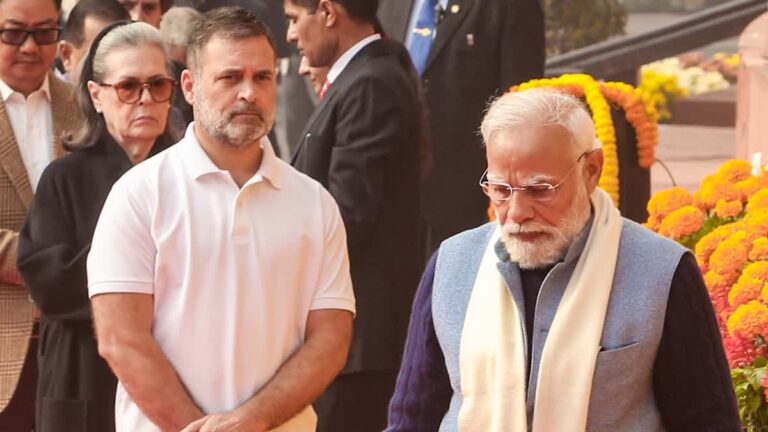
New Delhi, June 19, 2026 — In a traditional display of cross-party civility that cuts through India’s intense political landscape, Prime Minister Narendra Modi extended his warm greetings to Congress leader and Leader of the Opposition (LoP) in the Lok Sabha, Rahul Gandhi, on the occasion of his 56th birthday.

Taking to the social media platform X (formerly Twitter) early Friday morning, Prime Minister Modi shared a brief yet respectful message acknowledging the senior leader’s special day:

The gesture, though brief, carries significant weight in the current political climate. It reflects a deep-rooted tradition of parliamentary courtesy that persists despite fierce, ongoing ideological battles between the ruling Bharatiya Janata Party (BJP) and the opposition coalition, the INDIA bloc.

A Historic Political Journey

Born on June 19, 1970, to former Prime Minister Rajiv Gandhi and former Congress President Sonia Gandhi, Rahul Gandhi has been a core figure in Indian politics for over two decades. His path from representing the family bastion of Amethi in 2004 to his current prominent role as the official Leader of the Opposition has seen major shifts.

After representing the Wayanad constituency in Kerala between 2019 and 2024, Gandhi successfully contested the 2024 general elections from Rae Bareli in Uttar Pradesh—a victory that solidified his position as the 12th Leader of the Opposition in the Lok Sabha. His elevated position officially gives him a status equivalent to a cabinet minister, giving him a powerful seat at the table during parliamentary debates and major national policy negotiations.

Festive Spirits and Youth Outreach at Congress Headquarters

Across the capital, the mood inside the Congress party was celebratory. Bright banners, massive floral arrangements, and congratulatory posters lined the perimeter of the Congress headquarters at Indira Bhawan in New Delhi. Party workers and senior leaders gathered early in the day to distribute sweets and burst crackers.

Significantly, this year’s celebrations moved beyond traditional gatherings. Reflecting a push to appeal to younger generations, the Indian National Youth Congress (IYC), led by National President Uday Bhanu Chib, organized a massive national initiative. Dubbed the “Mega Job Fair 2026,” the event brought together over 150 multinational corporations and domestic companies to distribute thousands of offer letters to unemployed youth across the country.

The official handle of the Indian National Congress (INC) published an emotional tribute online, framing Gandhi’s political career as a fight for compassion and institutional integrity.

Widespread Tributes Across the Political Spectrum

Prime Minister Modi was far from the only political heavyweight to mark the day. Leaders from various regional and national parties set aside partisan divides to extend their respect to the Leader of the Opposition.

Supporters and allies praised Gandhi’s extensive public campaigns, such as his previous cross-country march initiatives, which party strategists believe re-energized the opposition base and led to a strongly competitive performance in recent general elections.

The Importance of Parliamentary Civility

Political analysts note that public exchanges of courtesy between Prime Minister Modi and Rahul Gandhi offer a reassuring breath of fresh air for citizens. While both leaders frequently engage in sharp rhetorical battles on the floor of the Lok Sabha—debating core national issues like economic growth, employment, social justice, and national security—personal milestones provide an essential bridge for maintaining institutional harmony.

In a functional democracy, robust disagreement is expected, but structural respect remains vital. The Prime Minister’s public greeting acts as a subtle reminder that despite deep ideological differences, the offices of the Prime Minister and the Leader of the Opposition share a common responsibility toward governance and national welfare.

As the day progressed, Gandhi spent time meeting with grassroots party workers and ordinary citizens who had traveled from various states to catch a glimpse of their leader. Moving forward, the political calendar remains packed with state elections and policy debates, but for today, the sharp edges of Indian politics softened momentarily around a milestone 56th birthday celebration.

‘Priya Mitra Narendra’: Emmanuel Macron Drops Linguistic Surprise with Hindi Farewell Message for PM Modi

0

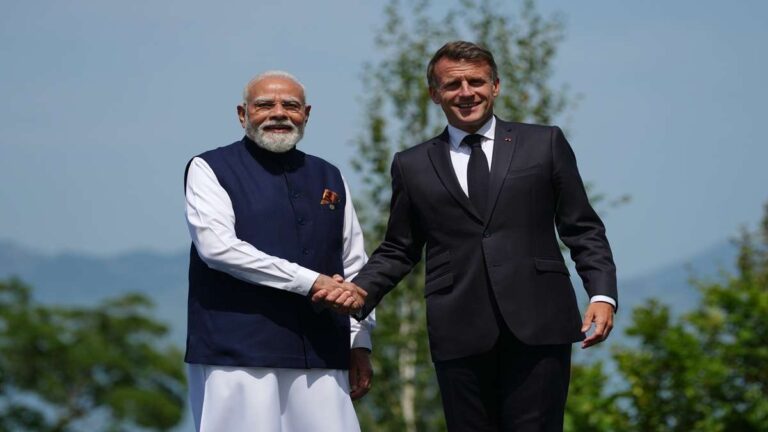
New Delhi, June 19, 2026 — In a striking departure from rigid diplomatic protocol, French President Emmanuel Macron has wrapped up Indian Prime Minister Narendra Modi’s high-profile tour of France with a deeply personal, multilingual farewell. In a video message that quickly went viral across global social media platforms, Macron addressed the Indian Prime Minister in Hindi, signaling the deep camaraderie and growing strategic alignment between Paris and New Delhi.

Standing alongside PM Modi at the conclusion of a packed, multi-city tour that spanned Nice, Evian-les-Bains, and Paris, President Macron looked directly into the camera to deliver his carefully practiced message.

Breaking into a warm smile immediately after, Macron candidly added in English, “I hope it was correct.” He then continued to express his gratitude, stating, “My dear Narendra Modi, I wanted to thank you so much for your friendship. France loves you. I am so happy you are with so many friends in Paris before leaving and going back to Delhi.” Macron signed off his address with an enthusiastic “Jai Hind” and announced plans to visit India in February.

A Multilayered Diplomatic Tour

The warm farewell marked the culmination of an intense and highly productive diplomatic itinerary. PM Modi’s visit to France was multifaceted, bridging top-tier global governance, cutting-edge technology, and localized bilateral diplomacy.

The tour kicked off on June 14, 2026, on the scenic French coast at the historic Villa Kerylos in Nice. This meeting was highly anticipated, marking the first formal bilateral interaction between the two leaders since India and France officially upgraded their relationship to a “Special Global Strategic Partnership.”

From Nice, the diplomatic momentum shifted to the lakeside town of Evian-les-Bains, where PM Modi attended the G7 Summit. On the sidelines of the summit, the Prime Minister engaged in heavy-hitting discussions on global economic stability, artificial intelligence, and supply chain resilience, holding key meetings with several world leaders, including US President Donald Trump.

High-Tech Synergies at VivaTech

The final leg of the tour brought the leaders to Paris, where they pivoted from traditional geopolitics to future-focused economic engineering. Modi and Macron jointly attended VivaTech, Europe’s largest startup and technology exhibition, where India served as the official AI Country Partner.

Walking the exhibition floors, the two leaders interacted directly with tech entrepreneurs, innovators, and venture capitalists. They explored major breakthroughs in:

  • Generative Artificial Intelligence: Exploring collaborative frontier models.
  • Deep Tech & Mobility: Accelerating hardware integration.
  • Space Technology: Reviewing joint private-sector space ventures.

During the Bharat Innovates segment of the tech summit, President Macron took a moment to formally congratulate PM Modi on a historic domestic milestone. Having recently surpassed Jawaharlal Nehru’s record to become India’s longest-serving continuously elected Prime Minister, Modi received high praise from his French counterpart.

Defense, Space, and the “Demographic Dividend”

Beyond the symbolic gestures, the visit yielded concrete advancements in defense and aerospace cooperation. In their bilateral reviews, Modi and Macron moved past a standard buyer-seller dynamic, locking in agreements focused on the co-design, co-development, and joint production of advanced defense platforms.

In the aerospace sector, the leaders lauded the ongoing collaboration between the Indian Space Research Organisation (ISRO) and the French National Centre for Space Studies (CNES). Macron explicitly cited India’s landmark Chandrayaan-3 mission—which achieved a historic landing near the Moon’s south pole in record time and at a fraction of standard global costs—as definitive proof of India’s operational efficiency and innovation capabilities.

Addressing the gathered tech audience, Macron explained why France is heavily betting on Indian talent.

The Power of “Personal Diplomacy”

While the joint statements outlined major progress in industrial defense and technological research, global analysts are focusing heavily on the personal chemistry displayed between the two leaders. Geopolitical experts note that personal gestures—like Macron’s Hindi sign-off or the frequent warm embraces seen on the VivaTech floor—are calculated elements of modern statecraft designed to signal an unshakeable alignment to external observers.

For France, a deepened relationship with New Delhi provides a reliable, democratic anchor in the Indo-Pacific region. For India, France remains an independent-minded Western ally that consistently respects strategic autonomy and champions Indian representation in global forums.

As PM Modi’s aircraft departed Paris for New Delhi, the resonance of Macron’s “Priya Mitra” message lingered as a testament to an evolving geopolitical alliance. With a return visit by President Macron slated for February, the momentum generated in Nice, Evian, and Paris is set to carry forward into a new chapter of Euro-Asian strategic cooperation.

Kareena & Prithviraj’s ‘Daayra’ Sets September 18 Release

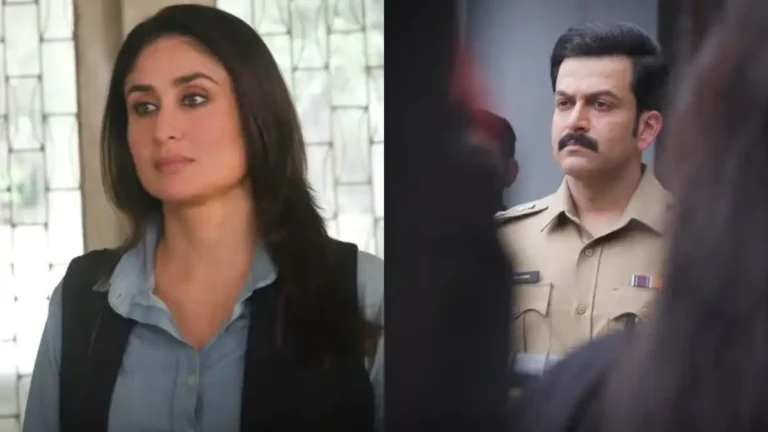
New Delhi, June 18, 2026: In what is already shaping up to be one of the most anticipated cinematic events of the year, powerhouse filmmaker Meghna Gulzar is ready to return to the big screen with her next directorial venture, Daayra. Fronted by Bollywood royalty Kareena Kapoor Khan and Malayalam cinema icon Prithviraj Sukumaran, the highly anticipated crime thriller is officially scheduled to lock its theatrical windows on September 18.

The announcement, which arrived with just a three-month countdown to the release, has sent waves of excitement through moviegoers. To mark the date, the makers skipped a traditional flashy poster and instead unveiled a raw, behind-the-scenes (BTS) look into the gritty world they have spent months building. Featuring glimpses of Kareena Kapoor Khan donning a police uniform, flashing sirens on law enforcement vehicles, and a stark, realistic atmosphere, the preview signals a return to the hard-hitting, grounded storytelling that has defined Meghna Gulzar’s celebrated filmography.

A Casting Coup: When Two Cinematic Worlds Collide

At the heart of the intense buzz surrounding Daayra is its unprecedented central pairing. Bringing together Kareena Kapoor Khan and Prithviraj Sukumaran represents a massive casting coup, combining two distinct powerhouses who have never shared the screen before.

Kareena Kapoor Khan, currently navigating a remarkable phase of her 25-year career, continues to champion fearless artistic reinvention. Moving gracefully between commercial blockbusters and complex, character-driven narratives, her inclusion as a police officer in Daayra promises a deeply layered performance.

Matching her step-for-step is Prithviraj Sukumaran, widely regarded as one of Indian cinema’s most versatile and accomplished performers. Fresh off massive critical and commercial triumphs like the survival drama The Goat Life and the politically charged Jana Gana Mana, Prithviraj brings a commanding screen presence and fierce intensity. In Daayra, both actors slip into the boots of police officers, caught in a high-stakes narrative where their morals and duties will be tested to the absolute limit.

Grounded in Reality: Crime, Justice, and Accountability

True to Meghna Gulzar’s signature style, Daayra is inspired by real-life incidents. The film is described as an intense, unvarnished drama that heavily examines the dark themes of crime, justice, and accountability. Co-written by Meghna Gulzar alongside Yash Keswani and Sima Agarwal, the narrative aims to explore the deep systemic cracks that form when the delicate line between upholding the law and delivering actual justice begins to blur.

Gulzar has built a formidable reputation as a filmmaker who refuses to sugarcoat real-world complexities. Whether it was exploring the tragic anatomy of a real-life murder investigation in Talvar or tracking the emotional toll of espionage in Raazi, her films possess an inherent emotional depth and gut-punch intensity. With Daayra, she turns her lens toward the psychology of law enforcement and punishment, promising a gripping exploration that feels urgent and timely.

Powerhouses Behind the Camera

The scale of Daayra is further amplified by the creative heavyweights driving its production. The film marks the third major collaboration between Meghna Gulzar and Junglee Pictures. Their history together has yielded some of modern Hindi cinema’s finest critical darlings, including Talvar and the Alia Bhatt-led blockbuster Raazi.

Furthermore, Daayra marks a milestone industry collaboration as the first-ever joint production between Junglee Pictures and Pen Studios (presented by Dr. Jayantilal Gada). According to studio insiders, the two distribution and production giants united seamlessly over this specific script, driven by a shared belief that this particular story needed to be told immediately.

The technical blueprint of the film is equally robust, boasting top-tier crew members ensuring a distinct visual and auditory identity:

  • Director of Photography (DOP): Saurabh Goswami
  • Editor: Charu Shree Roy
  • Production Designers: Subrata Chakraborty and Amit Ray
  • Action Director: Parvez Mohammand

The Raw and Unseen Look: What the BTS Glimpse Tells Us

The decision to announce the release date using raw, unedited behind-the-scenes footage rather than a polished teaser has drawn immense praise from film critics. The video snippet strips away traditional Bollywood glamour, prioritizing authenticity.

The footage showcases Kareena and Prithviraj moving through starkly lit backdrops, interacting with the crew, and stepping into character. Kareena’s appearance in uniform feels stripped-back and authoritative, immediately evoking a sense of no-nonsense realism. The visual landscape is dominated by rain-soaked streets, pulsing police sirens, and intense, quiet moments between shots that highlight the psychological weight of the story. It effectively mirrors the title itself—Daayra, which translates to “boundaries” or “perimeters”—evoking the feeling of characters trapped within systemic or moral circles they cannot easily escape.

What to Expect This September

As Indian cinema increasingly embraces cross-industry collaborations, Daayra stands at the absolute vanguard of this movement. It isn’t just a massive pan-Indian pairing for the sake of box office math; it is a deliberate union of top-tier talent servicing a story grounded in human reality.

With exactly three months left before the curtains rise, the countdown has officially begun. Audiences can expect a deeply atmospheric, dialogue-heavy thriller that relies on psychological tension rather than mindless action sequences. Mark your calendars for September 18, as Meghna Gulzar, Kareena Kapoor Khan, and Prithviraj Sukumaran prepare to take us on a provocative journey through the gray areas of crime and human justice.

SBI PO 2026 Notification Out: 1,500 Vacancies Announced, Check Details

0

New Delhi, June 18, 2026: The State Bank of India (SBI) has officially released its highly anticipated recruitment notification for the position of Probationary Officer (PO) for the 2026-27 financial year. Banking aspirants across the country can now access the detailed notification directly on the bank’s updated official portal. For this recruitment cycle, India’s largest public sector bank has announced a total of 1,500 vacancies.

The online registration and application modification window officially opened on June 18, 2026, and candidates have until July 8, 2026, to complete their applications and submit the necessary fees. Considered one of the most prestigious entry-level jobs in the Indian banking sector, the SBI PO designation offers rapid career progression, an attractive pay structure, and excellent job security. This comprehensive report covers everything you need to know about the eligibility criteria, selection process, major updates, and step-by-step registration instructions.

Key Highlights of the 2026 Recruitment

The 2026 recruitment notification introduces several minor modifications alongside an updated compensation plan. Before deep-diving into the finer details, here is a quick breakdown of the core numbers and updates announced in the official document.

Category-Wise Vacancy Breakdown

Out of the 1,500 total advertised seats, the bank has divided the recruitment into 1,446 regular openings and 54 backlog openings carried forward from previous years. The vacancies are distributed among various categories as follows:

  • Unreserved (UR / General): 588 posts
  • Other Backward Classes (OBC – Non-Creamy Layer): 390 posts
  • Scheduled Caste (SC): 234 posts (216 Regular + 18 Backlog)
  • Scheduled Tribe (ST): 144 posts (108 Regular + 36 Backlog)
  • Economically Weaker Sections (EWS): 144 posts

Additionally, a 4% horizontal reservation is applicable for Persons with Benchmark Disabilities (PwBD) under the prevailing guidelines of the RPWD Act, 2016.

Eligibility Criteria: Who Can Apply?

To avoid getting disqualified at a later stage, applicants must thoroughly verify that they satisfy the educational, age, and attempt limits specified by the bank as of the designated cut-off dates.

1. Educational Qualifications (As of Sept 30, 2026)

Candidates must hold a graduation degree in any discipline or stream from a recognized university, or possess an equivalent qualification recognized by the Central Government.

  • Final Year Students: If you are in your final year or semester of graduation, you are eligible to apply provisionally. However, you will need to produce definitive proof of having passed your graduation examination on or before September 30, 2026, if shortlisted for the interview round.
  • Professional Degrees: Candidates possessing professional qualifications such as Chartered Accountancy (CA) are also fully eligible to apply.

2. Age Limit (As of April 1, 2026)

Applicants must be at least 21 years old and must not have crossed the age of 30 years as of April 1, 2026. This implies that candidates must have been born between April 2, 1996, and April 1, 2005 (both dates inclusive). Relaxations in the upper age limit apply to reserved categories:

  • OBC (Non-Creamy Layer): 3 years relaxation (up to 33 years)
  • SC / ST: 5 years relaxation (up to 35 years)
  • PwBD (General/EWS): 10 years relaxation

3. Number of Attempts

Unlike other banking exams, SBI limits the number of times a candidate can appear for the test. An attempt is only counted if the candidate actually appears for the Phase-II Main Examination. Appearing in the Phase-I Preliminary Exam does not count as a formal attempt. The upper limit for General/EWS candidates is set at 6 attempts, while General PwBD and OBC candidates are permitted up to 9 attempts.

The Three-Phase Selection Process

The SBI PO selection architecture is highly competitive and is structured into three individual phases to assess aptitude, technical knowledge, communication skills, and personality traits.

Phase I: Preliminary Examination (Expected August 2026)

The Prelims is an objective online test evaluating foundational skills. It serves as a screening filter and consists of 100 questions carrying 1 mark each, with a composite duration of 1 hour. A negative marking penalty of 1/4th (0.25) of a mark is deducted for every incorrect response. It features three sections:

  • English Language: 30 questions (20 minutes)
  • Quantitative Aptitude: 35 questions (20 minutes)
  • Reasoning Ability: 35 questions (20 minutes)

Phase II: Main Examination (Expected September 2026)

Candidates who score above the qualifying baseline in the Prelims are called for the Main Examination. This phase comprises an Objective Test (200 marks, 3 hours duration) immediately followed by an online Descriptive Test (50 marks, 30 minutes duration).

  • Objective Sections: Reasoning & Computer Aptitude (60 marks), Data Analysis & Interpretation (60 marks), General/Economy/Banking Awareness (40 marks), and English Language (40 marks).
  • Descriptive Section: Candidates must type a Letter and an Essay directly onto the computer terminal.

Phase III: Psychometric Test, Group Exercises & Interview

Shortlisted individuals undergo a psychometric evaluation aimed at mapping personality traits and behavior. This is followed by a Group Discussion (20 marks) and a formal Interview (30 marks) to test corporate suitability and situational leadership. The final merit list is prepared by assigning a 75:25 weight distribution to the Phase-II (Mains) and Phase-III scores, respectively.

Step-by-Step Guide on How to Apply

Eligible candidates must complete their registrations exclusively via the online pathway. Ensure you have a stable internet connection, scanned copies of your photograph, signature, left thumb impression, and your Aadhaar card handy before executing these steps.

1.Access the Official Career Portal:Step 1.

Navigate to the official website of the bank at sbi.bank.in. Once the page loads, scroll down and click on the Careers or Current Openings tab.

2.New Registration:Step 2.

Locate the link titled “Recruitment of Probationary Officers (Advertisement No: CRPD/PO/2026-27/09)” and click on Apply Online. Choose the Click Here for New Registration tab to generate your provisional registration number and password.

3.Fill in the Details:Step 3.

Log into your profile using the newly generated credentials. Fill out the application form carefully by entering your personal details, valid educational qualification marks, category, and preferences for exam cities.

4.Upload Required Documents:Step 4.

Upload your scanned photograph, a clear signature (do not use capital letters for signature), left thumb impression, and a handwritten declaration following the file size specifications mentioned in the notification booklet.

5.Application Fee Payment:Step 5.

Pay the application fee using any online payment infrastructure (Net Banking, Debit/Credit Card, or UPI). The application fee is ₹750 for General, EWS, and OBC categories, while SC, ST, and PwBD candidates are completely exempted from fee payments.

6.Final Submission & Printout:Step 6.

Preview the entire application form for spelling mistakes or data mismatches. Click Submit and immediately download or print out the confirmation page along with the e-receipt for your records.

Tentative Examination Schedule

The bank has put forward an aggressive timeline for the 2026 recruitment campaign. Aspirants should take note of the tentative timelines below to streamline their study schedules:

  • Online Registration & Fee Submission: June 18, 2026, to July 8, 2026
  • Download of Prelims Admit Cards: 2nd / 3rd week of July 2026 onwards
  • Phase-I Preliminary Examination: Expected August 2026
  • Declaration of Prelims Results: August / September 2026
  • Phase-II Main Examination: September 2026
  • Phase-III Psychometric & Interview Rounds: October / November 2026
  • Declaration of Final Merit List: December 2026

With the Preliminary examination expected to take place in August, candidates have roughly two months to consolidate their preparation. Because SBI does not enforce sectional cut-offs but maintains highly competitive overall cut-off parameters, maximizing accuracy and speed across sections is critical to securing a spot in this year’s batch of 1,500 Probationary Officers.

Samantha & Raj Nidimoru Seek Blessings at Tirupati Ahead of Maa Inti Bangaram Release

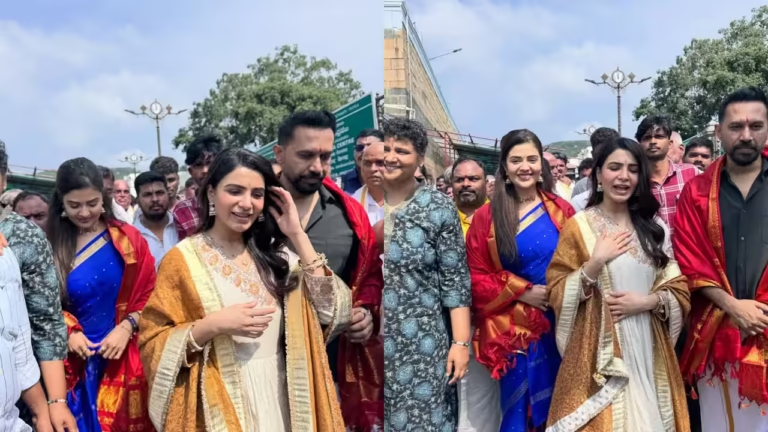
New Delhi, June 18, 2026: Ahead of the highly anticipated theatrical release of her upcoming Telugu film, Maa Inti Bangaram, actress and producer Samantha Ruth Prabhu visited the sacred hill shrine of Tirumala Venkateswara Temple in Tirupati to seek divine blessings.

The visit, which took place on Thursday, June 18, 2026, has captured significant media and fan attention. Samantha was accompanied by her husband, acclaimed filmmaker Raj Nidimoru, along with the core team of the film, including director BV Nandini Reddy, co-star Sreemukhi, and producer Himank Duvvuru of Tralala Moving Pictures.

A Seek for Divine Blessings Amid High Anticipation

Dressed in an elegant cream-colored kurta set paired with a traditional mustard-and-gold dupatta, Samantha appeared serene as she arrived for the morning darshan (sacred viewing). Raj Nidimoru opted for a classic black shirt paired with a traditional red temple shawl wrapped around his shoulders.

As news of their arrival spread, a massive crowd of devotees and fans gathered around the temple premises to catch a glimpse of the popular actress. Paparazzi and fan videos circulating on social media captured the hectic yet heartwarming moments outside the temple. In several clips, Raj Nidimoru could be seen protectively holding Samantha close, guiding her safely through the dense sea of fans while their security team managed the crowd.

Despite the overwhelming crowd, Samantha maintained her signature smile, warmly waving at her fans, interacting briefly with fellow devotees, and accepting their good wishes for her upcoming release. Following the prayers, the entire Maa Inti Bangaram team posed together for photographs outside the temple complex, sporting traditional marks on their foreheads as a symbol of the blessings received.

Maa Inti Bangaram: A Major Career Milestone

Scheduled to hit theaters worldwide on Friday, June 19, 2026, Maa Inti Bangaram holds massive significance for Samantha. The project marks her official return to the silver screen as a leading lady after a three-year hiatus following her 2023 films Shaakunthalam and Kushi.

While Samantha kept herself busy with prominent streaming projects—most notably Raj & DK’s global spy thriller series Citadel: Honey Bunny in 2024 and a brief cameo in the 2025 film Subham—fans have eagerly awaited her return to a full-fledged theatrical release.

Breaking the Stereotypical Mould

Directed by hitmaker BV Nandini Reddy, Maa Inti Bangaram presents Samantha in a refreshing yet fierce avatar. The film revolves around the life of an unassuming, traditional housewife living within a conservative household in the 1980s. While she constantly battles the societal pressures of being a “perfect daughter-in-law,” she harbors a massive secret: a violent, high-octane past that she is forced to unleash when her family’s safety is directly threatened.

The promotional material has already created a massive buzz online, particularly for showcasing Samantha performing intense, gritty stunt sequences while wearing a traditional saree. The actress recently opened up about the grueling physical demands of the film, disclosing that she performed her own stunts, took several heavy blows, and even bled on set to bring authenticity to her character.

Creative and Marital Partnership: Samantha and Raj Nidimoru

Beyond the film’s unique storyline, Maa Inti Bangaram highlights the deep personal and professional synergy between Samantha and her husband, Raj Nidimoru. The couple, who quietly tied the knot in an intimate ceremony in December 2025, have successfully integrated their creative minds.

Raj Nidimoru (one half of the famous filmmaking duo Raj & DK) serves as the creator and co-writer of Maa Inti Bangaram alongside Vasanth Maringanti, with additional screenplay by Prahas Boppudi. Furthermore, the film is jointly produced by Raj Nidimoru, Samantha, and Himank Duvvuru under Samantha’s home banner, Tralala Moving Pictures.

During the promotional interviews for the film, Samantha spoke candidly about her married life and the profound influence Raj has on her life and career choices. Speaking in a recent interview, she debunked the idea that they strictly keep their personal and professional worlds completely isolated.

Samantha laughingly added that “99 percent of the time, I listen to my husband,” showcasing the immense mutual trust and respect the duo share as partners.

Commercial Success Locked Ahead of Release

Commercially, Maa Inti Bangaram is already tracking to be a massive success. Days before its theatrical release, producer Himank Duvvuru confirmed that the film has completely recovered its production budget—estimated to be between ₹25 crore to ₹30 crore—solely through the sale of pre-release theatrical and digital rights.

A Proven Directorial Chemistry

The film also reunites Samantha with director BV Nandini Reddy for the third time in their careers, following their previous collaborations in Jabardasth (2013) and the critically acclaimed blockbuster Oh! Baby (2019).

Speaking at a recent pre-release event, Nandini Reddy expressed absolute confidence in the project and her leading lady. “Out of the three films we have done together, Sam brought two of them directly to me because she trusted my vision. I hope I have lived up to that massive trust. I can confidently promise the audience that on June 19, you will see the Samantha you love, multiplied by ten,” the director stated.

With a highly profitable pre-release status, immense fan backing, critical acclaim for its unique “saree-clad action” concept, and divine blessings from Tirupati, the stage is perfectly set for Maa Inti Bangaram to make a massive splash at the box office.

The ‘World’ Most Beautiful’ Baby Monkey Winning Hearts in Japan

0

New Delhi, June 18, 2026: A tiny primate with a pair of massive, glassy eyes, a wonderfully clumsy first step, and a colorful coat is taking the internet by storm. Meet Mi, a critically endangered baby red-shanked douc langur who has officially made her public debut at the Yokohama Zoological Gardens Zoorasia in Japan. Born earlier this year, this little bundle of joy spent her first few months completely secluded under the protective care of her parents, Hoa and Moi. Now, she is drawing record-breaking crowds and reminding the world of the fragile beauty of her species.

The name “Mi” was chosen through a public vote by zoo visitors, who selected it from a list of options. It is derived from a Vietnamese word meaning “beautiful,” a fitting tribute to both her heritage and her striking appearance. As a species native to the dense rainforest canopies of Southeast Asia—primarily Vietnam and Laos—the red-shanked douc langur is widely celebrated as the “world’s most beautiful monkey.”

A Living, Breathing Masterpiece

Looking at baby Mi, it is easy to see why her species has earned such high praise. While adult red-shanked doucs look almost as if they are wearing an elaborate, colorful costume—complete with deep red “stockings” on their legs, white forearms, black hands, and a bright golden-orange face frame—baby Mi is a miniature version of this striking palette.

Her most captivating feature is undoubtedly her eyes. Disproportionately large for her tiny face, her dark, round eyes give her a perpetually curious and innocent expression that instantly melts hearts. Her fur is incredibly soft and transitions into a beautiful mix of gray, white, and subtle hints of the vibrant colors she will fully develop as she matures.

According to her keepers at Zoorasia, Mi’s daily routine is a mix of playful exploration and frequent naps. In her first few months, she rarely detached herself from her mother, Hoa. However, as the weeks have passed, she has started showing a wonderful streak of independence. Visitors frequently catch glimpses of her confidently balancing across logs on her own, testing her reflexes, and venturing a few feet away from her parents—though she quickly scrambles back to her mother’s arms the moment she feels unsure.

Understanding the Red-Shanked Douc Langur

To truly appreciate how special Mi’s debut is, it helps to understand what makes her species unique. These gentle primates are specialized arboreal creatures, meaning they spend almost their entire lives high up in the forest canopy. They rarely ever descend to the ground, choosing instead to travel through the treetops by leaping from branch to branch with incredible agility.

Because their diet consists almost entirely of leaves, their digestive systems are highly complex. They possess a multi-chambered stomach, similar to that of a cow, which relies on specific bacteria to ferment and break down the tough, fibrous plant material. This makes caring for them in captivity exceptionally difficult, as keepers must source specific types of fresh leaves to replicate their wild diet and prevent fatal digestive issues.

A Bittersweet Spotlight: The Fight Against Extinction

While Mi’s viral fame brings smiles to millions, her story carries a heavy and urgent message. The red-shanked douc langur is currently listed as Critically Endangered by the International Union for Conservation of Nature (IUCN). In the wild, their populations have experienced a catastrophic decline over the last few decades.

The primary threat to their survival is habitat loss. Rapid agricultural expansion, logging, and infrastructure development have fragmented the dense Southeast Asian rainforests they call home. When the canopy is destroyed, these monkeys lose not only their nesting sites but also their highly specific food sources.

Furthermore, their striking beauty makes them a prime target for illegal wildlife poachers. Adults are frequently hunted for the illegal pet trade, or for use in traditional medicine. Because these primates are so socially close-knit, poachers often shoot the mothers just to capture the clinging infants. Sadly, due to their specialized dietary needs, the vast majority of smuggled douc langur babies die within weeks of capture.

Hope for the Future

The successful birth and public debut of Mi at Yokohama Zoological Gardens Zoorasia represents a major victory for international conservation efforts. Zoos participating in managed breeding programs play a critical role in creating a genetic safety net for species facing total extinction in the wild.

Every milestone Mi reaches—whether it is tasting her first solid leaf, successfully completing a tricky jump, or simply looking out at the crowds with her famous, wide-eyed gaze—is a step forward for her species. Zoo officials hope that the global affection for Mi will translate into real-world action, inspiring people to support rainforest preservation and combat the illegal wildlife trade. For now, little Mi remains blissful unaware of her status as an ambassador for her species, content with exploring her habitat under the watchful, loving eyes of her family.

Girija Oak Demands Action After Sanchita Ugale’s Suicide: ‘Need To Act’

New Delhi, June 18, 2026: The entertainment industry has been deeply shaken by the tragic demise of 22-year-old television actress Sanchita Ugale, who died by suicide at her residence in Nalasopara, Mumbai on June 14, 2026. Famous for her roles in popular serials like Kumkum Bhagya and Wagle Ki Duniya, Sanchita’s untimely death has sparked intense debate regarding workplace pressure, casting exploitation, and the heavy emotional toll behind showbiz glamour.

Adding significant momentum to this national conversation, acclaimed actress Girija Oak recently spoke out, calling for immediate systemic adjustments and the launch of a robust, dedicated mental health helpline for industry artists and crew members. In an emotional and urgent appeal, Girija emphasized that the industry can no longer afford to delay action until a tragedy occurs.

The Sanchita Ugale Case: What We Know So Far

Sanchita Ugale was found dead in her bedroom on the evening of June 14, 2026. According to the Achole Police Station, she had locked herself in her room and hanged herself with a sari from the ceiling fan. She was rushed to the Vasai-Virar Municipal Corporation Hospital but was tragically declared dead upon arrival.

While the police initially registered an Accidental Death Report (ADR) under Section 194 of the Bharatiya Nagarik Suraksha Sanhita, severe allegations of mental harassment and financial struggles have since emerged from Sanchita’s family and friends.

Family and Friends Allege Systemic Harassment

In the days following her demise, Sanchita’s brother, Akash Satish Ugale, and her father, Machhindra Ugale, made emotional public statements demanding a thorough investigation into the industry’s casting environment. Akash highlighted eerie parallels to the death of Bollywood actor Sushant Singh Rajput, who passed away on the exact same date six years prior, in 2020. Hours before her death, Sanchita had shared an Instagram reel using her profile picture with a caption noting, “It’s 14 June again.”

“I spoke to some of her friends and found out that some casting people were harassing her. She was being mentally harassed and was deeply upset,” Akash alleged in an interview with media outlets. Sanchita’s father also made a public appeal, stating that the truth behind his daughter’s extreme pain must come out to prevent other young women from facing a similar fate.

Furthermore, Sanchita’s close friend and co-star, Indraxi Kanjilal, alleged that Sanchita faced immense professional and financial distress stemming from unreturned loans and rude behavior by associates, compounding her emotional vulnerability.

Girija Oak Demands Action: ‘We Must Not Wait for Tragedy’

Reacting to the heartbreak reverberating through the television circles, actress Girija Oak spoke to NDTV about the severe vulnerabilities and massive power imbalances that young, aspiring performers face when entering the entertainment space.

Girija pointed out that while the television and film landscape promises immense success and fame, it can simultaneously be an incredibly isolating, volatile, and cutthroat environment, especially for outsiders who come to Mumbai without local support systems.

The Pitch for a Dedicated Industry Helpline

One of the core solutions Girija presented was the absolute necessity for an easily accessible, official crisis helpline and mental health platform tailored explicitly for actors, technicians, and crew members.

She revealed that she and her husband, producer Suhrud Godbole, had been actively discussing how the fraternity lacks immediate psychological guardrails.

  • Instant Support: Industry professionals from any department need a fast-track portal or helpline to get immediate help during a crisis.
  • De-stigmatizing Suicidal Thoughts: A judgment-free environment where individuals can openly state when they are having suicidal thoughts or are simply overwhelmed by rejection.
  • Safety Net for Outsiders: Aspiring actors who do not have family or childhood friends in Mumbai need immediate community access to prevent catastrophic isolation.

“I am more worried about people who come in from outside, who don’t have family here, who don’t have friends here to begin with,” Girija added. “I sincerely hope that I can do something more about this.”

A Rising Chorus Against Industry Pressure

Girija Oak is not alone in voicing these concerns. Following Sanchita’s passing, several other prominent television personalities have stepped forward to criticize the current state of television production and casting dynamics.

Actress Aanchal Khurana published a strongly worded reaction outlining the harsh realities hidden behind the glitter of showbiz. She highlighted how television channels aggressively chase TRPs while producers focus on severe cost-cutting, often treating actors as entirely expendable commodities. Khurana stated that performers are frequently replaced for standing up for their self-respect, asking for timely payments, or disagreeing with management, leaving them constantly vulnerable to sudden unemployment and severe anxiety.

Many industry insiders echo this sentiment, stating that the endless cycle of daytime auditions and nighttime rejections, paired with financial instability, creates a breeding ground for severe depression.

Moving Forward: The Call for Industry-Wide Accountability

As the Achole Police continue to scan Sanchita’s phone records, digital messages, and bank statements to determine the exact triggers behind her suicide, the entertainment fraternity faces an undeniable reckoning.

The tragic loss of a bright, 22-year-old talent has made one thing abundantly clear: temporary social media condolences are no longer enough. The implementation of specialized counseling cells, strict regulatory tracking of payment disbursements by production houses, and the immediate setup of the mental health helplines suggested by Girija Oak are imperative steps required to protect the next generation of creative minds.

Tea with the Taliban, Art with Afghan Women

0

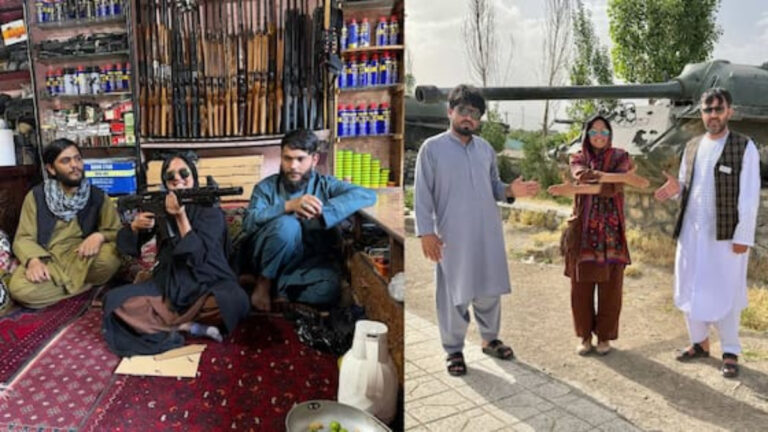
New Delhi, June 18, 2026: In an era where geopolitical borders feel heavier than ever, Indian travel influencer Ankita Kumar decided to step directly into one of the most closed-off nations on earth. Her recent 13-day solo expedition across Afghanistan has sent shockwaves through social media, sparking intense conversations about safety, the reality of life under the Taliban regime, and the hidden resilience of Afghan women. Armed with a camera, a willingness to listen, and an appetite for local hospitality, Kumar bypassed the traditional tourist trails to offer a raw, complicated look at a country caught between a violent past and an uncertain future.

For most global travelers, Afghanistan exists only as a series of grim headlines detailing conflict and systemic oppression. However, Kumar’s viral dispatches revealed a stark contrast between global perception and the daily realities on the ground. Over nearly two weeks, she navigated the bustling, mountain-fringed streets of Kabul, traveled through rural checkposts, and engaged directly with locals, capturing a side of the country that rarely makes it to the nightly news.

Shared Tea and Strange Encounters

One of the most surreal and widely discussed chapters of Kumar’s journey involved her unexpected interactions with the Taliban. In a country where armed fighters control every major intersection and highway checkpoint, encounters with the regime are entirely unavoidable. Yet, instead of hostility, Kumar documented moments of bizarre hospitality.

Because of the deep historical ties between India and Afghanistan—and a widespread love for Bollywood films and Hindi music—Kumar found that her nationality often acted as a diplomatic shield. At various military checkpoints, tense standoffs frequently melted into casual conversations once guards realized she was an Indian traveler. Despite the underlying tension, she noted that the strict security protocols actually made the physical act of traveling between provinces smoother, albeit under the constant, watchful eye of an armed patriarchal state.

Behind Closed Doors: Art and Afghan Women

While the superficial peace allowed her to move through the country, Kumar emphasizes that the true, heartbreaking heart of her trip lay in the homes of Afghan women. Since the Taliban returned to power, severe restrictions have stripped women of secondary education, most employment opportunities, and even the right to travel without a mahram (a male guardian).

For an independent female traveler, witnessing this reality firsthand was a profoundly emotional experience. Kumar spent days meeting secretly with local women who are refusing to let their identities be completely erased. In hidden apartments and quiet rooms across Kabul, she discovered a underground network of female artists, weavers, and poets using creativity as a silent form of rebellion.

“The strength of these women is staggering,” Kumar shared. She described sitting on floor cushions, sharing meals, and watching women paint vivid, emotional canvases that they cannot legally sell in public markets. “They told me that being a woman here right now can feel like a living death. Yet, they continue to paint, to write, and to teach younger girls in secret. Their art is their way of saying, ‘We are still here, and we still have a voice.’

The Tourism Debate: Connection vs. Whitewashing

Kumar’s solo trip comes at a time when Afghanistan is seeing a small but steady rise in foreign travel vloggers and “dark tourism” enthusiasts. The current administration has actively welcomed international tourists, recognizing the potential for foreign currency and positive public relations.

However, this trend has ignited a fierce global debate. Critics argue that lifestyle content and travel vlogs risk “whitewashing” severe human rights violations, presenting a peaceful facade while millions of local women suffer under systemic gender apartheid.

Kumar is quick to defend her journey not as an endorsement of the regime, but as a bridge to the citizens. “There is a massive difference between normalizing a government and humanizing a population,” she explains. By focusing her platform on the hospitality of everyday bakers, the struggles of carpet weavers, and the hidden brilliance of female artists, she hopes to redirect the world’s attention to the people rather than just the politics.

Navigating a Cash-Only, Disconnected Reality

Logistically, the 13-day trip was an exercise in extreme independence. With international banking systems completely cut off from Afghanistan, Kumar had to carry her entire budget in crisp, unblemished US dollar bills, exchanging them in the chaotic open-air markets of Kabul.

Furthermore, navigating public transportation as a solo woman required a delicate balancing act. While foreign women are often given a “third gender” status—granted exemptions that local women are denied—the environment remained highly unpredictable.

Kumar admits that the journey took a psychological toll, forcing her to constantly reassure her terrified family back home. “Every single day, my main priority was just texting my parents to say, ‘I am alive, I am safe,'” she said. The constant presence of firearms, the lack of basic amenities in smaller towns, and the heavy atmosphere of a society under total surveillance meant that letting her guard down was never an option.

Ultimately, Kumar’s journey highlights a profound paradox. She returned to India with stories of immense warmth, breathtaking mountain landscapes, and unforgettable hospitality—yet wrapped inside the sobering reality of a nation where half the population is forced to live in the shadows. Her 13-day trip stands as a testament to the fact that even in the world’s most troubled corners, the human spirit refuses to be completely dark.

Bihar Traffic Police Fine Motorcyclist for Displaying Religious Sticker on Bike; Viral Video Sparks Debate

0

New Delhi, June 18, 2026: In a strict crackdown on the violation of traffic regulations regarding vehicle modifications, the Bihar Traffic Police penalised a motorcyclist for displaying a caste or religious identifier on his vehicle. The incident, which went viral across social media platforms, involved a citizen identified as Dhananjay Paswan, who was stopped by transit authorities for having the word “Hindu” prominently written on his motorcycle.

The enforcement video has ignited a widespread public debate regarding traffic laws, the display of personal identities on vehicles, and the boundaries of Motor Vehicles Act regulations in India.

The Viral Incident Explained

The confrontation occurred during a routine vehicular inspection check by Bihar Traffic Police personnel. Officers spotted a motorcycle driven by Dhananjay Paswan that featured a large, customized sticker displaying his religious identity.

According to eyewitness accounts and the video circulating online, the police intercepting team promptly stopped the rider. The on-duty officers educated the citizen on transport guidelines, explaining that displaying words denoting religion, caste, profession, or political affiliation on vehicle registration plates or bodywork is a punishable offense under transport laws. Subsequently, a formal monetary penalty (challan) was issued against the rider.

Public Reaction and Social Media Debate

As the footage gained traction online, it polarized netizens. The internet quickly split into two distinct schools of thought regarding the enforcement:

  • Supporters of the Action: Many citizens lauded the Bihar Traffic Police for their unbiased implementation of the law. Advocates of this view argue that roads should remain neutral public spaces and that strict adherence to standard vehicle registration prevents distraction and enforces institutional discipline.
  • Critics of the Penalty: Conversely, a section of social media users questioned whether a text sticker on the body of a motorcycle genuinely warranted immediate police action, arguing that law enforcement should focus primarily on critical safety violations like driving without helmets, over-speeding, or triple-riding.

State-Wide Crackdown on Vehicle Stickers

This administrative action aligns with a broader, multi-state legal directive targeted at curbing the growing trend of displaying casteist, religious, or political assertions on personal vehicles. Over the last few years, transport departments across Uttar Pradesh, Bihar, and other neighboring states have issued directives to actively penalize vehicle owners who alter their number plates or vehicle bodies with custom lettering.

Prohibited Markings on Vehicles Include:

  • Caste designations (e.g., Yadav, Rajput, Pandit, Brahmin)
  • Religious identifiers (e.g., Hindu, Muslim, Sikh, symbols)
  • Political party designations or titles unless officially authorized
  • Professional designations designed to bypass security checks (e.g., “Police”, “Army”, “Judge” used by unauthorized family members)

What the Law Says

Transport department officials have clarified that standard vehicle specifications must be strictly maintained for security and uniformity. Altering a vehicle with massive decals or custom text can obscure manufacturing visibility, distract other commuters, or make vehicle identification difficult for automated speed and traffic cameras (ANPR systems).

The Bihar Traffic Police have urged commuters to strictly follow standard protocol, keep their registration plates completely clear of illegal text, and cooperate with law enforcement during safety drives.