Home Blog Page 69

India Under Fire: High-Risk Cities Bracing for the 2026 ‘Super El Niño’

0

May 15, 2026 – As the summer of 2026 enters its most punishing phase, meteorological departments and climate scientists have sounded a nationwide alarm: a Super El Niño is officially developing in the Pacific Ocean. Unlike a standard El Niño, this “Super” variant involves sea surface temperatures rising more than 2.0°C above average, a phenomenon that historically triggers catastrophic weather shifts across the Indian subcontinent.

With 98 of the world’s 100 hottest cities currently located within India, the stakes have never been higher. From the parched plains of the North to the water-stressed metros of the South, urban centers are bracing for a double-hit of record-breaking heatwaves and a severely weakened monsoon.

The “Super El Niño” Threat: Why 2026 is Different

El Niño is a natural climate pattern, but in 2026, human-induced global warming has supercharged its effects. The India Meteorological Department (IMD) has projected that this year’s monsoon rainfall could drop to 92% of the Long Period Average (LPA). For a country where agriculture and urban water supplies depend almost entirely on seasonal rain, this 8% deficit represents a potential national crisis.

Cities on the Frontline: The High-Risk Zones

While the entire country will feel the heat, certain urban hubs are categorized as “High Risk” due to their geography, population density, and existing water stress.

1. The Heatwave Hubs: Northern & Central India

Northern India is currently trapped under a “Heat Dome,” where high-pressure systems trap hot air over the Indo-Gangetic plains.

  • Delhi-NCR: The capital is a primary victim of the Urban Heat Island (UHI) effect. With temperatures already touching 43°C in May, the Super El Niño is expected to push Delhi toward the 50°C mark. The lack of green cover and high density of concrete make night-time relief nearly impossible.
  • Prayagraj & Banda (Uttar Pradesh): These cities have already recorded some of the highest temperatures in the country this year (up to 47.4°C). Under the influence of El Niño, these regions face “Severe Heatwave” alerts that could last well into late June.
  • Rajasthan’s Desert Cities (Phalodi, Jaisalmer): Traditionally hot, these cities are now seeing “early onset” summer, with peak heat arriving weeks ahead of schedule.

2. The Water-Crisis Zones: Southern Metros

In the South, the threat isn’t just the temperature—it’s the dry taps.

  • Bengaluru: Already struggling with groundwater depletion, Bengaluru faces a “Super El Niño” that could lead to widespread borewell failures. If the monsoon fails to recharge the Cauvery basin, the city’s water costs are expected to skyrocket.
  • Chennai: Highly dependent on reservoir levels, Chennai is at risk of severe water restrictions. While El Niño sometimes brings erratic coastal rain, the predominant forecast for 2026 is a significant deficit in the Northeast monsoon as well.
  • Hyderabad: The city’s inland geography makes it prone to “dry heat.” High evaporation rates from reservoirs like Himayat Sagar are already causing concern for the city’s drinking water supply.

3. The Agricultural Belt: Punjab, Haryana & Madhya Pradesh

  • Indore & Gwalior: These cities in Madhya Pradesh are projected to receive significantly below-normal rainfall. This impacts not just the urban population but the vital soy and wheat belts surrounding them.
  • Ludhiana & Ambala: As part of the “Granary of India,” these cities face a drop in groundwater levels as farmers are forced to pump more water to save crops from the El Niño-induced dry spells.

The Economic Ripple Effect: Food and Power

The impact of a Super El Niño extends far beyond a sweaty commute.

  • Food Inflation: Production of staples like rice, pulses, and maize is under threat. Even commercial crops like mangoes are suffering; early flowering and heat stress are leading to smaller fruit sizes and premature drops in regions like Maharashtra and Karnataka.
  • The Power Grid: With air conditioners running at full capacity, India’s power demand has hit record highs. Cities like Nagpur and Ahmedabad are seeing increased pressure on local grids, raising the risk of “load shedding” or scheduled blackouts during peak hours.

Vulnerable Populations: The Human Cost

The Super El Niño does not hit everyone equally.

  • Outdoor Workers: Construction workers, delivery partners, and street vendors are on the frontlines. Experts warn that agricultural workers in India are now 35 times more likely to die from occupational heat exposure than those in other sectors.
  • Urban Poor: For those living in informal settlements with tin roofs and no cooling infrastructure, the “Giant Concrete Oven” effect of the city is a literal matter of life and death.

Is There a Silver Lining?

While the forecast is grim, India is better prepared than it was during the last major El Niño in 2015-16.

  1. Heat Action Plans (HAPs): Over 250 cities and districts across 23 states now have operational Heat Action Plans. These include “Cool Roof” initiatives, rescheduled working hours for laborers, and the setup of “cooling stations” in public places.
  2. Reservoir Management: Current reports indicate that India’s reservoir storage is at roughly 127% of the normal level for this time of year. This “water bank” is the country’s primary defense against a failing monsoon.

Conclusion: A Call for Climate Resilience

The Super El Niño of 2026 is a stark reminder that extreme weather is no longer a “future” problem—it is a present reality. While cities like Delhi and Bengaluru face the immediate brunt, the solution lies in long-term urban redesign: increasing green cover, protecting wetlands, and implementing aggressive water harvesting.

As the IMD continues to monitor the Pacific, the message to citizens in high-risk cities is clear: stay hydrated, avoid peak sun hours, and prepare for a summer that will test the limits of India’s infrastructure and resilience.
SBI Recruitment 2026: 821 Concurrent Auditor Posts Open for Retired Officers

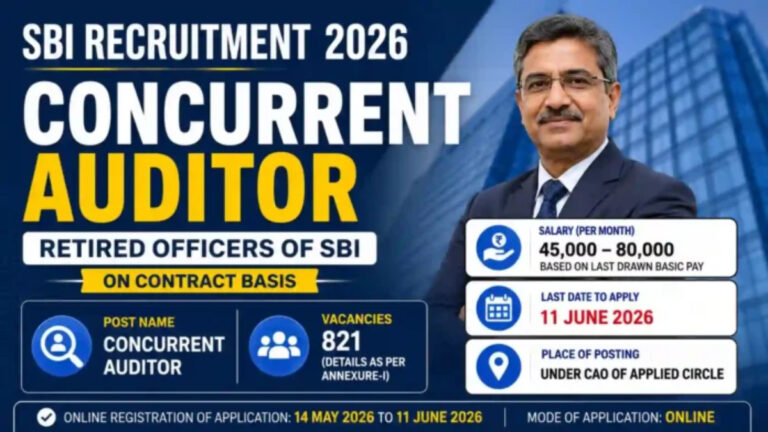
New Delhi, May 15, 2026: The State Bank of India (SBI) has officially released a major recruitment notification for 2026, targeting retired banking professionals. The bank is looking to fill 821 vacancies for the post of Concurrent Auditor on a contractual basis.

This initiative is designed to leverage the vast experience of former bank officers to strengthen the Internal Audit Department (IAD). If you are a retired officer looking to re-engage with the banking sector, here is an in-depth guide to everything you need to know about this recruitment drive.

1. Overview of the Vacancies

The recruitment drive aims to fill 821 positions across various SBI circles in India. These roles are critical for ensuring day-to-day compliance and operational integrity within the bank’s branches and specialized outfits.

Circle-wise Distribution (Highlights):

CircleVacanciesCircleVacancies
Jaipur95Mumbai Metro80
Bengaluru64Maharashtra61
Thiruvananthapuram59Bhubaneswar57
Chennai54New Delhi50

2. Eligibility Criteria

To ensure the highest standards of audit quality, SBI has set specific eligibility parameters:

  • Candidate Profile: Only retired officers from SBI and its former Associate Banks (e-ABs) are eligible to apply.
  • Retirement Status: Candidates must have retired specifically upon attaining superannuation at the age of 60.
  • Grade at Retirement: Officers must have retired in the following scales:
    • MMGS-III
    • SMGS-IV / SMGS-V
    • TEGS-VI
  • Age Limit: The maximum age for fresh engagement is 63 years as of May 14, 2026.
  • Service Record: Candidates must have a clean track record with no major penalties during their last five years of service.
  • Experience Preference: While not mandatory, preference is given to those with experience in Credit, Audit, or Forex operations.

3. Salary and Remuneration Structure

The compensation for Concurrent Auditors is fixed based on the grade from which they retired. This payment is a monthly lumpsum and is provided without prejudice to the officer’s pension.

Monthly Lumpsum Payment:

Retired GradeMonthly Fixed Pay
MMGS-III₹45,000
SMGS-IV₹50,000
SMGS-V₹65,000
TEGS-VI₹80,000

Additional Incentives: Auditors are also eligible for an additional payment of ₹2,000 per visit for special assignments such as branch audits, forex verification, or currency chest verification.

4. Contract Duration and Nature of Work

This is a contractual engagement and does not constitute permanent employment.

  • Duration: The contract is initially for one year, extendable up to a maximum of three years, or until the officer reaches 65 years of age, whichever is earlier.
  • Benefits: As it is a contract, candidates will not be eligible for PF, pension benefits (beyond what they already receive), accommodation, or furniture allowances.
  • Key Responsibilities:
    • Verifying loan documents and deposit accounts.
    • Monitoring day-to-day banking activities and forex transactions.
    • Ensuring audit compliance and cash transaction verification.
    • Reporting to the respective Circle Audit Office (CAO).

5. Selection Process

The selection is performance-based and follows a two-stage process:

  1. Shortlisting: Applications will be screened based on experience, eligibility, and suitability for the role.
  2. Interview: Shortlisted candidates will be called for an interview worth 100 marks.
  3. Final Merit List: The final selection will be based entirely on the marks obtained in the interview. If two candidates score the same marks, the older candidate will be ranked higher.

6. Important Dates to Remember

EventDate
Notification DateMay 14, 2026
Online Application StartsMay 14, 2026
Last Date to ApplyJune 11, 2026
Interview ScheduleTo be announced via email

7. How to Apply: A Step-by-Step Guide

Applications must be submitted online only through the official SBI website. No hard copies will be accepted at the Corporate Centre.

Steps to Register:

  1. Visit Official Link: Go to the SBI Careers portal at sbi.co.in/web/careers.
  2. Find the Ad: Look for Advertisement No: CRPD/RS/2026-27/08 regarding the engagement of Retired Bank Officers.
  3. Registration: Click on “Apply Online” and register using your basic details and email ID.
  4. Upload Documents: You will need to upload:
    • Recent Passport-size Photograph & Signature.
    • Identity Proof & Date of Birth Proof.
    • Copy of PPO (Pension Payment Order).
    • Detailed Service/Experience Certificate.
  5. Submission: Review your application and submit. Take a printout of the system-generated application form for future reference.

Conclusion

This 2026 recruitment for Concurrent Auditors is a vital opportunity for retired SBI officers to stay active in the professional sphere while contributing to the financial health of the nation’s largest bank. With 821 posts available across the country, the chances of securing a position in your preferred circle are high.

Ensure you complete your application before the June 11 deadline to avoid last-minute technical glitches. For any revisions or official updates, always keep an eye on the SBI Careers page.

Xi and Trump: Inside Zhongnanhai

0

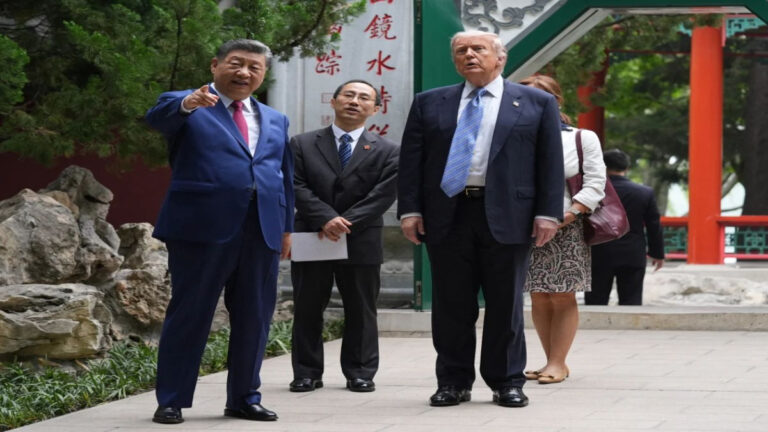
New Delhi, May 15, 2026: As the historic summit between the world’s two most powerful leaders concluded today, May 15, 2026, the global community witnessed a rare and symbolic gesture: Chinese President Xi Jinping personally guided U.S. President Donald Trump through Zhongnanhai, the highly secluded headquarters of the Communist Party of China (CPC).

This private tour of China’s “seat of power” served as the climax of Trump’s three-day state visit to Beijing—his first since returning to the White House for a second term. The visit, characterized by grand ceremonies and “fantastic” trade talk, aimed to stabilize a relationship that has been increasingly strained by conflicts in the Middle East and disputes over high-end technology.

Into the “Forbidden” Compound

While most official business takes place in the Great Hall of the People, the invitation to Zhongnanhai is a gesture reserved for only the highest level of diplomatic intimacy. Located adjacent to the Forbidden City, the compound is a lush, walled-off garden that serves as the official residence and workplace for China’s top leadership.

As the two men walked through the manicured gardens, President Xi provided a rare history lesson, explaining the compound’s significance.

“Zhongnanhai is where the CPC Central Committee and the State Council work, and it is also where I work and live,” Xi told Trump. He noted that founding leaders like Mao Zedong and Zhou Enlai once lived within these same walls, emphasizing the continuity of the Party’s “people-centered” philosophy.

President Trump, known for his appreciation of grand architecture and historical significance, appeared impressed. He remarked that the two nations are “great and wise,” suggesting that such direct communication is the only way to solve “problems that other people wouldn’t have been able to solve.”

The Agenda: Trade, Tech, and Tensions

Behind the polite smiles and scenic walks, the substance of the summit focused on two major global crises: the trade imbalance and the escalating conflict in the Middle East.

1. “Fantastic” Trade Deals

Following their final meeting, Trump struck an optimistic tone, claiming that “fantastic trade deals” had been reached. While official documents are still being finalized, early reports indicate significant breakthroughs:

  • Boeing Aircraft: Trump announced that China has agreed to purchase 200 Boeing jets, a massive boost for the American aerospace industry.
  • Energy and Agriculture: Beijing expressed renewed interest in buying large quantities of U.S. oil and soybeans, a move designed to reduce the trade deficit.
  • Technology: Discussions reportedly included the future of AI governance and semiconductor supply chains, with Nvidia CEO Jensen Huang notably joining the U.S. delegation.

2. The Iran Crisis

A central focus of the 2026 summit was the ongoing conflict involving Iran and the closure of the Strait of Hormuz, a critical chokepoint for global oil. Trump sought Xi’s help in pressuring Tehran to accept a ceasefire.

  • Xi’s Assurance: Trump told reporters that Xi had given assurances that China—the largest buyer of Iranian oil—would not provide military equipment to Iran and would like to see the Strait reopened.
  • China’s Stance: Beijing officially framed the talks as a push for “strategic stability,” positioning itself as a mediator that can influence Tehran in ways Washington cannot.

The Shadow of Taiwan

Despite the outward warmth, the issue of Taiwan remains the “red line” in the relationship. During the talks, President Xi issued a stern warning, stating that any mishandling of the Taiwan question could lead to “clashes and even conflicts.”

While Trump has been vocal about his personal friendship with Xi, he has also overseen significant arms packages for the self-governed island. U.S. Secretary of State Marco Rubio, who accompanied Trump, reiterated that the U.S. policy on Taiwan remains “unchanged,” though the administration’s focus during this trip was clearly on economic wins.

A “Milestone” Moment

The summit concluded with both leaders agreeing to a “new positioning” of ties for the next three years, termed “Constructive Strategic Stability.” To underscore the personal rapport, President Xi reportedly promised to send seeds from China to be planted in the White House Rose Garden.

As Air Force One departed Beijing this afternoon, the world breathed a cautious sigh of relief. While the fundamental rivalry between the two superpowers remains, the images of the two leaders strolling through the heart of Chinese power suggest a temporary “truce” in favor of economic pragmatism.

Key Highlights of the Visit:

EventSignificance
Temple of Heaven TourXi used the ancient site to explain the “mandate of the people” to Trump.
Zhongnanhai VisitA rare look into the CPC’s inner sanctum, signaling high-level respect.
Boeing DealA major commercial win for Trump’s “America First” economic agenda.
G20 & APEC 2026Both leaders agreed to attend upcoming summits in Miami and Shenzhen.

Analysis:

This 2026 summit marks a pivotal shift. By inviting Trump into the “seat of power,” Xi Jinping has signaled that China is ready to deal directly with the current U.S. administration to avoid a total decoupling. For Trump, the trip provides “deal-making” ammunition for his domestic audience, showing that his personal diplomacy can still yield tangible results on the world stage.

India Defies Global Fuel Crisis: BJP Cites 3% Domestic Rise Against 70% Global Surge

0

New Delhi, May 15, 2026 – In a move to address rising economic concerns and political criticism, the Bharatiya Janata Party (BJP) has issued a robust defense of India’s fuel pricing strategy. Senior government officials, including Union Petroleum Minister Hardeep Singh Puri, highlighted that while global crude oil prices have skyrocketed due to the escalating West Asia crisis, India has successfully restricted its domestic fuel price increase to a marginal 3% over the last few years.

This defense comes at a critical juncture as the nation faces a fresh wave of geopolitical volatility that has pushed international crude benchmarks, like Brent, toward the $100–$120 per barrel range.

The “India First” Energy Strategy

The central government’s primary argument rests on a comparative analysis of global energy markets. According to the Ministry of Petroleum and Natural Gas, while major economies in Europe and North America saw fuel prices jump by 30% to 50%, and neighboring South Asian countries faced hikes as high as 60%, India’s retail pump prices remained remarkably stable.

“The government had two choices: pass the burden to the citizens or take a hit on the exchequer. Prime Minister Narendra Modi chose the latter,” stated Hardeep Singh Puri during the 2026 Annual Business Summit.

To maintain this stability, the government recently implemented a significant fiscal intervention:

  • Excise Duty Cut: A reduction of ₹10 per litre on both petrol and diesel was announced in late March 2026.
  • Tax Structural Shift: Central excise duty on petrol was slashed to ₹3, while diesel duty was brought down to zero to cushion the blow of rising import costs.
  • Export Restrictions: A new export levy was imposed on diesel to ensure that domestic refinery output is prioritized for Indian consumers rather than being sold at a premium in international markets.

Economic Impact: Shielding the Common Man

The BJP leadership argues that by absorbing the “global shock,” the government has prevented a runaway inflationary spiral. In India, fuel prices are a major driver of the Wholesale Price Index (WPI); any sharp hike in diesel immediately translates to higher transportation costs for vegetables, grains, and essential goods.

MetricGlobal Average (2024-2026)India (2024-2026)
Crude Oil Price Surge~75% IncreaseN/A (Import Dependent)
Retail Fuel Price Hike35% – 60%~3%
Supply StatusRationing in several nationsUninterrupted Supply

The government noted that state-owned Oil Marketing Companies (OMCs)—including IOCL, BPCL, and HPCL—have been absorbing under-recoveries (losses) of nearly ₹2,400 crore per day to keep prices steady at the pump. The excise duty cuts were specifically designed to offset these losses, ensuring the financial health of these companies without raising the price for the end consumer.

The Opposition’s Counter-Strike

Despite the government’s data-backed defense, the Opposition, led by the Congress and AAP, has termed the narrative a “statistical smokescreen.” Leaders like Rahul Gandhi have argued that the government’s appeal for “economic self-defense”—asking citizens to reduce consumption of fuel and edible oil—is an admission of failure.

Critics point out that while retail prices haven’t spiked as drastically as global crude, the “base price” in India remains high due to state-level Value Added Tax (VAT) and the previous years’ high excise regimes. They also highlighted the sharp rise in Commercial LPG prices, which surged by nearly ₹1,000 in May 2026, putting immense pressure on small businesses and the hospitality sector.

Looking Ahead: The 2026 Energy Outlook

As of mid-May 2026, the global energy landscape remains “fragile and fraught with risk.” The Asian Development Bank (ADB) recently adjusted its forecast, suggesting that crude prices could average $96 per barrel through the remainder of the year.

For India, the challenge remains two-fold:

  1. Managing the Current Account Deficit (CAD): With 90% of its oil being imported, a weaker Rupee (currently hovering near ₹92 against the USD) makes imports costlier.
  2. Energy Transition: The Prime Minister has reiterated the need for “Mindful Consumption,” urging a faster shift toward Electric Vehicles (EVs), natural farming, and public transport to reduce the nation’s “import hunger.”

Conclusion

The BJP’s defense serves as a reminder of the complex balancing act required to manage a developing economy in a volatile world. By choosing to absorb the brunt of global price hikes through tax cuts and corporate under-recoveries, the government has arguably bought the Indian middle class some breathing room. However, with geopolitical tensions showing no signs of easing, the long-term sustainability of this “3% shield” will depend on how quickly India can diversify its energy basket.

Real-Life Bollywood: Man Jumps on Tracks to Save Tourist Dupatta

0

New Delhi, May 15, 2026: In a digital age where “clout” often outweighs genuine kindness, a simple act of chivalry at the New Delhi Railway Station has captured the hearts of over 52 million people worldwide. What started as a minor mishap for an Indonesian traveler turned into a “Bollywood-style” moment that serves as a refreshing reminder of selfless humanity.

The Incident: A Slip Between the Tracks

Indah A.L., a popular Indonesian digital creator, was documenting her journey through India, dressed in a classic white kurta set paired with a vibrant blue dupatta. While waiting near the doorway of her train at the bustling New Delhi station, a sudden gust or a momentary slip caused her dupatta—a staple of Indian ethnic wear—to fall into the narrow, dangerous gap between the platform and the railway tracks.

For any traveler, especially one in a foreign country, such a moment is distressing. The gap is notorious for being unreachable and hazardous, particularly with the constant movement of massive locomotives.

The “Real-Life Hero” Steps In

Before Indah could even process the loss, a local Indian man—later dubbed a “Real-Life Hero” by netizens—noticed her predicament. Without a second thought, the man bypassed the safety of the platform.

  • The Rescue: He initially tried to reach the fabric with his hand, but when that failed, he leaped down into the narrow crevice.
  • The Gesture: He retrieved the blue dupatta, handed it back to a visibly stunned Indah, and prepared to climb back up.
  • The Class Act: In a moment that touched viewers most, Indah reached out her hand to help pull him back onto the platform. The man politely declined the physical assistance, hoisted himself up, and walked away into the crowd without waiting for praise or even a formal introduction.

Why It Went Viral: “No Secret Agenda”

The video, shared by Indah on her Instagram, quickly skyrocketed to over 52 million views. While the act of jumping onto tracks is inherently risky and generally discouraged by railway authorities, the internet focused on the man’s conduct.

The comment sections across Instagram and X (formerly Twitter) highlighted a few key reasons why this moment resonated so deeply:

AspectWhy It Resonated
Purity of IntentHe didn’t ask for her number, didn’t look for a reward, and didn’t linger.
BoundariesNetizens noted he politely refused to hold her hand to climb up, maintaining a respectful distance.
Cultural BridgeIt showcased the “Atithi Devo Bhava” (The Guest is God) spirit of Indian hospitality to a foreign visitor.

“He didn’t have a secret agenda. He didn’t glance at her in a creepy way. He just saved the day and walked away like a hero,” wrote one top-voted commenter.

A Travel Journey Beyond the Tracks

Indah’s trip to India wasn’t defined solely by this incident. Her viral post was part of a larger travelogue where she explored the architectural marvels of the country, including:

  • The Taj Mahal (Agra): Where she was seen admiring the marble wonder in her traditional attire.
  • India Gate (Delhi): Capturing the spirit of the capital’s heritage.
  • Local Markets: Immersing herself in the colors and textures of Indian fabrics.

However, it is the railway station video that remains her most-shared content, proving that while monuments are beautiful, it is the people who make a travel experience unforgettable.

A Word of Caution from Authorities

While the internet celebrates the man’s bravery, railway officials often remind the public that jumping onto tracks is extremely dangerous.

  1. High-Tension Wires: Contact with overhead or floor-level electrical components can be fatal.
  2. Unexpected Movement: Trains can move or arrive without significant audible warning in the noise of a station.
  3. Legal Implications: Trespassing on tracks is a punishable offense under the Railways Act.

While this story had a happy, cinematic ending, authorities urge passengers to seek help from the Railway Protection Force (RPF) or station staff for lost items rather than risking their lives.

Final Thoughts: The Spirit of “Bharat”

For Indah, the incident was more than just a saved piece of clothing; it was an emotional highlight of her trip. She expressed her deep gratitude in her captions, stating she never expected someone to jump down for her.

In a world often filled with cynical headlines, this “Bollywood moment” at the New Delhi Railway Station stands as a testament to the fact that chivalry isn’t dead—it’s just busy catching trains and helping strangers.

Champion on the Court, Hero in the NICU: Jwala Gutta’s 60-Litre Lifeline

0

May 15, 2026 — Indian badminton ace Jwala Gutta has always been known for her fierce spirit on the court. But today, the Commonwealth Games gold medalist is being hailed for a different kind of victory—one that is happening in the quiet corridors of Neonatal Intensive Care Units (NICUs).

In a revelation that has sparked a nationwide conversation on maternal health and infant survival, Gutta announced that she has donated a staggering 60 litres of breast milk to government hospitals in Hyderabad and Chennai over the past year.

A Journey from Motherhood to Advocacy

Jwala Gutta and her husband, actor Vishnu Vishal, welcomed their daughter, Mira, in April 2025. Like many new mothers, Gutta’s journey was deeply personal, but she chose to turn her postpartum experience into a mission for public good.

What began as a smaller contribution of 14.5 litres through the Amirtham Foundation has now grown into a massive 60-litre milestone. By donating to government-run institutions, Gutta is targeting the most vulnerable segment of society—infants born into families who may not have the resources to seek private medical alternatives.

“Just 100 ml of donor milk can feed a tiny 1 kg baby for several days,” Gutta shared in a poignant post on X (formerly Twitter). “This donation could potentially support dozens of infants in the NICU. It is safe, screened, and desperately needed.”

Why Breast Milk Donation Matters

For premature or critically ill infants, breast milk is more than just food; it is often the difference between life and death. Gutta’s campaign highlights several medical reasons why donor milk is a “vital bridge”:

  • Immunity and Nutrition: Breast milk contains antibodies and enzymes that formula cannot replicate, providing a critical shield for babies with underdeveloped immune systems.
  • Preventing NEC: One of the most significant benefits is the reduction of Necrotizing Enterocolitis (NEC)—a life-threatening gut condition that primarily affects premature infants.
  • A Bridge for Mothers: Many mothers face delayed milk production due to postpartum stress, illness, malnutrition, or the trauma of a premature birth. Donor milk ensures the baby is nourished while the mother recovers.

The Science and Safety of Milk Banks

While the idea of milk donation might be new to some, the process is highly regulated and scientific. Government hospitals in India, particularly in cities like Hyderabad and Chennai, operate Human Milk Banks that follow strict protocols:

StepProcess
ScreeningDonor mothers undergo rigorous health checks to rule out infections.
CollectionMilk is expressed and stored in hygienic, specialized containers.
PasteurizationThe milk is heat-treated to eliminate any potential pathogens while preserving nutrients.
TestingPost-pasteurization samples are tested in labs before being cleared for use.

Breaking the Taboo

Despite India having one of the highest rates of preterm births globally, awareness surrounding milk donation remains low. Gutta’s public stance is a significant step toward normalizing a topic that is often shrouded in cultural hesitation.

Social media response to the athlete’s announcement has been overwhelmingly positive. One user noted, “You probably do not even realize how many families you helped through the most fragile moments of their lives.” However, Gutta also addressed the apprehensions some might feel, urging society to look at the clinical and humanitarian necessity of the act rather than the stigma.

How You Can Help

Jwala Gutta’s 60-litre contribution is a call to action for other healthy, lactating mothers. India’s milk banks are often understocked, leaving many NICU doctors with no choice but to rely on formula, which can be harder for a premature baby to digest.

If you are a lactating mother and wish to donate:

  1. Contact Local Authorities: Reach out to government hospitals in your city (e.g., Niloufer Hospital in Hyderabad or ICH Egmore in Chennai).
  2. Verify NGOs: Connect with registered organizations like the Amirtham Foundation that facilitate safe pickup and delivery.
  3. Spread the Word: Even if you cannot donate, raising awareness about the safety and importance of milk banks can save lives.

A Lasting Legacy

Jwala Gutta’s transition from a badminton champion to a “milk donation ambassador” proves that influence is most powerful when used to protect those who cannot speak for themselves. By providing 60 litres of “liquid gold,” she hasn’t just donated milk—she has given dozens of infants a fighting chance at a healthy life.

As she aptly put it, “One mother’s donation can give another baby a better chance at survival.” In the world of sports, medals are the ultimate goal; in the world of motherhood and humanity, Gutta has just set a new gold standard.

Kerala SSLC Result 2026 LIVE: Class 10th Results Today at 3 PM

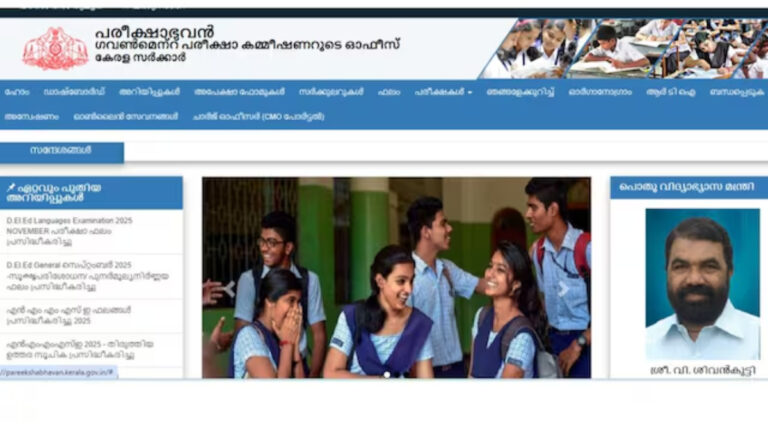
New Delhi, May 15, 2026: The wait for over 4.17 lakh students is finally coming to an end. The Kerala Pareeksha Bhavan is scheduled to officially release the Secondary School Leaving Certificate (SSLC) or Class 10 results today, May 15, 2026, at 3:00 PM.

Following a formal press conference held by the Honorable Minister for General Education at the PRD Chamber, the result links will be activated across multiple official portals. Students can access their individual scorecards using their registration number and date of birth, while schools can download collective results using their unique school codes.

Where to Check Kerala SSLC Result 2026

To ensure a smooth experience despite the high volume of web traffic, the Kerala Board of Public Examinations (KBPE) has made the results available on several official platforms:

How to Check Your Result via School Code

While individual results are standard, many students and teachers prefer to check the performance of an entire institution. The “School-wise Result” feature is specifically designed for this purpose.

  1. Visit the official portal at results.kite.kerala.gov.in.
  2. On the homepage, look for the link labeled “SSLC Result 2026 – School-wise”.
  3. Enter the School Code (a five-digit number unique to each school).
  4. Click on “Get School Result”.
  5. A list of all students from that school, along with their qualifying status and grades, will be displayed.

Alternative Ways to Access Your Marks

If the official websites become slow due to heavy traffic, students are encouraged to use mobile applications or digital locker services:

1. Saphalam App (KITE)

The Saphalam 2026 mobile app is one of the fastest ways to view results. It offers a detailed analysis, including school-wise, educational district-wise, and revenue district-wise data.

  • How to use: Download “Saphalam” from the Google Play Store, enter your Register Number, and view your result instantly.

2. PRD Live App

The Public Relations Department of Kerala also hosts the results on the PRD Live app. This is often a reliable backup when traditional servers are overloaded.

3. DigiLocker

For the first time, the Kerala Board has integrated more deeply with DigiLocker

Understanding the Grading System

Kerala follows a grade-based assessment rather than a marks-only system. To pass the SSLC exams, a student must secure at least a D+ grade (minimum 30-39% marks) in each subject.

GradeMarks RangeGrade Point
A+90% – 100%9
A80% – 89%8
B+70% – 79%7
B60% – 69%6
C+50% – 59%5
C40% – 49%4
D+30% – 39%3

Students who score lower than a D+ in any subject will be eligible for the SAY (Save A Year) Exam, which is typically conducted in June or July.

Quick Summary of SSLC 2026

  • Exam Dates: March 5 to March 30, 2026.
  • Total Students: Approx. 4,17,000.
  • Evaluation Centers: 70+ centers across the state.
  • Minimum Passing Criteria: D+ grade in all subjects.
  • Result Date & Time: May 15, 2026, at 3:00 PM.

Important Note for Students

The online results published today are provisional. These are intended for immediate information and to facilitate the Class 11 (Plus One) admission process. Original marksheets and certificates will be distributed by the respective schools within a few weeks.

Students should verify all details on their online marksheet, including the spelling of their name, parent’s name, and date of birth. If any discrepancies are found, they should be reported to the school headmaster immediately for rectification.

Dhurandhar 2: Ranveer Singh’s ‘Raw and Uncut’ Sequel Hits OTT

New Delhi, May 15, 2026: The wait is finally over for global fans of Ranveer Singh, but for Indian audiences, the anticipation is being stretched just a little bit longer. Dhurandhar: The Revenge (popularly known as Dhurandhar 2), the high-octane spy thriller directed by Aditya Dhar, has officially made its digital debut. However, the release comes with a significant twist: a split-platform strategy that has left Indian fans watching from the sidelines as the rest of the world experiences a “raw and uncut” version of the blockbuster.

While the film began streaming internationally on Netflix on May 14, 2026, the Indian release on JioHotstar is reportedly being held back until the conclusion of the IPL 2026 season.

The “Raw and Uncut” Controversy: What’s Different?

One of the biggest talking points surrounding the OTT release is the stark difference between the theatrical cut and the streaming version. When Dhurandhar 2 hit Indian theaters on March 19, 2026, it did so with an ‘A’ certificate and approximately 21 modifications ordered by the Central Board of Film Certification (CBFC).

The international Netflix version, titled “Dhurandhar 2: Raw and Uncut,” has restored these sequences, offering a significantly more visceral experience. Social media is currently buzzing with comparisons from overseas viewers who claim the digital version is “night and day” compared to what was seen in cinemas.

Key differences in the OTT version include:

  • Uncensored Violence: Highly graphic sequences, including the infamous “hammer scene” and the “cement block” climax, are shown in full detail without the cuts required for Indian theatrical release.
  • Restored Language: The theatrical version was criticized for heavy muting of expletives. The “Raw and Uncut” version features all original dialogue and cuss words intact.
  • Extended Sequences: Urban legends depicted in the film, such as the gruesome “football” sequence involving Uzair Baloch (played by Danish Pandor), are shown in their entirety rather than being merely hinted at.
  • The “Pinda” Scene: Viewers have noted a different emotional take in the pivotal death scene of the character Pinda, featuring a calmer, more haunting performance by Ranveer Singh.

Why the Delay in India?

Despite the film already streaming in international territories, Indian viewers will have to wait until June 2026. Sources within the industry suggest that the delay is a strategic move by Jio Studios.

With the IPL 2026 final scheduled for May 31, the makers are reportedly waiting for the cricket fever to subside to ensure maximum viewership and engagement on the JioHotstar platform. JioHotstar has already begun teasing the release on social media with “Exploding Soon” posters, but an official date remains unconfirmed, though insiders point toward the first week of June.

Note for Indian Streamers: It is expected that the Indian OTT version on JioHotstar will likely follow the CBFC-approved theatrical cut rather than the “Raw and Uncut” version available on Netflix overseas, due to local streaming regulations.

A Box Office Juggernaut

The buzz surrounding the OTT release is fueled by the film’s historic performance at the box office. As of mid-May 2026, Dhurandhar 2 has become one of the highest-grossing Indian films of all time.

MetricEstimated Collection (INR)
India Net Collection₹1,144.21 Crore
Overseas Gross₹426.65 Crore
Worldwide Total Gross₹1,796.07 Crore

The film’s massive success is a testament to the combined star power of Ranveer Singh and the visionary direction of Aditya Dhar. With a staggering runtime of 229 minutes (nearly 3 hours and 50 minutes), the film is a sprawling espionage epic that follows Jaskirat Singh Rangi (Singh) as he infiltrates global criminal syndicates to avenge a national conspiracy.

The Powerhouse Cast

While Ranveer Singh’s “chameleon-like” transformation as Jaskirat/Hamza Ali Mazari has drawn the most praise, the film’s ensemble cast is being hailed as one of the strongest in recent years:

  • Ranveer Singh as Jaskirat Singh Rangi (The protagonist)
  • Sanjay Dutt as SSP Chaudhary Aslam
  • R. Madhavan as Ajay Sanyal
  • Arjun Rampal as Major Iqbal
  • Akshaye Khanna (appearing in archival footage as the first film’s antagonist)

The film also features a haunting musical score by Sashwat Sachdev, which has been a staple on music charts since the film’s theatrical debut.

What’s Next: Dhurandhar 3?

As if the OTT excitement wasn’t enough, producer Jyoti Deshpande recently hinted that the franchise is far from over. During a recent interaction, she teased that the team has “something up their sleeves” and a surprise might be coming later this year.

Rumors of a “Dhurandhar 3” are already circulating, with fans speculating that the third installment might dive even deeper into the “Dhurandhar Cinematic Universe.”

For now, Indian fans can gear up for a June release on JioHotstar, while those with access to international Netflix accounts can already witness Ranveer Singh in his most “raw” avatar yet.

Tara Sutaria Cannes 2026 Debut: A Masterclass in Old-Hollywood Glamour

May 15, 2026 — As the Mediterranean sun bathed the Croisette in a golden hue, Bollywood’s very own “it-girl” Tara Sutaria made a splash at the 79th Cannes Film Festival. In an era where red carpets are often dominated by avant-garde silhouettes and “naked” dresses, Sutaria chose to pivot toward the timeless. Her debut appearance in a black-and-white Helsa midi dress wasn’t just a fashion choice; it was a revival of 1950s cinematic elegance that left both critics and fans breathless.

The Look: Monochrome Magic by Helsa

Styled by celebrity powerhouse Tanya Ghavri, Tara opted for a dress from Helsa Studio, the label founded by supermodel Elsa Hosk. The brand is renowned for its “quiet luxury” and minimalist Scandinavian-meets-retro aesthetic, and this piece was the perfect vessel for Tara’s classic features.

The dress featured:

  • The Silhouette: A strapless, structured bodice reminiscent of mid-century corsetry.
  • The Detail: A sharp, architectural white contrast at the sweetheart neckline that framed her collarbones perfectly.
  • The Skirt: The bodice cinched effortlessly at the waist before flaring into a voluminous, tea-length midi skirt.
  • The Finish: Delicate white lace peek-a-boo elements and poplin trim along the hem, adding a touch of playfulness to an otherwise regal ensemble.

Fashion commentators were quick to draw parallels to Audrey Hepburn in Sabrina and Grace Kelly’s early Riviera style. It was a look that felt less like a costume and more like a natural extension of Tara’s own sophisticated persona.

Beauty and Grooming: The “Vintage Siren” Aesthetic

A dress this iconic requires hair and makeup that can hold its own. Tara’s beauty team leaned heavily into the “Old Hollywood” theme, ensuring every detail was period-accurate yet fresh for 2026.

FeatureStyle Choice
HairVoluminous, high-shine waves with a deep side part.
MakeupSoft matte skin, fluttery “Bambi” lashes, and a chic nude-brown lip.
JewelryStatement gold pearl-drop earrings—the only accessory needed.
FootwearClassic black pointed-toe pumps that elongated her silhouette.

“We wanted to create a love letter to vintage glamour,” Ghavri shared on social media. “Tara has this innate ability to look like she belongs in a different era, and the Helsa dress was the key to unlocking that 1950s magic.”

Beyond the Red Carpet: A Career Milestone

While the fashion world was buzzing about her hemline, the purpose of Tara’s visit was equally significant. The actress was invited to Cannes to be honored at the Red Sea Film Foundation’s Women in Cinema Gala.

Held at the legendary Hotel du Cap-Eden-Roc, the event celebrated global female talent. For Tara, this debut marks a pivotal shift in her career trajectory. With her highly anticipated film Toxic (starring alongside Yash) set for a global release later this year, her presence at Cannes serves as an introduction to the international circuit.

The “Off-Duty” Style

Proving she’s a versatile fashion chameleon, Tara’s arrival at the Nice airport was just as discussed as her red carpet look. She touched down in another Helsa ensemble—a pinstriped boyfriend blazer with ultra-baggy trousers and a white georgette cape top. This “90s supermodel” vibe served as the perfect appetizer for the classic main course she delivered on the festival’s first day.

Why It Matters

In the high-pressure environment of Cannes, debutants often feel the need to go “big”—think ten-foot trains and neon colors. Tara Sutaria’s choice to go “classic” was a bold move that paid off. By choosing a midi length over a gown and monochrome over glitter, she stood out by blending in with the historic prestige of the French Riviera.

As the festival continues, all eyes remain on Sutaria. If her first appearance is any indication, she isn’t just attending the party—she’s setting the pace for the next generation of global style icons.

What’s Next for Tara?

Stay tuned as we follow her to the official premiere of her upcoming projects and her second red carpet appearance, where rumors suggest she may swap the monochrome for a daring couture piece by Vivienne Westwood. One thing is for certain: the era of Tara Sutaria has officially arrived in France.

Mouni Roy: From Teen Marriage Dreams to Global Stardom

New Delhi, May 15, 2026: In the fast-paced world of Indian entertainment, where headlines change as quickly as trending hashtags, a nostalgic revelation has recently resurfaced about one of the industry’s most successful stars. Mouni Roy, the powerhouse performer who transitioned from a television icon to a formidable Bollywood presence, once admitted in a candid interview that she was “dying to get married” as early as the age of 19.

As we look at her life in May 2026, this flashback provides a fascinating contrast to the woman she has become: a global fashion icon, an astute businesswoman, and an actress poised for international acclaim at the Cannes Film Festival.

The Viral Flashback: A 19-Year-Old’s Vision of Love

The resurfaced clip from an old interview has caught the attention of fans across social media. In the footage, a young Mouni Roy expresses a sentiment that many find surprisingly relatable. While her peers were focused on early career steps or college life, Roy admitted her eagerness to settle down and find a partner.

  • The “Sense of Belonging”: Roy explained that even at 19, she viewed marriage not just as a social contract, but as a source of stability. She noted, “It’s like you have a sense of belonging,” highlighting her early desire for a deep, emotional connection and a partner to share her journey with.
  • A Clear Perspective: Unlike many who shy away from the idea of commitment early on, Roy was vocal about her intentions. This clarity remained a trait throughout her life, eventually influencing her real-world relationships.

A Decade of Dominance: Building the “Naagin” Empire

While she may have harbored early dreams of domesticity, Mouni Roy’s career trajectory took her on a different, much more public path. Since her debut in Kyunki Saas Bhi Kabhi Bahu Thi in 2006, she has systematically redefined what it means to be a “TV star” in India.

  • The Breakthrough: Her role as Shivanya in the supernatural thriller Naagin was a cultural phenomenon. It transformed her into a household name and paved the way for high-budget film projects.
  • The Bollywood Transition: From her debut opposite Akshay Kumar in Gold to her critically acclaimed performance as the antagonist Junoon in Brahmāstra: Part One – Shiva, Roy proved she could hold her own against the biggest names in the industry.

The Reality of Romance: Marriage and Ultimatums

The 19-year-old who was “dying to get married” eventually found her partner in Dubai-based businessman Suraj Nambiar. However, the road to their 2022 wedding in Goa was a testament to Roy’s firm stance on commitment.

Suraj Nambiar later admitted in interviews that while he was initially hesitant about marriage, Roy was uncompromising about her needs. He famously recalled that she gave him an “ultimatum, stating it was “either this way or the highway.” Realizing he didn’t want to lose her, the couple tied the knot in traditional Bengali and Malayali ceremonies.

“Mouni was quite clear that she wanted to get married very early on… I realized that if I didn’t marry her, I would lose her.” — Suraj Nambiar

2026: A New Chapter and International Horizons

As of May 2026, Mouni Roy’s life and career are under intense scrutiny once again. While reports regarding her personal life and rumored separation from Nambiar have circulated in recent weeks, Roy remains focused on her professional evolution.

Current Highlights:

  • Cannes 2026: Roy is set to grace the red carpet at the Cannes Film Festival for the screening of her Indo-American production, Bombay Stories. This marks a significant milestone in her transition toward global cinema.
  • Business Ventures: Beyond acting, she has expanded her empire into the hospitality sector with her restaurant, Badmaash, and the educational platform Ultimate Gurus.
  • Financial Powerhouse: With a combined net worth estimated at nearly Rs 100 crore alongside Nambiar, she stands as one of the most financially successful women in the Indian entertainment landscape.

Conclusion

Mouni Roy’s journey from a 19-year-old girl “dying to get married” to a global star heading to Cannes is a story of evolution. While her early desires centered on finding a “sense of belonging,” her life’s work has created a legacy where she belongs to the world stage. Whether she is navigating the complexities of personal relationships or the glare of the international spotlight, Roy continues to lead with the same clarity she possessed as a teenager: knowing exactly what she wants and having the courage to ask for it.