Home Blog Page 90

The Tragic Aftermath of the Imsha Rehman Viral Video Scandal

New Delhi, May 4, 2026: A distressing erosion of digital privacy has been documented today, May 4, 2026, as the fallout from a viral video scandal involving Pakistani influencer Imsha Rehman continues to resonate across global platforms. The “truth” behind the digital stir involves the unauthorized release of private, intimate footage that surfaced in late 2024, joining a troubling string of similar leaks involving other high-profile influencers like Minahil Malik and Kanwal Aftab. This incident, which has been identified as a coordinated breach of personal space, has prompted a massive international debate regarding the “heavy price” of social media fame in an era of unchecked cyber-harassment.

The interaction between the influencer and her digital audience was abruptly severed following the leak, as Rehman was observed deactivating her TikTok and Instagram accounts to escape a wave of relentless trolling. In her final public statements before retreating from the limelight, the influencer described the backlash as “overwhelming,” a sentiment that has been echoed by millions who have condemned the sharing of the non-consensual content. It is reported by those close to the situation that the privacy breach may have been the result of a targeted hacking campaign, highlighting a “mechanical necessity” for stronger digital safeguards in the influencer economy.

The Silent Shadow: Imsha Rehman’s Withdrawal and Legal Path

The reaction from the digital community has shifted from initial shock to a widespread call for empathy and legal accountability. It is argued by human rights advocates that the viral nature of the “MMS” clip has caused irreparable damage to the young influencer’s personal and professional life. In a rare follow-up interview conducted in early 2025, a masked and hooded Rehman was observed describing her life as “over,” citing an inability to attend university or face the public due to constant death threats and intense scrutiny.

The impact of the scandal has prompted a swifter response from digital rights organizations in Pakistan, who have utilized the case to push for stricter enforcement of cyber-security laws. It is noted by commentators that while the video continues to be searched for by a curious audience, the passive role of the platforms—which often struggle to scrub such content permanently—remains a major point of criticism. The video stands as a powerful visual testament to the vulnerability of women in the digital age, where a single breach of trust can be transformed into a global spectacle.

Also Read: 5 Viral Moments That Defined the 2026 Five-State Elections

A Pattern of Harassment: The Growing Influencer Crisis

Following the viral success of the “Imsha Rehman Leak” searches, the focus has expanded to include the broader “scandal culture” that has targeted numerous Pakistani social media stars. It is reported that names like Mathira Khan and Maryam Faisal have also been caught in similar digital crosshairs, leading to a collective withdrawal of several prominent creators from public life. The video remains a top trending topic in “Dark Web” searches and unofficial forums, serving as a digital plea for a return to basic human decency and the protection of private data.

As of the afternoon of May 4, 2026, the story continues to serve as a major talking point in the “Cyber Law” and “Social Media Ethics” categories. While the era of instant virality offers the promise of rapid success, the digital record of Imsha Rehman’s ordeal stands as a permanent reminder of the toxic undercurrents that can destroy lives in a matter of seconds. For now, the story stands as a digital reminder: the person behind the screen is a human being with a right to privacy, and the sharing of non-consensual intimate content is not just a scandal—it is a crime against dignity.

Honda May 2026 Offers: Best Deals on City, Elevate, and Amaze

New Delhi, May 4, 2026: If you have been planning to bring home a new Honda car, this month might just be the perfect time to make your move. Honda Cars India has rolled out a comprehensive range of discounts and benefits across its entire portfolio for May 2026. Whether you are looking for a rugged SUV or a comfortable, fuel-efficient sedan, Honda’s latest offers—valid until May 31, 2026—are designed to provide significant savings.

Customers can enjoy total benefits of up to Rs 2.12 lakh, depending on the model and variant chosen. These benefits include a mix of attractive cash discounts, generous exchange bonuses, corporate perks, loyalty rewards, and discounted extended warranty packages.

Honda Elevate: The Flagship SUV Lead

The Honda Elevate, the Japanese automaker’s flagship mid-size SUV in India, currently leads the charge with the highest total benefits in the company’s lineup, reaching up to Rs 2.12 lakh.

  • Key Benefits: The deal is headlined by a flat cash discount of Rs 40,000 and an exchange bonus of up to Rs 30,000. Beyond these, buyers can avail of additional corporate and loyalty perks.
  • Performance: The Elevate continues to win hearts with its reliable 1.5L four-cylinder naturally aspirated petrol engine, producing 119 bhp and 145 Nm of torque. It is available with both a six-speed manual and a smooth seven-speed CVT automatic transmission.
  • Value Add: To sweeten the deal, Honda is offering a seven-year extended warranty package at a significantly discounted rate, ensuring long-term peace of mind for new owners.

Honda City: Sedan Sophistication

The legendary Honda City remains a favorite in the Indian market, and for May 2026, it is available with substantial savings as the company prepares for an upcoming facelift launch on May 22.

  • City Petrol: For the standard petrol-powered City, total benefits extend up to Rs 1.56 lakh. This includes a Rs 40,000 cash discount, an exchange bonus of up to Rs 60,000, and additional corporate/loyalty benefits.
  • City e:HEV (Hybrid): Those eyeing the advanced hybrid model can enjoy even higher incentives, with total benefits going up to Rs 1.97 lakh, including a substantial cash discount of Rs 1.80 lakh.
  • Added Perks: Similar to the Elevate, the City lineup includes access to a discounted seven-year extended warranty plan.

Note: With a facelift arriving later this month, these offers provide an excellent opportunity to secure the current model at an exceptionally attractive price point.

Honda Amaze: The Entry-Level Delight

For buyers looking for a compact, feature-rich, and reliable sub-4m sedan, the Honda Amaze offers a great entry point into the Honda family.

  • Third-Generation Amaze: The newer third-generation model carries total benefits of up to Rs 67,000. This package includes a Rs 15,000 cash discount and a Rs 15,000 exchange bonus.
  • Second-Generation Amaze: For those opting for the second-generation model, the benefits are slightly more modest, featuring a Rs 10,000 cash discount and a Rs 10,000 exchange bonus.
  • Loyalty Benefits: Both generations benefit from special loyalty rewards and the option to add the comprehensive seven-year extended warranty at a lower cost.

Important Things to Keep in Mind

While these figures represent the maximum benefits available, it is important to remember that:

  1. Availability: The final offer can vary depending on your specific city, the dealership, and the current stock availability.
  2. Validity: These offers are valid until May 31, 2026.
  3. Action Plan: Because inventory levels and specific dealer schemes can change rapidly, it is highly recommended that you visit your nearest authorized Honda dealership to get a customized quote and discuss the best possible deal for your chosen variant.

With the upcoming launch of the City facelift and the expanding presence of the ZR-V, Honda is making a concerted effort to clear current inventory, which works directly in the favor of customers. If you were waiting for the right moment to upgrade your vehicle, this May offer from Honda is a strong contender to consider.

5 Viral Moments That Defined the 2026 Five-State Elections

0

New Delhi, May 4, 2026: A fascinating blend of grassroots connection and high-stakes drama has been documented throughout the 2026 assembly elections across five Indian states. As the results are processed today, May 4, 2026, the digital landscape is being dominated by five specific videos that transcended traditional campaigning. The “truth” behind the digital stir reveals a “mechanical necessity” for modern politicians to balance serious policy with relatable, viral-friendly interactions to capture the attention of a massive Gen Z and millennial electorate.

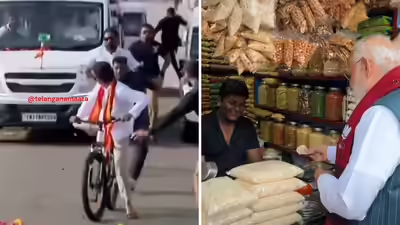
The interaction between high-profile leaders and the common citizen was observed most notably in West Bengal, where Prime Minister Narendra Modi made an unplanned stop. In the viral clips, which have amassed millions of views, the Prime Minister is seen pausing his convoy in Jhargram to enjoy a plate of “Jhalmuri” from a roadside vendor. It is reported by local residents that this spontaneous “Jhalmuri Moment” triggered a massive spike in digital interest for the local snack, serving as a powerful visual testament to the cultural connect required in a high-voltage election.

The Cycle and the Surge: Vijay’s Dramatic Campaign Trail

The reaction from the digital community has also been centered on the high-octane entry of actor-turned-politician Thalapathy Vijay into the Tamil Nadu political arena. A dramatic scene was documented during his rally in Karaikudi, where the TVK chief attempted to navigate the streets on a bicycle. It is argued by observers that the “heavy price” of his immense popularity was nearly paid in security risks, as massive crowds swelled around him, forcing the leader to “abandon the cycle” and jump into his campaign vehicle for safety. This “Vijay on a Cycle” video remains a top trending topic, highlighting the chaotic reality of star-driven politics.

The impact of the viral trend extended beyond individual stunts to broader shifts in campaign strategy across Tamil Nadu, Kerala, and West Bengal. It is noted by commentators that while traditional rallies continued, the passive role of the voter was replaced by an active participation in “Reel Politics.” From Chief Minister M.K. Stalin taking spontaneous auto rides to leaders engaging in local street food culture, every move was observed through the lens of a smartphone camera, aimed at turning a political message into a viral “vibe” for first-time voters.

Also Read: Viral Video Captures Unexpected Calm in Tehran During Ceasefire

A Historic Mandate: From Viral Snacks to Voting Booths

Following the viral success of these “lifestyle” political moments, the focus has shifted today to the actual electoral outcome. It is reported that the BJP has crossed the majority mark in West Bengal and Assam, while Vijay’s TVK is leading a historic three-way battle in Tamil Nadu, pushing traditional heavyweights like the DMK into third place in early trends. The video of Suvendu Adhikari celebrating the Bengal win—not with sweets, but with “celebratory Jhalmuri”—has been identified by netizens as the perfect full-circle moment for the campaign season.

As of the afternoon of May 4, 2026, the story continues to serve as a major talking point in the “National Elections” and “Social Media Trends” categories. While the era of digital campaigning has permanently changed how voters perceive their leaders, the digital record of these five videos stands as a reminder that even in a high-tech world, the most relatable moments often carry the most weight. For now, the story stands as a digital plea: the “vision” for the country must always outshine the “vibe” of the viral moment, ensuring that the results of today lead to a better tomorrow for all five states.

Viral Video Captures Unexpected Calm in Tehran During Ceasefire

0

New Delhi, May 4, 2026: A surprising perspective on life in the Iranian capital has been documented today, May 4, 2026, after an Instagram video titled “A Day in Tehran During Ceasefire” went viral across global social media. The footage, shared by a resident named Estelle, has stunned millions by showcasing a serene side of the city that stands in stark contrast to recent headlines of conflict. The “truth” behind the digital stir involves a series of mundane, everyday moments—from traffic-clogged streets to casual shopping—that have prompted a massive international conversation about the resilience of urban life.

The interaction between the resident and her city was observed as she navigated through busy roads where traffic moved with routine efficiency. In the viral clips, which have amassed millions of views, Estelle is seen stopping at a roadside vendor to purchase a small cat plushie before heading into a local food court. It is reported by those who viewed the footage that the atmosphere was surprisingly relaxed, with the narrator seen browsing for Iranian biscuits and sampling Korean food at various stalls, far removed from the tension suggested by global political developments.

Contrast in the Capital: Finding Peace Amidst Political Tensions

The reaction from the digital community has been one of fascination regarding the “mechanical necessity” of maintaining daily routines during a fragile ceasefire. It is argued by many viewers that the video provides a much-needed humanizing look at a region often defined solely by its geopolitics. On various social media platforms, the footage has been utilized to discuss the shifting perceptions of Tehran, where luxury hotels and bustling lounges were observed being frequented by citizens enjoying a moment of respite from the uncertainty of recent weeks.

The impact of the video has prompted a wider discussion regarding the current diplomatic climate, specifically the 60-day War Powers Resolution deadline that expired on May 1. It is noted by commentators that while the city appears calm on the surface, the underlying political situation remains complex. The passive role of the viewers—who expressed everything from curiosity to admiration for the city’s beauty—has been identified as a sign of the global desire for a lasting peace that allows such “normal” days to become permanent.

Also Read: Shimla ASI Suspended Following Altercation with Taxi Driver

A Journey through the Streets: Life Beyond the Headlines

Following the viral success of the “Normal Day in Tehran” clip, the footage has been highlighted for its diverse culinary and social glimpses, including visits to upscale lounges where the atmosphere appeared completely relaxed. It is reported that the video has challenged the “doom loop” narrative often associated with the region in Western media. The video remains a top trending topic as of this afternoon, serving as a powerful visual testament to the idea that life continues to pulse through the streets even in the most challenging of times.

As of the evening of May 4, 2026, the story continues to serve as a major talking point in the “Trending Globally” and “International News” categories. While the era of high-speed information often focuses on moments of crisis, the digital record of this peaceful day in Tehran stands as a reminder of the shared human experience that persists behind the headlines. For now, the story stands as a digital reminder: sometimes the most “shocking” thing about a city in conflict is just how normal it can look when the sirens are silent.

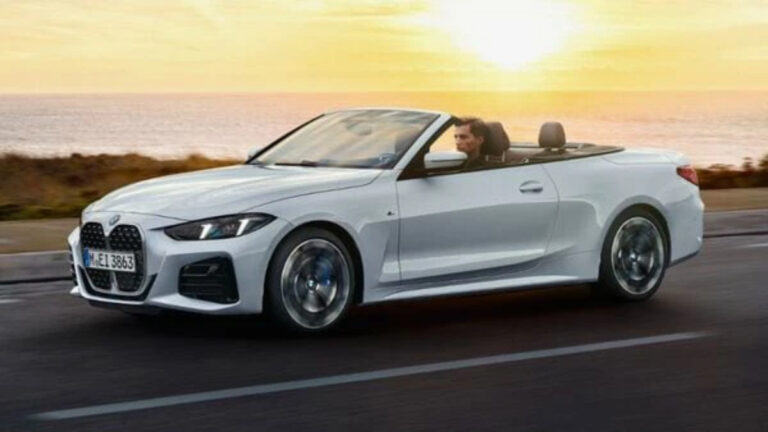
Top-Down Luxury: The Contrasting Strategies of BMW and Mini

New Delhi, May 4, 2026: In the landscape of Indian luxury motoring, the concept of a convertible is often seen as a niche luxury—a bold statement of lifestyle over pure practicality. While many premium brands treat open-top cars as rare, limited-run halo products, the BMW Group—comprising both BMW and its retro-inspired sibling, Mini—is taking a distinctly different approach to this segment in 2026.

By navigating contrasting paths, both brands are successfully expanding the footprint of the convertible in India, catering to different psychographics of the modern Indian buyer.

BMW: The Pursuit of Performance and Sophistication

For BMW, the convertible is a sophisticated expression of its “Sheer Driving Pleasure” philosophy. The recent launch of the 2026 BMW M440i Convertible (priced at approximately ₹1.09 crore) serves as a testament to this strategy.

BMW’s route is one of precision, power, and grand touring. The M440i is not merely a car for the occasional sunshine; it is a performance machine built on the robust architecture of the M340i. Powered by an M-tuned, 369 bhp B58 six-cylinder engine, it is designed for those who view driving as an experience rather than a commute.

BMW’s strategy with the convertible is deeply tied to its brand positioning in India. It appeals to the high-net-worth individual who appreciates the technical prowess of M-branded hardware—the adaptive suspension, the precision braking, and the raw acoustic joy of a high-performance engine made more accessible by the open top. For BMW, the convertible is a product of status and mechanical excellence, targeted at a segment that demands high performance without compromising on the comfort and luxury expected from the German marque.

Mini: The Joy of Character and Personalization

In contrast, Mini is taking a path that leans heavily into emotion, lifestyle, and accessibility. While BMW targets the performance purist, Mini targets the individualist.

The Mini Cooper Convertible, priced significantly lower than the BMW counterpart (roughly ₹58.50 – 61.50 lakh), serves as a vibrant gateway into the luxury open-top world. Mini’s approach is defined by “bold personalization” and iconic, retro-modern aesthetics. It is not just about raw horsepower; it is about the “go-kart feel,” the nimble handling, and the undeniable charm that makes a Mini an identity, not just a vehicle.

As BMW Group India pushes to double its Mini sales volume by the end of 2026, the convertible acts as a vital “brand shaper.” It attracts a younger, fashion-conscious demographic—buyers who are looking to stand out in the urban landscape. By offering a product that feels approachable and fun, Mini successfully converts aspirational buyers into owners, effectively growing the overall BMW Group ecosystem.

The Synergistic Strategy

While their routes differ, the brands are cleverly utilizing a unified strategy. BMW and Mini are now increasingly co-located in shared showrooms across India. This proximity is a deliberate masterstroke:

  1. Cross-Pollination: A buyer entering a showroom to look at a BMW sedan might be drawn to the playful design of a Mini Convertible, and vice versa. This encourages cross-selling and allows the Group to capture a wider spectrum of the premium market.
  2. Service Integration: Both brands benefit from the same robust after-sales infrastructure, with BMW Group India providing service support through 52 touchpoints across 40 cities. This minimizes the “risk” of owning a niche vehicle, as the mechanical support is backed by the expansive reach of the BMW network.
  3. Market Expansion: With Mini’s aggressive expansion plan—moving into tier-2 and tier-3 cities like Jaipur, Jodhpur, Lucknow, and Ranchi—the brand is unlocking latent demand in smaller markets where a flashy but accessible convertible fits the evolving lifestyle of India’s new affluent class.

The Road Ahead

The convertible segment in India remains sensitive to factors like weather, road quality, and infrastructure. However, the success of the BMW Group lies in their ability to market these vehicles not just as “convertibles,” but as distinct experiences.

BMW is selling the thrill of the open road and engineering dominance, while Mini is selling a vibrant, customizable lifestyle. By maintaining these distinct identities while sharing the same operational backbone, the BMW Group is proving that there is no single “right” way to sell a convertible in India—as long as you give the customer a reason to let the top down.

As 2026 progresses, the dual-pronged attack—BMW’s high-performance M-series and Mini’s accessible, stylish urban runabouts—is set to redefine how the Indian luxury buyer perceives the convertible. It is no longer just a weekend car; it is a vital part of the brand’s mission to deliver “JOY” to the Indian driver.

Shimla ASI Suspended Following Altercation with Taxi Driver

0

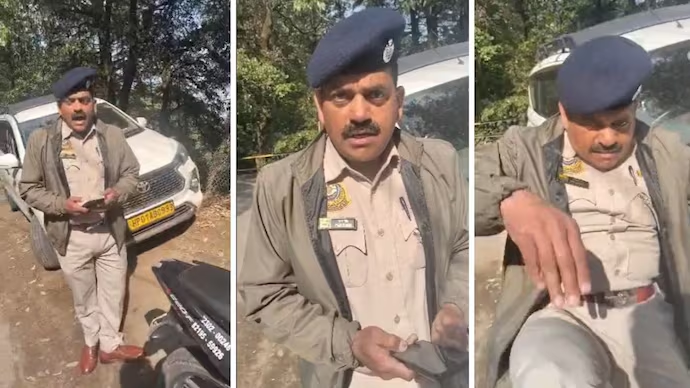
New Delhi, May 4, 2026: A serious breach of professional conduct has been documented in Shimla today, May 4, 2026, following the suspension of an Assistant Sub-Inspector (ASI) of the Himachal Pradesh Police. The disciplinary action was triggered by a viral video that surfaced on social media, showing the officer physically assaulting a local taxi driver during a heated exchange. The “truth” behind the digital stir involves a “mechanical necessity” of traffic management during a high-profile VVIP visit—specifically the President’s five-day tour of the state—which reportedly escalated into a violent confrontation near the Tavi Mod area.

The interaction between the law enforcement officer and the driver was observed on Friday, May 1, as the ASI was managing a contingency route. In the viral clips, which have amassed millions of views across national news platforms, the officer is seen instructing the driver to remove his taxi and a nearby motorcycle from the roadside. It is reported by those who viewed the footage that the driver explained he was alone and could only move one vehicle at a time, a response that apparently irked the policeman and led to a verbal spat.

Escalation on Camera: The Moment of Misconduct

The reaction from the digital community has been one of sharp criticism toward the “heavy price” of power when used inappropriately. It is argued by viewers that the situation reached a breaking point when the driver, identified as Ashish Kumar, began recording the interaction to document alleged misbehavior. In the video, as the driver attempted to zoom in on the officer’s nameplate to capture his identity, the ASI was observed delivering a kick to the driver. This specific moment of physical aggression has been identified by the public as a significant violation of the “humane policing” standards expected from the force.

The impact of the video prompted a swift response from the Shimla Superintendent of Police, Gaurav Singh, who announced the suspension of the ASI, identified as Pyar Chand Singh. It is noted by commentators that the department has invoked its “zero tolerance” policy toward misconduct and abuse of authority. The passive role of the law was replaced by active disciplinary proceedings, with the officer being sent to the police lines pending a fair and impartial departmental inquiry into the use of “excessive and inappropriate force.”

Also Read: Foreign Traveler’s Viral Reflection on the Soul of Indian Transit

Upholding Public Trust: The Path to Accountability

Following the viral success of the “Shimla Cop Assault” clip, the district police have reaffirmed their commitment to professional and lawful conduct. It is reported that the suspension is a necessary step to maintain public confidence and ensure that the rule of law applies equally to those in uniform. The video remains a top trending topic as of this afternoon, serving as a powerful visual testament to the role of digital transparency in holding public officials accountable for their actions on the street.

As of the afternoon of May 4, 2026, the story continues to serve as a major talking point in the “National News” and “Himachal Pradesh” categories. While the era of VVIP movements often places immense pressure on ground-level officers, the digital record of this incident stands as a reminder that discipline must never be sacrificed for convenience. For now, the story stands as a digital plea: the authority of a badge is a responsibility, not a weapon, and the dignity of every citizen must be respected even in the most stressful of circumstances.

Foreign Traveler’s Viral Reflection on the Soul of Indian Transit

0

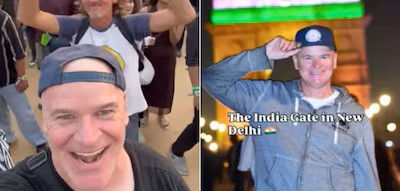
New Delhi, May 4, 2026: A profound shift in the philosophy of global exploration has been documented in a viral video today, May 4, 2026, after a foreign traveler shared a moving testimony regarding their journey through India. The footage, which has resonated with millions of viewers across international travel communities, articulates how the traditional concept of “sightseeing” was replaced by a deeper understanding of human connection. The “truth” behind the digital stir involves a realization that the “mechanical necessity” of moving from one destination to another in India is often more valuable than the destination itself.

The interaction between the traveler and the local environment was observed during a long-distance train journey across the heart of the country. In the viral clips, which have amassed millions of views on YouTube and Instagram, the narrator is seen sharing tea and conversations with fellow passengers in a crowded sleeper coach. It is reported by the traveler that their initial focus on “ticking off monuments” was completely abandoned after witnessing the effortless hospitality and communal spirit that defines the Indian travel experience.

The Beauty of Chaos: Finding Order in the Unpredictable

The reaction from the digital community has been one of overwhelming agreement, with many seasoned explorers sharing similar stories of transformation. It is argued by the traveler in the video that the “heavy price” of a rigid itinerary is the loss of spontaneous joy, a lesson that was learned while navigating the vibrant chaos of Indian streets. On various global tourism forums, the footage has been utilized to discuss the “India Effect,” where the sheer sensory overload of the country is seen as a catalyst for personal growth and adaptability.

The impact of the video has prompted a wider discussion regarding the difference between being a “tourist” and being a “traveler.” It is noted by commentators that the foreigner’s perspective highlights a specific type of wealth—the wealth of time and shared stories—that is often overlooked in luxury travel. The passive role of the observer was discarded as the traveler was seen being invited into homes and included in local festivities, proving that in India, a stranger is often treated as a guest of the soul.

Also Read: NCLAT Clears Path for Adani Group Takeover of Jaiprakash Associates

A Lesson in Resilience: Redefining the Meaning of “Comfort”

Following the viral success of the “India Changed Me” clip, there has been a renewed interest in slow travel and offbeat paths across the subcontinent. It is reported that the traveler’s message centered on the idea that comfort is not found in the quality of a hotel room, but in the resilience and warmth of the people encountered along the way. The video remains a top trending topic as of this afternoon, serving as a powerful visual testament to the power of cultural immersion in breaking down international barriers.

As of the evening of May 4, 2026, the story continues to serve as a major talking point in the “Travel Philosophy” and “Global Culture” categories. While the era of curated vacations continues to dominate the industry, the digital record of this traveler’s journey stands as a reminder of the raw, unfiltered beauty that can only be found when one is willing to get lost. For now, the story stands as a digital plea: the world is meant to be felt, not just seen, and India remains one of the greatest teachers for those willing to listen.

Clash Erupts Outside Bankura Counting Center

0

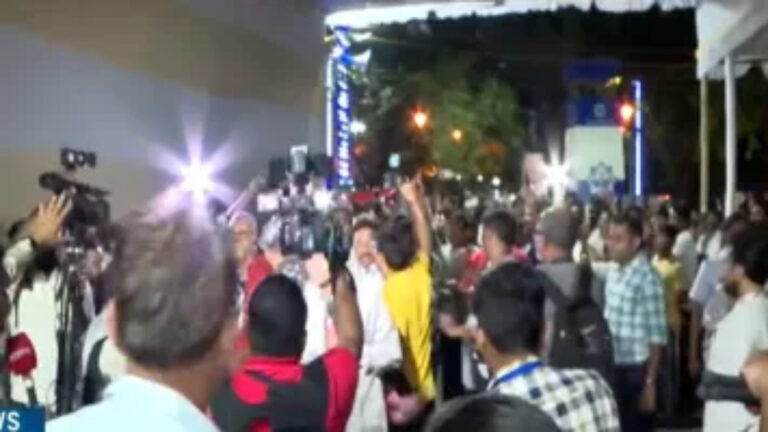
New Delhi, May 4, 2026 – The atmosphere surrounding the 2026 West Bengal Assembly Election results turned volatile earlier today as supporters of the Bharatiya Janata Party (BJP) and the All India Trinamool Congress (AITC/TMC) clashed outside a designated counting center in Bankura.

As counting began on the morning of Monday, May 4, reports of confrontation emerged from the premises of the Bankura University counting center. The incident occurred during the early rounds of vote tabulation, as initial trends indicated a neck-and-neck battle between the two major political parties in the constituency.

The Spark of Conflict

According to eyewitnesses on the ground, the friction began when supporters of both parties gathered outside the secure perimeter of the counting venue. As early trends began to circulate on social media and news outlets—showing the BJP’s candidate, Niladri Sekhar Dana, maintaining an early lead over the TMC’s Dr. Anup Mandal—tensions escalated into shouting matches, which quickly devolved into physical altercations.

Supporters allegedly began throwing projectiles and pushing against the police barricades, creating a chaotic scene. Fearing that the situation might escalate further and jeopardize the integrity of the counting process, security personnel—including central forces stationed at the site—intervened.

Police Response and Security Measures

To restore order and prevent further violence, security forces were forced to conduct a lathi charge to disperse the gathering crowds. The immediate area around the counting center was subsequently placed under stricter security protocols, with police personnel clearing the immediate vicinity of party workers.

“The situation is currently under control,” a local police official stated shortly after the incident. “Our priority is to ensure that the counting process continues without any interference. Anyone violating prohibitory orders or attempting to disrupt the democratic process will be dealt with according to the law.”

The Election Commission of India (ECI) has deployed extensive security across all 77 counting centers statewide for this election. The presence of these multi-layered security forces, including central paramilitary units, has been instrumental in keeping the overall counting process moving forward despite isolated incidents.

Broader Context of the 2026 Election

The 2026 West Bengal Assembly Elections, which concluded after a two-phase polling process on April 23 and April 29, have been defined by high stakes and intense polarization. With the term of the Legislative Assembly set to expire on May 7, the outcome of this election is seen as a pivotal moment for the state’s political future.

Across the state, early trends have shown a competitive race. In the Bankura constituency specifically, the contest is being closely watched, given the narrow margins seen in previous cycles. As of the latest updates from the Election Commission, the counting process is continuing, albeit with minor delays caused by the morning’s disruptions.

Awaiting the Final Verdict

District officials have appealed for calm, urging political leaders to ensure their supporters remain disciplined as the final results are tabulated. With the counting expected to continue throughout the day, the focus remains on the returning officers who are busy updating the data on the ECI portal.

As the state waits for the final declaration of winners in all 294 assembly seats, the incident in Bankura serves as a stark reminder of the intense political fervor that often accompanies election days in West Bengal. Both the BJP and TMC leadership have issued calls for restraint, though mutual allegations regarding the cause of the clash continue to circulate.

For now, the heavy deployment of security forces remains in place to guarantee that the final results reflect the mandate of the voters without further incident.

NCLAT Clears Path for Adani Group Takeover of Jaiprakash Associates

0

New Delhi, May 4, 2026 — In a major development for India’s corporate insolvency landscape, the National Company Law Appellate Tribunal (NCLAT) has dismissed the petitions filed by Vedanta Limited, effectively upholding the selection of Adani Enterprises as the successful resolution applicant for the debt-ridden Jaiprakash Associates Limited (JAL).

The ruling by a two-member bench, comprising Chairperson Justice (retd) Ashok Bhushan and Technical Member Barun Mitra, brings a decisive end to a contentious legal battle, paving the way for the Adani Group to proceed with its approximately ₹14,535-crore acquisition plan.

The Heart of the Dispute

The conflict stemmed from the insolvency resolution process of Jaiprakash Associates, a company that entered the Corporate Insolvency Resolution Process (CIRP) in June 2024 following a petition by ICICI Bank. With admitted claims exceeding ₹57,000 crore, the company’s assets—which include cement plants, real estate projects in the Delhi-NCR region, and the iconic Buddh International Circuit—became the subject of a high-stakes bidding war.

Vedanta Limited had challenged the decision of the Committee of Creditors (CoC) to select the Adani Group’s bid. Vedanta’s core argument was based on financial value; the company claimed that its own revised resolution plan, reportedly valued at over ₹17,900 crore, offered significantly higher returns to creditors than the ₹14,535-crore plan submitted by Adani Enterprises. Vedanta alleged that the process lacked transparency and that the CoC had failed to properly evaluate its superior financial offer.

NCLAT’s Verdict: Protecting ‘Commercial Wisdom’

In its order, the NCLAT bench found no merit in Vedanta’s arguments. The tribunal emphasized that the decision-making power of the Committee of Creditors is paramount under the Insolvency and Bankruptcy Code (IBC).

The NCLAT observed:

  • Commercial Wisdom: The tribunal reiterated that the CoC’s decision, taken with a massive 93.81% majority in November 2025, was a product of the creditors’ “commercial wisdom.” It noted that this decision cannot be labeled as arbitrary or perverse simply because a higher financial offer was presented later.
  • No Procedural Irregularity: The bench found no material irregularity in how the Resolution Professional conducted the bidding process.
  • Strict Adherence to Deadlines: The CoC had successfully argued that Vedanta’s revised, higher offer was submitted after the prescribed deadline and after the company had become aware of its competitors’ positions. The tribunal upheld the sanctity of the structured bidding process, noting that allowing post-deadline modifications would undermine the framework.

“No grounds have been made out by the appellant (Vedanta) to interfere with the decision of the adjudicating Authority (NCLT),” the NCLAT stated.

A Long Road to Resolution

The resolution of Jaiprakash Associates has been a long and complex journey since its admission into insolvency in 2024. The process attracted significant interest, with 28 expressions of interest received and six final bidders—including Dalmia Cement and Jindal Power—competing for the assets.

The legal tussle saw several stages:

  1. NCLT Approval: In March 2026, the Allahabad bench of the National Company Law Tribunal (NCLT) approved the Adani Group’s plan.
  2. Appellate Challenge: Vedanta appealed this decision to the NCLAT, which refused an interim stay in March, a decision later upheld by the Supreme Court.
  3. Final Dismissal: With today’s NCLAT ruling, the legal obstacles to the acquisition have been largely cleared.

What This Means for the Industry

This ruling is seen as a reinforcement of the principles of the IBC. By prioritizing the collective commercial judgment of lenders over the individual financial bids of corporate entities, the tribunal has signaled that the insolvency process is intended to be efficient and time-bound.

For the Adani Group, this victory secures a diverse portfolio of assets, including significant cement manufacturing capacity and high-value real estate in the National Capital Region. For Jaiprakash Associates’ creditors, the implementation of the plan brings a conclusion to years of financial uncertainty.

While Vedanta retains the right to approach the Supreme Court, legal experts note that the company faces a steep climb, given that the apex court has already declined to interfere with the lower tribunal’s interim proceedings. For now, the focus shifts to the implementation of the resolution plan and the eventual transfer of assets.

Isha Ambani 26-Border Bandage Dress Stuns at Vogue’s Pre-Met Gala Party

New Delhi, May 4, 2026: In the high-stakes world of international fashion, where the avant-garde often takes center stage, Isha Ambani recently chose to define her presence at the Vogue Met Gala pre-party with a powerful, deeply personal tribute to her roots. As global anticipation builds for the 2026 Met Gala, Ambani’s choice of attire—a reimagined bandage dress crafted from 26 distinct Indian textile borders—has not only stolen the spotlight but has ignited a conversation about the intersection of modern luxury and centuries-old heritage.

A Fashion Map of India

At the star-studded soirée held in New York City, Ambani stepped out in a custom-made, strapless midi dress designed by the renowned Manish Malhotra in collaboration with Swadesh—an initiative launched by Reliance Retail to preserve and promote Indian handcrafted heritage.

Far from a conventional red-carpet gown, this dress functioned as a narrative of Indian craftsmanship. By reimagining the iconic structure of a bandage dress—a style famously known for hugging the body’s natural form—through an “Indian lens,” the design team successfully bridged the gap between Western contemporary silhouettes and the vibrant, complex tapestry of Indian textiles.

The 26 Pillars of Tradition

The genius of the garment lies in its construction. It featured 26 different handcrafted borders, each sourced from a different region of the country, acting as a “fashion map” of India. According to details shared by the collaborators, the ensemble journeyed from the north to the south, and from the east to the west, incorporating a vast array of techniques:

  • North: Intricate Tilla embroidery from Kashmir and Zari work from Uttar Pradesh.
  • East: Traditional Kantha work from Bengal and woven Baluchari motifs.
  • West: Paithani silks from Maharashtra and Ashavali brocade from Gujarat.
  • South: Kanjeevaram silk strips and temple-inspired weaves.
  • Other Noted Techniques: Parsi Gara embroidery, Maheshwari weaves, Karchobi, Aari Bharat, and petite point from Puducherry.

The result was a seamless, unified garment where every border held the weight of history and the skill of generations of artisans.

450 Hours of Dedication

The creation of such an intricate piece was a monumental effort. Swadesh artisans dedicated over 450 hours to assemble these diverse borders into a cohesive narrative. As Manish Malhotra noted on his social media, the project was born from Ambani’s own desire to “wear India, not as an idea, but as a living expression of its craft.”

This focus on the process—the time invested, the hand-perfected techniques, and the preservation of fading arts—is what elevates the dress beyond mere fashion. It serves as a testament to the fact that true couture is often built slowly and is meant to stand the test of time.

Styling the Narrative

Styled by the celebrated Anaita Shroff Adajania, the look was designed to let the dress speak for itself while maintaining a polished, contemporary edge.

  • Minimalist Chic: Given the complexity of the gown’s textile layers, Ambani kept her styling refined. She opted for statement diamond earrings and a ring, allowing the rich textures of the dress to remain the undisputed focal point.
  • Hair and Makeup: Her hair was styled in a sleek, pulled-back braid, accented by delicate hair adornments. The makeup was soft and radiant, featuring glowing skin, flushed cheeks, and bold, winged eyeliner—a look that complemented the sharp structure of the outfit.
  • The Crown Jewel: One of the most talked-about accessories was a “Majestic Leopard Couture” hair ornament designed by the Delhi-based label Outhouse Jewellery. Handcrafted over 300 hours, the sculptural piece featured two sculpted leopards framing a luminous prehnite drop, symbolizing strength, union, and feminine power.

Why This Moment Matters

As the 2026 Met Gala—themed “Costume Art”—approaches, Ambani’s pre-party appearance has set a high bar for cultural storytelling on the global stage.

The Met Gala is known for being a spectacle where guests interpret themes through avant-garde fashion. By choosing to wear a dress that explicitly maps the regional diversity of India, Isha Ambani has effectively positioned Indian artisan heritage as a form of high-art equal to any global fashion house. It is a powerful reminder that “Fashion Is Art,” and that the most compelling stories are often those that honor the hands that created them.

As the industry looks forward to the main red carpet event, one thing is clear: Isha Ambani has solidified her reputation as a global fashion figure who uses her platform to shine a light on the incredible depth and diversity of regional Indian techniques. She hasn’t just attended the pre-party; she has made an indelible mark on the international fashion conversation, proving that tradition, when reimagined with vision, is the ultimate modern luxury.