

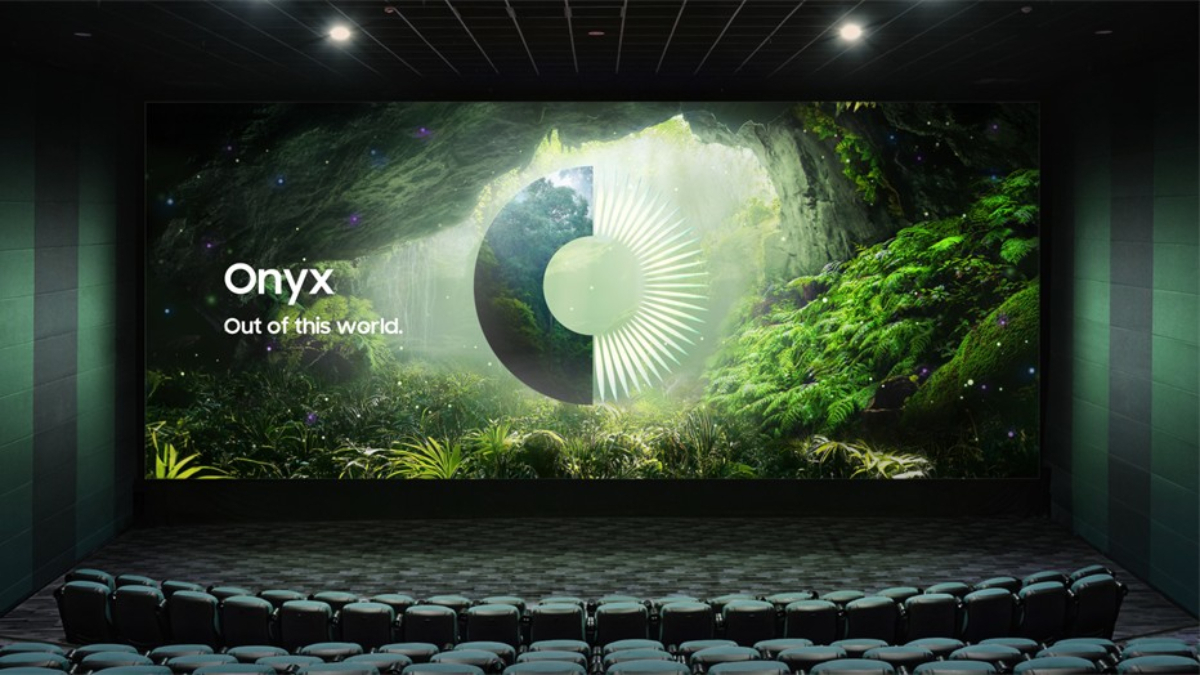
New Delhi, April 14, 2026 — As the lights dimmed at Caesars Palace during CinemaCon 2026, the focus wasn’t just on upcoming blockbusters, but on the very technology used to show them. Samsung Electronics has officially pulled back the curtain on its latest innovation: a 14-meter (46-foot) model of its Onyx Cinema LED display.
This new addition to the Onyx lineup is specifically designed to dominate the Premium Large Format (PLF) market, bridging the gap between standard cinema screens and massive, floor-to-ceiling installations. By moving away from traditional projection and toward direct-view LED, Samsung is betting that the future of cinema lies in “pixels, not projectors.”
Expanding the Premium Scale
Since its debut in 2017, the Onyx brand has been synonymous with “True Black” and high-contrast visuals. However, for years, the primary challenge for LED screens in theaters was scaling up to meet the demands of large, flagship auditoriums.
The introduction of the 14-meter format changes that dynamic. It joins a versatile family of displays:
- 5-meter (16-foot): Optimized for boutique theaters and intimate screening rooms.
- 10-meter (33-foot): The industry standard for high-end, mid-sized auditoriums.
- 14-meter (46-foot): The new sweet spot for Premium Large Format experiences.
- 20-meter (66-foot): The ultimate “mega-screen” for the world’s largest venues.
What makes the 14-meter model a game-changer is its flexible scaling support. Theater owners aren’t strictly limited to the 14-meter width; the system is modular. By adding individual LED cabinets to the sides and bottom, exhibitors can expand the screen up to 20 meters, allowing for a seamless, wall-to-wall visual experience that fits the unique architecture of any room.
Technical Mastery: Beyond the Projector
Traditional projectors work by bouncing light off a white screen. This method inherently loses contrast because the “black” parts of the image are still being hit by ambient light or light reflecting off theater walls. Samsung’s Onyx turns this concept on its head.
1. Infinite Contrast and “True Black”
Because every pixel in an LED display is self-emissive—meaning it creates its own light—it can simply turn off to create total darkness. This results in an infinite contrast ratio. When a scene in a movie is dark, the screen is actually black, not a muddy grey. This allows for incredible detail in shadows that would normally be lost in a projected image.
2. High Dynamic Range (HDR) and Brightness
The 14-meter Onyx supports a peak brightness of up to 300 nits. For context, that is approximately six times brighter than the 48-nit standard used by most traditional cinema projectors. This extra “headroom” allows for stunning HDR (High Dynamic Range) effects—like the glint of sun on water or the glow of a lightsaber—without washing out the surrounding colors.
3. 4K Resolution and 120Hz Refresh Rates
Equipped with a 3.3mm pixel pitch, the display ensures that even from the front row, the image remains sharp and free of the “screen door effect.” It supports 4K resolution and refresh rates of up to 120Hz. This makes it an ideal platform not just for Hollywood movies, but for “alternative content” like live-streamed sports, e-sports tournaments, and high-frame-rate concert films.
The Business Case: Why Theaters are Switching
While the visual benefits are obvious to the audience, the shift to LED offers significant operational advantages for theater owners.
| Feature | Traditional Projection | Samsung Onyx LED |
| Space Usage | Requires a bulky projection booth. | No booth needed; modular wall-mount. |
| Light Interference | Requires total darkness for quality. | Performs perfectly even with lights on. |
| Maintenance | Frequent bulb changes and alignment. | 100,000+ hour lifespan; minimal upkeep. |
| Seating | Limited by projection “throw” angles. | Optimized seating; no “bad seats” at the back. |
By eliminating the need for a projection booth, exhibitors can reclaim valuable real estate. That space can be converted into additional seating, a VIP lounge, or even a concession area, directly impacting the theater’s bottom line.
Furthermore, the Onyx is the world’s first DCI-certified (Digital Cinema Initiatives) LED display. This means it meets the strict technical standards required by major Hollywood studios like Disney, Warner Bros., and Universal, ensuring that the filmmaker’s artistic vision is preserved exactly as intended.
Partnering with Content Creators
The hardware is only half the story. Samsung has continued its deep collaboration with Pixar Animation Studios to ensure content is mastered specifically for the LED format. Recent films like Elio have been color-graded to take full advantage of the Onyx’s brightness and color volume.
Pixar has even installed Onyx displays at its Emeryville campus to evaluate HDR color during production. When a studio uses the same technology to make the movie that the theater uses to show it, the audience gets a level of fidelity that was previously impossible.
Beyond the Auditorium: The “Smart Cinema”
Samsung’s presence at CinemaCon 2026 wasn’t limited to the screen inside the theater. The company also showcased its Spatial Signage, a glasses-free 3D display designed for lobbies. Imagine walking into a theater and seeing a 3D character from an upcoming movie “pop out” of a poster to greet you—without needing special glasses.
Additionally, Samsung is promoting the use of energy-efficient color e-paper for digital menu boards and movie posters. These displays consume almost no power when showing static images, helping theaters reduce their carbon footprint while maintaining a modern, high-tech aesthetic.
Conclusion: Is the Projector Dead?
While traditional laser projection will likely remain a staple for smaller, budget-conscious theaters for a few more years, the momentum is clearly shifting. As audiences become more selective about where they spend their entertainment budget, “Premium” is no longer an option—it’s a requirement.
The Samsung 14-meter Onyx Cinema LED isn’t just a bigger screen; it’s a total reimagining of what a trip to the movies looks like. With its combination of blinding brightness, perfect blacks, and modular flexibility, it is setting a new benchmark for the “destination” cinema experience.
In an era where home TVs are getting bigger and better, the 14-meter Onyx gives people a reason to leave their couches and head back to the multiplex. The message from CinemaCon 2026 is clear: the future of film is brighter, sharper, and much more vibrant than ever before.