Home Blog Page 142

North Korea Bolsters Maritime Strike Power with New Destroyer Missile Tests

0

New Delhi, April 14, 2026 – In a significant escalation of its naval modernization efforts, North Korea has conducted a series of advanced missile tests from its newest 5,000-ton destroyer, the Choe Hyon. According to state media reports released on Tuesday, April 14, 2026, leader Kim Jong Un personally oversaw the launch of strategic cruise missiles and anti-ship missiles, signaling a clear shift in Pyongyang’s focus toward establishing a dominant presence in the surrounding seas.

The tests, which reportedly took place on Sunday, April 12, were designed to verify the “ultra-precision” strike capabilities of the North’s expanding fleet. This development comes at a time of heightened regional tension, with the North Korean leadership increasingly prioritizing the nuclear armament of its navy to counter what it describes as “provocations” from the United States and South Korea.

Precision Strikes from the West Sea

The state-run Korean Central News Agency (KCNA) provided detailed technical data on the performance of the weapons systems during the drills. According to the report, the exercise involved two distinct types of missiles:

  • Strategic Cruise Missiles: Two long-range cruise missiles were launched from the Choe Hyon. They reportedly flew along pre-set flight paths above the West Sea (Yellow Sea) for approximately 7,869 to 7,920 seconds (just over two hours) before successfully hitting their targets.
  • Anti-Ship Missiles: Three anti-ship missiles were also tested, remaining in the air for approximately 1,960 to 1,973 seconds (roughly 33 minutes). These missiles are designed to track and destroy moving naval vessels with high-speed, low-altitude flight patterns to evade radar detection.

KCNA emphasized that the launches were not merely for show but served as a rigorous assessment of the warship’s integrated weapons command system. The drills were also intended to verify the accuracy and “anti-jamming performance” of upgraded navigation systems, ensuring the missiles can strike accurately even in an electronically contested environment.

The Choe Hyon: A Symbol of Naval Ambition

The centerpiece of these tests is the Choe Hyon, a 5,000-ton class destroyer that has become the crown jewel of Kim Jong Un’s naval strategy. First unveiled in April 2025, the vessel represents a massive leap in tonnage and sophistication compared to the North’s older, Soviet-era patrol boats.

Satellite imagery and expert analysis suggest the destroyer is equipped with a Vertical Launch System (VLS), allowing it to fire a variety of munitions, including surface-to-air, anti-ship, and land-attack cruise missiles. Recent modifications to the ship’s hull and superstructure indicate that the North may have increased the number of launch cells to as many as 104, potentially allowing for a massive, coordinated missile volley.

During his visit, Kim Jong Un hailed the Choe Hyon as a “new symbol of the country’s maritime defense capability.” He stressed that the successful tests proved the vessel’s readiness to conduct “strategic strike missions” and serve as a “responsible exercise of the country’s war deterrent.”

Expanding the Fleet: Plans for a Destroyer Flotilla

Perhaps more concerning for regional security analysts than the missiles themselves is the news that North Korea is accelerating the production of this new class of warship. While on-site, Kim was briefed on the progress of two additional destroyers currently under construction at the Nampo shipyard on the western coast.

  • Accelerated Production: Kim has issued a directive to build at least two surface warships of the Choe Hyon class—or even more advanced models—every year.
  • Target Deadlines: The third destroyer in the series is expected to be completed by October 2026, coinciding with the anniversary of the founding of the ruling Workers’ Party.
  • The “Flotilla” Strategy: Experts believe Pyongyang is moving away from its traditional reliance on individual, isolated vessels. Instead, it is working to form a coordinated destroyer flotilla capable of projecting power further into the Pacific and providing a credible second-strike capability from the sea.

Geopolitical Context and Global Ties

The timing of these tests is no coincidence. North Korea has adopted an increasingly hostile stance toward South Korea, with Kim Jong Un recently defining Seoul as his “most hostile adversary” and ending all meaningful dialogue.

Furthermore, the technological advancement seen in the Choe Hyon has raised eyebrows in Washington and Seoul. Many military analysts suspect that North Korea may have received technical assistance from Russia in exchange for the thousands of containers of munitions and troops Pyongyang has reportedly sent to support Moscow’s invasion of Ukraine. While North Korea maintains the technology is indigenous, the rapid progress in sophisticated VLS systems and stealth-inspired hull designs suggests significant external collaboration.

Simultaneously, Kim has bolstered his “anti-imperialist” front by deepening ties with China. Last week, during a meeting with Chinese Foreign Minister Wang Yi, Kim voiced his support for a “multipolar world,” further isolating the U.S. influence in the region.

Challenges and Skepticism

Despite the triumphant tone of state media, external observers remain cautious. The second ship of this class, the Kang Kon, reportedly suffered damage during a botched launch attempt in May 2025. While the North claims it has since been repaired and relaunched, there are questions about the long-term reliability of these large platforms under combat conditions.

Maintaining a 5,000-ton destroyer requires advanced logistics, sophisticated radar arrays, and highly trained crews—areas where the North Korean Navy has historically struggled. However, the repeated and successful testing of cruise missiles from the Choe Hyon suggests that the “teething issues” of the new class are being addressed.

Also Read: Amazon “Prime” Cost: Life and Death on the Warehouse Floor

Conclusion: A New Era of Deterrence

As the sun set over the West Sea following the successful strikes, Kim Jong Un reiterated that the “limitless expansion” of the country’s nuclear forces remains the top priority. By successfully integrating cruise and anti-ship missiles into a modern destroyer platform, North Korea has sent a clear message: its “war deterrent” is no longer confined to land-based silos and mobile launchers.

For the international community, the Choe Hyon represents a new and unpredictable variable in the Pacific theater. With more destroyers on the way and a leadership determined to achieve “preemptive strike capabilities,” the waters of the Korean Peninsula are set to remain a focal point of global tension for the foreseeable future.
Amazon “Prime” Cost: Life and Death on the Warehouse Floor

0

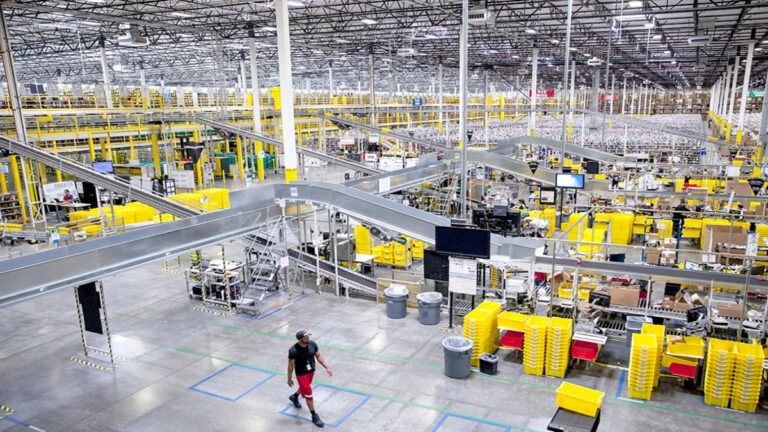
New Delhi, April 14, 2026: The glow of the fluorescent lights at the PDX9 Amazon fulfillment center in Troutdale, Oregon, didn’t flicker when a 46-year-old worker collapsed on the concrete floor on Monday, April 6, 2026. The mechanical hum of the conveyor belts didn’t stop, and the relentless “rate” that dictates the lives of thousands of employees continued to tick upward.

For more than an hour, according to harrowing eyewitness reports, the man lay unattended on the warehouse floor. As management reportedly instructed staff to “just turn around and not look” and “get back to work,” the facility became a grim tableau of modern industrial labor: a human life extinguished in the middle of an aisle, while the machinery of global commerce moved around it.

The Incident: “Don’t Look, Just Pick”

The details emerging from the PDX9 facility paint a chilling picture of corporate priorities. Reports suggest the worker, whose identity has been kept private out of respect for his family, collapsed during a shift characterized by unusual heat and humidity.

Internal accounts shared by colleagues on platforms like Reddit and through local labor advocates tell a story of systemic indifference:

  • The Delay: The worker reportedly remained on the floor for over 60 minutes before emergency services were effectively integrated into the scene.
  • The Instruction: Multiple employees allege that supervisors and “Top Managers” did not immediately halt operations. Instead, workers were told to continue fetching totes and picking items from shelves, literally walking past their fallen colleague.
  • The Environment: In the weeks leading up to the tragedy, employees had filed complaints regarding broken fans and poor ventilation. The installation of “sound curtains” in certain departments reportedly trapped heat, creating a “stuffy and dizzying” atmosphere even in early April.

“I have a lot of anxiety over walking back into that building,” one anonymous employee told The Western Edge. “To see someone you know, someone you work with, treated like a literal obstacle on the floor… it changes how you see the company.”

A Pattern of “Natural Causes”

This 2026 tragedy is not an isolated event; it is the latest chapter in a long-standing controversy surrounding Amazon’s workplace safety culture. The company has faced similar backlash for years, often citing “natural causes” or “pre-existing conditions” to distance operational pressure from worker fatalities.

LocationYearIncident Summary
Carteret, NJ2022A worker died during Prime Day; Amazon claimed it was a cardiac event unrelated to work.
Swansea, UK2023Martin Vaughan, 52, collapsed mid-shift. Family members fought for two years for an inquest into ambulance delays.
Staten Island, NY2025A 34-year-old worker was killed by a reversing truck at the JFK8 loading dock.
Troutdale, OR2026A worker lay on the floor for over an hour while operations continued around him.

In the 2023 case of Martin Vaughan, his family expressed outrage after learning it took 14 minutes for anyone to even find him after he collapsed. The recurring theme across these tragedies is a perceived gap between Amazon’s public safety “investments” and the reality of the warehouse floor.

Amazon’s Defense: Safety by the Numbers

Amazon has consistently pushed back against the narrative that it is a “hazardous” employer. In a statement released shortly after the PDX9 incident, spokesperson Sam Stephenson expressed deep sadness:

“Our thoughts and deepest sympathies are with their loved ones during this difficult time. We have provided on-site grief counselors and additional support for our employees at PDX9.”

In its 2025-2026 safety reports, Amazon claims to have reduced workplace injury rates by 43% since 2019. The company highlights its use of assistive robotics like Proteus and Cardinal to reduce physical strain, and a 24/7 team of meteorologists to monitor heat and weather risks.

However, labor advocates argue that these statistics are “sanitized.” While heavy lifting might be decreasing due to automation, the speed of work—the “rate”—has only increased, leading to what many call “exhaustion-induced” medical emergencies.

The “Sound Curtain” Controversy

One specific technical complaint at the PDX9 facility involves the use of industrial sound curtains. Designed to reduce the deafening noise of thousands of moving parts, workers claim these thick barriers act as insulators, preventing airflow in the “AFE” (Amazon Fulfillment Engine) zones.

“They turned the building into an oven,” one worker reported. “The fans aren’t working, the heat from the machines stays trapped, and then they wonder why people are fainting. They prioritize the decibel level over the body temperature of the workers.”

The Human Cost of “Prime”

The phrase “Let’s get back to work has become a rallying cry for labor unions and activists who see it as the ultimate distillation of Amazon’s philosophy. To the algorithm that manages these warehouses, a human being is a “unit of labor.” When that unit fails, the system is designed to route around the failure to maintain the flow of packages.

The psychological toll on the survivors at PDX9 is significant. Seeing a coworker die is a trauma; being told to ignore the body and keep picking items for a $20 delivery is a moral injury.

Also Read: Noida Unrest: Pakistan Link Probed?

What Happens Next?

  1. OSHA Investigations: The Occupational Safety and Health Administration (OSHA) is expected to review the response time and the environmental conditions at the Oregon facility.
  2. Union Pressures: The Amazon Labor Union (ALU) and groups like Warehouse Life are using this incident to demand “Heat Stress Standards” and mandatory “Stop-Work” protocols in the event of medical emergencies.
  3. Transparency Demands: Families of the deceased are increasingly taking legal action to obtain internal CCTV footage and supervisor communication logs to see if help was intentionally delayed to meet shipping quotas.

Final Reflections

As we move further into 2026, the convenience of “Same-Day Delivery” is increasingly scrutinized through the lens of those who provide it. The death at PDX9 serves as a stark reminder: behind every brown box is a human being operating in a high-pressure environment where, in the eyes of management, the clock never stops—not even for death.

Until the “rate” is secondary to the pulse of the person working, tragedies like the one in Troutdale will likely continue to be dismissed as “natural causes” in a very unnatural environment.

Noida Unrest: Pakistan Link Probed?

0

New Delhi, April 14, 2026: The industrial hub of Noida has become the center of a national security debate following claims by the Uttar Pradesh government that recent labor unrest may have been hijacked by “anti-national” forces.

On April 13, 2026, a protest by thousands of factory workers over wage hikes and working conditions spiraled into widespread violence, arson, and gridlock across the city. In the aftermath, UP Labour Minister Anil Rajbhar dropped a “shocker” by suggesting a potential link to Pakistan-based handlers, turning a local labor dispute into a high-stakes investigation.

The Spark: Why Noida’s Workers Took to the Streets

The unrest began as a push for economic survival. Thousands of workers from the Phase-2 Hosiery Complex, Sector 60, Sector 62, and Sector 84 gathered to demand a significant revision of the minimum wage.

The Workers’ Demands:

  • Wage Revision: Protesters called for a minimum monthly salary of ₹20,000, citing the soaring cost of living, high rents, and inflation.
  • Labor Codes: Tensions had been simmering over the implementation of new central government Labour Codes, which some workers feared would increase working hours to 12 hours while reducing overtime benefits.
  • Exploitation Claims: Several workers alleged “under-the-table” payment practices, where companies officially record higher salaries but pay workers significantly less in cash.

What started as a peaceful demonstration quickly turned into a logistical nightmare. The Noida-Greater Noida Expressway, the Chilla Border, and the Noida-Delhi Link Road were blocked, leaving thousands of commuters stranded for hours.

The Escalation: Violence and Arson

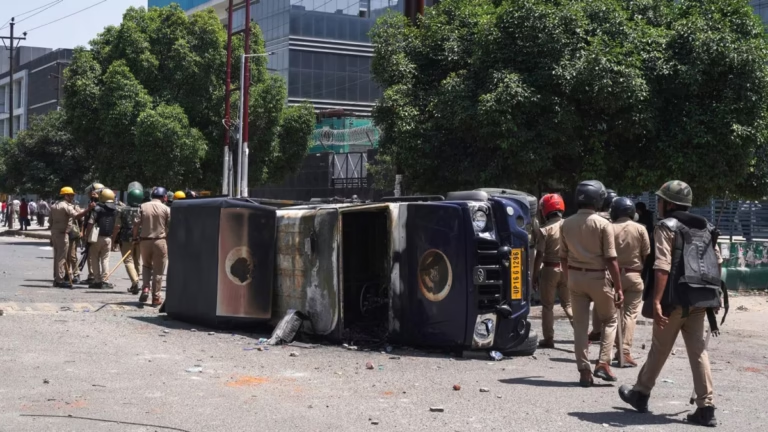
By Monday afternoon, the situation turned volatile. Groups of protesters engaged in stone-pelting against anti-riot police. Several vehicles were torched, and industrial properties were vandalized. The police responded with tear gas and lathi charges to disperse the crowds.

Key Figures from the Unrest:

  • 350+ Arrests: Authorities have already arrested hundreds in connection with the violence.
  • 100+ Detentions: Over a hundred people are currently being questioned to identify those who incited the mob.
  • 9 FIRs Registered: Seven FIRs target unidentified rioters, while two target social media accounts accused of spreading inflammatory rumors.

The “Pakistan Link”: A Well-Planned Conspiracy?

As the smoke cleared, UP Labour Minister Anil Rajbhar issued a statement that shifted the narrative from labor rights to national security. He described the violence as a “well-planned conspiracy” intended to disrupt the state’s development and law-and-order.

The Basis of the Claim:

Minister Rajbhar pointed to the recent arrest of four suspected terrorists in Noida and Meerut. According to intelligence agencies, these suspects had direct connections to handlers in Pakistan.

“The incident appears to have been carried out with the intention of disrupting the development and law and order of the state… recent arrests of suspected terrorists from Meerut and Noida, whose links were connected to handlers based in Pakistan… In such a situation, the possibility of a conspiracy to create instability in the state gains strength.” — Anil Rajbhar, UP Labour Minister

The Minister further alleged that the timing of the violence was suspicious, potentially aimed at disrupting a high-profile program attended by Chief Minister Yogi Adityanath in Muzaffarnagar on the same day.

CM Yogi Adityanath’s Stance: From Naxalism to “Outsiders”

Chief Minister Yogi Adityanath backed the conspiracy theory but added a different dimension. Following a high-level review, the CM warned that “misleading and disruptive elements” were attempting to revive Naxalism through these protests.

He directed officials to:

  1. Strengthen Intelligence: Beef up the local intelligence unit (LIU) networks within industrial clusters.
  2. Filter Negotiators: Ensure that only “genuine workers” are involved in government dialogues, cautioning that “external elements” often pose as labor representatives to incite chaos.
  3. Strict Action: The CM ordered the harshest possible action against anyone found to be orchestrating the unrest under the guise of worker rights.

The Political Fallout: A War of Words

The government’s claims have sparked a fierce political backlash. Akhilesh Yadav, President of the Samajwadi Party, slammed the Chief Minister’s remarks, calling the “conspiracy” label an attempt to mask administrative failure.

Yadav questioned why the state’s intelligence failed to prevent the unrest if it was indeed a planned operation. He argued that the government was “maligning” a genuine workers’ movement to avoid addressing the core issues of inflation and stagnant wages.

Government Response: A Double-Edged Approach

While the investigation into the “Pakistan link” continues, the UP government moved quickly to de-escalate the labor tension. On April 14, 2026, the administration announced a retrospective hike in minimum wages (effective from April 1).

New Monthly Wage Structure (Noida/Ghaziabad):

CategoryPrevious WageNew Revised Wage
Unskilled₹11,313₹13,690
Semi-Skilled₹15,059
Skilled₹16,868

This move was intended to satisfy the “genuine” workers and isolate those the government believes are part of the “conspiracy.”

Current Situation in Noida

As of today, Noida remains under a heavy security blanket. The Rapid Action Force (RAF) and thousands of UP Police personnel are patrolling industrial sectors. While the city is returning to normalcy and traffic has resumed, the air remains thick with tension.

Agencies are currently scanning CCTV footage and social media bot networks to determine if the protest was organic or if it was amplified by external digital propaganda. The investigation into the Pakistan link is being handled by specialized counter-terrorism units alongside the local police.

The Road Ahead

The Noida workers’ protest serves as a stark reminder of the fragile balance between industrial growth and labor welfare. While the wage hike may pacify the majority of the workforce, the “Pakistan link” allegations have ensured that the industrial belt will remain under strict surveillance for the foreseeable future. The government maintains that while it is open to dialogue, it will not allow the “engine of development” to be derailed by “anti-national forces.”

Summary of Events:

  • Protest Date: April 13, 2026.
  • Primary Cause: Demand for wage hike and opposition to new Labour Codes.
  • Government Action: Wage hike announced; 350+ arrested.
  • The Controversy: Investigation into a “Pakistan-linked” conspiracy to incite violence.

China’ Export Engine Stutters as Iran War Wipes Out AI-Driven Gains

0

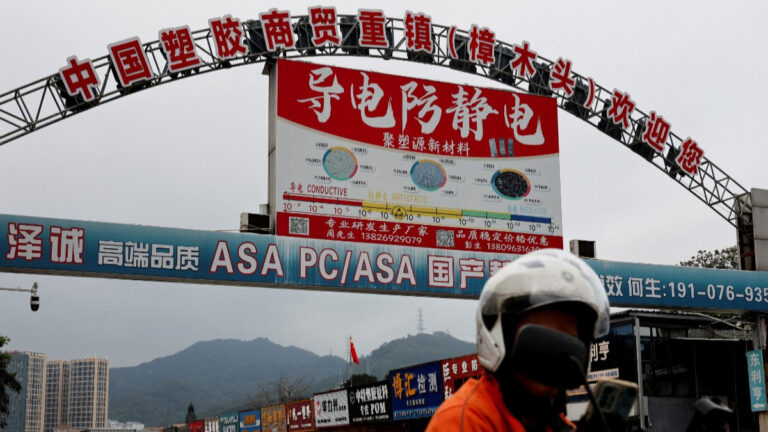
New Delhi, April 14, 2026 — The high-octane growth that defined the Chinese economy at the start of 2026 has hit a geopolitical brick wall. According to customs data released on Tuesday, April 14, 2026, China’s export growth slowed to a five-month low in March, as the escalating conflict in the Middle East and the closure of the Strait of Hormuz effectively neutralized the massive gains previously driven by the global artificial intelligence (AI) boom.

Outbound shipments from the world’s second-largest economy grew by just 2.5% year-on-year in March. This represents a staggering deceleration from the 21.8% surge seen in the January-February period and fell far short of the 8.3% growth analysts had projected.

The AI Mirage vs. Energy Reality

Throughout 2025 and the early weeks of 2026, China’s trade narrative was dominated by “The New Trio” (electric vehicles, lithium batteries, and solar products) and a global insatiable hunger for AI hardware. High-end semiconductors, servers, and automated data processing machines had been flying off Chinese shelves to fuel data centers worldwide.

However, the war in Iran has shifted the focus from “chips” to “ships” and the fuel that powers them.

  • The Hormuz Chokepoint: With the Strait of Hormuz—a transit point for 20% of the world’s oil and gas—effectively blocked, shipping costs have skyrocketed.
  • Vanishing Purchasing Power: In key markets like the EU and ASEAN, rising energy bills are forcing consumers and businesses to tighten their belts, leading to a sudden drop in orders for Chinese consumer electronics and machinery.
  • Logistical Gridlock: Chinese vessels are among those caught in the regional crossfire or forced into lengthy, expensive detours around the Cape of Good Hope, adding weeks to delivery times and eroding the profit margins of Chinese exporters.

A Tale of Two Tides: Imports Surge While Exports Lag

While exports cooled, China’s import data told a different, more complex story. Imports jumped by 27.8% in March, the strongest performance since late 2021.

MetricMarch 2026 PerformanceComparison (Jan-Feb)
Export Growth2.5%21.8%
Import Growth27.8%19.8%
Trade Surplus$51.13 Billion$214 Billion

The surge in imports suggests that while the world is buying less from China, China is frantically buying what it can from the world. Much of this growth was driven by a rush to secure commodities and high-tech components before the war’s “contagion” spread further.

“March was the first real stress test of the ‘AI-led recovery’ theory,” says Fred Neumann, Chief Asia Economist at HSBC. “We found that while the world wants AI servers, it needs energy. The energy shock has proven to be a more powerful force than the AI gold rush.”

The Semiconductor Crisis 2.0

The conflict has introduced a new, unexpected vulnerability into the tech supply chain: Helium.

Qatar, which provides nearly 34% of the global helium supply, relies on the now-blocked Strait of Hormuz. Helium is essential for the cooling systems used in semiconductor manufacturing. With supply lines cut, the production of the very AI chips that were driving China’s export growth is now under threat.

Furthermore, South Korean semiconductor exports to China—often a leading indicator of China’s own tech manufacturing health—surged by over 150% in March. This indicates that Chinese factories were “panic-buying” components to build up inventories, fearing that the war would eventually lead to a total shutdown of high-tech trade routes.

The “Trump Factor” and Front-Loading

Economists also point to a domestic “high base” effect from the previous year. In March 2025, Chinese factories rushed shipments to the United States to beat the April 2 “Liberation Day” tariff deadlines set by the Trump administration.

The lack of a similar “rush” this year, combined with the general cooling of U.S.-China trade (down 11% in the first quarter), has made the March numbers look even more anemic.

Why the Downturn Matters

  1. Growth Targets: Beijing’s 5% GDP target for 2026 relies heavily on the export engine. If the Iran war persists, the government may be forced to launch more aggressive internal stimulus packages to make up for the lost trade.
  2. Manufacturing Margins: Even if China can maintain its volume of exports, the rising cost of raw materials (due to the energy crisis) means factories are making less profit on every item sold.
  3. Global Inflation: As the “world’s factory” faces higher costs, it will eventually pass those costs on to global consumers, potentially triggering a second wave of global inflation.

Is There a Silver Lining?

Despite the grim export headlines, some analysts believe China is better positioned than most to weather the storm. Decades of strategic commodity stockpiling—oil, copper, and grains—have given Beijing a “buffer” that most Western nations lack.

“China has been preparing for a fractured global order for years,” notes Jinyue Dong, Principal Economist at BBVA Research. “While the war in Iran is a massive headache, the resilience of China’s domestic demand—as seen in the import surge—shows that the economy isn’t the fragile house of cards some feared.”

Looking Ahead

The coming months will be critical. If the Middle East conflict de-escalates, the pent-up demand for AI infrastructure could lead to a “V-shaped” recovery in China’s exports by the summer. However, if the Strait of Hormuz remains closed, the “AI gains” of 2025 may go down in history as a brief, bright spark extinguished by the harsh reality of 2026’s geopolitical volatility.

For now, the “Made in China” labels are still moving, but the engine is clearly starting to smoke.

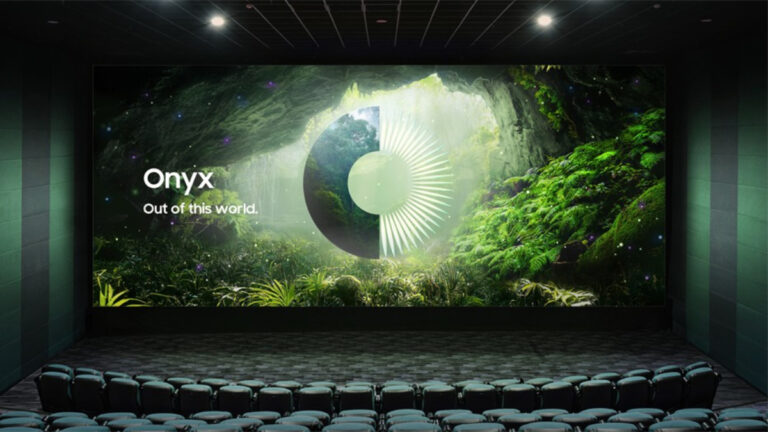
Samsung Unveils 14-Meter Onyx Cinema LED Display at CinemaCon 2026

0

New Delhi, April 14, 2026 — As the lights dimmed at Caesars Palace during CinemaCon 2026, the focus wasn’t just on upcoming blockbusters, but on the very technology used to show them. Samsung Electronics has officially pulled back the curtain on its latest innovation: a 14-meter (46-foot) model of its Onyx Cinema LED display.

This new addition to the Onyx lineup is specifically designed to dominate the Premium Large Format (PLF) market, bridging the gap between standard cinema screens and massive, floor-to-ceiling installations. By moving away from traditional projection and toward direct-view LED, Samsung is betting that the future of cinema lies in “pixels, not projectors.”

Expanding the Premium Scale

Since its debut in 2017, the Onyx brand has been synonymous with “True Black” and high-contrast visuals. However, for years, the primary challenge for LED screens in theaters was scaling up to meet the demands of large, flagship auditoriums.

The introduction of the 14-meter format changes that dynamic. It joins a versatile family of displays:

  • 5-meter (16-foot): Optimized for boutique theaters and intimate screening rooms.
  • 10-meter (33-foot): The industry standard for high-end, mid-sized auditoriums.
  • 14-meter (46-foot): The new sweet spot for Premium Large Format experiences.
  • 20-meter (66-foot): The ultimate “mega-screen” for the world’s largest venues.

What makes the 14-meter model a game-changer is its flexible scaling support. Theater owners aren’t strictly limited to the 14-meter width; the system is modular. By adding individual LED cabinets to the sides and bottom, exhibitors can expand the screen up to 20 meters, allowing for a seamless, wall-to-wall visual experience that fits the unique architecture of any room.

Technical Mastery: Beyond the Projector

Traditional projectors work by bouncing light off a white screen. This method inherently loses contrast because the “black” parts of the image are still being hit by ambient light or light reflecting off theater walls. Samsung’s Onyx turns this concept on its head.

1. Infinite Contrast and “True Black”

Because every pixel in an LED display is self-emissive—meaning it creates its own light—it can simply turn off to create total darkness. This results in an infinite contrast ratio. When a scene in a movie is dark, the screen is actually black, not a muddy grey. This allows for incredible detail in shadows that would normally be lost in a projected image.

2. High Dynamic Range (HDR) and Brightness

The 14-meter Onyx supports a peak brightness of up to 300 nits. For context, that is approximately six times brighter than the 48-nit standard used by most traditional cinema projectors. This extra “headroom” allows for stunning HDR (High Dynamic Range) effects—like the glint of sun on water or the glow of a lightsaber—without washing out the surrounding colors.

3. 4K Resolution and 120Hz Refresh Rates

Equipped with a 3.3mm pixel pitch, the display ensures that even from the front row, the image remains sharp and free of the “screen door effect.” It supports 4K resolution and refresh rates of up to 120Hz. This makes it an ideal platform not just for Hollywood movies, but for “alternative content” like live-streamed sports, e-sports tournaments, and high-frame-rate concert films.

The Business Case: Why Theaters are Switching

While the visual benefits are obvious to the audience, the shift to LED offers significant operational advantages for theater owners.

FeatureTraditional ProjectionSamsung Onyx LED
Space UsageRequires a bulky projection booth.No booth needed; modular wall-mount.
Light InterferenceRequires total darkness for quality.Performs perfectly even with lights on.
MaintenanceFrequent bulb changes and alignment.100,000+ hour lifespan; minimal upkeep.
SeatingLimited by projection “throw” angles.Optimized seating; no “bad seats” at the back.

By eliminating the need for a projection booth, exhibitors can reclaim valuable real estate. That space can be converted into additional seating, a VIP lounge, or even a concession area, directly impacting the theater’s bottom line.

Furthermore, the Onyx is the world’s first DCI-certified (Digital Cinema Initiatives) LED display. This means it meets the strict technical standards required by major Hollywood studios like Disney, Warner Bros., and Universal, ensuring that the filmmaker’s artistic vision is preserved exactly as intended.

Partnering with Content Creators

The hardware is only half the story. Samsung has continued its deep collaboration with Pixar Animation Studios to ensure content is mastered specifically for the LED format. Recent films like Elio have been color-graded to take full advantage of the Onyx’s brightness and color volume.

Pixar has even installed Onyx displays at its Emeryville campus to evaluate HDR color during production. When a studio uses the same technology to make the movie that the theater uses to show it, the audience gets a level of fidelity that was previously impossible.

Beyond the Auditorium: The “Smart Cinema”

Samsung’s presence at CinemaCon 2026 wasn’t limited to the screen inside the theater. The company also showcased its Spatial Signage, a glasses-free 3D display designed for lobbies. Imagine walking into a theater and seeing a 3D character from an upcoming movie “pop out” of a poster to greet you—without needing special glasses.

Additionally, Samsung is promoting the use of energy-efficient color e-paper for digital menu boards and movie posters. These displays consume almost no power when showing static images, helping theaters reduce their carbon footprint while maintaining a modern, high-tech aesthetic.

Conclusion: Is the Projector Dead?

While traditional laser projection will likely remain a staple for smaller, budget-conscious theaters for a few more years, the momentum is clearly shifting. As audiences become more selective about where they spend their entertainment budget, “Premium” is no longer an option—it’s a requirement.

The Samsung 14-meter Onyx Cinema LED isn’t just a bigger screen; it’s a total reimagining of what a trip to the movies looks like. With its combination of blinding brightness, perfect blacks, and modular flexibility, it is setting a new benchmark for the “destination” cinema experience.

In an era where home TVs are getting bigger and better, the 14-meter Onyx gives people a reason to leave their couches and head back to the multiplex. The message from CinemaCon 2026 is clear: the future of film is brighter, sharper, and much more vibrant than ever before.

Master Your Morning: Quordle Hints and Answers for Tuesday, April 14, 2026

0

New Delhi, April 14, 2026: If you’ve found yourself staring at a 2×2 grid of empty boxes this morning, wondering why you decided to quadruple your daily stress levels, you aren’t alone. Welcome to the Quordle daily challenge for April 14, 2026.

For the uninitiated, Quordle is the “big sibling” of Wordle. While the original game asks you to find one five-letter word in six tries, Quordle demands you find four different five-letter words simultaneously, using only nine guesses. It’s a game of efficiency, strategy, and—on mornings like today—a bit of linguistic gymnastics.

Below is your comprehensive guide to conquering today’s puzzle, featuring subtle hints, strategic advice, and (at the very bottom) the full answers.

Strategy: How to Approach Today’s Grid

Before we dive into the clues, let’s talk shop. Today’s puzzle is a classic “mixed bag.” We have a variety of starting letters and some common patterns, but there are a few traps to avoid.

1. The “Starting Word” Science

To succeed in Quordle, your first two guesses should never be about “winning” a specific quadrant. They should be about data collection.

  • Ideal Start: Use words like ARISE or ADIEU to check vowels.
  • The Follow-Up: Use a word like CLOTH or SPURN to sweep for high-frequency consonants.
  • Today’s Tip: Today’s words utilize a wide range of the alphabet. Don’t be afraid to burn your third guess on a “burner word” (a word you know isn’t the answer) just to eliminate letters like D, B, and P.

2. Solve the “Easy” Ones First

It sounds counterintuitive, but if you see a word that is clearly becoming BLOOD or DREAM, lock it in. Every word you solve removes visual clutter and lets you focus your mental energy on the remaining quadrants.

Today’s Quordle Hints (April 14, 2026)

If you’re stuck but don’t want the full spoilers yet, here are some nudges to get your gears turning:

  • Hint 1 (General): Today’s words start with four different letters: B, P, D, and D.
  • Hint 2 (Duplicate Letters): Good news for once! There are no double or triple letters in today’s puzzle. Every word consists of five unique letters.
  • Hint 3 (Rare Letters): Keep an eye out for the letter Z. It makes a sneaky appearance in one of the words.
  • Hint 4 (Word Meanings):
    • Word 1 (Top Left): A common action verb associated with starting something or a small stream.
    • Word 2 (Top Right): Often used in logic or mathematics; a statement that is assumed to be true.
    • Word 3 (Bottom Left): A term for a sequence of events or a specific type of fabric pattern.
    • Word 4 (Bottom Right): A word for a small, sharp tool or a sudden, sharp pain.

Clues for Each Quadrant

Top Left (Word 1)

This word is a staple of everyday language. It begins with B and ends with N. It’s often used when you are initiating a process.

Key Letters to try: G, I, E.

Top Right (Word 2)

This is the “trickiest” word of the day because it contains the rare letter mentioned earlier. It starts with P and ends with T. It’s a term you might hear in a geometry class or a philosophy lecture.

Key Letters to try: O, S, U.

Bottom Left (Word 3)

This word starts with D and ends with Y. It describes something that is multifaceted or relates to the way things are arranged. In a more casual sense, it can refer to a specific type of “daisy-like” floral pattern.

Key Letters to try: I, A, S.

Bottom Right (Word 4)

Another word starting with D, but this one is much “sharper.” It rhymes with “smart.” It ends with T and is often used to describe a small, pointed missile or a quick movement.

Key Letters to try: A, R.

The Quordle Answers for April 14, 2026

If you’ve run out of guesses or simply want to preserve your streak without the headache, here are the solutions for today:

  1. BEGIN (Top Left)
  2. POSIT (Top Right)
  3. DAISY (Bottom Left)
  4. DRANK (Bottom Right)

(Note: Based on the latest puzzle data, Word 4 is DRANK, while some regional variations may occasionally see DART or DREAM—always check your yellow/green placements!)

Why Quordle Stays Popular in 2026

It’s been years since the “Wordle Craze” of 2022, yet millions still log in daily to Merriam-Webster’s Quordle site. Why?

  • The “Flow State”: Unlike Wordle, which is over in seconds, Quordle requires a deeper level of focus. It hits that “Goldilocks” zone of difficulty—not too easy to be boring, but not so hard that it feels impossible.
  • The Community: Whether it’s sharing the colored-box emoji grids on social media or competing with coworkers, the social aspect of the game hasn’t faded.
  • Cognitive Health: Many players treat the daily Quordle as “morning coffee for the brain,” a quick way to sharpen linguistic recall and deductive reasoning before starting the workday.

Did you beat the grid today? If you managed to solve it in five or six guesses, you’re playing at an elite level. If you used all nine, hey—a win is a win. We’ll see you tomorrow for the April 15th challenge!

The “Bhavandar” Effect: Did Ranveer Singh and Prakash Padukone Just Roast Dhruv Rathee

New Delhi, April 14, 2026: In the fast-paced world of Indian entertainment, sometimes the loudest statements are the ones made without saying a single word. This week, the internet has erupted into a frenzy over a new advertisement featuring Bollywood powerhouse Ranveer Singh and his father-in-law, badminton legend Prakash Padukone. While the ad was intended to showcase their endearing off-screen chemistry, eagle-eyed fans have spotted a “blink-and-miss-it” detail that many believe is a sophisticated roast directed at popular YouTuber Dhruv Rathee.

The detail in question? A fictional movie poster in the background titled “Bhavandar: The Tornado.”

The Ad That Sparked a Thousand Theories

The promotional campaign marks the first time Ranveer Singh and Prakash Padukone have shared the screen. The narrative of the ad is wholesome enough: Ranveer plays the “perfect girl-dad” (referencing his real-life journey with Deepika Padukone), picking up toys and treats, while Prakash Padukone joins him for a quintessential family outing.

The duo eventually heads to a cinema hall. It is here, while Ranveer is purchasing tickets and holding popcorn buckets, that the background steals the show. Displayed prominently on the digital screens behind them is a poster for a film called Bhavandar: The Tornado.

To the casual observer, it’s just a prop. But to the internet, it’s a “meta-joke” aimed squarely at Dhruv Rathee’s recent criticism of Ranveer Singh’s latest blockbuster franchise, Dhurandhar.

Also Read: Teen Spirit: Vaibhav’ Viral “Bat-Tussle” Stuns IPL

Why “Bhavandar”? The Connection to Dhruv Rathee

The speculation isn’t baseless. A few weeks ago, Dhruv Rathee released a high-profile video dissecting Aditya Dhar’s film Dhurandhar: The Revenge, starring Ranveer Singh. In his analysis, Rathee was scathing, labeling the film as “blatant propaganda” and famously stating:

“Ab toh well-made propaganda bhi nahi raha” (Now, it’s not even well-made propaganda anymore).

The term “Bhavandar” (meaning storm or tornado) is often used in Hindi slang to describe a massive commotion or a “storm in a teacup.” Fans were quick to draw a linguistic parallel between the film’s actual title, Dhurandhar, and the ad’s fictional Bhavandar.

Social media users interpreted the “Directed by…” credit (which some claim mockingly mirrors Rathee’s presentation style) and the title itself as a tongue-in-cheek response to the “storm” Rathee tried to create around the film’s success.

Social Media Reacts: “This is Meta!”

It didn’t take long for the screenshots to go viral on X (formerly Twitter) and Instagram. The comments sections under the ad have transitioned from praising the Ranveer-Prakash duo to deconstructing the “Easter Egg.”

  • “The ‘Bhavandar’ poster behind them though… Ranveer didn’t even have to say anything,” wrote one user.
  • “Wait, I’m crying—the movie advertised is literally ‘Bhavandar.’ This is such a meta-roast of Rathee’s propaganda video,” another added.
  • “Dhurandhar vs. Bhavandar. The marketing team deserves a raise for this level of pettiness!”

The Dhurandhar Phenomenon: Success Amidst Strife

The reason this “roast” carries so much weight is the unprecedented box-office journey of the Dhurandhar franchise. Despite the polarizing debates sparked by critics and YouTubers like Rathee, the films have become a juggernaut in Indian cinema history.

MilestoneAchievement
Total Franchise CollectionOver ₹3,000 Crore
Dhurandhar (Part 1)₹1,300 Crore Worldwide
Dhurandhar 2: The Revenge₹1,700 Crore in just 24 days
Record StatusChasing Baahubali 2 and Pushpa 2

For Ranveer Singh, Dhurandhar has been a career-defining turn, reinventing his image after a string of experimental roles. The fact that he chose to appear in an ad with his father-in-law—a man known for his calm and dignified public persona—only adds to the irony if this was indeed a deliberate dig at a loud online critic.

A Subtle Shift in Celebrity Responses

Historically, Bollywood A-listers ignored YouTube critics. However, 2026 seems to be the year of the “Subtle Clapback.” Instead of issuing legal notices or heated tweets, stars are increasingly using their commercial projects to embed “Easter Eggs” that only their core fanbase will decode.

By placing a Bhavandar poster in a scene where Ranveer is enjoying a movie with his family, the message seems to be: “While you’re making ‘storms’ (Bhavandars) on YouTube, we’re making records at the box office.”

Conclusion: Coincidence or Calculated?

While neither Ranveer Singh nor the brand has officially confirmed the dig, the timing is too perfect for many to ignore. In an era where digital narratives can impact a film’s “word of mouth,” this ad serves as a masterclass in brand protection and subtle humor.

Whether it was a direct roast of Dhruv Rathee or a sheer coincidence, one thing is certain: the “Bhavandar” has successfully diverted the conversation back to Ranveer’s dominance in the industry. As Dhurandhar 2 continues its record-breaking run, the actor seems content to let the posters—and the popcorn—do the talking.

Teen Spirit: Vaibhav’ Viral “Bat-Tussle” Stuns IPL

0

New Delhi, April 14, 2026: In the high-pressure, multi-billion-dollar world of the Indian Premier League (IPL), where veterans often break under the weight of expectations, a 15-year-old boy from Bihar is reminding the world that, at the end of the day, cricket is still a game meant to be enjoyed.

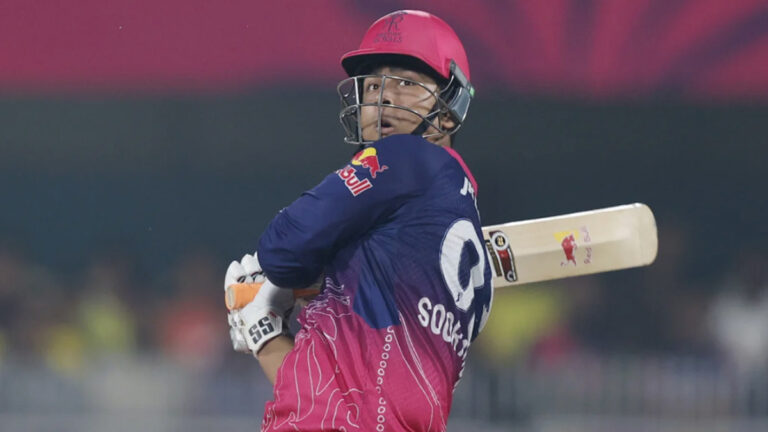
Vaibhav Sooryavanshi, the Rajasthan Royals (RR) prodigy who has been rewriting record books since he was 12, recently went viral not for a towering six or a record-breaking century, but for a hilariously candid live TV moment that proved he is, despite his superhuman talent, a “typical teenager.”

The Moment That Went Viral

The incident occurred following Rajasthan Royals’ dominant victory over the defending champions, Royal Challengers Bengaluru (RCB), in Guwahati. Sooryavanshi had just played a blistering knock of 78 runs off 26 balls, a performance that left seasoned international bowlers like Josh Hazlewood looking for answers.

During the post-match interactions, a lighthearted segment caught the attention of fans. RCB’s wicketkeeper-batter Jitesh Sharma, clearly impressed by the power generated from the youngster’s willow, playfully tried to “swipe” Vaibhav’s bat. In a scene that looked more like a schoolyard tussle than a professional sports league, the 15-year-old clutched his bat tight and flatly refused to give it up.

As Jitesh whispered a “trick” into his ear to convince him, Vaibhav’s response was loud, clear, and quintessentially teenage: “None of the tricks would work for now!” He told the veteran player that he could perhaps have the bat after the IPL 2026 season was over, but until then, it was his prized possession. The clip, shared widely by Rajasthan Royals, showcased a refreshing side of the IPL—one where the innocence of youth meets the intensity of elite competition.

A Sensation Beyond His Years

While his “typical teen” behavior is winning hearts, his stats are striking fear into opponents. As of mid-April 2026, Vaibhav Sooryavanshi is the most talked-about name in world cricket. Born on March 27, 2011, he is currently the youngest player in the history of the league, having debuted at just 14 years and 23 days old in the 2025 season.

The 2026 Breakout

The 2026 season has seen Vaibhav evolve from a “promising youngster” to a “certified match-winner.” His performances this year have been nothing short of spectacular:

  • The Powerplay King: In the season opener against Chennai Super Kings (CSK), he smashed 52 off 17 balls, reaching his half-century in just 15 deliveries.
  • The RCB Demolition: His 78-run blitz against RCB came at an incredible strike rate of 300, propelling RR to the top of the points table.
  • Orange Cap Contender: He currently leads the race for the Orange Cap, having amassed 200 runs in just four innings with an overall strike rate of approximately 266.66.

Domestic Dominance

Vaibhav’s rise wasn’t accidental. Before the IPL spotlight, he was already a legend in the making:

  • At 12 years old, he became the youngest Indian to make a First-Class debut since 1986, representing Bihar in the Ranji Trophy.
  • He led India Under-19 to World Cup glory in early 2026, earning the Player of the Tournament title after a monstrous 175 off 80 balls in the final against England.

The Secret Behind the Success

Despite the viral “masti” and the aggressive batting, Vaibhav remains remarkably grounded. He credits his father, a farmer from Tajpur village who recognized his talent at age four, and his coaches for his success.

“Papa and my coaches keep telling me that the journey is very long; this has just started. I have to focus on my process without looking here and there,” Vaibhav shared in a post-match interview.

This balance of humility and fearlessness is what sets him apart. In another viral moment from the 2026 season, Vaibhav was seen touching the feet of legendary commentator Harsha Bhogle to seek blessings before an interview—a gesture that earned him the nickname of India’s most “Sanskar” (well-mannered) young cricketer.

Why This Matters for Indian Cricket

The “Sooryavanshi Era” represents a shift in how talent is nurtured in India. To see a 15-year-old not just participating but dominating against the fastest bowlers in the world (including Josh Hazlewood and Bhuvneshwar Kumar) suggests that the gap between junior and senior cricket is narrowing.

His “hilarious live TV moment” serves as a reminder of his age. In an era of media-trained athletes and rehearsed PR statements, seeing a kid refuse to give away his favorite bat because he’s “determined to keep it for the rest of the season” is a breath of fresh air.

Quick Look: Vaibhav Sooryavanshi IPL 2026 Stats (to date)

CategoryStat
Matches5
Runs200
Strike Rate263.16
Highest Score78 (26 balls)
Sixes18
Average40.00

Looking Ahead

As the Rajasthan Royals continue their unbeaten run in IPL 2026, the focus remains squarely on their young opener. Whether he is dismantling bowling attacks or engaging in “typical 15-year-old” antics on the sidelines, Vaibhav Sooryavanshi has become the face of a new generation.

For fans, the message is clear: enjoy the records, but don’t forget the kid behind them. He might be the future of Indian cricket, but for now, he’s just a boy who really, really likes his bat.

Zanai Bhosle Pens Heartbreaking Tribute to Her ‘Love of Life’ Asha Bhosle

April 14, 2026 — The melody of an era has transitioned into the silence of eternity. Following the passing of the legendary playback singer Asha Bhosle on April 12, 2026, her granddaughter and closest confidante, Zanai Bhosle, has broken her silence. In a series of deeply moving social media posts, Zanai bid a final farewell to the woman she called the “love of her life,” capturing the collective grief of a nation while offering a glimpse into the private bond they shared.

The veteran singer, aged 92, passed away at Mumbai’s Breach Candy Hospital due to multiple organ failure following a brief battle with a chest infection. As India continues to mourn the loss of its most versatile voice, Zanai’s tribute has become a focal point for fans seeking solace.

“Goodbye My Love”: A Granddaughter’s Grief

Zanai Bhosle, who lived closely with the legendary singer and often accompanied her to public events, took to Instagram to share her first reflections since the funeral. The posts, which quickly went viral, were a blend of raw sorrow and profound pride.

In her first story, Zanai shared a poignant image from the Antim Darshan (final viewing) held at their residence, Casa Grande. Overwhelmed by the sea of mourners who gathered to pay their respects, she wrote:

“I am so overwhelmed with emotions. I’ll write something when I can, but I have to say that there were so many people who have respected her and honored her today. Beyond it all, you have shown her so much love.”

She continued with a line that has since touched thousands of hearts:

“I realize that she lives on in every one of us, in our hearts forever, and she has seen it all from above.”

In a subsequent post, Zanai shared a candid, joyful photograph of herself with her grandmother, captioned simply yet powerfully: “Goodbye my love, love of my life.”

The Final Journey of a Legend

The atmosphere in Mumbai over the last 48 hours has been one of heavy-hearted reverence. Asha Bhosle’s mortal remains were brought to her Lower Parel residence on Monday morning, where she was wrapped in the Indian Tricolour and accorded full state honors.

The funeral procession to the Shivaji Park crematorium saw a massive outpouring of fans, despite requests from the family to maintain a distance to avoid overcrowding. Industry titans, including Amitabh Bachchan, A.R. Rahman, and Shah Rukh Khan, were seen paying their last respects. Prime Minister Narendra Modi also expressed his grief, noting that her “extraordinary musical journey enriched our cultural heritage.”

A Legacy Beyond the Microphone

Asha Bhosle’s career spanned an incredible eight decades, during which she recorded over 12,000 songs in more than 20 languages. While her sister, the late Lata Mangeshkar, was known for her ethereal, classical purity, Asha was the “rebel” and the “chameleon.”

From the soulful ghazals of Umrao Jaan to the peppy cabaret numbers of the 70s, she redefined what an Indian female playback singer could achieve. Her accolades were as numerous as her hits, including:

  • Dadasaheb Phalke Award (2000)
  • Padma Vibhushan (2008)
  • Two National Film Awards
  • Two Grammy Nominations

But for Zanai, Asha was more than a Guinness World Record holder; she was a matriarch who balanced her global superstardom with a love for cooking, family, and sharp wit.

The Special Bond: Asha and Zanai

In recent years, Zanai had become the face of the younger generation of the Mangeshkar-Bhosle clan. She was often seen holding Asha’s hand at award ceremonies or assisting her during the launch of her “Asha’s” restaurant chain.

Insiders say that Asha saw a reflection of her own spirited youth in Zanai. In her tribute, Zanai’s mention of her grandmother “seeing it all from above” suggests a spiritual connection that transcends death—a belief that the legendary singer is finally at peace, perhaps reunited with her sister Lata and her husband, the late R.D. Burman.

Key Milestones of Asha BhosleYear
First Film Song (Majha Bal)1943
Breakthrough with Naya Daur1957
National Award for Umrao Jaan1981
Collaboration with Gorillaz2023
Passing at Age 922026

A Nation in Mourning

The loss of Asha Bhosle marks the definitive end of the “Golden Age” of Indian playback music. As the news of Zanai’s post spread, social media was flooded with tributes using the hashtag #AshaBhosle.

Amitabh Bachchan summarized the sentiment on his blog, writing, “An entire era… an incredible, phenomenal, astounding presence lost. The body has left us, but her soul shall remain forever with us through her voice.”

As Zanai Bhosle mentioned, Asha “has seen it all”—the struggles of a young singer in the 1940s, the heights of Bollywood’s musical revolution, and the love of three generations of fans. While the “Love of Life” may have departed the physical world, her voice remains an immortal companion to the millions who grew up listening to her.

For Zanai and the Bhosle family, the road ahead is one of healing. But as the granddaughter’s post suggests, they find strength in knowing that the legendary “Asha Tai” is watching over them, her legacy as vibrant and defiant as the woman herself.

63 Cuts, 1 Goal: The Leaner ‘Bhooth Bangla’ Ready to Haunt


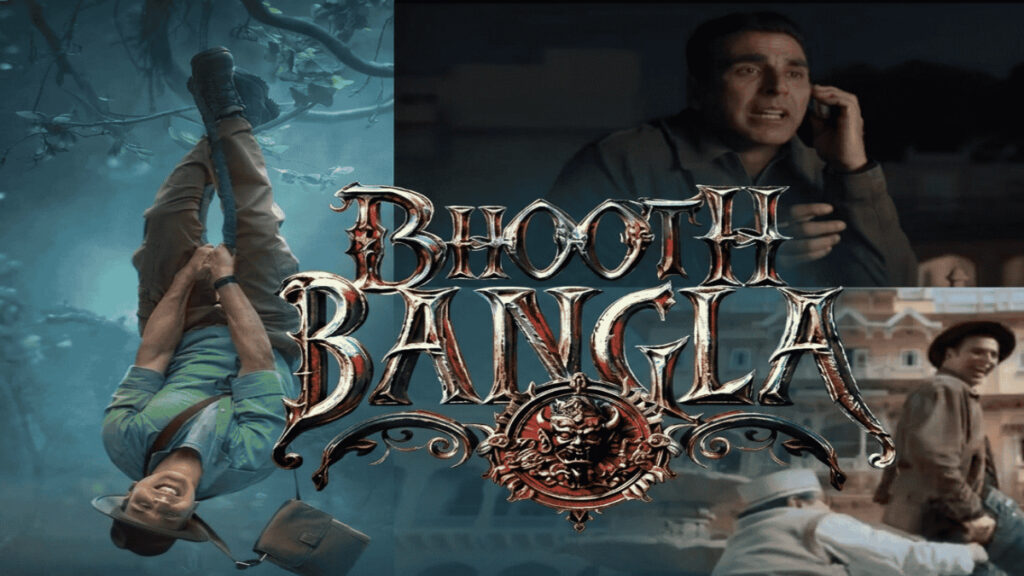
New Delhi, April 14, 2026: In the high-stakes world of Bollywood, the final week before a major release is often a whirlwind of frantic edits and technical polish. For Akshay Kumar’s highly anticipated horror-comedy Bhooth Bangla, the countdown to its April 17, 2026 release has taken a surprising turn. In a bold move to ensure the film remains “tight” and engaging, the makers have voluntarily returned to the editing table, trimming a staggering 63 scenes just days before the first paid previews.

This significant reduction has altered the film’s final runtime, sparking intense conversation among fans and industry insiders about the pacing of what is being hailed as the comeback of the iconic Akshay Kumar-Priyadarshan duo.

The Big Trim: Why 63 Scenes?

It is rare for a production house to make such extensive cuts after already receiving a certificate from the Central Board of Film Certification (CBFC). Originally, the film was clocked at a hefty 174 minutes and 57 seconds (nearly 3 hours), receiving a UA 16+ certificate on April 2.

However, following internal screenings and feedback, the makers—including Ektaa R Kapoor and Akshay Kumar himself—decided to streamline the narrative. On April 11, they submitted a revised version with 63 cuts. While the number sounds massive, many of these “scenes” were actually micro-trims—cuts of just a few seconds—designed to improve the comedic timing and suspenseful flow of the story.

Key Modifications at a Glance

FeatureOriginal DurationFinal Duration
Total Runtime2h 54m 57s2h 44m 52s
Total Reduction10 minutes, 5 seconds
Major Scene Cut“O Sundari” Song72 seconds removed
Minor Scene Cut“O Re O Sawariya” Song27 seconds removed

Navigating the Censor Board’s Gaze

Beyond the voluntary edits made for pacing, the makers also addressed specific concerns raised by the CBFC’s examining committee. The board’s requests focused on language, gender sensitivity, and religious context:+1

  1. Language and Subtitles: Obscene words found at the 26th-minute and one-hour marks were replaced. A similar word was also scrubbed from the subtitles toward the climax.+1
  2. Gender Sensitivity: A derogatory reference to women in the first half of the film was completely replaced with more appropriate dialogue.
  3. Religious Disclaimers: Given that the film deals with themes of mythology, black magic, and the Vedas, the board mandated clear disclaimers stating that the film does not intend to promote superstition or offend religious sentiments.

The Plot: A Return to Roots

The buzz around Bhooth Bangla isn’t just about the runtime; it’s about a legacy. This film marks the reunion of Akshay Kumar and director Priyadarshan after 14 years. The duo that gave us classics like Hera Pheri, Garam Masala, and Bhool Bhulaiyaa is diving back into the horror-comedy genre—a space they practically pioneered in modern Bollywood.

A Stellar Ensemble Cast

The film boasts a massive lineup that reads like a “who’s who” of Indian comedy:

  • Akshay Kumar: Leading the charge in his first release of 2026.
  • Tabu: Reuniting with Akshay after years, bringing her signature depth.
  • Wamiqa Gabbi & Mithila Palkar: Adding fresh energy and modern flair to the mix.
  • The Comedy Veterans: Paresh Rawal, Rajpal Yadav, Asrani, and Manoj Joshi.

The presence of the “OG” comedy gang has fans expecting the same slapstick magic and witty banter that defined the early 2000s.

Release Strategy: Beating the Competition

The journey to the theaters hasn’t been without its hurdles. Bhooth Bangla was originally eyeing several dates before locking in the current slot. The release was strategically shifted to avoid a direct clash with the action blockbuster Dhurandhar: The Revenge.

  • Paid Previews: For the eager fans, the wait ends early. Paid previews are scheduled to begin on April 16, 2026, at 9:00 PM across major metros.
  • Full Release: The wide theatrical release follows on Friday, April 17.
  • Advance Bookings: Sales opened on April 14, with reports suggesting a strong response in Tier-1 cities where the “nostalgia factor” of the Priyadarshan-Akshay combo is highest.

Final Verdict: Shorter is Sweeter?

In an era where audiences are increasingly sensitive to long runtimes, trimming Bhooth Bangla down to 2 hours and 44 minutes seems like a savvy business move. Horror-comedy relies heavily on “the jump” and “the punchline.” If a scene lingers too long, the tension evaporates; if a joke is stretched, the laughter dies.

By removing 10 minutes of fluff, Priyadarshan is likely aiming for a “rollercoaster” experience—one that keeps you looking over your shoulder one minute and clutching your stomach from laughter the next.

As the doors of the Bhooth Bangla prepare to open, one thing is certain: with 63 fewer distractions, the focus is now squarely on the scares, the stars, and the legendary comic timing of Akshay Kumar