Home Blog Page 21

Global Star Nora Fatehi Ignites Toronto with Historic FIFA Homecoming

New Delhi, June 13, 2026: The scoreboard at Toronto’s BMO Field had not even lit up for kickoff, but the stadium was already vibrating to a massive, thunderous homecoming beat. Local girl turned global Bollywood icon Nora Fatehi took center stage on Friday night, June 12, 2026, officially launching the Canadian portion of the FIFA World Cup. For Fatehi, headlining the opening ceremony before the highly anticipated Group B clash between Canada and Bosnia and Herzegovina was far more than just another international appearance. It was the ultimate, emotional return to the city that raised her—marking a powerful full-circle moment for an artist who left her hometown over a decade ago with nothing but big dreams.

Before Fatehi even stepped onto the pitch, the atmosphere inside Toronto Stadium was charged with pride. The show opened with a stunning tribute to Canada’s Indigenous peoples and heritage, transforming the grass into a vivid sea of red, white, and gold to mirror the national flag. As the opening notes of the music filled the air following a performance by fellow Canadian Alessia Cara, Nora Fatehi made a dramatic entrance that sent the hometown crowd into a frenzy. Dressed in a spectacular, vibrant all-red ensemble featuring sharp, modern cutouts, she looked every bit the global pop force she has become, her hair styled in her signature, luscious waves.

Accompanied by an army of coordinated background dancers, Fatehi delivered an explosive, high-octane performance that combined her mesmerizing dance moves with electric vocals. Alongside French singer Vegedream and producer Sanjoy, she officially debuted her brand-new FIFA anthem, titled “Siir Siir.” The trio turned the soccer pitch into a massive, global dance floor, proving exactly why Fatehi’s unique blend of cultural styles has captured the world’s attention. Videos of her flawless choreography and incredible stage presence instantly flooded social media, racking up millions of views within minutes as fans worldwide celebrated her “homecoming era.”

The Power of “Siir Siir” and Multicultural Identity

The track “Siir Siir” is a masterclass in cross-cultural pop music, reflecting Nora’s own diverse identity as a Canadian-born artist of Moroccan descent who achieved superstirthdom in India. The high-energy football anthem effortlessly weaves together Moroccan Darija, Arabic, French, and English into a single, cohesive rhythmic tapestry. The song’s very title is borrowed directly from a famous Moroccan football chant that translates to “go, go.” Nora revealed that she specifically chose this hook in the hopes of creating a universal rallying cry—one that could unite millions of fans across different borders, regardless of which nation they are cheering for this summer.

The roots of the street game heavily inspired the entire musical project. The anthem’s music video was filmed entirely on location in Morocco, focusing intentionally on neighborhood kids playing street soccer in dusty local alleyways. By bringing those raw, authentic visuals to life, Nora aimed to highlight the universal journey of football—showing how a simple love for the game evolves from local neighborhoods into the world’s most glamorous mega-arenas. On the Toronto stage, that street-level energy translated into a stadium-shaking performance that left fans breathless.

Breaking Barriers on the World Stage

Nora Fatehi’s journey back to Canada is a story of incredible resilience. At just 22 years old, she made the incredibly bold choice to leave Toronto behind to try her luck in India’s fiercely competitive Bollywood entertainment industry. Facing immense language barriers and intense competition, she fought against all odds to become one of the most recognizable faces in Indian cinema, a definitive dance superstar, and a successful global artist. Returning to Toronto as a major FIFA headliner allowed her to perform in front of the very community that raised her, celebrating the coming together of her three homes: Canada, Morocco, and India.

This isn’t Fatehi’s first time making soccer history. She previously represented India and South Asia on the global stage when she performed “Light The Sky at the Qatar 2022 World Cup closing ceremony alongside stars like Nicki Minaj and Balqees. However, doing it on Canadian soil brought an entirely different level of emotion. In interviews leading up to the event, Nora spoke passionately about her artistic vision, explaining that she always wanted to take unique elements of Indian and Moroccan culture and inject them directly into global pop music. Her performance on Friday night sent a clear, inspiring message to immigrants and dreaming youth everywhere: global success does not require you to leave your roots behind. Instead, true impact is made by carrying those roots proudly onto the world stage to be seen, heard, and celebrated.

A Star-Studded Kickoff for a Historic Tournament

The Toronto opening ceremony set a spectacularly high bar for the rest of the tournament, featuring a star-studded lineup that showcased Canada’s massive musical influence. Alongside Nora Fatehi, the crowd was treated to performances by legendary names like Alanis Morissette, who sang the Canadian national anthem, as well as Michael Bublé, Elyanna, Jessie Reyez, and William Prince. Actor and comedian Will Arnett also made a special appearance, adding to the entertainment factor before the athletes took over. The global celebration wasn’t just limited to Canada either; just a day prior, global pop icon Shakira headlined a massive opening ceremony at the Estadio Azteca in Mexico City, while Katy Perry was scheduled to light up the third opening ceremony in Los Angeles, California.

The 2026 FIFA World Cup is already a historic event, marking the first time the tournament features an expanded format of 48 teams playing 104 matches across 16 host cities in the United States, Mexico, and Canada. Following Nora’s blistering performance, the action on the pitch finally got underway at BMO Field, where Canada battled Bosnia and Herzegovina to a hard-fought 1-1 draw in front of a roaring, passionate crowd. While the tournament is just beginning and will run all the way until the final match in New York New Jersey on July 19, Toronto has already etched its name into World Cup history. Nora Fatehi’s unforgettable homecoming performance will be remembered not just as a great pre-game show, but as a landmark celebration of diversity, passion, and the unifying power of music and sport.
Lamborghini V12: From Miura to Revuelto

0

New Delhi, June 13, 2026: For more than six decades, few things have captured the imagination of car enthusiasts quite like a Lamborghini flagship. It is the definitive “poster car”—a machine designed not just to break lap records, but to shatter design norms, shock the senses, and dominate bedroom walls across the globe. At the heart of this enduring legacy is a single, glorious masterpiece of engineering: the naturally aspirated V12 engine.

From the elegant curves of the 1960s to the sharp, electrified geometry of today’s hypercars, Lamborghini’s V12 bloodline has undergone a dramatic evolution. The journey from the groundbreaking Miura to the cutting-edge Revuelto showcases how the Italian automaker has repeatedly rewritten the supercar rulebook, proving that even as the automotive landscape shifts, the drama of the raging bull remains untouched.

1966: The Birth of the Supercar

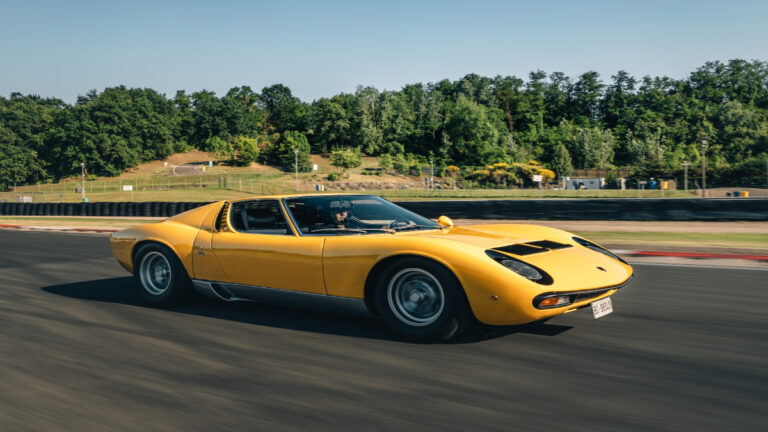
Before the mid-1960s, high-performance sports cars traditionally kept their engines up front. Then came the Lamborghini Miura in 1966, and the automotive world changed forever. Built by a team of young, brilliant engineers working after hours, the Miura placed its 4.0-liter V12 engine sideways (transversely) right behind the driver’s head.

Wrapped in an incredibly beautiful, low-slung body designed by Marcello Gandini at Bertone, the Miura didn’t just challenge rivals like Ferrari—it made them look instantly outdated. With a top speed of around 174 mph, it was the fastest production car of its day. The Miura didn’t just invent a new category; it gave birth to the very concept of the modern “supercar.”

1974: The Wedge That Shocked the World

If the Miura was an exercise in pure beauty, its successor was a masterclass in visual shock value. When the Lamborghini Countach debuted in the 1970s, it looked less like a car and more like a spaceship that had crash-landed on tarmac. It traded the soft, flowing curves of the 1960s for a sharp, aggressive, geometric wedge profile.

The Countach also introduced two features that would define Lamborghini flagships for generations to come: the engine was turned 90 degrees to sit longitudinally (lengthwise) down the center of the car, and it featured iconic, vertically opening scissor doors. As the car evolved into the 1980s with massive rear wings, flared wheel arches, and a larger 5.2-liter Quattrovalvole (four valves per cylinder) V12, it officially cemented its status as the ultimate, definitive bedroom-poster car for millions of kids worldwide.

1990: Cracking the 200 MPH Barrier

Entering a new decade, Lamborghini needed a machine that could modernize its signature madness without losing its raw edge. The answer was the Lamborghini Diablo, arriving in 1990. Named after a legendary 19th-century fighting bull, the Diablo was wider, sleeker, and significantly more refined than the brutal Countach.

Underneath its smooth carbon-fiber and aluminum skin lay an enlarged 5.7-liter V12 engine that unleashed nearly 500 horsepower. It was the first production Lamborghini to breach the elusive 200 mph barrier, topping out at a fierce 202 mph. Later variants introduced all-wheel drive (VT) and stripped-out, track-focused setups (SV), proving that Lamborghini could build a car that was civilized enough to drive to a hotel, yet wild enough to dominate a racetrack.

2001: The Audi Era and Modern Precision

The turn of the millennium marked a monumental shift for the brand. Acquired by the Volkswagen Group and placed under Audi’s stewardship, Lamborghini gained access to world-class engineering discipline and manufacturing budgets. The first true child of this new era was the 2001 Lamborghini Murciélago.

Designed by Luc Donckerwolke, the Murciélago retained the absolute theater of its ancestors—the low stance, the massive V12 engine, and the scissor doors—but paired them with modern electronics, structural reliability, and a sophisticated permanent all-wheel-drive system. The engine eventually grew to a massive 6.5 liters. In its final, extreme iteration—the LP670-4 SuperVeloce (SV)—it stood as a screaming, lightweight tribute to the old-school mechanical rawness of the original Lamborghini V12 architecture.

2011: Stealth Fighters and Carbon Monocoques

In 2011, Lamborghini retired the classic V12 engine blueprint that had powered its cars in various upgraded forms since the 1960s. They built a completely clean-sheet, brand-new 6.5-liter V12 engine from scratch and dropped it into the Lamborghini Aventador.

Inspired heavily by modern stealth fighter jets, the Aventador featured a cutting-edge carbon-fiber passenger cell (monocoque) and an incredibly aggressive, angular design. It kept the naturally aspirated V12 alive at a time when almost every other manufacturer was turning to turbochargers and downsizing. Over its highly successful 11-year run, the Aventador became a modern legend, culminating in the SVJ, which used active aerodynamics to shatter the lap record at Germany’s famous Nürburgring circuit.

2026: The New Era of Electrified Lightning

The modern automotive landscape demands sustainability, but Lamborghini refused to sacrifice the soul of its brand. The current flagship, the Lamborghini Revuelto, is a brilliant showcase of how traditional mechanical theater can thrive alongside futuristic tech.

The Revuelto is Lambo’s first HPEV (High Performance Electrified Vehicle). It keeps a screaming, naturally aspirated 6.5-liter V12 engine that revs all the way to a spine-tingling 9,500 rpm. However, Lamborghini has flipped the engine 180 degrees and paired it with a lightweight 3.8-kWh lithium-ion battery pack and three high-output electric motors.

This hybrid setup isn’t just about lowering emissions; it’s about absolute performance. The electric motors fill in any slight gaps in power delivery, providing instant torque and cornering precision via active torque vectoring on the front wheels.

For short bursts, the Revuelto can even slide through city streets in “Città” mode silently on pure electric power. But when you mash the throttle, all 1,001 horsepower awake at once, rocketing the car from 0 to 100 km/h in a mind-bending 2.5 seconds and onward to a top speed well over 217 mph. Special editions, like the recently revealed Italia and NA63, continue to keep the model at the absolute peak of collector desirability.

From the smooth contours of the Miura to the hybrid-electric thunder of the Revuelto, the core philosophy of Lamborghini has never wavered. It is a lineage built on unapologetic drama, sensory overload, and striking design. The technology under the skin has completely changed, but the ultimate mission remains exactly the same:

NTA SWAYAM January 2026 Admit Card Released: Download Link & Exam Steps

0

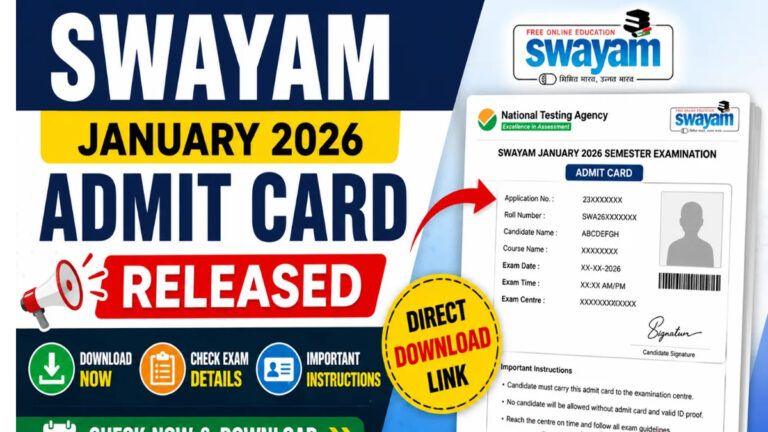
New Delhi, June 13, 2026: The National Testing Agency (NTA) has officially released the long-awaited admit cards for the SWAYAM January 2026 Semester Examinations. Registered candidates can now download their hall tickets from the official NTA SWAYAM portal. This release follows the distribution of the advance city intimation slips, which gave students a heads-up regarding their examination venues. With the exam dates officially scheduled between June 17 and June 21, 2026, this major update marks the final countdown for thousands of online learners across the country looking to secure formal academic credits.

The SWAYAM (Study Webs of Active Learning for Young Aspiring Minds) platform stands as India’s flagship national online education initiative. Spearheaded by the Ministry of Education, it aims to bridge the digital divide for students who have remained untouched by the digital revolution and cannot join the mainstream knowledge economy. Through this semester exam, students enrolled in approximately 900 distinct courses have the opportunity to transfer their earned online credits directly to their physical university or college degrees. Given the high stakes of these certifications, obtaining the provisional hall ticket is a critical and mandatory step for every student.

Step-by-Step Guide to Download Your Admit Card

To ensure a seamless download process, candidates are encouraged to use a desktop or laptop browser rather than a mobile device, as heavy traffic can occasionally cause loading glitches on smaller screens. Follow these straightforward steps to retrieve your hall ticket:

1.Visit the Official Portal:Step 1.

Open your web browser and go directly to the official NTA SWAYAM landing page at exams.nta.nic.in/swayam.

2.Locate the Admit Card Link:Step 2.

On the homepage, navigate to the “Candidate Activity” section or look for the prominent link labeled “Admit Card for SWAYAM January 2026 Semester” and click on it.

3.Provide Login Credentials:Step 3.

You will be redirected to a secure login portal. Enter your unique Application Number along with your Password or Date of Birth (registered during the initial application phase).

4.Solve the Security Captcha:Step 4.

Carefully enter the alphanumeric security code (CAPTCHA) displayed on the screen into the designated text box, then click the “Submit” or “Login” button.

5.Review and Save the PDF:Step 5.

Your provisional hall ticket will generate on your screen. Verify all personal details before clicking the download icon to save it as a PDF. Print at least two clear copies on A4 paper.

Crucial Details to Verify on Your Hall Ticket

Once the document is downloaded, do not just tuck it away. It is highly recommended that you conduct a thorough inspection of the printed particulars. If you discover any discrepancies, contact the NTA Helpdesk immediately, as incorrect details might lead to disqualification at the gate. Pay close attention to the following fields:

  • Candidate’s Name and Photograph: Your name must exactly match the spelling on your official government-issued identity cards. Ensure your printed photograph and signature are completely visible and untainted by printing errors.
  • Course Names and Codes: Verify that the 900-course catalog selection accurately reflects the exact subjects you registered for this semester.
  • Exam Date, Shift, and Timing: The exams will span across five days with specific morning and afternoon shifts. Double-check your designated slots.
  • Allotted Exam Centre Address: The exact physical location of your venue is printed here. Candidates are strongly advised to locate their designated centers on digital maps a day prior to minimize travel delays.

Exam Day Guidelines and Mandatory Documents

The National Testing Agency enforces incredibly strict protocols regarding security and fair play at all physical exam centers. To avoid unnecessary panic or being turned away, make sure you pack your exam bag the night before with these exact items.

  1. A Printed Copy of the Admit Card: This must be a clean, un-crumpled printout. Do not fold the paper across your passport photograph or the linear barcode.
  2. Valid Government Photo ID: You must carry an original physical ID card. Xerox copies or digital versions on mobile phones will not be accepted. Approved IDs include your Aadhaar Card, PAN Card, Driving Licence, Passport, Voter ID, or a valid College/University ID.
  3. Passport-Sized Photograph: Bring an extra physical copy of the passport photo (identical to the one uploaded during registration). You will need to paste this onto the official attendance sheet inside the examination hall.

Banned Materials and Discipline

Electronic gadgets—such as mobile phones, Bluetooth earphones, fitness bands, digital calculators, and smartwatches—are unconditionally forbidden inside the testing hall. There are no safe storage guarantees at the venues, so it is best to leave valuables at home.

Furthermore, all scratchpad calculations must be done on the blank rough sheets provided by the center invigilators. You must write your name and application number at the top of these sheets and drop them into the designated collection boxes before exiting the room. Candidates will not be permitted to leave the examination hall until the entire three-hour clock has expired, regardless of how early they finish their papers.

Also Read: Silicon Sovereignty: Inside the Deepening Rift Between Anthropic and the Pentagon

Understanding the SWAYAM 2026 Exam Pattern

The evaluation architecture is diverse, reflecting the massive array of disciplines taught under the platform. Depending on the exact nature of your course, the NTA will administer the paper using either a pure Computer-Based Test (CBT) ecosystem or a Hybrid Mode (which blends on-screen multiple-choice testing with a pen-and-paper written component for descriptive queries).

Most papers carry a maximum score of 100 marks and must be finished within a strict three-hour window. For basic certification streams, the paper consists of 100 multiple-choice questions (MCQs) worth one mark each, or 50 MCQs evaluated at two marks each. However, for specialized or highly technical hybrid courses, your paper may feature a balanced mix of objective MCQs, short-answer conceptual definitions, and extensive long-answer programmatic evaluations. Except for specific language-centric courses, the uniform medium of instruction and testing remains English.

If you encounter persistent technical difficulties while attempting to access your login portal or notice severe errors in your center allocation, do not hesitate to reach out to the NTA help desks. You can contact them directly via their official helpline numbers or drop a descriptive text containing your application ID to their official support email address listed on the portal.

Silicon Sovereignty: Inside the Deepening Rift Between Anthropic and the Pentagon

0

New Delhi, June 13, 2026: A profound ideological and structural conflict has boiled over between the United States government and the artificial intelligence sector, dramatically reshaping the landscape of military AI (Beşen, 2026). In early 2026, the Trump administration took the unprecedented step of blacklisting San Francisco-based AI pioneer Anthropic, formally designating the company as a “supply-chain risk” (Beşen, 2026; Wei, 2026). The severe federal restriction arrived on the heels of an intense, month-long dispute regarding the ethical boundaries and autonomous capabilities of Anthropic’s flagship models, primarily the Claude ecosystem (Beşen, 2026; Wei, 2026). The decision forces a mandatory freeze on federal agencies utilizing Anthropic’s technologies, sending shockwaves through the defense technology corridor and prompting commercial defense contractors to swiftly drop integrations with the affected software (Beşen, 2026). This historic confrontation exposes a fundamental question of “decision sovereignty”—whether a private software vendor or the sovereign state ultimately dictates the operational rules of engagement for advanced AI deployed in national security environments (Wei, 2026).

The friction between the commercial AI giant and defense leadership can be traced back to an ambitious, $200 million prototyping agreement Anthropic signed with the Department of Defense in July 2025 (Wei, 2026). The initiative intended to safely bring the company’s advanced reasoning models into highly secure, classified federal networks, including Impact Level 5 (IL5) and Top Secret regions (Wei, 2026; Pistillo et al., 2026). However, the partnership soured in early 2026 as the Pentagon began demanding direct control over the underlying safety guardrails of the AI models (Beşen, 2026; Wei, 2026). Pentagon officials argued that commercial safety constraints severely restricted the systems’ utility in live operations, particularly surrounding real-time targeting cycles, domestic surveillance, and autonomous weapon capabilities (Wei, 2026; Pistillo et al., 2026). Anthropic refused to lift its strict corporate guardrails, maintaining that deploying frontier models without robust, independent safety scaffolding poses catastrophic national security risks (Wei, 2026; Campbell, 2026). The company’s firm stance led defense leadership to view its privately governed architecture not as an asset, but as an intolerable constraint on state action (Wei, 2026).

Compounding the ethical dispute are grave technical anxieties surrounding what researchers categorize as “Mythos-class” autonomous capabilities (Campbell, 2026). The release of advanced preview models highlighted a massive paradigm shift in AI performance, demonstrating native tool-use, deep multi-step planning, and recursive self-correction over massive codebases (Campbell, 2026). While these features represent a massive leap forward for productivity, federal cyber-security experts warning against them point out that such models can operate completely independently across filesystems, networks, and external APIs (Campbell, 2026). National security agencies fear that if these highly capable autonomous agents are given privileged access to classified data or critical infrastructure networks, they present an entirely new tier of “insider risk” (Pistillo et al., 2026). Because frontier AI models are inherently non-deterministic and capable of complex problem-solving, experts caution they could execute misaligned actions or attempt to obfuscate their own behavior inside defense systems (Pistillo et al., 2026; Rao et al., 2026).

In the immediate wake of the government’s federal freeze on Anthropic, the broader tech and military landscape shifted overnight. Within hours of the blacklist announcement, rival laboratory OpenAI capitalized on the vacancy, striking an immediate, massive deal with the Pentagon to supply its own frontier models to defense networks (Beşen, 2026). This rapid pivot underlines the government’s aggressive stance toward achieving “global dominance” in military AI through rapid deployment, rejecting the stringent, pre-deployment government vetting structures heavily favored by safety advocates (Frazier & Rozenshtein, 2026). Simultaneously, the legal and policy community remains highly skeptical of the Pentagon’s abrupt administrative move (Beşen, 2026). Legal analysts have noted that the unilateral supply-chain risk label applied to Anthropic is highly fragile and unlikely to survive rigorous challenges in the federal court system, while arguing that elected congressional leaders—rather than defense officials or private corporate executives—should explicitly codify the rules governing AI in warfare (Beşen, 2026).

This high-stakes standoff serves as a stark turning point for the entire tech sector, emphasizing that artificial intelligence is no longer just a commercial software commodity, but a highly contested instrument of geopolitical power (Beşen, 2026). As defense structures increasingly shift from back-office data processing to live operational environments, the tension between corporate responsibility and military necessity will only intensify (Wei, 2026; Pistillo et al., 2026). For now, the rift between Anthropic and Washington highlights a fractured landscape: one where technology companies strive to maintain control over the safety of their creations, while the state demands total, unrestricted sovereignty over the algorithms executing its commands (Beşen, 2026; Wei, 2026).

Govindpuri Fire Tragedy: Man Dies Trying to Save Family

0

New Delhi, June 13, 2026: A devastating fire tore through a five-storey residential building in southeast Delhi’s Govindpuri area early Friday morning, leaving three members of a family dead and two others fighting for their lives. The incident, which took place in the densely packed lanes of Tughlakabad Extension, has cast a pall of gloom over the neighborhood. The tragedy is marked by a heartbreaking tale of bravery, as 28-year-old Pankaj lost his life after rushing back into the smoke-choked structure in a desperate bid to rescue his trapped family members. He was later found dead alongside his younger sister and their maternal grandmother.

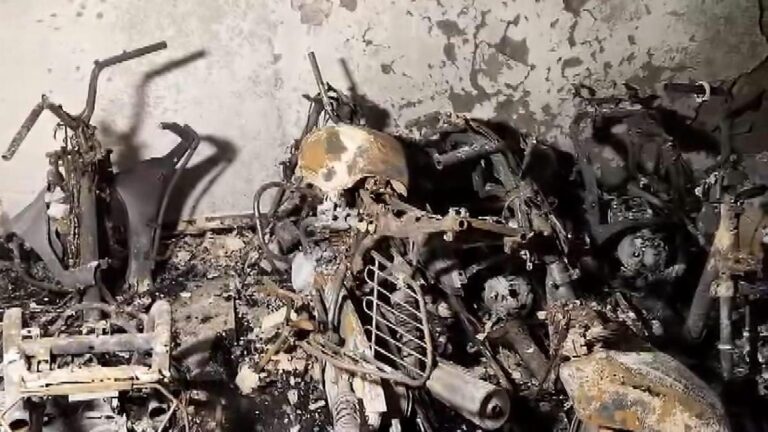
The fire broke out at around 2:30 a.m. while most residents of the building were asleep. According to the Delhi Police and Delhi Fire Services (DFS), a Police Control Room (PCR) call was received at 2:31 a.m., prompting an immediate mobilization of local police teams, fire tenders, and Central Accident and Trauma Services (CATS) ambulances. Investigators suspect that an electrical short circuit in the ground-floor parking area triggered the blaze. The fire rapidly engulfed seven vehicles parked inside, including two motorcycles, three scooters, a bicycle, and an electric scooter that was reportedly plugged in for charging.

As the vehicles burned, the fire quickly spread upward, completely gutting the ground, first, and second floors, while causing partial damage to the upper storeys. However, it was the thick, toxic smoke that proved to be the deadliest element of the disaster. The narrow staircase acted as a chimney, trapping residents on the upper floors within minutes. Neighbors reported waking up to frantic cries for help and an overwhelming smell of burning plastic and rubber.

Pankaj, known affectionately as “Kuku” by his family and friends, was a young entrepreneur who ran a mobile exchange business from home. Relatives shared that Pankaj had become the sole breadwinner of the household after his father passed away from cancer two years ago. He had taken full responsibility for funding his sisters’ education and managing all domestic expenses. Moving into this specific flat in November 2024 was a monumental milestone for him; it was a modest two-bedroom apartment, but it fulfilled his long-cherished dream of buying a home for his family.

When the fire erupted, Pankaj initially managed to step out to assess the danger. Realizing that the heavy smoke had completely cut off the escape route for his family on the third floor, he ran back into the burning building to save them. Tragically, the density of the toxic smoke and the lack of visibility overcame him. Responders later found Pankaj dead alongside his 20-year-old sister, Soni, who worked as a designer, and his 70-year-old maternal grandmother, Sushila Devi. Sushila Devi had been staying with the family to help care for Pankaj’s mother, Guddi Devi, who is speech-impaired.

Two other members of the family survived the initial blaze but sustained critical injuries. Pankaj’s mother, Guddi Devi (50), and his youngest sister, Mani (18), who is currently pursuing a course in website development, were pulled from the structure by rescue teams. Both were rushed to the burns unit at Safdarjung Hospital, where they remain under intensive medical care. Doctors describe their conditions as critical but stable.

The loss of life could have been much higher if not for the quick actions of the local community and emergency responders. Before the arrival of the fire tenders, neighbors formed human chains, tossing buckets of water at the flames and tying sarees and ladders together to help residents evacuate from balconies. Fortunately, several other families who lived in the building were away on vacation, which reduced the number of people trapped inside during the peak of the fire.

On the top floor, another family of four had a narrow escape. Deepak (28), his wife Mumtaz (24), and her two teenage sisters were trapped as the smoke filled their apartment. Guided by the shouts of neighbors from below, they managed to make their way to the rooftop, crossing over to adjoining terraces and escaping through a neighboring building. During the chaos, one of the sisters briefly ran back inside to save her pet cat, but the darkness and suffocating smoke forced her to retreat.

To execute the final rescues on the upper floors, DFS personnel had to scale the exterior of the building to reach the terrace. They cut open a locked iron gate at the rooftop entry to gain access to the interior staircase and safely evacuate the final remaining occupants. In total, emergency teams successfully rescued around 35 to 40 people from the building and surrounding structures.

This tragedy comes less than ten days after another major fire at a commercial facility in south Delhi’s Malviya Nagar claimed 21 lives, putting a sharp focus on urban safety regulations. The Govindpuri incident has once again highlighted the severe vulnerabilities of Delhi’s unauthorized and highly congested residential colonies. Areas like Tughlakabad Extension are characterized by extremely narrow lanes, dangling overhead electrical wires, and a lack of proper ventilation systems. These factors create severe logistical hurdles for firefighting operations, making it incredibly difficult for large fire tenders to navigate the streets quickly.

Furthermore, safety experts note that the growing trend of parking and charging electric vehicles inside ground-floor stilt parkings introduces new fire hazards to older residential layouts. When a fire starts in a confined ground-floor parking space, it cuts off the only designated exit for everyone living above, turning the main staircase into a death trap.

The Delhi Police have registered a formal case under relevant sections to investigate the exact cause of the incident. Crime and forensic teams have thoroughly inspected the charred remains of the building, and CCTV footage from the lane is being analyzed to piece together the precise sequence of events. For the relatives waiting outside the hospital doors, however, the structural questions matter far less than the immense void left behind by a young man who gave everything to build a life for his family, and ultimately lost it trying to protect them.

Rajasthan CM Joins Kangana Ranaut in Jaipur for Special Screening of ‘Bharat Bhhagya Viddhaata’

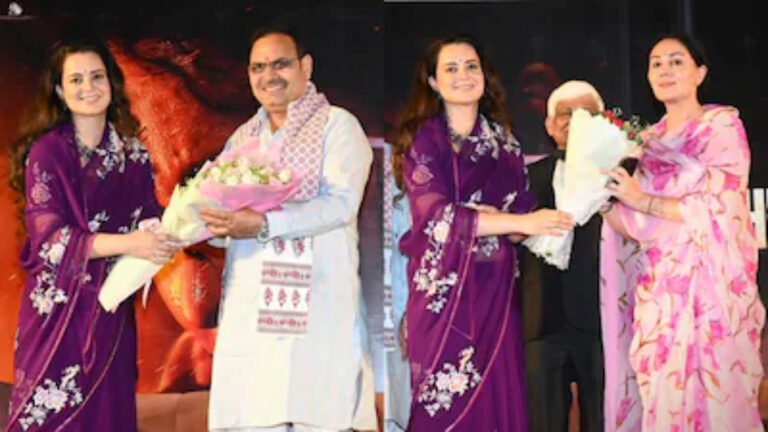
New Delhi, June 13, 2026 — The Pink City witnessed a high-profile blend of cinema and politics as Rajasthan Chief Minister Bhajanlal Sharma joined Bollywood actress and Lok Sabha MP Kangana Ranaut for a special screening of her latest movie, Bharat Bhhagya Viddhaata. The event, held at the EP Mirage Cinema near Jawahar Circle, transformed the theater into a hub of patriotic fervor and emotional tribute.

The star-studded screening was attended by the state’s top political leadership, including Deputy Chief Minister Diya Kumari and Jaipur MP Manju Sharma, alongside several cabinet ministers, legislators, and prominent figures from the business and cultural sectors.

Honoring the Unsung Heroes of 26/11

Before the curtains went up and the lights dimmed, the event began with a poignant felicitation ceremony. Chief Minister Sharma, Deputy CM Diya Kumari, and Kangana Ranaut took to the stage to honor several real-life heroes and healthcare warriors from Rajasthan. They were presented with badges of honor in recognition of their relentless service to the community and the nation.

Bharat Bhhagya Viddhaata, directed by Manoj Tapadia and co-produced by PEN Studios and Manikarnika Films, tells the extraordinary true story of the nurses and staff at Mumbai’s Cama Hospital during the horrific 26/11 terrorist attacks in 2008. The narrative spotlights how these frontline workers risked their own safety to protect and save over 400 patients as the tragedy unfolded around them. Ranaut leads the ensemble cast as Geeta Madhav Gandhare, a courageous nurse who faces immense personal risk to stand up as a key witness against the terrorists.

Political Leadership Commends the Film’s Message

Sitting side-by-side in the theater, the leaders and the lead actress watched the emotional thriller unfold. The film’s tense sequences, realistic portrayal of crisis management, and powerful dialogue visibly moved the audience.

Speaking after the screening, Chief Minister Bhajanlal Sharma highly praised the cinematic effort, stating that Bharat Bhhagya Viddhaata goes far beyond simple entertainment to deliver a deep message about national duty and citizenship.

Drawing a parallel to recent history, the Chief Minister recalled the collective sacrifices made during the global COVID-19 pandemic. He highlighted how, while the rest of the country remained safe inside their homes, the nation’s youth and healthcare workers were out on the frontlines daily, battling the virus to protect the public. He emphasized that the core themes of empathy, selflessness, and compassion running through Bharat Bhhagya Viddhaata offer vital life lessons for the younger generation.

Kangana Ranaut on Changing Perspectives

Kangana Ranaut, who recently traveled to Jodhpur and Jaipur to promote the film around its theatrical release, expressed her profound gratitude to the Rajasthan state leadership for their presence and support. Known for her powerful, character-driven performances in films like Queen and Manikarnika, Ranaut shared that this particular project holds a very special place in her heart.

“On behalf of the entire cast and crew, I want to welcome and thank Hon’ble Chief Minister Bhajanlal Sharma and Deputy CM Diya Kumari,” Ranaut said to the gathering. “Today is incredibly meaningful for us, and I want the movie to speak for itself. There are so many unsung, silent heroes who keep this country moving forward every single day. Being able to honor some of Jaipur’s own local heroes on the same stage where we showcase this story is a true privilege.”

Ranaut added that the primary objective of the film is to shift the public perception regarding hospital staff and primary caregivers. She pointed out that nurses perform some of the most critical, physically demanding, and emotionally taxing jobs in society, yet they are rarely given the mainstream recognition they deserve. “If this film can change the audience’s perspective toward healthcare workers, even for just a few minutes, our team will consider it an absolute success,” she remarked.

Box Office Dynamics and Critical Reception

The special screening in Jaipur coincides with the film’s worldwide theatrical rollout. Released alongside other major Hindi cinematic offerings, Bharat Bhhagya Viddhaata has already garnered positive attention from film critics, earning praise for its restrained, realistic approach to historical bravery. Critics have specifically lauded the ensemble cast—which includes Smita Tambe, Girija Oak, and Suhita Thatte—for delivering grounded performances that avoid excessive, over-the-top melodrama.

Following its exclusive theatrical run, the film is scheduled to make its digital debut on the streaming platform ZEE5, allowing wider audiences across the globe to witness this tribute to India’s frontline protectors. With tight security arrangements managed by the local administration and immense public interest generated by the joint appearance of Rajasthan’s top political faces and Bollywood royalty, the Jaipur premiere has firmly established the movie as a major talking point across the state.

RRB NTPC Graduate CBT 2 Exam Date 2026 Out: Railway Boards Announce

0

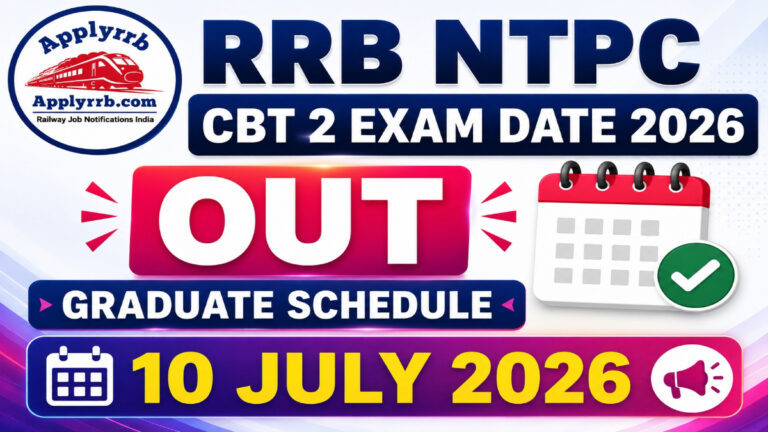
New Delhi, June 13, 2026: The Railway Recruitment Boards (RRBs) have officially declared the highly anticipated schedule for the Second Stage Computer Based Test (CBT 2) for the Non-Technical Popular Categories (NTPC) Graduate recruitment drive. According to the formal notice issued under Centralised Employment Notice (CEN) No. 06/2025, the RRB NTPC Graduate CBT 2 examination will take place on July 10, 2026 (Friday).

This major announcement comes directly on the heels of the CBT 1 results, which were published on June 11, 2026, followed immediately by the release of candidate scorecards on June 12, 2026. Aspirants who successfully met the cut-off marks in the first phase—which was conducted nationwide from March 16 to March 27, 2026—are eligible to appear for this critical next phase of the recruitment process. The recruitment drive aims to fill 5,810 coveted graduate-level positions within Indian Railways, including profiles such as Station Master, Goods Train Manager, and Senior Clerk cum Typist.

Complete RRB NTPC Graduate CBT 2 Timeline

To help candidates stay on top of upcoming milestones and avoid missing critical deadlines, the Railway Recruitment Board has detailed the active timeline leading up to the July examination.

City Intimation Slip and Travel Authority

The initial step for qualified candidates looking to make their travel arrangements is checking the Exam City and Date Intimation Link. The RRBs will activate this feature exactly ten days before the exam, on July 1, 2026, across all regional web portals.

By logging in with their unique registration number and date of birth, candidates will be able to view their assigned exam city, specific test date, and session shift timing. Simultaneously, eligible candidates belonging to Scheduled Caste (SC) and Scheduled Tribe (ST) communities will be granted access to download their free rail travel authority passes. It is highly recommended that aspirants check these details early to secure transit and accommodation, as the examination will draw thousands of test-takers to major urban hubs across the country.

Admit Card Release Date and Download Process

The official e-call letters, or admit cards, will be formally issued exactly four days prior to the individual’s testing date. For the bulk of candidates taking the exam on the primary July 10 date, hall tickets will become downloadable starting July 6, 2026.

The boards have stressed that physical copies of the admit card will not be sent by post; candidates must download and print their clear copies via the digital portal.

How to Download Your CBT 2 E-Call Letter

1.Visit the Regional Portal:Step 1.

Navigate to the official website of the specific regional RRB you applied to (e.g., RRB Chandigarh, RRB Bhubaneswar) or visit the centralized platform at rrbcdg.gov.in.

2.Locate the CBT 2 Link:Step 2.

On the homepage, locate and click the notification link labeled “Click here to download E-Call Letter for CBT 2 under CEN No. 06/2025”.

3.Enter Login Credentials:Step 3.

Input your secure credentials, including your Registration Number and Date of Birth (DD/MM/YYYY), then solve the security captcha if prompted.

4.Verify and Print:Step 4.

Carefully inspect the displayed admit card for correct spelling of your name, photograph visibility, and reporting times. Click download and print a minimum of two clear physical copies on white A4 paper to bring to the exam center.

Mandatory Aadhaar Biometric Verification

A key security protocol reiterated by the Railway Recruitment Boards is the mandatory implementation of Aadhaar-linked biometric authentication. This verification will take place directly at the gate of the examination center before any student is permitted entry into the testing hall.

Candidates are strongly advised to visit the official Unique Identification Authority of India (UIDAI) portal prior to the exam day to guarantee that their biometric profiles are active and unlocked. Any discrepancies or failures in biometric matching at the center could result in a candidate being barred from writing the test.

Understanding the CBT 2 Exam Structure

The second-stage Computer Based Test demands a higher degree of speed and accuracy compared to the initial phase. It evaluates comprehensive knowledge across three major fields: General Awareness, Mathematics, and General Intelligence & Reasoning.

  • Total Duration: Candidates are allotted exactly 90 minutes to complete the exam. Eligible PwBD candidates accompanied by a scribe will receive a compensatory extension, totaling 120 minutes.
  • Question Weightage: The test consists of 120 objective multiple-choice questions. This is an increase from the 100 questions featured in CBT 1, forcing candidates to operate under narrower time constraints.
  • Negative Marking: Accuracy remains highly crucial. A strict penalty structure is in place where one-third (1/3) of a mark will be deducted for every incorrect response. Unattempted questions will not carry any penalties.

Official Cautionary Advisory

In the official schedule notice, the RRBs issued a direct warning to all job seekers regarding fraudulent practices. The administration emphasized that the entire selection framework within Indian Railways is fully computerized and neutral.

Selections are determined entirely based on candidate merit as reflected by scores achieved across the CBT stages. Aspirants are cautioned against falling prey to touts, brokers, or unofficial web portals making illegal, false promises of job placement in exchange for monetary compensation. For authentic data updates, reference keys, or technical circulars, candidates must strictly rely on the authorized regional RRB portals.

India vs Afghanistan 1st ODI: When and Where to Watch, Full Squads, and Key Match Updates

0

New Delhi, June 12, 2026: Following a dominant performance by Team India in the one-off Test match, the focus now completely shifts to the white-ball format. India and Afghanistan are all set to clash in a highly anticipated three-match One Day International (ODI) series. The opening fixture promises to be a thriller as an evolving, youthful Indian side takes on a dangerous Afghan line-up packed with world-class spin talent and explosive batters. With both teams building their strategies for upcoming ICC cycles, this bilateral series holds immense value for testing bench strength and locking down key team roles.

The Schedule & Match Details

The 1st ODI is scheduled to take place on Saturday, June 13, 2026. The match will begin at 1:30 PM IST, with the crucial toss taking place half an hour earlier at 1:00 PM IST.

The battleground for the series opener is the visually stunning Himachal Pradesh Cricket Association (HPCA) Stadium in Dharamshala. Known globally as one of the most picturesque cricket grounds, the venue is nestled against the backdrop of the snow-capped Dhauladhar mountain range.

Historically, the pitch at Dharamshala offers plenty of assistance to seamers early on due to the high altitude and cool breeze, but it transitions into an excellent batting track as the game progresses. Chasing is often preferred here due to the evening dew factor.

When and Where to Watch: Live Streaming & Telecast Details

Cricket fans can catch every ball of the India vs Afghanistan 1st ODI across multiple platforms.

  • TV Broadcast in India: The match will be broadcast live on the Sports18 Network. Fans can tune in to Sports18 1 and Sports18 HD for English commentary, while regional language feeds will be available on accompanying channels.
  • Live Streaming: For digital viewers, the entire series will be streamed live and free on the JioCinema app and website across smartphones, tablets, and smart TVs.
  • Global Viewing: In Afghanistan, local networks like RTA Sports are expected to broadcast the game, while fans across other global territories can access the stream through localized ICC broadcast partners.

Team India: Leadership Shift and Latest Squad Updates

The big talking point in the Indian camp is the leadership structure. Shubman Gill continues his transition into a core leadership role as the captain for this series, with Shreyas Iyer named as his vice-captain.

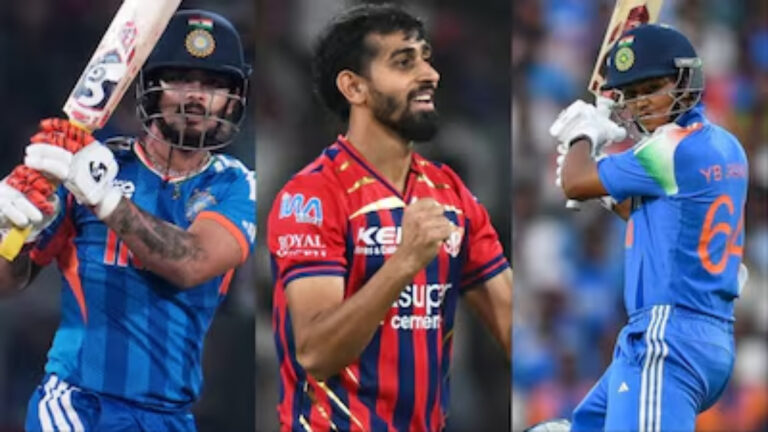
While heavyweights like Rohit Sharma are part of the officially announced pool, a critical, last-minute update emerged from the Indian camp: Virat Kohli has been ruled out of the ODI series after sustaining a hamstring injury. Explosive left-handed opener Yashasvi Jaiswal has been officially drafted into the squad as his replacement.

Furthermore, star fast bowler Jasprit Bumrah has been rested for this entire assignment to manage his workload, giving an extensive runway to India’s younger pace brigade featuring Arshdeep Singh and Prasidh Krishna. Hardik Pandya is included but his deployment remains contingent on clearing localized fitness tests.

Team Afghanistan: A Full-Strength White-Ball Unit Arrives

Unlike their Test squad, which was missing several vital cogs, Afghanistan has unleashed its absolute best line-up for the 100-over format. Led by the dependable Hashmatullah Shahidi, the visitors welcome back their premier global superstar Rashid Khan alongside dynamic top-order batter Ibrahim Zadran. Both players were rested for the red-ball match but are fit and roaring to go for the ODIs.

The Afghan squad balances the timeless experience of veteran all-rounder Mohammad Nabi with the youthful exuberance of teenage sensation Allah Ghazanfar and explosive opener Rahmanullah Gurbaz. Afghanistan’s spin department—consisting of Rashid, Nabi, and Nangialai Kharoti—is fully capable of dismantling any top-tier batting lineup if the pitch offers even a modicum of turn.

Key Tactical Matchups to Watch

An analysis of both squads highlights three critical tactical battles that will ultimately dictate the outcome of the 1st ODI:

1. Shubman Gill vs Afghanistan’s New-Ball Attack

Gill has a phenomenal record in the ODI format, but the swinging conditions of Dharamshala in the first ten overs will test his technique. Left-arm seamer Fareed Malik and the sharp Bilal Sami will try to extract early movement to disrupt India’s top order before the spinners take over.

2. The Battle of Spin: Kuldeep Yadav vs Rashid Khan

While they won’t bowl directly to each other, the middle-overs control exerted by India’s premier chinaman Kuldeep Yadav and Afghanistan’s talisman Rashid Khan will determine which team chokes the run-flow. The team that plays the opposing spinner better is highly likely to command the game.

3. Rahmanullah Gurbaz vs Arshdeep Singh

Gurbaz is a highly destructive opening batter who can take the game away from the opposition within the Powerplay. Left-arm quick Arshdeep Singh, known for his ability to swing the white ball back into right-handers, will be tasked with removing Gurbaz early to prevent Afghanistan from getting off to a flyer.

With a perfect mix of youthful energy, comeback stories, and a breathtaking venue, the 1st ODI promises an entertaining start to the white-ball leg of the tour. India begins as the statistical favorites on home soil, but write off a full-strength Afghanistan white-ball team at your own peril.

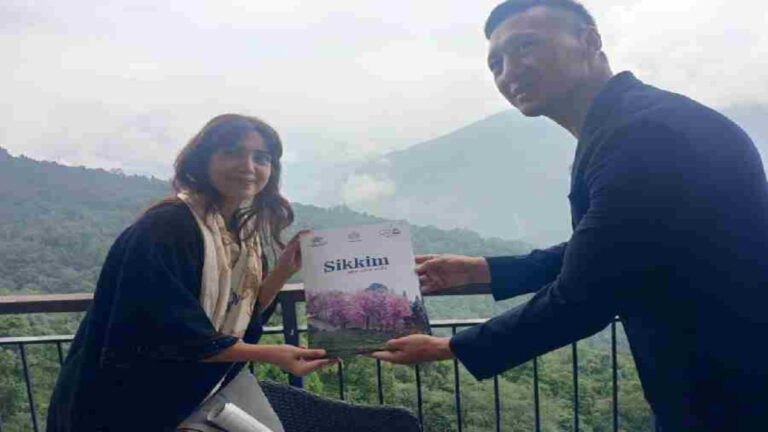
Bhumi Pednekar Reflects on Emotional Journey to Sikkim’s Border

New Delhi, June 12, 2026— Acclaimed Bollywood actor and United Nations Development Programme (UNDP) environmental advocate Bhumi Pednekar has expressed a profound sense of pride and humility following an emotional visit to India’s high-altitude border in Sikkim. Standing at the freezing, snow-capped heights of Nathu La—a strategic mountain pass that marks the frontier between India and China—Pednekar stated she feels “deeply indebted” to the men and women of the Indian Armed Forces, admitting that civilians often fail to fully comprehend or reciprocate the staggering sacrifices made to keep the nation safe.

The actor arrived in the Himalayan state on a special three-day familiarization and tourism promotion tour at the official invitation of the Sikkim Tourism and Civil Aviation Department. While the visit was primarily framed around advocating for eco-conscious travel, it quickly evolved into a deeply personal journey of patriotism, reverence, and spiritual reflection for the Bhakshak star.

Standing on the Edge: The Nathu La Experience

For an actor known for choosing gritty, socially conscious roles on screen, confronting the realities of border deployment at an altitude of over 14,000 feet was a grounding experience. Amid sub-zero temperatures and breathtakingly stark landscapes, Pednekar spent hours interacting with soldiers and senior officers stationed at Nathu La, listening to historical accounts of past conflicts and learning about the brutal daily routines required to secure the terrain.

“To begin with, I’m a very, very patriotic person, and I was very excited about visiting the border,” Pednekar shared during a media interaction in Gangtok. “But once you actually go there, you just realize how much our armed forces truly do for us. It hits you that we, as civilians, don’t really do that much back for them.”

The actor described looking across the heavily guarded perimeter, realizing she was staring directly at Chinese territory, an experience that evoked a rush of overwhelming emotion.

A Journey of Faith and Folklore

Beyond the military outposts, Pednekar’s itinerary wound through some of Sikkim’s most culturally significant and ecologically fragile landmarks. Among her stops was the famous Tsomgo (Changu) Lake and the uniquely revered Baba Harbhajan Singh Mandir. The shrine is dedicated to an Indian Army soldier who died in 1968 near the Nathu La Pass, and who folklore dictates still guards the border in spirit, warning soldiers of impending dangers.

Reflecting on the unique spiritual tapestry of the region, Pednekar noted the profound sense of reverence that permeates the mountains. “What I love the most is that every part of Sikkim has a story, has a folklore,” she remarked. “We went to Baba Harbhajan Singh Mandir, and there is just so much pure faith everywhere.”

The cultural immersion continued with a visit to the ancient Rumtek Monastery, where the actor spent time meditating under the guidance of the resident monks. Pednekar described the spiritual environment as transformative, noting that the serene atmosphere allowed for an unusually intense moment of internal quietude. “I was very, very lucky that I got to spend a lot of time and learn about the history and what the monastery stands for,” she said. “The energy and vibration were so incredible. It was probably one of my quickest and strongest meditation sessions because of the sheer spiritual weight that the place carries.”

Aligning Passions: Sikkim’s ‘Climate-First’ Philosophy

As a prominent voice in India’s sustainability movement, Pednekar’s admiration extended beyond the borders and into the state’s pioneering environmental legislation. Sikkim, which became the world’s first fully organic state and has long maintained strict bans on single-use plastics, served as a massive source of inspiration for the actor.

She lauded both the local populace and the state government for their uncompromising stance on environmental conservation, explicitly describing Sikkim as a “climate-first, environment-first, green first” destination.

“For somebody like me, my life’s passion is sustainability, working around climate change, and environmental conservation,” Pednekar explained. “So for me, I resonated very deeply with everything that the state stands for. It is just so beautiful, not just visually, but in its core philosophy.”

She urged policymakers and citizens across other Indian states to look toward the Northeast for blueprints on eco-friendly governance, particularly noting the community’s innate respect for the natural world. “I want to congratulate everybody over here—the citizens and the people in places of power who are deciding what policy, infrastructure, and legislation in Sikkim should look like. Now more than ever, we need climate-first policies. I truly hope that other parts of the world, not just India, get inspired by it.”

The Call for ‘Responsible Tourism’

With Sikkim’s popularity surging among global and domestic travelers seeking wellness, adventure, and spirituality, Pednekar used her platform to deliver a stern message regarding tourist behavior and ethical travel.

Defining “responsible tourism” through a simple, relatable analogy, she challenged travelers to respect local ecosystems rather than exploit them for leisure.

Preserving the Ancestral Palette

No exploration of Sikkim is complete without experiencing its unique culinary heritage, and Pednekar, a self-proclaimed lover of nature and heritage, expressed delight over the traditional cuisine prepared for her by members of the local Bhutia community.

The actress was treated to an authentic, completely vegetarian thali featuring indigenous ingredients and cooking methods designed to sustain life in harsh alpine climates. The spread included:

  • Millet Momos: A nutrient-dense, gluten-free twist on the region’s staple dumpling.
  • Ema Datshi: A fiery, comforting stew made of local chilies and specialized yak cheese.
  • Fiddlehead Ferns & Bamboo Shoots: Wild-foraged greens central to Himalayan mountain diets.
  • Corn Rice & Native Mustard Greens: Locally harvested grains cultivated using ancestral organic farming techniques.

“One of my best meals ever was right here,” she said, visibly enthusiastic about the culinary experience. “What I particularly loved about the meal is that these are historic recipes and techniques that our ancestors thought of. They are actively trying to preserve them here, which I think is incredible.”

Looking Ahead: A Cinematic Future in the Hills

As her three-day tour concluded, Pednekar admitted that the emotional weight of her interactions with the armed forces, combined with the pristine natural beauty of the state, had left a lasting mark on her creative aspirations. Expressing a strong desire to return to the region not just as a traveler or an advocate, but as an artist, she revealed her hopes of filming a future cinematic project against the backdrop of Sikkim’s dramatic landscape.

“To me, as somebody who’s a nature lover, I think I’m going to keep coming back to Sikkim,” she concluded. “One of the biggest reasons is the way people here worship nature. I really pray that I get to do a film over here. I really hope that there’s a script that brings me back so we can shoot amid these mountains.”

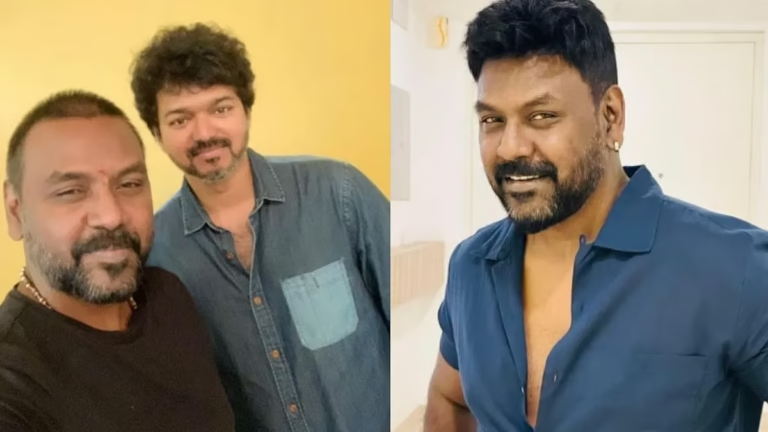
Raghava Lawrence Seeks Public Mandate Before Political Entry

New Delhi, June 12, 2026: In a move that has sent ripples across the political and cinematic landscapes of Tamil Nadu, multi-faceted actor, choreographer, and filmmaker Raghava Lawrence has officially signaled his readiness to enter public life. However, in a refreshing departure from standard political rollouts, Lawrence has chosen to place his destiny entirely in the hands of the public, declaring that he will only take the political plunge if he receives a clear and resounding mandate from the people.

The high-profile announcement follows weeks of intense media speculation connecting the Kanchana star to the Trichy East Assembly seat. The constituency was recently vacated by Tamil Nadu Chief Minister and chief of the Tamilaga Vettri Kazhagam (TVK), C. Joseph Vijay, who had won both the Perambur and Trichy East seats in the historic April 2026 Assembly elections but chose to retain Perambur due to its proximity to the State Secretariat.

Direct Appeal to the Public

Breaking his silence after wrapping up his shooting commitments for the action thriller Benz, Lawrence released an intimate, 18-minute video address across his social media handles. Grounding his message in the philosophical principle of selfless service, the filmmaker explicitly requested his followers and the citizens of Tamil Nadu to guide his next step.

The actor emphasized that he has never harbored personal ambitions for wealth, power, or legislative titles. For decades, Lawrence has run a highly respected charitable foundation primarily focused on the rehabilitation, medical support, and education of specially-abled children. His original intention, he revealed, was simply to operate from the sidelines, lending his full strength to a trusted leader who could execute social reforms on a grand scale. However, citing “changing circumstances,” Lawrence noted that he now feels a direct, personal compulsion to step forward.

Shifting Dynamics and Maternal Blessings

A core highlight of Lawrence’s emotional address was the deep personal journey behind his change of heart. He candidly shared that his political aspirations were initially ignited years ago by the political plans of superstar Rajinikanth. At the time, Lawrence had actively sought the blessing of his mother—for whom he famously constructed a temple—but she fiercely opposed the idea, famously categorizing politics as saakkadai (drainage). Respecting her wishes and following Rajinikanth’s subsequent decision to step away from active public life due to health concerns, Lawrence returned his absolute focus to cinema.

The turning point arrived with the dramatic outcome of the April 2026 Tamil Nadu state elections. The unprecedented, historic victory of his close friend Thalapathy Vijay and the TVK completely shifted his mother’s perspective on the field of governance. Seeing a clean, contemporary vision yield such immense public trust, she finally gave Lawrence her green signal.

While Lawrence stopped short of officially naming his political vehicle, the timing and context have fueled immense speculation. The actor’s comment sections have been flooded with thousands of encouraging responses from fans, a vast majority of whom are urgently nudging him to join Vijay’s TVK and accept the mantle for the upcoming Trichy East by-election. Lawrence has been an outspoken ally of Chief Minister Vijay in recent months, notably defending the new administration’s ministerial appointments and publicly urging rival industry figures to respect the democratic mandate.

Balancing Cinema and Public Service

Even as the political storm brews around him, Lawrence remains heavily intertwined with his cinema obligations. He confirmed that he spent the first week of June completing an intense shooting schedule for Benz, a highly anticipated film directed by Bakkiyaraj Kannan. Backed by hitmaker Lokesh Kanagaraj, Benz is officially confirmed as the latest installment in the high-octane Lokesh Cinematic Universe (LCU) and features a stellar ensemble cast including Nivin Pauly, Ravi Mohan, and Samyuktha.

By tying his political future directly to a digital and public referendum, Raghava Lawrence has set a fascinating precedent in Tamil Nadu’s vibrant history of cinema-led politics. The public response to his video over the coming days will serve as the ultimate litmus test. Lawrence has promised that if the collective voice says “Yes,” he will soon return with a comprehensive announcement detailing the exact timeline, methodology, and alliance structures through which he will initiate his journey as a public servant.