Home Blog Page 225

Amrapali Dubey: Why the Bhojpuri Star is Trending Now

0

New Delhi, February 25, 2026: Amrapali Dubey, widely known as the “YouTube Queen” of Bhojpuri cinema, is one of the highest-paid and most influential actresses in the industry. Her career is a testament to the power of digital popularity, as her music videos and film clips consistently garner hundreds of millions of views, making her a household name across Northern India.

Who is Amrapali Dubey?

Born on January 11, 1987, in Gorakhpur, Uttar Pradesh, Amrapali Dubey originally harbored dreams of entering Bollywood. However, her career took a different path based on the encouragement of her grandmother, who wanted to see her represent her own Bhojpuri roots.

1. Television Beginnings

Before her cinematic debut, Amrapali was a successful television actress. She gained recognition for her roles in popular Hindi soap operas:

  • Saat Phere – Saloni Ka Safar (2009)
  • Maayka (2009)

2. Bhojpuri Cinema Debut and Rise

Amrapali transitioned to Bhojpuri films in 2014 with the blockbuster Nirahua Hindustani,” starring opposite Dinesh Lal Yadav (Nirahua). The film’s massive success instantly established her as a leading lady. Since then, she has appeared in over 25 films, including hits like Patna Se Pakistan, Border, and Nirahua Chalal London.

The “Nirahua” Connection

Amrapali’s professional identity is deeply intertwined with superstar Dinesh Lal Yadav (Nirahua). Their on-screen chemistry is considered the most successful “jodi” in Bhojpuri history.

  • Professional Partnership: They have worked together in nearly 30 projects. Their songs, such as “Raate Diya Buta Ke,” have broken digital records, contributing to her “YouTube Queen” title.
  • Relationship Speculation: Due to their frequent collaborations and public appearances, fans and media have often speculated about a secret marriage or romantic relationship. While Nirahua is married to Mansha Devi, the duo has consistently maintained that they are “just good friends” and that their bond is purely professional.

Why is She in the Spotlight Now?

As of February 2026, Amrapali Dubey is trending for several reasons ranging from personal revelations to upcoming projects:

1. Nirahua’s Candid Remarks on Marriage

In recent interviews, Nirahua has spoken openly about his personal life, expressing regret over his early “forced” marriage and admitting he never loved his wife. He even mentioned referring to Amrapali as his “Ardhangini” (better half) in front of spiritual leaders, which has reignited intense speculation about their real-life relationship status.

2. Marriage and Motherhood Statements

Amrapali recently made headlines by expressing her desire to settle down and become a mother. She stated in an interview that she feels “wedding fever” and is ready to marry whoever her family approves of, adding a new layer to the ongoing rumors surrounding her and Nirahua.

3. Recent Legal and Social Controversies

  • Legal Trouble: In late 2025, she and Nirahua faced legal scrutiny after a complaint was filed regarding a road blockade during a mall inauguration in Muzaffarpur, which allegedly caused delays for emergency vehicles.
  • Political Commentary: She has been active in public discourse, recently praising the development in Bihar and calling for justice in social controversies, such as the hijab-pulling incident involving a female doctor.

4. Upcoming Projects

Amrapali remains prolific with a packed slate for 2026, including highly anticipated sequels like “Nirahua Hindustani 4” and “Nirahua Chalal Sasural 3, as well as new ventures like Naagin 2 and TV Wali Biwi.

Amrapali Dubey continues to dominate the Bhojpuri landscape through her versatility as an actor, her melodious singing voice, and a digital footprint that remains unmatched by her peers.
Indian Markets Bounce Back: Nifty Reclaims 25,581 Level as IT Stocks Lead Recovery

0

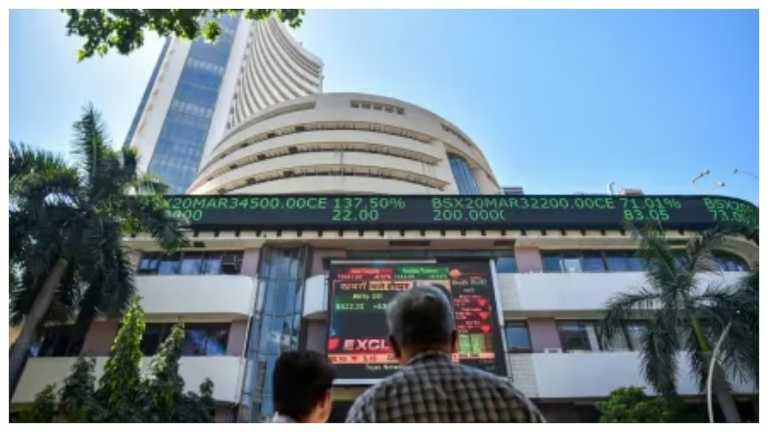
February 25, 2026 – After a grueling session on Tuesday that saw the benchmark indices bleed over 1%, the Indian equity markets staged a spirited recovery in early trade on Wednesday. The NSE Nifty 50 climbed 157.05 points to reach the 25,581.70 mark, while the BSE Sensex jumped 558.79 points, trading at 82,784.71.

This rebound comes as a relief to investors who were rattled by yesterday’s sharp sell-off, which was triggered by global concerns over artificial intelligence-led disruptions and high-stakes geopolitical shifts.

Key Drivers of the Morning Rally

The market’s “green” opening was primarily fueled by three major factors:

  1. IT Sector Resurgence: The Information Technology index, which bore the brunt of Tuesday’s losses, emerged as the top performer. Bargain hunting in heavyweights like Infosys, TCS, and HCL Tech provided the necessary muscle to the Nifty.
  2. Global Cues: Wall Street closed in positive territory overnight, driven by a recovery in U.S. technology stocks. This optimism spilled over into Asian markets, with Japan’s Nikkei 225 and South Korea’s Kospi trading significantly higher.
  3. Institutional Support: Despite minor offloading by Foreign Institutional Investors (FIIs) worth ₹102 crore on Tuesday, Domestic Institutional Investors (DIIs) showed immense faith by pumping in ₹3,161.22 crore, effectively cushioning the market’s fall and setting the stage for today’s jump.

Sectoral Performance and Top Gainers

The rally was broad-based, with the BSE IT Index gaining over 2% in the initial hour. Other sectors like Power and Aviation also showed strength.

Top GainersTop Laggards
Tech MahindraState Bank of India
HCL TechBajaj Finance
TCSAsian Paints
InfosysMaruti Suzuki
Power Grid

Expert Take: Easing “AI Scare” Trade

Market analysts suggest that the initial panic regarding AI-driven volatility—often dubbed the “Anthropic shock”—is beginning to subside.

“We are seeing a transition from a ‘scare trade’ to a ‘hope trade,'” says Ajay Bagga, a prominent banking and market expert. “While global uncertainties like U.S. tariff policies and Iranian tensions remain in the background, the fundamental strength of the Indian economy and rising corporate earnings are encouraging investors to buy the dip.”

Global Commodities and Currency

While equities soared, other asset classes remained volatile:

  • Brent Crude: Rose by 0.76% to $71.31 per barrel, keeping oil marketing companies under a watchful eye.
  • Gold & Silver: Safe-haven demand remains elevated. Gold prices in India hovered around ₹1,60,750 per 10 grams, while Silver surged over 2%.

Looking Ahead

Investors are now looking toward the U.S. State of the Union address and further signals on inflation for long-term direction. For the Nifty, technical analysts point to 25,650 as a crucial resistance level. A sustained move above this could open doors for the 25,800 mark.

PM Modi Israel Visit Underscores New ‘Bonhomie’ With Netanyahu: Israeli Envoy

0

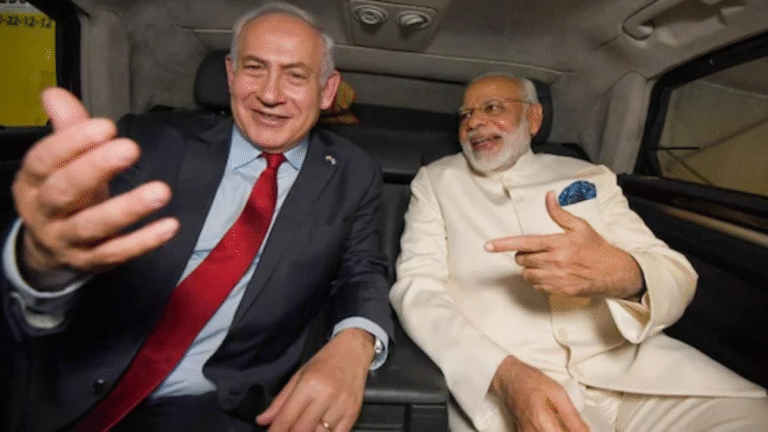
New Delhi, February 25, 2026: Prime Minister Narendra Modi’s state visit to Israel this week (February 25–26, 2026) marks a watershed moment in Middle Eastern and Indo-Pacific geopolitics. Israeli Ambassador Reuven Azar, speaking ahead of the visit, characterized the meeting as more than just a diplomatic routine, describing it as a “deepening bonhomie” between PM Modi and Israeli Prime Minister Benjamin Netanyahu.

This visit, Modi’s second to the Jewish nation since his historic 2017 trip, comes at a time of significant regional shifts and technological acceleration. The “personal chemistry” between the two leaders is being viewed as the primary engine driving a new era of the India-Israel Strategic Partnership.

A “Hexagon” of Alliances

Prime Minister Netanyahu has framed this visit within a broader diplomatic vision. He recently described a plan to build a hexagon” of alliances, positioning India as a cornerstone alongside Arab nations, African states, and Mediterranean partners. The goal is to create a coordinated axis of like-minded democracies to counter regional radicalism and promote economic stability.

Israeli Envoy Reuven Azar echoed this sentiment, stating:

“Now, when India and Israel come together, it’s never just a meeting. It’s a partnership built on trust, powered by innovation, and guided by a clear understanding of the challenges of our time.”

Key Pillars of the 2026 Visit

The itinerary for the two-day visit is packed with high-stakes discussions and symbolic gestures:

  • Address to the Knesset: PM Modi will become the first Indian Prime Minister to address the Israeli Parliament, an honor highlighting the shared democratic values of both nations.
  • Defense & Security: Conversations are expected to focus on “Mission Sudarshan”—India’s ambitious air defense shield. Discussions will likely cover the integration of Israeli technologies (similar to the Iron Dome and Arrow systems) into India’s indigenous defense infrastructure.
  • The FTA Momentum: Ambassador Azar indicated that both nations are moving decisively toward a Free Trade Agreement (FTA), with hopes of finalizing the first phase by the end of 2026.
  • Innovation & Frontier Tech: A major “Innovation Event” in Jerusalem will focus on AI, Quantum Computing, and Semiconductors, sectors where both nations aim to lead globally.

Deepening the Strategic “Axis”

The relationship has evolved significantly since it was elevated to a Strategic Partnership in 2017. Beyond the multi-billion dollar defense trade, the “bonhomie” is now reflected in “ground-level” cooperation:

SectorCurrent Focus
Agriculture35 operational Centers of Excellence in India using Israeli drip irrigation.
WaterNational-level cooperation on water desalination and rejuvenation of the Ganges.
EnergyJoint ventures in Green Hydrogen and renewable energy projects.
DiplomacyActive participation in the I2U2 Group (India, Israel, UAE, USA).

Symbolic Gestures

The visit is not without its emotional weight. The two leaders are scheduled to visit Yad Vashem, the World Holocaust Remembrance Center, and PM Modi will meet with members of the Indian diaspora. The Jerusalem Post featured PM Modi on its front page with the headline “Welcome, Modi,” reflecting the high public and political regard for the Indian leader in Israel.

As the two “resilient democracies” realign their efforts, the world watches closely. This visit doesn’t just underscore a friendship between two men; it cements a strategic axis that could define the security and economic architecture of the region for decades to come.

Ambani Family Gathers in Rajasthan to Celebrate Kokilaben Ambani’s 92nd Birthday

0

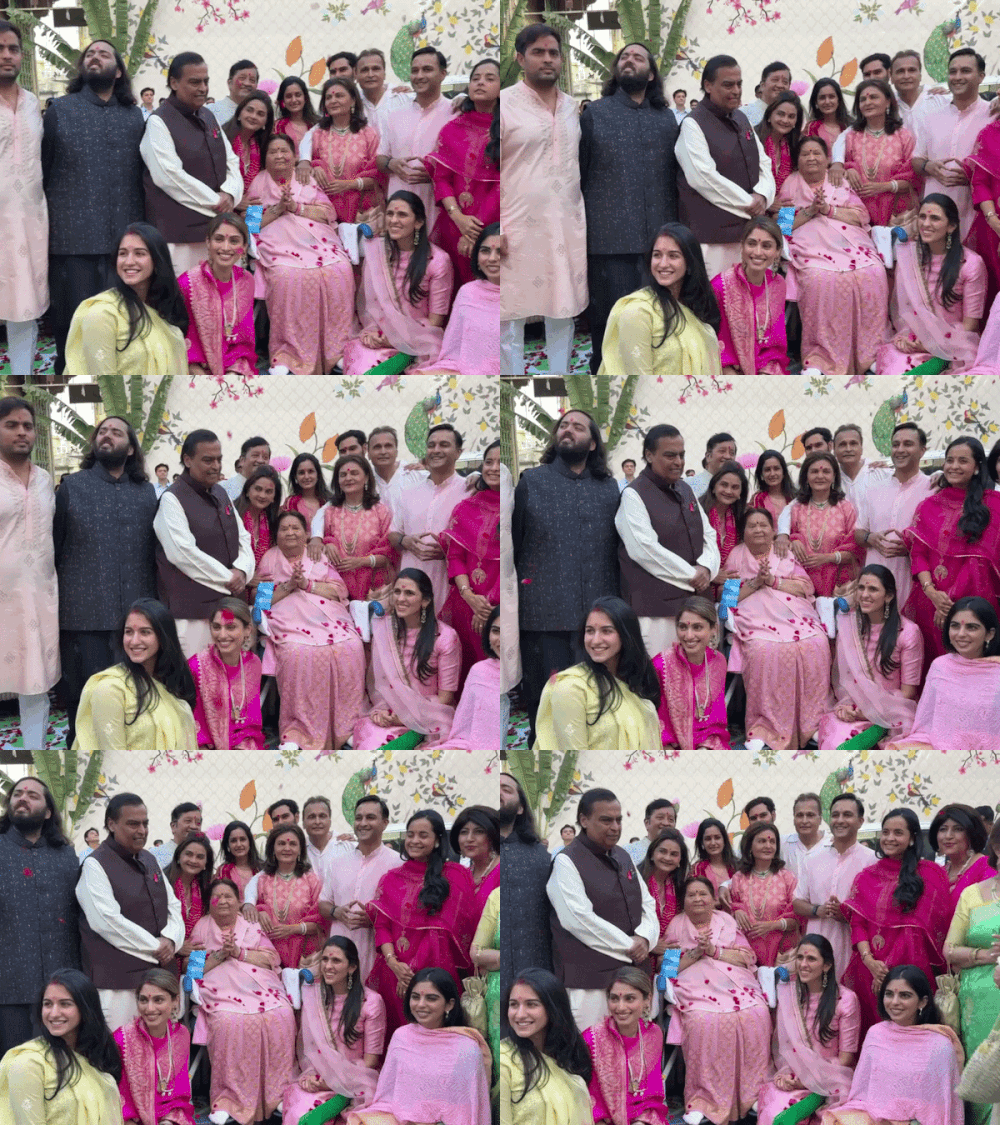
New Delhi, February 25, 2026: The matriarch of the Ambani family, Kokilaben Ambani, celebrated her 92nd birthday on Tuesday, February 24, 2026, surrounded by her family in the spiritual heart of Rajasthan. The family, known for their deep-rooted spiritual values, chose the historic town of Nathdwara in the Rajsamand district to mark this milestone.

A Spiritual Celebration at Shrinathji Temple

The celebrations were centered around the Shrinathji Temple, the principal seat of the Pushtimarg sect, where the Ambani family has shared a long-standing devotional connection. Kokilaben, accompanied by her sons Mukesh and Anil Ambani, arrived at the temple in the evening to offer prayers and seek blessings for the year ahead.

The family participated in the ‘Bhog Aarti’, a significant ritual at the temple. Sources from the temple board noted that the atmosphere was one of quiet devotion rather than flamboyant celebration. Following the aarti, the family visited the ‘Haveli’ of Shrinathji. As a mark of tradition and respect, the temple priests honored the family members with traditional Rajasthani safas (turbans) and shawls.

Grace in Simplicity

While Ambani family events are often associated with unmatched grandeur, Kokilaben’s 92nd birthday was noted for its understated elegance.

  • The Look: The matriarch chose a soothing lime-green chiffon saree with a subtle golden border, pairing it with minimal jewelry and a traditional red bindi.
  • The Family: In attendance were several members of the third generation, including Anant Ambani, Radhika Merchant, Isha Ambani, and Shloka Mehta. The family members were seen in simple, elegant ethnic wear—cotton suits and kurta-pyjamas—blending seamlessly with the spiritual setting of Udaipur and Nathdwara.

Philanthropy and Devotion

The visit to Rajasthan was not just a personal milestone but also a continuation of the family’s philanthropic legacy in the region. Only months prior, Mukesh Ambani had announced the construction of a ₹50 crore “Seva Sadan in Nathdwara, a dedicated facility to provide medical care and housing for elderly pilgrims.

Kokilaben, who serves as the Vice Chairperson of the Nathdwara Temple Board, has frequently emphasized the importance of seva (service). Her birthday celebration served as a reflection of these values, beginning with a visit to the Eklingnath Ji Temple in Udaipur before reaching Nathdwara.

The Legacy of Kokilaben Ambani

Born in 1934 in Jamnagar, Gujarat, Kokilaben Ambani has been the pillar of the Reliance empire since its inception. From supporting her husband, the late Dhirubhai Ambani, in the early days in Aden, Yemen, to playing a pivotal role as a mediator during the family’s business demerger in 2005, she remains the most respected figure within the dynasty.

Today, she is not only the revered matriarch but also one of the largest individual shareholders in Reliance Industries, continuing to inspire the family with her blend of traditional values and modern outlook.

Star Names vs. Real Identities: The Faces Behind the Icons

0

New Delhi, February 25, 2026: In the glitzy world of Indian cinema, stage names often become the identity by which millions of fans swear. However, behind the larger-than-life personas of “Superstar,” “Thalapathy,” and “Bhai” lie humble beginnings and birth names that tell stories of heritage and family legacy.

Here is a deep dive into the real identities of three of India’s most iconic actors.

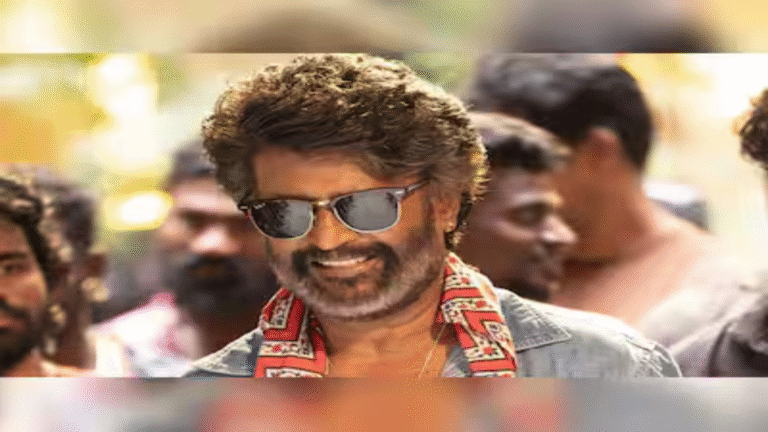
1. Shivaji Rao Gaekwad: The Bus Conductor Who Became ‘Rajinikanth’

Before he was the “Thalaiva” of Indian cinema, Shivaji Rao Gaekwad was a young man working as a bus conductor for the Bangalore Transport Service (BTS). Born on December 12, 1950, into a Marathi family in Bangalore, he was named after the legendary Maratha King, Chhatrapati Shivaji.

His journey from a bus conductor to a global phenomenon is the stuff of legend. While performing in local plays, he was discovered by the renowned director K. Balachander. It was Balachander who gave him the screen name Rajinikanth to avoid confusion with the veteran actor Sivaji Ganesan.

  • The Persona: Known for his signature style—from flipping cigarettes to his unique walk—Rajinikanth transcended regional boundaries.
  • Legacy: He has been honored with the Padma Bhushan (2000) and Padma Vibhushan (2016). Today, he remains one of the highest-paid and most influential actors in the world.

2. Joseph Vijay Chandrasekhar: The ‘Thalapathy’ of Millions

To the world, he is simply Vijay, but his birth certificate reads Joseph Vijay Chandrasekhar. Born on June 22, 1974, in Chennai, Vijay was born into a family with deep roots in the film industry; his father, S.A. Chandrasekhar, is a veteran director, and his mother, Shoba, is a playback singer.

Vijay’s rise to superstardom was not overnight. He started as a child artist and later made his debut as a lead actor in Naalaiya Theerpu (1992). Over the decades, he evolved from a romantic hero into a massive action star, earning the title “Thalapathy” (Commander).

  • The Persona: He is celebrated for his incredible dancing skills and his ability to deliver socially conscious blockbusters.
  • Current Transition: In a bold move for his career, as of 2024–2025, Vijay has begun pivoting toward a future in politics, launching his party, Tamilaga Vettri Kazhagam (TVK), while continuing to dominate the box office with his final film projects.

3. Abdul Rashid Salim Salman Khan: The ‘Bhai’ of Bollywood

Widely known as the “Tiger” of Bollywood, Salman Khan’s full legal name is Abdul Rashid Salim Salman Khan. Born on December 27, 1965, he is the eldest son of the legendary screenwriter Salim Khan and Sushila Charak (later Salma Khan).

His full name reflects a rich ancestry; his grandfather, Abdul Rashid Khan, was a high-ranking police officer in the Indore state during the British era. While the world calls him Salman, his close family and legal documents carry the weight of his ancestral lineage.

  • The Persona: Since his breakout role in Maine Pyar Kiya (1989), Salman has become the face of the “masala” entertainer. He is synonymous with the “Angry Young Man” mantle of the modern era and is famous for his philanthropic work through his foundation, Being Human.
  • Box Office King: He holds the record for the most films in the “100-crore club” in Hindi cinema, proving that his name alone is a brand capable of carrying a film to success.

Comparison at a Glance

Stage NameReal NamePrimary IndustryIconic Moniker
RajinikanthShivaji Rao GaekwadTamil CinemaThalaiva / Superstar
VijayJoseph Vijay ChandrasekharTamil CinemaThalapathy
Salman KhanAbdul Rashid Salim Salman KhanHindi CinemaBhai / Sultan

These names serve as a reminder that while fame can change how the world sees you, these actors remain deeply connected to the roots represented by their birth names.

Tamannaah Bhatia Warns Actors on the Illusion of Wealth

0

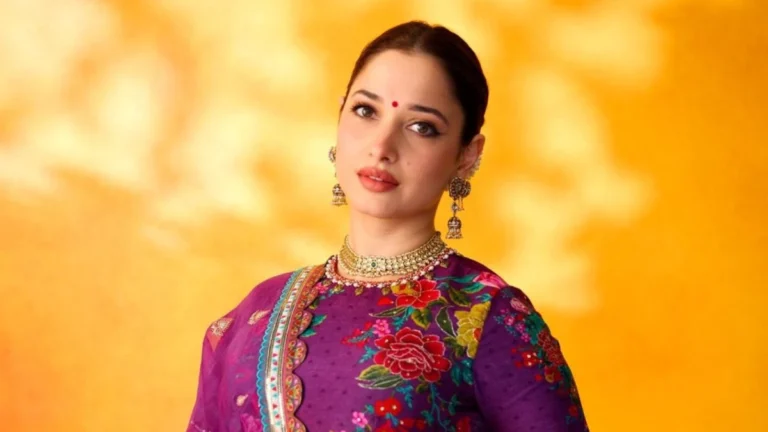
New Delhi, February 24, 2026: In the glitzy world of Indian cinema, where multi-crore paychecks and designer lifestyles dominate the headlines, veteran actress Tamannaah Bhatia has offered a sobering reality check. In a recent candid discussion, the Baahubali star pulled back the curtain on the financial instability of the entertainment industry, warning that even the highest earners are in “real danger” of losing it all if they lack financial literacy.

Despite her own successful career spanning nearly two decades across the Telugu, Tamil, and Hindi film industries, Bhatia emphasized that a high income does not equate to long-term wealth.

The “Disposable” Nature of Stardom

Tamannaah’s insights touch on a nerve that many in the industry rarely acknowledge publicly: the inconsistent nature of acting income. Unlike a corporate job with a steady climb and a pension, an actor’s earnings are often front-loaded into a few “peak” years.

“You can make a lot of money in a short span of time,” Bhatia noted, “but if you don’t multiply it, if you don’t understand how to make your money work for you, you can end up with nothing.”

She highlighted several factors that contribute to this financial precariousness:

  • High Overheads: The cost of maintaining “stardom”—including PR teams, stylists, security, and travel—can drain bank accounts quickly.
  • Irregular Cycles: An actor might earn a massive sum for one project, then go months or even years without another significant payday.
  • The “Flashy” Trap: The pressure to maintain an image of luxury often leads to lifestyle inflation that exceeds actual savings.

The Importance of Multiplying Wealth

The core of Tamannaah’s message was the transition from earning to investing. She stressed that without a strategic approach to “multiplying” wealth through diverse investments—such as real estate, stocks, or private businesses—actors remain vulnerable to the industry’s legendary “boom and bust” cycles.

Bhatia herself has been proactive in this regard. Beyond the silver screen, she has ventured into the jewelry business with her brand Witman & Gold and has been an active investor in several tech startups and healthcare ventures. By diversifying her portfolio, she has insulated herself from the inherent risks of the box office.

A Lesson for the Next Generation

Her comments serve as a vital roadmap for newcomers entering the industry today. While the advent of OTT platforms and social media brand deals has increased the avenues for earning, the competition has also intensified.

Tamannaah’s advice can be distilled into three pillars:

  1. Financial Literacy: Understanding the difference between gross income and net savings.
  2. Asset Allocation: Moving money out of luxury goods and into appreciating assets.
  3. Sustainability: Planning for a future where the “acting calls” might slow down.

The Bottom Line

Tamannaah Bhatia’s candor is a refreshing departure from the usual promotional rhetoric. By admitting that even “A-list” stars face financial risks, she humanizes the profession and highlights a universal truth: it’s not about how much you make, but how much you keep.

Sonam Bajwa Sets Fitness Goals with Viral ‘Impromptu’ Post-Workout Dance

0

New Delhi, February 24, 2026: Punjabi cinema’s reigning queen, Sonam Bajwa, has once again captured the internet’s heart, but this time it wasn’t for a high-glamour red carpet look or a gripping film teaser. Taking to her social media, the actress shared a candid, high-energy video of her “impromptu cool down” session following a grueling workout, proving that fitness can—and should—be fun.

Known for her disciplined lifestyle and envy-inducing physique, Bajwa’s latest post offers a refreshing glimpse into her personality beyond the silver screen.

Redefining the ‘Cool Down’

While most fitness enthusiasts stick to static stretching and deep breathing after a gym session, Sonam decided to take a more rhythmic approach. In the video, dressed in sleek athletic wear, the actress is seen breaking into a spontaneous dance routine.

With a radiant, post-workout glow and messy hair, she embraced the endorphin rush, captioned the post: “An impromptu cool down because why not?” The clip quickly went viral, garnering hundreds of thousands of likes within hours. Fans and fellow celebrities flocked to the comments section to praise her energy, with many noting that her “natural vibe” is what makes her stand out in the crowded space of fitness influencers.

Why This resonates with Fans

Sonam Bajwa has built a massive following not just through her acting prowess in hits like Carry on Jatta and Godday Godday Chaa, but through her relatability. By sharing a video that is unpolished and joyful, she sends a powerful message to her followers:

  • Fitness isn’t a chore: It’s a celebration of what the body can do.
  • Authenticity wins: In an era of curated “perfection,” a sweaty, dancing-like-nobody’s-watching video feels like a breath of fresh air.
  • Mental Well-being: Highlighting the “fun” side of exercise encourages a healthier relationship with physical movement.

A Style Icon Even at the Gym

Even in a casual gym setting, Sonam’s style remains impeccable. Sporting a coordinated monochrome gym set, she effortlessly blended functionality with fashion. Her minimal-effort, maximum-impact look has already sparked a wave of “gym-wear inspo” posts across Pinterest and Instagram.

What’s Next for Sonam?

On the professional front, Sonam continues to be one of the most sought-after names in the Punjabi film industry and is increasingly making waves in pan-Indian circles. While her fans eagerly await her next cinematic outing, these snippets of her daily life keep the engagement levels skyrocketing.

As the video continues to trend, one thing is clear: Sonam Bajwa knows exactly how to keep her audience entertained, whether she’s delivering a dramatic monologue or just dancing away the post-workout fatigue.

PSSSB Group D Recruitment 2026: Apply Online from February 27

0

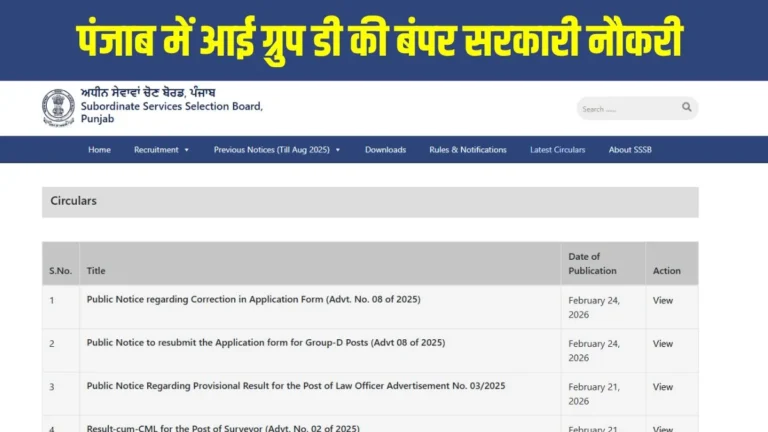
New Delhi, February 24, 2026: The Punjab Subordinate Services Selection Board (PSSSB) has officially released the recruitment notification for various Group D positions across several government departments. According to the short notice issued under Advertisement No. 04/2026, the online application window is scheduled to open on February 27, 2026.

This recruitment drive provides a significant opportunity for job seekers in Punjab looking for stable government employment. While the short notice has confirmed the timeline, the board is expected to release the post-wise vacancy breakdown and the detailed PDF notification on the official website shortly.

PSSSB Group D Recruitment 2026: Key Highlights

ParticularsDetails
Recruiting BodyPunjab Subordinate Services Selection Board (PSSSB)
Post NamesSewadar, Chowkidar, Mali, Peon, Sweeper, etc.
Advertisement No.04/2026
Job LocationPunjab
Application ModeOnline
Official Website[suspicious link removed]

Important Dates to Remember

Candidates should keep a close watch on the following schedule to ensure they do not miss the registration deadlines:

  • Release of Short Notification: February 23, 2026
  • Commencement of Online Applications: February 27, 2026
  • Last Date to Apply Online: March 20, 2026 (up to 5:00 PM)
  • Last Date for Fee Payment: March 20, 2026
  • Exam Date: To be announced

Eligibility Criteria

To be eligible for the PSSSB Group D vacancies, applicants must meet the following basic requirements:

  1. Educational Qualification: Candidates must have passed Class 10 (Matriculation) from a recognized board.
  2. Language Requirement: It is mandatory for applicants to have passed Punjabi as a subject at the matriculation level.
  3. Age Limit (as of Jan 1, 2026):
    • Minimum Age: 18 years
    • Maximum Age (General): 37 years
    • Note: Age relaxation will be provided to SC, BC, and other reserved categories as per Punjab Government rules.

Application Fee Structure

The application fee varies based on the candidate’s category:

  • General / Freedom Fighters: ₹1,000
  • SC / BC / EWS (Punjab): ₹250
  • Ex-Servicemen & Dependents: ₹200
  • Physically Handicapped (PwD): ₹500

Selection Process

The PSSSB will select candidates based on a multi-stage process designed to test basic aptitude and language proficiency:

  • Written Examination: An objective-type (MCQ) test.
  • Document Verification: Successful candidates from the merit list will be called for original document checking.
  • Medical Examination: A final fitness check before the formal appointment.

How to Apply for PSSSB Group D 2026

Once the link is activated on February 27, eligible candidates can follow these steps:

  1. Visit the official portal at sssb.punjab.gov.in.
  2. Click on the “Applications” tab on the homepage.
  3. Find the link for Advertisement No. 04/2026 (Group D Recruitment).
  4. Complete the One-Time Registration (OTR) to generate your credentials.
  5. Fill out the application form with personal and educational details.
  6. Upload scanned copies of your photograph, signature, and 10th-grade mark sheet.
  7. Pay the application fee and submit the form.
  8. Download and print the confirmation page for future reference.

Note to Aspirants: The number of vacancies for the 2026 cycle is expected to be substantial, following a previous recruitment (Advt 08/2025) that saw a total of 406 posts. Candidates are advised to read the detailed notification carefully before applying.

JEE Main 2026 Paper 2 Result: NTA to Declare B.Arch and B.Planning Scores Soon

0

New Delhi | February 24, 2026: Thousands of architecture and planning aspirants are on the edge of their seats as the National Testing Agency (NTA) is expected to announce the JEE Main 2026 Session 1 Paper 2 results imminently. Following the release of the Paper 1 (B.E./B.Tech) results on February 16, the focus has shifted to the candidates who appeared for the B.Arch (Paper 2A) and B.Planning (Paper 2B) examinations on January 29, 2026.

According to the latest updates from the official portal, the final answer keys for Paper 2 have already been processed. Historically, the NTA declares the Paper 2 results within a few days of the engineering paper results, often citing the extra time required for the manual evaluation of the drawing sketches in the B.Arch segment.

Key Highlights of the JEE Main Session 1 Result

As the countdown begins, here is a summary of the current status and upcoming events:

  • Official Website: jeemain.nta.nic.in
  • Final Answer Key: Released; NTA reportedly dropped six questions, and candidates will receive bonus marks for these as per the marking scheme.
  • Result Format: Results will be available as NTA scores (percentiles) rather than raw marks to ensure a level playing field across different shifts.
  • Session 2 Registration: The window for Session 2 registration closes tomorrow, February 25, 2026, making it vital for students to check their scores and decide on a second attempt.

How to Check JEE Main 2026 Paper 2 Results

Once the link is activated, candidates can follow these steps to download their scorecards:

  1. Visit the Official Portal: Navigate to the NTA JEE Main website at jeemain.nta.nic.in.
  2. Locate the Link: Click on the notification titled “Result/Scorecard for JEE (Main) 2026 Session 1 Paper 2.”
  3. Enter Credentials: Provide your Application Number and Date of Birth (or Password).
  4. Security Pin: Input the case-sensitive CAPTCHA displayed on the screen.
  5. Download & Print: View your percentile scores and download the PDF. It is highly recommended to keep multiple physical copies for the JoSAA/CSAB 2026 counseling process.

Understanding the Normalization Process

Since the drawing test (Part III of B.Arch) is conducted in a pen-and-paper format, it undergoes a rigorous manual grading process. The scores are then normalized with the computer-based Mathematics and Aptitude sections.

Note: In the event of a tie in Paper 2, the NTA uses a specific hierarchy for resolution: higher marks in Mathematics, followed by the Aptitude Test, then the Drawing Test, and finally, the candidate with the fewer negative responses is ranked higher.

What’s Next for Aspirants?

With the Paper 2 result out soon, candidates will have a clearer picture of their standing for admission into prestigious institutions like the School of Planning and Architecture (SPAs) and various NITs.

For those looking to improve their performance, the Session 2 examination is scheduled to take place between April 2 and April 9, 2026. The correction window for Session 2 applications will also open briefly from February 27 to February 28, 2026.

Viral “Train Cooler” Hack Sparks Safety Debate

0

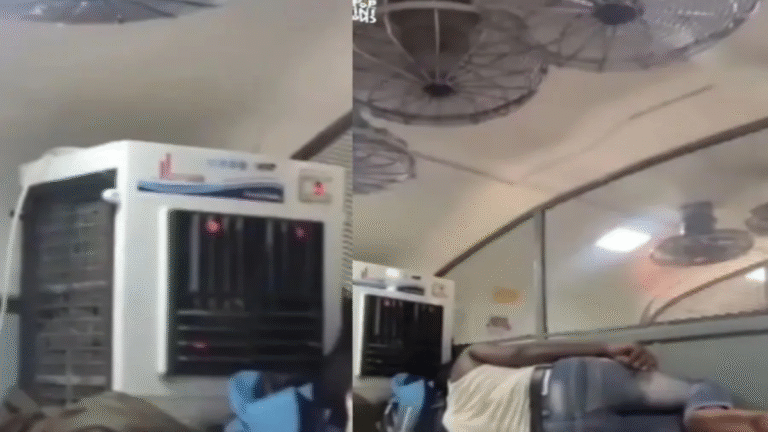
New Delhi, February 24, 2026: It was only a matter of time before “summer survival hacks” met the reality of railway safety protocols. The video of a passenger hooking up a full-sized desert cooler inside a non-AC sleeper coach has certainly set the internet—and the Indian Railways’ safety departments—on fire.

While we can all empathize with the sweltering heat of a cross-country train journey, this particular “innovation” sits right at the intersection of clever and dangerous.

The Core Issues: Why It’s Not Just “Cooling Off”

The debate isn’t just about someone being extra; it’s about the technical and legal risks involved in modifying a public transport environment.

  • Electrical Overload: Train coaches have specific voltage and load capacities. Plugging in a high-wattage appliance like a cooler can lead to short circuits, potentially causing a fire in a moving vehicle—a nightmare scenario for emergency services.
  • Safety Hazards: An unsecured, water-filled heavy metal box is essentially a projectile if the train brakes suddenly. Furthermore, water spillage near electrical points in a vibrating carriage is a recipe for disaster.
  • Legal Ramifications: Under the Railways Act, unauthorized use of electricity or carrying bulky items that obstruct passengers is a punishable offense. It can lead to heavy fines or even imprisonment.

Public Reaction: Two Sides of the Coin

The viral debate has split social media into two very distinct camps:

The “Jugaad” SupportersThe Safety Advocates
Argue that extreme heat makes non-AC travel unbearable and “inhumane.”Point out that one person’s comfort shouldn’t risk the lives of 70+ others in the coach.
View it as a creative solution to a systemic problem (lack of affordable cooling).Highlight the risk of fire and the precedent it sets for others to bring heaters or stoves.

The Official Stance

Indian Railways generally maintains a zero-tolerance policy toward such modifications. Officials often remind passengers that coach sockets are designed for low-power devices like mobile phones and laptops, not heavy machinery.

It’s a classic case of “just because you can, doesn’t mean you should.” The heat is a real problem, but turning a sleeper coach into a makeshift laboratory for electrical experiments usually ends with a visit from the RPF (Railway Protection Force).