Home Blog Page 437

Retired IAS Dr. S. Siddharth Wins Hearts with Gardening Video

0

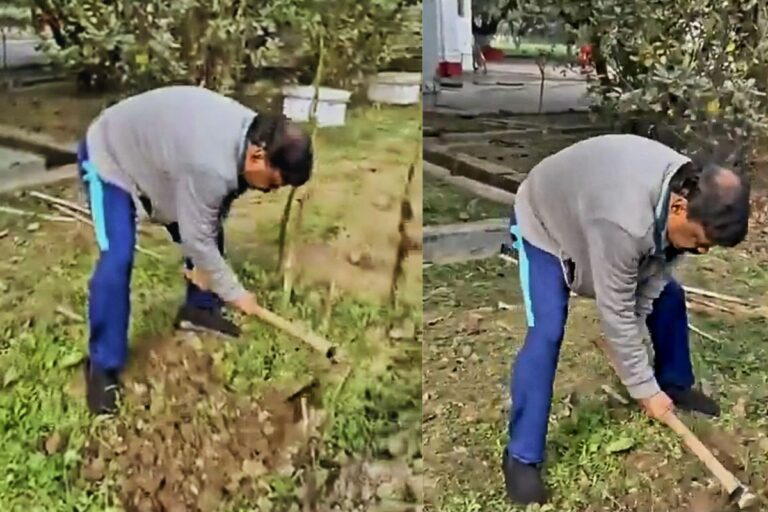
New Delhi, January 1, 2026: A refreshing display of grounded living was witnessed this week through a viral video featuring retired senior IAS officer Dr. S. Siddharth. On December 31, 2025, footage surfaced on social media showing the former bureaucrat actively working in his home garden. Rather than delegating the task to domestic help, Dr. Siddharth was observed handling a kudali (hoe) with ease, digging the soil and preparing his plants for the new year. The video has quickly become a symbol of how true leadership is rooted in simplicity, even after decades of holding high-ranking administrative positions.

The Man of Many Talents: Beyond the Bureaucracy

Dr. S. Siddharth, a 1991-batch IAS officer of the Bihar cadre, has long been known for his intellectual depth and varied interests. An alumnus of IIT Delhi and IIM Ahmedabad, he was often noted for his academic excellence, holding a PhD in Information Technology and pursuing another in Economics. Throughout his career, including his tenure as the Additional Chief Secretary (ACS) and Development Commissioner, he was observed maintaining a uniquely accessible persona. Whether he was seen inspecting schools or sipping tea at a roadside stall, his “common man” approach has frequently made him a digital sensation.

Also Read: Ikkis Movie Review: A Moving Tribute Where Humanity Triumphs Over War

Gardening as a Message of Environmental Connection

In the latest viral clip, the retired officer was heard sharing his personal philosophy on the importance of staying connected to nature. He was observed meticulously clearing weeds and tilling the earth, appearing entirely unbothered by the physical labor involved. Commenters on platforms like X and Facebook have hailed the video as a “inspiring new year message,” suggesting that the act of gardening serves as a metaphor for nurturing one’s own roots and mental peace. Many noted that seeing a man who once managed state-level departments now “getting his hands dirty” in his own yard is a powerful lesson for today’s youth.

A Legacy of Surprise Inspections and Simplicity

The popularity of this gardening video is rooted in Dr. Siddharth’s history of unconventional behavior that often went viral during his service. He was previously observed taking surprise inspections of Bihar’s schools by traveling in public transport or riding a bicycle. In another famous instance from 2025, he was seen trying his hand at making launglata (a traditional sweet) at a local shop. These actions have consistently humanized the often-impenetrable image of the Indian bureaucracy, proving that power and prestige do not have to come at the cost of one’s personal identity or humility.

Redefining Retirement in 2026

As the world enters 2026, Dr. Siddharth’s peaceful transition into a life of hobby and manual labor has been held up as a model for “graceful retirement.” While many high-ranking officials distance themselves from the public eye post-service, he continues to be observed engaging with the community through his simple lifestyle choices. The video of him with a kudali in hand is being viewed not just as a leisure activity, but as a statement on the dignity of labor. It serves as a reminder that regardless of the titles one holds, the ultimate fulfillment is often found in the simplest of tasks.
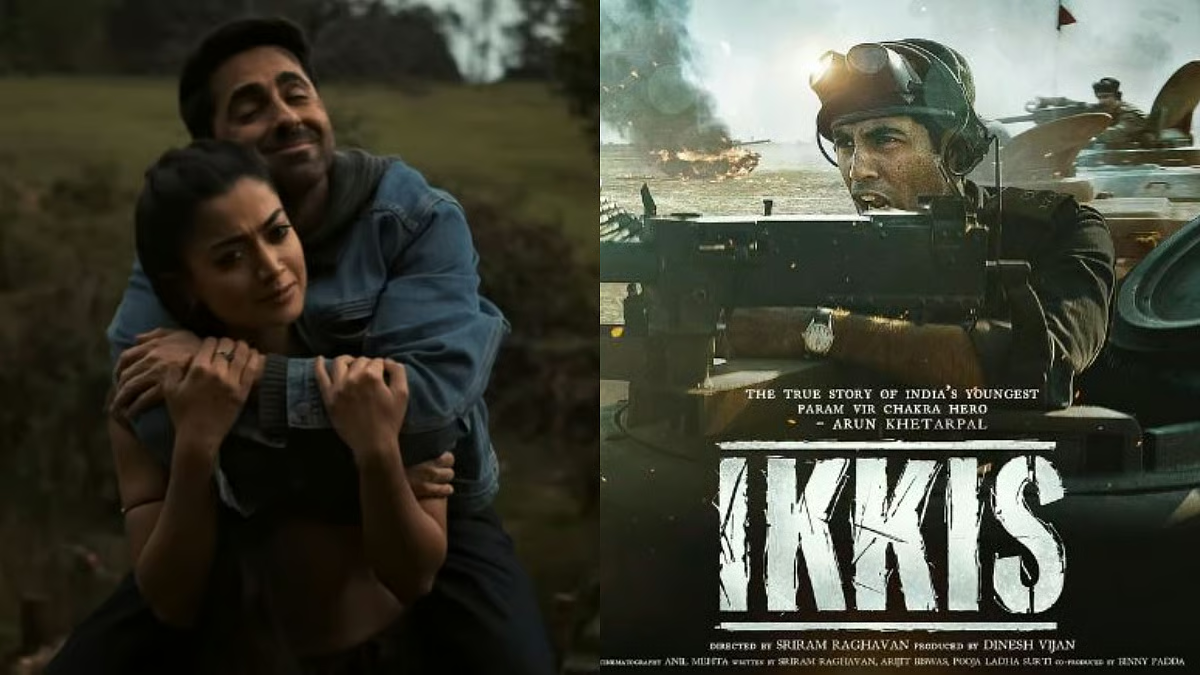
Ikkis Movie Review: A Moving Tribute Where Humanity Triumphs Over War

0

New Delhi, january 01, 2026: Released on the first day of 2026, Sriram Raghavan’s Ikkis is not your typical high-octane, chest-thumping war movie. While it recreates the brutal tank battles of the 1971 Indo-Pak war with meticulous detail, its soul lies in a quiet, devastating exploration of grief and the shared humanity of those on opposite sides of the border.

A Tale of Two Timelines

The film skillfully navigates two eras. In 1971, we follow the 21-year-old Second Lieutenant Arun Khetarpal (Agastya Nanda) during the Battle of Basantar. He is a young man full of life, famously quipping about “playing golf in Lahore” before reality hits. The second timeline, set in 2001, follows his father, Brigadier M.L. Khetarpal (played by the late legend Dharmendra), as he travels to Pakistan for a college reunion.

The heart of the movie is the meeting between the elder Khetarpal and a retired Pakistani officer, Brigadier Khwaja Mohammed Naser (Jaideep Ahlawat). Naser carries a heavy secret: he is the man who engaged in the final duel that took Arun’s life.

Performances That Linger

  • Dharmendra: In his final cinematic outing, the veteran actor delivers a masterclass in restrained emotion. His performance is the “beating heart” of the film—a father who has lived long enough to carry a three-decade-old loss.
  • Agastya Nanda: Following his debut in The Archies, Nanda steps into a far more demanding role. He captures the “boyish, brooding presence” of a young martyr with earnestness, particularly shining in the intense climax.
  • Jaideep Ahlawat: Ahlawat is predictably stellar, portraying a soldier who respects his adversary and lives with the moral weight of war.

Direction and Style

Director Sriram Raghavan, known for neo-noir thrillers like Andhadhun, shifts gears beautifully here. He avoids the “stark black and white” tropes often seen in patriotic cinema. Instead, he focuses on the technical realism of tank warfare and the “moral consequences” of conflict.

Quick Movie Facts

Ikkis doesn’t leave you feeling proud or vengeful; it leaves you “hollowed out” with a sense of quiet grief. It is a powerful reminder that behind every uniform is a human being, and every war hero is a son who never came home.

IndiGo Air Hostess Lifts Spirits During Dense Fog Delay

0

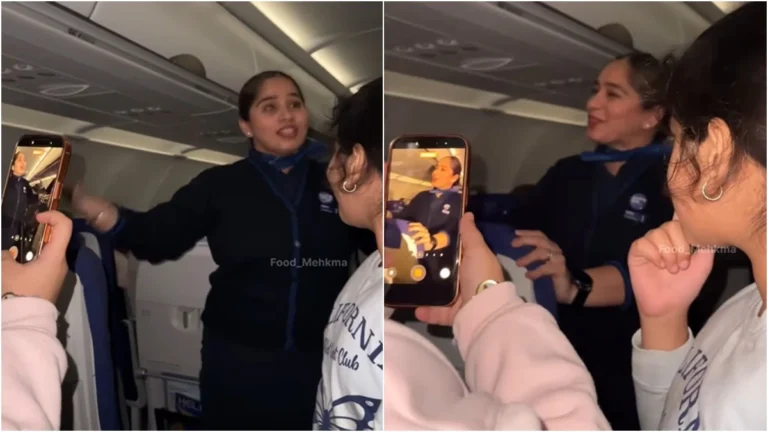
New Delhi, January 1, 2026: A routine travel disruption was turned into a heartwarming memory on January 1, 2026, as an IndiGo flight attendant was observed using humor to calm frustrated passengers. Due to the severe dense fog covering North India, the flight, which was originally destined for Amritsar, was diverted back to Delhi after being unable to land. As the aircraft sat on the tarmac, the atmosphere of tension was lifted by a cabin crew member who broke the ice with a spontaneous and lighthearted speech in Punjabi.

“Amritsari Kulche” and Relatable Banter

The viral video, shared by Instagram user Baldeep Singh (@food_mehkma), captures the air hostess engaging in playful banter about local delicacies. She was heard jokingly complaining to the passengers, “Ye lo yaha kulche khani si, tussi chole bhature ke liye baithe ho?” (I wanted to eat kulche, and you’re here talking about chole bhature?). Her witty remark about the unexpected change in meal plans—and her candid admission of “Mereko ghar jana hai” (I want to go home)—immediately resonated with the tired travelers, transforming their annoyance into laughter.

Also Read: Noida Office Employees Prefer Male Managers Over Women Bosses

A Local Connection and Standing Ovation

The interaction took a more personal turn when a passenger asked if the attendant was herself from Amritsar. Upon her positive response, several children on board were observed shouting “Assi bhi!” (We too!), indicating they were from the same neighborhood. This shared cultural bond and the crew’s calm demeanor led to a rare scene of collective joy during a travel crisis. The video concludes with the sound of applause and cheers from the passengers, a stark contrast to the usual scenes of chaos seen at airports during the fog season.

Praise for Calm Conflict Management

The video has since amassed over 5.5 million views, with netizens praising the flight attendant for her exceptional “people skills.” It was remarked by many commenters that while technical delays are inevitable, the way they are communicated makes all the difference. The IndiGo staff was lauded for being “extremely kind and cooperative” despite the operational challenges posed by the 400+ AQI and low visibility conditions in Delhi. This incident has been highlighted as a prime example of how a touch of regional language and humor can serve as a powerful tool in conflict resolution.

Humanizing the Skies in 2026

As 2026 begins with challenging weather for the aviation sector, this “Punjabi banter” video stands out as a reminder of the human element in air travel. It was noted by travel experts that such organic moments of empathy help in rebuilding the trust that is often lost during mass cancellations. For the passengers on that diverted flight, the delay will likely be remembered not for the missed landing, but for the laughter shared over the thought of Amritsari kulche. The attendant’s ability to remain cheerful despite the crisis has made her the internet’s latest favorite “hospitality hero.”

Noida Office Employees Prefer Male Managers Over Women Bosses

0

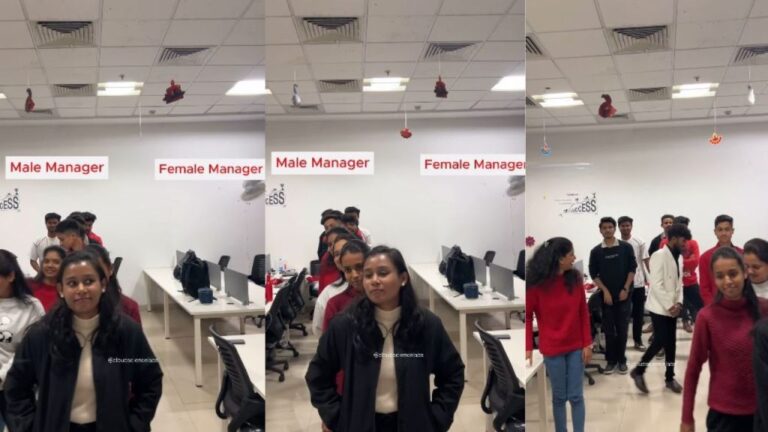
New Delhi, January 1, 2026: A profound conversation regarding workplace dynamics and gender prejudice has been ignited by a viral video from a Noida-based company. On December 31, 2025, a clip was shared by Cloud Science Labs as part of a popular “this or that” social media trend. In the video, employees were observed being asked to choose between a “male manager” and a “female manager.” To the surprise of millions of viewers, every single employee featured in the video—including the women—unanimously opted for a male boss. This collective preference has triggered a firestorm of criticism online, with many questioning the deep-rooted biases that persist even among female professionals.

The Internalized Bias: “Females Not Supporting Females”

The most striking aspect of the footage was the participation of female employees in rejecting female leadership. It was observed by social media commentators that the phrase “Even females are not supporting females” became a recurring sentiment in the comments section. This phenomenon is often discussed by psychologists as “internalized misogyny,” where women may perceive female leaders as more “difficult” or “emotional” based on societal stereotypes rather than professional reality. The video has been described as a “disappointing mirror” to the modern corporate world, suggesting that women in leadership still face a lack of solidarity from their own peers.

Also Read: Aishwarya & Abhishek Cozy NYC Getaway: Viral Photos

Analyzing the Preference for Male Leadership

The unanimous choice for male managers was justified by some netizens who argued that male bosses are often perceived as more “direct” and “less likely to micromanage.” However, these claims were met with heavy pushback from those who believe such views are based on outdated tropes. It was remarked by HR experts that female managers are often forced to be “extra strict” to prove their competence in male-dominated environments, which can inadvertently lead to friction with their subordinates. The video has highlighted a troubling cycle where the perceived “harshness” of female leaders—often a survival mechanism—is used as a reason to prefer male authority.

Corporate Culture and the “This or That” Trap

The company, Cloud Science Labs, has faced significant backlash for posting the video, with many calling it “tone-deaf” and “counterproductive” to gender equality initiatives. It was argued by critics that by framing leadership preference as a “this or that” game, the company inadvertently validated gender bias among its staff. While the caption of the post described it as a way to “connect through simple moments,” the reaction has been anything but simple. Industry leaders have noted that such trends can damage a company’s brand image, making it appear as an environment where female talent is undervalued or stereotyped.

Toward a More Inclusive 2026

As the video continues to circulate in early 2026, it serves as a wake-up call for organizations across India to address unconscious bias. It was noted by diversity advocates that “true progress” is not just about hiring women, but about fostering an environment where they are respected as leaders by all genders. The viral incident has prompted many users to share positive stories of their female mentors, aiming to balance the narrative. For the employees in the Noida office, the global backlash has turned a “quick choice” into a national lesson on the importance of breaking stereotypes and supporting talent regardless of gender.

Garena Free Fire Max Redeem Codes for January 1, 2026

0

New Delhi, january 01, 2026: Garena Free Fire Max enthusiasts have much more to celebrate than just the New Year. The developers have released a fresh batch of exclusive redeem codes, offering players a chance to kick off the year with premium in-game rewards ranging from legendary weapon skins to rare character bundles—all without spending a single diamond.

Free Fire Max continues to dominate the mobile battle royale scene by providing a high-definition experience, and these daily codes remain the most popular way for the community to upgrade their “Vault” for free.

Below is the list of active redeem codes available for today. Note that these codes are time-sensitive and often come with a redemption limit, so it is recommended to claim them as early as possible.

Character & Bundle Codes

  • FB1Z6U8N9A7O5TRS – Exclusive Character Outfits
  • FFEV0SQPFDZ9 – Streetwear Bundles
  • XZJZE25WEFJJ – Rare Heroic Loot
  • FFPURTQPFDZ9 – Seasonal Rewards

Weapon & Skin Codes

  • FFGYBGD8H1H4 – M82B Taped Delivery Skin (Theme-based)
  • FV1P9C4J7H5F3SBM – Legendary Weapon Crate
  • FFX4QKNFSM9Y – Gloo Wall Skins
  • FF2VC3DENRF5 – Diamond Royale Vouchers

Utility & Misc Codes

  • UVX9PYZV54AC – 500x Gold Coins
  • FFPLZJUDKPTJ – Room Match Cards
  • BR43FMAPYEZZ – Random Loot Crate
  • FFICJGW9NKYT – Emote Unlock

What’s New: The “Taped Delivery” Season

January 2026 marks the debut of the Season 37 Booyah Pass, titled “Taped Delivery.” This month’s aesthetic shifts away from traditional themes toward a futuristic, industrial-urban look. Players using today’s redeem codes may find items that complement this new “High-speed Courier” style, featuring neon yellow accents and tech-wear silhouettes.

How to Redeem Free Fire Max Codes

To claim your freebies, follow this official step-by-step guide. Remember, rewards cannot be redeemed within the game app; you must use the official web portal.

  1. Visit the Official Site: Navigate to the Garena Rewards Redemption Site.
  2. Login: Sign in using the platform linked to your game account (Facebook, Google, X/Twitter, Apple ID, or VK).
    • Note: Guest accounts are not eligible for rewards. You must bind your account first.
  3. Enter Code: Copy a 12 or 16-character code from the list above and paste it into the text box.
  4. Confirm: Click the “Confirm” button. A pop-up will appear notifying you if the redemption was successful.
  5. Check In-Game Mail: Once successful, your items will be sent to your in-game mailbox within 24 hours. Currency like Gold or Diamonds will be added directly to your account balance.

Important Tips for Players

  • Regional Restrictions: Most codes are locked to specific servers (e.g., India, Europe, or North America). If a code says “Failed to redeem,” it may not be valid for your region.
  • Expiry Date: These codes typically last between 12 to 24 hours. Once the limit is reached, the code will become invalid.
  • Avoid Fake Sites: Only use the official Garena reward.ff.garena.com link. Never share your game password or personal login details with third-party “diamond generator” websites.

Would you like me to help you draft a social media post or a newsletter summary to share these codes with your gaming community?

Aishwarya & Abhishek Cozy NYC Getaway: Viral Photos

0

New Delhi, December 01, 2026: As the world welcomes 2026, Bollywood’s power couple, Aishwarya Rai Bachchan and Abhishek Bachchan, have chosen the scenic backdrop of the “Big Apple” to ring in the festivities. Breaking away from the glitz of Mumbai, the duo was recently spotted enjoying a quiet, cozy winter break in New York, with their daughter Aaradhya Bachchan also reportedly joining the family getaway.

The vacation has become a major talking point on social media after several “fan-moment” photographs surfaced online. These viral snaps show the couple looking relaxed and radiant, effectively putting to rest the swirling rumors of discord that have occasionally surfaced in the headlines over the past year.

Winter Fashion and Candid Moments

The viral photos, shared by lucky fans who bumped into the stars on the streets of Manhattan, showcase the couple in their element. Aishwarya Rai Bachchan looked effortlessly elegant, opting for a chic winter ensemble. In one particular selfie that has the internet buzzing, the Ponniyin Selvan actress is seen wearing a snug black jacket paired with a stylish beanie, her signature glow intact despite the chilly New York breeze.

Abhishek Bachchan complemented her low-key style, sporting a casual black padded jacket and a cap. Fans noted that the Ghoomer actor looked “dashing” and relaxed, often seen smiling warmly as he posed for pictures. Unlike their high-profile appearances at red carpets and weddings, the couple appeared to be enjoying the anonymity that New York provides, blending in with the festive crowds.

A Family Tradition: The Bachchans in the Big Apple

New York has long been a favorite destination for the Bachchan family. Whether it is a summer break or a New Year’s celebration, the city serves as a sanctuary for them. Sources close to the family suggest that they prefer the city’s blend of festive energy and private corners where they can spend quality time without the constant glare of the paparazzi.

Earlier in December, the trio was spotted at the Mumbai airport twinning in coordinated all-black outfits, signaling the start of their holiday. While some initial viral photos from New York featured just the couple, later reports and social media clips confirmed that Aaradhya is right there with them, enjoying the holiday spirit and perhaps some New Year shopping.

Silencing the Rumors

For months, the couple had been the subject of intense social media speculation regarding their relationship status, especially after appearing separately at high-profile events in 2024. However, their recent joint appearances—both at the airport and now in these candid vacation snaps—have been hailed by fans as a “silent yet powerful” response to the gossip.

“A beautiful family. They look so happy and grounded. It’s heartening to see them together,” wrote one fan on Instagram, reflecting the general sentiment across social media platforms.

What’s Next for the Duo?

On the professional front, both actors have an exciting year ahead in 2026:

  • Abhishek Bachchan: Is set to appear in several high-stakes projects, including the much-anticipated Housefull 5 and a collaboration with filmmaker Shoojit Sircar.
  • Aishwarya Rai Bachchan: Having recently captivated audiences in Mani Ratnam’s magnum opus, she is reportedly being approached for several prestigious pan-India projects, though she remains selective about her scripts.

As they soak in the magic of Times Square and the quiet beauty of Central Park, the Bachchans continue to prove why they remain one of the most loved and resilient couples in Indian cinema.

How a Single Viral Video Triggered a White House Funding Freeze

0

New Delhi, January 1, 2026: A dramatic shift in federal policy was witnessed this week following the meteoric rise of a single viral video. On December 31, 2025, the White House issued an intense response to allegations of widespread fraud within Minnesota’s social safety net. The catalyst was a 43-minute documentary posted by independent journalist Nick Shirley, which purportedly exposed a massive scheme involving Somali-run childcare centers. The video, which has been viewed over 100 million times on X, has not only sparked a national conversation but has also resulted in an unprecedented freeze of federal funds.

Federal Action: Turning Off the “Money Spigot”

The fallout from the footage was felt immediately across the federal government. On December 30, 2025, the Department of Health and Human Services (HHS) announced that all childcare assistance payments to the state of Minnesota would be suspended. Deputy HHS Secretary Jim O’Neill was heard stating that “blatant fraud” had been uncovered, prompting a requirement for “photo evidence or receipts” before any state can draw federal funds in the future. This move was described as the activation of a new “defend-the-spend” system, signaling a zero-tolerance policy toward misappropriation of taxpayer dollars.

Also Read: Navigating India’s Complex Cyber Fraud Crisis

Targeting the Quality “Learing” Center

A specific highlight of the viral video that caught the eye of federal investigators was the “Quality Learing Center” in Minneapolis. The facility, noted for the misspelling of the word “learning” on its signage, was portrayed in the video as a “ghost facility” that was allegedly receiving millions in public funds while appearing vacant. While state regulators from the Minnesota Department of Children, Youth, and Families argued that the center had been inspected recently and found compliant, the White House responded by demanding a comprehensive audit of all ten facilities featured in the exposé.

A Growing Rift Between State and Federal Leaders

The federal intervention has created a significant political rift between the Trump administration and Minnesota Governor Tim Walz. The Governor was heard pushing back against the funding freeze, describing it as a “politicized move” aimed at defunding programs that assist low-income families. While federal prosecutors have estimated that fraudulent payments in the state could total as much as $9 billion across various programs, state officials have disputed these figures. The White House, however, has stood firm, with FBI Director Kash Patel confirming that federal resources are being “surged” to investigate the claims further.

The Human Impact of Policy Shifts

As the nation enters 2026, the focus has shifted toward the thousands of families who may be affected by the sudden pause in funding. It was remarked by child advocacy groups that a prolonged freeze could lead to a “childcare crisis,” as legitimate providers struggle to keep their doors open without federal support. The case serves as a powerful reminder of how “citizen journalism” and viral content can now shape national policy in real-time. Whether the audit vindicates the state or confirms the fraud, the “Minnesota daycare saga” has already permanently changed the landscape of federal oversight.

Navigating India’s Complex Cyber Fraud Crisis

0

New Delhi, January 1, 2026: A new wave of digital exploitation has emerged in early 2026, capitalizing on the public’s curiosity regarding sensational “leaks.” Cybercriminals were observed deploying malicious links across WhatsApp and Telegram, falsely promising access to a “19-minute viral video.” These links are often embedded in “phishing traps” that, once clicked, install stealthy malware or redirect users to fake login pages. The psychological hook of “exclusive content” is being weaponized to bypass the natural caution of users, leading to a surge in compromised accounts and stolen personal data.

Ghost Pairing: The Invisible Hijack

One of the most sophisticated threats identified by CERT-In this year is the “Ghost Pairing” scam. Unlike traditional hacking, this method exploits the “Linked Devices” feature of messaging apps like WhatsApp. Users were observed being tricked into scanning a QR code or entering a pairing code on a fake “verification” website. Once linked, the attacker’s device silently mirrors the victim’s chats and media in real-time. Because the account continues to function normally on the primary phone, many victims remain unaware for weeks that their private conversations are being “ghosted” by a third party.

Also Read: New College MMS Leak Sparks Urgent National Safety Concerns

The Terror of the “Digital Arrest”

A significant rise in “Digital Arrest” scams has been recorded by the Indian Cyber Crime Coordination Centre (I4C). In these elaborate schemes, victims are contacted via video calls by individuals posing as “fake cops” or officers from the CBI and NCB. Dressed in realistic uniforms and seated in mock police stations, these fraudsters accuse citizens of involvement in money laundering or drug trafficking. Victims are observed being placed under “psychological confinement,” ordered to stay on a continuous video call, and coerced into transferring “security deposits” to avoid immediate arrest.

Fake Cops and Authority Impersonation

The authority of law enforcement is being increasingly mimicked to bypass logical skepticism. It was noted by security analysts that these “fake cops” utilize spoofed IDs and forged warrants to create a sense of absolute urgency. The goal is to induce panic, preventing the victim from consulting family or verifying the claims. Mumbai and Delhi have emerged as hotspots for these impersonation crimes, with losses often exceeding several lakhs per incident. Authorities have reiterated that no Indian law enforcement agency conducts arrests, interrogations, or legal settlements via WhatsApp or video call.

How to Build Your Digital Shield

As 2026 progresses, the “human firewall” remains the most critical line of defense against these evolving threats. To stay safe, users are urged to never click on unsolicited links promising viral content and to regularly check “Linked Devices” in their app settings. Any call from a “police officer” demanding money or requesting a video-call interrogation should be disconnected immediately. Two-step verification and the use of the Sanchar Saathi portal to report suspicious numbers are being promoted as essential habits. Remember, true digital security begins with a pause and a moment of verification.

New College MMS Leak Sparks Urgent National Safety Concerns

0

New Delhi, January 1, 2026: The digital landscape of early 2026 has been rocked by another severe breach of privacy following the emergence of a new “College MMS” video circulating online. This latest incident follows a troubling series of high-profile leaks, including a 19-minute video that went viral in late 2025 and a deeply distressing 5-minute clip involving a minor. The current footage, which allegedly features students from a prominent educational institution, has reignited a fierce national debate regarding the vulnerability of young adults in the age of instant sharing and hidden cameras.

Exploiting the Curiosity: The Rise of Cyber Scams

It has been observed that these viral scandals are being weaponized by cybercriminals to target unsuspecting internet users. In the wake of the 19-minute viral video, cyber experts warned that malicious links were being distributed under the guise of “leaked footage” to drain bank accounts. These “phishing traps” exploit the curiosity of the public, leading to a secondary wave of victimization where users lose their financial data while searching for controversial content. This pattern of “content-based fraud” has been described by digital watchdogs as a growing menace that accompanies every major viral leak in India.

Also Read: Was Putin’s Residence Really Attacked by Drones?

Institutional Accountability and Privacy Gaps

The latest college leak has placed educational institutions under intense scrutiny regarding their on-campus safety protocols. It was noted by activists that despite previous scandals—such as the massive protests at Chandigarh University years prior—the security of hostels and private student spaces remains alarmingly fragile. The recurring nature of these “MMS leaks” in 2025 and 2026 highlights a systemic failure to implement effective anti-spyware measures and strict digital conduct codes. Students have been heard expressing a profound sense of “digital anxiety,” fearing that their most private moments could be monetized for “clout” or extortion.

The Legal and Ethical Fallout of Viral Infamy

As the video continues to spread through encrypted platforms like Telegram, the Cyber Cell has been observed issuing stern warnings against the possession or distribution of such material. Under current Indian laws, the sharing of non-consensual intimate imagery is a punishable offense that can lead to significant prison time. However, the “immortality” of the internet means that for the victims involved, the trauma often lasts far longer than the legal proceedings. The Department of Telecommunications has urged citizens to use tools like the Sanchar Saathi app to report suspicious activity, but the ethical vacuum of the “viral economy” remains a difficult challenge to overcome.

Building a “Human Firewall” for 2026

The collective shock over the latest College MMS leak has led to calls for a fundamental shift in how digital literacy is taught in India. It was remarked by cybersecurity professionals that while technology continues to evolve, the “human firewall” is often the weakest link. As the nation enters a new year, the focus is being shifted toward “consent education” and the “responsible use of AI,” as deepfakes and morphed images add a new layer of complexity to these scandals. The goal for 2026 remains clear: to ensure that the digital world becomes a space of empowerment rather than a hunting ground for privacy violations.

Was Putin’s Residence Really Attacked by Drones?

0

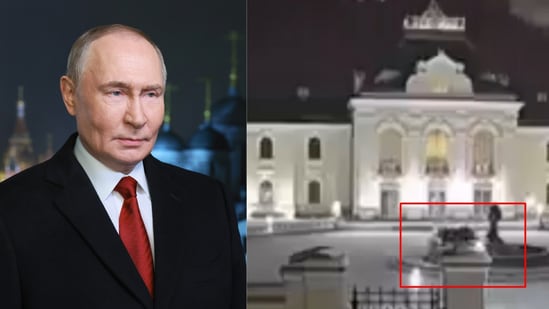
New Delhi, January 1, 2026: A wave of international alarm was triggered on December 31, 2025, after a chilling video began circulating on social media, purportedly showing a massive drone attack on Russian President Vladimir Putin’s residence. The 15-second clip, which features multiple drones striking a heavily guarded compound, has amassed millions of views across X and Telegram. However, as the world transitions into January 2026, the authenticity of this footage has been called into serious question by intelligence agencies and digital forensics experts alike.

AI Deception and the “Viral” Smoke Screen

The viral video showing the actual impact on the residence has been confirmed as a sophisticated AI-generated fabrication. Detailed fact-checks by digital experts and platform safety teams revealed that the footage contains several visual anomalies, such as inconsistent lighting and unrealistic physics during the explosions. It was noted that while the clip appeared highly realistic to the untrained eye, it was designed specifically to capitalize on current geopolitical tensions. On January 1, 2026, social media platforms began labeling the footage as “AI Generated” to prevent further public panic.

Also Read: The Viral Moments That Defined India in 2025

The Kremlin’s Official Claims vs. Intelligence Reports

While the viral “strike” video is a fake, the Kremlin has been observed doubling down on allegations of a real-world attempt. On December 31, the Russian Defense Ministry released its own night-time footage of what it claimed were fragments of a Chaklun-V drone downed near Putin’s residence in the Novgorod region. Russian officials alleged that 91 drones were intercepted during a “mass launch” by Ukraine. However, these claims were met with extreme skepticism by the CIA and US National Security officials, who stated on Thursday that no evidence exists to suggest that Putin or his residences were ever targeted.

Ukraine’s Firm Rebuttal and Diplomatic Fallout

The allegations have been described by Ukrainian President Volodymyr Zelenskyy as a “complete fabrication” and a “typical Russian lie.” It was argued by Kyiv that the story was manufactured by Moscow to derail ongoing peace negotiations and to justify intensified strikes on Ukrainian cities, including the capital. The timing of the “attack” was highlighted as particularly suspicious, occurring just as diplomatic efforts between Ukraine and the Trump administration were reaching a delicate phase. Ukraine’s Foreign Ministry dismissed the Russian “debris video” as laughable, noting the two-day delay in producing such meager evidence.

Navigating a New Era of Information Warfare

As 2026 begins, this incident serves as a stark reminder of the complexities of information warfare in the age of generative AI. While the Russian government used the incident to “harden its negotiating position,” international observers have been urged to rely on verified intelligence rather than viral clips. The “Putin drone attack” saga highlights how manufactured digital content can influence real-world leaders, as evidenced by initial expressions of concern from global figures before the footage was debunked. For now, the consensus remains that no such strike occurred, and the viral video was merely a digital illusion.