Home Blog Page 61

A Melodious Bridge: How Two Uzbek Kids Brought Back the Magic of ‘Om Shanti Om’

New Delhi, May 20, 2026: The short clip, which quickly spread across platforms like X (formerly Twitter) and Instagram, features the duo perfectly mirroring the dreamy visuals and soulful romance originally brought to life by Shah Rukh Khan and Deepika Padukone. Dressed in coordinated, retro-style outfits that invoke the golden 1970s era depicted in the film, the young performers have captured the imagination of millions of viewers across continents.

Pitch-Perfect Expressions and Retro Costumes

What has truly left netizens spellbound is the sheer precision of the recreation. “Main Agar Kahoon,” sung by the legendary Sonu Nigam and Shreya Ghoshal, is famous for its grand, theatrical setting, dramatic lighting, and deeply expressive choreography. Rather than offering a loose adaptation, these young Uzbek performers took it upon themselves to master the nuances of the track.

The video—which bears the production quality of a professional talent or reality television show—displays an impressive attention to detail:

  • The Outfits: The young boy sports a sharp, retro suit reminiscent of Shah Rukh Khan’s character, Om Kapoor, while the little girl glides gracefully in an elegant gown channeling the ethereal charm of Shantipriya (Deepika Padukone’s debut character).
  • The Choreography: From the precise hand extensions to the famous dramatic glances, the children mirror the original sequence with incredible discipline.
  • The Expressions: What truly sets the video apart is the emotion. The kids effortlessly mimic the earnest, wide-eyed adoration that defined the on-screen chemistry between King Khan and Padukone nearly two decades ago.

For a generation of Bollywood fans, watching these tiny actors recreate the sophisticated choreography with complete focus and sincerity is nothing short of pure joy.

Why ‘Main Agar Kahoon’ Remains Timeless

Originally released in 2007 under the direction of Farah Khan, Om Shanti Om was a cinematic love letter to the history of Indian cinema. While the entire soundtrack composed by Vishal-Shekhar became an instant classic, “Main Agar Kahoon” ca

The track is celebrated for its poetic lyrics penned by Javed Akhtar and its lush, symphonic arrangement. It has remained a staple at Indian weddings, talent shows, and romantic playlists for nearly twenty years. The fact that children born long after the movie’s release—and living thousands of miles away from Mumbai—are performing it word-for-word is a testament to the track’s enduring, trans-generational magic.

Bollywood’s Historic Love Affair with Central Asia

While the viral video has surprised some casual internet users, cultural historians and long-time cinema lovers know that India and Uzbekistan share a deep, historical bond through the silver screen.

Bollywood’s massive footprint in Central Asia and the former Soviet states dates back to the mid-20th century. Legendary actor-director Raj Kapoor was an absolute icon in regions like Tashkent and Samarkand. It is a common cultural phenomenon in Uzbekistan for locals to sing lines from “Awaara Hoon” or “Mera Joota Hai Japani” with perfect pronunciation.

This love affair didn’t end with the golden era. It seamlessly transitioned into modern cinema, with Shah Rukh Khan, Amitabh Bachchan, and Mithun Chakraborty enjoying massive, fiercely loyal fan bases across Central Asia. Because classic Bollywood stories rely heavily on universal emotional themes—honor, family, star-crossed love, and redemption—the language barrier dissolves almost immediately. The music and dances act as an emotional shorthand that anyone can understand and enjoy.

Social Media Reacts: “Pure Nostalgia”

The internet’s reaction to the video has been an outpouring of love, admiration, and a heavy dose of nostalgia. Within hours of being shared by fan accounts, the video amassed hundreds of thousands of views and thousands of comments from moved fans.

"This is the most adorable thing on the internet today! The way the little boy looks at her is pure SRK energy."
— An Indian fan on X
"Bollywood's soft power is unmatched. Seeing kids from Uzbekistan show so much love for a 2007 track is mind-blowing."
— A user on Instagram

Many comments pointed out how Shah Rukh Khan’s unique brand of cinematic romance continues to serve as India’s ultimate cultural ambassador. Fans are actively tagging the superstar and director Farah Khan on social media, hoping the creators of the original masterpiece notice this beautiful tribute from Tashkent.

In a world often fragmented by boundaries, a simple, sweet performance by two Uzbek children reminds us that great music and a bit of theatrical romance are sometimes all it takes to bring the world a little closer together

AI Deepfakes Weaponized: Alina Amir Fights Back Against Cyber Harassment

New Delhi, May 20, 2026: The rapid evolution of generative artificial intelligence has brought creative breakthroughs, but it has also fueled a dangerous wave of digital exploitation. Pakistani digital content creator and social media influencer Alina Amir recently became the latest target of a highly coordinated cyber harassment campaign.

An alleged “leaked” private video, varying in shared descriptions from four to seven minutes long, began circulating aggressively across major digital platforms. The clip was pushed under viral search terms like “MMS Leaked Video” and “Alina Amir Private Video Link.”

The incident has triggered widespread public outrage, shedding light on the ease with which bad actors manipulate artificial intelligence to target and defame prominent women online.

Rise of the ‘Sarsarahat Girl’

Born on May 10, 2003, in Lahore, Alina Amir rose from a middle-class background to become one of Pakistan’s fastest-growing digital personalities. Her breakthrough moment came when she uploaded a highly expressive recreation of a viral Bollywood dialogue originally spoken by actress Parineeti Chopra (“Meri body mein sensation ho rahi hai”). The short reel struck a chord across both Pakistan and India, earning her the affectionate nickname “Sarsarahat Girl.

Amir’s innate charm, lip-sync content, and fashion reels quickly catapulted her into social media stardom. By early 2026, her digital footprint expanded significantly, garnering over 2.5 million followers on Instagram and another 2.3 million on TikTok. However, this massive public visibility also made her a prime target for malicious online actors looking to exploit her likeness for digital traffic.

Anatomy of the Deceptive Video Scandal

The controversy erupted when a deeply explicit video allegedly featuring Amir in an intimate scenario surfaced on various adult forums and mainstream social media channels. The clip spread rapidly, boosted by suspicious, spam-heavy external links promising users access to the “original footage.”

Initially, Amir chose to handle the situation quietly, hoping the unverified rumors would dissipate naturally. However, the sheer velocity of the digital news cycle combined with an influx of vulgar comments on her official profiles forced her to take a stand.

Amir formally clarified that the content is an entirely AI-generated deepfake—a manipulated media format where a person’s face is seamlessly swapped onto another individual’s body using specialized deep learning software. She emphasized that the video was a calculated attempt to damage her public standing and personal life, branding the act as a severe cybercrime rather than mindless internet gossip.

Demanding Accountability: Appeals to Leadership and the CCD

Refusing to let the perpetrators hide behind digital anonymity, Amir took swift legal and public actions to defend her name. She officially engaged the Punjab Cyber Crime Department (CCD) to trace the origin of the video and pull down malicious links from public spaces.

Furthermore, Amir used her massive reach to appeal directly to government leadership, tagging Punjab Chief Minister Maryam Nawaz Sharif. She urged the Chief Minister to enforce strict punitive measures against online syndicates that weaponize morphed media against women.

In an unprecedented move to accelerate the investigation, Amir also took a personal financial risk by offering a $1,000 bounty out of her own pocket for any credible, verified information leading to the identification and arrest of the individuals behind the deepfake’s creation.

The Malicious Landscape of Fake ‘MMS’ Links

Cybersecurity experts reviewing the incident have highlighted a dual danger regarding the situation. Beyond the immense psychological harm inflicted on the victim, the viral spread of the “Alina Amir Leaked Video” is also being leveraged by digital scammers to deploy malware.

Many of the highly circulated external links promising the full video are actually “phishing scams” or malicious doorways designed to compromise the data privacy of unsuspecting clickers. These fake networks manipulate public curiosity to steal login credentials, financial information, or install background tracking software on mobile devices.

The underlying technology used to defame Amir points toward a wider, systemic epidemic hitting Pakistan’s digital creator ecosystem. In recent months, several prominent female influencers—including Minahil Malik, Imsha Rehman, Kanwal Aftab, Mathira Khan, and Maryam Faisal—have faced similar targeted campaigns involving alleged private leaks, many of which share the distinct hallmarks of AI manipulation or unauthorized privacy breaches.

Where is Alina Amir Now?

Despite the immense emotional toll of the controversy, Amir has chosen not to retreat from the public eye. She continues to reside in Lahore with her family, who have remained her primary support system throughout the ordeal. By turning a private crisis into a public fight for digital justice, she has earned significant praise from her core audience. Her clarification video was met with an outpouring of support, with thousands of fans apologizing for believing unverified content and praising her courage.

Amir’s current focus remains tied to monitoring the progress of the cybercrime investigation while advising her audience to cultivate better media literacy. She urges everyday internet users to exercise strict critical thinking before forwarding sensitive content, reminding them of the human cost involved.

“Reputation takes years to build and seconds to ruin,” Amir noted in her final address on the matter. “Anyone can become a target. Today it’s me; tomorrow it could be someone else. It’s easy to forget there’s a real human behind the screen.”

Nature’s Original Engineer: Why This Giant Beats Any Machine

0

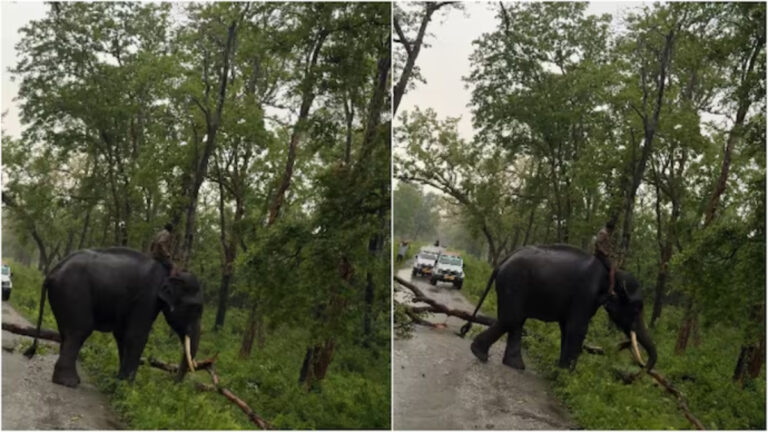
New Delhi, May 20, 2026 — In an era where artificial intelligence, heavy machinery, and advanced robotics claim to solve almost every human problem, a viral video from the heart of the Indian wilderness has delivered a powerful reality check. The footage proves that when it comes to navigating and preserving the planet’s most dense ecosystem, nature’s original engineering still outperforms anything humanity has built.

The video, captured during a routine evening field patrol and shared on X (formerly Twitter) by Indian Forest Service (IFS) officer Parveen Kaswan, has quickly taken social media by storm. It highlights an extraordinary, unsung “co-worker” of the forest department: a majestic Asian elephant smoothly clearing an impenetrable jungle path where modern vehicles and heavy machinery cannot tread.

The Video That Captivated Millions

The clip offers a rare, ground-level glimpse into daily conservation work, moving away from typical tourist safari perspectives. In the video, forest officials follow closely behind a large elephant navigating thick, overgrown jungle vegetation.

With incredible precision and calm strength, the elephant uses its powerful trunk to snap away blocking branches, pull down dense overgrown foliage, and clear massive twigs that have choked the narrow forest trail.

The effortless manner in which the animal sweeps away obstacles highlights a profound partnership between the forest department and these intelligent creatures. Netizens have flooded the post with admiration, universally labeling the elephant as the “real ranger of the jungle.”

Where Modern Technology Fails

The viral sensation has sparked a broader conversation about why heavy machinery is intentionally kept out of deep forest zones. While an excavator or bulldozer could technically clear path blockages, their deployment in core wildlife zones causes irreversible damage.

  • Ecological Sensitivity: Heavy tires and metal tracks crush delicate topsoil, destroy root systems, and disrupt micro-habitats of smaller organisms.
  • Noise Pollution: The deafening roar of mechanical engines panics wildlife, potentially driving herds toward human settlements and exacerbating human-animal conflict.
  • Terrain Limitations: Deep inside natural reserves, structured roads vanish entirely. Swamps, steep muddy inclines, and tightly knit canopies create a landscape where multi-ton vehicles easily get stuck or find it physically impossible to maneuver.

The elephant, by contrast, moves with zero carbon footprint. Its massive feet distribute its weight perfectly across uneven terrain, and its natural clearing method mimics the natural life cycle of the forest without causing structural damage to the habitat.

Intelligence Over Raw Power

What truly resonates with viewers online is the sheer intelligence displayed by the giant mammal. The elephant doesn’t mindlessly tear down trees; it accurately assesses which branches are obstructing the human path and systematically removes them.

This level of problem-solving and environmental awareness is something standard machinery simply cannot replicate without human remote control or highly complex, rigid programming. The elephant reads the jungle terrain dynamically, adjusting its strength depending on whether it is snapping a brittle bamboo stalk or moving a heavy fallen limb.

The Vital Role of Camp Elephants in Conservation

The viral video sheds light on the critical role of “Kumkis” and camp elephants managed by forest departments across India. These elephants are not just symbols of majesty; they are active, indispensable assets in wildlife protection.

Conservation DutyDescriptionWhy Machines Can’t Do It
Deep PatrolsNavigating anti-poaching squads through dense, roadless terrain to monitor vulnerable wildlife.Vehicles lack the clearance and quiet mobility required for anti-poaching operations.
Rescue OperationsAssisting in the relocation or medical treatment of injured wild animals or trapped herd members.Wild animals react with extreme aggression to mechanical noises, but tolerate other elephants.
Conflict MitigationStanding as a physical barrier to herd back wild elephant groups away from human agricultural fields.Standard vehicles can easily be flipped or damaged by an agitated wild tusker.

A Symbiotic Bond

Beyond the utility, the video stands out as a beautiful testament to the ancient, mutual trust between mahouts (elephant caretakers), forest officials, and captive pachyderms. This partnership relies entirely on vocal cues, touch, and deep emotional bonds built over decades.

As technology continues to reshape the world, this viral moment serves as a gentle reminder that some of the world’s most complex environments cannot be managed by a dashboard or an engine. To protect the wild, humans must continue to rely on the ancient, matchless wisdom of the wild itself.

Mega Crores Fraud Rocks State: How a Viral Video Brought Down a Khaki-Clad Racket

0

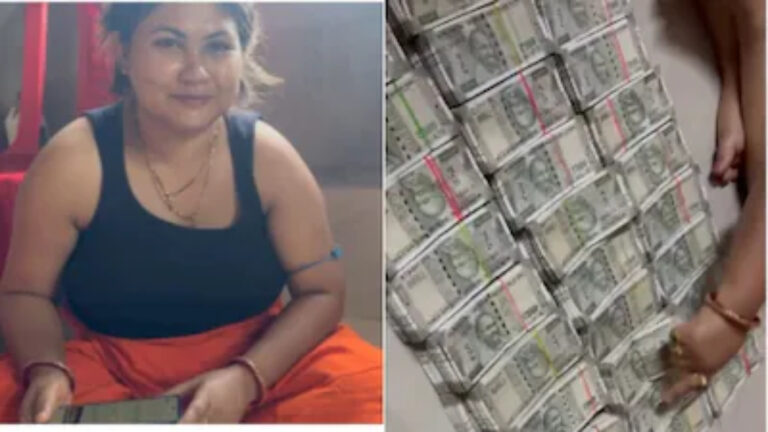
New Delhi, May 20, 2026 — A massive financial scandal estimated at nearly ₹50 crore has rocked Tripura, exposing a fraudulent network operating right under the nose of law enforcement. What makes the case particularly shocking is its masterminds: a prominent couple serving within the state’s security forces.

The illicit operation unraveled overnight after a mobile video capturing bundles of cash stacked high on a bedroom floor went viral on social media. The intense public outrage that followed forced the state government to step in, leading to the immediate arrest of the couple and several accomplices.

The Spark: A Viral Video and Room Full of Cash

The scandal surfaced when a clip began circulating rapidly across WhatsApp and Facebook. The footage showed a room scattered with thick bundles of currency notes. Sitting calmly beside the mountain of cash was a woman identified as Menka Debbarma, a constable with the Tripura Police posted at the Agartala East Police Station.

Another image emerged shortly after, showing a man packing stacks of money into a bag. He was identified as her husband, Ajit Debbarma, a jawan (soldier) belonging to the 14th Battalion of the elite Tripura State Rifles (TSR).

The sheer volume of wealth—completely disconnected from the known income of regular security personnel—sparked immediate public fury and drew the attention of top government officials. Seeing the overwhelming evidence, Tripura Chief Minister Manik Saha, who also holds the Home portfolio, intervened directly, ordering the state police to crack down on the network immediately.

The Modus Operandi: High Returns and Deep Deception

As the police launched an intensive investigation, the layers of a deeply entrenched financial scam began to peel away. Investigators revealed that the accused couple was running a classic “Ponzi” or fraudulent investment scheme targeting unsuspecting citizens, including fellow security personnel.

Racket At A GlanceDetails
Estimated ScaleApproximately ₹50 Crore
Primary TacticPromises of unusually high-yield returns on cash investments
Victim ProfileCommon citizens, local villagers, and fellow police officials
Key Direct Evidence₹3 Crore in unaccounted cash seized during initial raids

According to police sources, the group enticed people to hand over their life savings by promising massive, unrealistic returns on their investments within a short maturity period. For a long time, the couple leveraged their official uniforms and positions of authority to build trust and evade suspicion.

The house of cards collapsed when an individual, reported to be another police official, lodged a formal complaint at the Salema Police Station in the Dhalai district. The complainant stated that they had invested ₹65 lakh into the couple’s scheme. When the investment matured, the couple refused to return the money. Instead, they reportedly resorted to intimidation, using their positions in the police force to threaten and silence the investor.

Police Crackdown and Widening Net

Following the registration of cases at the Salema Police Station and the West Agartala Police Station, a special team spearheaded targeted raids. At the residence of constable Pijush Debbarma in Bhatgouri, Dhalai district, investigators hit a jackpot, recovering roughly ₹3 crore in pure, unaccounted cash.

The police moved swiftly to apprehend the prime suspects. Ajit Debbarma and Menka Debbarma were arrested and produced before the Kamalpur Sub-Divisional Judicial Magistrate (SDJM) court, which granted an eight-day police remand for rigorous interrogation.

The dragnet quickly expanded beyond the initial couple. Authorities have since arrested several others associated with the racket, including:

  • Pijush Debbarma (Tripura Police Constable)
  • Nanda Rani Debbarma (Wife of Pijush, spotted in a cash display video)
  • Sanjana Debbarma (A health department employee and wife of a suspended constable)

To ensure a completely transparent and unhindered investigation, the police department has formally suspended the involved personnel from active duty.

Probing Darker Angles: The Myanmar Border Connection

While the financial fraud alone has stunned the state, the investigation is rapidly moving toward an even more dangerous narrative. Led by high-ranking officials—including Director General of Police (DGP) Anurag, Inspector General (Law and Order) Manchak Ipper, and Dhalai Superintendent of Police Rushikesh Jaysing Desai—investigators are looking into where all that liquidity originated.

Because Tripura shares a long international border with Bangladesh and sits close to major regional narcotics transit routes, authorities are deeply concerned that international drug cartels might be using local security personnel to launder money and distribute illicit goods.

What Lies Ahead

The Officer-in-Charge of the Salema Police Station, Dipak Das, confirmed that notices are being dispatched to dozens of individuals connected to the ledger books seized during the raids. Investigators are currently sorting through bank statements, phone records, and asset deeds to map out the entire extent of the network.

With multiple departments coordinating, the state government has made it clear that no one, regardless of their rank or political clout, will be spared. For the people of Tripura, the focus remains firmly on how deep this institutional compromise goes, and whether the victims of the scam will ever recover their hard-earned money.

NHAI Recruitment 2026: Applications Open for 60 Deputy Manager Posts

New Delhi, May 20, 2026: The National Highways Authority of India (NHAI), functioning under the Ministry of Road Transport and Highways, has officially released its recruitment notification for 2026. This year, the premier highway infrastructure body is inviting applications from qualified and ambitious Civil Engineering graduates to fill 60 vacancies for the position of Deputy Manager (Technical).

The recruitment drive offers an exceptional career path for engineering freshers and professionals aiming to contribute to India’s rapidly expanding highway infrastructure network. The online application window opened on May 15, 2026, and eligible candidates have until June 15, 2026 (up to 6:00 PM) to submit their forms through the official NHAI portal.

NHAI Recruitment 2026: Key Overview

ParticularsDetails
OrganizationNational Highways Authority of India (NHAI)
Post NameDeputy Manager (Technical)
Total Vacancies60 Posts
DisciplineCivil Engineering
Selection ModeScore based on GATE 2026 (No Written Exam)
Application ModeOnline via www.nhai.gov.in
Crucial DatesMay 15, 2026 to June 15, 2026

Detailed Vacancy Breakdown

Out of the 60 announced seats for Deputy Manager (Technical), NHAI has distributed vacancies across various categories in accordance with Government of India reservation guidelines:

  • Unreserved (UR): 26 posts
  • Other Backward Classes (OBC – Non-Creamy Layer): 16 posts
  • Scheduled Caste (SC): 09 posts
  • Economically Weaker Section (EWS): 05 posts
  • Scheduled Tribe (ST): 04 posts

Additionally, 4 posts within the total tally are reserved for Persons with Benchmark Disabilities (PwBD), catering to sub-categories such as Hard of Hearing (HH), Special Learning Disability (SLD), and Mental Illness (MI).

Eligibility Criteria

To be considered for the direct recruitment process, applicants must satisfy strict educational and age specifications as of the closing date of the application.

1. Educational Qualification

  • Candidates must possess a Bachelor’s Degree in Civil Engineering from a recognized University or Institute.
  • Special Provision for Final Year Students: Candidates whose final semester results have not been declared by June 15, 2026, are still eligible to apply. However, their selection will remain provisional. They must produce their final degree or provisional degree certificate to NHAI no later than August 31, 2026, failing which their candidature will be summarily cancelled.

2. Mandatory Recruitment Score

  • A valid GATE 2026 Score in Civil Engineering (CE) is strictly mandatory. Selection will be purely performance-based relative to this score.

3. Age Limit & Relaxations

The upper age limit for the Unreserved/EWS categories is 30 years as of June 15, 2026. However, age relaxations apply for reserved categories as follows:

  • SC / ST: Relaxed by 5 years (Up to 35 years)
  • OBC (NCL): Relaxed by 3 years (Up to 33 years)
  • PwBD (General): Relaxed by 10 years (Up to 40 years)

Salary and Compensation Structure

Securing a position as a Deputy Manager (Technical) at NHAI brings substantial financial stability and central government perks. Selected candidates will be placed in Level 10 of the Pay Matrix according to the 7th Central Pay Commission (CPC).

The basic salary scales from Rs. 56,100 to Rs. 1,77,500. Alongside the base pay, officers receive Central Dearness Allowance (CDA), House Rent Allowance (HRA) or official accommodation, medical facilities, and other travel allowances standard to Central Government autonomous bodies.

Selection Process

NHAI has streamlined the selection to ensure absolute meritocracy. There will be no written examination or personal interview conducted by NHAI for these posts.

Shortlisting is completed purely on the merit of the candidate’s GATE 2026 Civil Engineering score. In the event of a tie where two candidates secure the exact same GATE score, NHAI will implement a two-step tie-break mechanism.

Airtel Launches 5G ‘Priority’ Postpaid; Shares Dip 0.32%

0

New Delhi, May 20, 2026: In a major move to solidify its hold on premium telecom consumers, Bharti Airtel launched a first-of-its-kind feature in India: Priority Postpaid. Powered by cutting-edge 5G network slicing technology, this new feature promises retail postpaid users an uninterrupted, high-speed “Fastlane” network experience, even in heavily congested environments.

Despite making this landmark technological leap, Bharti Airtel’s stock experienced a classic case of “sell the news” on Dalal Street. The telecom giant’s shares traded lower on Wednesday, dipping 0.32% to around ₹1,913.50 in early trade on the National Stock Exchange (NSE), reversing brief pre-market gains.

The launch marks a vital evolutionary step for 5G in India. While early 5G rollouts focused heavily on broad coverage, telecom operators are now pivoting hard toward monetization and premium tiering. By rolling out Priority Postpaid, Airtel has effectively beaten its chief rival, Reliance Jio, to commercially deploy network slicing for everyday retail consumers.

Understanding ‘Priority Postpaid’ and 5G Slicing

For the average consumer, network congestion is a routine frustration. Whether trying to book a cab in a teeming marketplace, attending a critical Microsoft Teams call while stuck in traffic, or uploading a video at a packed concert, standard mobile data networks often choke under intense localized demand.

Airtel’s Priority Postpaid feature aims to solve this using 5G Network Slicing.

By utilizing network slicing, Airtel has created a dedicated virtual layer exclusively for its postpaid base. This “Fastlane” essentially ring-fences a portion of network capacity, ensuring that even when a cell tower is overwhelmed by tens of thousands of users, postpaid subscribers maintain consistent, high-bandwidth throughput.

Commenting on the launch, Shashwat Sharma, Managing Director and CEO of Airtel India, stated:

“Our focus at Airtel is on delivering meaningful innovations that enhance our customers’ experience. Priority Postpaid is our latest innovation powered by the 5G slicing technology. It provides a superior, more reliable, and dependable experience to our customers — whether they are attending a client call in traffic, or streaming at a packed concert, or booking a cab in a crowded market.”

Deep Dive: The New Priority Postpaid Plans

Airtel has integrated this feature directly into its existing postpaid portfolio, spanning from entry-level individual packages to premium multi-user family plans. Prices range from ₹449 to ₹1,749 per month (plus GST).

Crucially, existing postpaid customers will be migrated to the Priority tier automatically at no extra cost, provided they have a compatible 5G Standalone-enabled smartphone with the latest software updates. Prepaid users looking to access this network tier will need to port over to a postpaid connection.

The breakdown of the new Priority Postpaid matrix features distinct data allocations and bundled digital perks:

Plan Rental (INR)Plan TypeCore Network & Security BenefitsBundled Content & OTT Perks
₹449 + GSTIndividualPriority 5G (Fastlane), Fraud Detection, Spam Alerts, Unlimited Calling/Data, 3000 SMSAirtel Xstream Play, Adobe Express Premium, 100 GB Cloud Storage
₹699 + GSTFamily of 2Priority 5G (Fastlane), Fraud Detection, Spam Alerts, Unlimited Calling/Data, 3000 SMSAmazon Prime, JioHotstar, Airtel Xstream Play, Adobe Express, Cloud Storage
₹999 + GSTFamily of 3Priority 5G (Fastlane), Fraud Detection, Spam Alerts, Unlimited Calling/Data, 3000 SMSApple TV+, Apple Music, Amazon Prime, JioHotstar, Xstream Play, Cloud Storage
₹1,199 + GSTFamily of 4Priority 5G (Fastlane), Fraud Detection, Spam Alerts, Unlimited Calling/Data, 3000 SMSExpanded Family Sharing Benefits, Apple TV+, Apple Music, Amazon Prime, JioHotstar
₹1,749 + GSTFamily of 5Priority 5G (Fastlane), Fraud Detection, Spam Alerts, Unlimited Calling/Data, 3000 SMSNetflix (Basic/Standard), Apple TV+, Apple Music, Amazon Prime, JioHotstar, Full Suite

Device Eligibility and Technical Check

To utilize the Priority service, users must possess a smartphone that supports 5G Standalone (SA) architecture. While most mid-range and premium Android and iOS devices sold over the last two years natively support SA, users can officially verify their device’s status using the Airtel App, which now features a “Priority Readiness Check.” If an operating system patch is required, users will see a notification in their phone’s native settings menu.

The Strategic Play: Why Postpaid Matters

The launch is less about capturing immediate volume and more about defending and growing Airtel’s highly lucrative Average Revenue Per User (ARPU).

While postpaid users make up only about 7.75% of Airtel’s massive 373 million mobile subscriber base in India, they contribute disproportionately to the company’s core revenues and margins. Postpaid customers rarely churn (switch networks) and are far more willing to pay a premium for consistent service quality.

Historically, 5G slicing has been marketed globally as an enterprise-only product—tailored for smart factories, automated port operations, or remote surgeries. However, over the past year, international telcos in markets like the United States, the United Kingdom, Singapore, and Malaysia have successfully commercialized retail network slicing. By bringing this strategy to India, Airtel is positioning mobile connectivity as a tiered utility, laying the groundwork to fix a domestic telecom pricing model that industry executives have long criticized as “broken.”

Market Reaction: Why Are Shares Trading Lower?

The immediate reaction on the stock market might seem counterintuitive to a major technological rollout, but market analysts point to standard trading dynamics and macro factors.

Bharti Airtel Ltd. (NSE: BHARTIARTL)
Current Price: ~₹1,913.50 
Intraday Change: Down 0.32% (Following Tuesday's close of ₹1,913.50, down 1.27%)
Market Capitalization: ~₹11.64 Lakh Crore

1. “Sell the News” Profit Booking

Bharti Airtel has been on an absolute tear in the stock market. Earlier this week, Airtel’s market capitalization crossed that of HDFC Bank, briefly making it the second-largest listed company in India behind Reliance Industries. Over a 5-year horizon, the stock has yielded an astonishing 270%+ return, with over 137% gains coming in the last three years alone. Given that the market heavily priced in Airtel’s premiumization strategy beforehand, institutional investors chose the morning after the official announcement to lock in short-term profits.

2. Broad Market Consolidation

The minor dip in Airtel shares also aligns with broader weakness across the NIFTY50 index, which has faced a multi-session consolidation phase. Sector-wide pressures and macroeconomic variables have led foreign institutional investors (FIIs) to step back slightly, keeping large-cap stocks like Airtel under a temporary ceiling.

Long-Term Outlook Remains Robust

Despite a 9.4% contraction year-to-date in 2026, market analysts remain overwhelmingly bullish on Airtel’s long-term structure. The telecom giant has risen 3.5% over the past month and remains up nearly 7% over the last five trading sessions. Innovations like Priority Postpaid prove that Airtel can systematically command a pricing premium over Vodafone Idea and effectively match or exceed Reliance Jio’s infrastructural offerings.

As India’s 5G landscape matures, the focus has permanently shifted from who has the cheapest data to who can offer the most reliable pipeline. With network slicing now live for retail users, Airtel has redrawn the battle lines for the premium Indian consumer.

Stock Market Live Updates: Sensex and Nifty Trim Early Losses but Trade in Red; PI Industries Slumps 7%

0

New Delhi, May 20, 2026: The Indian equity benchmarks, BSE Sensex and NSE Nifty 50, witnessed an extremely volatile trading session on Wednesday, May 20, 2026. A cocktail of unfavorable global cues, surging US bond yields, a historic low in the Indian rupee, and escalating geopolitical tensions in West Asia triggered a sharp, broad-based sell-off across Indian bourses during early trade.

However, as the trading session progressed into mid-day, both benchmark indices managed to stage a recovery from their respective intraday lows, erasing a significant portion of their morning losses. Despite the recovery, the market sentiment remained highly cautious, keeping the indices confined to the negative territory.

The Morning Panic: Benchmarks Hit Intraday Lows

The market opened on a highly fragile note, deeply mirroring weak overnight cues from Wall Street and negative trading setups across major Asian markets.

The 30-share BSE Sensex opened at 74,806.49, down nearly 394 points. The selling pressure quickly intensified within the first hour of trade, dragging the index down by as much as 671 points (or 0.89%) to touch an intraday low of 74,529.

Similarly, the broader NSE Nifty 50 commenced its session at 23,457.25, slipping over 160 points. Aggressive short-building by traders forced the index to slide 220 points (or 0.93%), hitting a morning low of 23,397. This sharp drop caused the Nifty to breach its immediate support levels, sparking concern among retail investors.

Mid-Day Recovery: Trimming Losses

By late morning, institutional buying at lower levels provided a much-needed cushion to the falling market. Financial heavyweights and selective defensive sectors stepped in to arrest the slide, pulling the indices well above their structural support lines.

By 11:37 AM, the market recovered over 500 points from the day’s lowest points:

  • BSE Sensex: Traded at 75,156.28, down just 58.28 points or 0.08%.
  • NSE Nifty 50: Traded at 23,606.90, down 11.75 points or 0.05%.

While the headline indices managed to flatter the visual recovery, the broader market indices continued to feel the heat. The Nifty Midcap 100 was trading 0.14% lower, while the Nifty Smallcap 100 dropped 0.46%, showing that risk-off sentiment was still deeply integrated into mid- and small-sized companies. Reflecting this underlying nervousness, India VIX—the market’s volatility gauge—jumped over 3% to hover around the 19 level.

Corporate Spotlight: PI Industries Slumps 7%

In corporate developments, agrochemical major PI Industries emerged as one of the biggest laggards on the National Stock Exchange (NSE). The stock faced severe selling pressure right from the opening bell, plunging over 7% to touch an intraday low of ₹2,860.10 against its previous close of ₹3,124.60.

Market analysts point out that sector-wide headwinds in chemicals, combined with cautious institutional positioning ahead of global demand shifts, triggered a major exit from the counter. By mid-day, the stock was trading around ₹2,904.20, down 7.05%.

The decline wasn’t restricted to PI Industries alone. The broader Nifty Chemicals index slipped 1.53%. Other major sectoral laggards included Nifty Media (down 1.90%), Nifty Realty (down 1.63%), and Nifty Auto (down 1.42%). On the flip side, the Nifty Pharma index outperformed the market, acting as a defensive shield for investors.

Top Gainers and Losers

Top Nifty LosersTop Outperforming Sectors
PI Industries (-7.05%)Nifty Pharma
Tata SteelFast Moving Consumer Goods (FMCG) (Selective)
Bharat Electronics Limited (BEL)Information Technology (IT) (Flat to Positive)
Mahindra & Mahindra

Why is the Share Market Falling Today?

Market experts have highlighted three major macroeconomic headwinds that are keeping the domestic bourses under immense pressure today:

1. Geopolitical Uncertainties & Rising Energy Costs

Global market sentiment took a massive hit following statements from US President Donald Trump, who hinted at being “an hour away” from authorizing military action against Iran before temporarily postponing the decision. This has renewed deep fears regarding geopolitical instability in West Asia, threatening global energy supply lines. Consequently, international crude prices remained stubbornly high, with Brent crude trading near $110 a barrel, compounding inflation fears for importing nations like India.

2. Multi-Decade High US Bond Yields

The lingering US-Iran tensions have stoked fears of long-term global inflation. As a result, global investors rushed to safe-haven assets, driving the yields on longer-dated US government securities to multi-decade highs. Elevated US bond yields typically trigger foreign institutional investor (FII) capital outflows from emerging markets like India toward US debt instruments.

3. Rupee Hits Historic Low

The Indian Rupee continued its downward spiral against the greenback, depreciating heavily to touch an unprecedented lifetime low of 96.89 against the US Dollar in early trade. A weaker rupee directly impacts corporate margins by increasing the cost of imported raw materials, which significantly weighed down the sentiment in the auto, chemical, and manufacturing sectors.

Outlook for the Afternoon Session

Technical analysts suggest that the near-term bias for the Nifty remains corrective unless it decisively crosses and sustains above the 23,800–23,900 zone.

With heavyweights like Grasim Industries, Apollo Hospitals, and Bosch scheduled to report their fourth-quarter (Q4FY26) corporate earnings later today, stock-specific action is expected to dominate the second half of the trading session. Investors are advised to maintain a cautious approach and avoid aggressive overnight leveraged positions until global volatility cools down.

Three Things We Can Expect in the Honda Elevate Facelift

New Delhi, May 20, 2026: The midsize SUV segment in India remains an absolute battleground. Since its debut in late 2023, the Honda Elevate has carved out a respectable niche for itself, leveraging its muscular, old-school SUV stance, exceptional ride comfort, and bulletproof Japanese reliability. However, with heavyweights like the Hyundai Creta, Kia Seltos, and the newly updated German pairs offering heavily loaded feature sheets, the competition moves incredibly fast.

To keep its contender fresh and competitive, Honda Cars India is preparing a mid-cycle refresh for the SUV. Expected to make its official debut around mid-to-late 2026, the upcoming midsize SUV refresh aims to bridge the feature gap while sharpening its road presence.

If you are planning to buy a midsize SUV or are tracking the latest industry movements, here are the three major things you can expect from the upcoming Honda Elevate facelift.

1. Much-Needed Cabin Creature Comforts: Ventilated Seats & 360-Degree Camera

While the current Elevate gets the core ergonomics right—offering massive headroom, class-leading legroom, and an incredibly spacious 458-litre boot—it lacks some of the modern luxuries that buyers in the ₹11 lakh to ₹18 lakh bracket take for granted. Honda is set to address these exact pain points with the mid-lifecycle update.

Premium Feature Additions

The biggest interior upgrades will directly mirror the changes seen in Honda’s stablemate sedan updates.

  • Ventilated Front Seats: A near-essential feature for dealing with harsh Indian summers, ventilated seats are expected to make their way into the top-spec ZX trim of the Elevate facelift.
  • 360-Degree Camera System: The pre-facelift model features Honda’s proprietary LaneWatch camera, which displays the left-side blind spot on the screen when blinking the indicator. While helpful, it falls short of the full overhead visibility offered by competitors. The facelift will introduce a proper 360-degree camera system, making parking and navigating through tight city traffic far less stressful.
  • Repositioned Wireless Charging & Cabin Tech: Expect minor ergonomics tweaks to the center console, a better-placed wireless charging pad, and enhanced multi-color ambient lighting to give the cabin a more upmarket, modern aesthetic during night drives.

2. A Sharper, More Modern Exterior Design

The original styling of the Elevate leaned heavily into traditional, boxy SUV proportions, highlighted by an upright, massive front grille. For the 2026 facelift, Honda will not alter the structural sheet metal but will apply a sleeker, more aggressive cosmetic treatment.

Up front, expect a heavily revised front bumper with fewer cluttered elements, a downsized and re-profiled front grille finished in dark chrome or high-gloss black, and updated LED headlamp clusters featuring integrated, sleek eyebrow-style LED daytime running lights (DRLs).

Moving to the rear, the current connected-look tail lamps will receive refreshed, clear-lens smoked detailing, coupled with a reprofiled rear bumper to accentuate the SUV’s rugged stance. Additionally, fresh designs for the dual-tone diamond-cut alloy wheels will help differentiate the facelifted model from the older version on the road.

3. Retained Mechanical Reliability with a Refined Powertrain

Under the skin, Honda is playing to its strengths. Unlike its rivals, which offer a confusing maze of small-capacity turbo-petrols, diesels, and dual-clutch transmissions, the Honda Elevate facelift will keep things simple, predictable, and highly reliable.

This engine is widely celebrated for its linear power delivery and incredibly smooth performance in typical stop-and-go city traffic. While driving enthusiasts looking for aggressive turbo kicks might find it modest, the real-world fuel efficiency combined with the seamless step-shifting logic of the CVT automatic transmission makes it an ideal, hassle-free family commuter.

While rumors regarding a strong-hybrid variant (e:HEV tech borrowed from the City sedan) continue to float around, industry indicators suggest Honda might save full electrification strategies for its upcoming standalone EV platform slated for late 2027.

Market Positioning, Pricing, and Rivals

The Honda Elevate facelift will continue to challenge established segment benchmarks. It is designed to go head-to-head with a diverse lineup of compact and midsize SUVs:

  • Direct Competitors: Hyundai Creta, Kia Seltos, Maruti Suzuki Grand Vitara, and Toyota Urban Cruiser Hyryder.
  • European and Alternative Rivals: Skoda Kushaq, Volkswagen Taigun, MG Astor, and the Tata Curvv coupe-SUV.

Expected Price Bracket

The current model is priced competitively starting around ₹11.60 lakh (ex-showroom). With the addition of premium tech like the 360-degree camera, ventilated seats, and revised styling kits, expect a marginal price correction. The upcoming Honda Elevate facelift is anticipated to retail in the estimated price bracket of ₹12 lakh to ₹17.50 lakh (ex-showroom), depending on the variant.

Final Takeaway

The upcoming facelift isn’t a radical re-imagination of the car, but rather a calculated polishing of an already solid package. By retaining its high ground clearance and mechanical simplicity while injecting a healthy dose of modern interior features, Honda ensures that the Elevate remains a compelling, practical choice for practical Indian households.

The ₹60 Crore Night: Vaibhav Sooryavanshi Historic Demolition of LSG

0

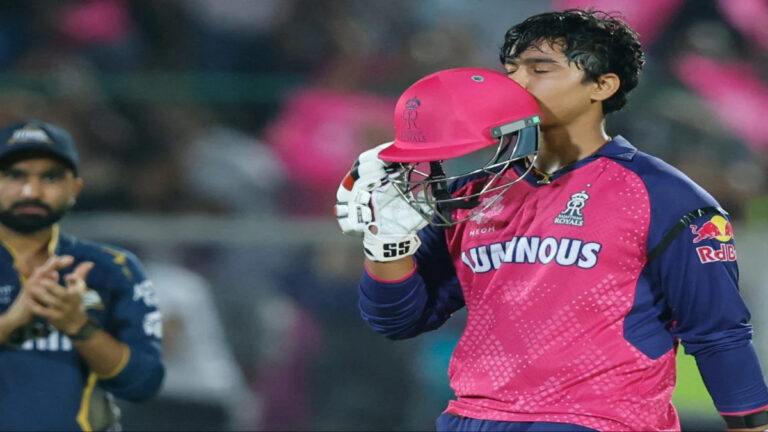
New Delhi, May 20, 2026 — There are nights in the Indian Premier League when the scoreboard tells only half the story. On Tuesday at the Sawai Mansingh Stadium, the numbers flashing across the giant screen were staggering enough: 93 runs off just 38 balls, punctuated by 7 fours and 10 towering sixes.

But behind the 15-year-old wonderkid Vaibhav Sooryavanshi’s brutal demolition of the Lucknow Super Giants (LSG) lies an even more shocking narrative—a financial and statistical evaluation that has broken the tournament’s traditional ROI (Return on Investment) metrics.

The Financial Shock: Scaling the Multiplier

In the modern landscape of corporate cricket, every run, boundary, and over is tracked on a valuation ledger. Because Sooryavanshi was retained on a modest baseline contract relative to seasoned international superstars, his match-by-match cost allocation is relatively minuscule.

According to financial performance tracking post-match, Sooryavanshi’s precise operational cost to the Rajasthan Royals (RR) for this single game stood at just ₹7.86 lakh.

However, his rating-adjusted performance worth for the night—calculated against the match scenario, pressure, and destructive strike rate—was valued at a massive ₹4.75 crore.

By clearing his baseline cost within the very first few balls of his innings, the teenage opener generated a pure surplus of ₹4.67 crore after cost, handing Rajasthan a 59.4x profit return on their match investment.

Dismantling the Target and the Record Books

The context of the game amplified the value of this performance. Chasing a daunting target of 221 runs in a must-win clash to solidify their playoff aspirations, Rajasthan Royals were staring down the barrel. LSG had built a mountain of runs courtesy of a punishing 96 from Mitchell Marsh and a quick-fire 60 from Josh Inglis.

While fellow opener Yashasvi Jaiswal set a fiery early tempo with a 16-ball 43, Sooryavanshi played the long game before exploding. In an exhibit of tactical maturity that belies his age, he started quietly, managing just 5 runs off his first 10 deliveries.

What followed was complete and utter carnage. Shifting into overdrive, Sooryavanshi targeted both express pace and spin, effortlessly dispatching the ball into the Jaipur night sky. He reserve-swept spinners and pulled pacers like Mayank Yadav over the midwicket boundary with terrifying ease.

Most Sixes in a Single IPL Season:
1. Chris Gayle (2012) – 59
2. Vaibhav Sooryavanshi (2026) – 53*
3. Andre Russell (2019) – 52

By hitting his 50th six of the season during the innings, he became the first-ever Indian batsman in IPL history to breach the 50-sixes milestone in a single edition, leapfrogging the previous Indian record holder, Abhishek Sharma (42 sixes in 2024). He now sits second on the all-time list, trailing only Chris Gayle’s historic peak of 59.

Tactical Value Over Pure Style

A batsman operating at a strike rate of 244.74 does more than just accumulate runs; he actively breaks the opposition’s defensive frameworks. LSG’s bowlers, including Akash Singh and Mohsin Khan, were forced into purely defensive fields ahead of schedule. Captains lose the luxury of waiting out matchups when a 15-year-old is clearing the boundary ropes at will.

Though his spectacular assault ended agonizingly close to a century when he mistimed a Mohsin Khan slower ball to long-on for 93, the structural damage was done. Rajasthan coasted to victory with five balls to spare.

The Verdict

As IPL 2026 heads toward its business end, Vaibhav Sooryavanshi holds the Orange Cap with 579 runs across 13 matches. Beyond the orange cap and the playoff ticket, it is the sheer economic imbalance of his performance that has captured the cricketing world’s attention. Superstars are paid premium prices to deliver premium wins, but when a teenage prodigy generates elite-tier destruction on a rookie’s budget, it turns a regular cricket match into a historic gold rush.

To watch the post-match breakdown, team celebrations, and the young prodigy’s viral reaction after guiding his team to victory, check out this Vaibhav Sooryavanshi RR vs LSG Post-Match Analysis. This video covers the emotional aftermath of the game and how the team celebrated securing their playoff spot.