Home Blog Page 81

Movie Review: Daadi Ki Shaadi – A Heartfelt but Sluggish Walk Down the Aisle

New Delhi, May 8, 2026: In an era of high-octane thrillers and dark dramas, director Ashish R. Mohan attempts to bring back the “wholesome family entertainer” with Daadi Ki Shaadi. Starring the evergreen Neetu Kapoor and comedy king Kapil Sharma, the film arrives with a promising premise: an elderly woman deciding to reclaim her life and happiness through remarriage. However, while the film starts with a burst of energy and humor, it eventually buckles under the weight of its own sentimentality, turning a potentially sharp social commentary into a sluggish, preachy lecture on family values.

The Plot: A Social Media Mishap and a Family Meltdown

The story centers on Vimla Ahuja (Neetu Kapoor), a spirited widow living in a sprawling, picturesque bungalow in Shimla. Despite her luxury, she is deeply lonely, largely ignored by her three children who are preoccupied with their own lives in far-off cities. Her only solace is her circle of friends and her “Facelook” (a cheeky nod to Facebook) account.

The chaos kicks off when Vimla accidentally posts a status update about her “upcoming marriage.” The news spreads like wildfire, reaching her grandson Tony (Kapil Sharma), who is the heir to a massive sweet empire in Delhi. Tony is on the verge of his own engagement to Kanika (Sadia Khateeb), but his prospective in-laws deliver an ultimatum: if his grandmother remarries at her age, the “scandal” will ruin their family reputation, and the wedding is off.

Desperate to save his own love life, Tony rallies his father and aunts to descend upon Shimla. Their mission? To stop “Daadi” from walking down the aisle with the dignified Colonel Theeran Devarajan (R. Sarathkumar).

Performances: Neetu Kapoor is the Saving Grace

The absolute highlight of the film is Neetu Kapoor. She brings a quiet dignity and a relatable vulnerability to Vimla. Whether she’s navigating the digital world with adorable confusion or expressing the sharp ache of being forgotten by her children, she reminds us why she remains one of cinema’s most enduring icons. She is the emotional anchor that keeps the film from drifting into total parody.

Kapil Sharma delivers exactly what his fans expect. Playing Tony, he injects the script with his signature comic timing and rapid-fire one-liners. However, as the film shifts from comedy to heavy melodrama in the second half, Kapil’s performance feels slightly restricted by the “preachy” tone. His romantic subplot with Sadia Khateeb also feels somewhat dated and lacks the necessary chemistry to make us truly root for them.

Riddhima Kapoor Sahni, making her much-anticipated acting debut, has a polished screen presence. While she plays the role of the “ungrateful daughter” with confidence, the screenplay doesn’t give her much room to breathe or show depth beyond being a cog in the family’s dysfunctional machine.

The Highs: Humor and Visuals

The first half of Daadi Ki Shaadi is genuinely entertaining. The clash between the Delhi-based “Kalra Sweets” family and the serene Shimla lifestyle provides plenty of laughs. The film captures the absurdity of modern family dynamics—where people are connected on WhatsApp but disconnected in reality—with a light, satirical touch.

Visually, the film is a treat. The cinematography captures Shimla in all its glory—snow-dusted rooftops, cozy interiors, and winding mountain roads. It creates a “warm blanket” feel that fits the initial cozy vibe of the movie.

The Lows: Pacing and “Baghban” Hangover

The film’s primary downfall is its inability to sustain the momentum. At 150 minutes, it is far too long for a comedy-drama. By the time the second half rolls around, the jokes thin out, replaced by heavy-handed monologues about filial duty.

The script borrows heavily from the Baghban (2003) template—painting the children as caricatures of greed and selfishness while the parents are saintly martyrs. This “black and white” approach feels outdated in 2026. In trying to deliver a “message,” the film loses the nuance that made the first hour so refreshing.

Technical Glitches:

  • Editing: Several scenes feel repetitive, hammering home the same emotional point multiple times.
  • Visual Consistency: Interestingly, some viewers have pointed out inconsistent color grading and what appears to be “AI-smoothed” visuals on certain actors, which can be distracting in close-up shots.

Final Verdict: A One-Time Watch for the Family

Daadi Ki Shaadi isn’t a bad film; it’s just a frustrated one. It starts as a progressive story about elderly companionship and the right to happiness regardless of age, but it retreats into the safety of traditional melodrama far too quickly.

If you are a fan of Neetu Kapoor’s grace or Kapil Sharma’s wit, there is enough here to keep you smiling for a while. However, don’t expect a groundbreaking masterpiece. It’s a breezy, occasionally touching family drama that would have been much better with a sharper edit and a lot less preaching.


Love Transcends Bars: MP Jail Official and Former Convict Tie the Knot in Interfaith Ceremony

0

MAY 8, 2026 — In a story that reads more like a high-stakes Bollywood screenplay than a daily news brief, a woman jail official and a former life convict have solemnized their relationship through an interfaith marriage in Madhya Pradesh. The wedding, which took place on May 5 in the Lavkushnagar area of Chhatarpur district, has become the talk of the region, bridging a massive social and religious divide.

The union between Firoza Khatoon, an Assistant Jail Superintendent at Satna Central Jail, and Dharmendra Singh (also known as Abhilash), a man who served 14 years for murder, has ignited conversations across the state about reform, redemption, and the unpredictable nature of the human heart.

A Meeting Behind High Walls

The seeds of this unusual romance were sown within the heavily guarded corridors of Satna Central Jail. Firoza Khatoon, a native of Rewa, was posted as the warrant in-charge at the facility. Part of her duties involved managing the legal paperwork for the inmates, a task that brought her into regular contact with Dharmendra Singh.

Dharmendra, a resident of Chandla in Chhatarpur, was serving a life sentence in connection with a high-profile 2007 case involving the murder of Krishna Dutt Dixit, the then Vice-Chairman of the Chandla Nagar Parishad. Because of his “good conduct” and disciplined behavior during his incarceration, prison authorities had assigned him to assist with clerical and warrant-related administrative work.

What began as professional interaction over prison files and legal documents slowly evolved:

  • The Connection: Daily interactions led to a deep mutual respect.
  • The Transition: Professionalism turned into friendship as they discovered shared perspectives despite their vastly different circumstances.
  • The Commitment: By the time Dharmendra was released four years ago on grounds of good conduct, the two had already decided they wanted a future together.

The Wedding: Defying Social Norms

Maintaining a relationship after Dharmendra’s release was not without its challenges. The couple faced significant pushback from their respective social circles—most notably from Firoza’s family, who opposed the interfaith nature of the union.

When the wedding day arrived on May 5, 2026, Firoza’s relatives were notably absent. However, the ceremony proceeded with significant local support. In a striking display of community intervention, Rajbahadur Mishra, the district vice-president of the Vishva Hindu Parishad (VHP), and his wife stepped in to perform the ‘Kanyadaan’—the traditional Hindu ritual where the bride is given away.

Key Highlights of the Ceremony:

  • Rituals: The wedding was conducted according to Vedic rites, including the Saat Phere (seven circumambulations around the sacred fire).
  • The Guest List: While the bride’s family stayed away, members of the Bajrang Dal and several local residents attended to support the couple.
  • A New Identity: To avoid unnecessary social friction, reports suggest Dharmendra even used a different name on the wedding invitation cards to ensure the ceremony remained peaceful.

Public Reaction and the Path Forward

The marriage has sparked a polarized but largely fascinated response in Chhatarpur and Satna. For many, it is a testament to the rehabilitative power of the prison system, suggesting that a person can indeed emerge from a dark past and find a place in society—and even love.

“Their story is extraordinary because it breaks every stereotype we have about the ‘jailer-prisoner’ dynamic,” says a local resident. “It shows that at the end of the day, people are just people, regardless of the walls between them.”

Inside the Satna Central Jail, the news has been met with a mix of surprise and warmth. Former colleagues and even some inmates have reportedly sent their well-wishes to the couple.

The Challenges of an Unconventional Union

Despite the celebratory atmosphere of the wedding, the couple faces a long road ahead. The intersection of an interfaith marriage and the social stigma attached to a former convict creates a unique set of hurdles. However, by choosing to go public with their union, Firoza and Dharmendra have signaled their intent to face these challenges together.

For now, the Assistant Jail Superintendent and her husband are focused on building their new life in Chhatarpur. Their journey from the warrant office of a central jail to the wedding canopy stands as a rare, real-life example of love blooming in the most unlikely of places.

The Global Hantavirus Map: A 2026 Update on a Growing Threat

New Delhi, May 8, 2026: In the quiet corners of rural America, the dense forests of Germany, and most recently, the confined cabins of a luxury cruise ship, a silent but deadly pathogen is making headlines. Hantavirus, once considered a rare and localized concern, has emerged in May 2026 as a focal point of global health surveillance.

From a high-profile outbreak on the high seas to surging case numbers in Europe and the United States, the geography of hantavirus is shifting. Here is everything you need to know about the current state of this virus, its global footprint, and how to stay safe.

The 2026 Crisis: A Cruise Ship Catalyst

In early May 2026, the World Health Organization (WHO) issued an urgent alert following a deadly cluster of cases aboard the MV Hondius, an expedition cruise ship. The vessel, which departed from Argentina in April, became the center of a multi-country investigation after passengers began falling ill with severe respiratory distress.

As of May 8, 2026, the outbreak has linked several countries in a way rarely seen with this virus:

  • Germany and the Netherlands: Several victims, including a Dutch couple and a German national, tragically lost their lives.
  • Singapore: Two residents who were aboard the ship have been isolated at the National Centre for Infectious Diseases (NCID) for monitoring.
  • South Africa: A British passenger was medically evacuated to an ICU in Johannesburg, becoming one of the first laboratory-confirmed cases of this cluster.

What makes this specific event alarming to scientists is the confirmation of the Andes strain (ANDV). While most hantaviruses only spread from rodents to humans, the Andes strain is the only variant known to potentially spread from person to person.

Mapping the Global Risk

Hantavirus doesn’t look the same everywhere. It generally presents in two different forms depending on the region:

1. The Americas: Hantavirus Pulmonary Syndrome (HPS)

In the United States and South America, the virus primarily attacks the lungs.

  • United States: The risk remains highest in the “Four Corners” region (Arizona, New Mexico, Colorado, and Utah). In early 2026, San Diego County reported its first positive rodent detection of the year. While cases remain rare, the fatality rate for HPS can be as high as 35% to 50%.
  • South America: Argentina and Chile are hotspots for the Andes strain. A significant surge in cases was reported in late 2025, which likely set the stage for the recent cruise ship outbreak. +1

2. Europe and Asia: Hemorrhagic Fever with Renal Syndrome (HFRS)

In these regions, the virus more commonly affects the kidneys.

  • Germany: 2025 and 2026 have seen a notable increase in cases, particularly in Bavaria. Experts attribute this to “mast years”—seasons where an abundance of beechwood seeds leads to a population explosion of bank voles, the primary carriers in Europe.
  • Singapore and Southeast Asia: While human cases are infrequent, the region monitors “Seoul virus” strains carried by urban rats. The recent isolation of travelers in Singapore highlights how international travel can bridge the gap between endemic zones and urban hubs.

How it Spreads: Myths vs. Reality

Contrary to popular belief, you don’t need to be bitten by a rat to catch hantavirus. The primary mode of transmission is aerosolization.

When rodent urine, droppings, or nesting materials are disturbed (such as during sweeping or vacuuming), the virus becomes airborne in tiny droplets. If you breathe in that dust, you can become infected.

Important Note: Except for the rare Andes strain found in South America, hantavirus is not considered a “contagious” disease like the flu or COVID-19. You generally cannot catch it from casual contact with an infected person.

Symptoms to Watch For

Early symptoms can easily be mistaken for a common cold or the flu, which is why a history of travel or rodent exposure is a critical detail for doctors.

The Early Phase (Days 1–5):

  • High fever and chills
  • Severe muscle aches (especially in the thighs, hips, and back)
  • Fatigue and dizziness
  • Abdominal pain, nausea, or vomiting

The Late Phase:

  • In the Americas (HPS): Shortness of breath and fluid buildup in the lungs. This can progress very quickly to respiratory failure. +1
  • In Europe/Asia (HFRS): Low blood pressure, internal bleeding, and acute kidney failure.

Prevention: Your Best Defense

Since there is currently no specific vaccine or antiviral treatment for hantavirus, prevention is the only sure way to stay safe.

1. Seal Up

Prevent rodents from entering your home or workspace. Use steel wool or caulk to seal gaps larger than 1/4 inch (about the size of a pencil).

2. Clean Smart (No Sweeping!)

If you find rodent droppings in a shed, cabin, or attic:

  • Do Not sweep or vacuum. This sends the virus into the air.
  • Wet the area: Use a mixture of bleach and water (1 part bleach to 10 parts water) to soak the area for 5 minutes.
  • Gear up: Use rubber gloves and, if possible, an N95 mask.
  • Wipe: Use a paper towel to pick up the waste, then mop or sponge the area.

3. Be Travel-Aware

When traveling to areas like the American West, rural Germany, or South American forests, avoid staying in cabins that show signs of rodent infestation.

The Road Ahead

The 2026 cruise ship outbreak has been a “wake-up call” for global health agencies. It has highlighted how climate change (affecting rodent populations) and international travel can turn a localized rural virus into a global news story.

While the risk to the general public in cities like Singapore or Berlin remains very low, the lesson of 2026 is clear: vigilance and proper hygiene in rodent-prone areas are no longer optional. Early diagnosis is the key to survival—if you’ve been near rodents and start feeling flu-like symptoms, see a doctor immediately and mention the exposure.

In the quiet corners of rural America, the dense forests of Germany, and most recently, the confined cabins of a luxury cruise ship, a silent but deadly pathogen is making headlines. Hantavirus, once considered a rare and localized concern, has emerged in May 2026 as a focal point of global health surveillance.

From a high-profile outbreak on the high seas to surging case numbers in Europe and the United States, the geography of hantavirus is shifting. Here is everything you need to know about the current state of this virus, its global footprint, and how to stay safe.

BTS Rocks Mexico: 50K Fans & $107M Revenue Goal

New Delhi, May 8, 2026: — In a scene that felt more like a historic state visit than a concert promotion, the global icons of BTS transformed the heart of Mexico City into a sea of purple this week. On Wednesday, May 6, 2026, an estimated 50,000 fans—collectively known as ARMY—packed into the historic Zócalo Plaza to catch a glimpse of the group during their special visit to the National Palace.

The appearance, which saw the septet standing alongside Mexican President Claudia Sheinbaum on the palace balcony, marks a pinnacle moment for the group’s “ARIRANG” World Tour. With three sold-out nights at the Estadio GNP Seguros (formerly Foro Sol) beginning May 7, financial analysts and the Mexico City Chamber of Commerce project that the stop alone will generate a staggering $107.5 million USD (approximately 155.7 billion KRW) in economic impact.

A Presidential Welcome

The atmosphere in the Zócalo was electric long before the members—RM, Jin, Suga, J-Hope, Jimin, V, and Jungkook—stepped into view. Fans had been camping out for days, draped in purple blankets and holding signs reading, “BTS will always be in the heart of Mexico.”

President Sheinbaum, who has been vocal about the group’s positive influence on Mexican youth, officially designated the band as “Distinguished Visitors.” During a private ceremony, she presented them with a commemorative plaque, citing their messages of peace, empathy, and diversity.

“BTS is a group that always carries messages of friendship and love,” President Sheinbaum stated during her morning press briefing. “This is a historic moment for our young people who have waited years for this reunion.”

When the group finally appeared on the balcony, the roar of the crowd was reportedly heard several blocks away. Leader RM expressed his gratitude in Spanish, thanking the Mexican ARMY for their unwavering patience during the group’s recent mandatory military service hiatus.

The $107 Million Boom

While the emotional weight of the reunion is the primary focus for fans, the economic figures surrounding the Mexico City stop are impossible to ignore. The $107.5 million revenue projection accounts for:

  • Ticket Sales: Three consecutive sell-outs at Estadio GNP Seguros.
  • Merchandise: High-demand tour “merch” and pop-up shops across the city.
  • Tourism: An influx of international fans flying in from across Latin America and the United States.
  • Local Hospitality: A “BTS Boom” that has seen hotel occupancy rates in the city center soar to nearly 100%.

Mexico is currently ranked as the fifth-largest K-pop market in the world, and the demand for this tour has shattered previous records. Globally, the “ARIRANG” tour is projected to be one of the highest-grossing tours in history, with some industry experts estimating total worldwide revenue could eventually surpass $1.8 billion.

The “ARIRANG” Era Begins

The 2026 tour follows the release of their fifth studio album, ARIRANG, which dropped in March to critical acclaim and record-breaking streaming numbers. The album, which blends traditional Korean motifs with modern pop and hip-hop, serves as a “thank you” to fans who waited through the group’s three-year break.

The setlist for the Mexico City shows has been a closely guarded secret, though fans who attended the tour’s opening nights in Florida and Texas reported a massive 360-degree stage design and a mix of new hits like “Swim” alongside nostalgic favorites.

Upcoming “ARIRANG” Tour Dates:

DateCityVenue
May 7, 9, 10Mexico City, MXEstadio GNP Seguros
May 16, 17Stanford, CAStanford Stadium
May 23, 24, 27Las Vegas, NVAllegiant Stadium
June 12, 13Busan, South KoreaBusan Asiad Main Stadium

A Cultural Phenomenon

The scenes in Mexico City underscore that BTS is no longer just a musical act; they are a geopolitical force. The “purple wave” has effectively taken over the city, with the Paseo de la Reforma hosting fan-led dance festivals and local businesses offering BTS-themed menus.

As the group prepares to head back to California and eventually to their home soil in South Korea for a massive June celebration in Busan, the Mexico City leg will be remembered as the moment the world realized that the “BTS hiatus” did nothing to diminish their crown. If anything, the distance has only made the ARMY grow stronger—and significantly more lucrative for the global economy.

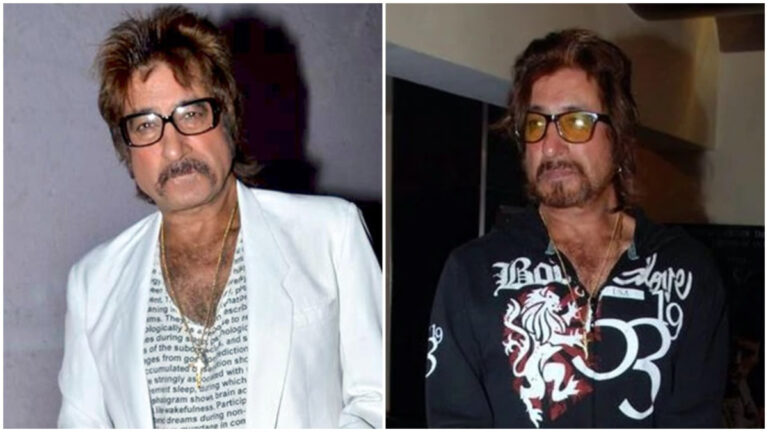
“I am Healthy and Happy”: Shakti Kapoor Slams Death Hoax, Vows Strict Legal Action

Friday, May 8, 2026 — In an era where digital misinformation travels faster than the truth, veteran Bollywood actor Shakti Kapoor became the latest victim of a malicious “death hoax” that sent shockwaves across social media. However, the legendary actor was quick to pull the plug on the rumors, surfacing on social media to reassure fans of his well-being while promising to hunt down the “rumor-mongers” responsible for the distress.

The Anatomy of a Viral Hoax

The rumors began late Thursday night, May 7, when several unverified posts and “breaking news” graphics started circulating on WhatsApp and X (formerly Twitter). The posts claimed that the 73-year-old actor had passed away due to age-related complications. Within hours, “Rest in Peace” messages began flooding the timelines of unsuspecting fans, causing widespread panic and confusion.

The timing of the hoax was particularly sensitive, as fans had been protective of the actor since early January 2026, when he was spotted visiting a Mumbai hospital with his daughter, Shraddha Kapoor. While that visit was later clarified as a routine check-up, the digital trolls used that past context to lend a veneer of “credibility” to their false claims.

Shakti Kapoor’s Strong Rebuttal

Refusing to let the misinformation fester, Shakti Kapoor took to his official Instagram handle on the morning of May 8 to set the record straight. In a selfie video recorded from his home, dressed in a simple purple vest, the actor appeared calm but visibly firm.

“Hello everyone, the news of my death is completely fake. I am healthy and happy. Please ignore it,” Kapoor said in the video message.

He didn’t stop at a mere clarification. Clearly disturbed by the trend of “death-clickbait,” he addressed the gravity of the situation:

“I am going to complain about it. But this is not good. That’s not good.”

The actor confirmed that he intends to file an official complaint with the Cyber Cell to track the origin of the fake news. He emphasized that such rumors are not just “bad jokes” but are deeply traumatic for the family members and close friends of the person involved.

A Pattern of Digital Malice

This incident has reignited the conversation regarding the lack of accountability for “news” pages on social media. Industry experts note that Shakti Kapoor’s experience is part of a troubling pattern:

  • Targeting Veterans: Senior actors like Raza Murad, Paresh Rawal, and Lucky Ali have all faced similar hoaxes in recent years.
  • Monetizing Grief: Many YouTube channels and “news” handles spread such news to gain instant clicks and ad revenue.
  • The Emotional Toll: Unlike younger stars who are digitally savvy, family members of veteran actors often find out about these rumors through frantic phone calls, leading to genuine medical emergencies.

The Industry Rallies Behind “Crime Master Gogo”

As soon as the video was posted, the film fraternity and fans rallied around the actor. The comments section of his post became a testament to his enduring popularity.

  • Fan Reactions: One user commented, “Legends never die! Long live Crime Master Gogo!” while another wrote, “Tiger is alive! Don’t let these fake news spreaders go easily, sir.”
  • Support from Peers: Several of his colleagues from the 80s and 90s expressed their relief and urged the authorities to take strict action against cyber-bullying and fake reporting.

Current Projects and Legacy

Despite being in his 70s, Shakti Kapoor remains a busy man in the industry. He was recently seen in the 2025 hit Mere Husband Ki Biwi, starring alongside Arjun Kapoor and Bhumi Pednekar, where his comic timing was praised for being as sharp as ever. He is also part of the highly anticipated Malayalam film L2: Empuraan starring Mohanlal.

With a career spanning over 700 films, Shakti Kapoor is more than just an actor; he is a pop-culture icon. From his villainous streaks in Himmatwala to his iconic comedic turn as Nandu in Raja Babu, he has remained a household name for four decades.

How to Spot and Stop Fake News

In light of this incident, digital experts are urging the public to follow the “Verify Before You Notify” rule:

  1. Check Official Handles: If a celebrity has passed away, their family or official social media accounts will be the first to post.
  2. Look for Legacy Media: Established news organizations will have detailed reports; do not trust lone screenshots or WhatsApp forwards.
  3. Report the Source: Instead of sharing the post to “ask if it’s true,” use the “Report” button on Instagram or X to flag it as “False Information.”

Final Word

Shakti Kapoor’s vow to involve the Cyber Cell marks a shift in how Bollywood veterans are fighting back against digital toxicity. By choosing to file a formal complaint, he isn’t just protecting his own peace of mind—he is setting a precedent that the internet is not a lawless land where one can “kill off” celebrities for a few thousand views.

For now, fans can breathe a sigh of relief. The man who gave us “Auuu!” and “Dhakkiikiiki” is very much alive, well, and ready to take on the trolls.

Riva Arora Delivery Ordeal: A 40-Minute Stand-Off

New Delhi, May 8, 2026: In an era where home delivery has become a pillar of urban convenience, a recent incident involving popular young actress and influencer Riva Arora has sparked a heated conversation about safety, professional boundaries, and the vulnerability of celebrities in their own homes.

Riva Arora, known for her roles in films like Uri: The Surgical Strike and her massive social media following, recently took to her platforms to recount a “distressing and terrifying” 40-minute encounter with a food delivery agent. What was supposed to be a routine Sunday evening order quickly spiraled into a confrontation that required police intervention, leaving the actress and her family shaken.

The Spark of the Conflict

The incident began on a typical evening when Riva’s family placed an order through a popular food delivery app. According to Riva’s detailed account, the trouble started not with the delivery itself, but with the payment process.

The order was placed as “Cash on Delivery” (COD). When the delivery agent arrived at their doorstep, the family handed over the exact amount reflected on the app. However, a discrepancy arose. The agent claimed that the amount shown on his interface was different from what was shown on the customer’s app—a common technical glitch in delivery platforms, but one that is usually resolved through a quick call to customer support.

Instead of a routine resolution, Riva alleges that the agent became immediately aggressive. “It wasn’t just about the money anymore,” Riva shared in a video statement. “It was the way he spoke, the way he stood his ground in a threatening manner, and his refusal to leave our premises.”

A 40-Minute Stand-Off

What followed was a tense 40-minute ordeal. The actress explained that despite her mother’s attempts to calm the situation and suggest they contact the company’s help center, the agent allegedly began to raise his voice and use intimidating body language.

“We tried to explain that we are paying exactly what the app is asking us to pay,” Riva recounted. “But he started shouting. He blocked the doorway and refused to move. As women in the house, it became extremely intimidating. You don’t expect a routine service to turn into a situation where you feel unsafe inside your own home.”

The situation escalated when the agent reportedly refused to contact his supervisors and insisted that the family pay the “extra” amount he claimed was due, or he would not leave. For a young actress who often deals with the public, the invasion of her private space by an aggressive stranger was particularly traumatizing.

“No Choice But to Call the Police”

As the minutes ticked by and the agent’s behavior allegedly became more volatile, Riva’s mother decided that they could no longer handle the situation privately. Fearing for their physical safety, they dialed the local police.

“We had no choice,” Riva said, visibly emotional while recounting the story. “We didn’t want to escalate it to that level, but when someone refuses to leave your doorstep and is constantly shouting and behaving in a threatening manner for nearly an hour, what else can you do? Your safety comes first.”

The arrival of the police finally brought the confrontation to an end. The officers intervened, mediated the dispute, and ensured the agent left the premises. While no physical harm was done, the psychological impact of the “40-minute ordeal” has left a lasting impression on the teenager and her family.

The Aftermath and Public Reaction

Following the incident, Riva shared her experience on Instagram to warn others—especially women living alone or with limited security—about the potential dangers of such interactions.

The reaction from the public was swift and divided. While many fans and fellow creators offered their support, praising Riva for standing up for her safety, the incident also drew criticism from those who felt the situation might have been a misunderstanding over a small amount of money.

However, Riva clarified that the issue was never about the money. “It’s about the behavior. It’s about the fact that a service provider felt it was okay to intimidate customers in their home. No one should feel like a prisoner in their own house because of a technical glitch on an app.”

The Growing Concern Over Delivery Safety

This incident is not an isolated case. It highlights a growing trend of friction between delivery partners and customers in India’s booming “gig economy.” On one hand, delivery agents often work under extreme pressure, dealing with tight deadlines, low pay, and sometimes rude customers. On the other hand, customers—particularly women—frequently report instances of harassment, stalking, or aggressive behavior by delivery personnel who have access to their home addresses and phone numbers.

Following Riva’s post, many users shared similar stories of delivery agents refusing to leave until given a five-star rating, or calling customers late at night after a delivery was completed.

The Responsibility of Aggregator Platforms

The incident has put the spotlight back on the safety protocols of food delivery giants. While most apps have a “Safety” button or a “Help” section, the real-time effectiveness of these features is often questioned.

Industry experts argue that platforms need to do more than just provide a helpline.

  1. Background Checks: Stricter vetting processes for delivery partners.
  2. Conflict Resolution Training: Training agents on how to handle billing discrepancies without resorting to aggression.
  3. Privacy Features: Masking customer phone numbers and providing “silent” SOS alerts for both the customer and the rider.

In response to the viral nature of Riva’s story, the delivery platform involved reportedly reached out to the actress to conduct an internal investigation. They issued a statement reiterating their “zero-tolerance policy” towards any form of harassment or intimidation.

Lessons from the Ordeal

Riva Arora’s experience serves as a sobering reminder for the general public. In her closing remarks on the matter, she urged her followers to:

  • Always keep a door chain or security gate closed during deliveries.
  • Avoid engaging in long arguments; if a situation feels tense, move inside and call customer support or the authorities immediately.
  • Record the interaction if it starts to escalate, as evidence is crucial for both police and company complaints.

“I’m sharing this because I want people to know it’s okay to call for help,” Riva concluded. “Don’t wait for something bad to happen. If you feel unsafe, act on it.”

Conclusion

The “40-minute ordeal” of Riva Arora is more than just a celebrity news snippet; it is a reflection of the modern challenges of the service economy. As we move toward more automated and home-delivered lifestyles, the human element of these transactions remains the most unpredictable.

While the delivery agent’s side of the story remains largely unheard in the public eye, the incident underscores a universal truth: no amount of convenience is worth the compromise of personal safety. For Riva, the experience was a harsh lesson in vigilance, one that has resonated with millions of her followers who now look at their doorbell rings with a little more caution.

Skyroot Countdown to History: The Vikram-1 Rocket and India New Space Age

0

May 8, 2026 – The air at the Satish Dhawan Space Centre is thick with anticipation. On the launchpad stands a sleek, seven-story pillar of carbon fiber and cutting-edge engineering: the Vikram-1. Developed by the Hyderabad-based startup Skyroot Aerospace, this rocket is more than just a vehicle; it is a symbol of a massive shift in how India reaches the stars.

As the final integration tests conclude this week, Skyroot is on the verge of making history. If successful, Vikram-1 will become India’s first privately developed rocket to reach orbit, signaling the country’s transition from a government-led space program to a vibrant, multi-player ecosystem.

A Unicorn Takes Flight

Just yesterday, Skyroot Aerospace officially crossed the threshold into “Unicorn” status, reaching a valuation of $1.1 billion following a fresh $60 million funding round led by Sherpalo Ventures and GIC. This financial milestone isn’t just for the books—it’s the fuel for a mission that has been years in the making.

“This investment signals confidence from some of the world’s most reputed investors,” said Pawan Kumar Chandana, co-founder and CEO of Skyroot. “We are excited about the upcoming Vikram-1 launch. It marks a significant milestone both for India and the global space sector.”

The Anatomy of an Orbital Pioneer

Named after the father of the Indian space program, Vikram Sarabhai, the Vikram-1 is a multi-stage launch vehicle designed for the “SmallSat” market. Unlike the massive rockets used by ISRO for Moon or Mars missions, Vikram-1 is built for agility and cost-effectiveness.

Key Specifications:

  • Height: Approximately 75 feet (7 stories).
  • Payload Capacity: Can carry up to 350 kg to Low Earth Orbit (LEO).
  • Structure: An all-carbon composite body, making it incredibly light yet stronger than steel.
  • Propulsion: Three solid-fuel stages (Kalam-1200, 250, and 125) and a liquid-fuel upper stage.
  • The “Brain”: A 3D-printed liquid engine called Raman-2, designed for precise orbit adjustment.

The rocket is often described as a “Space Cab.” While traditional rockets are like massive buses that require many passengers (satellites) to share a ride to a fixed destination, Vikram-1 allows satellite operators to book a dedicated flight to a specific orbit on their own schedule.

The Mission: A 15-Minute Leap

The upcoming flight, though technically a “test flight,” is high-stakes. The mission is expected to last roughly 15 minutes. In that brief window, the rocket must clear the atmosphere, separate its stages perfectly, and deploy its payloads—a mix of Earth observation and experimental satellites—at an altitude of over 400 km.

“First-time orbital launches are inherently complex,” Chandana noted, managing expectations. “The objective is to gather as much data as possible. This flight is the bridge to regular commercial operations.”

Why This Matters for India

For decades, India’s space success was synonymous with ISRO. However, recent policy reforms through IN-SPACe (the Indian National Space Promotion and Authorisation Centre) have opened the doors for the private sector.

  1. Global Competition: Success places India in an elite group of nations—including the US and China—with private companies capable of orbital launches.
  2. Economic Engine: India aims to capture 10% of the global space economy by 2033. Private players like Skyroot and Agnikul Cosmos are the primary drivers of this growth.
  3. ISRO’s Evolution: With private companies handling commercial satellite launches, ISRO can focus its resources on deep-space exploration, like the Gaganyaan human spaceflight and future lunar bases.

What’s Next?

Hardware for the Vikram-1 has already been dispatched to the spaceport in Sriharikota. The launch window is expected to open in June 2026, depending on final regulatory approvals and weather conditions.

But Skyroot isn’t stopping at Vikram-1. The team is already accelerating work on Vikram-2, a 1-tonne class vehicle featuring a cryogenic upper stage, and aims to achieve a “launch-on-demand” cadence of one rocket per month from their “Infinity Campus” in Hyderabad.

As the countdown begins, the world is watching. India has already proven it can reach the Moon and Mars on a budget; now, it’s about to prove that its entrepreneurs can own the sky.

Vijay’s TVK and the High-Stakes Gambit at Raj Bhavan

0

New Delhi, May 8, 2026 – As the dust settles on the most transformative election in Tamil Nadu’s modern history, the state finds itself in uncharted territory. For the first time in over five decades, the iron grip of the DMK-AIADMK duopoly has been shattered, leaving Governor Rajendra Vishwanath Arlekar at the center of a constitutional whirlpool.

With the 2026 Assembly election results delivering a hung house, the “MGR 2.0” phenomenon—embodied by actor-turned-politician C. Joseph Vijay and his Tamilaga Vettri Kazhagam (TVK)—has arrived. But while the victory is historic, the path to Fort St. George remains blocked by a simple, stubborn number: 118.

The Numbers Game: A Fractured Mandate

The Election Commission’s final tally presents a jigsaw puzzle that no party can solve alone. The TVK emerged as the single largest party with 108 seats, an unprecedented feat for a debutant. However, they remain 10 seats short of a simple majority in the 234-member house.

The incumbent DMK, led by M.K. Stalin—who suffered a shocking personal defeat in his Kolathur stronghold—has been relegated to the opposition with 59 seats. The AIADMK, once the state’s dominant force, finds itself in third place with 47 seats. Smaller players like the Congress (5 seats), PMK (4), and various Left parties hold the “kingmaker” chips in a game where everyone is hedging their bets.

The Options Before Governor Arlekar

Governor Rajendra Arlekar, who took additional charge of Tamil Nadu in March 2026, now holds the discretionary powers of the “umpire.” Under the Indian Constitution, his primary duty is to ensure the formation of a stable government. He has several precedents and constitutional paths to consider:

1. Inviting the Single Largest Party (The TVK)

Precedent suggests that the Governor usually invites the leader of the single largest party first. Vijay met Governor Arlekar on May 6 to stake his claim, reportedly backed by a surprise pivot from the Congress’s 5 MLAs. By aligning with the TVK, the Congress has effectively walked out of the DMK-led Secular Progressive Alliance, signaling a shift in national-regional dynamics.

However, even with Congress, Vijay sits at 113. The Governor has reportedly asked for formal letters of support to prove a clear path to 118 before administering the oath.

2. Recognizing a Post-Poll Coalition

If Vijay can secure the support of independent winners or smaller parties like the VCK or CPI(M), the Governor can recognize a formal coalition. The “Sarkaria Commission” guidelines emphasize that a pre-poll alliance has the first right, but in this election, the pre-poll alliances (SPA and NDA) failed to reach the mark. This gives the Governor significant leeway to judge which grouping can provide a “stable” administration.

3. The “Wait and See” Approach

The Governor could also wait for the DMK or AIADMK to attempt a “counter-coalition.” While the DMK has publicly stated it will sit in the opposition and “respect the people’s mandate,” the corridors of power are buzzing with rumors of “tactical abstentions” during a floor test, which would lower the majority threshold and allow the TVK to sail through.

Constitutional Precedents: Lessons from the Past

Governor Arlekar is likely looking at two landmark cases to guide his decision:

  • The S.R. Bommai Case (1994): The Supreme Court ruled that the floor of the Assembly, not the Governor’s chambers, is the only place to test a majority. This means Arlekar is likely to invite Vijay, the single largest party leader, but set a very tight deadline (usually 7 to 14 days) for a floor test.
  • The Rameshwar Prasad Case (2006): This warned Governors against “subjective satisfaction.” Arlekar cannot simply assume Vijay will fail; he must provide the opportunity if there is a “reasonable claim” of support.

The Political Fallout: A State in Flux

The atmosphere in Chennai is electric. TVK supporters have thronged the streets, celebrating the end of the “Dravidian Era,” while political analysts scramble to understand how a two-year-old party swept the youth and women’s vote across traditional party lines.

The AIADMK, led by Edappadi K. Palaniswami, initially offered “unconditional support” to TVK to keep the DMK out, but later withdrew the offer when Vijay reportedly refused to yield on cabinet positions. This “go-it-alone” spirit of the TVK chief is being tested; he wants a clean break from the past, but the math of the present demands compromise.

What Happens Next?

The current Assembly’s term ends on May 10, 2026. If no leader can demonstrate a viable majority by then, the state could technically face a brief period of Governor’s Rule—though all parties are desperate to avoid this.

As of Friday morning, the ball remains in the Governor’s court. Will he prioritize the “single largest party” principle, or will he demand a signed list of 118 names before the swearing-in ceremony?

For the people of Tamil Nadu, the wait is more than just about a leader. It is about whether the “New Politics” promised by Vijay can survive the old-school maneuvering of a hung assembly. One thing is certain: the sun has set on the old bipolar order, and a new, unpredictable chapter has begun.

Viral Video Shows IndiGo Passengers Chanting ‘Jai Shri Ram’ After BJP’ Landmark Bengal Victory

0

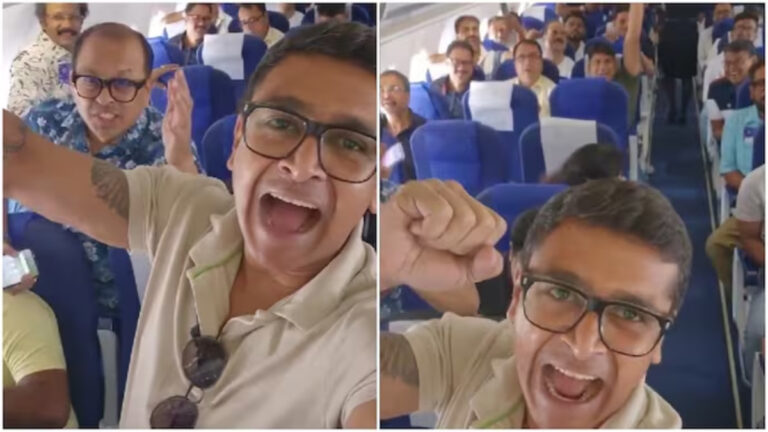
New Delhi, May 7, 2026 – The skies above India became the latest stage for political fervor this week as a viral video captured passengers on an IndiGo flight erupting into chants of “Jai Shri Ram” and “Bharat Mata Ki Jai.” The spontaneous celebration followed the Bharatiya Janata Party’s (BJP) historic landslide victory in the 2026 West Bengal Assembly elections, a result that has fundamentally reshaped the political landscape of Eastern India.

The Viral Moment

The video, which surfaced on social media late Wednesday, shows a man standing in the aisle of an IndiGo aircraft, recording himself as he leads a series of spirited slogans. What began as a solo expression of joy quickly spread through the cabin, with dozens of fellow travelers joining in.

The slogans included:

  • “Jai Shri Ram”
  • “Har Har Mahadev”
  • “Jai Durga”
  • “Jai Bangla”

As the camera panned across the plane, passengers were seen smiling, laughing, and clapping along. While the exact flight route remains unconfirmed, the clip has become a digital lightning rod, symbolizing the high-octane emotional state of the country following the election results.

A Seismic Political Shift: The Bengal Results

The backdrop to this mid-air celebration is one of the most significant electoral upsets in modern Indian history. On May 4, 2026, the BJP effectively ended the 15-year reign of Mamata Banerjee and her Trinamool Congress (TMC).

Category2021 Results2026 Final Tally
BJP Seats77207
TMC Seats21580
BJP Vote Share~38%~45%
TMC Vote Share~48%~41%

The BJP secured a massive two-thirds majority in the 294-member assembly, crossing the 148-seat majority mark with ease. In a symbolic blow to the incumbent government, Chief Minister Mamata Banerjee lost her high-profile Bhabanipur seat to the BJP’s Suvendu Adhikari, who is widely expected to be named the next Chief Minister of West Bengal.

Why the “Saffron Surge”?

Analysts point to a “perfect storm” of factors that led to this historic mandate:

  1. Hindu Consolidation: The BJP’s campaign leaned heavily on narratives of “appeasement politics” by the TMC, successfully consolidating the Hindu vote across rural and urban belts.
  2. Anti-Incumbency: After a decade and a half in power, the TMC faced significant fatigue, with voters citing issues of local corruption, unemployment, and administrative stagnation.
  3. Voter List Revisions: A controversial “Special Intensive Revision” (SIR) of the electoral rolls saw nearly 91 lakh names deleted. While the BJP supported the move to “remove illegal voters,” the TMC claimed it was a targeted effort to disenfranchise their supporters.
  4. Double-Engine Governance: For the first time since 1972, West Bengal has voted for the same party that holds power at the Centre, a prospect many voters hoped would bring increased development funds to the state.

Polarization and Public Spaces

While the viral IndiGo clip has been hailed by BJP supporters as a “spontaneous celebration of democracy,” it has also sparked a heated debate regarding decorum in public spaces.

“Commercial flights are shared public spaces. While everyone has the right to celebrate, sloganeering in a confined tube at 30,000 feet can be intimidating for those who don’t share those political or religious views,” noted one social media commentator.

Others argued that the video simply reflected the “genuine happiness” of the people of Bengal who felt liberated by the change in government.

The Road Ahead for Bengal

As the dust settles on the election, the transition of power remains tense. Reports of post-poll violence, including arson and vandalism, have emerged from several districts. Mamata Banerjee, despite the heavy loss, has initially refused to accept the mandate as the “true will of the people,” alleging electoral irregularities.

However, for the BJP, the victory is a crowning achievement. Prime Minister Narendra Modi hailed the results as a “new dawn for Sonar Bangla” (Golden Bengal).

As Suvendu Adhikari prepares to take the oath of office, he has pledged to focus on “governance for all,” while simultaneously emphasizing his commitment to the voters who brought about this unprecedented saffron wave. Whether this shift brings the promised

Bengaluru Couple Creates History with 10-Hour Swim from Sri Lanka to India

0

May 7, 2026 — In a breathtaking display of endurance and unity, a Bengaluru-based couple has etched their names into the record books. On Wednesday, May 6, 2026, Danish Abdi and Vrushali Prasade became the first-ever couple to successfully complete a solo open-water swim across the Palk Strait, connecting Talaimannar in Sri Lanka to Dhanushkodi in India.

The duo traversed approximately 32 kilometers (19 nautical miles) through the challenging waters of the legendary Ram Setu route, completing the feat in exactly 10 hours. As they emerged from the surf onto the sands of Arichalmunai, their faces etched with exhaustion but glowing with triumph, they shared a simple, powerful message: “We did it!

Against the Tide: The Journey of Ten Hours

The expedition began in the pitch-black early hours of Wednesday at Talaimannar. At roughly 4:00 AM, under a starlit sky, Danish and Vrushali entered the Indian Ocean. The Palk Strait is notorious among marathon swimmers for its unpredictable nature—strong cross-currents, choppy waves, and a thriving population of jellyfish that can turn an athletic pursuit into a painful ordeal.

For the first few hours, the couple maintained a steady rhythm, swimming side-by-side. However, open-water swimming is rarely a calm affair. As the sun rose, so did the temperature and the intensity of the currents.

“The hardest part wasn’t the distance; it was the elements,” said Danish after the swim. “The jellyfish were a constant presence, and the currents felt like they were pushing us back with every second stroke. But looking over and seeing Vrushali right there kept me going.”

The swim was not just a test of physical strength but of mental synchronicity. Supported by a team of paramedics, coast guards, and professional navigators in pilot boats, the couple navigated the shifting tides that have historically deterred even seasoned athletes.

From Beginners to Record-Breakers

Perhaps the most inspiring aspect of this historic achievement is the couple’s background. Unlike many professional marathon swimmers who train from childhood, Danish and Vrushali only learned to swim four years ago.

The spark of inspiration came during a vacation to the Maldives. While watching European children swim freely in the ocean, the couple—who were being offered life vests for even shallow water—asked themselves a life-changing question: Why can’t we do that?

Upon returning to Bengaluru, the IT professionals traded their keyboards for goggles. What started as a quest for a basic life skill evolved into a passion for endurance sports. After participating in relay swims in the Indian Ocean, they decided to take on the “Everest of Swims” for the South Asian region—the Palk Strait.

A Symbol of Unity and Wellness

The initiative, titled “Making Waves Across Borders,” was championed by Manipal Hospitals. More than just a personal milestone, the swim was designed to highlight the deep cultural and historical ties between India and Sri Lanka.

Mr. Karthik Rajagopal, Group COO of Manipal Health Enterprises, praised the duo’s resilience:

“This historic swim reflects not only athletic excellence but also the health-connect between our nations. It’s a reminder that while borders exist on maps, shared ambition and heritage bind us together.”

The couple also used the platform to advocate for preventative healthcare and fitness. They aimed to prove that age and professional life should not be barriers to achieving peak physical health. “Swimming is for everyone,” Vrushali noted. “Whether you are seven or seventy, it is never too late to start.”

The Technical Challenges of the Palk Strait

Crossing the Palk Strait is a massive logistical undertaking. The route follows the underwater limestone shoal chain known as Adam’s Bridge or Ram Setu.

FeatureDetails
Start PointTalaimannar, Sri Lanka
End PointDhanushkodi (Arichalmunai), India
Total Distance~32 Kilometers
Time Taken10 Hours
Key HazardsJellyfish stings, strong currents, heat exhaustion

The couple’s 10-hour timing is particularly impressive given the conditions reported on May 6. They join a small, elite group of swimmers to have crossed these waters, including recent record-breaker Ishank Singh, a 7-year-old prodigy from Ranchi who completed the swim just last week.

A Hero’s Welcome

As Danish and Vrushali reached the Indian shore at Dhanushkodi, they were greeted by a cheering crowd of supporters, family members, and local officials. The atmosphere was one of pure celebration, marked by the waving of national flags and the distribution of sweets.

For Bengaluru, a city often associated with the sedentary “desk life” of the tech industry, the couple has become a beacon of inspiration. They have shown that with four years of discipline and a shared dream, it is possible to bridge the gap between two nations and turn a “life skill” into a historic legacy.

As the sun set over the Rameswaram coast on Wednesday evening, the tired but triumphant couple looked back at the horizon they had just conquered. Their story is a testament to the fact that the greatest distances are covered not just with arms and legs, but with heart and partnership.

What’s next for the history-making duo? While they plan to take a well-deserved rest, they’ve hinted that their journey in the open water is far from over. For now, they are simply happy to be back on solid ground, having proved that when a couple swims together, they can weather any storm.