Home Blog Page 80

Beyond the Viral Lens: How RK Sohan is Redefining Bangladesh’s Travel Narrative in 2026

0

New Delhi, May 8, 2026: In an era where travel content is often reduced to 15-second “aesthetic” reels and clickbait titles, one creator is taking a decidedly different path. RK Sohan, a graduate of Bangladesh University of Professionals (BUP), has emerged as a leading documentary filmmaker and storyteller, moving far beyond the typical tourist hotspots of Cox’s Bazar or Sylhet. By May 2026, his work has become a vital archive of Bangladesh’s “unseen” heritage, focusing on the stories that live in the shadows of viral trends.

The Shift from Vlogging to Storytelling

For many creators, a trip to the Sundarbans or the Hill Tracts is about the “vibe.” For RK Sohan, it is about the narrative. His recent coverage, including his collaborations with Somoy Entertainment, showcases a shift toward investigative and documentary-style travel.

Sohan’s approach doesn’t just show a landmark; it explores the human connection to it. Whether he is uncovering the mysteries of the deep Sundarbans—where he recently explored the harrowing stories of those who enter the forest and never return—or documenting the architectural pride of the 201 Dome Mosque in Tangail, the focus remains on education and preservation rather than just entertainment.

Exploring the “Offbeat” Bangladesh

While most travelers stick to well-paved roads, Sohan’s lens frequently turns toward places like Kolmakanda in Netrokona or the hidden gems of Panchgaon. These areas, often overlooked by mainstream tourism boards, offer a glimpse into the raw, untouched beauty of the country.

  • Cultural Heritage: He dives deep into the spiritual history of places like the Lalon Shah Shrine in Kushtia, highlighting the secularism and humanism that define the “Baul” culture.
  • Infrastructure & Reality: Unlike “viral” videos that edit out the struggles, Sohan’s content often addresses the reality of rural infrastructure, providing a balanced view of the potential and the challenges of sustainable tourism in Bangladesh.

The “Sohan Style”: Why It Resonates

With a growing community of over 120,000 dedicated subscribers and millions of views, Sohan has proven there is a massive appetite for high-quality, long-form content. His videos are characterized by:

  1. Authentic Voice: He avoids the over-the-top energy typical of “influencers,” opting instead for a grounded, narrator-led experience.
  2. Cinematic Quality: Using high-end production techniques, he treats the Bangladeshi landscape with the same reverence one might see in a National Geographic documentary.
  3. Educational Value: Every video serves as a travel guide, providing historical context, local legends, and practical tips for those brave enough to follow in his footsteps.

The Impact on Local Tourism

By showcasing “Bangladesh beyond the viral,” RK Sohan is helping to diversify the country’s tourism economy. When a creator highlights a “hidden” village in Netrokona, it brings attention (and eventually, resources) to local communities that are usually bypassed by the holiday crowds.

His work acts as a bridge between the urban youth—who are increasingly looking for authentic “slow travel” experiences—and the rich, diverse traditions of rural Bangladesh. In 2026, as Bangladesh continues to position itself as a global destination for heritage and nature tourism, creators like Sohan are the ones writing the most important chapters of that story.

Conclusion

RK Sohan is more than a traveler; he is a digital curator of Bangladeshi identity. By choosing the difficult path of documentary filmmaking over the easy path of viral trends, he has built a legacy that will outlast any social media algorithm. For anyone looking to see the true heart of the Delta, his channel is the definitive starting point.
From Privilege to Public: CM Revanth Reddy Viral “Normal Traffic” Journey

0

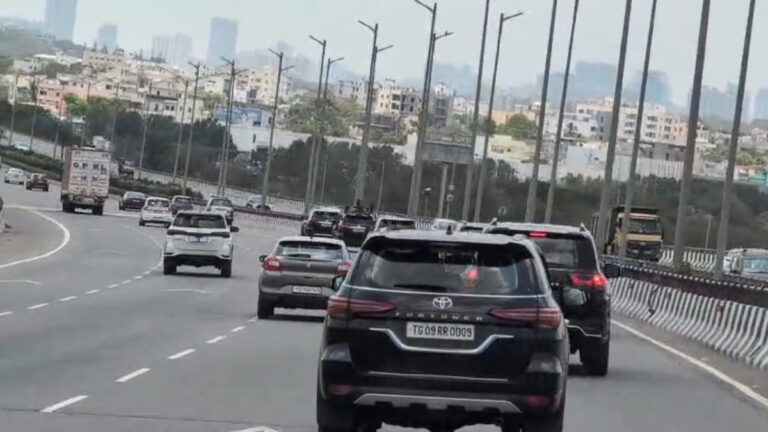
May 8, 2026: In a city where the siren of a VIP convoy usually signals a frustrating standstill for thousands of commuters, a different scene unfolded on Thursday evening. Telangana Chief Minister A. Revanth Reddy turned heads and captured hearts across social media after a video went viral showing his convoy navigating through the city’s regular, bustling traffic without the usual high-profile road closures.

The move, which many are calling a “death blow to VIP culture,” saw the Chief Minister traveling from the Rajiv Gandhi International Airport (RGIA) in Shamshabad to his residence in Jubilee Hills just like any other citizen.

The Incident That Sparked Change

The decision wasn’t accidental. It follows a moment of introspection for the state administration. On Wednesday, May 6, while heading to New Delhi to discuss the Hyderabad Metro Phase II project, the Chief Minister’s own departure caused significant traffic snarls near the airport.

Witnessing the sea of stalled vehicles and the visible frustration of commuters, office-goers, and families, Revanth Reddy reportedly took “serious note” of the situation. Upon his return on Thursday, he made it clear: the public should not suffer for the sake of his movement.

What Changed?

Typically, “VVIP movement” involves a complete halt of traffic on both sides of the road, sometimes for 15 to 20 minutes before and after a convoy passes. However, on Thursday:

  • Single Lane Movement: Traffic police were instructed to allow vehicles to continue moving in a single lane rather than halting them entirely.
  • No Opposite Stoppages: Vehicles coming from the opposite direction were not stopped.
  • Minimal Diversions: Public transport and private cars were allowed to flow alongside the convoy, separated only by a light security perimeter.

“The Chief Minister’s repeated concern highlights the gravity of the issue. We must address it with utmost seriousness,” stated DGP C.V. Anand, who convened an emergency video conference with police officers across the state following the CM’s directive.

A Directive for All VIPs

The Chief Minister hasn’t just changed his own travel habits; he has ordered a systemic overhaul. He directed the Director General of Police to ensure that:

  1. Accountability: Action will be initiated against officials responsible for unnecessary traffic lapses.
  2. A Dedicated Bureau: Plans are now being finalized to establish a dedicated Traffic Bureau headed by an Additional DGP to manage urban congestion more scientifically.
  3. Monsoon Readiness: With the monsoon approaching, the CM has urged proactive steps to prevent water stagnation, which often compounds traffic woes during VIP movements.

Public Reaction: “A Breath of Fresh Air”

The viral video, shared extensively by the IPR Department and various news outlets, shows the CM’s white convoy moving steadily alongside motorcycles and city buses.

On social media, the response has been overwhelmingly positive.

  • “Finally, a leader who understands the value of a common man’s time,” wrote one user on X (formerly Twitter).
  • Another Hyderabad local commented, “I was on the airport road yesterday and was shocked to see the convoy just pass by without me having to turn off my engine for 20 minutes. This is real change.”

The Road Ahead

While the move has been praised as a populist masterstroke, it also presents a challenge for the state’s security apparatus. Balancing the safety of the head of state with the convenience of the public is a tightrope walk.

However, by choosing to sit in the same traffic as his constituents, Revanth Reddy has sent a powerful message: governance is about serving the people, not standing above them. Whether this becomes the permanent “new normal” for Telangana remains to be seen, but for the commuters of Hyderabad, yesterday was a rare day of relief on the road.

‘Too Perfect to be Real’: The Viral Rainbow Clouds of Indonesia Explained

0

New Delhi, May 8, 2026 — In an era where artificial intelligence can generate hyper-realistic landscapes with a few keystrokes, the world has become a skeptical audience. So, when videos began circulating this week of a sky drenched in shimmering neon pastels over West Java, the collective internet response was a mix of awe and disbelief.

“Is this real life, or is this just AI?” one TikTok user commented on a video that has now surpassed 46 million views.

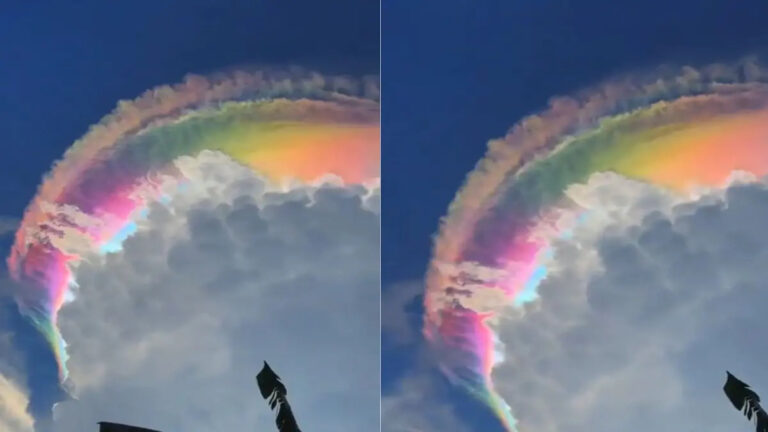
The footage, captured primarily in the regions of Bogor and Bekasi, shows massive, billowing clouds crowned with a “cap” of iridescent colors—vibrant pinks, electric greens, and deep violets that look more like a Mario Kart track than a typical sunset. But according to atmospheric scientists and Indonesia’s meteorological agency, this isn’t a digital fabrication. It is a rare, breathtaking natural phenomenon known as Cloud Iridescence, often accompanied by a Pileus cloud.

The Moment the Sky Stopped Traffic

On May 1, 2026, the quiet streets of Jonggol, West Java, came to a standstill. Motorists pulled over to the side of the road, and residents spilled out of their homes, mobile phones aimed upward.

One witness, 21-year-old Ahmad Baehaqy Pratama, was traveling along Jalan Jeprah when he saw the sky begin to “bleed” color. “It hadn’t rained yet, but on the right side, it looked like there was a rainbow inside the cloud,” he told local reporters.

As the videos hit platforms like TikTok, X (formerly Twitter), and Instagram, they quickly spiraled into a global sensation. The most popular clips show a towering cumulus cloud—the kind that usually signals a thunderstorm—topped with a thin, gauzy veil that shimmers with the intensity of an oil slick on water.

“Too Perfect to be Real”: The AI Skepticism

The viral nature of the Indonesia rainbow cloud highlights a growing modern dilemma: our increasing inability to trust our eyes. Because the colors were so saturated and the shapes so geometric, thousands of commenters claimed the footage was “obviously CGI.”

“We’ve reached a point where nature has to prove it’s not a filter,” says digital media analyst Sarah Chen. “Because we see so much fake content, when the Earth actually does something spectacular, our first instinct is to look for the glitch.”

However, meteorologists from Indonesia’s Meteorology, Climatology, and Geophysics Agency (BMKG) were quick to verify the event. Ida Pramuwardani, Acting Director of Public Meteorology at BMKG, confirmed that the phenomenon is a natural occurrence related to atmospheric optics.

The Science: How Nature Creates a “Rainbow Cap”

So, how does a cloud turn into a prism? The answer lies in a specific combination of physics and timing.

1. The Pileus Cloud (The “Haircut”)

The phenomenon often involves what scientists call a pileus cloud (Latin for “cap”). This is a smooth, thin cloud that forms on top of a rapidly growing cumulus cloud. As the moist air from the lower cloud is pushed upward by a strong current, it cools and condenses into a cap. Because these clouds form so quickly, they are made of tiny, uniform water droplets—the perfect canvas for light.

2. Diffraction vs. Refraction

While a standard rainbow is caused by refraction (light bending as it enters a raindrop), cloud iridescence is caused by diffraction. When sunlight hits these tiny, uniform water droplets or ice crystals at just the right angle (usually within 10 to 40 degrees of the sun), the light waves are scattered and spread out.

Because the droplets in a pileus cloud are all roughly the same size, they scatter the light in a consistent way, creating the vivid, organized bands of color seen in the Indonesian videos.

3. The “Thinness” Factor

For the colors to be this bright, the cloud must be very thin. If the cloud were thicker, the light would be scattered too many times, and the colors would wash out into white. The Indonesian sighting was a “perfect storm” of conditions: a rapidly rising cloud, a thin moisture cap, and the sun positioned at the exact angle to ignite the colors.

A Sign of a Storm?

While the clouds looked “otherworldly,” BMKG officials assured the public that they were not a sign of a natural disaster. Instead, they indicate high humidity and strong upward air currents.

“This phenomenon is not a direct sign of an impending storm,” Pramuwardani explained. “It simply indicates the growth of convective clouds. It might rain locally, but it’s a standard atmospheric process, even if the result looks like a miracle.”

Nature’s Viral Marketing

This isn’t the first time rainbow clouds have gone viral—similar sightings have been reported in China, Thailand, and South America—but the Indonesian event has struck a chord because of its sheer vibrance.

For many, the “rainbow road” in the sky provided a moment of collective wonder. In a world often dominated by heavy news, the sight of a neon-colored sky served as a reminder of the Earth’s capacity to surprise us.

As one social media user put it: “If this is what the world looks like without filters, maybe we should look up more often.”

Hansika Krishna Viral Video Controversy: Deepfake, Marketing, or Privacy Breach?

May 8, 2026 – Hansika Krishna, the popular social media influencer and youngest daughter of veteran Malayalam actor-politician Krishnakumar, has found herself at the center of a swirling digital storm. Just as the 20-year-old prepares for her high-stakes debut in the Malayalam film industry, an alleged “leaked” video has sparked a fierce debate across social media platforms, raising serious questions about digital privacy, the ethics of paid content, and the potential misuse of AI.

The Spark of the Controversy

The issue began earlier this week when a video allegedly featuring Hansika started circulating on X (formerly Twitter) and Telegram. Unlike her usual dance reels and lifestyle updates shared with her 1.6 million Instagram followers, this specific clip was reportedly not from her public feed.

Speculation quickly mounted that the video—which features the influencer in a pink camisole—was “leaked” from her Instagram Subscription service, a feature where creators share exclusive content with paying fans.

A Divided Digital Public

The internet has split into several camps regarding the origin and intent behind the video. The debate currently focuses on three main theories:

1. The Deepfake/AI Theory

Many of Hansika’s supporters and tech-savvy observers have raised the alarm about Deepfake technology. Given the rise of AI-generated non-consensual content, fans argue that the video could be a sophisticated manipulation designed to tarnish her reputation ahead of her film debut. As of now, no forensic digital analysis has been released to confirm or deny this.

2. The Subscription Leak

Another section of the audience believes the video is authentic but was stolen from her private subscription tier. This has reignited the conversation around the “privacy” of paid social media content. If the video was indeed behind a paywall, its unauthorized distribution constitutes a significant breach of the platform’s terms and the creator’s personal boundaries.

3. The “Marketing Stunt” Allegations

Perhaps the most cynical take comes from critics who allege the leak was a calculated move to boost visibility. Netizens pointed out that around the time the video went viral, Hansika’s Instagram subscription fee reportedly increased from ₹299 to ₹390.

  • The Argument: Critics claim the “leak” was an “attention grabber” to drive up subscriber numbers.
  • The Counter: Supporters find this theory offensive, arguing that no young woman would compromise her dignity for a marginal increase in subscription revenue, especially with a major film career on the horizon.

The Film Debut: Bachelor Party D’eux

The timing of the controversy is particularly sensitive. Hansika is set to make her entry into mainstream Mollywood with the upcoming film “Bachelor Party D’eux”, starring alongside the rising youth icon Naslen.

Being the youngest of the “Krishna Sisters”—following in the footsteps of her sisters Ahaana and Ishaani Krishna—Hansika has been under the public microscope since her early teens. For many, this debut was supposed to be a celebration of her transition from a “social media kid” to a professional actor. Instead, the narrative has been hijacked by viral speculation.

Current Status and Response

As of Friday afternoon, May 8, 2026, Hansika Krishna has maintained a stoic silence. She has not issued an official statement or “clarification” video, a move some PR experts suggest is a strategy to let the news cycle burn out.

However, observant fans noticed a change on her Instagram profile today. The Subscription button, which was the source of much of the debate, appears to have been modified or hidden, with pricing details no longer visible to the general public. This suggests that the influencer or her team may be taking steps to mitigate the backlash or secure her private content further.

The Bigger Picture: The Cost of Digital Fame

The Hansika Krishna incident serves as a modern cautionary tale about the intersection of celebrity, technology, and monetization. Whether the video is a victim of AI malice, a breach of trust by a “fan,” or a misunderstood marketing move, it highlights the vulnerability of young stars in the 2020s.

“In the age of AI and instant sharing, the line between a creator’s public persona and their private life is thinner than ever,” says a digital media analyst. “For someone like Hansika, who has grown up in front of the camera, the stakes are even higher.”

As the debut of Bachelor Party D’eux approaches, the industry and her fans are watching closely. Will this controversy overshadow her performance, or will it be remembered as just another hurdle in the turbulent life of a modern-day digital star?

How Nepali Model Anjana Das Became an Overnight Global Sensation

New Delhi, May 8, 2026: In the fast-paced world of social media, where trends change with a swipe and “virality” is the ultimate currency, a new star has emerged from the heart of the Himalayas. Anjana Das, a talented model and actress from Nepal, has captured the collective imagination of millions, transforming from a rising local talent into a household name across South Asia almost overnight.

As of May 2026, her meteoric rise serves as a fascinating case study on how digital platforms like TikTok, Instagram, and YouTube can catapult a person into the global spotlight, transcending geographical and cultural boundaries.

The Moment of Impact: A Viral Phenomenon

While Anjana Das has been active in the Nepali entertainment industry for a few years, her “overnight” fame was sparked by a series of visually stunning short-form videos. It wasn’t just her undeniable beauty that caught the eye of the algorithm; it was a unique blend of traditional Nepali elegance and modern aesthetic appeal.

A specific video—featuring her in a contemporary adaptation of the traditional Gunyo Cholo against the backdrop of the Kathmandu Valley—began circulating in early 2026. Within 48 hours, the clip amassed over 20 million views across multiple platforms. What started as a local appreciation post quickly spread to Indian, Bangladeshi, and Middle Eastern social media circles, earning her the title of “The Himalayan Muse.”

Why the World is Watching

  • Aesthetic Versatility: Anjana possesses a rare ability to switch between high-fashion editorial looks and the girl-next-door charm that resonates with a broad audience.
  • Digital Engagement: Unlike many celebrities who maintain a distant persona, Anjana’s interactive style—replying to comments and sharing “behind-the-scenes” glimpses of her life—has built a fiercely loyal community.
  • Cultural Pride: She frequently incorporates Nepali music and landmarks into her content, acting as an unofficial cultural ambassador for her country.

From Local Screens to International Headlines

The “Anjana Das wave” didn’t stop at social media likes. The sheer volume of her engagement caught the attention of major Indian media outlets. Recently, several prominent Bollywood entertainment portals and lifestyle magazines have featured her, drawing comparisons to the early viral days of stars like Priya Prakash Varrier or Triptii Dimri.

Her sudden fame has led to a massive influx of international brand collaborations. Marketing experts suggest that her “authentic” image is exactly what brands are looking for in 2026.

“Anjana represents a shift in influencer marketing. She doesn’t just sell a product; she sells a story of Himalayan heritage meeting global modernity,” says a leading digital strategist.

Navigating the Challenges of Sudden Fame

While the spotlight brings opportunities, it also brings intense scrutiny. Anjana has handled her newfound celebrity with a level of grace that many find refreshing. In a recent livestream, she addressed the overwhelming nature of her success:

“I woke up one morning and my phone wouldn’t stop buzzing. It felt like a dream, but also a bit frightening. I am just a girl from Nepal who loves the camera. To see people from so many different countries sending me love is something I am still trying to process.”

Key Statistics of Her Rise (Estimated May 2026)

PlatformPre-Viral FollowersCurrent Followers
Instagram150,0004.2 Million
TikTok300,0008.5 Million
YouTube50,0001.2 Million

What’s Next for Anjana Das?

The industry is buzzing with rumors regarding her next move. Insiders suggest that she has already been approached by several major production houses in Mumbai and South India for film projects. Additionally, there are talks of her being the face of a major international skincare line launching in the SAARC region later this year.

Despite the global calls, Anjana remains committed to the Nepali film industry (Kollywood). She has stated in multiple interviews that her goal is to take Nepali cinema to international film festivals and prove that talent from the mountains can compete on any stage.

Upcoming Projects to Watch:

  1. “Himalayan Echoes”: A rumored travel docuseries highlighting hidden gems in Nepal.
  2. High-Fashion Campaigns: Potential partnerships with luxury ethnic-wear brands.
  3. Music Video Collaborations: Rumored appearances with top-tier South Asian artists.

The “Anjana Effect” on the Nepali Creative Economy

Anjana’s success is doing more than just building her own career; it is shining a light on the entire Nepali creative ecosystem. Photographers, makeup artists, and stylists from Kathmandu who worked on her viral shoots are now seeing an increase in international inquiries.

She has effectively broken the “digital ceiling,” proving that a creator doesn’t need to be based in a major global hub like New York or Mumbai to influence global trends. All it takes is the right content, at the right time, and a genuine connection with the audience.

Conclusion: A New Era of Celebrity

The story of Anjana Das is a testament to the democratizing power of the internet in 2026. Her journey from a local model to a viral sensation is a reminder that the world is more connected than ever. As she prepares to transition from a “social media star” to a multi-platform entertainer, one thing is certain: Anjana Das is no longer just Nepal’s secret—she is the world’s newest obsession.

Whether she is walking a red carpet in the near future or continuing to create art in the hills of her homeland, her impact on the digital landscape is undeniable. For now, millions of fans are hit with the same thought every time she posts: What will she do next?

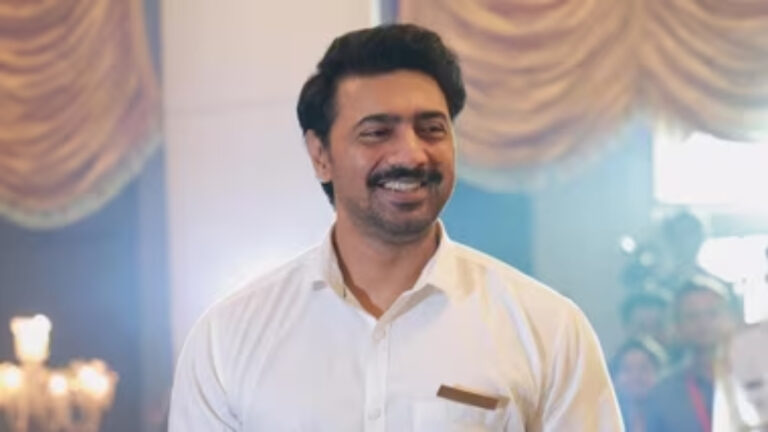
Dev Slams ‘Fake’ Viral Video: “Bengal Never Believed in Hatred”

New Delhi, May 8, 2026 — In the wake of a seismic shift in West Bengal’s political landscape, superstar-turned-politician Dev Adhikari has broken his silence regarding a viral video that appeared to show him being heckled by a crowd. The actor, who has long been the face of the Trinamool Congress (TMC) in Ghatal, labeled the footage “altered and manipulated,” asserting that such “malicious propaganda” is a stain on the true culture of Bengal.

The controversy erupted shortly after the 2026 West Bengal Assembly Elections, which saw the Bharatiya Janata Party (BJP) secure a landmark victory, ending 15 years of TMC governance.

The Controversy: Fact vs. Fiction

The video in question, which spread like wildfire across social media platforms, depicted Dev moving through a dense crowd under heavy security. In the audio accompanying the clip, voices could be heard chanting “chor, chor” (thief, thief)—a slogan frequently used during the heated election campaign.

However, Dev took to Facebook and X (formerly Twitter) to set the record straight, sharing the original footage alongside the viral version. In the authentic clip, the “chor” chants are absent; instead, the air is filled with the usual roar of supporters and the general clamor of a public event. Dev explained that he was shielding his face in the video not out of shame, but simply to protect himself from the heavy dust in the area.

“Bengal has never believed in a culture of hatred,” Dev wrote in a heartfelt post. “Over the past few days, several altered and manipulated videos of me have been circulated with the intention of defaming and misleading people. Deliberate misinformation and character assassination can never be the culture of our state.”

A Call for Unity Amid a New Guard

The timing of the video’s circulation is particularly sensitive. As the state transitions to a new administration, Dev—who has maintained a reputation as one of the more “gentle” faces of politics—issued a plea for grace and professionalism.

Interestingly, despite his deep ties to Mamata Banerjee’s TMC, Dev was quick to acknowledge the democratic mandate. He congratulated the BJP on their victory and expressed hope that the new government would prioritize the Ghatal Master Plan, a massive flood management project crucial to his constituency.

Dev’s message to the new government included:

  • Ending Industry Divisions: He urged the incoming leadership to ensure that the Bengali film industry (Tollywood) remains a space of artistic freedom, free from the “culture of bans” and political polarization.
  • Safety and Respect: He called on the authorities to take strict action against digital misinformation, expressing faith that the new government would protect citizens from character assassination.
  • Progress Over Politics: He emphasized that while parties may change, the development of Bengal—specifically the completion of the Medinipur flood projects—must continue.

The Broader Impact on Tollywood

Dev isn’t the only artist feeling the heat. The 2026 election results have sent ripples through the Bengali film industry, which has been deeply intertwined with politics for over a decade. While some figures, like filmmaker Raj Chakraborty, have announced their exit from active politics following the TMC’s debacle, Dev seems intent on navigating the new reality with a focus on “mutual respect and coexistence.”

His stance has garnered praise from both fans and some political rivals, who view his call for harmony as a necessary step toward healing a deeply divided state. By addressing the “fake news” head-on, Dev has highlighted a growing concern in modern Indian elections: the use of deepfakes and audio manipulation to settle political scores.

Looking Ahead: “Bike Ambulance Dada”

While the political storm rages, Dev is also looking toward his professional milestones. He is currently preparing for the release of his 50th film, Bike Ambulance Dada. Based on the inspiring true story of Padma Shri awardee Karimul Haque, the film represents a return to the “people-centric” storytelling that Dev hopes will transcend the bitterness of the recent polls.

As Bengal enters this new chapter, Dev’s message remains clear: Governments may rise and fall, but the “heart of Bengal”—built on harmony and culture—must remain intact. He has requested his followers not to share unverified content, reminding everyone that in the digital age, the truth is often the first casualty of war.

Lenskart in Focus: Block Deal Fever Grips Markets as Post-IPO Lock-in Ends

0

New Delhi, May 8, 2026 — Shares of India’s eyewear giant, Lenskart Solutions Limited, are the center of intense market chatter today as the mandatory six-month post-IPO lock-in period for several large shareholders officially expired. The event has triggered a massive wave of “block deals,” with existing institutional investors reportedly offloading stakes worth thousands of crores, reshaping the company’s cap table in the public market.

By mid-morning on Friday, reports indicated that a staggering ₹5,300 crore to ₹5,650 crore worth of shares were being shuffled through block transactions. This surge in volume comes as nearly 60% of Lenskart’s total equity—valued at approximately ₹51,000 crore—became eligible for trading for the first time since the company’s blockbuster listing in November 2025.

The Mechanics of the Deal

According to sources familiar with the development, the block deal was executed at a floor price of approximately ₹470 per share. This represents a modest discount of about 3.6% compared to Thursday’s closing price of ₹492.40.

Investors participating in the sell-off include prominent names that have backed Lenskart through its journey from a startup to a global eyewear powerhouse. Reports suggest that Birdseye View Holding, TR Capital Mauritius, ABG Capital, and Kariba Holdings are among the sellers looking to either trim or fully exit their positions. Alpha Wave Global, one of Lenskart’s largest backers with a nearly 7% stake, is also expected to be part of the transaction, though sources indicate they may remain subject to a fresh 90-day lock-in for their remaining holdings.

Market Reaction: A Stress Test for the Stock

As news of the massive supply hit the terminals, Lenskart’s stock price faced immediate pressure. The shares were trading down by roughly 1.3% to 3% in early Friday trade, hovering around the ₹481 mark.

While a dip is common when a large volume of shares enters the market (the “supply overhang” effect), analysts point out that the stock still holds a healthy lead over its IPO issue price of ₹402. Since its debut in late 2025, Lenskart has consistently traded above its listing price, bolstered by strong quarterly earnings and aggressive international expansion.

Understanding the “Lock-in” Expiry

For the uninitiated, SEBI regulations mandate a “lock-in” period for pre-IPO shareholders, promoters, and anchor investors to prevent a sudden exodus of capital immediately after a company goes public. This ensures price stability during the initial months of trading.

For Lenskart, which listed on November 10, 2025, the six-month window closed this week. The sheer scale of this expiry—involving over 104 crore shares—is one of the largest the Indian markets have seen this year. However, it is important to note that “eligible for trading” does not mean all these shares will be sold; many long-term investors like SoftBank and Temasek often choose to hold their positions for years post-listing.

A Look at the Fundamentals: “Compounding Has Begun”

The block deal buzz comes on the heels of a stellar Q3 FY26 performance. Founder and CEO Peyush Bansal recently remarked that the company’s “compounding has begun,” a sentiment backed by a 238% jump in net profit to ₹132 crore for the December quarter.

Lenskart’s growth story remains a compelling one for institutional buyers who might be on the other side of today’s block deals:

  • Revenue Growth: The company reported an operating revenue of over ₹5,400 crore in FY24, with expectations of crossing ₹7,000 crore in the current fiscal.
  • Profitability: After years of prioritizing scale, Lenskart has successfully pivoted toward consistent profitability, reducing its net losses to near-zero before turning the corner into substantial green territory this year.
  • Global Footprint: With over 2,500 stores (roughly 2,000 in India and 500+ abroad), Lenskart is no longer just an Indian retailer. Its acquisition of the Japanese brand Owndays and its expansion into Thailand, the UAE, and Singapore have turned it into a pan-Asian leader.

Navigating Recent Controversies

While the financial metrics look robust, Lenskart has not been without its share of “noise.” In recent weeks, the company faced a social media storm regarding an alleged internal dress code policy that reportedly restricted religious symbols.

The company was quick to issue a public apology and a revised “In-Store Style Guide,” explicitly welcoming symbols of faith such as bindis, tilaks, turbans, and hijabs. While this controversy caused a brief 5% dip in the stock last week, today’s market activity suggests that institutional investors are focused squarely on the company’s long-term earnings potential rather than short-term PR hurdles.

What Lies Ahead?

The successful absorption of a ₹5,000+ crore block deal is often seen as a sign of “institutional depth.” If the market can soak up this supply without a free-fall in the share price, it signals that new, large-scale investors (likely mutual funds and foreign sovereign wealth funds) are eager to buy into the Lenskart story at these levels.

For retail investors, the end of the lock-in period marks a transition. Lenskart is moving from being a “newly-listed” stock to a mature, high-liquidity mid-cap play. With the supply overhang partially cleared through today’s deals, the focus will now shift to the upcoming Q4 and Annual FY26 results, where the market will look for confirmation that the “compounding” Peyush Bansal promised is indeed in full swing.

Tata Trusts Meeting Delayed: Governance and IPO Decisions Loom

0

New Delhi, May 8, 2026: The Indian corporate landscape is currently centered on Mumbai’s Bombay House as news emerges regarding the postponement of a critical Tata Trusts board meeting. This meeting, which was expected to address pivotal issues regarding the governance structure of the philanthropic behemoth and the potential public listing of Tata Sons, has reportedly been pushed back.

This development comes at a time when the $165-billion Tata Group is navigating a complex transition phase, balancing its traditional philanthropic roots with the modern pressures of regulatory compliance and market expectations.

The Significance of the Meeting

The Tata Trusts—principally the Sir Dorabji Tata Trust and the Sir Ratan Tata Trust—hold a combined 66% stake in Tata Sons, the holding company of the entire Tata Group. Because the Trusts are the majority owners, any decision made by their board has a direct and profound impact on the direction of India’s largest conglomerate.

The postponed meeting was expected to be a landmark session. Industry insiders suggest that the agenda was packed with high-stakes items, ranging from the formalization of leadership roles to the legal intricacies of how the group interacts with its primary holding company.

The Governance Overhaul

One of the primary reasons for the intense interest in this meeting is the ongoing discussion regarding governance. Since the passing of Ratan Tata, the group has been meticulously working on a “succession and stability” framework.

Governance at the Trusts is not just about choosing leaders; it is about defining the “vanguard” role the Trusts play over Tata Sons. Key points under discussion include:

  1. The Dual Role Conflict: There have been historical debates about whether the Chairman of the Tata Trusts should also be a director on the board of Tata Sons. Recent efforts have leaned toward keeping these roles distinct to ensure a system of checks and balances.
  2. Professionalization of the Board: There is a growing movement within the group to induct more professional trustees with backgrounds in law, finance, and global philanthropy to complement the family’s presence.
  3. The “Veto” Rights: Under the current Articles of Association, the Trusts have significant powers over the appointment and removal of the Tata Sons Chairman. Refining these powers to ensure they are used constructively for long-term growth is a top priority.

The Tata Sons Listing Dilemma

Perhaps the most market-sensitive topic on the table is the potential Initial Public Offering (IPO) of Tata Sons. The Reserve Bank of India (RBI) classified Tata Sons as an “Upper Layer” Non-Banking Financial Company (NBFC-UL) in 2022. According to RBI regulations, such companies are required to list on the stock exchanges within three years—a deadline that falls in September 2025.

However, the Tata Group has historically preferred to remain a closely-held entity. Listing Tata Sons would mean:

  • Unprecedented Transparency: As a public company, Tata Sons would have to disclose granular details about its investments, cash flows, and decision-making processes.
  • Valuation Spark: Analysts estimate that a Tata Sons listing could be one of the largest in Indian history, potentially unlocking billions of dollars in value for the Trusts.
  • Regulatory Maneuvering: There have been reports that the group is exploring ways to restructure its debt or surrender its NBFC license to avoid the mandatory listing. This “de-registration” route would involve paying off substantial debts and reorganizing its balance sheet.

The postponement of the board meeting suggests that the leadership may need more time to evaluate the legal and financial implications of these choices before making a final commitment to the RBI.

Why the Postponement?

While an official reason has not been cited, several factors likely contributed to the delay:

  • Legal Consultations: Given the complexity of the RBI mandate, the group’s legal advisors are likely fine-tuning the proposal to ensure that any path taken—whether listing or restructuring—is watertight.
  • Stakeholder Alignment: In a group as large as Tata, ensuring that all major trustees and family members are on the same page is crucial. Rushing a decision of this magnitude could lead to friction.
  • Financial Audits: Preparing for a potential listing or a massive debt restructuring requires an exhaustive audit of the group’s various holdings, from TCS and Tata Motors to the newer ventures in semiconductors and electronics.

The Broader Impact on the Tata Ecosystem

The outcome of these discussions will trickle down to every subsidiary within the group. For example, Tata Consultancy Services (TCS) provides the bulk of the dividends that fund the Trusts’ philanthropic activities. A change in the governance of the Trusts could influence how those dividends are reinvested or distributed.

Furthermore, the “Tata Brand” is built on trust and stability. By taking the time to address these governance questions thoroughly, the leadership is signaling to global investors that they are committed to a stable, long-term vision rather than a quick fix for regulatory requirements.

What Happens Next?

The market is now watching for the rescheduled date of the board meeting. In the interim, the following developments are expected:

  1. Communication with the RBI: Tata Sons may seek further clarity or a potential extension from the central bank, citing the unique nature of its structure as a holding company for a philanthropic trust.
  2. Internal Committee Meetings: Smaller sub-committees within the Trusts will likely continue to meet to resolve technical disagreements before the full board reconvenes.
  3. Market Speculation: Shares of listed Tata companies—such as Tata Motors, Tata Power, and Tata Steel—may experience volatility as investors speculate on the potential “value unlocking” that a Tata Sons IPO could bring.

Conclusion

The postponement of the Tata Trusts board meeting is not merely a delay in scheduling; it is a reflection of the gravity of the decisions at hand. As the group stands at a crossroads between its century-old traditions and the demands of modern financial regulation, the steps taken in the coming months will define the Tata legacy for the next generation.

For the common investor and the public, the message is clear: The Tata Group is prioritizing “doing it right” over “doing it fast.” Whether this leads to a historic IPO or a sophisticated corporate restructuring, the focus remains on preserving the integrity of the institution that remains a cornerstone of the Indian economy.

The Mythos Effect: How Mozilla Fixed a Decade of Bugs in a Single Month

0

New Delhi, May 8, 2026 — In what cybersecurity experts are calling a “watershed moment” for software defense, Mozilla has announced a massive successful “bug cull” for its Firefox browser. Leveraging a powerful new AI engine known as Mythos, the non-profit organization successfully identified and patched 271 security-sensitive vulnerabilities in just a few weeks—a feat that would typically take human researchers years to accomplish.

The results, included in the recent release of Firefox 150, represent a seismic shift in the arms race between hackers and defenders. While Firefox has long been a favorite for privacy-conscious users, it has often struggled to match the sheer engineering resources of Google’s Chromium. With Mythos, Mozilla may have finally found the ultimate equalizer.

What is Mythos?

Mythos is an advanced, cybersecurity-focused version of Anthropic’s Claude large language model. Unlike standard AI that writes poetry or summarizes emails, Mythos was built specifically to understand code logic and “think” like a high-level security researcher.

Mozilla’s success wasn’t just about handing the keys to an AI. They developed a custom system called an “Agent Harness” to guide the AI.

  • Directed Scanning: Instead of guessing, the harness points Mythos toward specific, complex parts of the Firefox source code.
  • Autonomous Testing: Mythos doesn’t just point at a potential bug; it writes a “test case” (like a piece of malformed HTML) to see if it can actually crash the browser.
  • The “Double Check”: To prevent “hallucinations” (AI making things up), Mozilla used a second AI model to grade the reports. Only the most certain, high-quality bugs ever made it to a human engineer’s desk.

The Numbers: A Year’s Work in Three Weeks

The sheer scale of the bug cull is best understood by comparing it to previous years. In April 2025, Mozilla patched roughly 30 bugs. In April 2026, that number skyrocketed to 423 total fixes, with 271 of those directly credited to the Mythos initiative.

Breakdown of the 271 AI-Found Bugs

SeverityCountImpact
High180Critical vulnerabilities that could allow data theft.
Medium80Logic errors and moderate security risks.
Low11Minor “defense-in-depth” improvements.

Most notably, Mythos discovered sandbox vulnerabilities—the “Holy Grail” for hackers. A sandbox is the digital cage that keeps a website from reaching the rest of your computer. Breaking out of it is incredibly difficult, which is why Mozilla offers bounties of up to $20,000 for such bugs. Mythos found several that had been sitting in the code for over a decade.

The Human Element: AI Finds, Humans Fix

Despite the AI’s brilliance, Mozilla is quick to point out that humans aren’t obsolete. While Mythos is world-class at finding flaws, it isn’t yet trusted to fix them.

“Every single patch in Firefox 150 was written by one human engineer and reviewed by another,” explained Brian Grinstead, a distinguished engineer at Mozilla. “The AI can suggest a fix, and that helps us work faster, but for software as critical as a browser, we still need human accountability.”

Mozilla CTO Bobby Holley noted that while Mythos is as capable as an “elite human researcher,” it hasn’t yet found a type of bug that humans couldn’t eventually find. The difference is speed and scale. Mythos can work 24/7, never gets tired, and can keep the entire 30-million-line Firefox codebase in its “memory” at once.

A New Era for Cybersecurity

The success of the Mythos project has wider implications for the entire internet. Mozilla is part of a consortium called Project Glasswing, which includes giants like Apple, Google, and Microsoft. These companies are getting early access to Mythos to harden the world’s most important software before the AI is released more broadly.

The logic is simple: if the “good guys” use AI to find and fix every bug today, there will be nothing left for “bad guys” to exploit tomorrow.

However, the mood at Mozilla is one of “cautious optimism.” While the 271 bugs are gone, the browser remains a moving target. As new features are added, new bugs are born. But for the first time in years, the defenders feel they have the high ground.

As Anthropic CEO Dario Amodei put it: “There are only so many bugs to find. If we handle this right, we could be in a better world on the other side of this.”

Amazon Great Summer Sale 2026: Top Early Deals for Prime Members

0

New Delhi, May 8, 2026: Amazon’s much-anticipated Great Summer Sale has officially kicked off for Prime members, offering a 24-hour head start on some of the year’s most aggressive discounts. While the general public will gain access shortly, Prime subscribers are currently snagging the best deals on premium smartphones, high-end laptops, and essential summer appliances.

With a mix of flat discounts, bank offers, and exchange bonuses, this sale is a golden opportunity for tech enthusiasts to upgrade their gear. Here is a comprehensive breakdown of the best offers available right now.

The Banking & Cashback Advantage

Before diving into specific products, it is vital to understand the “stackable” offers that drive prices down to their lowest points. For the Great Summer Sale, Amazon has partnered with several major banks to provide instant relief at checkout.

  • Bank Offers: Customers using credit/debit cards from HDFC Bank, ICICI Bank, and Axis Bank can avail of an instant 10% discount (up to ₹1,500 – ₹5,000 depending on the category).
  • Amazon Pay ICICI Card: Prime members using this co-branded card get 5% unlimited cashback, which often works out to be better than the flat bank discount for high-value items like iPhones or premium TVs.
  • Exchange Bonuses: Amazon is offering “Mega Exchange” deals where you can get up to ₹25,000 off by trading in your old smartphone or laptop.
  • No-Cost EMI: Budget-conscious shoppers can opt for no-cost EMI plans for up to 24 months, making premium tech much more accessible.

Smartphones: The Biggest Price Drops

Smartphones remain the headline act of every Amazon sale. From budget-friendly 5G devices to ultra-premium flagships, the price cuts are significant.

1. The iPhone 15 & 16 Series

Apple enthusiasts have a reason to cheer. The iPhone 15 (128GB), which usually retails around ₹65,000, is seeing an effective price drop to nearly ₹51,999 when combining bank offers and coupons. The newer iPhone 16 is also seeing its first major price revision on Amazon, with effective prices landing in the ₹60,000 – ₹64,000 range. If you’ve been waiting to switch to the “Action Button” era, now is the time.

2. Samsung Galaxy Flagships

Samsung is dominating the premium segment this year with massive price slashes on the S-series:

  • Galaxy S25 Ultra 5G: The AI-heavy flagship is available with a massive exchange bonus, bringing its effective price down significantly from its launch price of ₹1,29,999.
  • Galaxy S24 & S23 FE: These “Fan Edition” models are the stars of the mid-premium segment, with the S23 FE hitting an all-time low price of approximately ₹33,999.

3. Mid-Range Killers: OnePlus, iQOO, and Xiaomi

  • OnePlus Nord CE 4 & OnePlus 12R: These remain the go-to choices for performance. The OnePlus 12R is seeing effective discounts of up to ₹4,000, making it a beast for gaming under ₹40k.
  • iQOO 12 & Z9 Series: For those prioritizing raw speed, iQOO’s lineup is bundled with flat bank discounts and additional coupon offers.
  • Redmi Note 13 Pro: A favorite for its 200MP camera, it’s now available at its lowest price since launch.

Electronics: Laptops, Tablets, and Audio

The “Great Summer Sale” isn’t just for phones; the electronics category is seeing discounts of up to 75%.

Laptops for Every Need

Whether you are a student, a gamer, or a professional, there is a deal for you:

  • MacBook Air M2/M3: The MacBook Air M2 has become the “value king” of the sale, often appearing at an effective price of under ₹70,000 with bank offers.
  • Gaming Laptops: ASUS ROG and HP Victus series laptops with RTX 3050/4050 GPUs are seeing price cuts of up to 30%, with additional exchange benefits on your old PC.
  • Thin & Light: Laptops from Acer and Dell starting as low as ₹29,999 are perfect for back-to-school shoppers.

Tablets and Audio

  • Apple iPad (10th Gen): This tablet is seeing a massive push, with prices dropping toward the ₹30,000 mark.
  • Samsung Galaxy Tab S9 FE: A great Android alternative that includes the S-Pen, now available at a highly competitive sub-₹25k price point.
  • Sony WH-1000XM5: The industry-leading noise-canceling headphones are seeing a price drop of nearly ₹5,000, making them a must-buy for frequent travelers.
  • TWS Earbuds: Popular earbuds like the OnePlus Buds Pro 2 and Samsung Galaxy Buds 2 Pro are at their lowest-ever prices.

Beating the Heat: Summer Appliances

True to its name, the Great Summer Sale is focusing heavily on cooling appliances.

  • Air Conditioners: Brands like Daikin, LG, and Panasonic are offering up to 55% off on 1.5-ton 3-star and 5-star Inverter Split ACs. Many of these come with free installation and extended warranties.
  • Refrigerators: Double-door and Side-by-Side refrigerators from Samsung and Whirlpool are seeing discounts of up to ₹20,000 when combined with exchange offers.
  • Smart TVs: 4K Smart TVs are starting at just ₹19,999. Premium OLED and QLED models from Sony and Samsung are bundled with “No-Cost EMI” for up to 18 months, making the luxury theater experience more affordable.

Quick Tips for Prime Members

To ensure you get the most out of this sale, keep these tips in mind:

  1. Check for Coupons: Many products have a “Check Box” coupon on the product page. Always click it to get an extra ₹500 to ₹2,000 off.
  2. Use the “Wishlist” Feature: Popular items like the iPhone 15 can go out of stock or see price fluctuations. Keep them in your wishlist to monitor price changes instantly.
  3. Compare Exchange Values: Sometimes, Amazon offers a “Scrap Value” for very old phones, while other times they offer “Bonus Exchange.” Check both options to see which gives you the better deal.
  4. Amazon Pay Rewards: Check your Amazon Pay dashboard for “collected” rewards that might give you extra cashback on your purchase.

Conclusion

The Amazon Great Summer Sale 2024 is shaping up to be one of the best mid-year shopping events. While the smartphone deals are the primary attraction, the aggressive pricing on laptops and summer appliances makes it a well-rounded event. If you are a Prime member, the clock is ticking—the most popular colors and storage variants of top-tier gadgets are likely to sell out before the sale opens to everyone else.

Happy shopping, and remember to double-check those bank card eligibility criteria before hitting “Buy Now”!