Home Blog Page 93

From Trench Coats to Saris: A History of Indian Icons at the Met Gala

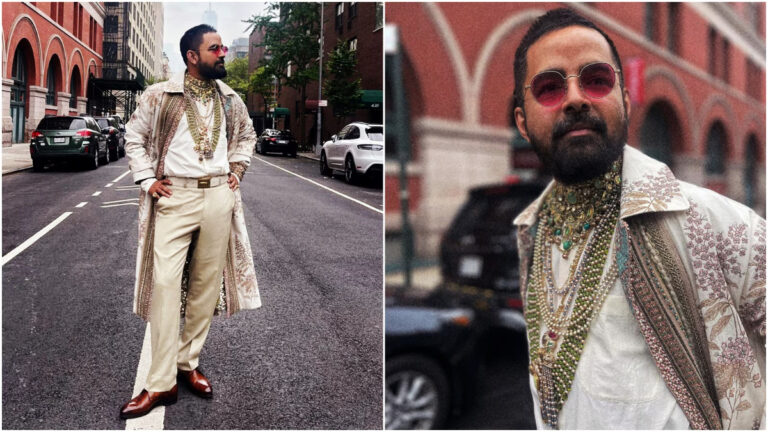
New Delhi, May 2, 2026: As the world’s fashion elite prepares for another night of spectacle and style, the Met Gala has firmly established itself as the “Super Bowl of Fashion.” While once dominated almost exclusively by Hollywood, the red carpet steps of the Metropolitan Museum of Art have increasingly become a runway for Indian excellence. From global trailblazers to cultural ambassadors, Indian stars have transformed from occasional guests to central figures who now shape the global fashion narrative.

As we approach the 2026 gala, let’s look back at the journey of the Indian icons who have graced the iconic steps.

The Trailblazer: Priyanka Chopra Jonas

It is impossible to discuss the Indian presence at the Met Gala without beginning with Priyanka Chopra Jonas. In 2017, she made her debut in a custom Ralph Lauren trench coat gown that remains one of the most talked-about looks in the event’s history. It wasn’t just a dress; it was a defining pop-culture moment that shattered the notion that Indian celebrities were peripheral players on the global stage.

Priyanka has since become the most consistent Indian attendee, effortlessly shifting themes year after year:

  • 2018: A regal, deep burgundy velvet Ralph Lauren gown with a jewel-encrusted hood.
  • 2019: A theatrical, feathered Dior look that perfectly embraced the “Camp” theme.
  • 2023: A sleek, black Maison Valentino gown featuring gloves and a dramatic cape.
  • 2025: A sophisticated Balmain polka-dotted ensemble paired with a wide-brimmed hat and a massive 241-carat emerald necklace by Bvlgari.

The Early Adopter: Deepika Padukone

Deepika Padukone joined the Met Gala circuit in 2017 alongside Priyanka, marking a significant period for Indian representation. While her debut featured a elegant satin Tommy Hilfiger gown, Deepika quickly pivoted toward the avant-garde theatricality the gala is famous for. Her 2019 appearance—a voluminous, doll-inspired pink Zac Posen gown—is still cited by fashion critics as a masterclass in interpreting a challenging theme.

The Cultural Ambassadors: Alia Bhatt and Beyond

In recent years, the narrative has shifted from merely participating in global trends to actively centering Indian craftsmanship.

Alia Bhatt has become a powerhouse of “desi” pride. Her 2023 debut in a pearl-embellished Prabal Gurung gown was a beautiful nod to Karl Lagerfeld’s Chanel aesthetic. However, it was her 2024 appearance that truly captured the world’s attention: a custom mint-green Sabyasachi sari. Featuring a 23-foot train, intricate silk floss embroidery, and semi-precious stones, it placed Indian textile heritage firmly at the center of the conversation.

The 2025 gala saw an unprecedented surge in Indian visibility, with stars like Shah Rukh Khan, Kiara Advani, and Diljit Dosanjh making their highly anticipated debuts:

  • Shah Rukh Khan: Made a spectacular entry in a sharply tailored, all-black Sabyasachi ensemble. Styled with layered jewelry, a “K” pendant, and a statement cane, he embodied a theatrical, dandy aesthetic that resonated globally.
  • Kiara Advani: Delivered a breathtaking debut in a sculptural Gaurav Gupta gown. The off-shoulder black design with a striking gold corset was both empowering and effortlessly chic.
  • Diljit Dosanjh: Rooted his appearance in cultural pride, wearing a custom Prabal Gurung look styled with a traditional turban and a ceremonial kirpan, successfully blending high-fashion couture with his distinct identity.

Why This Matters

The evolution of Indian celebrities at the Met Gala mirrors the rising influence of India on the global stage. Early appearances often leaned toward Western, “safe” couture. Today, however, the trend has shifted toward celebration—embracing saris, sherwanis, and indigenous embroidery techniques that demand respect for Indian fashion history.

These celebrities have proved that Indian culture is not just a destination for inspiration, but a vibrant participant in the future of global fashion. As we wait to see who walks the red carpet in 2026, one thing is certain: the world is watching, and the Indian footprint at the Met Gala is only growing larger.

OnePlus 15R vs. Vivo V70 Elite – Which Reigns Supreme in 2026?

New Delhi, May 2, 2026: As of May 2026, the mid-to-premium smartphone segment in India has become incredibly competitive. For buyers looking to spend upwards of ₹50,000, two devices are currently dominating the conversation: the OnePlus 15R and the Vivo V70 Elite. Both phones promise flagship-grade experiences, but they cater to very different types of users.

If you find yourself torn between these two, you aren’t alone. Let’s break down exactly what each device offers to help you decide which one deserves a spot in your pocket.

Design and Display: Immersive Power vs. Sleek Sophistication

The OnePlus 15R is built for those who prioritize immersion. Featuring a large 6.83-inch AMOLED display with a segment-leading 165Hz refresh rate, it is undeniably a powerhouse for mobile gaming and media consumption. Whether you are scrolling through social media or engaging in high-stakes competitive gaming, the fluidity is unmatched.

On the other side of the ring, the Vivo V70 Elite takes a more refined approach. It features a compact 6.59-inch AMOLED display that is easier to handle with one hand. Don’t let its size fool you—it is incredibly bright, peaking at 5000 nits, making it arguably the best phone in the segment for outdoor visibility under direct sunlight. Furthermore, its design is strikingly thin at just 7.59mm, offering a premium feel that fits comfortably in a pocket or small bag.

Performance: The Engine Room

This is where the two devices take fundamentally different paths.

  • OnePlus 15R (The Performance Beast): Powered by the Snapdragon 8 Gen 5, this device is built for maximum speed. In real-world usage, it handles the most demanding games—like Genshin Impact or competitive shooters—with consistent frame rates and impressive thermal efficiency. If you are a power user who wants the latest hardware for longevity, the 15R is the clear technical winner.
  • Vivo V70 Elite (The Balanced Performer): Driven by the Snapdragon 8s Gen 3, the V70 Elite doesn’t aim to top benchmark charts, but it excels in daily reliability. It manages heat effectively and keeps the system running smoothly without the occasional thermal throttling that can occur when pushing top-tier chips to their absolute limit. For most users, this is more than enough power.

Battery and Charging: Endurance vs. Speed

A major point of contention for potential buyers is how these phones handle power.

The OnePlus 15R is a marathon runner. Its massive 7,400mAh battery is one of the largest in its class. For heavy users who are often away from a charger, this phone is a dream come true, easily lasting through a day and a half of heavy use.

The Vivo V70 Elite counters with a 6,500mAh battery paired with 90W fast charging. While it has a smaller capacity, the convenience of topping up your battery in minutes is a lifestyle game-changer. If your day involves quick breaks rather than long, uninterrupted periods away from a power outlet, you might find the Vivo’s charging speed more practical.

Camera: Capturing the Moment

Photography remains a subjective but crucial factor.

  • Vivo V70 Elite: Vivo has leaned heavily into its ZEISS optics, which provide a distinct, cinematic look to photos. The primary and telephoto sensors offer excellent versatility, especially for portrait photography and creative social media content. It is a fantastic choice for those who value artistic expression and zoom capabilities.
  • OnePlus 15R: OnePlus has simplified its camera system to focus on the basics. The 50MP main sensor produces sharp, natural-looking images with great color accuracy. However, in this iteration, the company has opted to remove the dedicated telephoto lens. If you are a casual shooter who just wants a reliable point-and-shoot experience, you will be happy, but photography enthusiasts might miss the zoom versatility found in the Vivo.

Final Verdict: Which One Should You Pick?

Choosing between these two comes down to your personal lifestyle, not just the spec sheet.

Pick the OnePlus 15R if:

  • You are a gamer: The 165Hz display and the Snapdragon 8 Gen 5 processor make this the ultimate choice for mobile gaming enthusiasts.
  • Battery life is your #1 priority: The 7,400mAh battery is truly exceptional for long-term usage.
  • You prefer a larger screen: It is perfect for streaming movies or intense multitasking.

Pick the Vivo V70 Elite if:

  • You value a premium, compact design: It feels more elegant and is much easier to manage in one hand.
  • You are a photography enthusiast: The ZEISS-tuned camera system offers more creative versatility for portraits and outdoor photography.
  • You prioritize outdoor brightness and quick charging: The 5000-nit screen and 90W charging are incredibly convenient for daily, on-the-go use.

At over ₹50,000, you are making a significant investment. Both phones are excellent, but ensure you align your choice with whether you want a performance-first powerhouse (OnePlus) or a design-centric, versatile companion (Vivo).

Viral Birthday Stunt at Kedarnath Sparks Police FIR

0

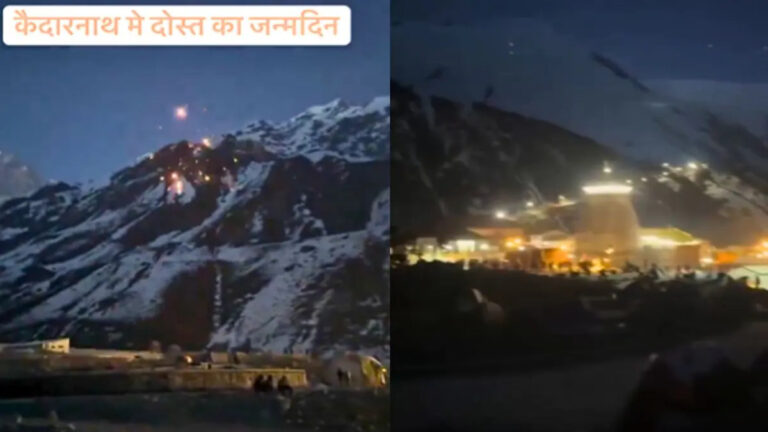
New Delhi, May 2, 2026 — The sanctity of one of India’s most revered pilgrimage sites has been thrust into the center of a national debate following a viral video showing tourists bursting firecrackers to celebrate a birthday within the premises of the Kedarnath Temple. The incident, which occurred just days after the commencement of the Char Dham Yatra, has sparked massive public outrage, leading to immediate police intervention and a stern warning from authorities regarding the conduct of pilgrims at holy sites.

The Incident and Police Action

The controversy began earlier this week when a video surfaced on social media platforms, showing a group of individuals celebrating a birthday near the hallowed Kedarnath shrine. In the footage, the tourists are seen lighting firecrackers, clearly audible and visible, amidst the sacred environment where thousands of devotees gather to seek spiritual solace.

The Rudraprayag Police, acting swiftly upon the circulation of the video, registered a formal FIR at the Kotwali Sonprayag police station. The case has been filed against the individuals involved, including the owner of an Instagram handle identified as ‘Sumit-Ke-Blog’, under Section 353(3) of the Bharatiya Nyaya Sanhita (BNS). This section specifically addresses acts of public mischief and the violation of sanctity within a place of worship.

“The reel appears to have been recorded during the initial days of the shrine’s opening,” said Sub-inspector Ravindra Singh Rawat, in-charge of the Rudraprayag Social Media Monitoring Cell. “An investigation is underway to identify and apprehend all individuals involved in this act, which has deeply hurt the religious sentiments of pilgrims and devotees.”

A Growing Trend of “Reel Culture”

This incident is not an isolated event but rather part of a worrying pattern that has emerged during the 2026 Char Dham Yatra. Since the portals of the temple opened on April 22, police have been grappling with a rising tide of improper behavior by visitors more interested in creating social media content than in religious observance.

Reports indicate that nearly half a dozen similar cases have been registered within the first week of the pilgrimage alone. Other infractions include:

  • Political Demonstrations: Visitors waving political party flags within the temple vicinity.
  • Restricted Zone Breaches: Vloggers and tourists venturing into restricted, fragile glacier zones to film content, ignoring boundary ropes and safety warnings.
  • Disruptive Conduct: General unruly behavior that hinders the smooth management of the heavy footfall of devotees.

Local residents and shrine officials have expressed profound disappointment. Ashish Gairola, a local resident, lamented the shift in visitor behavior: “The things happening this time are unprecedented. People are breaching the sanctity of such a pious place. It feels as though more people are coming for social media likes and comments rather than to experience the spirituality of Kedarnath.”

The Impact on Pilgrimage and Administration

The Kedarnath Yatra is a monumental administrative effort, requiring massive coordination to manage crowds, ensure safety, and maintain the fragile Himalayan ecology. The local economy, which relies heavily on the success of the pilgrimage, is now concerned that such controversies could tarnish the reputation of the Yatra.

For the police, managing these incidents is not only a matter of law but a drain on critical resources. An officer deployed at the site noted, “Dealing with such conduct consumes time and manpower that should be dedicated to assisting elderly pilgrims and ensuring the safety of the massive crowds we see daily.”

The Badrinath-Kedarnath Temple Committee (BKTC) has issued a renewed appeal to all visitors. Senior priest and committee member, Vineet Posti, emphasized that the administration is continuously requesting devotees to behave in a dignified manner that aligns with the religious significance of the Dham.

Law, Ecology, and Religious Sensitivity

The incident also highlights the intersection of law, environment, and tradition. Uttarakhand’s topography is ecologically sensitive, and the noise and chemical pollution from firecrackers pose risks to local wildlife and the environment. Beyond the environmental impact, the act of bursting crackers in a site of profound religious silence and devotion is viewed as a direct affront to the sentiments of the millions who travel great distances to pray there.

State authorities have now tightened social media monitoring, with the state cyber crime unit actively tracking handles that violate norms. Nilesh Anand Bharne, IG (STF) and the state cyber crime unit, stated, “Our dedicated social media monitoring team is identifying such handles and accounts to take necessary legal action. FIRs have already been registered, and more action will follow wherever required.”

Conclusion: A Call for Responsibility

As the Char Dham Yatra continues, the incident serves as a stark reminder of the responsibilities that accompany tourism in sacred spaces. While the digital age encourages capturing memories, there is a growing consensus that such documentation must not come at the cost of public decorum, environmental safety, or the religious sanctity of India’s cultural heritage.

The police action in this case is intended as a deterrent, signaling that the “reel culture” will not be permitted to overshadow the devotion that defines the Kedarnath experience. As the season progresses, authorities are hopeful that increased vigilance and public awareness will restore the peace and reverence that the Kedarnath Dham rightfully demands.

Outrage in Banda: Viral Video Exposes Children Forced into Manual Labour

0

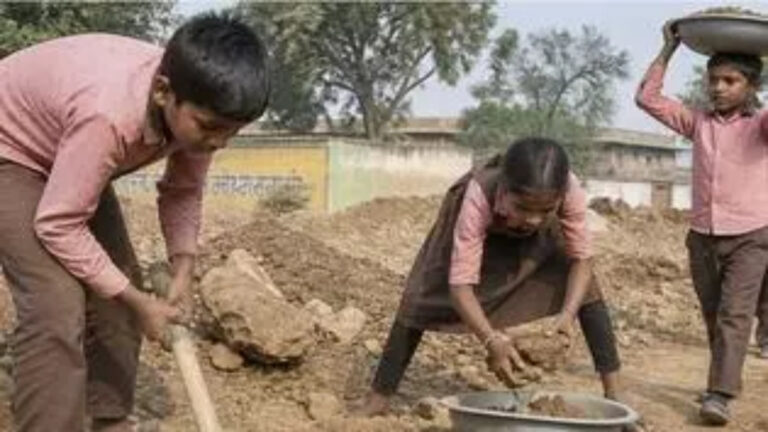
New Delhi, May 2, 2026 – A disturbing video surfacing from Banda, Uttar Pradesh, has ignited widespread public outrage and triggered an urgent administrative inquiry. The footage, which has gone viral on social media platforms, purportedly shows young schoolchildren being forced to engage in strenuous manual labour during what should have been their instructional hours.

The incident has reignited a fierce national debate regarding the safety of minors in educational institutions and the effectiveness of oversight mechanisms designed to protect children from exploitation.

The Incident at a Glance

The viral clip, which began circulating late this week, depicts a group of children—reportedly primary school students—performing physically demanding tasks on school premises. The visuals appear to show the children clearing debris, moving heavy objects, and performing cleaning duties that are clearly outside the scope of any school-related activity or permissible vocational training.

As the video spread, it drew swift condemnation from child rights activists, local community members, and concerned citizens across the state. The widespread reaction highlights a growing intolerance for any form of child labour, particularly when it occurs under the supervision or negligence of those entrusted with the children’s care and education.

Administrative Response and Investigation

In response to the mounting pressure, local authorities in Banda have launched a formal investigation into the matter. District officials have confirmed that they are reviewing the footage to identify the specific school and the individuals responsible for directing the children to perform these tasks.

“We have taken cognizance of the video,” a senior district official stated during a press briefing earlier today. “A team has been constituted to conduct an on-site investigation. Any person found guilty of violating child protection laws or exploiting students for manual labour will face the strictest possible disciplinary and legal action.”

The authorities are currently:

  • Verifying the authenticity and the exact timeline of the footage.
  • Questioning school administration and staff to determine who authorized these tasks.
  • Reviewing compliance with the Right to Education (RTE) Act and other child safety guidelines mandated by the state government.

Legal and Ethical Framework

Under Indian law, children are afforded robust protections against exploitation. The Right of Children to Free and Compulsory Education Act and the Juvenile Justice (Care and Protection of Children) Act explicitly prohibit the use of children for manual labour in any setting.

Experts in child welfare argue that such incidents are not merely lapses in judgment but represent a systemic failure. When schools—the very institutions meant to safeguard the physical and mental development of a child—become sites of exploitation, it causes significant psychological harm and discourages attendance.

“Education is a fundamental right, and schools must be ‘safe spaces’,” says a local activist involved in child protection efforts. “Forcing children into manual labour is a criminal misuse of their time and violates their dignity. This cannot be treated as a simple administrative oversight; it must be addressed with a zero-tolerance policy.”

Community Impact and Public Sentiment

The incident has caused considerable anxiety among parents in the Banda district. Many have demanded an immediate audit of school maintenance practices to ensure that students are never again treated as a source of cheap or forced labour.

Social media discourse has been equally heated, with users calling for the suspension of those in charge and demanding that the education department implement more rigorous monitoring of rural and suburban schools.

Moving Forward: Ensuring Accountability

As the investigation proceeds, the public eye remains fixed on Banda. The incident serves as a stark reminder of the persistent challenges in enforcing child protection policies at the grassroots level.

Moving forward, the administration faces the task of not only penalizing those responsible in this instance but also implementing systemic changes. This includes better community oversight, empowering parents’ associations, and ensuring that school administrations are fully aware of their legal obligations to prioritize the well-being of their students above all else.

Updates on this investigation are expected to be released by the District Magistrate’s office in the coming days as the committee completes its assessment.

Viral Video: Dog Bath at Haridwar Ghat Sparks Outrage

0

May 2, 2026 — A video capturing a woman bathing her pet dog at Haridwar’s Sarvanand Ghat has ignited a fierce debate online, drawing sharp criticism from local authorities and sparking a broader conversation about the intersection of individual freedom, animal welfare, and deep-seated religious sentiments in one of India’s most sacred cities.

The incident, which took place earlier today, shows a woman attempting to wash her dog in the waters of the Ganges. Despite being surrounded by pilgrims and locals who were there for holy rituals, the woman proceeded with the act, ignoring vocal protests from those present.

The Incident at Sarvanand Ghat

In the viral clip, the woman is seen in the water with her dog, seemingly unfazed by the growing discomfort and objections of onlookers. Local priests and devotees, who view the Ganga as a revered goddess, immediately intervened, urging the woman to cease the activity out of respect for the river’s religious sanctity.

As the situation intensified, a heated argument broke out between the woman and the local crowd. A young man accompanying the woman was seen attempting to de-escalate the tension, trying to persuade her to leave the ghat. After a prolonged exchange of words, the pair eventually left the area with the dog.

Ujjwal Pandit, the secretary of the Ganga Sabha, issued a statement regarding the incident, emphasizing that while people from across the country come to express their faith in the Ganga, there is an expectation that they respect the local sentiments and the sacred nature of the site. “Even when requested to stop, some fail to acknowledge the sanctity of the place,” he noted.

A Polarized Online Reaction

The video has triggered a wave of reactions on social media, with netizens largely divided into two distinct camps.

Many users expressed outrage, viewing the act as a deliberate insult to the religious feelings of the millions who visit Haridwar for spiritual cleansing. Critics have pointed out that the ghats are designated for human prayer, meditation, and ritual bathing, and that introducing pets—which are traditionally considered “unclean” in the context of ritual purity in Hindu tradition—is a violation of the site’s rules and atmosphere.

Conversely, a vocal segment of the online community has come to the woman’s defense, framing the issue through a lens of animal rights and nature conservation.

“Nature belongs to animals, too,” one supporter argued on social media. “If the concern is hygiene, there are many humans who use the river without bathing for days. Why single out the dog?” Another commenter pointed to perceived hypocrisy, questioning why practices that arguably pollute the river—such as dumping dairy products, flowers, and waste—are often overlooked, while this particular incident sparked such immediate hostility.

Navigating Sacred Spaces and Modern Norms

Haridwar remains a deeply religious destination, governed by both official municipal regulations and strong, unwritten codes of social conduct. While official guidelines explicitly ask visitors to respect religious norms, dress modestly, and avoid polluting the river, the influx of domestic and international tourists often creates friction between modern urban lifestyles and traditional practices.

Travel experts and local authorities consistently advise visitors to abide by the following to ensure a peaceful experience:

  • Respect Local Customs: Understand that the ghats are not merely recreational sites but active places of worship.
  • Adhere to Signage: Observe any rules posted regarding bathing zones and conduct.
  • Practice Sensitivity: Be mindful that behaviors acceptable in a park or a private home may be seen as deeply offensive in a religious context.

The Broader Context

This incident is not an isolated one, but rather part of an ongoing trend where the rapid modernization of tourist behaviors clashes with traditional spiritual landscapes. As infrastructure projects—like the newly inaugurated Ganga Expressway—continue to bring more people to historic sites, the challenge of maintaining the balance between accessibility for tourists and the preservation of sacred sanctity becomes increasingly complex.

As of now, there have been no formal police reports filed regarding the incident, but the viral video continues to fuel discussion across multiple platforms, serving as a reminder of the delicate cultural landscape of India’s pilgrimage sites.

Viral Bengaluru Police Video: Outrage Over Old Incident

0

New Delhi, May 2, 2026 — A video capturing an incident of police misconduct has resurfaced on social media, triggering significant public outrage and reigniting critical conversations about law enforcement conduct in Bengaluru. The footage, which shows a police officer repeatedly striking a roadside vendor with a baton, has been widely circulated across various digital platforms, prompting immediate demands for accountability.

However, investigations have clarified that the incident is not a recent event. The footage, which depicts a scene from the outskirts of Bengaluru, is reportedly over a year old.

The Incident: What the Footage Shows

The viral clip features a police officer—identified in reports as a Devanahalli police inspector named Rakesh—chasing and striking a man at an eatery located near the Kempegowda International Airport. In the brief but distressing video, the vendor can be heard pleading with the officer, saying, “Don’t beat me,” as the officer continues to strike him with a baton.

According to reports, the confrontation allegedly stemmed from the vendor opening his stall early in the morning, leading to the officer’s aggressive response. The raw nature of the footage has caused a strong emotional reaction among viewers, with many social media users expressing frustration over what they perceive as excessive use of force.

Public Reaction and Calls for Accountability

The circulation of this video has reignited intense debate regarding police-citizen interactions. Prominent public figures have joined the chorus of voices condemning the officer’s actions. Industrialist TV Mohandas Pai took to the social media platform X (formerly Twitter) to voice his strong disapproval, tagging the Karnataka Chief Minister, the Home Minister, and the Director General of Police.

“We are not subjects of anybody, but free citizens in a free country,” Mohandas Pai stated, emphasizing the need for respectful treatment by those in authority.

In response to the viral nature of the video, local organizations, including the Suryanarayana Karunada Senanigala Vedike, held protests in Devanahalli, demanding the immediate suspension of the officer involved.

Official Response: Clearing the Timeline

While the outrage is current, authorities have moved to provide context regarding the age of the incident. When questioned about the current status of the matter, Devanahalli Assistant Commissioner of Police (ACP) Harsha addressed the public concern by clarifying the timeline.

“The video is a year and two months old,” ACP Harsha stated. He further noted that he had taken charge of the area only five months ago, but that the necessary actions regarding the incident had been addressed by the relevant officials at the time the incident originally occurred.

Despite the clarification that the video is archival, the incident has served as a catalyst for renewed calls to ensure that law enforcement personnel maintain professional standards and treat citizens with dignity, regardless of the circumstances.

A Pattern of Increased Scrutiny

This incident arrives at a time when Bengaluru’s police department is facing heightened public and administrative scrutiny. It follows closely on the heels of other recent controversies involving police conduct in the city.

Just days earlier, in late April 2026, an investigation was ordered by the North Division Deputy Commissioner of Police (DCP) after another viral video surfaced. That video allegedly showed an inspector at the R.T. Nagar police station being felicitated by a known rowdy-sheeter. Senior officers have termed such behavior “very unfortunate,” noting that associating with anti-social elements or using excessive force damages the public image and credibility of the police force.

Moving Forward

The reappearance of this older video highlights how digital archives can continue to impact public perception long after an event has passed. It also underscores the ongoing importance of transparency in law enforcement. As Bengaluru continues to grow, both the public and officials are increasingly focused on ensuring that the city’s police force operates with the highest levels of discipline and accountability.

For now, the administration has urged citizens to be mindful of the context behind viral content, while simultaneously reaffirming its commitment to investigating any verified instances of misconduct to maintain public trust.

IPL Pulse: Big Boys, Bigger Bullies – The 2026 Season So Far

0

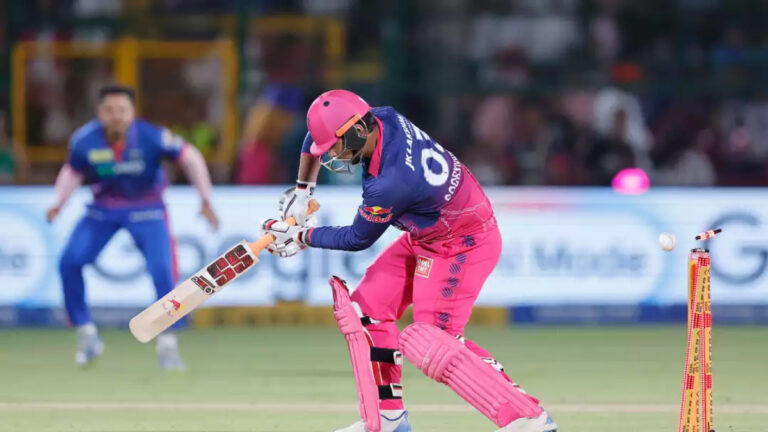
New Delhi, May 2, 2026: The 2026 Indian Premier League (IPL) is proving to be a season defined by explosive power, audacious batting, and a shift in the traditional power dynamics. As we approach the midway point of the tournament, the narrative has shifted from mere competition to a display of pure, unadulterated “bullying” by the top teams.

With the league stage reaching its climax, the points table reflects a fascinating tale: the established giants are being challenged, and a new breed of aggressive cricketers is turning the IPL into a high-octane battle of nerves and muscle.

The Power Struggle at the Top

Currently, the Punjab Kings (PBKS) are leading the pack, asserting their authority with a clinical performance. With 13 points from 8 matches, they have set the benchmark for consistency. Their ability to post gargantuan totals and defend them—or chase down intimidating scores—has made them the team to beat.

Right behind them, the Royal Challengers Bengaluru (RCB) are enjoying a stellar run. Their campaign, anchored by the evergreen Virat Kohli, has been nothing short of a statement. Their recent demolition of the Delhi Capitals, where they chased down a target with sheer dominance, highlighted exactly why they are regarded as one of the most dangerous units this year. With 12 points, they are breathing down Punjab’s neck, boasting the best Net Run Rate (NRR) in the tournament, a clear indicator of their “bully” mentality on the field.

The Resurgent and the Consistent

Sunrisers Hyderabad (SRH) and Rajasthan Royals (RR) round out the top four, both sitting on 12 points. SRH has been particularly impressive, with their batting lineup featuring the likes of Abhishek Sharma and Heinrich Klaasen, who have been consistently terrorizing opposition bowlers.

The Rajasthan Royals, meanwhile, remain the team that everyone fears facing. Their ability to find match-winners from unexpected quarters was on full display recently when they handed Punjab Kings their first defeat of the season.

The Breakout Star: Vaibhav Sooryavanshi

If the 2026 season has a face, it is undoubtedly that of Vaibhav Sooryavanshi. The 15-year-old sensation has taken the league by storm, currently sitting at the top of the Orange Cap race. His ability to hit boundaries at will—coupled with an astonishing strike rate—has left seasoned veterans in awe. Scoring over 400 runs in just nine matches, Sooryavanshi is the embodiment of the new-age IPL cricketer: fearless, brutal, and utterly unbothered by reputations.

He isn’t alone, though. The race for the Orange Cap is a logjam of talent, with KL Rahul, Abhishek Sharma, and Virat Kohli all trading the coveted cap in a race that is as much about tactical aggression as it is about skill.

The “Bullies” Effect: Why Totals Are Soaring

The most distinct trend this season is the sheer magnitude of the totals. It is no longer unusual to see teams posting scores in excess of 220 or 250. This shift is driven by a collective mindset change among batting units. Teams are no longer playing to “set a total”; they are playing to maximize every single ball from the first over to the twentieth.

This “bullying” batting approach has put immense pressure on bowlers. While the likes of Bhuvneshwar Kumar and Jofra Archer continue to pick up wickets, even the most economical bowlers are finding themselves under fire. The rise of specialists, like Mohsin Khan—the current leader in the Purple Cap race—shows that while the batters are bullies, the bowlers are fighting back with cunning variations and raw pace.

What to Watch: The Road to the Playoffs

As the tournament enters the final stretch, the bottom half of the table is desperate for survival. Teams like the Mumbai Indians, Delhi Capitals, and Chennai Super Kings are fighting to break into the top four. The upcoming clashes will be high-stakes affairs where every run and every wicket will be magnified.

With the playoffs looming and the competition tighter than ever, the “big boys” of the IPL are finding that being the best isn’t enough—you have to be the biggest bully on the block to survive the 2026 season.

Key Stats at a Glance (As of May 2, 2026)

MetricPlayer/TeamPerformance Highlights
Orange CapVaibhav Sooryavanshi400+ Runs (Record-breaking strike rate)
Purple CapMohsin KhanLeading wicket-taker (5-wicket haul)
League LeadersPunjab Kings13 Points from 8 matches
Best NRRRoyal Challengers Bengaluru+1.919

As the IPL 2026 season hurtles toward its thrilling conclusion, one thing is certain: there is no room for the faint-hearted. Whether it is a last-over thriller or a dominant nine-wicket chase, the league continues to prove why it is the greatest show in cricket.

‘Tumm Se Tumm Tak’: Arya Harsh Ultimatum to Neel Leaves Everyone Stunned

New Delhi, May 2, 2026 — The drama in Zee TV’s popular romantic saga, Tumm Se Tumm Tak, reached a boiling point in today’s episode, leaving viewers on the edge of their seats. As the story continues to weave a complex web of love, family secrets, and societal pressures, the latest turn of events has cast a dark cloud over the bond between the lead characters and those around them.

The episode, which aired on May 2, 2026, showcased a dramatic confrontation that has fundamentally altered the power dynamics within the show.

A House Divided by Secrets and Strains

The episode began with an atmosphere heavy with tension. Fans of the show, produced by Prateek Sharma’s LSD Studio, have been witnessing a rollercoaster of emotions as the characters navigate the fallout of recent revelations.

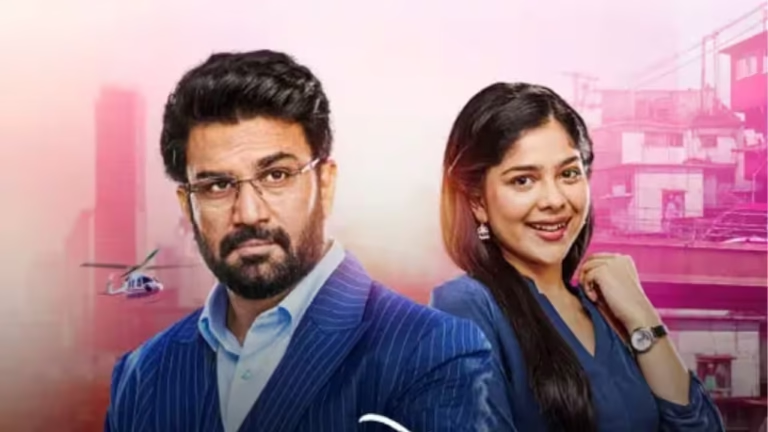
The scene opened at home, where a deeply emotional moment played out between Gayatri and Arya (played by Sharad Kelkar). In a heartbreaking sequence, Arya broke down, confessing the truth that he is not her biological son. Despite the weight of this revelation, Gayatri reassured him that he will always hold that place in her heart. However, the emotional respite was short-lived as the narrative shifted toward the brewing conflict surrounding Simran and Neel.

The Confrontation: Arya’s Drastic Move

The central focus of the episode shifted to the arrival of Anu (played by Niharika Chouksey) at Arya’s residence. In an attempt to mend bridges and help foster the burgeoning relationship between her best friend, Simran, and Neel, Anu brought Neel along, hoping for a peaceful intervention.

However, things did not go as planned. Upon seeing Neel, Arya’s demeanor changed instantly. Instead of a dialogue, Arya launched a scathing attack, questioning Neel’s intentions regarding Simran. In a display of chilling authority, Arya issued a harsh ultimatum: if Neel wants to remain safe, he must leave the city within 24 hours.

Anu Caught in the Crossfire

The moment was nothing short of traumatic for those involved. Anu, who brought Neel to the house with the purest of intentions, watched in absolute shock as the man she loves turned into a person she could barely recognize.

The intensity of the scene was amplified by the reactions of the characters:

  • Neel: Stood stunned, caught off guard by the abruptness and violence of the threat.
  • Anu: Desperately tried to intervene to mitigate the fallout, but was stopped by Arya’s stern resolve.

What Lies Ahead?

This confrontation marks a significant turning point in the series. For months, the audience has watched the relationship between Arya and Anu evolve through trials, age-gap challenges, and societal hurdles. Now, with Arya displaying a darker, more possessive, and volatile side, the fundamental question remains: Can their relationship withstand this shift?

As the episode concluded with a cliffhanger, viewers are left wondering about the underlying motives behind Arya’s aggressive behavior. Is this an act of genuine protection, or is the weight of his hidden past finally eroding his judgment?

Tumm Se Tumm Tak continues to keep audiences hooked, not just with its romantic core, but with its unpredictable character arcs that challenge the conventional “hero” archetype. As the 24-hour deadline looms for Neel, fans can expect the upcoming episodes to delve deeper into the consequences of this explosive warning.

7 Critically-Acclaimed Shows on ZEE5 You Shouldn’t Miss (2026 Edition)

New Delhi, May 2, 2026: In the ever-evolving landscape of Indian streaming, ZEE5 has consistently carved a niche for itself by blending mainstream entertainment with high-quality, thought-provoking storytelling. Whether you are a fan of gritty true crime, family dramas that pull at your heartstrings, or narratives that challenge social norms, the platform’s 2026 catalog offers a wealth of content.

If you are looking for your next weekend binge, here are seven critically-acclaimed shows on ZEE5 that are making waves this year.

1. Honeymoon Se Hatya

True crime has taken center stage in 2026, and Honeymoon Se Hatya stands out as one of the most chilling and meticulously crafted docu-dramas on the platform. Directed by Ajitesh Sharma, this series moves away from fictional tropes to explore real-life cases where the sanctity of marriage turned into a nightmare. By weaving together reenactments, expert interviews, and archival footage, the show provides a harrowing look at the psychological and social factors that can lead to domestic tragedies. It is a must-watch for those who appreciate factual, investigative storytelling.

2. TVF Pitchers (Season 1)

Even years after its debut, this modern classic remains a staple on ZEE5. TVF Pitchers captured the imagination of a generation, chronicling the journey of four friends who quit their corporate jobs to pursue the startup dream. It is a perfect blend of humor, ambition, and the harsh realities of the Indian entrepreneurial ecosystem. If you haven’t yet followed the journey of Naveen, Jitu, Yogesh, and Saurabh, now is the time to start.

3. Lawrence of Punjab

A recent addition to the platform’s library, Lawrence of Punjab is a gripping docuseries that dives deep into the formation of criminal identity in modern India. By using the life of Lawrence Bishnoi as a central case study, the series examines how aspiration, societal systems, and media amplification collide to create a modern-day digital narrative. It is a complex, journalistic piece that is as thought-provoking as it is intense.

4. Broken But Beautiful (Season 2)

For those who prefer a more emotional, character-driven narrative, the Broken But Beautiful series is a quintessential watch. Season 2, in particular, is celebrated for its deep dive into love, heartbreak, and the slow process of healing. With stellar performances and a soundtrack that resonates long after the credits roll, it remains one of the best romantic dramas in the ZEE5 stable.

5. Grahan

Grahan is a poignant drama that expertly balances the past and the present. It follows a young IPS officer who discovers a connection between her father and the 1984 anti-Sikh riots. The series is lauded for its powerful screenplay, emotional depth, and its ability to handle sensitive historical events with nuance and gravity. It is an essential watch for viewers who enjoy stories that reflect on history and personal integrity.

6. Jeet Ki Zid

Inspired by true events, Jeet Ki Zid is a visceral action-drama that tells the story of Major Deep Singh Sengar. After being left paralyzed during a military operation, the protagonist faces the daunting challenge of regaining his life. Amit Sadh delivers a towering performance in this series, which serves as a testament to the indomitable human spirit. It is an inspiring, high-stakes watch that hits home for fans of military and underdog stories.

7. Permanent Roommates

Often credited with ushering in the web series revolution in India, Permanent Roommates is the ultimate feel-good watch. The story of Tanya and Mikesh—a long-distance couple forced to live together and navigate the prospects of marriage—is filled with relatable banter, genuine emotion, and sharp comedy. It is the perfect series for a lighthearted binge-watch that doesn’t sacrifice substance for humor.

Final Thoughts

The variety of genres on ZEE5 in 2026 proves that the platform is committed to diverse storytelling. Whether you want to unravel the dark mysteries of Honeymoon Se Hatya or enjoy the heartwarming journey of Permanent Roommates, there is something for every mood. These seven shows represent the gold standard of what the platform has to offer—so grab your popcorn and get ready for a binge-worthy experience!

A Hero’s Welcome: Rajnandini Pawar’s Grand Homecoming

May 2, 2026 — The atmosphere in Chhatrapati Sambhaji Nagar was electric this Friday evening as the city united to offer a grand, heartfelt homecoming to its very own, Rajnandini Pawar. Recently crowned the first runner-up at the prestigious 61st Femina Miss India pageant held in Bhubaneswar, Odisha, Rajnandini returned to her roots, greeted by a massive outpouring of local pride, affection, and celebration.

For the residents of this historic city, Rajnandini is more than just a beauty queen; she is a trailblazer who has placed Chhatrapati Sambhaji Nagar firmly on the national map. Her achievement at the national stage has served as a beacon of inspiration for countless young people in the Marathwada region.

A Celebration of Tradition and Pride

The homecoming was planned with meticulous care, reflecting both the cultural richness of Maharashtra and the immense pride the community feels for its daughter. The celebrations began at 6:00 PM, with the city transforming into a festive hub to welcome her.

The emotional centerpiece of the evening was a solemn and respectful tribute paid by Rajnandini at the iconic statue of Chhatrapati Shivaji Maharaj at Kranti Chowk. Amidst the cheers of the crowd, the young icon bowed before the statue, a gesture that resonated deeply with the citizens, bridging the gap between modern achievement and historical reverence.

Following the tribute, a public reception was held that captured the spirit of a true Maharashtrian celebration. In keeping with local customs, Rajnandini was welcomed with the traditional aukshan (a ceremonial ritual of warding off evil and welcoming a loved one). The air was filled with the rhythmic sounds of traditional drum performances, while a spectacular display of fireworks lit up the evening sky, symbolizing the triumph and joy of the occasion.

Organizers of the event—including Sonali Pawar, Mangalsing Pawar, Abhijit Deshmukh, and Rajvardhan Pawar—had earlier issued a call to the public to join in the festivities. The response was overwhelming, as thousands gathered to catch a glimpse of the woman who has brought such immense honor to their city.

A Journey of Determination and Grace

Rajnandini Pawar’s path to the Femina Miss India podium was not merely a matter of chance; it was the result of hard work, grit, and multifaceted talent. At the grand finale held on April 18, 2026, at the Kalinga Institute of Industrial Technology (KIIT) in Bhubaneswar, she competed against some of the brightest and most talented individuals across the nation.

While Sadhvi Satish Sail of Goa took home the coveted crown, Rajnandini’s performance throughout the pageant—marked by her sharp intellect during the Q&A rounds, her poise, and her impeccable fashion sense—solidified her position as a force to be reckoned with. She was also recognized with the titles of Miss Fashion Icon and Miss Photogenic, further highlighting her versatility.

In various interviews following her win, Rajnandini has spoken candidly about the profound impact of this journey. “It fills me with immense gratitude for this moment, for this journey, and for the opportunity to grow,” she shared. “This journey has been a powerful transformation. It has shaped me into a more confident, aware, and empowered individual, ready to create a meaningful impact in the world.”

Reflecting on her roots, she fondly mentioned the “fire of soil” in her heart—a testament to her deep connection to Maharashtra and the values instilled in her by her family in Chhatrapati Sambhaji Nagar.

More Than Just a Model

Beyond the glitz and glamour of the pageant world, Rajnandini’s profile is one of substance. Her background as a local student and her dedication to various activities make her an incredibly relatable role model for youth in the region.

  • A Multitalented Personality: Rajnandini is not just a model; she is an accomplished artist and athlete. She has trained as a state-level dancer, displayed prowess on the squash court, and excelled as a swimmer at the division level.
  • Academic and Personal Roots: Having completed her schooling in Chhatrapati Sambhaji Nagar, she remains deeply attached to her hometown and her family. She has often spoken about her strong bond with her grandmother and how her upbringing has shaped her calm demeanor and positive worldview.
  • A Commitment to Impact: Her stated goal is to use her newfound platform to create a meaningful impact on society. She has expressed a strong desire to continue her journey by representing India on international platforms, aiming to further the legacy she has begun to build.

Looking Ahead

As the banners come down and the echoes of the drums fade, the message of Rajnandini’s homecoming remains clear: Chhatrapati Sambhaji Nagar is immensely proud. Her success has served as a catalyst for local aspiration, proving that talent, coupled with dedication and pride in one’s identity, can break barriers.

For now, the young achiever enjoys the warmth of her community, knowing that she has become a symbol of what is possible. As she looks to the future, the entire region watches with bated breath, eager to support her as she carries the hopes and dreams of her city onto the global stage.