Home Blog Page 95

A Mother Final Embrace: The Heartbreaking Story of the Bargi Dam Tragedy

0

New Delhi, May 2, 2026: In the quiet aftermath of the devastating boat capsizing at Bargi Dam, Madhya Pradesh, a single, gut-wrenching image has emerged that encapsulates the profound human cost of the tragedy. Search and rescue teams, working tirelessly through the night and into the morning, recovered the bodies of a mother and her four-year-old son, still locked in a desperate, final embrace.

The victims, 39-year-old Marina Massey and her young son, Trishaan, were among nine people who perished when a cruise boat—meant to be a source of leisure and joy—suddenly capsized, plunging passengers into the dark waters of the dam.

The Final Moments

For rescuers who have spent hours combing the reservoir, the discovery of Marina and Trishaan was a moment of profound sorrow that brought operations to a temporary standstill. According to the rescue personnel on-site, the child was found pressed firmly against his mother’s chest, held securely within the protective contour of her body.

“When we brought them out, they were still holding each other,” one rescuer shared, his voice heavy with the weight of the moment.

Preliminary investigations by officials into the final seconds of the tragedy suggest an instinctive, heart-wrenching act of maternal heroism. As the vessel began to destabilize and take on water, witnesses and officials believe Marina made a split-second decision to pull her son into the protective space of her own life jacket. It appears she was attempting to create a “protective air buffer” to shield him, a last-ditch effort to keep him safe as their environment collapsed around them.

The pair had been inside the vessel’s lower cabin—a confined space that authorities believe flooded within mere minutes. “In such enclosed compartments, once water ingress reaches a critical level, disorientation and pressure leave passengers with seconds, not minutes,” explained an officer involved in the recovery effort. “The positioning of their bodies suggests a final, deliberate act of a mother protecting her child against a rapidly encroaching danger.”

A Family Devastated

The Massey family had traveled from Delhi to Madhya Pradesh, hoping for a pleasant vacation. Instead, they were met with an unimaginable nightmare. While Marina and Trishaan were unable to escape the trap of the sinking cabin, her husband, Pradeep Massey, and their daughter, Siya, miraculously survived the accident.

The grief surrounding the loss of Marina and Trishaan has resonated far beyond the immediate site of the tragedy, highlighting the sheer vulnerability of passengers in such tourist-centric maritime operations.

Serious Questions Regarding Safety

While the focus remains on the immense grief of the families involved, the tragedy at Bargi Dam has sparked urgent questions about safety protocols on tourist vessels. Survivors of the incident have alleged major safety lapses, raising concerns that could have directly contributed to the high death toll.

One of the most pressing questions raised by officials is the lack of child-sized life jackets on board. If the tragedy was preventable, investigators are now tasked with determining why basic safety equipment for minors was not readily available or accessible, and why the boat’s safety management failed to protect its passengers during the crisis.

A Community in Mourning

The tragedy has left a void in the hearts of those who knew the family and has served as a grim reminder of the need for stringent safety audits in water-based tourist attractions. As the search operations conclude and the recovery efforts transition into investigation, the image of a mother holding her child remains the defining, tragic symbol of this disaster.

It is a story of profound love—a mother who did everything she possibly could to save her son in his final moments. While it is a narrative born of tragedy, it also speaks to the resilience and enduring strength of maternal instinct in the face of absolute despair.

As the state reels from this loss, the focus must shift to ensuring that no other family has to endure such a heartbreak due to negligence or lack of proper safety measures. The memory of Marina and Trishaan will undoubtedly serve as a somber catalyst for demanding better accountability for the safety of tourists in the region.
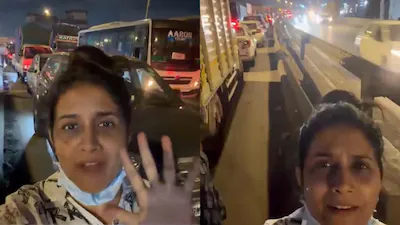

Sonali Kulkarni’s Viral Traffic Ordeal on Mankhurd Bridge

New Delhi, April 30, 2026: A harrowing experience of urban gridlock has been documented today, April 30, 2026, by acclaimed actress Sonali Kulkarni, whose social media video from the Mumbai-Pune route has gone viral. The “Dil Chahta Hai” star was observed stranded in a massive traffic jam that effectively paralyzed the Mankhurd Bridge for several hours. The “truth” behind the digital stir reveals a “mechanical necessity” of patience that was tested to its limit, as the actress reported being stuck at “just one position” for exactly five hours while attempting to travel toward Pune.

The interaction between the actress and the stalled highway was observed during a period of severe congestion that reportedly began on the night of April 28 and spilled into the following days. In the viral clips, which have amassed millions of views, Sonali is seen stepping out of her vehicle to capture the endless rows of stationary cars, trucks, and buses. It is reported that she reached out to the traffic control team for an update, only to be told that the situation was dire and the time for resolution remained uncertain.

A Plea for Help: “Pray For Us” Captures the Commuter’s Fear

The reaction from the digital community has been one of deep sympathy and shared frustration regarding the “heavy price” of Mumbai’s infrastructure challenges. It is argued by many viewers that the actress’s plea—”We are completely stuck… pray for us”—reflects the genuine fear and helplessness felt by hundreds of commuters trapped without access to food, water, or restrooms. On various city forums, the footage has been utilized to highlight the tragic context of the jam, which was reportedly triggered by a crane collapse on the Sion-Panvel highway.

The impact of the video has prompted a wider discussion regarding the efficiency of emergency responses during such catastrophic traffic failures. It is noted by commentators that the tragedy of the gridlock was compounded by the news of a police constable who lost his life after being caught in the same stationary traffic while returning from duty. The passive role of the authorities—who were described by Kulkarni as having “no clarity” on the situation—has been identified as a significant point of public outrage as the city grapples with deteriorating road conditions.

Also Read: The Legacy Continues: Jovika Vijayakumar Stuns in First Look of ‘Agadha’

The Missing Link: Hopes for Future Infrastructure Relief

Following the viral success of the “Mankhurd Nightmare” clip, the focus has shifted toward the upcoming opening of the Mumbai-Pune Expressway “Missing Link” on May 1, 2026. It is reported that this new 13.3-km stretch is designed to bypass the traditional bottlenecks and “accident-prone” sections that lead to such massive jams. The video remains a top trending topic as of this afternoon, serving as a powerful visual testament to the urgent need for these upgrades to prevent future five-hour “horrors” for travelers.

As of the evening of April 30, 2026, the story continues to serve as a major talking point in the “Mumbai News” and “Infrastructure” categories. While the era of high-speed travel is promised by new projects, the digital record of Sonali Kulkarni’s ordeal stands as a reminder of the current reality faced by thousands of motorists. For now, the story stands as a digital reminder: until the “Missing Link” is fully integrated, the roads between Mumbai and Pune remain a gamble where even a single mechanical failure can lead to a half-day of uncertainty.

Bengaluru Skies Set to Expand: The Race for the Second International Airport

0

April 30, 2026 – The race to establish Bengaluru’s second international airport has officially narrowed down to a high-stakes contest in the city’s southern corridor. Deputy Chief Minister and Bengaluru Development Minister D.K. Shivakumar has confirmed that the state is fast-tracking the evaluation of two primary sites in the Kanakapura region, signaling a strategic shift to cater to the city’s rapidly expanding southern and western suburbs.

As Kempegowda International Airport (KIA) in Devanahalli approaches its projected saturation point, the Karnataka government is under pressure to finalize a location that can mirror KIA’s scale and economic impact.

The Leading Contenders: Why Kanakapura?

For months, the government has balanced a shortlist of three locations. However, recent developments indicate that the two sites along Kanakapura Road—one near Kaggalipura and another near Harohalli—have taken the lead over the third option on Kunigal Road.

1. Kaggalipura (Bengaluru Urban)

Located within the Bengaluru Urban district, this site offers approximately 4,800 acres of land. Its proximity to the existing city limits makes it an attractive choice for commuters from South Bengaluru, Jayanagar, and Banashankari.

2. Harohalli (Ramanagara District)

The second site, situated near the industrial hub of Harohalli, spans roughly 5,000 acres. This location is particularly strategic due to its distance—only about 10 kilometers—from the final station of the Namma Metro Green Line.

“We are looking at the next 50 years of Bengaluru’s growth,” said D.K. Shivakumar during a recent infrastructure briefing. “The southern part of the city has seen immense residential and industrial growth, yet residents here often face a two-hour journey to reach Devanahalli. A second airport in Kanakapura would balance the city’s geography.”

The Infrastructure Push: A ₹1.5 Lakh Crore Vision

The push for a second airport is not an isolated project. It is the crown jewel in a massive ₹1.5 lakh crore infrastructure overhaul aimed at transforming Bengaluru into a global “Future Tech Capital.”

The government’s plan includes:

  • The 74-km Bengaluru Business Corridor: Designed to provide seamless connectivity between the outskirts.
  • Twin Tunnel Projects: A 40-km network to bypass surface-level traffic.
  • Double-Decker Metro Lines: Expanding the reach of public transit to the airport gates.
  • Bidadi AI City: A 9,000-acre dedicated hub for Artificial Intelligence located in close proximity to the proposed Kanakapura airport sites.

Hurdles on the Horizon: Terrain and Airspace

Despite the political momentum, the project faces significant technical and environmental challenges. A preliminary report by the Airports Authority of India (AAI) has highlighted several “red flags” that the state must now address through a more detailed feasibility study.

The “Hilly” Challenge

Both Kanakapura sites are characterized by rocky, uneven terrain. The AAI noted that hills on the eastern and western flanks of these sites might pose navigation risks. Leveling these hills to meet international aviation safety standards would be a monumental engineering task and could significantly drive up costs.

Airspace Congestion

Bengaluru’s airspace is already crowded. With the HAL Airport, Yelahanka Air Force Station, and the existing KIA all operating in a relatively tight radius, earmarking a new “flight corridor” for a second international airport requires complex negotiations with the Ministry of Defence and civil aviation regulators.

Environmental Concerns

The proximity of the Kanakapura sites to the Bannerghatta National Park has raised alarms among environmentalists. The park is a vital elephant corridor, and critics argue that the noise pollution and urban sprawl associated with an international airport could devastate local biodiversity.

The “150-Kilometer” Clause

One of the biggest hurdles is a legal one. The current agreement between the Union Government and Bangalore International Airport Limited (BIAL), which operates KIA, includes an exclusivity clause. This clause prevents any other international airport from operating within a 150-km radius until May 2033.

Consequently, the government is playing the long game. By finalizing the site and beginning land acquisition in 2026, they aim to have the infrastructure ready the moment the exclusivity clause expires. Experts suggest that if construction begins by 2028, the second airport could realistically welcome its first flight by 2034 or 2035.

Comparison of Proposed Sites

FeatureKanakapura Site 1 (Kaggalipura)Kanakapura Site 2 (Harohalli)Kunigal Road Site
Land Area~4,800 Acres~5,000 Acres~5,200 Acres
DistrictBengaluru UrbanRamanagaraNelamangala
ProximityClose to South Bengaluru residential hubsNear Industrial area & Metro Green LineBetter connectivity to North/West Karnataka
TopographyHilly/RockyHilly/RockyRelatively Flat
Main AdvantageHigh passenger catchmentIndustrial synergy & Metro accessLower land cost & easier terrain

What Happens Next?

The state government has already invited bids for a Techno-Economic and Financial Feasibility (TEFR) study. This study will provide a definitive answer on:

  1. Which site offers the best return on investment.
  2. How to mitigate the environmental impact on Bannerghatta.
  3. The cost of leveling the rocky terrain.

Union Civil Aviation Minister Kinjarapu Ram Mohan Naidu has assured the state of the Centre’s support once the feasibility report is submitted. For now, the “Race to Kanakapura” remains the most watched development in Indian aviation, promising to redefine the landscape of India’s Silicon Valley.

As the city continues to swell, the decision made in the coming months will determine whether Bengaluru remains a congested tech hub or evolves into a multi-modal global metropolis.

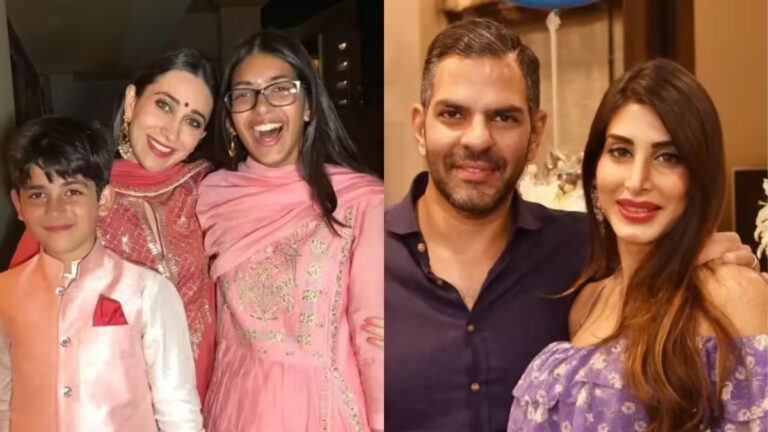
Court Protects Inheritance of Karisma Kapoor Children

New Delhi, April 30, 2026 – In a landmark ruling that provides significant legal protection to the heirs of late industrialist Sunjay Kapur, the Delhi High Court has issued an interim order restraining his widow, Priya Sachdev Kapur, from selling, transferring, or creating any third-party rights over his massive estate.

The decision, delivered on April 30, 2026, serves as a major victory for Samaira and Kiaan Raj Kapur, the children of Sunjay Kapur and his former wife, Bollywood icon Karisma Kapoor. The court’s intervention ensures that the multi-billion rupee inheritance remains intact while the legal battle over the validity of Sunjay Kapur’s will continues.

The Core of the Dispute: A Contested Will

The legal firestorm ignited following the passing of Sunjay Kapur in June 2025. At the center of the conflict is a purportedly left “Will” that allegedly bequeathed the vast majority of Kapur’s estimated ₹30,000-crore ($3.6 billion) fortune to his second wife, Priya Sachdev, and their son, Azarias.

Samaira and Kiaan, represented by their legal counsel, challenged the document in the Delhi High Court, citing “glaring contradictions” and irregularities. They moved a petition seeking a forensic examination of the original Will, arguing that it may have been forged or executed under questionable circumstances.

“Assets Must Not Be Dissipated”: The High Court’s Mandate

Presiding over the case, Justice Jyoti Singh emphasized the necessity of preserving the estate during the trial. The court noted that not only the children but also Sunjay’s mother, Rani Kapur, had raised serious suspicions regarding the authenticity of the Will.

Key highlights of the Court’s Restraining Order:

  • Real Estate & Companies: Priya Sachdev is prohibited from alienating, transferring, or pledging shares in Sunjay’s Indian companies or selling any physical property.
  • Financial Holdings: The court placed an immediate freeze on the operation of foreign bank accounts and cryptocurrency holdings.
  • Personal Effects: The order extends to luxury items, including artwork and personal effects, ensuring the family legacy is not liquidated piece by piece.
  • Transparency: The respondents have been directed to submit comprehensive bank statements and account details to the court to ensure full financial transparency.

“The onus is now on Priya Kapur to clear the suspicions raised over the Will. Until then, the assets must be preserved and not dissipated,” the Court remarked.

A Complex Family Web

The legal battle is not just between the widow and the children. Sunjay Kapur’s mother, 80-year-old Rani Kapur, has launched her own parallel legal offensive. She alleges that she was “fraudulently stripped” of her control over the family trust and her stakes in the Sona Group—the automotive giant founded by her late husband.

The Supreme Court of India recently weighed in on Rani Kapur’s plea, with the bench famously remarking, “80 is not an age to fight,” and strongly urging the family to seek mediation. While Rani Kapur has expressed a willingness to mediate for the sake of “truth and dignity,” the interim injunction by the High Court provides the legal “teeth” needed to ensure no assets disappear during negotiations.

Impact on Samaira and Kiaan

For Samaira (21) and Kiaan (15), the ruling is a crucial shield. Since their parents’ high-profile divorce in 2016, the children have largely stayed out of the media spotlight, supported by their mother, Karisma Kapoor. However, the stakes of this inheritance battle—involving one of India’s largest automotive empires—forced a legal intervention to secure their financial future.

While the court has allowed for some funds to be withdrawn to discharge “liabilities towards the children” (under the terms of the original divorce decree between Sunjay and Karisma), the bulk of the ₹30,000-crore estate remains under lock and key.

What Happens Next?

The legal road ahead remains long. The upcoming weeks will focus on:

  1. Forensic Verification: The court will likely proceed with a forensic audit of the signature and paper of the contested Will.
  2. Mediation Efforts: Following the Supreme Court’s nudge, the parties may meet behind closed doors to discuss a settlement that honors the interests of all three branches of the family (Rani Kapur, Karisma’s children, and Priya Sachdev’s son).
  3. Financial Disclosures: Priya Sachdev must provide the court with detailed records of all transactions made since Sunjay Kapur’s passing.

For now, the status quo remains. The “huge relief” cited by legal experts reflects a growing trend in Indian courts to prioritize the protection of heirs’ rights in high-net-worth estate disputes where the validity of a will is under a cloud of suspicion.

The Legacy Continues: Jovika Vijayakumar Stuns in First Look of ‘Agadha’

New Delhi, April 30, 2026: The Indian film industry has always celebrated the arrival of “star kids” and the continuation of cinematic dynasties. Today, a new chapter begins for one of the most respected families in South Indian cinema. Jovika Vijayakumar, the granddaughter of the legendary veteran actress Manjula and veteran actor Vijayakumar, is all set to make her silver screen debut.

The makers of her debut film, ‘Agadha’, recently unveiled her first-look poster, and it is safe to say that the young actress has already managed to grab the undivided attention of moviegoers and critics alike. Directed by the veteran filmmaker MS Raju, the film is being touted as a high-concept “mystic divine thriller,” and Jovika’s introduction has only heightened the anticipation for this pan-Indian project.

A Striking Debut: The First Look Decoded

The first-look poster of Jovika Vijayakumar in Agadha is a masterclass in visual storytelling. Unlike traditional debutante reveals that often focus on glamour, this poster leans heavily into the film’s eerie and spiritual themes.

  • The Character: Jovika plays a character named Harini.
  • The Visuals: Set against a dimly lit, ancient backdrop with rain pouring down, the poster captures Jovika in a moment of intense emotion. Her expressive eyes are the focal point, reflecting a unique blend of vulnerability, innocence, and a latent, hidden strength.
  • The Vibe: The overall tone is dark, moody, and atmospheric. It suggests that Harini is not just a standard protagonist but a character deeply intertwined with the mystical and supernatural core of the plot.

Social media has been abuzz since the release, with fans noting the striking resemblance between Jovika and her mother, Vanitha Vijayakumar, as well as the grace of her grandmother, the late Manjula.

A Full-Circle Moment for MS Raju

The debut of Jovika Vijayakumar is not just a milestone for her family but also a poignant moment for the director, MS Raju. Raju is a legendary name in the Telugu film industry, known for producing and directing iconic “feel-good” blockbusters like Okkadu, Varsham, and Nuvvostanante Nenoddantana.

In a beautiful twist of fate, it was MS Raju who introduced Jovika’s mother, Vanitha Vijayakumar, to the film industry decades ago with the film ‘Devi’. Now, years later, he is the one launching the third generation of this illustrious family. This emotional connection across generations has added a layer of sentimental value to the project, making Agadha more than just a movie—it is a legacy project.

What is ‘Agadha’ About?

While the full plot is still under wraps, the details released so far suggest that Agadha is a bold departure for MS Raju. Moving away from his signature romantic dramas, Raju is venturing into the horror and divine thriller genre.

The film is described as a “mystic divine thriller,” blending elements of ancient spirituality with modern-day suspense. Early posters for the film have featured:

  1. Mahadevi (played by Sai Kamakshi Bhaskarla): A divine feminine figure surrounded by spiritual energy.
  2. Simha (played by Shravan Reddy): Shown in darkness with a blazing torch, symbolizing a journey through the unknown.
  3. Mahima (played by Ulka Gupta): An intense character look that has also generated significant buzz.

The film aims to explore the thin line between the human world and the divine (or perhaps the demonic), promising a narrative that is both terrifying and thought-provoking.

High Production Values and Pan-Indian Ambition

Agadha is not a small-scale experiment. Produced by Kasi Visalakshi Balusu under the banner of Sri Adi Varaha Productions, the film is being mounted on a massive scale.

  • Extensive VFX: The makers have revealed that the film features nearly 45 minutes of high-end VFX, which is crucial for a divine thriller of this nature.
  • Dedicated Craftsmanship: The shoot spanned over 85 days, involving extensive set work to create the “ancient” and “mystical” locations seen in the posters.
  • Multi-Lingual Release: Aiming for a broad audience, Agadha will be released simultaneously in Telugu, Hindi, Tamil, Kannada, and Malayalam.

The Ensemble Cast

Jovika joins a talented cast that brings a mix of experience and fresh energy to the table:

  • Sai Kamakshi Bhaskarla: Gained fame for her performance in the hit Polimera.
  • Shravan Reddy: Known for his work in Dirty Hari.
  • Ulka Gupta: A recognizable face from The Kerala Story 2 and various television projects.
  • The Technical Team: With music by Mikkin Aruldev and cinematography by Nani Chamidisetty, the film is technically sound and visually ambitious.

The Legacy of Manjula and Vijayakumar

To understand why Jovika’s debut is such big news, one must look at her roots. Her grandmother, Manjula, was a powerhouse of South Indian cinema, starring alongside legends like NTR, ANR, and Krishna in numerous blockbusters such as Manushulanta Okkate and Bangaru Bommalu. Her grandfather, Vijayakumar, remains one of the most respected character actors in the industry.

Jovika herself is already a familiar face to younger audiences. Before her film debut, she built a significant following as a social media influencer and YouTuber, often appearing alongside her mother, Vanitha, in popular cooking and lifestyle videos. She also gained immense popularity as a contestant on Bigg Boss Tamil, where her outspoken nature and maturity won her many fans.

Expectations and Future Outlook

With the first-look poster of “Harini” now viral, the pressure and excitement for Agadha have shifted into high gear. For Jovika Vijayakumar, this is the beginning of a journey that many have been waiting for. She isn’t just entering an industry; she is stepping into a spotlight that has shone on her family for over half a century.

As the film moves through the final stages of post-production, audiences are eagerly waiting for the teaser and trailer. If the first look is any indication, Agadha will offer a unique cinematic experience that combines the chills of a horror film with the grandeur of a mythological epic.

Conclusion Jovika Vijayakumar’s first look from Agadha is more than just a poster—it’s a statement. It signals the arrival of a performer who is ready to take on complex, atmospheric roles rather than just playing it safe. Under the guidance of a veteran like MS Raju, Harini might just be the character that cements Jovika’s place in the next generation of Indian cinema stars.

Stay tuned as Agadha prepares to bring its “mystic divine” world to theaters soon.

Natasha Poonawalla New York Moment: A Masterclass in Sculptural Kantha and Muga Silk

New Delhi, April 30, 2026 — In a world where high fashion often leans into the futuristic or the fleeting, Natasha Poonawalla has once again anchored the global gaze back to the roots of Indian craftsmanship. On April 30, 2026, at the King Charles Charity Ball in New York, the philanthropist and fashion icon unveiled a breathtaking custom ensemble that didn’t just “wear” tradition—it reinvented it.

Draped in a sculptural ivory muga silk saree featuring the ancient hand-embroidery of Kantha, Poonawalla, along with designer Arpita Mehta and stylist Rhea Kapoor, proved that heritage is the ultimate luxury.

The Architecture of the Ensemble

The look is a study in contrasts: the organic, soft nature of traditional textiles meeting a sharp, modern silhouette. The foundation of the outfit is Muga silk, often referred to as the “Golden Silk” of Assam, known for its natural yellowish-gold tint and incredible durability. In this custom iteration, the silk was treated in a warm ivory tone, serving as a pristine canvas for the drama to follow.

Key Design Elements:

  • The Saree: A modern reinterpretation of the classic drape, the saree felt fluid yet grounded, featuring a floor-sweeping volume that commanded the room.
  • The Sculptural Cape: To add a contemporary edge, the saree was paired with an exaggerated Chanderi silk cape. This addition transformed the traditional garment into a piece of wearable art, creating a structural dimension that felt both ethereal and powerful.
  • The Blouse: A sleek halter-neck design provided a minimalist anchor to the voluminous drape and heavy embroidery.

Reimagining Kantha: From Sustainability to Couture

The standout feature of the ensemble was the intricate Kantha embroidery. Originating from Bengal, Kantha is one of India’s oldest forms of eco-conscious craft. Traditionally, it involved women repurposing old sarees and dhotis by layering them and using a simple running stitch to create beautiful, narrative textiles.

In Poonawalla’s look, this “running stitch” was elevated to high-fashion couture. The embroidery featured a riot of colors—baby pinks, mauves, lime, olive, peaches, and reds—delicately stitched across the ivory base. The motifs drew from nature and folklore, including:

  • Birds and Vines: Representing freedom and growth.
  • Mandala-inspired circles: Reflecting the cyclical nature of life.
  • Intentional Irregularity: True to the essence of Kantha, no two motifs were identical, giving the garment a “lived-in” history that felt personal rather than mass-produced.

Styling the Heritage: Emeralds and Navratans

Stylist Rhea Kapoor opted for a “more is more” approach when it came to jewelry, layering heritage pieces to complement the artisanal depth of the saree.

Jewelry PieceDetails
Emerald ChokerA heavy, statement piece that provided a striking pop of green against the ivory silk.
Custom EarringsTeardrop-shaped earrings by Sri Paramani Jewels, featuring bird motifs that mirrored the Kantha embroidery.
BajubandhA traditional armlet worn over the sleeve, adding a regal, old-world charm.
Traditional KadasTiger and peacock-themed bangles that emphasized the “animalia” theme within the embroidery.

A Global Platform for Local Craft

Designer Arpita Mehta noted that this project was her first exploration into Kantha, driven by Rhea Kapoor’s vision to bring a “less explored” craft to a global stage. By wearing this look in the heart of New York, Natasha Poonawalla continues her streak of using her platform to champion Indian artisans.

Whether she is wearing vintage Issey Miyake or avant-garde Schiaparelli, Poonawalla’s true strength lies in her ability to treat the saree as a canvas for innovation. This sculptural ivory muga silk look isn’t just a win for the red carpet; it’s a love letter to the weavers and embroiderers of Bengal and Assam, proving that ancient techniques are perfectly at home in 2026’s high-fashion landscape.

Bellamkonda Sreenivas Weds Kavya Reddy in Tirupati

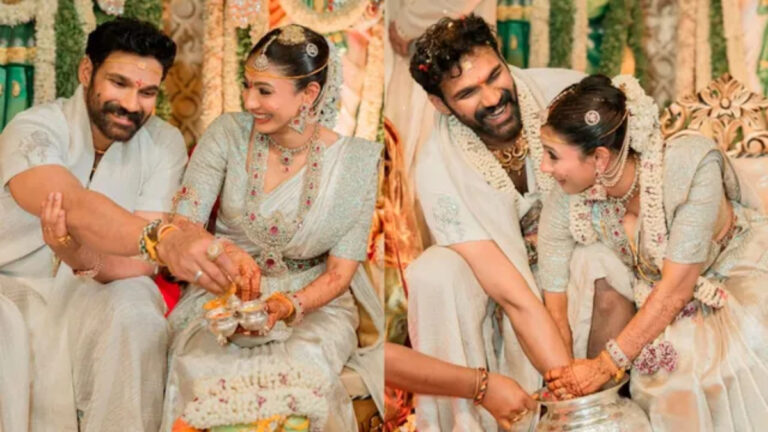
April 30, 2026 – In a beautiful blend of tradition and spirituality, Tollywood sensation Bellamkonda Sai Sreenivas has officially entered a new chapter of his life. The actor tied the knot with his long-time partner, Kavya Reddy, in an intimate wedding ceremony held at the holy hill shrine of Tirumala late Wednesday night.

Departing from the trend of extravagant “Big Fat Indian Weddings,” Sreenivas and Kavya chose a path rooted in simplicity and Vedic rituals. The ceremony, which took place during an auspicious muhurtham at 11:13 PM on April 29, was a private affair attended only by the couple’s immediate family and closest circle of friends.

A Ceremony Rooted in Sanatana Dharma

The wedding was a testament to the couple’s respect for tradition. Eschewing flashy decor and massive crowds, the nuptials were performed following the principles of Sanatana Dharma. The atmosphere in the temple town of Tirupati was one of serenity and devotion as the couple exchanged vows amidst the chanting of Vedic hymns.

The Couple’s Look:

  • The Groom: Bellamkonda Sai Sreenivas looked every bit the traditional groom in an elegant ivory-toned silk kurta and dhoti. He paired the ensemble with sacred garlands and a statement gold choker, exuding a grounded yet regal charm.
  • The Bride: Kavya Reddy complemented him perfectly in a stunning traditional saree of matching tones. Adorned with a classic mathapatti (headpiece) and heritage gold jewelry, her look reflected timeless Indian beauty.

Both the bride and groom’s outfits were reportedly designed by renowned celebrity designer Shravan Kumar, who is known for his ability to blend classic aesthetics with modern sophistication.

From Engagement to the Altar

The journey to the altar began on March 8, 2026, when the couple hosted an intimate Roka ceremony in Hyderabad. Shortly after, the actor took to social media to share his joy, posting a heartfelt message for Kavya, calling her arrival in his life “perfectly timed” and promising to keep her smiling forever.

The pre-wedding festivities reached a peak on April 5 with a grand engagement ceremony at a private farmhouse in Hyderabad. Unlike the wedding itself, the engagement was a star-studded event where several big names from the Telugu film industry were seen blessing the couple.

Grand Reception Awaits in Hyderabad

While the wedding was a low-key, spiritual event, the celebrations are far from over. The Bellamkonda family is set to host a grand wedding reception on May 1, 2026, at a luxury venue in Hyderabad.

The reception is expected to be one of the biggest social gatherings of the year, with a guest list that reads like a “Who’s Who” of the South Indian film industry and regional politics. Invitations have reportedly been extended to:

  • Megastar Chiranjeevi
  • Nagarjuna Akkineni
  • Allu Arjun
  • Telangana CM Revanth Reddy
  • Andhra Pradesh CM N. Chandrababu Naidu

Professional Highs and Future Plans

On the career front, Bellamkonda Sai Sreenivas is currently riding a wave of success. His recent horror-thriller, Kishkindhapuri, was a massive hit, re-establishing his box-office pull. He has also recently wrapped up shooting for Tyson Naidu, where he portrays a powerful police officer.

Fans won’t have to wait long to see him back in action. After a brief honeymoon break following the Hyderabad reception, the actor is expected to resume his shooting schedules in June 2026.

“This is a new beginning for me, and I couldn’t be happier to share it with someone as grounded and loving as Kavya,” the actor reportedly shared with close associates ahead of the wedding.

As photos and clips of the ceremony begin to surface on social media, fans from across the globe are flooding the couple with “Sreenivasakavyanam” wishes, celebrating the union of one of Tollywood’s most eligible bachelors with his soulmate.

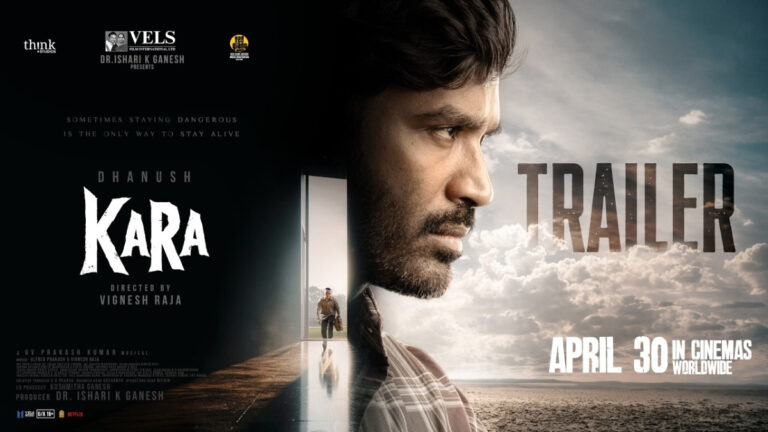
Review: ‘Kara’—Dhanush Lost in a Muddled Heist

April 30, 2026 — When it was first announced that Dhanush would be teaming up with director Vignesh Raja—the mastermind behind the clinical and gripping Por Thozhil—expectations were sky-high. Fans and critics alike anticipated a genre-bending masterpiece that would redefine the heist thriller in Tamil cinema.

However, as Kara hit screens worldwide today, the consensus is bittersweet. While the film showcases Dhanush’s signature brilliance and a fascinating 1990s backdrop, it ultimately feels like a formulaic project that tries to hold too many threads at once, causing it to lose its grip on the audience.

A Strong Start: The 1991 Heist

The film opens with an electric sequence that suggests we are in for something special. It is 1991 in Thiruverumbur, Tamil Nadu. The world is gripped by the tension of the Gulf War, and India is reeling from a fuel crisis. Amidst this atmosphere of uncertainty, we meet Karasaami (Dhanush), perched atop a tree, scouting a target.

Dhanush, appearing in the first few seconds of the film, skips the traditional “mass hero” intro. Instead, we get a lean, hungry thief who moves with the precision of a predator. Alongside his apprentice, played with earnest charm by Prithvi Pandiarajan, Kara executes a break-in that is filmed with the kind of focus that made Vignesh Raja’s debut so memorable.

At this point, Kara feels like a “pure” genre film. There are no unnecessary songs, no forced romantic subplots—just a man, a lock, and a ticking clock.

The Cat-and-Mouse Game

The tension escalates with the introduction of DSP Bharathan (Suraj Venjaramoodu). The veteran Malayalam actor brings a grounded, relentless energy to the role of the cop tasked with ending Kara’s spree. The first act sets up what should have been a classic cat-and-mouse game: an intelligent robber versus a meticulous lawman.

Vignesh Raja successfully uses the 1991 setting to add texture. The lack of modern technology means the investigation relies on old-school grit, and the backdrop of the fuel crisis adds a layer of desperation to the characters’ survival.

Where it Falters: The Identity Crisis

As the runtime stretches to an exhausting 161 minutes, the “pure” heist film begins to dissolve into something far more generic. Kara suffers from what many call “The Second Act Slump,” but here, it’s specifically caused by an inability to stick to one idea.

The film shifts gears from a heist thriller to a heavy-handed melodrama. While Dhanush is more than capable of handling emotional depth, the script forces Karasaami into a “thief with a heart of gold” archetype that feels dated. The narrative starts vacillating between:

  1. A gritty survival thriller.
  2. A sentimental family drama.
  3. A socio-political commentary on the 1991 era.

By trying to be all three, it fails to excel at any. The sharp, clinical directing style seen in the opening scenes is replaced by slow-motion shots and a background score by G.V. Prakash Kumar that, while technically sound, often over-emphasizes the melodrama, telling the audience how to feel rather than letting the story speak for itself.

The Supporting Cast: A Mixed Bag

The film boasts an impressive ensemble, but many are underutilized:

  • Mamitha Baiju: After her breakout success in Premalu, she is relegated here to a role that offers little room for her talent, serving mostly as an emotional anchor for the protagonist.
  • Suraj Venjaramoodu: He provides the film’s strongest performance outside of Dhanush, playing the DSP with a weary, believable intensity.
  • Jayaram and Karunas: Both actors turn in solid performances, but their characters feel like they belong in a different, more traditional commercial film.

Technical Brilliance

Despite the narrative flaws, Kara is a visual treat. Cinematographer Theni Eswar captures the rural 90s aesthetic with a muted, earthy palette that feels authentic. The night sequences, in particular, are expertly lit, creating a sense of claustrophobia and tension during the robbery scenes.

The production design by Mayapandi deserves a special mention for recreating 1991 Thiruverumbur without it feeling like a “set.” From the old Bajaj Chetak scooters to the vintage posters on the walls, the world-building is impeccable.

FeatureRating/Review
Lead Performance⭐⭐⭐⭐ (Dhanush is effortless)
Direction⭐⭐½ (Lacks the focus of Por Thozhil)
Cinematography⭐⭐⭐⭐ (Beautifully captures the 90s)
Pacing⭐⭐ (Feels bloated at 161 mins)

The Verdict: A Missed Opportunity

Kara isn’t a bad film, but it is a frustrating one because it contains the seeds of a great one. It starts as a focused, high-stakes thriller but eventually gets lost in the “Dhanush Film” formula—prioritizing tear-jerking backstories over the central plot.

For fans of Dhanush, his performance alone is worth the price of admission. He manages to make Karasaami empathetic even when the script doesn’t give him much to work with. However, for those expecting the tight, suspenseful storytelling Vignesh Raja is known for, Kara might feel like a step backward.

In the end, Kara is a heist movie that manages to steal your time but fails to leave a lasting impression. It’s a reminder that even the most talented teams can stumble when they try to please everyone instead of trusting the strength of their original idea.

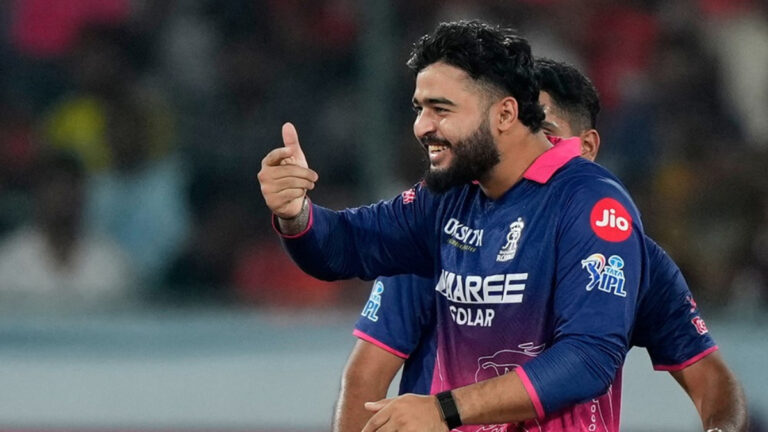
IPL 2026: Riyan Parag Fined for “Bringing Game into Disrepute” After Vaping Incident

0

April 30, 2026 – Rajasthan Royals (RR) captain Riyan Parag has been officially penalized by the Board of Control for Cricket in India (BCCI) following a controversial incident during the IPL 2026 match against Punjab Kings (PBKS). The 24-year-old skipper was caught on live television using a vape inside the players’ dressing room, an act that has sparked nationwide debate over athlete conduct and legal compliance.

In a formal statement released on Thursday, the IPL governing body confirmed that Parag had been fined 25% of his match fee and handed one demerit point for a Level 1 offence.

The Incident: Caught on Camera

The controversy unfolded during the second innings of the clash at the Maharaja Yadavindra Singh PCA Stadium in Mullanpur. While Rajasthan Royals were in the middle of a high-stakes 222-run chase, the broadcast cameras panned to the RR dressing room. For a brief few seconds, Parag was seen inhaling from an electronic device, commonly known as a vape or e-cigarette.

The footage instantly went viral on social media platforms like X (formerly Twitter) and Instagram, with fans and former cricketers expressing shock. The incident occurred shortly after Parag was dismissed for 29 runs off 16 balls.

The BCCI Verdict: “Disrepute” to the Game

The BCCI acted swiftly after the visual evidence was reviewed by match officials. On-field umpires Tanmay Srivastava and Nitin Menon reported the matter to match referee Amit Sharma, who subsequently summoned the RR captain.

“Riyan Parag was found to have breached Article 2.21 of the IPL’s Code of Conduct, which relates to ‘conduct that brings the game into disrepute.’ The incident occurred during the second innings when Riyan was seen using a vape inside the dressing room,” the official IPL media advisory stated.

Parag admitted to the offence and accepted the sanction. Under the IPL’s current framework, a Level 1 breach typically results in a fine and the accumulation of demerit points. If a player accumulates four demerit points within a rolling period, they face a suspension.

A Legal and Ethical Grey Area

The controversy carries weight beyond the cricket field due to India’s strict laws regarding electronic cigarettes. Under the Prohibition of Electronic Cigarettes Act (PECA) 2019, the production, manufacture, import, export, transport, sale, distribution, storage, and advertisement of e-cigarettes are completely banned in India.

While the IPL Code of Conduct does not explicitly mention “vaping” in its rulebook, Article 2.21 is a “catch-all” clause designed to address any behavior that harms the reputation of the sport.

Controversy DetailsDetails
EventPBKS vs RR (April 28, 2026)
ChargeArticle 2.21 (Conduct bringing game into disrepute)
Penalty25% Match Fee Fine + 1 Demerit Point
Legal ContextVaping is illegal in India under PECA 2019

Struggling Form and Leadership Pressure

The vaping row comes at a difficult time for Riyan Parag. Having taken over the captaincy after Sanju Samson’s high-profile move to Chennai Super Kings, Parag has faced immense scrutiny. His performance on the field has been lackluster this season, with only 117 runs across nine matches at a disappointing average of 14.62.

Though Rajasthan Royals have enjoyed a successful season so far—sitting comfortably with six wins—the captain’s personal form and this latest disciplinary lapse have raised questions about his suitability for the leadership role.

Wider Implications for Rajasthan Royals

This is the second time this season that the Rajasthan Royals have found themselves in the crosshairs of the BCCI’s disciplinary committee. Earlier this month, team manager Ravinder “Romi” Bhinder was fined ₹1 lakh for using a mobile phone in the dugout, a breach of anti-corruption protocols.

Reports suggest the BCCI is “exploring further options” regarding the franchise’s internal supervision. Officials are concerned that such incidents reflect a lack of discipline within the team environment, which could lead to more stringent warnings for the RR management.

Public and Social Media Reaction

The reaction from the cricketing fraternity has been polarized. While some fans defended Parag, arguing that players are under immense stress, the majority of the response has been critical.

  • Health Advocates: Pointed out that IPL players are role models for millions of youngsters and that glamorizing a banned substance is irresponsible.
  • Legal Experts: Suggested that the BCCI’s fine is “light” considering the act is a violation of federal law.
  • The “Vibe” Argument: Some supporters claimed Parag was simply “chilling,” but the BCCI’s stance remains clear: the dressing room is a professional workspace, not a private lounge.

What’s Next for Riyan Parag?

With one demerit point now on his record, Parag will need to be on his best behavior for the remainder of the tournament. The Royals are scheduled to face Delhi Capitals next in Jaipur, and all eyes will be on the captain—not just for his batting, but for his conduct off the ball.

The BCCI has sent a loud and clear message to all 10 franchises: the “spirit of the game” extends beyond the boundary ropes and into the dressing room. For Riyan Parag, the challenge now is to let his bat do the talking and move past a controversy that has threatened to overshadow his team’s playoff charge.

Vasuki indicus: India 50-Foot Mythical Monster Snake Found

0

New Delhi, April 30, 2026 — In the dusty expanse of a lignite mine in western India, paleontologists have unearthed the remains of a prehistoric giant that is rewriting the record books of the natural world. Vasuki indicus, an ancient snake estimated to reach lengths of up to 50 feet (15.2 meters), has emerged as a top contender for the title of the largest snake to ever slither across the Earth.

The discovery, led by researchers from the Indian Institute of Technology (IIT) Roorkee, provides a rare glimpse into a world 47 million years ago, when the Indian subcontinent was a tropical hothouse teeming with colossal predators.

A Mythological Name for a Real-Life Monster

The serpent has been aptly named after Vasuki, the mythical king of serpents in Hindu mythology often depicted coiled around the neck of Lord Shiva. The “indicus” part of its name pays homage to the land where it was found.

While the name is rooted in legend, the physical evidence is grounded in hard science. The research team, led by Professor Sunil Bajpai and Debajit Datta, recovered 27 well-preserved vertebrae from the Panandhro Lignite Mine in Kutch, Gujarat. These fossilized bones—some still connected in the same position they were in millions of years ago—reveal a creature of staggering proportions.

Sizing Up the Giant: Vasuki vs. Titanoboa

For years, the undisputed heavyweight champion of the snake world was Titanoboa, a 42-foot monster discovered in the coal mines of Colombia in 2009. However, Vasuki indicus has now entered the ring, potentially surpassing its South American rival in length.

FeatureVasuki indicusTitanoboa cerrejonensis
Estimated Length36 to 50 feet (10.9 – 15.2m)42 feet (12.8m)
Estimated Weight~1 Metric Ton~1.1 Metric Tons
EraMiddle Eocene (~47M years ago)Paleocene (~60M years ago)
HabitatTerrestrial/Coastal SwampsSemi-aquatic Rivers
LocationGujarat, IndiaLa Guajira, Colombia

While Vasuki may have been longer, scientists note that Titanoboa was likely more “robust” or thicker, meaning it might still hold the title for the heaviest snake. Regardless of who takes the crown, both were significantly larger than any snake alive today; for comparison, the modern Reticulated Python rarely exceeds 20 feet.

How Did It Live?

The anatomy of the vertebrae suggests that Vasuki was a thick-bodied, cylindrical snake. Because of its immense size, it was likely not a high-speed hunter. Instead, researchers believe it functioned much like a modern-day Anaconda or Python.

  • The Ambush Strategy: Vasuki was likely a slow-moving predator that relied on stealth. It would lie in wait in the marshy swamps of ancient Gujarat, striking quickly at passing prey.
  • The Power of Constriction: Like modern pythons, it was non-venomous. It would use its massive muscular body to wrap around prey—which likely included primitive whales, crocodiles, and turtles—and subdue them through sheer crushing force.
  • A Warm World: The Middle Eocene was a period of high global temperatures. Scientists believe the snake’s massive size was made possible by the warm tropical climate of the time, as large cold-blooded reptiles require higher ambient temperatures to maintain their metabolic processes.

Scientific Significance: Connecting the Continents

Beyond its “cool factor,” the discovery of Vasuki indicus is a major win for biogeography. Vasuki belongs to the Madtsoiidae family, an extinct group of primitive snakes that existed for nearly 100 million years.

This find suggests that this particular lineage of giant snakes likely originated in India. As the Indian plate eventually collided with Eurasia, these giants slithered out of the subcontinent, spreading through southern Europe and into Africa during the Eocene period.

The Future of the Find

Though the 27 vertebrae provide a wealth of information, paleontologists are still hoping to find a skull. A snake’s skull is fragile and rarely fossilizes, but it would reveal exactly what Vasuki ate and how its senses operated.

For now, the Panandhro Lignite Mine remains a site of intense interest. As mining continues, more secrets of India’s prehistoric past may be unearthed, perhaps revealing even more about the giant serpent that once ruled the marshlands of Kutch.