Home Blog Page 96

Bengaluru’s “White” Summer Sparkles Amidst Urban Havoc

0

New Delhi, April 30, 2026: A dramatic shift in weather has been documented in Bengaluru today, April 30, 2026, after a powerful hailstorm and heavy downpour transformed the city’s scorched landscape. The “truth” behind the digital stir involves a breathtaking visual of the city “turning white,” with streets and iconic stadiums blanketed in layers of ice. This “Bengaluring” phenomenon was observed across various neighborhoods, providing a fleeting, winter-like aesthetic that has captivated social media users worldwide.

The interaction between the pre-monsoon storm and the city’s infrastructure was observed for over an hour as intense winds and hailstones lashed the streets. In the viral clips, which have amassed millions of views, Sree Kanteerava Stadium and MG Road are seen resembling hill stations, with commuters pausing to record the rare “snow-like” scenery. It is reported that the sudden drop in temperature offered a much-needed relief from the weeks of scorching heat that had previously gripped the tech capital.

The Aesthetic vs. The Agony: A City Divided by Nature

The reaction from the digital community has been a stark mix of “Instagrammable” wonder and genuine distress regarding the “heavy price” of the storm. It is argued by local residents that while the “Bengaluring” views are beautiful, the mechanical necessity of basic city maintenance was severely tested. On various urban forums, the footage has been utilized to highlight the darker side of the weather, as widespread waterlogging and traffic gridlocks turned the “Silicon Valley of India” into a series of impassable streams.

The impact of the rain has unfortunately resulted in significant tragedy, with at least ten lives reported lost in rain-related incidents across the city. It is noted by commentators that a major compound wall collapse at Bowring Hospital in Shivajinagar claimed several lives after individuals took shelter there to escape the hail. The passive role of the civic authorities—who were reportedly taken by surprise by the storm’s intensity—has been identified as a critical point of debate as families count the cost of the “destructive beauty” of the evening.

Also Read: A New Lifeline for Uttar Pradesh: PM Modi Inaugurates 594-km Ganga Expressway

A Historic Downpour: Record-Breaking Relief and Ruin

Following the viral success of the hailstorm clips, meteorological data has confirmed that the city broke a 15-year-old rainfall record, with over 111 mm recorded by the morning of April 30, 2026. It is reported that while the heat has been temporarily vanquished, the recovery process for small businesses and residents in low-lying areas is just beginning. The video remains a top trending topic as of this afternoon, serving as a powerful visual testament to the duality of nature—where a single event can be both a poetic marvel and a terrifying crisis.

As of the evening of April 30, 2026, the story continues to serve as a major talking point in the “Environment” and “India News” categories. While the era of climate instability continues to bring unpredictable weather, the digital record of Bengaluru’s “Ice Storm” stands as a reminder of the city’s resilience and its ongoing struggle with infrastructure. For now, the story stands as a digital reminder: even the most beautiful scenes can carry a heavy weight, and the safety of citizens must always remain the priority over a viral aesthetic.
A New Lifeline for Uttar Pradesh: PM Modi Inaugurates 594-km Ganga Expressway

0

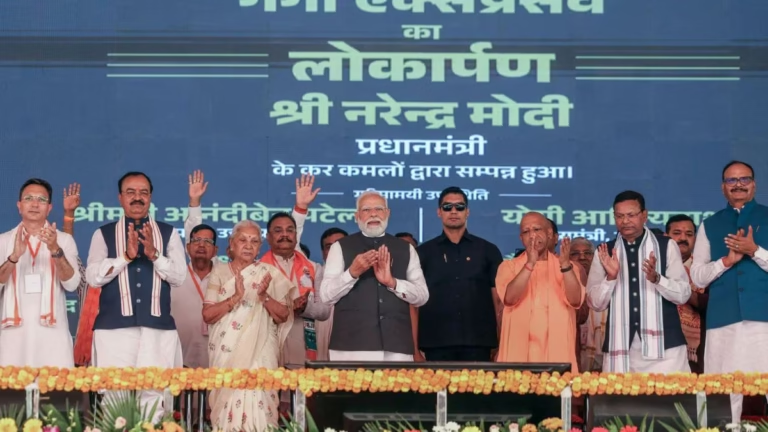
April 30, 2026 – In a historic move that signals a tectonic shift in Northern India’s infrastructure landscape, Prime Minister Narendra Modi officially inaugurated the 594-km-long Ganga Expressway on April 29, 2026. This mega-project, constructed at an estimated cost of ₹36,230 crore, now stands as one of India’s longest access-controlled greenfield expressways, seamlessly linking the western gateway of Meerut to the spiritual heart of Prayagraj.

Addressing a massive gathering in Hardoi, the Prime Minister described the expressway as the “identity of a New Uttar Pradesh.” He emphasized that just as the holy River Ganga has been the spiritual lifeline of India for millennia, this modern “Ganga of Asphalt” would become the economic lifeline for the state’s 240 million residents.

Bridging the Gap: From 12 Hours to 6

For decades, the journey from Meerut in Western UP to Prayagraj in the East was a grueling 12-hour ordeal through congested state highways and narrow town roads. With the opening of the Ganga Expressway, that travel time has been effectively slashed by half.

Commuters can now cover the distance in a mere 6 to 7 hours, maintained by a design speed of 120 km/h. This isn’t just a win for travelers; it is a revolution for the movement of perishable agricultural goods and industrial freight across the state.

The Route: 12 Districts, 519 Villages

The expressway begins at Bijauli village in Meerut and culminates at Judapur Dandu village in Prayagraj. It acts as a high-speed corridor weaving through the heart of Uttar Pradesh, touching 12 key districts:

  1. Meerut
  2. Hapur
  3. Bulandshahr
  4. Amroha
  5. Sambhal
  6. Budaun
  7. Shahjahanpur (Featuring a 3.5 km emergency airstrip)
  8. Hardoi
  9. Unnao
  10. Raebareli
  11. Pratapgarh
  12. Prayagraj
  13. Engineering Marvels and Strategic Features

The Ganga Expressway is more than just a road; it is a masterclass in modern civil engineering. Built on a Public-Private Partnership (PPP) model, the project utilized “Swiss technology” to monitor and rectify road defects in real-time.

Key Technical Specifications:

FeatureDetails
Total Length594.27 km
Lanes6 Lanes (Expandable to 8)
Right of Way (ROW)120 Meters
Major Bridges14 (Including crossings over Ganga and Ramganga)
Structures28 Flyovers, 7 Railway Overbridges, and 380+ Underpasses

The Shahjahanpur Airstrip

One of the most talked-about features is the 3.5-kilometer emergency landing strip in Shahjahanpur. Designed to handle heavy transport planes and fighter jets like the Su-30MKI and Mirage 2000, this stretch doubles as a strategic asset for the Indian Air Force (IAF), ensuring national security readiness in the heart of the country.

An Economic Engine for $1 Trillion Goal

Chief Minister Yogi Adityanath, present at the inauguration, highlighted that the expressway is a cornerstone of UP’s mission to become a $1 trillion economy. The state government has identified 27 locations along the route for integrated industrial clusters and logistics hubs.

  • Boost to Agriculture: Farmers in Hardoi and Budaun—often called the “potato and grain belts”—now have direct, high-speed access to the massive markets of the National Capital Region (NCR).
  • Real Estate Boom: Property experts anticipate a 25–40% appreciation in land values in cities like Meerut and Prayagraj over the next three years as connectivity to the upcoming Noida International Airport at Jewar becomes more seamless.
  • Religious Tourism: The corridor links major pilgrimage centers. Devotees traveling from Delhi or Haridwar can now reach the Sangam in Prayagraj or proceed toward Varanasi and Kashi with unprecedented ease.

“These expressways are not just roads; they are the foundations of social justice. They ensure that a youth in Badaun or a farmer in Pratapgarh has the same opportunities as someone living in Delhi.” — PM Narendra Modi

Environmental and Social Impact

While the project required the acquisition of approximately 6,500 hectares of land, it was completed with the cooperation of over one lakh farmers. To balance the environmental footprint, the Uttar Pradesh Expressways Industrial Development Authority (UPEIDA) has committed to extensive “green belt” development along the entire stretch, planting lakhs of trees to create a natural canopy.

The expressway is also equipped with Advanced Traffic Management Systems (ATMS), emergency trauma centers, and helipads for air ambulances, prioritizing passenger safety above all else.

What’s Next? Phase 2 and Beyond

The inauguration marks the completion of Phase 1. Plans are already in motion for Phase 2, which intends to extend the expressway further:

  • Westward: From Meerut to the border of Uttarakhand (near Haridwar).
  • Eastward: From Prayagraj to Ballia, linking with the Purvanchal Expressway.

Once these extensions are complete, the Ganga Expressway will serve as a continuous high-speed artery stretching from the western borders of the state to the easternmost edge, cementing Uttar Pradesh’s status as the “Expressway Capital of India.”

As the first toll-paying vehicles began their journey today, the atmosphere was one of celebration. For the millions living along the banks of the Ganga, the distance to the future just got a whole lot shorter.

Reliving the Star-Studded ‘Haunted 3D’ Success Bash (2011)

New Delhi, April 30, 2026: In the summer of 2011, the Indian film industry stood on the precipice of a technological revolution. While Bollywood had dabbled in horror for decades, Vikram Bhatt’s Haunted 3D’ promised something entirely different: India’s first stereoscopic 3D experience, shot with the same technology used in James Cameron’s Avatar. When the film defied skeptics and emerged as a resounding box-office hit, the ensuing success bash was not just a party—it was a victory lap for a new era of Hindi cinema.

Held in May 2011, the ‘Haunted 3D’ success celebration brought together a fascinating mix of legendary veterans, rising stars, and the creative masterminds behind the film. Here is a look back at that star-studded night when the industry gathered to toast the ghost that broke the bank.

A Father’s Pride: Mithun and Mimoh Chakraborty

The man of the hour was undoubtedly Mahaakshay (Mimoh) Chakraborty. After a rocky debut with Jimmy, Mimoh found his footing with ‘Haunted 3D’. His performance as Rehan—a man who travels back in time to save a girl from an malevolent spirit—was praised for its earnestness.

The highlight of the evening was the presence of the legendary Mithun Chakraborty. The “Disco Dancer” was seen beaming with pride, standing firmly by his son’s side. For Mithun, the party wasn’t just about a film’s collection; it was about witnessing his son’s redemption in an industry that can be notoriously unforgiving. Mimoh himself acknowledged this during the event, famously stating that the failure of his previous films served as the fuel for this success.

The Architects of Terror: Mahesh and Vikram Bhatt

The Bhatt camp, known for their mid-budget hits and “high-concept” thrillers, was out in full force. Vikram Bhatt, the director who pivoted from romantic dramas to becoming the “Master of Indian Horror,” was the man of the moment. He had taken a massive gamble by investing in expensive stereoscopic cameras and international technicians, and the gamble had paid off.

Standing by him was his mentor and uncle, Mahesh Bhatt. The veteran filmmaker, known for his philosophical takes on cinema, was seen interacting with the media about how ‘Haunted 3D’ had changed the “low-budget” perception of the horror genre. The success of this film paved the way for Vikram to announce his next ambitious project that very night: the supernatural thriller Dangerous Ishq.

Glamour and Grit: Mugdha Godse and the Ensemble Cast

While the film’s lead actress Tia Bajpai (who also sang the haunting melody “Sau Baras”) was the breakout star, the success bash was graced by several other Bollywood beauties. Mugdha Godse, a frequent collaborator with the Bhatts, added a touch of high-fashion glamour to the event.

Other notable attendees included:

  • Celina Jaitly: A long-time friend of the director, who came to support the team.
  • Remo D’Souza: The choreographer-turned-director who was then rising to superstardom.
  • Rahul Dev: Known for his intense roles, adding to the alpha-presence at the bash.
  • Anjana Sukhani & Kavita Kaushik: Popular faces from film and television who joined the celebration.

66-Year-Old Groom and 35-Year-Old Bride from Kullu

0

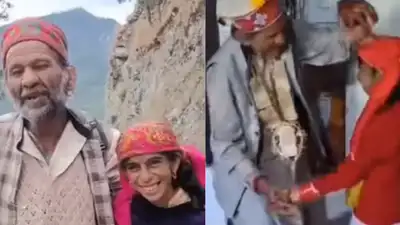
New Delhi, April 30, 2026: A heartwarming and unique wedding story from the serene hills of Himachal Pradesh has become a viral sensation today, April 30, 2026. The union between a 66-year-old man and a 35-year-old woman in the Banjar subdivision of Kullu district has captured the curiosity of social media users across the nation. The “truth” behind the digital stir involves a celebration of companionship, as the couple was observed dancing joyfully during their recent wedding reception, proving that the search for happiness has no expiration date.

The interaction was observed during a reception ceremony held in Tharimbla village, where the groom, identified locally as Soni, and his bride from Tarmehra village celebrated their union. In the viral clips, which have amassed millions of views, the couple is seen performing a traditional Nati dance, holding hands with radiant smiles. It is reported by local residents that while the formal marriage took place nearly a month ago, the footage from their reception has only recently ignited a massive conversation online.

A Quest for Companionship: Overcoming Loneliness in the Hills

The reaction from the digital community has been one of fascination regarding the “mechanical necessity” of emotional support in one’s later years. It is argued by many viewers that Soni, who had been living a solitary life following the passing of his parents, made a courageous choice to seek a life partner despite the significant 31-year age gap. On various social media platforms, the footage has been utilized to discuss the shifting perceptions of marriage in rural India, where traditional boundaries are increasingly being challenged by individual choices.

The impact of the video has prompted a wider discussion regarding the bride’s perspective, who has expressed immense satisfaction with her new life. It is noted by commentators that the couple’s mutual consent and visible happiness have silenced many critics who initially questioned the union. The passive role of the local community—who were seen cheering and dancing alongside the newlyweds—has been identified as a sign of acceptance for the couple’s “unconventional” path to a shared future.

Also Read: CISCE Result 2026 Announced: Over 1 Lakh Students Pass as Pass Percentage Soars

A New Chapter in Tharimbla: The Power of Joyful Beginnings

Following the viral success of the “Kullu Nati Dance” clip, the couple has received a flood of well-wishes from strangers moved by their story. It is reported that Soni, a retired professional, had been managing his household alone for several years before deciding to wed. The video remains a top trending topic as of this afternoon, serving as a powerful visual testament to the idea that companionship can bring a renewed sense of purpose and vitality to life at any age.

As of the evening of April 30, 2026, the story continues to serve as a major talking point in the “Trending News” and “Inspirational Stories” categories. While the era of viral content often focuses on fleeting moments, the digital record of this wedding stands as a permanent reminder of the human need for connection. For now, the story stands as a digital reminder: life is meant to be shared, and sometimes, the most beautiful stories are written in the quiet corners of the mountains.

CISCE Result 2026 Announced: Over 1 Lakh Students Pass as Pass Percentage Soars

0

New Delhi | April 30, 2026 — The Council for the Indian School Certificate Examinations (CISCE) has officially declared the results for the Class 12 Indian School Certificate (CISC) Year 2026 examinations. In what is being hailed as a landmark year for the council, over 1 lakh students have successfully cleared the examinations, reflecting the academic vigor and dedication of the batch of 2026.

With a significant rise in the overall pass percentage and a record number of students appearing for the exams, the results highlight a successful transition into more competency-based education formats.

The Big Picture: 2026 Performance Highlights

This year, the ISC examinations were conducted from February 12 to April 4, 2026. According to the official statement released by the CISCE Chairperson, the overall pass percentage for 2026 stands at an impressive 99.21%.

Quick Statistics at a Glance:

CategoryData/Percentage
Total Candidates Appeared1,08,450
Total Candidates Passed1,07,593
Overall Pass Percentage99.21%
Girls Pass Percentage99.54%
Boys Pass Percentage98.88%

For the tenth consecutive year, girls have outperformed boys, securing a pass percentage that is 0.66% higher. Educators suggest that the consistent performance of female candidates across both urban and rural centers is a testament to the narrowing gap in educational accessibility.

Regional Breakdown: South and West Lead the Way

Geography played a notable role in the 2026 results. The Southern Region recorded the highest pass percentage at 99.91%, followed closely by the Western Region at 99.85%.

  • Foreign Schools: ISC maintains a strong international presence. Students appearing from schools in the UAE, Singapore, and Indonesia recorded a combined pass percentage of 99.10%.
  • Top Performing States: States like Tamil Nadu, Maharashtra, and West Bengal saw a surge in the number of students scoring above the 95th percentile.

Understanding the “Improvement Exam” Policy

One of the most significant shifts in the CISCE framework for 2026 is the solidification of the Improvement Examination policy. Moving away from the high-pressure “Compartment” system of the past, the council now allows students a second chance to better their scores in the same academic year.

Key Rules for 2026:

  1. Subject Limit: Students can appear for the Improvement Examination in a maximum of two subjects.
  2. Eligibility: Both students who failed to reach the passing mark and those who passed but are unhappy with their scores are eligible.
  3. Timeline: These exams are scheduled to take place in July 2026, with results expected by mid-August, ensuring students do not lose an academic year for college admissions.

Qualifying Criteria: What it Takes to Pass

To clear the ISC Class 12 examinations, a student must meet specific criteria set by the council. Unlike some state boards, the ISC maintains a rigorous standard for its “Pass Certificate.”

  • The 35% Rule: Students must obtain at least 35% marks in at least four subjects.
  • The English Requirement: Passing in English is mandatory. If a student fails English but passes in four other subjects, they are still considered “unsuccessful” in the overall result.
  • Internal Assessment: The final result is a combination of the theory paper (usually 70 or 80 marks) and the internal assessment/project work (20 or 30 marks).

The Shift Toward Competency-Based Assessment

The 2026 results are particularly noteworthy because they mark the third year of the council’s shift toward Higher Order Thinking Skills (HOTS). The 2026 question papers featured approximately 25-30% application-based questions.

“The 2026 batch has proven that they are not just rote learners,” said a senior CISCE official during the press conference. “Despite the increased complexity of the questions, the pass percentage has remained stable, proving that our students are becoming more analytical and critical in their approach.”

How to Access Your Results

Students can check their results through three primary channels:

1. The Official Portal

Students can visit results.cisce.org or cisce.org. You will need:

  • Your Unique ID
  • Your Index Number
  • The CAPTCHA code provided on the page.

2. DigiLocker (The Digital Vault)

The CISCE has integrated with the Government of India’s DigiLocker. This is the fastest way to get your Digitally Signed Marksheet and Migration Certificate. These digital copies are legally valid for all college admission processes.

3. SMS Service

In areas with low internet connectivity, students can send an SMS to 09248082883.

  • Format: ISC <7-Digit Unique ID>
  • Example: ISC 1234567

Future Prospects: Life After ISC

With the results out, the race for university admissions has begun. The CISC marksheet remains a prestigious credential for admission into top-tier Indian institutions and international universities.

  • CUET 2026: Most ISC graduates will now turn their attention to the Common University Entrance Test (CUET) for admission into Central Universities like DU, BHU, and JNU.
  • Professional Streams: For those eyeing Engineering and Medicine, the focus remains on JEE and NEET, where ISC students historically perform exceptionally well due to the board’s comprehensive Science syllabus.

A Word of Encouragement

While the news of “1 Lakh Pass” is a cause for celebration, the council also addressed the students who did not meet their expectations.

“Exam results are a chapter, not the whole book,” a council spokesperson noted. “With the recheck window opening tomorrow and the Improvement Exams scheduled for July, every student has a pathway to success. We urge parents to support their children during this time, focusing on their growth rather than just the percentage.”

Recheck Application Window: Students can apply for a recheck of their answer scripts directly through the CISCE website from May 1 to May 7, 2026.

Conclusion

The CISC 2026 results reflect a maturing education system that balances high academic standards with student-friendly policies. As over 1 lakh students step out of their schools and into the world of higher education, the 99.21% pass rate serves as a testament to the resilience of the Indian education sector.

Father and Son Survive as Train Passes Over Them

0

New Delhi, April 30, 2026: A heart-stopping moment of survival has been documented in a viral video from Bangladesh today, April 30, 2026, after a man and his young son were caught on a railway track as a train approached. The footage, which has left millions of viewers stunned, depicts the pair lying perfectly still in the narrow space between the tracks while the heavy locomotive and its carriages thunder directly over them. The “truth” behind this digital stir involves a split-second decision that resulted in a “mechanical necessity” of remaining flat against the ground to avoid a fatal collision.

The interaction between the family and the moving train was observed at a busy railway crossing where the pair reportedly found themselves trapped after misjudging the speed of the oncoming engine. In the viral clips, which have amassed millions of views across international news platforms, the father is seen shielding his son with his own body, pressing the child firmly into the ballast. It is reported by onlookers that the atmosphere was filled with screams of terror from bystanders who feared the worst as the train failed to come to an immediate halt.

Seconds from Tragedy: The Physics of Survival

The reaction from the digital community has been one of overwhelming relief and awe at the father’s composure under extreme pressure. It is argued by safety experts that the “heavy price” of a single misplaced movement would have been certain death, yet the pair remained miraculously unharmed. On various global forums, the footage has been utilized to highlight the dangers of unauthorized track crossings, while the father’s protective instinct has been hailed as a supreme act of courage.

The impact of the video has prompted a wider discussion regarding railway safety and the lack of secure barriers in many rural and urban areas of Bangladesh. It is noted by commentators that while the train continued its journey, the father and son were seen standing up and walking away once the last carriage had passed, appearing visibly shaken but without major physical injury. The passive role of the camera—which captured the entire event from a distance—has been identified as a haunting reminder of how quickly life can hang in the balance.

Also Read: Physical Altercation Over Delhi Metro Seating Becomes Viral Sensation

A Second Lease on Life: Lessons from the Tracks

Following the viral success of the “Miracle in Bangladesh” clip, local authorities have reportedly issued fresh warnings to pedestrians to avoid using railway tracks as shortcuts. It is reported that the duo was given medical attention shortly after the incident, where they were confirmed to be in stable condition. The video remains a top trending topic as of this afternoon, serving as a powerful visual testament to the unpredictable nature of life and the incredible will to survive against all odds.

As of the evening of April 30, 2026, the story continues to serve as a major talking point in the “Human Interest” and “Global News” categories. While the footage is difficult to watch for many, the digital record of this survival stands as a permanent reminder of the importance of vigilance and the strength of a parental bond. For now, the story stands as a digital plea: no destination is worth the risk of a shortcut across the tracks, and this miracle should serve as a lesson for all.

Physical Altercation Over Delhi Metro Seating Becomes Viral Sensation

0

New Delhi, April 30, 2026: A chaotic scene of public discord has been documented in a viral video today, April 30, 2026, after a dispute over a seat in the Delhi Metro escalated into physical violence. The footage, which was captured by a fellow commuter, depicts an intense verbal argument that rapidly deteriorated when a woman was observed slapping another passenger. The “truth” behind the digital stir involves a “mechanical necessity” of public transport—limited seating—which once again acted as the catalyst for a breakdown in social decorum during the peak morning rush.

The interaction was observed on a train moving along the Blue Line, where the coach was reported to be crowded beyond capacity. In the viral clips, which have amassed millions of views on X and Instagram, the two individuals are seen exchanging heated words over the right to a specific seat. It is reported by witnesses that the situation turned violent within seconds, leading to a visible shock among the surrounding passengers who were caught in the crossfire of the mid-commute brawl.

Escalation in the Underground: When Words Lead to Blows

The reaction from the digital community has been one of deep concern regarding the rising levels of aggression observed in public spaces. It is argued by many social media users that the “heavy price” of daily commuting in a metropolis often leads to a short fuse, but the use of physical force is never justified. On various city forums, the footage has been utilized to discuss the persistent “seat culture” of the Delhi Metro, where the struggle for a few minutes of rest often overrides the basic principles of mutual respect.

The impact of the video has prompted a swifter response from the Delhi Metro Rail Corporation (DMRC) and the CISF, with an investigation reportedly being launched to identify the parties involved. It is noted by commentators that while security personnel are stationed at every station, the passive role of the crowd—who largely focused on filming the incident rather than de-escalating it—has been identified as a modern social challenge. The video stands as a powerful visual testament to the high-stress environment that thousands of commuters navigate every single day.

Also Read: Speeding Car Plunges into Himachal Gorge After Tyre Burst; 2 Dead

Safety and Decorum: Calls for Stricter Enforcement

Following the viral success of the “Metro Slap” clip, there have been renewed calls for a permanent “Zero Tolerance” policy toward violence on the transit network. It is reported that several passengers have reached out to the authorities to provide additional context regarding how the fight began. The video remains a top trending topic as of this afternoon, serving as a digital plea for commuters to maintain their composure despite the frustrations of a congested commute.

As of the evening of April 30, 2026, the story continues to serve as a major talking point in the “City News” and “Social Behavior” categories. While the Delhi Metro remains the lifeline of the capital, the digital record of this violent outburst stands as a reminder of the need for greater patience and empathy in shared public spaces. For now, the story stands as a digital reminder: no seat is worth the loss of dignity, and a peaceful journey is a collective responsibility of every citizen.

Speeding Car Plunges into Himachal Gorge After Tyre Burst; 2 Dead

0

New Delhi, April 30, 2026 – A pilgrimage turned into a nightmare on Wednesday as a horrific car accident claimed the lives of two residents of Ludhiana, Punjab. The incident, which was captured on chilling CCTV footage, occurred on the Bharwain–Hoshiarpur road near the Chintpurni area, a stretch notorious for its sharp bends and steep gradients.

The victims, who were reportedly returning home after visiting the sacred Mata Chintpurni shrine, met with a fatal end when their vehicle—a Maruti Suzuki Swift—suffered a suspected tyre burst, veered off the highway, and plummeted nearly 150 feet into a deep gorge.

The Moment of Impact: What the Footage Reveals

The accident, which took place in broad daylight, was recorded by a nearby security camera. The footage shows a black car traveling at a high rate of speed along the winding mountain road. As the vehicle approached a sharp curve near an under-construction building, it appeared to lose stability.

Eyewitnesses reported hearing a “loud, explosion-like sound” just moments before the car veered off the road. This sound is believed to have been a tyre burst, which caused the driver to lose all steering control. The car did not merely skid; it “flew” off the edge of the road, launching into the air before crashing into the rocky depths of the ravine.

Upon impact, the vehicle immediately burst into flames, creating a wall of fire that made immediate rescue efforts nearly impossible for the locals who rushed to the scene.

Rescue Efforts and Identifying the Victims

By the time the Himachal Pradesh police and fire services reached the site, the car had been almost entirely gutted by the fire. The scene was grim:

  • One victim was found lying in the grass outside the vehicle, having likely been ejected during the violent descent.
  • The second victim was recovered from the charred remains of the car, having been trapped inside as it caught fire.

Authorities recovered an Aadhaar card at the scene belonging to an individual from Tajpur Road, Ludhiana. While the vehicle’s registration (PB-10-K-7531) confirms it originated from Punjab, the police are currently working with the Ludhiana authorities to officially notify the families and confirm the identities of the deceased.

Analysis: A Deadly Combination of Factors

Road safety experts and local authorities have pointed to a “perfect storm” of factors that led to this catastrophe:

FactorDescription
High SpeedCCTV footage suggests the vehicle was exceeding safe limits for hilly terrain, reducing the driver’s reaction time.
Mechanical FailureThe suspected tyre burst at high speed on a curve made the vehicle impossible to recover.
Infrastructure GapsThe absence of crash barriers or guardrails at that specific bend allowed the car to go over the edge rather than being redirected back onto the road.
Steep GradientThe Bharwain–Hoshiarpur stretch features sharp descents that naturally increase a vehicle’s momentum.

Public Outcry Over Road Infrastructure

The viral video of the car plunging into the gorge has ignited a fierce debate on social media regarding the safety of Himachal’s highways. Many users pointed out that while the roads are being widened, the installation of safety barriers often lags behind.

“This is exactly why we tell people to drive slow in the hills,” one resident commented on a viral post. “One small mistake or a mechanical failure becomes a death sentence because there is nothing to stop the car from falling. Had there been a strong steel barrier, those lives might have been saved.”

Safety Guidelines for Hill Driving

In light of this tragedy, the Himachal Pradesh Traffic Police have issued a fresh advisory for tourists and pilgrims visiting the state:

  1. Check Your Tyres: Mountain roads put immense heat and pressure on tyres. Ensure they are properly inflated and have sufficient tread before starting your journey.
  2. Respect Speed Limits: Speed limits in the hills (often 30-40 km/h on curves) are there for a reason. High speed makes a car top-heavy and prone to flipping.
  3. Engine Braking: When descending, use lower gears to control speed rather than relying solely on brakes, which can overheat and fail.
  4. Avoid Overtaking on Curves: Never attempt to pass another vehicle on a blind bend.
  5. Stay Alert for Construction: Many roads in Himachal are currently under expansion. Be prepared for sudden changes in road width and loose gravel.

Investigation Status

The Una police have registered a case and are conducting a technical investigation into the remains of the vehicle. A forensic team is expected to examine the charred wreckage to confirm if the fire was caused by a fuel line rupture during the fall or if the vehicle had a pre-existing electrical fault.

As the community mourns the loss of two more lives on the state’s treacherous roads, the incident serves as a haunting reminder of the fragility of life in the mountains and the urgent need for enhanced safety measures on India’s scenic but deadly high-altitude highways.

Sonali Kulkarni Exposes Severe Congestion on Mumbai-Pune Expressway

New Delhi, April 30, 2026: A distressing account of urban infrastructure failure was documented today, April 30, 2026, as a viral video featuring renowned actress Sonali Kulkarni began circulating across social media platforms. The footage, which was recorded during a peak travel hour on the Mumbai-Pune Expressway, depicts the star caught in a massive traffic jam that brought the region’s primary artery to a complete standstill. The “truth” behind the digital stir reveals a systemic collapse of traffic management, as the actress reported being stuck at “just one position” for an agonizing five hours.

The interaction between the actress and the stalled highway was observed during her journey between the two major Maharashtra hubs. In the viral clips, which have amassed millions of views on Instagram and X, Sonali Kulkarni is seen visibly frustrated while describing the “mechanical necessity” of better road planning and emergency response. It is reported by fellow commuters that the blockage was caused by a combination of heavy weekend outflow and a series of minor accidents that were not cleared for several hours.

A Regional Nightmare: The Human Cost of Highway Delays

The reaction from the digital community has been one of overwhelming solidarity with the actress, as thousands of regular commuters shared their own harrowing stories of the Expressway. It is argued by urban planners that the “heavy price” of rapid development is being paid by citizens who are left stranded without access to basic amenities or information during these long delays. On various regional forums, the footage has been utilized to demand immediate accountability from the highway authorities regarding the lack of alternative routes and stagnant traffic flow.

The impact of the video has prompted a swifter response from the Maharashtra State Road Development Corporation, who reportedly acknowledged the “unprecedented” nature of today’s gridlock. It is noted by commentators that despite the high tolls paid by motorists, the passive role of the administrative machinery in preventing such bottlenecks remains a significant point of contention. The video stands as a powerful visual testament to the daily struggle of professionals and families who rely on this critical infrastructure for their livelihoods.

Also Read: Mid-Tarmac Crisis Erupts as Passenger Targets Cabin Door

Infrastructure at the Breaking Point: Calls for Urgent Reform

Following the viral success of the “Expressway Nightmare” clip, the focus has shifted toward the technological upgrades required to manage such high-volume traffic. It is reported that several emergency lanes were blocked by unauthorized vehicles, further complicating the arrival of relief teams. The video remains a top trending topic as of this afternoon, serving as a digital plea for the implementation of smart traffic systems and real-time monitoring to ensure that no citizen is forced to spend half a day trapped in their car.

As of the evening of April 30, 2026, the story continues to serve as a major talking point in the “National News” and “Infrastructure” categories. While the era of digital connectivity allows such stories to be told instantly, the physical record of the highway’s failure stands as a reminder of the gap between policy and reality. For now, the story stands as a digital reminder: the roads of the future cannot be managed with the tools of the past, and every hour lost to traffic is an hour stolen from the lives of the people.

Mid-Tarmac Crisis Erupts as Passenger Targets Cabin Door

0

New Delhi, April 30, 2026: A terrifying security breach was documented during a recent Delta Air Lines flight, as a viral video capturing a passenger’s attempt to open the aircraft’s cabin door has surfaced today, April 30, 2026. The incident occurred while the plane was taxiing for takeoff, causing immediate panic among the travelers on board. The “truth” behind the digital stir involves a sudden and unexplained outburst by an individual who was observed leaving their seat and rushing toward the exit while the aircraft was in motion on the runway.

The interaction was observed by dozens of fellow passengers who began filming as the situation escalated. In the viral clips, which have amassed millions of views on global news networks and social media, the passenger is seen frantically pulling at the door handle despite the “mechanical necessity” of the cabin being pressurized and locked for flight. It is reported by witnesses that the individual appeared to be in a state of extreme distress, leading to a swift and physical intervention by both flight attendants and nearby passengers to prevent a potential disaster.

Chaos on the Runway: Emergency Response and Grounding

The reaction from the digital community has been one of shock and concern regarding the rising frequency of air rage incidents. It is argued by aviation experts that while the cabin door cannot be opened easily during flight due to pressure differentials, such actions during taxiing pose a severe risk to the ground crew and the structural integrity of the slides. On various travel forums, the footage has been utilized to highlight the bravery of the crew, as the aircraft was forced to come to an immediate halt and return to the gate under a high-security escort.

The impact of the video has prompted a swifter response from federal authorities, with the passenger reportedly being removed from the flight and taken into custody for questioning. It is noted by commentators that the entire terminal was placed on a temporary alert while the aircraft underwent a secondary safety inspection. The passive role of the other passengers—who were seen clinging to their armrests as the struggle ensued—has been identified as a sign of the growing anxiety felt by modern flyers during such unpredictable security threats.

Also Read: Radhika’s ₹1.6 Crore ‘Simple’ Look

Security and Mental Health: Addressing the Root Causes

Following the viral success of the “Delta Cabin Door” clip, the airline has issued a statement confirming that the safety of the crew and passengers remained the top priority throughout the ordeal. It is reported that the flight was eventually canceled, and travelers were rebooked on alternative routes after the mechanical and security checks were completed. The video remains a top trending topic as of this afternoon, serving as a powerful visual testament to the challenges faced by the aviation industry in managing passenger behavior and mental health crises.

As of the evening of April 30, 2026, the story continues to serve as a major talking point in the “Aviation News” and “Safety Alert” categories. While the era of viral travel content often focuses on luxury, the digital record of this near-miss stands as a vital reminder of the strict protocols required to keep the skies safe. For now, the story stands as a digital plea: cooperation and calm are essential for the safety of all, and any attempt to compromise a flight’s security will be met with the full force of the law.