Home Blog Page 135

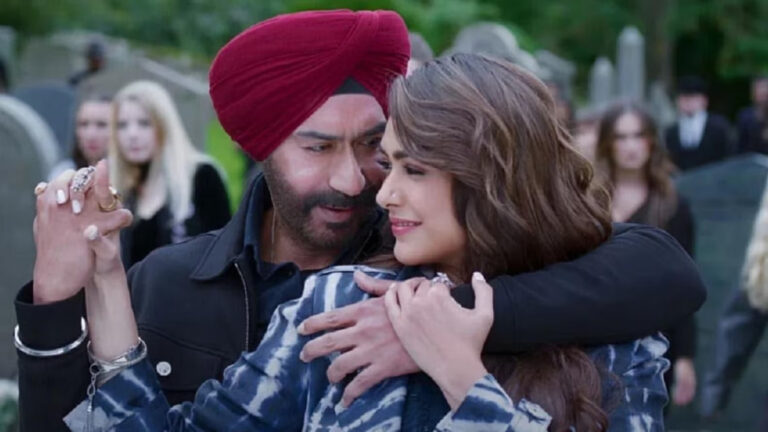
Mrunal Thakur on ‘Son of Sardaar 2’ Casting: “My Trust Was Shaken”

April 16, 2026 – In an industry where the leading lady’s trajectory is often dictated by the “hero” she is paired with, Mrunal Thakur has always tried to steer her own ship. However, in a candid new interview that has sent ripples through Bollywood, the Sita Ramam star opened up about her recent experience on the sets of Son of Sardaar 2, admitting that she felt blindsided by certain casting decisions and the eventual editing of the film.

Specifically, Thakur revealed that she was never informed that a “very senior actor”—veteran comedian and character artist Chunky Panday—would be playing her husband in the film. The actress confessed that the realization was jarring and led to a moment where her professional “trust was shaken.”

The Casting Surprise: Not What She Signed Up For?

The sequel to the 2012 hit, Son of Sardaar 2, was one of the most anticipated releases of 2025. While the film boasted an ensemble cast led by Ajay Devgn, the internal dynamics of the production are only now coming to light. Thakur, who played the role of Rabia Akhtar, found herself in a narrative tangle that she hadn’t fully anticipated during the script-reading phase.

Speaking to veteran journalist Prema, Thakur was uncharacteristically blunt about her disappointment:

“I didn’t know, like, a very senior actor was going to play my husband. Because that just changes my… this is not what I expected from the movie. So, there I failed because there was a little bit of trust that was shaken.”

In the film, Chunky Panday portrays Danish, Rabia’s estranged husband. While Panday is widely respected for his comic timing and decades-long career, the age gap and the nature of the pairing seemingly shifted the tone of the character Thakur had envisioned. Despite the shock, the actress was quick to add that she holds no personal grudges, stating, “You know what, I don’t have regrets.”

Beyond Casting: The ‘Editing Table’ Heartbreak

The casting of her on-screen husband wasn’t the only hurdle Thakur faced. The actress also expressed deep frustration over the final cut of the film, alleging that significant emotional beats were sacrificed on the editing table.

Thakur highlighted her work with young actress Roshni Walia, who played her stepdaughter, Saba. According to Thakur, the emotional core of her character was built on the bond with Saba—a child of her deceased sister whom Rabia raises as her own, sacrificing her personal life in the process.

“I did not know two important scenes of mine would be edited on the table,” she lamented. She described a poignant scene where Saba tells Rabia, ‘It’s better I don’t have a mother, I have you. I pray that every girl gets a mother like you.’ For Thakur, these scenes weren’t just filler; they were the “why” behind her character’s journey. Without them, she feels the narrative arc was hollowed out, leaving the audience with a less impactful version of Rabia Akhtar.

A Rocky Road for ‘Son of Sardaar 2’

The production of Son of Sardaar 2 was plagued by headlines long before its August 1, 2025, release. From the get-go, the film faced casting shuffles:

  • Sanjay Dutt, who was a staple of the first film, was replaced by Ravi Kishan after his UK visa was rejected.
  • Vijay Raaz was reportedly dropped from the project following a misunderstanding on set during the UK schedule.

When the film finally hit theaters, the reception was lukewarm at best. While it managed to earn approximately ₹60.90 crore at the box office, critics were less than kind. Many echoed Thakur’s hidden frustrations, noting that the actress felt “wasted” in a script that prioritized slapstick over substance.

Navigating the “Age Gap” Narrative in 2026

Thakur’s comments have reignited a long-standing debate in Indian cinema regarding the pairing of younger actresses with significantly older male actors. While the industry frequently pairs 50-plus male leads with actresses in their 20s or 30s as romantic interests, Thakur’s situation was a reversal of the trope—she was placed in a marital dynamic with a senior actor without prior clarity.

Industry insiders suggest that this lack of transparency can affect an actor’s performance. When an actor builds a character’s backstory, the “chemistry” or “history” they imagine with their co-star is vital. Finding out the identity of a primary co-star on the day of the shoot can disrupt the emotional homework done by the artist.

What’s Next for Mrunal Thakur?

Despite the “shaken trust” from Son of Sardaar 2, Mrunal Thakur remains one of the busiest and most sought-after names in the industry. She is currently riding high on the success of ‘Dacoit: A Love Story’, her Hindi-Telugu bilingual release alongside Adivi Sesh, which has garnered critical acclaim for its gritty performances.

Looking ahead, Thakur has a packed slate for the remainder of 2026:

  1. Hai Jawani Toh Ishq Hona Hai: Directed by David Dhawan, this rom-com pairs her with Varun Dhawan and Pooja Hegde. The film is slated for a May 22, 2026, release.
  2. Pooja Meri Jaan: A long-awaited thriller that promises to showcase her range.
  3. Do Deewane Seher Mein: A project that further cements her presence in the romantic drama genre.

Conclusion

Mrunal Thakur’s decision to speak out reflects a growing trend of modern actors demanding more transparency and creative respect from large-scale productions. While Son of Sardaar 2 may be a “failed” experiment in her eyes due to the broken trust, her honesty serves as a reminder that even in the high-stakes world of Bollywood sequels, the script and the “narrative soul” of a character should never be secondary to the spectacle.

As she moves forward with David Dhawan’s next big entertainer, fans are hopeful that the actress will get the screen time and the “husband” (or lack thereof) that her talent deserves.
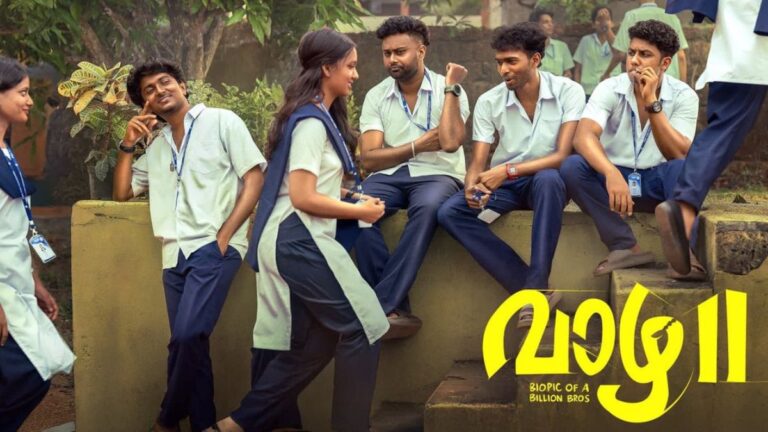
Vaazha 2: Biopic of a Billion Bros – Day 15 Box Office Update

New Delhi, April 16, 2026: The Malayalam film industry has witnessed a historic phenomenon this April. Vaazha II: Biopic of a Billion Bros, the spiritual successor to the 2024 cult hit, has officially cemented its status as a blockbuster. As of April 16, 2026, the film has completed its 15th day in theaters, and the numbers are nothing short of staggering for a project led by social media stars and newcomers.

The film, which hit screens on April 2, 2026, has defied traditional box office logic, proving that relatable content and digital-era stardom can outperform massive budgets and “superstar” templates.

Day 15: The Numbers and Trends

By the end of its 15th day (Thursday), Vaazha 2 has officially crossed the ₹107 crore mark in India gross collections. While the weekday collections have seen a natural stabilization compared to the explosive first week, the film’s hold remains incredibly firm.

CategoryCollection Details (Approx.)
India Net (15 Days)₹92.47 Crore
India Gross (15 Days)₹107.00 Crore
Worldwide Gross (15 Days)₹175.00+ Crore
Kerala State Gross₹55.00+ Crore

On Day 15 specifically, the film reported an occupancy of approximately 21.0% across 135 tracked shows in major urban centers, though it continues to run in many more screens across rural Kerala. While this is a sharp drop from the 62% occupancy seen on Day 14, it is important to note that the film has entered its third week, and the dip is expected as it prepares for another weekend surge.

A Record-Breaking Fortnight

The journey of Vaazha 2 has been a sprint. In just seven days, the film crossed the ₹100 crore mark globally. By Day 11, it had sprinted past ₹150 crore, making it the fastest-grossing Malayalam film of 2026 and currently the sixth highest-grossing Malayalam film of all time.

The film’s success is attributed to its massive appeal among Gen Z and millennial audiences. Lead actors Hashir H., Alan Bin Siraj, Ajin Joy, and Vinayak V.—all popular content creators—have successfully transitioned from mobile screens to the silver screen, bringing their massive digital following with them.

The Secret Sauce: Why It’s Working

  1. Authenticity over Grandeur: Directed by debutant Savin S.A. and written by Vipin Das, the film avoids the “larger-than-life” trap. It focuses on the raw, chaotic, and often hilarious struggles of four “losers” whom society has written off.
  2. Relatability: The “Biopic of a Billion Bros” tagline isn’t just marketing; it resonates with every young person who has felt the pressure of parental expectations or the camaraderie of friends who stick together through bad decisions.
  3. Strategic Casting: Supporting veterans like Jagadish, Aju Varghese, and Vijay Babu provide the acting “heft,” while a surprise appearance by director Alphonse Puthren sent fans into a frenzy during the opening weekend.
  4. Viral Music: The soundtrack, featuring contributions from nine different composers, has been trending on social media, keeping the movie relevant in daily digital conversations.

The Franchise Future: Vaazha 3 is Official

The “rampage” of Vaazha 2 at the box office has given the producers enough confidence to double down. Writer Vipin Das and co-producer Harris Desom have officially announced the third installment: Vaazha 3: Biopic of a Billion Girls.

In a recent interview, Harris Desom noted:

“Our vision is to create stars. With Vaazha and Vaazha 2, we proved that newcomers can carry a film to ₹100 crore and beyond. Vaazha 3 will shift the lens to a female-led cast, continuing our tradition of bringing fresh talent and technicians to the forefront.”

Vaazha 3 is set to be directed by Viswan Sreejith, who served as the assistant director on the second part.

What’s Next for Vaazha 2?

As the film moves into its third weekend, trade analysts are watching closely to see if it can breach the ₹200 crore global mark. With no major competition in the Malayalam market this week, the “Billion Bros” have a clear runway to add another ₹15-20 crore to their tally.

For the audience, the film remains a “must-watch” for its emotional core—a story that begins with laughter but ends with a poignant reflection on youth, mistakes, and the unbreakable bond of friendship.

Vaazha 2 isn’t just a movie anymore; it’s a case study on the changing face of Indian cinema in 2026.

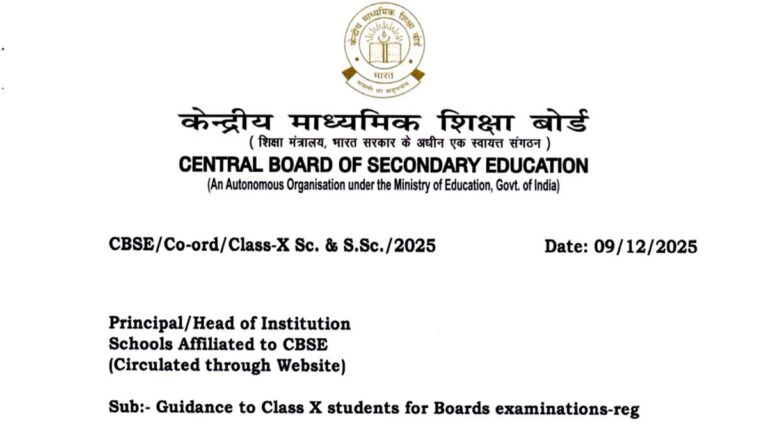
CBSE Class 10: 2026 Second Board Exam Guide

0

New Delhi, April 16, 2026: In a landmark move aligning with the National Education Policy (NEP) 2020, the Central Board of Secondary Education (CBSE) has officially set the stage for the Second Board Examination 2026 for Class 10. This dual-exam policy is designed to reduce student stress, eliminate the high-stakes nature of a single annual exam, and provide a much-needed “safety net” for those looking to improve their performance or clear subjects they found challenging.

For private candidates, this transition offers a unique opportunity to navigate their academic journey with greater flexibility. Following the declaration of the main results on April 15, 2026, the board has now opened the application window for the second phase of examinations, tentatively scheduled for May–June 2026.

Below is a comprehensive guide on eligibility, application procedures, fee structures, and the strategic changes implemented for the 2026 cycle.

Understanding the Two-Exam System

The introduction of the second board exam marks a shift from the traditional “Supplementary” or “Compartment” mindset to an “Improvement and Opportunity” framework.

  1. Objective: To allow students to retain the best score between two attempts.
  2. Syllabus: The second exam will be based on the same syllabus as the main board examination held in February–March 2026.
  3. Flexibility: Students can choose to appear for up to three core subjects to improve their grades.

Eligibility Criteria: Who Can Apply?

The 2026 guidelines categorize private candidates into specific groups eligible for the second exam:

  • Improvement Seekers: Students who passed the main exam but are dissatisfied with their scores in certain subjects. They can apply for improvement in up to three subjects.+1
  • Compartment Candidates: Students who were placed in the “Compartment” category after failing to secure passing marks in one or two subjects during the main March 2026 exams.
  • Additional Subject Candidates: Those who passed the main exam but wish to appear for an additional subject (non-practical).
  • Skill Subject Replacement: Students who passed but wish to appear for a failed compulsory subject that was replaced by a skill subject in their final result.

Crucial Note: Students marked as “Essential Repeat” (ER) in the main result are generally not eligible for the second exam in May/June and must wait for the 2027 main examination cycle.

The Application Process: Step-by-Step

For private candidates, the application process is entirely online and must be completed through the official CBSE “Saral” or “Private Candidate” portal.

Step 1: Preparation

Gather your 2026 Main Examination Roll Number, School Code, and Center Number as mentioned on your original admit card. You will also need a scanned copy of your passport-sized photograph and signature (in JPEG format).

Step 2: Online Entry

Visit the official website (cbse.gov.in) and navigate to the “Individual Application for Private Candidates” link. Select the category (Improvement, Compartment, or Additional Subject). Enter your roll number and other details to fetch your records from the CBSE database.

Step 3: Subject Selection

Choose the subjects you wish to appear for. A major update for 2026 allows Class 10 students to switch from Mathematics Standard to Mathematics Basic for the second attempt if they find the Standard version too difficult, though no other subject changes are permitted.

Step 4: Fee Payment

Fees must be paid through digital modes only (Net Banking, Debit/Credit Card, or UPI).

  • Standard Fee: ₹320 per subject for Indian candidates.
  • Late Fee: A significant “Late Fee” of ₹2,000 per candidate is applied if the initial deadline is missed.

Step 5: Confirmation Page

After successful payment, generate the “Confirmation Page.” This document is vital; while you don’t need to send it to the CBSE regional office, you must keep it for your records and to download your new admit card.

Important Dates and Deadlines

The board has emphasized a very tight schedule for the 2026 second exam to ensure that results are declared in time for the new academic session.

  • Application Window (Regular): April 16, 2026 – April 20, 2026.
  • Late Fee Window: April 21, 2026 – April 22, 2026.
  • Exam Commencement (Tentative): Third week of May 2026.
  • Result Declaration (Tentative): Mid-July 2026.

The “Best of Two” Rule

One of the most frequently asked questions is: What happens if I score lower in the second exam?

The CBSE policy ensures that students are not penalized for trying. For those appearing for Improvement, the board will issue a statement of marks that reflects the better of the two scores for each subject. If you score 75 in March and 82 in May, the 82 will be considered. If you score 75 in March and 70 in May, your original 75 will remain valid.

Key Highlights for 2026 Candidates

  • Practical Marks: Private candidates do not need to retake practical exams. The marks obtained in the main examination’s practical/internal assessment will be carried forward.
  • Examination Centers: While the board tries to allot centers near the candidate’s residence, private candidates may be assigned to different centers than their main exam to optimize logistics.
  • Three Subject Limit: Unlike the main exam, the second board exam is limited to a maximum of three subjects for Class 10. This is to ensure a focused preparation window for the students.

Preparation Strategy: How to Approach the Second Exam

With only about 4–5 weeks between the result declaration and the second exam, candidates must be surgical in their preparation.

  1. Analyze the Main Paper: Look at your March 2026 question paper and identify where you lost marks. Was it time management? Or specific chapters like Trigonometry or Heredity?
  2. Focus on the NCERT: The second exam will follow the NCERT curriculum strictly. Avoid cluttering your desk with new reference books.
  3. Solve Sample Papers: CBSE usually releases a specific set of sample papers for the second attempt. Practicing these is essential to understand the difficulty level.

The Psychological Shift

The 2026 dual-exam policy is a cultural shift in the Indian education system. For decades, the “Board Exam” was a one-shot event that caused immense anxiety. By providing this second window, CBSE is encouraging a growth mindset.

For private candidates—who often study without the daily structure of a classroom—this second chance is a vital resource. It provides a structured way to fix mistakes without losing an entire academic year.

The CBSE Class 10 Second Board Exam 2026 is more than just a “re-test”; it is a progressive step toward a more student-friendly evaluation system. Private candidates should act swiftly to complete their applications by the April 20 deadline to avoid heavy late fees. Whether you are looking to turn a ‘D’ into a ‘B’ or simply clear a subject that gave you trouble, this May attempt is your golden ticket to a better academic record.

The ‘Dhak Dhak’ Controversy: From Viral Fame to a Student Mental Health Crisis

0

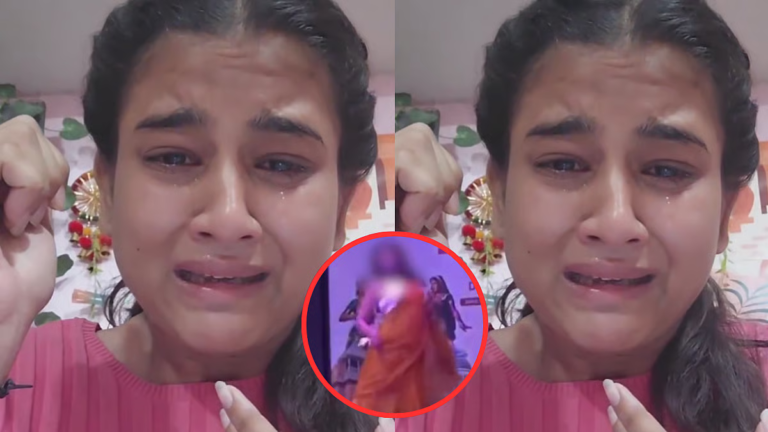
New Delhi, April 15, 2026: In the heart of Gujarat’s cultural capital, Vadodara, a seemingly routine college performance has spiraled into a national debate on morality, political ethics, and the digital safety of women. What began as a spirited Bollywood dance at Maharaja Sayajirao University (MSU) has transformed into a heartbreaking saga of online harassment, leaving a young student in tears and sparking a fierce political showdown.

The Performance That Sparked a Storm

The incident occurred during “Sanskar Sangam,” a three-day cultural festival organized by the Akhil Bharatiya Vidyarthi Parishad (ABVP) at MSU’s C.C. Mehta Auditorium. Amidst a lineup of traditional programs, an arts student took the stage clad in a saffron saree to perform to the iconic Bollywood track “Dhak Dhak Karne Laga.”

Within hours, clips of the performance flooded social media platforms like X (formerly Twitter) and Instagram. While many initially viewed it as a standard college dance, the tone quickly shifted as the video was co-opted by various groups and influencers.

From Cultural Fest to Political Battlefield

The controversy took a sharp political turn when the National Students’ Union of India (NSUI), the student wing of the Congress party, flagged the video. Labeling the performance as “obscene” and “vulgar,” NSUI leaders launched a scathing attack on the ABVP.

  • The Accusation: NSUI President Amar Vaghela stated that MSU is a “temple of education” and that such performances under the banner of a “cultural” event were a stain on the university’s values.
  • The Counter-Response: Caught in the crossfire, the ABVP initially distanced itself from the student. They claimed that while 140 students had registered for traditional acts, the student in question was an independent performer who went on stage during a break. ABVP’s Gujarat state general secretary, Devansh Brahmabhatt, later shifted the focus, accusing the NSUI of violating the student’s dignity by circulating her video with “obscene” labels without her consent.

A Student Breaks Down: “Where is the Obscenity?”

The most harrowing part of this story is the human cost. Following the backlash, the student released a self-recorded video that has since gone viral for all the wrong reasons—it shows a young woman completely broken by the weight of public shaming.

Speaking through tears, the student defended her performance and questioned the logic of her critics:

“I was wearing a simple, normal saree. I was presenting my art on stage. If you are all so ‘cultured,’ then you should stop listening to Bollywood songs as well. I am a normal student; I didn’t think dancing to a song would lead to claims that I have ‘violated traditions.'”

She admitted that her choice of song might have been “a mistake” in hindsight, but she fiercely denied the charge of obscenity. Most poignantly, she alleged that she was being used as a “pawn” in a political game between the NSUI and ABVP, stating that neither party truly cared about her mental well-being.

The Impact of Digital Shaming

The student reported severe mental distress, noting that her social media accounts were targeted and suspended after she tried to tell her side of the story. She highlighted a glaring double standard in the outrage:

  • Selective Outrage: She questioned why, in a country with significant socio-economic issues, the collective focus of political organizations was centered on a girl in a saree dancing to a mainstream Bollywood song.
  • Privacy Violations: The video was shared widely with political logos and derogatory captions, often without blurring her face or seeking her permission, leading to targeted online harassment.

Key Takeaways from the MSU Controversy

AspectDetails
LocationMaharaja Sayajirao University (MSU), Vadodara
Event‘Sanskar Sangam’ Cultural Festival
Song Choice“Dhak Dhak Karne Laga” (Bollywood)
Political InvolvementNSUI (Critics) vs. ABVP (Organizers)
Student’s DefensePerformed in a saree; no obscenity intended; art was misinterpreted.
Current StatusStudent has apologized for the song choice while seeking an end to the harassment.

The Broader Conversation: Art vs. “Sanskari” Values

This incident has reignited a debate on what constitutes “appropriate” culture in Indian educational institutions. Vadodara is often referred to as the Sanskari Nagari (Cultured City), a title that has become a double-edged sword for its residents.

Critics of the backlash argue that the “policing” of a student’s clothing and dance moves is a regression into moral vigilantism. They point out that the song “Dhak Dhak Karne Laga” is a staple of Indian pop culture and that the student’s attire—a saree—is the quintessence of traditional Indian clothing.

On the other hand, traditionalists argue that university platforms should be reserved for “high art” or folk traditions that reflect regional heritage, rather than Bollywood “item” numbers which they perceive as commercial and provocative.

Conclusion: A Call for Empathy

As the dust settles, the Vadodara student’s breakdown serves as a grim reminder of how quickly the internet can turn a moment of joy into a nightmare. Whether or not the song choice was “appropriate” for a specific event is a matter of administrative policy; however, the subsequent public shaming and political weaponization of a student’s image is a matter of ethics.

In an era where every moment is recorded and potentially viral, the MSU incident asks us to pause: Is our “culture” protected by tearing down a student, or is it better served by showing her grace and empathy?

For now, the student remains in a state of distress, asking the public to look past the political logos and see the human being behind the viral video.

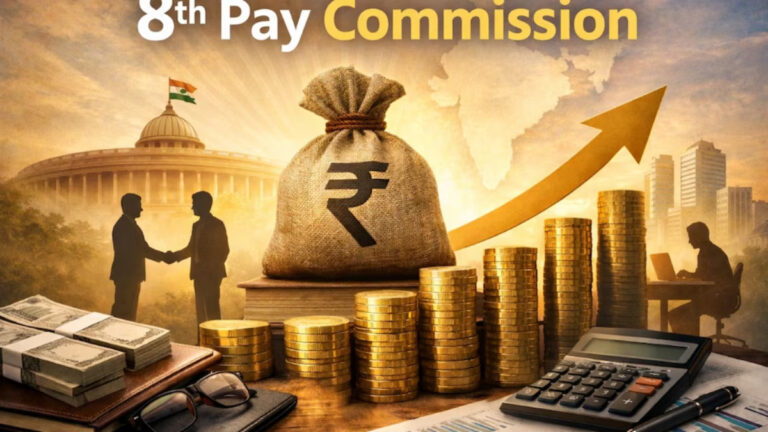
8th Pay Commission: ₹69k Pay & 6% Hike Demanded

0

New Delhi | April 15, 2026 — As the 8th Central Pay Commission (CPC) begins its high-gear consultations in the capital, central government employees and pensioners have laid out a bold roadmap for their financial future. In a comprehensive 51-page memorandum submitted to the Commission today, the National Council (Staff Side) of the Joint Consultative Machinery (NC-JCM) has formally requested a massive overhaul of the existing pay structure, headlined by a minimum basic pay of ₹69,000 and a doubling of the annual increment to 6%.

The submission marks a pivotal moment for over 50 lakh employees and 65 lakh pensioners, as the Commission—chaired by Justice Ranjana Prakash Desai—prepares to redefine the central government’s wage policy for the next decade.

The “Five-Unit” Logic: Why ₹69,000?

One of the most significant shifts in this memorandum is the logic used to calculate the minimum wage. Traditionally, pay commissions have calculated minimum pay based on a family of three units (husband, wife, and two children counting as one unit). However, the NC-JCM has argued that this model is outdated and legally inconsistent.

The Staff Side contends that the family unit should be increased from three to five. This change accounts for two dependent parents, citing the Maintenance and Welfare of Parents and Senior Citizens Act, which mandates that children support their elderly parents. By factoring in the cost of living—including food, clothing, housing, and healthcare—for five units, the unions have calculated that the minimum basic pay must be set at ₹69,000, a significant jump from the current ₹18,000 established under the 7th Pay Commission.

Doubling the Annual Increment

Currently, central government employees receive a 3% annual increase in their basic pay. The Staff Side has termed this “inadequate” in the face of modern inflationary pressures and the rising cost of specialized services like education and private healthcare.

The memorandum proposes an annual increment of 6%. The unions argue that a higher increment rate is necessary to ensure that employees’ purchasing power does not erode over the ten-year gap between pay commissions. This move, if accepted, would lead to much steeper career-long salary growth for government personnel.

Key Demands at a Glance

The memorandum isn’t just about the base salary; it suggests a total restructuring of allowances and benefits.

CategoryExisting (7th CPC)Proposed (8th CPC)
Minimum Basic Pay₹18,000₹69,000
Fitment Factor2.573.833
Annual Increment3%6%
HRA (X Class Cities)24% – 30%40%
Minimum Pension₹9,000₹34,500

Restructuring the Pay Matrix

To simplify the bureaucracy of pay grades, the NC-JCM has proposed a radical “merger” of levels. Currently, the 7th Pay Commission uses a complex matrix of 18 levels. The new proposal suggests consolidating these into just seven broad pay scales.

  • Pay Scale 1: Covers the entry-level (formerly Level 1) starting at ₹69,000.
  • Pay Scale 2: Merges the current Levels 2 and 3, with a starting pay of ₹83,200.
  • Pay Scale 3: Merges Levels 4 and 5, starting at ₹1,12,000.
  • Pay Scale 6: Merges Levels 9 and 10, reaching a minimum of ₹2,15,100.

The goal of this consolidation is to reduce “stagnation,” where employees remain at the same pay level for years. Additionally, the unions are demanding at least five guaranteed promotions (or financial upgrades) during a 30-year career.

Housing and Social Security

With property prices and rentals skyrocketing in metropolitan areas, the memorandum seeks a major revision of the House Rent Allowance (HRA). The proposed rates are:

  • 40% for X-category cities (Metros)
  • 35% for Y-category cities
  • 30% for Z-category cities

Furthermore, the unions have called for the restoration of the Old Pension Scheme (OPS) for all employees recruited after January 1, 2004, and have suggested that the monthly pension should be fixed at 67% of the last drawn pay, up from the current 50%.

Other Notable Proposals

Beyond the core salary figures, the Staff Side has included several welfare-oriented demands:

  • Parent Care Leave: A new provision of 60 days of leave during the entire service period to care for aging parents.
  • Increased Maternity/Paternity Leave: Maternity leave to be extended to 240 days, and paternity leave to 45 days.
  • Death Compensation: A demand for ₹2 crore compensation for employees who lose their lives in accidents while on duty.
  • Health Benefits: An increase in Fixed Medical Allowance (FMA) for those in non-CGHS areas, potentially rising from ₹1,000 to as much as ₹20,000 per month.

Timeline and Next Steps

The 8th Pay Commission was officially constituted in late 2025 and has been given a mandate of 18 months to submit its report. While the official “due date” for the implementation of the new scales is January 1, 2026, the actual rollout often sees delays.

  1. Consultation Phase (Ongoing): The Commission is currently meeting with various stakeholders, including railway unions, defense personnel associations, and various ministry representatives.
  2. Report Submission (Expected late 2026): After analyzing the financial impact and the unions’ demands, the Commission will submit its final recommendations to the Union Cabinet.
  3. Implementation (2026-2027): While the government usually implements the changes retroactively from January 1, 2026, the actual revised paychecks may only reach employees by early to mid-2027, with arrears paid for the intervening months.

The Economic Reality

Economists note that accepting these demands in full would place a massive burden on the national exchequer. A fitment factor of 3.83—the multiplier used to jump from 7th CPC basic pay to 8th CPC basic pay—is significantly higher than the 2.57 used in the last revision.

However, the Staff Side argues that the government’s revenue has grown substantially, and the “Model Employer” status of the Government of India requires it to provide a living wage that keeps up with the realities of 2026.

As the 8th Pay Commission continues its deliberations, the millions of families dependent on central government salaries and pensions will be watching closely. Whether the government settles on the requested ₹69,000 or a more conservative figure, the coming year promises to be a landmark period for India’s public sector workforce.

Abducted Graduate’s Viral Video Sparks Urgent Appeals

0

New Delhi, April 15, 2026: A deeply distressing video featuring an abducted university graduate has surfaced online, prompting an immediate and emotional wave of appeals from his family and employer. In the viral footage, which has been circulated across multiple social media platforms, the young man is observed in a fragile state, surrounded by armed captors. This visual confirmation of his captivity has sent shockwaves through the community, as the reality of his predicament was brought into the public eye in mid-April 2026.

The footage is being utilized by the abductors as a means of communication, and the sight of the graduate pleading for his life has been described by viewers as a profound tragedy. It is noted that the young professional was seized during a routine journey, and his whereabouts had remained unknown until this digital proof of life was released. The video has since been viewed by thousands, fueling a collective demand for his safe and unconditional release.

Emotional Appeals from Loved Ones and Colleagues

The family of the victim has been observed in a state of immense grief, issuing a public plea for mercy to the abductors. It was stated by his parents during a press briefing that the graduate is a peace-loving individual with a bright future ahead of him. The captors were urged by the grieving family to consider the humanitarian aspect of the situation and to allow their son to return home unharmed. The emotional weight of their appeal has been felt nationwide, as the “merciless” nature of the abduction is debated in the public sphere.

Simultaneously, a strong statement of support has been issued by the victim’s employer, who described the graduate as a dedicated and promising member of their team. It was emphasized by the organization that every effort is being made to coordinate with security agencies to secure his freedom. The employer has joined the family in their appeal for mercy, highlighting the devastating impact such an event has on the professional and social fabric of the community.

Also Read: Man Charged in Terrifying Home Invasion

Coordinating a Path Toward Freedom

The viral video is currently being analyzed by security experts and intelligence agencies to determine the location and identity of the kidnappers. It is reported that specialized units have been deployed to the region where the abduction is believed to have occurred. The data extracted from the digital footage, including background sounds and visual cues, is being utilized to refine the ongoing rescue operation. It is argued by security analysts that the public nature of the video increases the pressure on both the perpetrators and the authorities to reach a resolution.

As the situation develops, the community remains in a state of hopeful anticipation for a positive outcome. The case has sparked a wider conversation about the rising trend of abductions targeting young graduates and the need for enhanced security measures on major transport routes. It is concluded that while the video has caused significant distress, it has also united the public in a singular mission to ensure that the abducted graduate is returned to the safety of his home and career.

Man Charged in Terrifying Home Invasion

0

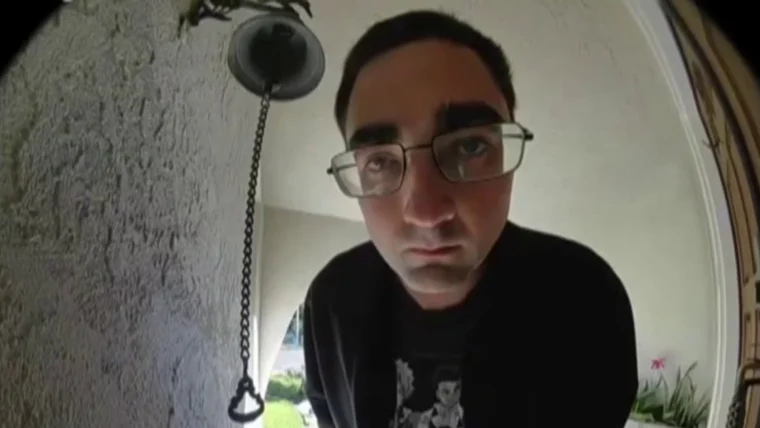
New Delhi, April 15, 2026: A harrowing home invasion that was documented by a residential security camera has resulted in serious criminal charges for a Florida man. The footage, which has since transitioned into a widespread viral sensation, depicts a suspect forcefully entering a private residence and shouting, “Where is your daughter?” The video captures the terrifying moments as the homeowner was confronted by the intruder, leading to a physical struggle that has been described by local law enforcement as a targeted and violent assault.

The incident was reported in Hillsborough County, where the suspect was identified as a 44-year-old male. It is observed in the footage that the intruder appeared to be in an agitated state as he bypassed the home’s entry points. The chilling nature of the verbal threats directed toward the family has sparked significant concern among the public regarding residential security and the safety of the victims involved in this confrontation.

Immediate Law Enforcement Response

The suspect was apprehended shortly after the video was analyzed by local detectives and shared across social media platforms. It has been confirmed by the Hillsborough County Sheriff’s Office that the man has been officially charged with multiple counts, including aggravated assault and home invasion robbery. It was clarified by the authorities that the suspect was not a stranger to the family, and the incident is believed to be rooted in a domestic or personal grievance that escalated into physical violence.

The legal process was initiated swiftly as the digital evidence provided a clear and undeniable record of the suspect’s actions. It is argued by legal experts that the presence of high-definition audio and video from the home’s doorbell camera was instrumental in securing the charges. The victim, who sustained injuries during the struggle to protect his household, is reported to be in stable condition as the investigation continues into the specific motives behind the attack.

Also Read: Mumbai’s “Swiftie” Auto Driver Becomes an Internet Sensation

The Impact of Viral Evidence

The viral nature of the clip has prompted a wider discussion regarding the role of private surveillance in modern criminal investigations. It is noted that the transparency provided by such footage allows for a more rapid identification of suspects in high-risk scenarios. The case has been utilized by public safety advocates to emphasize the importance of secure home environments and the immediate reporting of suspicious activities to the police.

As the legal proceedings move forward, the suspect remains in custody without bond, pending a court appearance. The psychological impact on the family, particularly concerning the threats made against the daughter, is being addressed through victim advocacy services. It is concluded that while the footage is difficult to watch, its role in ensuring that the perpetrator was brought to justice remains a critical aspect of this disturbing case.

Mumbai’s “Swiftie” Auto Driver Becomes an Internet Sensation

0

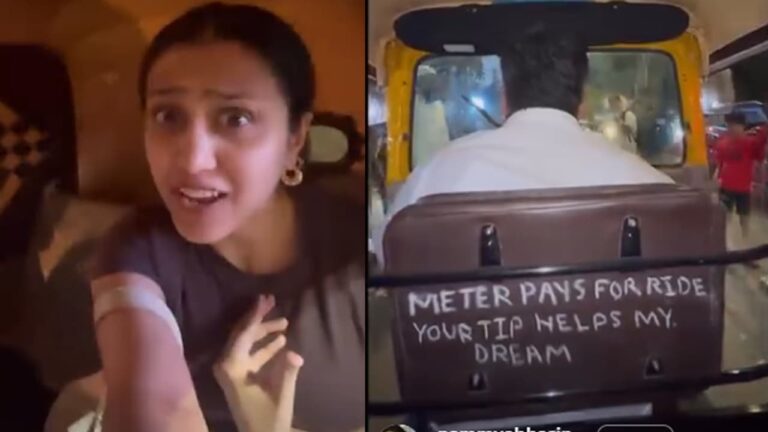
New Delhi, April 15, 2026: A heartwarming moment of shared fandom has been witnessed on the busy streets of Mumbai, where a local auto-rickshaw driver and a female passenger were captured singing Taylor Swift’s hit song “Blank Space.” The video, which has achieved viral status within hours of being posted, depicts a rare and joyful interaction that transcends the typical commute. It is reported that the passenger was pleasantly surprised to find a fellow “Swiftie” behind the wheel, leading to an impromptu duet that has resonated with music lovers globally.

The footage was recorded during a routine ride and later shared on Instagram, where it quickly caught the attention of thousands. In the clip, the driver is observed singing along with impressive accuracy, showcasing a deep familiarity with the lyrics of the 2014 pop anthem. This delightful scene has been described by viewers as a “wholesome Mumbai moment,” proving that the love for music knows no boundaries of profession or background.

The Global Reach of the Swiftie Fandom

The viral nature of the video is a testament to the immense popularity of Taylor Swift in India. It is noted that the “Swiftie” community in Mumbai has grown significantly in 2026, with fans frequently organizing local listening parties and themed events. However, seeing this passion reflected in the city’s iconic public transport system has added a unique local flavor to the global phenomenon. The driver’s enthusiasm was praised by many, with netizens noting that his “vibe” made the journey far more memorable than a standard trip.

Public reaction to the post has been overwhelmingly positive, with many users commenting on the power of music to bridge social gaps. It is argued that such interactions serve as a reminder of the vibrant and inclusive spirit of Mumbai. The video has been utilized by several digital creators to highlight the “hidden gems” of the city’s daily life, where moments of pure happiness can be found in the most ordinary settings.

Also Read: CEO’s Dance Interrupted by Hilarious Appraisal Query

A Viral Spotlight on Human Connection

Beyond the music, the video has sparked a conversation about the importance of kindness and shared interests in urban environments. It is observed that the passenger and the driver were both visibly enjoying the moment, creating a sense of camaraderie that is often missing in the hustle of metropolitan life. The data from the video’s engagement suggests that viewers are increasingly drawn to “feel-good” content that celebrates simple, positive human connections.

As the clip continues to trend across platforms like X and Facebook, the “Swiftie Auto Driver” has become a local celebrity of sorts. Many commuters have expressed their hope to book a ride with him just to experience a musical commute. It is concluded that while the city of Mumbai is known for its fast pace, it is these small, melodic pauses that truly define its heart. The song may be titled “Blank Space,” but this interaction has certainly filled the digital space with immense joy.

CEO’s Dance Interrupted by Hilarious Appraisal Query

0

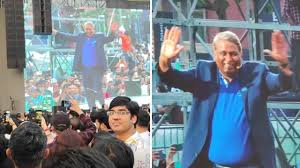
New Delhi, April 15, 2026: A celebratory event at HCL Technologies recently transitioned from a grand anniversary party into a viral internet sensation. To mark the company’s 50th year, a massive gathering was organized for employees at the Noida campus, featuring high-profile appearances by founder Shiv Nadar and Chairperson Roshni Nadar. However, the spotlight was unexpectedly stolen by CEO C. Vijayakumar during an impromptu dance performance on stage that showcased a more relaxed side of the corporate leader.

The event, which included a private concert by playback singer Arijit Singh, was intended to boost employee morale and celebrate five decades of global operations. As the CEO joined his team to groove to the music, the atmosphere was filled with cheers and applause. It is noted by attendees that such moments of informal interaction are rare in large-scale tech enterprises, making the sight of the “highest-paid tech CEO” dancing a significant highlight of the evening.

The Question That Stole the Show

The viral nature of the footage is largely attributed to a bold and humorous interruption from the audience. As Vijayakumar was seen waving his hands and dancing, a loud voice from the crowd was captured on video shouting, “Sir, appraisal kab hoga?” (Sir, when will the appraisals happen?). This direct question about salary hikes and performance reviews, delivered in the middle of a high-energy celebration, has resonated with thousands of corporate workers across India.

It is reported that while the CEO likely did not hear the specific query over the loud music and distance from the stage, the surrounding employees were heard erupting into laughter. The video, originally shared by an HCL employee on Instagram, has since garnered hundreds of thousands of views. It is argued by many netizens that the question represents the “inner voice” of every salaried professional who finds themselves at a corporate party while waiting for financial updates.

Also Read: The Silent Fall: Prem Chopra on Rajesh Khanna vs. Amitabh Bachchan

Social Media Reacts with Wit

The digital response to the “appraisal” interruption has been filled with humor and lighthearted commentary. Some users joked that the CEO’s hand-waving on stage was actually a secret signal that appraisals were not coming anytime soon, while others suggested that the grand celebration itself was the “actual appraisal” for the year. This playful exchange has highlighted the universal tension between corporate festivities and the practical concerns of the workforce.

Beyond the humor, the event has been praised for its logistical scale, including a partnership with the Delhi Metro to extend train timings until 12:30 AM for the safety of the employees. As the video continues to trend in mid-April 2026, it serves as a reminder of the evolving culture within Indian IT firms. It is concluded that while the dance was impressive, the quest for the elusive appraisal remains the ultimate “showstopper” in any office setting.

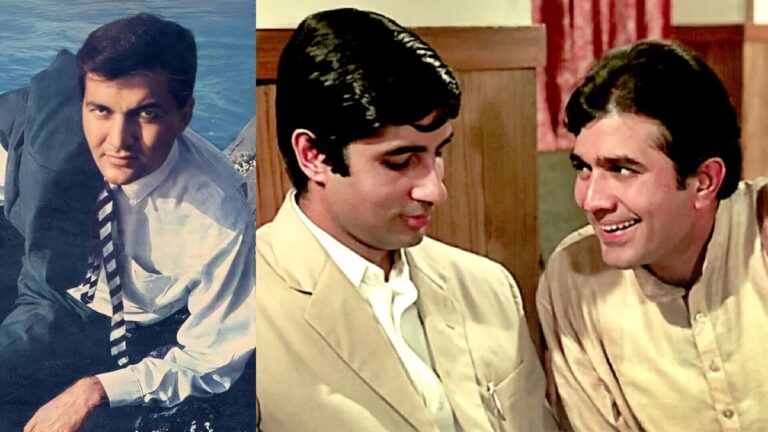
The Silent Fall: Prem Chopra on Rajesh Khanna vs. Amitabh Bachchan

New Delhi, April 15, 2026: The glitz and glamour of Bollywood often hide a profound sense of isolation, especially for those who have tasted the dizzying heights of unparalleled success. In a recent, soul-baring interview, veteran actor Prem Chopra revisited one of the most significant power shifts in Indian cinema history: the eclipse of Rajesh Khanna’s superstardom by the meteoric rise of Amitabh Bachchan.

While the rivalry between the “Original Superstar” and the “Angry Young Man” is well-documented, Chopra’s latest reflections offer a heartbreaking look at the internal devastation Khanna faced. “His silence said more than words,” Chopra remarked, painting a picture of a man who was psychologically shattered by the changing tides of the industry.

The Weight of Unprecedented Fame

To understand the depth of Rajesh Khanna’s fall, one must understand the sheer magnitude of his rise. Between 1969 and 1971, Khanna delivered 15 consecutive solo hits, a record that remains unbroken. He wasn’t just an actor; he was a phenomenon. Women wrote him letters in blood, and his car was often stained with lipstick from fans who would mob him wherever he went.

Prem Chopra, who worked with Khanna in nearly two dozen films, recalled the aura that surrounded him. “There was a time when the world stopped for Rajesh Khanna,” Chopra noted. However, this level of adoration created a cocoon. When the audience’s taste shifted toward the raw, grounded intensity of Amitabh Bachchan, the transition was not just a career setback for Khanna—it was an identity crisis.

‘His Silence Said More Than Words’

According to Chopra, Rajesh Khanna was never one to complain or lash out publicly about his declining box office numbers. Instead, he retreated into a haunting, heavy silence.

“He didn’t discuss it, but I could feel what was going on,” Chopra shared in a recent conversation. “It is incredibly difficult for a person who has been at the absolute peak to digest failure. He couldn’t accept that he was no longer the sole ruler of the box office.”

This “silent battle” was evident on film sets. Chopra observed that while Khanna maintained his trademark style and late-arrival habits—hallmarks of his peak years—the energy around him had changed. The industry, once willing to wait hours for him, was now looking toward the disciplined, punctual, and versatile Amitabh Bachchan.

The Turning Point: Adaptability vs. Denial

The crux of Chopra’s revelation lies in the fundamental difference between how the two legends approached their careers.

  • Rajesh Khanna’s Struggle: Khanna found it difficult to let go of the “Superstar” image. He continued to chase roles that required him to be the romantic lead, even as the “Angry Young Man” era demanded a different kind of hero. Chopra noted that Khanna’s refusal to evolve led to a painful disconnect with the audience.
  • Amitabh Bachchan’s Strategy: In contrast, Chopra praised Bachchan for his remarkable adaptability. Even after his own professional slump in the late 90s, Bachchan reinvented himself. “Amitabh accepted that he was no longer the ‘hero’ of the picture in the traditional sense,” Chopra explained. “He transitioned into powerful character roles and didn’t try to carry the entire film on his shoulders.”

Chopra recalled a poignant anecdote about Bachchan’s humility, noting that during his darkest financial phase, Amitabh famously walked to director Yash Chopra’s house to ask for work. This willingness to start over was something Khanna, burdened by the ghost of his own legend, struggled to emulate.

The Toll of Stardom: Alcohol and Isolation

Perhaps the most “shocking” part of Prem Chopra’s account was the confirmation of how Khanna’s emotional turmoil manifested in his personal habits. Chopra revealed that as the hits dried up, Khanna’s dependence on alcohol intensified.

“He was drinking earlier too, but then he started drinking heavily,” Chopra admitted. He explained that this is a tragic, recurring theme in the film industry. When actors cannot reconcile who they were with who they are now, they often turn to substances to numb the pain of being forgotten. For Khanna, the loss of his “superstar” status felt like a loss of his very self.

A Lesson in the Fickleness of Fame

Prem Chopra’s reflections serve as a sobering reminder of the volatility of the entertainment world. He emphasized that in Bollywood, “different times bring different cinema.”

While Rajesh Khanna’s era was defined by melody, romance, and a certain stylized charm, the rise of Amitabh Bachchan brought realism and grit. Khanna was the master of an era that ended sooner than he was ready for.

Key Takeaways from Chopra’s Account:

FeatureRajesh Khanna’s ApproachAmitabh Bachchan’s Approach
PunctualityKnown for arriving late, maintaining “Superstar” aura.Renowned for being on time or early to every set.
EvolutionStuck to his romantic image for too long.Transitioned into central character roles with age.
Response to FailureInternalized pain; turned to silence and heavy drinking.Sought work actively; focused on hard work and reinvention.

The Legacy of Two Titans

Despite the “shocking” nature of these revelations, Prem Chopra remains a staunch admirer of both men. He noted that while Khanna’s fall was tragic, his impact on Indian cinema is indelible. “Rajesh Khanna was the first to show us what superstardom really looks like,” he said.

Today, as Amitabh Bachchan continues to dominate the screen at over 80 years old, Chopra’s words remind us that staying relevant requires more than just talent—it requires the humility to change. Rajesh Khanna’s “silence” in his final decades was the sound of a man who had seen the highest of highs and found the ground too cold to touch.

As fans look back at the 2026 lens of Bollywood history, this revelation adds a layer of human vulnerability to the legends we see on screen. It serves as a tribute to the “Kaka” we loved and a testament to the “Big B” who refused to quit.