Home Blog Page 36

Fortifying the Gateway: Is Great Nicobar India’s Hormuz-Like Choke Point Against China?

0

New Delhi, June 3, 2026: For decades, naval strategists have mapped the global economy through its maritime choke points—narrow channels like the Strait of Hormuz or the Suez Canal, where a geopolitical freeze can paralyze international trade. Today, a remote tropical outpost in the eastern Indian Ocean is emerging as the focal point of Asia’s next great maritime standoff. Great Nicobar Island, India’s southernmost territory, is undergoing a massive, highly debated $\text{₹}1,00,000\text{-crore}$ ($\$9\text{ billion}$) transformation.

The ambition behind the Great Nicobar Island Development Project has sparked a sharp geopolitical question: Is New Delhi building a “Hormuz-like” choke point capable of cutting off China’s economic lifeline?

While the Indian government frames the mega-project as a balanced mix of commercial logistics and national defense, Beijing watches with growing anxiety. The island sits directly atop China’s most vulnerable economic soft spot—a vulnerability known as the “Malacca Dilemma”.

Understanding the Geography of the Power Move

To understand why Great Nicobar is drawing comparisons to the Strait of Hormuz, one must look at a map of global energy flows. The Strait of Hormuz is critical because it controls access to Persian Gulf oil. Similarly, the Strait of Malacca is the busiest choke point in East Asia, serving as the shortest maritime highway connecting the Indian Ocean to the Pacific.

Approximately 75% to 80% of China’s crude oil imports, alongside nearly 25% of all global traded goods, pass through this narrow corridor. This heavy reliance means that if an adversarial power were to close the gates of Malacca, China’s industrialized economy would face an immediate energy crisis.

Great Nicobar Island sits just 40 nautical miles (74 km) from these bustling international shipping lanes. It straddles the Six Degree Channel—a vital maritime gateway that all vessels must pass through before entering or exiting the Strait of Malacca. By aggressively developing this island, India is positioning a massive security apparatus right at the front door of China’s primary supply line.

The Blueprint: Commercial Hub or Military Fort?

The mega-project, spearheaded by NITI Aayog, is a sprawling infrastructure plan centered around Galathea Bay on the southeast coast of Great Nicobar. The blueprint features four core pillars:

  • A $\text{₹}18,000\text{-crore}$ International Container Transshipment Terminal (ICTT).
  • A dual-use greenfield international airport.
  • A dedicated gas and solar power plant.
  • A futuristic defense-industrial township.

A fierce debate has emerged regarding the true intent of the project. Critics, including senior political leaders and environmental groups, note that the project was originally pitched primarily as a commercial enterprise. They argue that the government is using “national security” as a shield to deflect intense scrutiny over the ecological destruction of pristine rainforests and indigenous tribal reserves.

However, the strategic reality is that civilian infrastructure and military power are deeply linked. The Indian Navy and the Andaman and Nicobar Command (ANC)—India’s only unified tri-services military command—suffer from long logistical tails. Building deep-water ports, heavy-duty runways, and power grids transforms Great Nicobar into what military analysts call an “unsinkable aircraft carrier”.

It allows India to shift from a purely defensive posture to an active power-projection stance. With a fully operational hub at Galathea Bay, Indian warships, P-8I maritime surveillance aircraft, and submarine-hunting drones can sustain permanent patrols across the mouth of the Malacca Strait. They can even monitor alternate routes like the Sunda and Lombok straits further south.

The View from Beijing: The Dilemma Deepens

Unsurprisingly, China views India’s activities on Great Nicobar with high suspicion. Prominent Chinese geopolitical analysts, such as Jin Canrong from Renmin University, have publicly warned that India’s push directly threatens Beijing’s “Malacca Lifeline”. In the past, China assumed that any attempt to blockade the Malacca Strait would come from the United States operating out of bases in Singapore or Diego Garcia. Now, they must factor in India as a formidable maritime rival operating right next door.

In response to this growing pressure, Beijing is pursuing three specific countermeasures to reduce its vulnerability:

Is it Truly a Hormuz-Level Choke Point?

While the comparison to Hormuz is a helpful analogy, important differences remain. The Strait of Hormuz is a tight, inescapable funnel just 39 kilometers wide at its narrowest point. The maritime geography around the Andaman Sea is much wider and more complex. If India attempted a hard blockade at the Six Degree Channel during peacetime, it would disrupt not just Chinese vessels, but the commercial shipping of dozens of neutral nations, potentially triggering a major international backlash.

Furthermore, defense experts point out that a commercial megacity might actually complicate military operations. Bringing 300,000 new settlers, tourists, and commercial actors to a fragile island creates an administrative and security burden for the military during a crisis, transforming a streamlined military outpost into a vulnerable civilian target.

Instead of a brute-force physical wall, Great Nicobar acts as an information and leverage choke point. It gives New Delhi unmatched domain awareness. In times of peace, India can track every Chinese submarine, warship, and oil tanker entering its backyard. In a conflict scenario—such as a clash along the Line of Actual Control (LAC) in the Himalayas—India’s position on Great Nicobar provides crucial asymmetric leverage. New Delhi can quietly signal that if China pushes too hard on land, India holds the keys to the energy lifeline that fuels China’s factories.

The Domestic Balancing Act

Even as the strategic logic solidifies, the project faces intense domestic resistance. The environmental costs are severe: the project requires clearing roughly 130 square kilometers of pristine tropical rainforest and cutting down hundreds of thousands of trees within a global biodiversity hotspot. Galathea Bay is also a critical nesting ground for the endangered leatherback sea turtle.

The government’s plan to offset this damage by planting trees thousands of kilometers away in northern India has been criticized by scientists as a poor substitute for a lost ecosystem. Simultaneously, human rights advocates warn that the project infringes upon the legally protected lands of the isolated Shompen and Nicobarese indigenous tribes.

Ultimately, Great Nicobar Island may never completely replicate the physical blockade capabilities of the Strait of Hormuz. However, it changes the geopolitical equation in Asia. By placing a powerful economic and military hub at the mouth of the Malacca Strait, India has successfully turned China’s worst maritime nightmare into a permanent geographic reality. The true challenge for New Delhi over the coming decade will be managing this geopolitical advantage without permanently destroying one of the earth’s most unique ecological treasures.

For a deeper dive into the geographical stakes and defensive architectures shaping this region, you can watch this breakdown on the Great Nicobar Project and the Malacca Power Move. This video details how the island’s developing infrastructure impacts China’s energy security and reshapes trade dynamics across the Indo-Pacific.

Over 20 Dead in Delhi Fire; PM Announces Relief

0

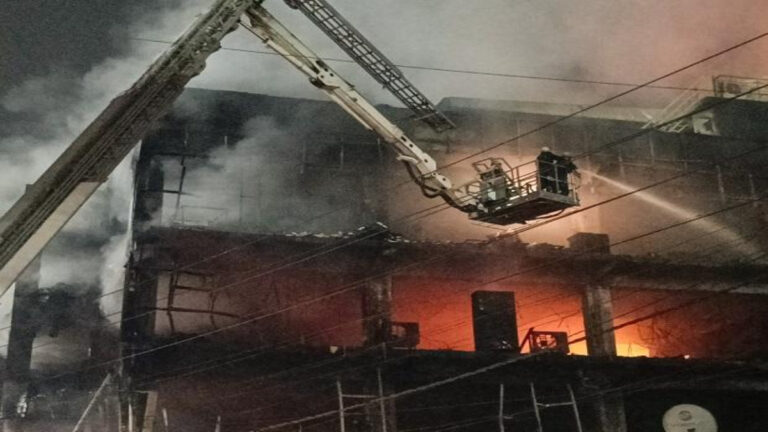
New Delhi, June 3, 2026: A devastating blaze that ripped through a commercial-cum-residential complex has left more than 20 people dead, including several foreign nationals, sending shockwaves through the local community and triggering a massive political and administrative fallout. The disaster, which began late in the evening, quickly escalated into one of the worst urban fire tragedies the capital has seen in recent years. As families mourn their sudden losses, Prime Minister Narendra Modi expressed deep grief over the incident and announced an ex-gratia compensation of ₹2 lakh each for the next of kin of the deceased.

The fire is believed to have broken out around 10:30 PM, a time when many residents were winding down for the day and labor units inside the complex were finishing their late-night shifts. Within minutes, what started as a localized spark transformed into a raging inferno, fed by highly flammable materials stored illegally within the building’s lower floors.

Midnight Chaos and the Race Against Time

The first distress calls flooded the fire control room just before 10:45 PM. Eyewitnesses reported seeing thick, toxic black smoke billowing from the ground floor, which housed a mix of small-scale manufacturing units and illegal warehouses. Because the building was located deep inside a congested neighborhood characterized by narrow, twisting alleyways, the initial response teams faced an uphill battle before they even reached the scene.

More than 25 fire tenders were eventually deployed to the site. Firefighters struggled to navigate the water tankers through streets choked by parked vehicles and overhead hanging wires. By the time the first hoses were trained on the flames, the fire had already climbed the central staircase—acting like a chimney and trapping dozens of people on the upper residential floors.

The Human Toll and International Impact

As emergency crews finally breached the building using hydraulic cutters and smoke-filtration masks, they were met with scenes of devastation. A total of 22 bodies have been recovered so far, with several others rushed to nearby government hospitals with severe burn injuries and smoke inhalation.

Among the victims were several foreign nationals, reportedly students and young professionals renting apartments on the topmost floors. Local authorities have contacted respective embassies to coordinate the identification process and manage the repatriation of the remains.

Medical authorities at the apex trauma center confirmed that the majority of the casualties were not caused by direct burns, but by asphyxiation (suffocation from inhaling toxic smoke). Carbon monoxide and hydrogen cyanide gases, produced by burning plastics and synthetic fabrics in the warehouses below, filled the unventilated residential spaces within less than five minutes, knocking victims unconscious before they could find an exit.

Government Response and Relief Announcements

The scale of the tragedy prompted immediate reactions from the highest levels of government. Expressing his profound condolences to the grieving families, Prime Minister Narendra Modi took to social media to announce immediate financial relief.

In a public statement, the Prime Minister’s Office noted.

The Investigation: A Familiar Story of Systemic Negligence

While local police have filed a First Information Report (FIR) charging the building owners with culpable homicide not amounting to murder, a preliminary structural and safety audit has already revealed a laundry list of severe violations. Investigators from the Fire Services department point to three critical factors that turned a routine electrical fire into a mass casualty event:

  • Absence of a Fire NOC: The building did not possess a valid Fire No-Objection Certificate (NOC). It was registered strictly for residential use but was being utilized commercially for high-risk manufacturing.
  • Blocked Emergency Exits: The structure had only one narrow staircase. The designated emergency exit door on the rear side had been permanently locked and converted into extra storage space for a clothing distributor.
  • Zero Firefighting Infrastructure: None of the floors were equipped with functional smoke alarms, overhead sprinklers, or basic fire extinguishers.

The civic body has suspended two local inspectors for failing to report the illegal commercial operations running in the residential zone, but community leaders argue that administrative action after the fact is not enough.

Moving Forward: The Urgent Need for Urban Renewal

This latest tragedy serves as a grim reminder of the ticking time bombs hidden inside dense, unregulated urban spaces across major metros. When commercial greed bypasses municipal bylaws, it is innocent residents and under-equipped emergency workers who pay the ultimate price.

As the smoke clears and the neighborhood begins the painful process of burying its dead, the focus must shift from temporary financial compensation to permanent structural reform. Experts argue that until the city enforces strict, zero-tolerance sealing drives against buildings operating without fire safety compliance, “tragedies by negligence” will continue to disrupt lives and devastate families.

From Overlooked to Adored: How a Viral Video Saved a Senior Dog’s Life

0

New Delhi, June 3, 2026: The loud, metallic clanking of kennel doors and the endless chorus of barking can make any animal shelter a stressful place. For a senior dog, it can feel like a lifetime sentence. Sadly, older dogs are often the most overlooked residents in animal rescues. Visitors frequently rush past the quiet, gray-muzzled residents in favor of energetic puppies or younger dogs. But for one sweet senior dog who spent months waiting in the shadows of a crowded shelter, everything changed in a single flash of digital lightning.

The turning point came when a dedicated shelter volunteer noticed the elderly dog sitting quietly in the corner of her kennel, looking defeated. Wanting to give her a fighting chance, the volunteer captured a short video of the dog. The clip highlighted her gentle eyes, her slow, hopeful tail wag, and the quiet dignity that only a senior pet possesses. Set to a moving soundtrack, the video was uploaded online with a simple plea: “Don’t let her spend her golden years behind bars.” Within days, the video struck a chord with internet users, racking up hundreds of thousands of views and shares.

The Power of a Single Share

Halfway across town, a loving mother was scrolling through her social media feed when the video appeared on her screen. She wasn’t actively looking to adopt another pet, but the image of the senior dog’s weary yet hopeful face instantly captured her heart. She watched the video repeatedly, completely moved by the dog’s gentle spirit and the obvious sadness in her eyes.

The very next morning, the mother drove straight to the shelter. When she arrived, she showed the staff the viral video and asked to meet the dog. Shelter workers were overcome with emotion; they had watched this sweet animal get bypassed day after day, and they knew this was the miracle they had been praying for.

A Heartwarming First Meeting

The introduction between the mother and the senior dog was nothing short of magical. When the dog was brought out of her kennel, she initially seemed hesitant, unsure of what was happening. But as soon as the mother knelt down and offered a gentle hand, the dog walked over, rested her heavy, gray head right in her lap, and let out a deep, contented sigh. It was a clear, unspoken acknowledgment that she finally felt safe.

The adoption paperwork was finalized quickly. The moment the senior dog walked through the shelter’s front doors to leave for good, the staff and volunteers broke into applause, wiping away tears of joy. After months of cold concrete floors and constant noise, the elderly pup was finally heading toward a soft bed and a quiet life

Living the Best Life in Their Golden Years

Since moving into her new home, the senior dog has undergone a stunning transformation. The stress and exhaustion that once weighed her down have melted away, replaced by an energetic brightness that surprises everyone. Her new family frequently shares updates of her enjoying slow walks in the park, indulging in tasty treats, and taking long, uninterrupted naps on a plush orthopedic bed in the sun.

This heartwarming story serves as a beautiful reminder of the incredible joys of adopting senior pets. Older dogs are often already house-trained, have calmer temperaments, and possess an endless amount of gratitude for the people who give them a second chance. While social media can often feel overwhelming, this viral video proved that digital communities can be a powerful force for good—connecting an overlooked animal with the perfect family just when she needed it most.

Cocktail 2 Trailer: A Messy New Love Triangle Begins

New Delhi, June 3, 2026: The wait is officially over for Bollywood rom-com fans. The highly anticipated trailer for Cocktail 2 has finally dropped, introducing a fresh, chaotic, and modern love triangle featuring Shahid Kapoor, Kriti Sanon, and Rashmika Mandanna. Directed by Homi Adajania—the filmmaker behind the beloved 2012 original—and written by the master of contemporary relationship dramas, Luv Ranjan, alongside Tarun Jain, the sequel promises a glossy yet complicated look at friendship, love, and the messy grey areas in between.

Scheduled to hit theaters on June 19, 2026, the movie arrives 14 years after Saif Ali Khan, Deepika Padukone, and Diana Penty first stole hearts with the original Cocktail. While the first film became a cult favorite for its emotional depth and iconic soundtrack, Cocktail 2 shifts gears, heading to scenic Italian locales to deliver a brand-new story packed with unexpected twists, high-energy banter, and a very unconventional second half.

The Plot: Friendship, Flirting, and Ultimate Chaos

The three-minute trailer gives us a solid glimpse into the lives of the central trio: Kunal (Shahid Kapoor), Ally (Kriti Sanon), and Diya (Rashmika Mandanna). The story kicks off with a lighthearted vibe, establishing Kunal as a charming guy caught in a classic modern dilemma. As his character notes in a Hindi voiceover, new relationships are thrilling precisely because they are new, and new friends bring exciting new stories.

However, things quickly get complicated when the group takes a trip to Italy. While Kunal and Diya share an obviously romantic bond, Ally enters the picture as Kunal’s incredibly close friend. As the trio travels and spends time together, the lines between friendship and romance begin to blur heavily. Ally starts flirting openly with Kunal, pushing the boundaries of their platonic bond and triggering a wave of jealousy from Diya.

What starts as a fun, sun-soaked vacation rapidly devolves into an emotional battlefield. The trailer drops hints of wildly chaotic scenarios—including a casual discussion about a potential threesome—before diving headfirst into the dramatic fallout. As both women begin actively competing for Kunal’s affection, the tension escalates into full-blown confrontations, leaving a conflicted Kunal utterly torn between his girlfriend and his best friend.

A Modern Take on Relationships

According to director Homi Adajania, Cocktail 2 is not your typical, black-and-white Bollywood romance. At the grand trailer launch event in Mumbai, Adajania emphasized that the film deliberately explores modern relationship anxieties. It tackles burning contemporary questions, such as whether merely thinking about cheating is equivalent to the physical act, and whether intent matters more than actions.

Producer Dinesh Vijan also noted that while the 2012 original had a deeply intense and traditional emotional arc in its second half, Cocktail 2 opts for a highly unconventional approach that aims to mirror how today’s youth navigate love, hope, and heartbreak.

Nostalgia Meets Fresh Chartbusters

You cannot talk about a Cocktail movie without talking about the music. The trailer leverages a massive wave of nostalgia by bringing back the iconic track “Tum Hi Ho Bandhu,” a fan-favorite anthem from the 2012 film composed by Pritam. Hearing those familiar beats instantly bridges the gap between the two generations of the franchise.

Beyond the nostalgia, the sequel boasts a fresh soundtrack crafted by Pritam, with lyrics by Amitabh Bhattacharya and Irshad Kamil. The makers have already released a few tracks, including the soulful, slow-flowing romantic ballad “Tujhko,” beautifully sung as a duet by Arijit Singh and Sunidhi Chauhan. Other tracks like “Mashooqa” and “Jab Talak” are already generating significant buzz online.

Internet Verdict: A Divided House

As expected with any high-profile sequel, the trailer has sparked a massive wave of reactions across social media, leaving the internet somewhat divided.

  • The Praise: A large section of the audience has flooded social media with praise for Kriti Sanon, calling her the absolute “spotlight” and “soul” of the trailer. Fans have lauded her glowing screen presence and seemingly bold performance. Shahid Kapoor has also turned heads, with many marveling at how he effortlessly pulls off the look and energy of a 25-year-old.
  • The Criticism: On the flip side, some hardcore fans of the original film remain unconvinced. Twitter reviews have seen complaints that the dialogue relies too heavily on generic humor, and some viewers feel it lacks the immediate, raw emotional hook that Deepika Padukone’s Veronica brought to the screen 14 years ago.

Behind the Scenes: Hexagons and Candid Confessions

The star-studded trailer launch in Mumbai wasn’t just about the movie; the cast and crew kept the atmosphere electric with their candid thoughts on real-life love triangles.

When asked if she had ever been in a love triangle, Kriti Sanon laughingly admitted to a school-age predicament. She confessed to having a crush on her best friend’s crush, though she chose not to act on it—a decision she’s glad she made, jokingly calling the guy a “major red flag.” Meanwhile, Rashmika Mandanna playfully sidestepped the question by stating she is incredibly happy in her present life.

The biggest laugh of the night came when producer Dinesh Vijan decided to brutally tease Shahid Kapoor about his high-profile dating history before his marriage to Mira Rajput. Vijan joked that Shahid hadn’t just been in a love triangle in the past, but rather a “hexagon.” Shahid took the joke in stride, wittily replying, “It was a circle that started from the same place and ended at the same place.”

With its beautiful Italian backdrops, a messy, high-stakes relationship dynamic, and an infectious soundtrack, Cocktail 2 is shaping up to be the definitive theatrical rom-com of the summer. Whether this new trio can perfectly recreate the cinematic magic of the original remains to be seen, but audiences will find out for themselves when the film hits the big screen on June 19.

Stocks in Focus: Alkem Labs, Vedanta, Canara Bank, NHPC, and Adani Ports Drive Market Action

0

New Delhi, June 3, 2026: The Indian stock market is buzzing with corporate developments, regulatory actions, and major financial decisions. Investors are closely monitoring key market players like Alkem Laboratories, Vedanta Limited, Canara Bank, NHPC, and Adani Ports. Each of these companies has made headlines with significant updates ranging from massive stakeholder exits and institutional buy-ins to major capital expansions and regulatory inquiries.

Below is an updated, detailed analysis of the major developments driving these five stocks.

1. Alkem Laboratories: Promoters Divest Stake Worth ₹930 Crore

Alkem Laboratories saw massive block deal activity in the open market. Two promoter entities—Jayanti Sinha and the Samprada & Nanhamati Singh Family Trust—together offloaded approximately 17.88 lakh shares. This transaction represents roughly a $1.5\%$ stake in the prominent pharmaceutical company, cumulative to a total value of ₹929.87 crore.

  • Promoter Exit: Jayanti Sinha completely exited her position in the company by divesting her entire $1.04\%$ holding. Following this transaction, the overall promoter group shareholding in Alkem Labs contracted from $51.20\%$ down to $49.71\%$.
  • The Institutional Response: The large block of shares was eagerly absorbed by a mix of top-tier domestic mutual funds and major global financial institutions. ICICI Prudential Mutual Fund and HDFC Mutual Fund emerged as the largest buyers, picking up shares worth ₹469.83 crore and ₹265 crore respectively. Other institutional buyers included Goldman Sachs, Morgan Stanley, Nippon India Mutual Fund, and DSP Mutual Fund.

Despite the high institutional demand, Alkem’s stock closed down by $1.42\%$ at ₹5,239 per share on the National Stock Exchange (NSE) due to short-term supply pressure.

2. Vedanta Limited: Under ED Scrutiny for FEMA Violations

Mining and natural resources conglomerate Vedanta Limited experienced a turbulent session after reports surfaced regarding regulatory action. The Enforcement Directorate (ED) initiated a series of search operations against the Anil Agarwal-promoted group.

In response to the development, a spokesperson for Vedanta confirmed that the company is actively cooperating with the regulatory authorities and providing all necessary information requested of them. While the company reiterated its total commitment to legal and statutory compliance, the looming regulatory overhang is expected to keep the stock volatile as investors look for clarity regarding the scope of the investigation.

3. Canara Bank: Board Approves ₹8,500 Crore Capital Raise

Public sector lender Canara Bank has officially set its financial roadmap into motion for the financial year 2026–27. The bank’s board of directors approved a comprehensive capital-raising plan amounting to a maximum of ₹8,500 crore. The entire corpus will be gathered via the issuance of Basel III-compliant debt instruments.

  • The Capital Breakdown: The capital infusion will be dual-structured. Canara Bank will raise up to ₹4,500 crore through Additional Tier-I (AT1) Bonds and the remaining ₹4,000 crore via Tier-II Bonds, depending on prevailing market conditions and regulatory clearances.
  • Impact on Shareholders: This strategy is structured efficiently to strengthen the bank’s capital adequacy levels and fuel upcoming credit growth. Because the fundraise relies entirely on debt instruments rather than issuing fresh equity, there will be absolutely no shareholding dilution for existing retail and institutional investors.

Market participants view this as a strategically sound move to insulate the bank from potential loan losses while driving aggressive future corporate and retail lending campaigns.

4. NHPC Limited: Dips on Government Stake Sale via OFS

State-run hydropower giant NHPC Limited witnessed a dip in its stock price following an explicit equity dilution initiative orchestrated by the Government of India. The government initiated an Offer for Sale (OFS) to offload a portion of its equity stake in the open market.

To invite wide institutional and retail participation, the floor price for this offer for sale was established at ₹71 per share. Although an OFS creates temporary downward pressure on a stock’s market valuation due to an immediate increase in floating supply, NHPC’s long-term project pipeline remains exceptionally robust. The company recently celebrated major milestones, including the successful commissioning of additional units at its massive 2,000 MW Subansiri Lower Hydroelectric Project, which is India’s largest hydropower venture.

5. Adani Ports: Clocking Impressive $16\%$ YoY Cargo Growth

Adani Ports and Special Economic Zone (APSEZ) continues to demonstrate operational resilience and strong logistics demand. The company reported that it handled a massive cargo volume of 48.3 Million Metric Tonnes (MMT). This represents a stellar $16\%$ Year-on-Year (YoY) operational growth compared to the same period in the previous fiscal year.

The exceptional growth metrics underscore Adani Ports’ market dominance across India’s maritime gateways. The steady rise in container and liquid shipping activity indicates a robust economic environment and highly efficient supply chain handling, making it a highly attractive pick for long-term infrastructure investors.

Investor Takeaway

The ongoing corporate activities highlight a highly dynamic phase in the Indian market. While capital expansions at Canara Bank and operational milestones at Adani Ports present clear growth indicators, the short-term disruptions via stakeholder sales at Alkem Labs and NHPC alongside regulatory probes at Vedanta serve as reminders to look closely at both the fundamentals and ongoing corporate governance cycles. Investors are advised to balance tactical opportunities with macro-level trends before making adjustments to their portfolios.

West Asia Crisis Deepens: Iranian Drone and Missile Attack Hits Kuwait International Airport

0

New Delhi, June 3, 2026 — The conflict in West Asia has escalated sharply after a wave of hostile Iranian drones and missiles directly struck Kuwait International Airport early Wednesday morning. The targeted strike hit Terminal 1 (T1), causing severe structural damage and wounding several people. In immediate response, Kuwaiti aviation authorities suspended all commercial flights and initiated emergency protocols. This major incident marks a dangerous new chapter in the rapidly deteriorating security situation across the region.

The Strike on Terminal 1

According to the Kuwait Ministry of Defense, a fleet of hostile drones penetrated local airspace and targeted the airport’s main passenger facilities. Brigadier General Saud Abdulaziz Al-Otaibi, official spokesperson for the Ministry of Defense, condemned the incident as an act of “criminal Iranian aggression”. He confirmed that the explosive impacts tore through parts of the T1 building, leaving behind significant material wreckage and injuring an unspecified number of individuals inside the terminal.

Social media video footage quickly emerged from the scene, showing smoke rising into the sky and burning debris in the airport parking lots. Emergency services and medical teams rushed to the site to treat the wounded, all of whom have since been moved to nearby hospitals to receive necessary medical care.

Total Flight Suspension and Emergency Plans

Following the impact, the Kuwait Public Authority for Civil Aviation (PACA) immediately activated its high-level security contingency plan. Spokesman Abdullah Al-Rajhi announced via the state news agency (KUNA) that all incoming and outgoing commercial flights have been grounded until further notice to protect passengers and airport workers.

Airplanes already en route to Kuwait City were abruptly diverted to alternate airports in neighbouring countries. Specialized technical teams are currently on-site assessing the structural integrity of the terminal building before any cleanup or repair work can officially begin. While the airport remains dark, Kuwaiti military officials stated they are in a state of complete readiness to handle further threats.

A Night of Heavy Exchange

The direct hit on the airport follows hours of heavy military exchanges between the United States, its regional allies, and Iran. Late Tuesday night, United States Central Command (CENTCOM) reported tracking a massive volley of ballistic missiles and drones launched by Iran toward its neighbors.

While that initial wave failed to hit its intended marks, it triggered immediate retaliatory action. The US military launched heavy “self-defense” airstrikes on an Iranian military facility located on Qeshm Island in the Strait of Hormuz. Despite these American attempts to suppress Iran’s launch capabilities, a secondary wave of Iranian drones successfully slipped through, culminating in the devastating early-morning strike on Kuwait’s civilian passenger terminal.

Furthermore, CENTCOM firmly denied separate claims made by Iran’s Islamic Revolutionary Guard Corps (IRGC) stating that they had successfully hit the headquarters of the U.S. Navy’s Fifth Fleet in Bahrain, labeling those claims as propaganda.

Global and Regional Fallout

The attack on a major international civilian aviation hub has sent shockwaves through global markets and sparked severe political condemnation.

The Arab Parliament also issued a swift statement strongly condemning the strike. Meanwhile, international energy markets reacted instantly to the flares of hostility. Global crude oil prices jumped sharply as energy traders grew deeply concerned about potential supply chain chokepoints, particularly given the proximity of the conflict to the highly strategic Strait of Hormuz.

With regional diplomatic ceasefire talks hitting a complete standstill, experts fear this direct strike on Kuwait will push the international community into a broader, more unpredictable war. Allied forces in the region have upgraded their defense postures to maximum alert as the world watches to see how Kuwait and its international partners choose to respond to this unprecedented aggression.

Shilpa Shinde Retracts Harassment Claims Against Bhabiji Producer

New Delhi, June 3, 2026: In a dramatic turn of events that has sent shockwaves through the Indian television industry, popular actress Shilpa Shinde has publicly retracted her long-standing sexual harassment allegations against Sanjay Kohli, the producer of the hit comedy show Bhabiji Ghar Par Hai!. Shilpa, who became a household name for her iconic portrayal of Angoori Bhabhi, famously walked out of the show at the peak of its popularity, triggering a massive legal and media battle that lasted for years. Her recent admission that the harassment claims were false marks a stunning conclusion to one of the most high-profile controversies in Indian television history.

The feud originally erupted when Shilpa abruptly exited the show, alleging a hostile work environment, breach of contract, and mental harassment. The dispute quickly escalated into a legal battle when Shilpa filed a formal First Information Report (FIR) against producer Sanjay Kohli, accusing him of sexual harassment. At the time, the actress claimed that Kohli had made unwanted advances toward her and threatened to fire her from the show if she did not comply. The allegations deeply divided the television fraternity, with federations, co-stars, and producers taking opposing sides, ultimately leading to a temporary industry ban on the actress.

However, in a surprising twist that has redefined the narrative, Shilpa has now clarified that the sexual harassment charges were not based on reality. Opening up about the legal strategy behind the move, the actress revealed that the extreme accusation was leveraged primarily to pressure the production house and the channel during a bitter financial dispute. Shilpa admitted that the core issue was entirely about her contract, payment revisions, and the production team’s alleged exclusivity clauses, which prevented her from taking up other lucrative assignments.

According to sources close to the development, Shilpa explained that she felt backed into a corner at the time, facing immense professional isolation and a potential smear campaign that threatened to ruin her career. In a bid to force the producers to settle her dues and lift the industry restrictions against her, she was advised to escalate the matter legally by introducing the harassment angle. The actress expressed regret over how the situation spiraled out of control, acknowledging that the gravity of a sexual harassment claim should not have been used as a tool for a contractual settlement.

The retraction has sparked intense debate within the entertainment industry regarding the misuse of laws designed to protect women in the workplace. Industry insiders and legal experts have noted that such high-profile retractions can inadvertently damage the credibility of genuine survivors of workplace harassment, making it harder for women to come forward in an already difficult environment. Conversely, supporters of the producers have expressed a sense of vindication, emphasizing the immense personal and professional damage Sanjay Kohli and his family endured during the years the case remained active in the public eye.

Despite the severe controversies that have shadowed her career, Shilpa Shinde has consistently managed to retain a massive and fiercely loyal fan base. Following her exit from Bhabiji Ghar Par Hai!, she went on to win the reality show Bigg Boss, where her raw honesty and resilience resonated with millions of viewers. While this latest revelation adds a complex and controversial chapter to her public legacy, the actress remains focused on her digital projects and upcoming acting assignments, hoping to finally put the ghosts of her past television disputes to rest.

Zaheer Iqbal Sweet Birthday Tribute to Sonakshi Sinha Melts Hearts

0

New Delhi, June 3, 2026: The bond between Bollywood stars Sonakshi Sinha and Zaheer Iqbal continues to be a favorite among fans, serving up major relationship goals. Celebrated for their down-to-earth romance and mutual playfulness, the couple recently gave the internet another reason to gush. To mark Sonakshi’s special day on June 2, Zaheer took to social media to share a wonderfully candid glimpse into their lives, pairing it with a deeply affectionate message: “I love you, my birthday girl.”

What made the tribute stand out wasn’t a highly stylized, glamorous photoshoot, but a delightfully messy, real-world moment that highlighted the authenticity of their relationship.

A Peek Behind the Glamour: The “Pre-Proposal” Video

Zaheer’s Instagram tribute bypassed the traditional red-carpet aesthetics in favor of pure, unscripted joy. He posted a video of Sonakshi completely lost in the simple pleasure of eating a large burger, with melted cheese visibly smeared across her face. Alongside the video, Zaheer penned a message that perfectly captured his love for her unfiltered self.

The post quickly grew even more romantic as Zaheer shared a fascinating bit of relationship trivia. He revealed that the video was captured on December 30, 2022, exactly two hours before he asked her to marry him. He playfully added the hashtag #BiwiNo1, calling it her “last meal without a ring on it.” Fans and colleagues flooded the comment section, praising the post as one of the sweetest, most genuine celebrity birthday wishes in recent memory.

The Celebration: A Hilarious Cake Mishap

Sonakshi chose to celebrate her birthday surrounded by a close-knit circle of family and friends, including her husband and actress Huma Qureshi. Giving her followers a peek inside the intimate party, Sonakshi shared a video where the room was filled with laughter and loud singing. In a moment of pure fun, Zaheer can be seen sitting on Sonakshi’s lap while their friends belt out the birthday song.

However, it was the birthday cake itself that stole the show for a completely accidental reason. Instead of writing her common nickname “Sona,” her friends managed to get the cake misspelled. Sonakshi addressed the mistake with her trademark humor on Instagram:

From Co-Stars to Life Partners

The couple’s journey together reads like a classic modern romance. They initially crossed paths back in 2017 during an event hosted at superstar Salman Khan’s residence. Sparks flew later that month at an afterparty for the film Tubelight, where the two reportedly spent five hours completely lost in conversation.

Their professional lives crossed paths when they starred together in the 2022 comedy-drama Double XL. While they kept their relationship relatively quiet for several years to maintain their privacy, their quiet bond eventually culminated in a beautiful, intimate civil ceremony on June 24, 2024, held under the Special Marriage Act.

Navigating the Spotlight Side by Side

Being a high-profile couple in Bollywood always brings a fair share of public attention and media speculation. Over the years, Sonakshi and Zaheer have gracefully managed everything from persistent rumors to online scrutiny regarding their interfaith marriage. Sonakshi has historically shrugged off the outside noise, emphasizing that their focus remains entirely on their shared happiness, personal growth, and professional dedication.

On the professional front, both actors continue to explore new horizons. Sonakshi has experienced an impressive resurgence on streaming platforms, recently drawing widespread acclaim for her powerful dual role in Sanjay Leela Bhansali’s epic series Heeramandi. She also expanded her horizons by making her debut in Telugu cinema with the project Jatadhara. Meanwhile, Zaheer was last seen on the big screen in the action-comedy Ruslaan.

Even as their careers keep them busy, the couple’s ability to slow down, share a burger, laugh at a misspelled cake, and openly celebrate one another proves that their real-life partnership is firmly anchored in what matters most: genuine love and mutual respect.

Microsoft Unveils the AI-First Device Era

New Delhi, June 3, 2026: At its annual Build developer conference, Microsoft officially declared the dawn of a new era in personal computing, shifting its strategy from traditional software applications to autonomous, “agent-first” hardware. Moving beyond basic chatbots, the tech giant showcased a future where users no longer open apps or click through menus, but instead rely on dedicated AI agents capable of carrying out complex tasks independently across the cloud and local devices.

Beyond the App Store: The Shift to AI Agents

For decades, the standard computing model has revolved around operating systems running individual, siloed applications. Microsoft CEO Satya Nadella made it clear that this era is winding down. “The next platform shift is from apps to agents—from software you open to intelligence you invoke,” Nadella announced during his keynote address, detailing how the company aims to rebuild computing from the ground up.

Rather than relying on a single all-knowing assistant, Microsoft envisions an open ecosystem where specialized AI agents collaborate. To make this possible, the company is integrating OpenClaw—a popular open-source software package that coordinates teams of AI bots—directly into the Windows environment. This allows businesses to securely deploy AI workers to manage data, handle routine operations, and execute workflows without risking sensitive corporate information.

Introducing Project Solara: Hardware Built for AI

The most surprising announcement of the conference was Project Solara, an Android-based, chip-to-cloud platform built specifically to support these intelligent agents. Developed using the Microsoft Device Ecosystem Platform (MDEP) and powered by processors from Qualcomm and MediaTek, Project Solara steps completely away from traditional phone or PC interfaces.

Instead of hosting standard mobile applications, Solara devices act as physical vessels for autonomous AI. Microsoft showcased several innovative form factors, including:

  • The Smart Badge: A device about the size of a standard employee ID card, equipped with a touchscreen, a fingerprint reader, and full wireless connectivity. It is designed for hands-free environments, such as a clinic where an agent can listen to and automatically document a nurse’s patient visit.
  • The Smart Display: A compact desktop unit reminiscent of a smart speaker with a built-in screen, meant to serve as an interactive control hub for workplace productivity.

A key technical breakthrough of Project Solara is what Microsoft terms “just-in-time UI.” Because these devices lack fixed application screens, the AI agent dynamically generates a user interface on the fly based on the size of the screen, voice prompts, or camera inputs. This means developers do not have to rewrite code for every different shape of hardware; the AI alters its own visual layout to fit the device perfectly.

Heavy-Duty Hardware: The Surface RTX Spark Dev Box

While compact gadgets stole the spotlight, Microsoft also answered the call for heavy-duty, localized computational power by unveiling the Surface RTX Spark Dev Box. Described by Nadella as a developer’s “dream machine,” this compact, high-performance desktop unit is loaded with Nvidia’s advanced RTX Spark silicon.

The Dev Box is uniquely engineered to run massive AI models directly on the machine itself. During live demonstrations, executives showed the device smoothly running a localized AI model packed with 120 billion parameters. Typically, models of this complexity require massive server farms to run, but the specialized architecture allows developers to train, test, and run heavy agent workflows locally without relying on data centers.

Next-Generation Software: Scout and MAI-Thinking

On the software front, Microsoft took aim at competitors like OpenAI, Google, and Anthropic by introducing its own family of in-house AI models. Chief among these is MAI-Thinking-1, the company’s premier “reasoning model.” A specialized variant called MAI-Code-1-Flash was introduced specifically to support the growing trend of “vibe coding,” allowing developers to build functional websites and software backends using simple natural language instructions.

Microsoft also launched an “always-on” AI assistant called Scout. Integrated directly into Microsoft’s Copilot framework, Scout runs continuously in the background to proactively manage schedules, draft emails, and gather relevant notes before meetings even begin, functioning like a human chief of staff.

Accelerating the Future: Quantum Computing and Beyond

To prove that its AI strategy is already yielding scientific results, Microsoft concluded its hardware announcements by detailing Majorana 2, its newest topological quantum computing chip. Developed using Microsoft Discovery—an agentic AI platform designed for scientific research—the development team used AI bots to automate chip measurements and analyze decades of data.

Thanks to the rapid iterations provided by these AI research agents, Microsoft successfully utilized a new lead-based material stack that resulted in a 1,000-fold improvement in qubit reliability over its predecessor. The breakthrough has allowed Microsoft to cut its development timeline in half, confidently announcing plans to launch a commercially scalable quantum computer by 2029.

The underlying theme of Build was clear: Microsoft is moving aggressively to control every single layer of the AI ecosystem—from the physical microchips and local desktop hardware to the operating systems and the cloud-connected models that power them. By removing the barriers of traditional apps and giving AI agents a physical presence in the real world, the tech giant is betting everything on a more seamless, ambient future for technology.

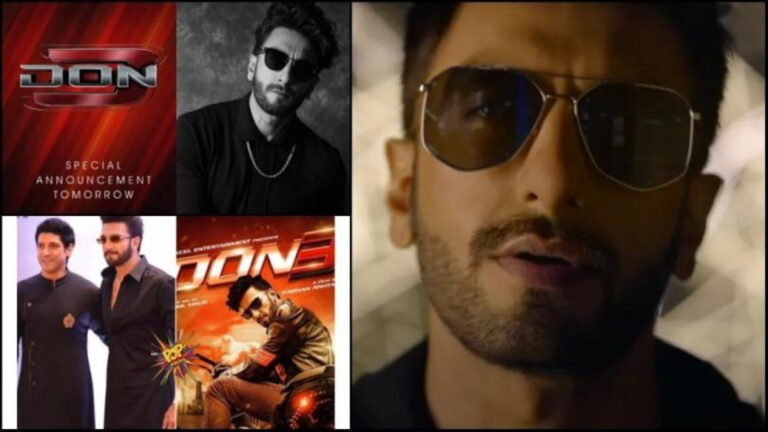
Ranveer Singh vs FWICE: The Don 3 Ban Controversy Escalates

New Delhi, June 3, 2026: The ongoing feud between Bollywood superstar Ranveer Singh and the Federation of Western India Cine Employees (FWICE) has taken a dramatic legal turn. What began as a high-profile casting dispute over the highly anticipated action film Don 3 has now escalated into a full-blown legal battle. This dispute threatens to reshape the power dynamics between individual actors and the industry’s largest trade unions.

At the center of the controversy is Ranveer Singh’s sudden exit from Don 3, a project spearheaded by Excel Entertainment’s Farhan Akhtar and Ritesh Sidhwani. The actor has officially served a legal notice to FWICE. This move is a direct response to a “non-cooperation directive” issued by the apex film body, which many in the industry have labeled an effective ban. With the film body calling a major press conference today to address the escalation, the entire Hindi film fraternity is watching closely.

The Root of the Don 3 Fallout

The controversy trace back to late 2025, when rumors began circulating that Ranveer Singh had walked away from the iconic Don franchise. Initially announced in 2023 with a slick teaser introducing Ranveer as the new face of the criminal mastermind—following in the footsteps of legends Amitabh Bachchan and Shah Rukh Khan—the film faced multiple script delays before entering heavy pre-production.

According to trade reports, Ranveer abruptly withdrew from the project just days before the cameras were set to roll, citing lingering creative differences and script concerns. However, the producers painted a vastly different picture. Excel Entertainment approached FWICE alleging that the actor’s last-minute exit left them facing staggering financial losses. The production house claimed it had already spent roughly ₹45 crores on intensive pre-production activities, including international location scouting, booking large crew logistics, and constructing massive sets.

FWICE Steps In With a “Non-Cooperation” Directive

Taking up the producers’ grievance, FWICE leadership—including prominent figures like Ashoke Pandit and B.N. Tiwari—stepped in to mediate. The film workers’ body claimed they sent three separate notices to Ranveer Singh over a month-long period, inviting him to sit down and present his side of the story. When the actor reportedly failed to appear and chose to communicate only through his legal counsel, FWICE retaliated with a severe directive.

On May 25, the federation issued an official non-cooperation notice to all its affiliated unions. FWICE demanded that none of its members—ranging from vital technicians, lightmen, and camera operators to makeup artists and security personnel—work on any future project starring Ranveer Singh. FWICE President Ashoke Pandit publicly called on other Bollywood producers to stand in solidarity with Excel Entertainment, arguing that massive, uncompensated losses caused by an actor walking out threaten the livelihood of the entire daily-wage workforce.

Ranveer Strikes Back with Legal Action

While the media quickly framed the non-cooperation directive as a “ban” on the actor, Ranveer’s legal team chose to strike back at the very framework of FWICE’s authority. In the legal notice served to the trade body, Ranveer’s representatives argued that FWICE has “absolutely no jurisdiction” over what is fundamentally a private contractual disagreement between an individual actor and a production house.

The actor’s legal defense heavily leans on historical legal precedents, most notably a landmark 2017 ruling by the Competition Commission of India (CCI). In a previous dispute involving filmmaker Vipul Amrutlal Shah, the CCI explicitly ruled that trade associations like FWICE do not possess the legal power to issue bans or enforce anti-competitive “non-cooperation” directives that restrict a person’s right to work. Fully aware of these legal boundaries, FWICE officials have carefully chosen to call their action a “directive” rather than a ban, but Ranveer’s team argues that the practical damage to his career remains identical.

Today’s Press Conference and Industry Divide

As FWICE prepares for its highly anticipated follow-up press conference today, industry insiders suggest that a sudden twist may be on the horizon. Reports have emerged indicating that behind-the-scenes interventions by senior industry veterans might force FWICE to lift the non-cooperation directive in the spirit of maintaining industry peace.

The situation has triggered deep conversations across Bollywood regarding actor accountability and trade union overreach. While organizations like the Cine and TV Artistes’ Association (CINTAA) have expressed frustration over the dispute being broadcast so publicly without prior cross-association dialogue, others feel a clear line needs to be drawn regarding financial liabilities in big-budget filmmaking.

Whether today’s press conference brings a peaceful resolution, a temporary truce, or signals the beginning of an intense courtroom showdown, this Don 3 controversy has already cemented itself as a landmark moment that will shape contractual agreements in Indian cinema for years to come.