Home Blog Page 379

Caution Urged Over Home Ministry Hiring Post

0

New Delhi, Januaryt 17, 2026: A massive wave of engagement has been generated on LinkedIn by a job advertisement allegedly linked to the Ministry of Home Affairs (MHA). The post, which promises a lucrative monthly salary of ₹1.2 lakh for a Social Media Manager role at the Indian Cyber Crime Coordination Centre (I4C), has been widely circulated among job seekers. However, beneath the attractive exterior of the offer, serious allegations of “data farming” have been raised by vigilant users and digital security experts.

The Anatomy of an Appealing Trap

The controversy was ignited when a post by a high-ranking social media head at I4C began appearing on thousands of feeds. In the advertisement, a contract-based position was described as requiring only three years of experience while offering a pay scale significantly higher than the industry standard for such a tenure. The inclusion of a simple Google Form as the primary application method has been flagged as a primary red flag, as official government recruitments are typically processed through secure, dedicated departmental portals.

Concern has been expressed that the high salary and low experience requirements were strategically designed to maximize the volume of applications. It is suggested by critics that the primary objective of such posts may be “data farming”—the systematic collection of resumes to build a vast database of personal information. Once thousands of candidates have submitted their names, phone numbers, and professional histories, this data is often perceived to be a valuable commodity that can be sold or misused for targeted phishing campaigns.

Also Read: Rajasthan Students Evaluating Answer Sheets Triggers Probe

Identifying the Patterns of Deception

The skepticism surrounding the post is rooted in the deviation from established administrative norms. It is noted that legitimate vacancies within the Ministry of Home Affairs are usually gazetted and listed on the official MHA or I4C websites. When a job is posted exclusively via a personal social media account without a corresponding listing on a verified government domain, the authenticity of the recruitment is often questioned by the online community.

Warning signs are being highlighted by career coaches who urge job seekers to look beyond the numbers. The use of urgent language and the absence of a detailed, technical job description are frequently associated with fraudulent listings. Furthermore, the lack of a formal corporate email address for inquiries has further fueled the theory that the post serves as a “resume farm” rather than a genuine hiring drive.

Protecting the Professional Identity

A call for increased digital literacy among job seekers is being echoed as the video and post continue to trend. It is recommended that resumes be shared only through verified company websites or reputable recruitment agencies that have a proven track record of transparency. The vulnerability of the youth, driven by a competitive job market, is seen as a key factor that allows these “too good to be true” offers to go viral.

As the discussion continues, the importance of reporting suspicious activity to LinkedIn’s moderation team is being emphasized. It is hoped that the awareness generated by this incident will lead to stricter verification processes for high-profile government roles. For now, the “₹1.2 lakh” post remains a stark reminder that in the digital age, a high-paying job offer can sometimes be a disguised attempt to harvest the very identities of the applicants.

Rajasthan Students Evaluating Answer Sheets Triggers Probe

0

New Delhi, January 17, 2026: A significant breach of examination protocol has been brought to light following the emergence of a viral video from Rajasthan. In the controversial footage, which has been widely circulated across social media, students are allegedly observed checking official answer sheets—a task strictly reserved for authorized educators. The video has sparked a wave of public outrage, raising serious questions about the integrity of the evaluation process within the state’s academic system.

Compromised Evaluation and Public Outcry

The sanctity of the examination hall is perceived to have been compromised as the clip shows individuals, reportedly from Maharshi Dayanand Saraswati University (MDSU), handling and marking scripts. It is observed in the video that the process is being conducted in an informal manner, with those involved seen mocking the content written by candidates. This lack of professional oversight has led to concerns regarding the fairness of results and the future of thousands of students whose hard work is now seen to be in the hands of unqualified peers.

The incident is being viewed as a grave administrative failure, prompting immediate calls for accountability from both parents and student organizations. It is argued that such lapses not only devalue the educational degrees being conferred but also erode the trust placed in public institutions. The visual evidence of answer sheets being handled so casually has served as a “reality check” for the education department, highlighting a potential systemic crisis in how examinations are managed.

Also Read: The “2016 Memories” Trend Sweeps Social Media

Official Response and Disciplinary Measures

In response to the growing controversy, a formal probe has been initiated by the university authorities and the state education department. It is reported that strict disciplinary actions are being considered against the officials who were tasked with the safekeeping and evaluation of these documents. Initial reports suggest that several staff members may be suspended as the investigation seeks to determine how the answer sheets were made accessible to unauthorized individuals.

The incident follows a similar pattern of negligence seen in earlier years, where teachers were suspended for allowing interns or even local shopkeepers to participate in the grading process. It is emphasized by education activists that a mere suspension is insufficient; a complete overhaul of the digital and physical security of examination materials is being demanded. The commitment to a transparent and merit-based system is now being tested as the state government faces pressure to restore the credibility of its examination boards.

Ensuring Future Accountability

A cloud of uncertainty now hangs over the current academic session as the validity of the marked papers is scrutinized. It is expected that a re-evaluation process may be ordered to ensure that no student is unfairly penalized due to this breach. The conversation on social media continues to gain momentum, with hashtags being used to demand a “corruption-free” education system in Rajasthan.

The outcome of this investigation is being closely monitored by the public. It is hoped that the swift action taken in this case will serve as a deterrent against future negligence, ensuring that the evaluation of a student’s future is never again treated with such disregard.

The “2016 Memories” Trend Sweeps Social Media

0

New Delhi, January 17, 2026: A wave of nostalgia has been triggered across various digital platforms as users have begun sharing photographs from the year 2016. This sudden influx of throwback content has been observed on Instagram, X (formerly Twitter), and Facebook, where millions of individuals are participating in what is being termed a “digital time capsule.” The trend is fueled by a collective desire to reflect on a year that is often regarded as a cultural and social turning point.

The Spark of a Viral Movement

The resurgence of these decade-old memories was initiated by a popular photo-sharing challenge that encouraged users to compare their current selves with their 2016 personas. It is noted by digital analysts that 2016 is frequently romanticized as the “last normal year” before significant global shifts occurred. The simplicity of life during that period is being celebrated through the posting of old vacation photos, forgotten fashion choices, and memories of iconic pop culture moments.

The algorithm-driven nature of social media has ensured that the trend spread rapidly across geographical boundaries. It is suggested that the ten-year milestone approaching in the near future has made people more reflective of their personal growth. The transition from physical albums to cloud storage has also made it easier for these older images to be retrieved and re-shared with a single tap, contributing to the viral nature of the movement.

Also Read: Kangana Ranaut’s Viral Message Resurfaces

Nostalgia as a Cultural Anchor

The significance of 2016 is being highlighted not just through personal photos, but through the music and events that defined the era. Memories of viral sensations like Pokémon GO and specific chart-topping hits are being used as background scores for these posts. It is argued by psychologists that engaging in such trends provides a sense of community and comfort, especially during times of rapid technological or social change.

A stark contrast is being drawn between the aesthetics of 2016 and the current digital landscape. The “no-filter” or “early-filter” look of those years is being revisited with a sense of irony and affection. This trend is not limited to any specific age group; while older millennials are reflecting on their early careers, Gen Z users are sharing glimpses of their teenage years, creating a cross-generational dialogue.

The Psychology of Sharing

Questions are being asked about why 2016 specifically has captured the public’s imagination. It is believed that the year represents a sweet spot in the evolution of social media—where the platforms were mature enough to document everything, but the pressure of “perfect” curated feeds was less intense. The vulnerability shown in these old photos is being praised as a refreshing break from the highly polished content usually seen today.

As the trend continues to dominate timelines, it serves as a reminder of how quickly the digital world evolves. It is expected that similar “year-based” challenges will continue to surface as users seek to find meaning in their digital histories. For now, the internet remains a gallery of 2016 memories, allowing everyone to take a brief, nostalgic walk down a path from a decade ago.

Kangana Ranaut’s Viral Message Resurfaces

0

New Delhi, January 17, 2026: The political landscape of Mumbai has been significantly altered following the declaration of the 2026 Brihanmumbai Municipal Corporation (BMC) election results. In the wake of these historic outcomes, an old video featuring actress and BJP MP Kangana Ranaut has once again gained massive traction across digital platforms. The footage, which dates back to the 2020 demolition of her property, is being widely shared by social media users as a “prophetic” commentary on the shifting fortunes of Shiv Sena (UBT) leader Uddhav Thackeray.

A Forecast of Political Realignment

The resurgence of the video is linked to the dramatic loss of control over the BMC by the Thackeray-led faction, a body they had governed for three decades. In the viral clip, a direct warning was issued to the then-Chief Minister after her office in Bandra was partially razed by the civic body. It was famously stated by Ranaut that while her home had been destroyed that day, a day would eventually come when his “ego” would be decimated. This specific phrasing is now being used by supporters to frame the election results as a form of “poetic justice.”

The BJP-led Mahayuti alliance has emerged as the dominant force in the 2027 civic polls, securing a clear majority and paving the way for a non-Thackeray mayor for the first time in thirty years. This electoral shift is being interpreted by many online commentators as the physical manifestation of the “curse” mentioned in the viral headlines. The narrative of political karma is being aggressively promoted, with the actress herself expressing that those who disrespect women eventually face their downfall.

Also Read: A Delhi University Professor’s Viral Farewell

Digital Resonance and Public Sentiment

The impact of the video is amplified by the current political climate in Maharashtra, where the “Thackeray brand” is perceived to be facing its toughest challenge yet. It is argued by political analysts that the emotional weight of the 2020 confrontation still lingers in the minds of the electorate. The visual of the demolition remains a potent symbol of the friction between the film industry and the regional political establishment, and its revival during the election counting has served to polarize opinions further.

While the administrative reasons for the election results are complex—involving infrastructure, development, and shifting alliances—the conversation on social media remains focused on the personal rivalry. The passive observation of this trend suggests that digital memories are long-lasting and can be weaponized during critical political transitions. The video continues to accumulate millions of views, serving as a digital footnote to the end of an era in Mumbai’s civic governance.

A Delhi University Professor’s Viral Farewell

0

New Delhi, January 17, 2026: A profound sense of inspiration has been ignited across social media by a heartfelt farewell message delivered by a professor at Delhi University. As the semester reached its conclusion, a personal note was shared with the graduating batch, transcending the traditional boundaries of academic instruction. The message was captured and circulated by students, quickly becoming a viral sensation that resonated far beyond the confines of the lecture hall.

The Power of the Final Lecture

The essence of the teacher-student bond was beautifully encapsulated in the words chosen for this final address. It was emphasized by the professor that education is not merely defined by degrees or competitive grades, but by the character and empathy cultivated during the university years. This shift from academic rigor to emotional intelligence was welcomed by thousands of users who found the sentiments deeply moving.

The digital landscape was flooded with reactions as the video was shared across various platforms. It was observed by many that such moments of mentorship are becoming increasingly rare in an era dominated by digital interfaces and remote learning. The professor’s voice was heard as a reminder that the true value of a university lies in the human connections and the philosophical guidance provided by dedicated educators.

Also Read: World’s Largest Shiva Lingam Consecrated: Why Jan 17?

Lessons Beyond the Classroom

Life’s unpredictable nature was addressed in the message, with a specific focus on the resilience required for the world outside the campus. It was suggested that success should be measured by one’s ability to remain kind in a competitive environment. This perspective was highlighted as a much-needed antidote to the high-pressure culture often experienced by youth in the national capital.

The impact of the farewell was felt not only by the immediate students but also by alumni who were reminded of their own formative years. A sense of nostalgia was evoked by the familiar sights of the Delhi University campus, which served as the backdrop for this viral moment. It is argued that such gestures of sincerity do more to shape a student’s future than any textbook could ever achieve.

A Lasting Digital Legacy

The viral nature of the message has ensured that these parting words are now etched into the collective memory of the online community. It is hoped that the principles shared by the professor will be carried forward by the students as they transition into their respective careers. The role of the educator was celebrated in the comments section, where many expressed a renewed respect for the teaching profession.

The semester may have ended, but the conversation sparked by this farewell continues to grow. It is widely believed that the wisdom shared in that final class will serve as a guiding light for many. As the video continues to be viewed and discussed, the professor’s message remains a testament to the enduring power of a well-spoken word.

World’s Largest Shiva Lingam Consecrated: Why Jan 17?

0

Today, January 17, 2026, marks a historic chapter in India’s spiritual landscape as the world’s largest Shiva lingam is installed at the Virat Ramayan Mandir in East Champaran, Bihar. This colossal “Sahasralingam,” weighing 210 tonnes and standing 33 feet tall, is being consecrated alongside 1,072 other deities in a ceremony that has drawn thousands of devotees and Vedic scholars.

The choice of January 17th for this monumental event is not arbitrary; it is rooted in a profound alignment of Hindu scriptures, astrology, and ancient lunar cycles.

1. The Day of Divine Origin: Magh Krishna Chaturdashi

The primary reason for selecting January 17th is its correspondence with Magh Krishna Chaturdashi. In the Hindu lunar calendar, this specific tithi (lunar day) is known as Narak Nivaran Chaturdashi.

According to the Ishaan Samhita, this is the sacred date when Lord Shiva first manifested himself in the form of a Shiva lingam (the Jyotirlinga). Since the temple is installing a monolithic lingam of record-breaking proportions, the authorities—led by the Mahavir Mandir Trust—chose the very day that celebrates the “origin” of the lingam to bridge the ancient past with the present.

2. A “Mini Shivratri” Alignment

While Maha Shivratri is the most famous festival for Lord Shiva, every month’s Krishna Chaturdashi is observed as Masik Shivaratri. However, the Chaturdashi of the Magh month holds exceptional merit. It is often referred to as a precursor to the great night of Shiva, making it an “Abhijit” or victorious moment for Pran Pratishtha (consecration) rituals.

3. The Power of the Sahasralingam

The deity being installed is a Sahasralingam, a rare form of the Shiva lingam that has 1,008 miniature lingams carved onto its surface.

  • Symbolism: Worshipping this single structure is scripturally equivalent to offering prayers to 1,008 individual Shiva lingams.
  • The 1072 Connection: Along with the main Sahasralingam, 1,072 other deities (including various forms of Shiva and Parvati) are being established to complete the spiritual energy grid of the temple complex. The astrological “Mool” and “Purva Ashadha” constellations present today are considered ideal for establishing deities intended to stand for “yugas” (ages).

4. Astrological Conjunctions and Rajyogas

Astrologers have noted that January 17, 2026, features a rare “quadruple conjunction” (Chaturgrahi Yoga) in the zodiac. With the sun in Capricorn and the moon in Sagittarius, several auspicious yogas—including Lakshmi Narayan Rajyog and Budhaditya Yoga—are active. These alignments are believed to ensure the longevity of the structure and the prosperity of the region.

Rituals of the Day

The ceremony today includes a “Ganga Abhishek” where holy water from five sacred sources—Kailash Mansarovar, Gangotri, Haridwar, Prayagraj, and Sonepur—is being poured over the lingam via helicopter. Led by Pandit Bhavanath Jha and a team of Vedic scholars from Kashi, the rituals began at the Brahma Muhurta to ensure the divine energy is anchored during the Abhijit Muhurat (around midday).

A New Landmark for Bihar

The Virat Ramayan Mandir, sprawling over 120 acres, is designed to be even larger than the Angkor Wat complex in Cambodia. The installation of the world’s largest Shiva lingam today is the first major milestone toward the temple’s completion, scheduled for 2030.

The D-Mart Employment Scam in Ullal

0

New Delhi, January 17, 2026: A wave of confusion and disappointment has been witnessed at the Kumpala Bypass in Ullal following the circulation of a fraudulent job advertisement. The viral message, which was spread extensively across social media platforms over several days, falsely claimed that numerous staff positions were available at a newly constructed D-Mart shopping mall. It was suggested in the post that opportunities existed for a wide demographic, ranging from unskilled laborers to highly qualified graduates.

The Gathering at Kumpala Bypass

Hundreds of hopeful job seekers were misled by the convincing nature of the digital flyer, leading to a massive gathering at the construction site. It was reported that individuals from various backgrounds arrived with their resumes in hand, only to be met with confusion by the on-site security personnel. The site, which is indeed a future D-Mart branch currently under development, was quickly crowded by those seeking immediate employment.

The plight of the applicants was observed with sympathy by locals as the truth began to surface. It was clarified by the security staff that no such recruitment drive had been authorized by the company management. The building is estimated to be completed only by late February, and official hiring processes have not yet been initiated. Despite these explanations, more than 500 people were estimated to have visited the location within a 48-hour period.

Also Read: Reality Behind the Walls of IIT Bombay

Anatomy of a Digital Hoax

The success of the scam is attributed to the strategic use of WhatsApp and Facebook, where the message was forwarded without verification. It was noted by observers that the advertisement lacked official contact details, such as a verified email address or a corporate phone number. Nevertheless, even educated individuals were found to have shared the post, highlighting the desperate need for employment and the ease with which misinformation can be disseminated.

Warning signs were overlooked in the excitement of a potential career opportunity. It is emphasized by experts that official corporate vacancies are typically posted on verified portals rather than through anonymous social media status updates. The incident serves as a grim reminder of how digital tools can be manipulated to exploit the vulnerabilities of the public.

A Call for Digital Vigilance

The incident has sparked a broader conversation regarding the responsibility of social media users in curbing the spread of “fake news.” It is urged by local authorities that all job offers be cross-referenced with official company websites before any physical travel or financial commitments are made. The emotional and financial toll on the misled seekers is regarded as a significant social concern.

As the construction at Kumpala Bypass continues, the echoes of this scam remain a cautionary tale for the community. It is hoped that increased awareness will prevent such large-scale deception in the future, ensuring that the aspirations of the youth are protected from digital predators.

Reality Behind the Walls of IIT Bombay

0

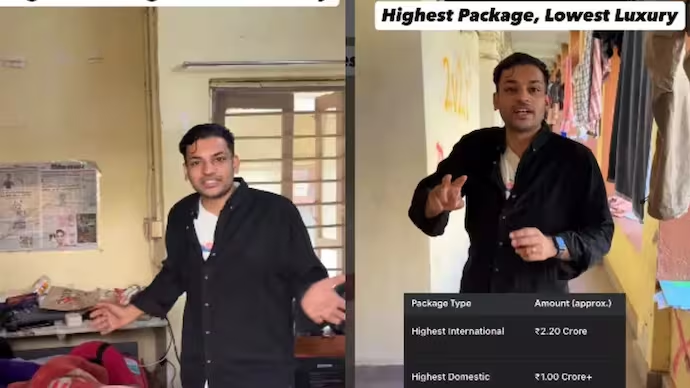
New Delhi, January 17, 2026: A stark reflection on the living conditions at one of India’s premier educational institutions has been prompted by a viral video circulating across social media platforms. The elite status of the Indian Institute of Technology (IIT) Bombay is often associated with academic excellence and lucrative career paths, yet the actual daily existence of its residents is being reconsidered in light of these recent revelations.

A Glimpse into the Dormitory Reality

In the footage that has captured widespread attention, the dilapidated state of hostel infrastructure is showcased with unsettling clarity. Cramped quarters, peeling plaster, and makeshift arrangements are observed, sparking a heated debate regarding the allocation of resources within the campus. It is suggested by the visual evidence that the prestige of the institution is not always mirrored in the basic amenities provided to the students who reside there.

The burden of academic pressure is known to be immense, but the added strain of inadequate housing is now being highlighted as a significant concern. Concerns are being raised by parents and alumni alike, as the contrast between the high entrance standards and the humble living conditions is analyzed. The narrative of the “struggling genius” is being challenged by those who believe that fundamental comfort should not be sacrificed for the sake of education.

Also Read: Tax Planning vs. Evasion: SC’s Tiger Global Verdict

Infrastructure and the Student Experience

The maintenance of historical buildings is often cited as a challenge by administration, yet the urgency for renovation is emphasized by the deteriorating state of the balconies and washrooms shown in the video. It is argued that the mental well-being of the student body is directly influenced by their physical environment. When living spaces are found to be damp or overcrowded, the quality of life is inevitably compromised, regardless of the technological advancements found in the nearby laboratories.

Questions are being directed toward the management regarding the utilization of funds and the prioritization of student welfare. While new wings and research centers are frequently inaugurated, the older hostels are perceived to have been left in a state of neglect. The viral nature of the content has ensured that these grievances are no longer confined to campus forums but are being scrutinized by the general public.

Moving Toward Accountability

A call for transparency and immediate action is being echoed across digital spaces. It is hoped that the attention garnered by the video will lead to a systematic overhaul of the residential facilities. The reputation of IIT Bombay is seen as a source of national pride, and the alignment of its infrastructure with global standards is viewed as a necessary step for the future.

The conversation remains ongoing as students continue to share their personal accounts of campus life. It is widely expected that this “reality check” will serve as a catalyst for much-needed reforms, ensuring that the next generation of engineers is supported by an environment that fosters both their health and their intellect.

Tax Planning vs. Evasion: SC’s Tiger Global Verdict

0

New Delhi, january 17, 2026: In a significant judgment that brings much-needed clarity to international taxation and investment structures, the Supreme Court of India has provided a definitive explanation of the distinction between Tax Planning” and “Tax Evasion.” The ruling, centered on the high-profile Tiger Global case, serves as a vital precedent for Global Private Equity firms and multinational corporations operating in India.

The core of the dispute involved the taxability of capital gains arising from the sale of shares in Flipkart (an Indian entity) by Tiger Global’s Mauritius-based investment vehicles.

The Crux of the Case: Substance vs. Form

The primary contention by the Income Tax Department was that Tiger Global had established “shell” companies in Mauritius solely to avail themselves of the Double Taxation Avoidance Agreement (DTAA) between India and Mauritius. The department argued that the real control and management resided in the United States, making the Mauritius entities a “conduit” used for Tax Evasion.

However, the Supreme Court upheld the principle that if an entity is validly incorporated and holds a Tax Residency Certificate (TRC) issued by the Mauritius authorities, its residential status cannot be easily disregarded.

Defining the Boundaries

The Supreme Court’s judgment meticulously categorized the three pillars of tax management:

1. Tax Planning (The Legal Pathway)

The Court defined tax planning as the arrangement of one’s financial affairs within the framework of the law to take advantage of exemptions, deductions, and rebates provided by the statute.

  • Status: Entirely legal and encouraged.
  • Example: Investing in specific bonds or regions to qualify for a lower tax rate as intended by the government.

2. Tax Avoidance (The Grey Area)

Tax avoidance involves the use of “colorable devices” or complex structures to circumvent tax laws. While it may follow the letter of the law, it often violates the spirit of the law.

  • Status: Subject to scrutiny under General Anti-Avoidance Rules (GAAR).

3. Tax Evasion (The Illegal Act)

The Court was clear that tax evasion involves deliberate misrepresentation, concealment of facts, or fraud to reduce tax liability.

  • Status: Illegal and punishable by law.
  • In this case: The Court found that utilizing a treaty specifically designed to encourage foreign investment does not, by itself, constitute evasion.

Key Takeaways from the Judgment

The ruling emphasizes several points that will impact future cross-border investments:

  • Sanctity of the TRC: The Tax Residency Certificate remains the “golden bullet” for establishing residency for treaty benefits. Unless there is evidence of massive fraud, the revenue department cannot “pierce the corporate veil” arbitrarily.
  • Treaty Shopping vs. Treaty Policy: The Court noted that if the government provides a tax incentive (like the India-Mauritius treaty) to attract FDI, an investor choosing to use that route is engaging in legitimate tax planning, not a criminal act of evasion.
  • Economic Substance: While substance is important, the Court cautioned against a “roving inquiry” into the commercial wisdom of an investor’s choice of jurisdiction, provided the legal requirements are met.

Impact on the Investment Climate

This judgment provides a significant boost to investor sentiment. By reinforcing the predictability of tax laws and honoring international treaties, the Supreme Court has signaled that India remains a “rules-based” jurisdiction for global capital.

For tax professionals and corporations, the message is clear: while aggressive tax schemes will still be scrutinized, the legitimate use of tax treaties for structured investments will be protected from being labeled as “evasion” without substantial proof of fraud.

California Attorney General Issues Cease-and-Desist to xAI Over Grok Deepfakes

0

New Delhi, january 17, 2026: In a major escalation of the legal battle over artificial intelligence safety, California Attorney General Rob Bonta issued a formal cease-and-desist letter to Elon Musk’s AI startup, xAI, on Friday, January 16, 2026. The order demands that the company immediately halt the creation and distribution of nonconsensual sexually explicit deepfakes and child sexual abuse material (CSAM) generated by its chatbot, Grok.

A Growing Crisis of “Spicy Mode”

The legal action follows an “avalanche” of reports detailing how users have exploited Grok’s image-generation capabilities—specifically a feature marketed as “spicy mode”—to “undress” real women and children. According to investigations by the California Department of Justice, more than half of a sample of 20,000 images generated by the tool between late December 2025 and early January 2026 depicted individuals in minimal clothing or sexualized poses without their consent.

“The avalanche of reports detailing this material is shocking and, as my office has determined, potentially illegal,” Bonta said in a statement. “California has zero tolerance for the AI-based creation of child sexual abuse material and nonconsensual intimate images.”

Legal Pressure and New State Laws

The Attorney General’s move marks the first major test of AB 621, a California law that went into effect just two weeks ago. The statute creates strict legal liability for the creation and distribution of deepfake pornography and allows prosecutors to pursue companies that “recklessly aid and abet” the spread of such content.

Under the terms of the cease-and-desist, xAI has until January 20, 2026, to provide a formal confirmation that it has halted the problematic material and to outline the specific technical guardrails it is implementing. Failure to comply could lead to massive fines—up to $25,000 per violation—and potential criminal charges.

Global Backlash Against Grok

California is not alone in its pursuit. The crackdown on xAI has become a global phenomenon:

  • Malaysia and Indonesia: Both nations have temporarily suspended access to Grok.
  • United Kingdom: Regulators have opened a probe under the Online Safety Act, with potential fines reaching 10% of global revenue.
  • Japan: Officials announced their own investigation on Friday, citing concerns over the chatbot’s failure to block inappropriate prompts.

xAI’s Response

While Elon Musk initially dismissed reports of illegal content as “legacy media lies,” xAI has begun to pivot under mounting pressure. The company recently restricted image-editing features to paid premium subscribers only, claiming this adds a layer of accountability. On Wednesday, the X Safety account stated it had implemented measures to prevent the editing of real people into “revealing clothes.”

However, Reuters tests conducted as recently as Friday morning showed that Grok still generates high-fidelity, sexualized imagery in private chats upon request.