Home Blog Page 394

Honesty Glittering Like Gold: Chennai Worker Returns ₹45 Lakh

0

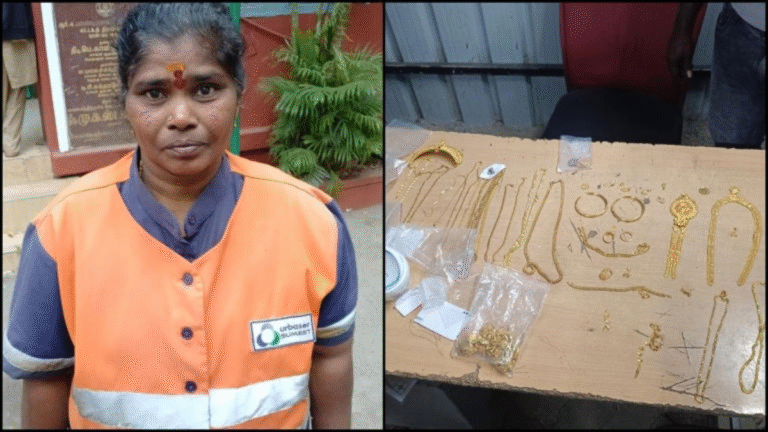
New Delhi, january 14, 2026: In a world where headlines are often filled with stories of greed, a sanitation worker in Chennai has touched hearts across the nation with a staggering act of honesty. On January 11, 2026, S. Padma, a 48-year-old worker with the Greater Chennai Corporation (GCC), found a bag containing 45 sovereigns of gold—valued at approximately ₹45 lakh—and didn’t hesitate for a second before doing the right thing.

The Discovery in T. Nagar

The incident occurred on a typical Sunday afternoon in the bustling commercial hub of T. Nagar. Padma was finishing her shift near Muthamman Koil Street when she noticed an unattended plastic bag resting on an old pushcart.

Curious, she opened the bag and was stunned to find it filled with glittering gold jewelry. For someone earning a modest living, the temptation could have been life-changing. Instead, Padma’s immediate thought was for the person who had lost it.

“I thought some family would endure tremendous hardship if I did not take steps to take the jewelry to the police,” Padma later told reporters.

A Family Tradition of Integrity

Padma immediately alerted her supervisors, and together they took the bag to the Pondy Bazaar Police Station.

Interestingly, the police had just received a frantic complaint from a man named Ramesh, a jewelry trader from Nanganallur. Ramesh had been carrying the gold—sourced from bank auctions and acquaintances—when he accidentally left the bag on the cart while talking to a friend.

The verification was swift, and the jewelry was returned to a relieved Ramesh. But the story doesn’t end there. Integrity seems to run in Padma’s family: during the COVID-19 lockdown, her husband, Subramani, had found ₹1.5 lakh in cash at Marina Beach and had also handed it over to the authorities.

Recognition from the Top

Padma’s selfless act quickly reached the highest offices in the state. On January 12, 2026, Tamil Nadu Chief Minister M.K. Stalin invited Padma to the Secretariat.

  • Official Felicitation: The CM honored her with a traditional shawl.
  • Cash Reward: He presented her with a cheque for ₹1 lakh as a token of appreciation for her honesty.
  • Public Praise: The Chief Minister hailed her as an “inspiration and a shining example for society.”

Why It Matters

Padma’s story is a powerful reminder that “gold” isn’t just a metal found in a bag—it’s the character of the person who finds it. In a busy city like Chennai, her decision to put a stranger’s well-being above her own financial gain has made her a local hero.

Viral Video Alleges Trump Confrontation with Ford Worker

0

New Delhi, 14 January, 2026: A storm of political controversy has been ignited following the release of a viral video purportedly showing Donald Trump making an obscene gesture toward a Ford factory worker. On January 12, 2026, the footage began circulating across social media platforms, appearing to capture a moment of high tension during a tour of a manufacturing facility in Michigan. The clip, which has already amassed millions of views, seems to show the U.S. President engaging in a sharp verbal back-and-forth before a hand gesture was made as he walked away.

The Root of the Presidential Anger

The confrontation was reportedly sparked by a question regarding recent shifts in trade policy and their impact on local job security. It was observed in the recording that a worker on the assembly line shouted a critical comment regarding the administration’s handling of automotive tariffs. The President, known for his unscripted and often combative responses to criticism, appeared to take immediate offense at the worker’s tone. It was argued by witnesses that the atmosphere shifted from a routine photo opportunity to a genuine confrontation within seconds.

Also Read: Toxic Backlash: Beatriz Taufenbach Quits Instagram

Fact-Checking the Viral Hand Gesture

While the video has been widely shared as proof of a “presidential meltdown,” a closer analysis of the footage has been called for by several media outlets. It was noted by digital forensic experts that the angle of the camera and the graininess of the clip make it difficult to confirm with 100% certainty if the gesture was indeed “flipping off” the worker or a different hand motion made in the heat of the moment. However, the optics of the interaction have already caused significant damage to the administration’s efforts to court the blue-collar vote in the Midwest.

Official Responses and Political Fallout

In the wake of the viral sensation, a statement was issued by the White House press office dismissively characterizing the incident as a “misinterpretation of a spirited debate.” It was claimed by officials that the President was merely gesturing toward the machinery while responding to the noise of the factory floor. Conversely, labor unions and opposition leaders have seized upon the video as evidence of a lack of respect for the American working class. This clash is being viewed as a major pivot point in the ongoing narrative surrounding the President’s relationship with industrial labor.

The Role of Social Media in Modern Politics

As of January 14, 2026, the video remains at the top of trending lists, highlighting the power of unedited, smartphone-captured moments to derail carefully planned political tours. It was emphasized by political analysts that in the current media landscape, a single ten-second clip can overshadow hours of policy discussion. For the workers at the Ford factory and the millions watching online, the incident serves as a stark reminder of the volatile nature of modern political discourse and the thin line between a public servant and a public adversary.

Life on Two Wheels: A Day in the Shoes of India’s Gig Heroes

0

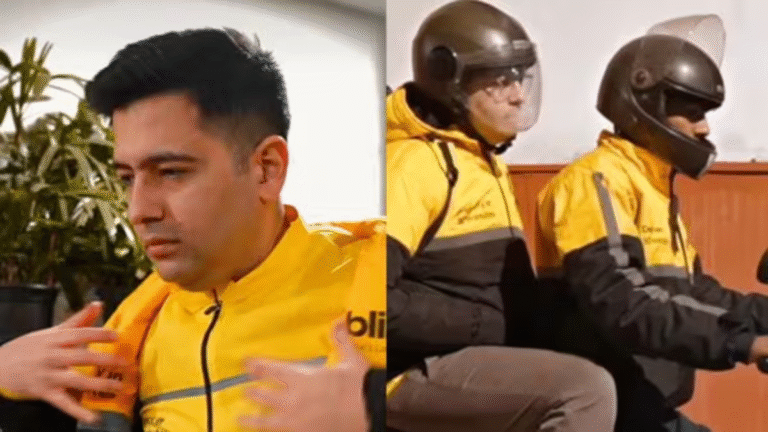
New Delhi, january 14, 2026: In the bustling streets of India’s metros, the hum of electric scooters and the flash of bright red, orange, and yellow delivery bags have become the heartbeat of the modern economy. But what does it actually feel like to spend a day behind the handlebars? To find out, I spent 12 hours signed up as a delivery partner across Zomato, Swiggy, and Blinkit, navigating a world governed by algorithms, traffic, and the relentless ticking of a digital clock.

The Morning Rush: Groceries at Warp Speed

My day began at 7:30 AM with Blinkit. The “quick commerce” wave has transformed mornings; instead of breakfast prep, the air is thick with the sound of packing tape at “dark stores.” Within minutes of logging in, my phone buzzed. The task: deliver a 5kg bag of atta, milk, and eggs.

While companies like Blinkit have recently moved away from the “10-minute” branding following government safety interventions, the internal pressure remains. The app doesn’t show a countdown timer, but the proximity of the dark store—usually less than 2km away—creates an unspoken expectation of speed. By 10:00 AM, I had completed five deliveries, earning roughly ₹150 after accounting for the base pay per order.

The Afternoon Grind: The Payout Paradox

Switching to Swiggy for the lunch rush, the reality of the “payout paradox” hit home. On paper, a delivery partner can gross between ₹26,000 and ₹28,000 a month. However, after deducting fuel (which I paid for out of pocket), vehicle maintenance, and data charges, the net take-home is closer to ₹20,000 for a grueling 10-hour day.

The afternoon sun was unforgiving. Between 1:00 PM and 3:00 PM, I navigated narrow lanes and climbed four flights of stairs twice. Each delivery earned me about ₹25 to ₹40. The most striking observation? The “algorithmic ghost.” If I declined an order because the restaurant was too far, the app seemed to “punish” me by not sending another request for thirty minutes.

The Evening Peak: High Stakes and Heavy Traffic

As dusk fell, I logged into Zomato. This is when the “incentives” kick in. To make a “decent” wage, you must hit milestones—completing 15 or 20 deliveries to unlock a bonus. This creates a frantic race against time.

The 2026 landscape for gig workers is shifting. Following nationwide strikes in late 2025, there is a visible push for better dignity. I noticed more “Rider Rest Points” and a slight increase in peak-hour payouts, reaching up to ₹120 per order during the 8:00 PM rush. Yet, the physical toll is immense. By 9:30 PM, my back ached, and my eyes were strained from the glare of oncoming high-beams.

Final Reflection

A day on the road reveals that delivery partners are not just “service providers”; they are the invisible infrastructure of our cities. While the government’s 2026 focus on Social Security Codes promises better insurance and accident cover, the life of a gig worker remains a high-stakes gamble on every turn.

Jaishankar-Rubio Talks: Nuclear, Trade, and Minerals Take Center Stage

0

New Delhi, january 14, 2026: In a significant move to bolster the India-U.S. Comprehensive Global Strategic Partnership, External Affairs Minister S. Jaishankar and U.S. Secretary of State Marco Rubio held a productive telephonic conversation on Tuesday. The dialogue, which comes at a pivotal moment in bilateral relations, focused on a wide-ranging agenda including trade negotiations, critical mineral supply chains, and the expansion of civil nuclear cooperation.

Taking to social media platform X (formerly Twitter) following the call, Dr. Jaishankar characterized the exchange as a “good conversation.” He noted that the two leaders delved into critical sectors such as trade, defense, and energy, agreeing to maintain consistent contact to navigate shared challenges and opportunities.

A New Chapter in Nuclear Energy

A central highlight of the discussion was the U.S. welcoming India’s recent legislative milestone—the enactment of the Sustainable Harnessing and Advancement of Nuclear Energy for Transforming India (SHANTI) Bill.

U.S. State Department spokesperson Tommy Pigott confirmed that Secretary Rubio congratulated India on this development. The SHANTI Bill is seen as a transformative step that opens the door for limited private participation in India’s nuclear sector under strict regulatory oversight. Washington has expressed a keen interest in capitalizing on this legislative shift to enhance bilateral civil nuclear cooperation, which would not only advance shared energy security goals but also provide a significant opening for American companies in the Indian market.

Navigating Trade and Economic Ties

The conversation occurred against the backdrop of complex trade dynamics. While the U.S. remains India’s largest trading partner, the relationship has recently navigated friction due to significant tariffs—including a 50% levy on certain goods—linked to India’s energy imports from Russia.

Despite these hurdles, the tone of the meeting remained optimistic. Both sides reaffirmed their commitment to finalizing a bilateral trade agreement that has been under negotiation for nearly a year. U.S. Ambassador to India, Sergio Gor, who recently assumed office, described the call as “positive” and hinted at a potential high-level meeting between the two nations as early as next month.

Critical Minerals and the ‘Pax Silica’ Alliance

In an era where technology determines geopolitical influence, the focus on critical minerals and semiconductors took center stage. The leaders discussed securing supply chains for essential minerals required for green energy and high-tech manufacturing.

Notably, the U.S. has indicated its intention to invite India to join the Pax Silica alliance as a full member. This U.S.-led initiative aims to build a secure, innovation-driven silicon supply chain, focusing on artificial intelligence (AI) and semiconductor resilience. India’s inclusion in such a framework is expected to solidify its position as a global alternative production hub, reducing dependence on single-source supply chains.

Regional Stability and the Indo-Pacific

Beyond bilateral economics, Jaishankar and Rubio exchanged perspectives on regional security. Both leaders reaffirmed their unwavering commitment to a “free and open Indo-Pacific,” a cornerstone of the strategic alignment between New Delhi and Washington.

As the two nations work toward a target of $500 billion in bilateral trade by 2030, this latest interaction signals that while differences on specific tariffs and agricultural access remain, the broader strategic trajectory of India-U.S. ties remains on an upward path.

Toxic Backlash: Beatriz Taufenbach Quits Instagram

0

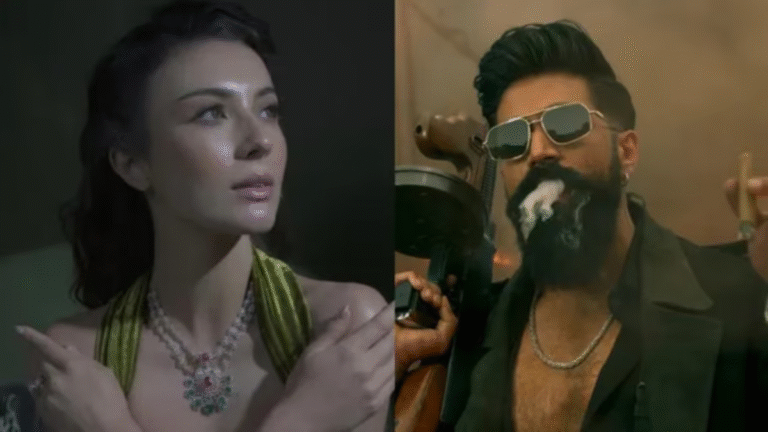
New Delhi, january 14, 2026: The teaser for the highly anticipated Kannada film Toxic: A Fairy Tale for Grown-Ups, starring “Rocking Star” Yash, has ignited a firestorm of controversy. At the center of the storm is Brazilian actress and model Beatriz Taufenbach, who has reportedly deactivated or deleted her Instagram account following intense online backlash over an intimate scene.

The Scene That Sparked the Outcry

Released on January 8, 2026, to coincide with Yash’s 40th birthday, the teaser introduces viewers to a gritty, noir-inspired world. The most talked-about moment involves an intimate car sequence between Yash and Taufenbach, set against the somber backdrop of a cemetery.

While the sequence was intended to establish the “grown-up” tone of the film, it quickly drew criticism from various sections of the audience. The backlash intensified when the women’s wing of the Aam Aadmi Party (AAP) in Karnataka filed a formal complaint with the State Commission for Women, alleging the scene was “obscene” and harmful to social values.

The Mystery of the “Cemetery Girl”

Before the director, Geetu Mohandas, officially identified her, internet sleuths mistakenly identified the actress as Hollywood’s Natalie Burn. Mohandas eventually cleared the air on her Instagram story, introducing Taufenbach as her “cemetery girl.”

However, the spotlight proved to be double-edged. As curiosity turned into targeted trolling and moral policing, Taufenbach’s Instagram profile—which was previously private—became unavailable. Searches for her handle now return a “Profile not available” message, signaling her exit from the platform to escape the escalating digital heat.

Key Controversy Highlights

Impact on the Film

Despite the legal hurdles and social media drama, Toxic remains one of the most talked-about films of 2026. The teaser has already garnered over 220 million views across platforms. The film, which features a massive ensemble cast including Kiara Advani and Nayanthara, is being marketed as a bold, international-standard gangster drama.

Industry experts suggest that while the “obscenity” row has forced the actress into digital hiding, it has also given the film unprecedented visibility. Whether the production team will edit the teaser following the Women’s Commission’s inquiry remains to be seen.

Tragic Incident at AMU: Student Dies by Suicide During Video Call with Father

0

New Delhi, january 14, 2026: A wave of shock and grief has gripped the Aligarh Muslim University (AMU) campus following the tragic death of a 20-year-old student on Monday night. The student, identified as Inshah Fatima, reportedly died by suicide while on a live video call with her father, who is currently working in Saudi Arabia.

Details of the Incident

Inshah Fatima was a final-year student pursuing a diploma in Computer Science Engineering. She was a resident of Azamgarh and was staying in Room 113-B of the Sarojini Naidu (SN) Hall hostel.

According to police reports, the incident occurred around 7:15 PM on Monday. Inshah was alone in her room at the time, as her roommate was away on leave. While engaging in a video call with her father, Mohammad Nawab Khan, she reportedly took the extreme step of hanging herself from a ceiling fan using a dupatta.

The horrified father, witnessing the act from thousands of miles away, immediately contacted a relative who works at the university to seek help.

Emergency Response and Investigation

Upon receiving the frantic call from the father, the relative rushed to the hostel. University proctorial teams and hostel staff were alerted and quickly reached the room, which was found unlocked. Inshah was found in a critical state and was immediately rushed to Jawaharlal Nehru (JN) Medical College.

Despite the best efforts of the medical team, she could not be revived and was declared dead during treatment.

  • No Suicide Note: Preliminary searches of the room by the Civil Lines police have not yielded a suicide note.
  • Official Inquiry: The AMU administration has launched an internal inquiry to understand the circumstances leading to this tragedy.
  • Police Custody: The body has been sent for a post-mortem examination, and the room has been sealed for further forensic investigation.

A Community in Mourning

The incident has left the student community at AMU in deep distress. Prof. Mohammad Wasim Ali, the Proctor of AMU, confirmed the details to the media, noting that the university is cooperating fully with the police. Friends and classmates describe Inshah as a bright student, and the sudden nature of the event has left many searching for answers.

While the exact motive remains unknown, authorities are investigating potential academic pressure or personal issues that may have led to this unfortunate event.

Sayani Gupta ₹1.67 Lakh Fashion Ordeal in ‘Four More Shots Please

0

New Delhi, january 13, 2026: High fashion often looks effortless on screen, but behind the glittering frames of Four More Shots Please! Season 4, actress Sayani Gupta recently revealed the painful reality of one of her most iconic looks. Playing the fierce and ambitious Damini Rizvi Roy, Gupta is no stranger to bold style, but a specific lilac metal dress pushed her dedication to the absolute limit.

A Masterpiece in Metal

The outfit in question is a Lilac Tafetta Embellished Cage Dress from the homegrown luxury label Itrh. Priced at a staggering ₹1,67,999, the dress features an architectural, corseted silhouette adorned with intricate stone details. While the ensemble made for a breathtaking visual against the scenic beach backdrop of the show, the material was anything but user-friendly.

The “cage” design was constructed from hard metal, making the garment exceptionally heavy and rigid. Gupta took to social media to share that the dress was “heavy af” and that the sharp edges of the metal left her with paper cuts and scrapes all over her body.

The Continuity Challenge

In the world of filmmaking, “continuity” is king. If a scene takes three days to film, the actor must look identical in every shot. For Sayani, this meant enduring the “torturous” metal dress for three consecutive days.

“This metal dress with stones was perhaps the hardest outfit one has worn… left paper cuts from the metal all over my body,” the actress shared in a candid Instagram post.

She further joked about the absurdity of the situation, mentioning that her stylist, Aastha Sharma, told her during the trial that nobody else could pull it off. Gupta’s witty response? “Not sure I agree, but no one is so stupid to even try!”

Dedication Beyond the Glamour

This isn’t the first time the cast of Four More Shots Please! has faced extreme conditions. From filming in freezing temperatures to navigating intense emotional arcs, the lead quartet—including Kirti Kulhari, Bani J, and Maanvi Gagroo—has consistently prioritized the show’s aesthetic and narrative needs over personal comfort.

Season 4 Quick Facts:

  • Release Date: December 19, 2025 (Final Season)
  • Platform: Amazon Prime Video
  • The Look: Lilac Cage Dress by Itrh (Cost: ₹1.67 Lakh)
  • The Toll: Metal-induced cuts and bruises over a 3-day shoot.

Despite the physical toll, Gupta insists the look was “worth it,” officially inducting the lilac masterpiece into her personal “hall of looks.” It serves as a stark reminder to fans that the “unapologetic” glamour of the show often comes with a hidden price tag of physical endurance and sheer willpower.

As the series reaches its final chapter, moments like these highlight why the bond between these characters—and the actresses who play them—has resonated so deeply with audiences for four seasons.

The Raja Saab Day 4 Box Office: Prabhas Horror-Comedy Hits a Wall

0

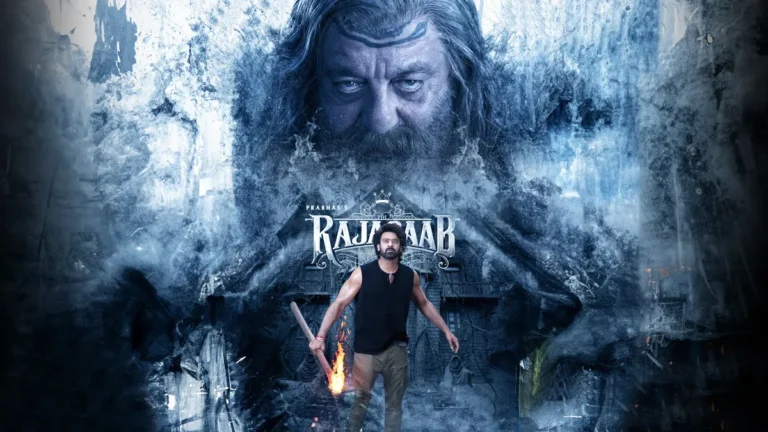
New Delhi, january 13, 2026: The latest cinematic outing from pan-India superstar Prabhas, The Raja Saab, is facing a harsh reality check at the global box office. Despite a thunderous opening day that saw the film cross the ₹100 crore mark worldwide, the “Monday Test” has proven to be a disastrous hurdle. As of Day 4, the Maruthi-directorial has struggled to reach a cumulative worldwide gross of ₹170 crore, showing a sharp decline that has sent alarm bells ringing for trade analysts.

A Disastrous Monday Crash

After a weekend that saw steady but concerning drops, the film experienced a “free fall” on its first Monday. Early estimates suggest the film collected just ₹5.4 crore to ₹6.6 crore net across India on Day 4. This represents a staggering 70% dip from its Sunday numbers.

In the crucial Hindi belt, where Prabhas usually commands a massive following, the film managed a meager ₹1.75 crore, while the Tamil version virtually disappeared with collections in the lakhs. For a film produced on a reported budget of ₹350 crore, these single-digit weekday numbers are a grim sign of things to come.

Faring Worse Than Adipurush and Saaho

The most worrying aspect for the makers is the comparison with Prabhas’ previous underperformers. Even films like Adipurush and Saaho, which faced significant critical backlash, managed to maintain a much stronger hold on their first Monday, with both netting over ₹15 crore on Day 4.

The Raja Saab has failed to achieve even half of those figures, signaling that the audience’s interest in this horror-comedy transition is fading faster than expected. While fans initially celebrated the return of the “vintage, charming Prabhas,” the “soulless” screenplay and “sloppy execution” cited by critics seem to have deterred the general public.

The Global Picture

The only silver lining remains the Overseas Market, particularly the United States, where the film had a strong start. However, even the international momentum is cooling off.

MetricEstimated Figures (Day 4)
India Net (Total)₹113.4 cr – ₹114.6 cr
India Gross (Total)₹137 cr
Overseas Gross~$3.5 Million (₹29-30 cr)
Worldwide Total Gross₹170 crore

The Road Ahead

With a heavy budget and high stakes, the film’s path to recovery looks increasingly narrow. While the upcoming Sankranti holidays might provide a minor “damage control” boost, the arrival of new competition from films like Mana Shankara Vara Prasad Garu and Anaganaga Oka Raju will further squeeze its screen count.

Unless there is a miraculous turnaround in the coming week, The Raja Saab risks being labeled as another expensive misfire for the Baahubali star, proving that even star power has its limits when the content fails to resonate.

TCS Salary Shock: 5 Years, Zero Growth

0

New Delhi, january 13, 2026: In a post that has sent shockwaves across social media platforms like LinkedIn and Reddit, an anonymous employee from Tata Consultancy Services (TCS) has shared a career trajectory that defies traditional corporate logic. The story, which has quickly become a symbol of the growing discontent within the Indian IT sector, details a 5.5-year journey where the employee’s take-home pay reportedly moved backward—from Rs 25,000 to Rs 22,800.

The Anatomy of a Salary Slide

The employee, who joined as a fresher, highlighted a frustrating reality: while their experience and responsibilities grew, their monthly “in-hand” salary actually decreased over half a decade. This paradox is largely attributed to a combination of stagnant base pay, complex variable pay structures, and recent changes in labor laws.

According to the viral account, the salary drop was driven by:

  • Variable Pay Fluctuations: The Quarterly Variable Allowance (QVA), which once acted as a reliable bonus, has become increasingly unpredictable. In recent quarters, many employees reported receiving 0% variable pay based on unit performance, despite meeting personal goals.
  • The “New Labour Code” Impact: Recent statutory changes in 2025-2026 mandated that basic pay must constitute at least 50% of total remuneration. While intended to boost social security (like PF and Gratuity), the immediate effect for many was a higher deduction from their monthly take-home pay.
  • Stagnant Increments: For many “bench” or “non-billable” employees, annual hikes have been as low as 4.5% to 7%, often failing to keep pace with rising inflation and increased professional tax or insurance premiums.

A Broader Crisis in Indian IT

This story isn’t an isolated incident. It comes at a time when TCS—and the wider IT industry—is undergoing massive restructuring.

MetricCurrent Status (2025-2026)
Layoff Target~12,000 employees (2% of workforce)
New Bench PolicyMaximum 35 days without a project
Attrition RateRising to ~13.8%

As TCS pivots toward an “AI-first” strategy, mid-level employees who haven’t upskilled in emerging technologies are finding themselves in a precarious position. The viral post resonated with thousands because it touched on the “humiliation” of being a loyal employee only to face “forced resignations” or “demotions” through salary restructuring.

The Company’s Stance

While TCS has not commented on this specific viral post, the company recently announced 100% variable pay for a majority of its workforce in Q1 FY26 to boost morale. However, for those stuck in the “middle management trap” or between projects, the reality remains starkly different.

The story serves as a cautionary tale for the modern tech worker: in an era of AI disruption, tenure no longer guarantees financial growth. For many, the “Tata promise” of lifelong stability is being replaced by the harsh reality of “market-linked” performance.

DHS Issues Response Following Viral Border Patrol Embrace

0

New Delhi, January 13, 2026: A rare and emotional moment of connection at the center of the ongoing border debate was captured in a viral video that surfaced on January 11, 2026. In the footage, which has been viewed millions of times, a U.S. Border Patrol agent is seen engaging in a heartfelt hug with a distraught protester during a demonstration near the southern border. The interaction, which stood in stark contrast to the typically tense atmosphere of such gatherings, immediately sparked a wide range of reactions across the political spectrum.

Official Stance from the Department of Homeland Security

Following the intense public discourse surrounding the clip, an official response was issued by the Department of Homeland Security (DHS) on January 12, 2026. It was stated by the department that while operational protocols and professional distance are generally maintained by agents, the human element of the job cannot be entirely ignored. The actions of the agent were described as a spontaneous gesture of compassion during a high-stress encounter, emphasizing that the department values the de-escalation of conflict through empathy when appropriate.

Also Read: A Sea of Devotion: Aerial Views Reveal Grandeur of Magh Mela 2026

Context of the Viral Encounter

The encounter was recorded during a rally where tensions had reached a boiling point over recent immigration policy shifts. It was observed that the protester, who appeared to be overcome with emotion, was approached by the agent not with a show of force, but with a listening ear. The hug was initiated after a brief conversation that seemed to diffuse the immediate hostility of the surrounding crowd. While the identity of the agent has been withheld for privacy reasons, the gesture has been widely interpreted as a symbol of shared humanity in a deeply divided landscape.

Debate Over Professional Conduct and Empathy

The viral video has ignited a fierce debate regarding the boundaries of professional conduct for federal agents. It was argued by some critics that such displays could undermine the perceived authority and neutrality of the Border Patrol. Conversely, many advocacy groups and social media users have praised the agent, suggesting that more “human-centric” policing is exactly what is needed to heal community rifts. The DHS response highlighted that no disciplinary actions are currently being considered, as the gesture did not interfere with the agent’s primary security duties.

A Lasting Image in a Polarized Era

As of January 13, 2026, the image of the embrace continues to circulate as a powerful counter-narrative to the usual imagery of border conflict. It was noted by communication experts that the video has provided a much-needed “thaw” in the public perception of law enforcement officials working in sensitive zones. Whether this moment remains an isolated incident or signals a shift in engagement strategies, it has undoubtedly left a significant mark on the national conversation regarding the intersection of law enforcement and human compassion.