Home Blog Page 43

Kedarnath Mule Abuse Video Sparks National Outrage

0

New Delhi, May 29, 2026: The rigorous 16-kilometer trek from Gaurikund to the holy Kedarnath shrine has long been a test of physical endurance and spiritual devotion. However, the pilgrimage has increasingly turned into a battleground for animal welfare. A viral video circulating widely on social media has ignited a fierce national debate and sparked immense public outrage, shining a bright light on the dark underbelly of the equine services that power the Char Dham Yatra.

The video shows a heavily built male pilgrim, estimated by online onlookers to weigh around 140 kilograms, riding a visibly exhausted and straining mule up a steep, treacherous, and congested mountain cliffside. The animal’s buckling knees, labored breathing, and wide, distressed eyes have struck a chord with millions online. The footage quickly became a rallying cry for animal rights activists and ordinary citizens alike, all demanding an immediate halt to what they label as systemic, unchecked animal cruelty in the name of religion.

Outrage on Social Media and the Call for Accountability

As the video spread across platforms like X (formerly Twitter), Instagram, and YouTube, the hashtag #StopAnimalCruelty trended heavily. Commenters expressed deep anger and sadness over the visual evidence of animal exploitation. Many pointed out that while the pilgrimage is meant to be a journey of purification and empathy, the treatment of the working animals on the route reflects a complete lack of basic humanity.

The public reaction was swift and critical, targeting not just the individual pilgrim riding the mule, but also the local operators who rent out these animals for quick financial gain, and the authorities tasked with monitoring them. Netizens called for strict weight limits for riders, mandatory fitness checks for the animals, and heavy penalties for handlers who push their beasts of burden past the point of physical collapse.

The Reality on the Ground: Overworked and Under-Cared For

The viral video is unfortunately not an isolated incident, but rather a visible symptom of a much larger, institutional problem. Every year, thousands of horses and mules are deployed along the steep terrain of the Kedarnath trek to ferry pilgrims who are elderly, physically challenged, or simply unwilling to walk the grueling mountain path.

Reports from ground zero reveal an alarming reality for these animals:

  • Brutal Schedules: Mules are frequently forced to make multiple round trips a day up and down the mountain without adequate rest.
  • Severe Neglect: Proper nutrition, clean drinking water, and warm shelter are rarely provided by profit-driven handlers.
  • Medical Malpractice: Past investigations by local police and animal welfare groups have uncovered horrifying instances where handlers physically abused the animals with sticks or even forced them to ingest narcotics and drugs to temporarily mask their pain and exhaustion, keeping them moving on the trail.

The physical toll of these conditions is devastating. The high altitude, thin air, freezing temperatures, and unforgiving rocky pathways often lead to severe injuries, respiratory failure, and sudden death.

A Growing Crisis and Government Action

The controversy surrounding the viral video comes on the heels of a highly alarming trend regarding equine fatalities on the pilgrimage routes. Earlier, the state government had to temporarily suspend mule services altogether after a shocking 14 mules died within the first three days of the yatra’s opening.

While initial fears pointed toward a highly contagious outbreak like equine influenza, investigators and veterinary experts from the ICAR-National Research Centre on Equines have noted that sheer physical exhaustion, hypothermia, and lack of oxygen management play a major, fatal role in these sudden animal deaths. Currently, over 8,000 registered animals serve thousands of pilgrims daily, but medical infrastructure remains tragically thin, with very few dedicated animal shelters or veterinary clinics available along the high-altitude pathway to handle emergencies.

Balancing Faith and Ethics: The Path Forward

The core of the issue lies in finding a delicate balance between facilitating a deeply important religious pilgrimage and upholding modern ethics of animal welfare. While many argue that horses and mules are an absolute necessity for disabled or elderly devotees who cannot otherwise reach the temple, activists counter that this accommodation should not come at the cost of torturing living creatures.

To prevent further tragedies and restore dignity to the pilgrimage, experts and citizens are urging the Uttarakhand government to implement a comprehensive overhaul of the system:

Ultimately, the viral video has served as an uncomfortable wake-up call. It challenges both the authorities and the devotees themselves to reconsider what it truly means to embark on a sacred journey. True devotion, as many spiritual leaders have pointed out in the wake of this controversy, cannot coexist with the blatant suffering and exploitation of innocent animals. If the sanctity of Kedarnath is to be preserved, the welfare of the creatures that pave the way to it must become a top priority.
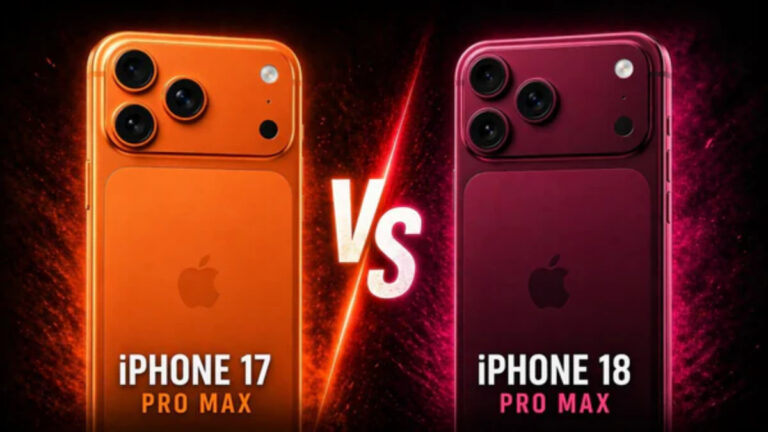

iPhone 18 Pro Leaks: Will It Be a Better Upgrade Than the iPhone 17 Pro

New Delhi, May 29, 2026: The technology world never stands still. Even though Apple’s iPhone 17 Pro made waves with its bold “plateau camera” design, lightweight aluminum frame, and massive jump to 12GB of RAM, all eyes are already turning toward the horizon. Rumors and supply chain leaks regarding the upcoming iPhone 18 Pro series are coming in fast.

For anyone holding onto an older device—or even those who bought the iPhone 17 Pro—the ultimate question is brewing: Will the iPhone 18 Pro be a true generational leap, or should you save your money? Let’s dive into the leaked specifications, design overhauls, and internal upgrades to see how the next-generation flagship stacks up against the current king.

The Design Shift: Say Goodbye to the Two-Tone Look

When Apple launched the iPhone 17 Pro, it surprised everyone by moving away from titanium and introducing an innovative aluminum-glass hybrid chassis with a distinct two-tone aesthetic. While it succeeded in making the phone lighter and running cooler, leaks suggest Apple is already pivoting back to a more unified look for the iPhone 18 Pro.

According to insider reports, the rear Ceramic Shield glass area around the MagSafe charging coil is being redesigned. Instead of the high-contrast, two-tone appearance, the iPhone 18 Pro will feature a beautiful, frosted, and monochromatic back glass that blends seamlessly with the frame.

Furthermore, fans of deep, rich colors are in for a treat. While the popular Cosmic Orange and Deep Blue shades are rumored to be retired, Apple is reportedly introducing a stunning Dark Cherry (a deep wine red) alongside Light Blue, Dark Gray, and classic Silver.

Screen Real Estate: A Smaller Dynamic Island

If you were hoping for a massive change in screen size, Apple is sticking to its guns. The iPhone 18 Pro and Pro Max will retain the 6.3-inch and 6.9-inch display sizes, respectively. However, how you view that screen is going to change.

For years, users have dreamed of a completely uninterrupted, all-screen iPhone. The iPhone 18 Pro takes a major step closer to that reality. Supply chain leaks indicate that Apple has successfully figured out how to place the Face ID flood illuminator component entirely underneath the display panel. By burying this hardware under the glass, Apple is finally able to noticeably shrink the size of the pill-shaped Dynamic Island. It will look sleeker, tighter, and free up valuable pixel real estate at the top of your screen.

Additionally, the panels are upgrading to a new LTPO+ display technology. Combined with Apple’s historically high brightness demands, these screens will not only be incredibly vivid outdoors but will also draw significantly less power.

Performance: The Massive 2-Nanometer Jump

This is where the iPhone 18 Pro completely leaves the iPhone 17 Pro in the dust. The iPhone 17 Pro runs on the incredibly fast A19 Pro chip, which is built on an optimized 3-nanometer architecture. However, the iPhone 18 Pro is slated to debut Apple’s first-ever 2-nanometer processor, the A20 Pro.

What does a drop to 2nm actually mean? In simple terms, it allows engineers to pack billions more transistors onto a single, microscopic piece of silicon. Early projections suggest the A20 Pro chip will be up to 15% faster and a massive 30% more energy-efficient than the A19 Pro. Whether you are editing multi-stream 8K video, playing console-grade video games, or running complex, on-device artificial intelligence models, the iPhone 18 Pro will handle it while barely breaking a sweat or warming up.

Camera Upgrades: True Mechanical Control

The iPhone 17 Pro shook up mobile photography by introducing a 48-megapixel telephoto lens with a 4x tetraprism design, allowing for high-quality 8x sensor-crop zoom. The iPhone 18 Pro will keep this impressive zoom capability but will completely revolutionize the primary sensor by introducing a variable aperture system.

This means that in low-light environments, the iPhone 18 Pro can open its lens wide to catch every single photon of light, reducing grain and noise without relying entirely on software tricks. In bright daylight, it can narrow the aperture to create razor-sharp landscapes with a deep, natural field of view.

Interestingly, Apple is also rumored to be simplifying the physical interactions on the chassis. The touch-sensitive swipe gestures on the side Camera Control button—which some users found finicky or accidental on the iPhone 17 series—are expected to be removed, leaving behind a pure, pressure-sensitive mechanical shutter button.

Connectivity & Battery: Web Browsing from Anywhere

Apple is steadily working to eliminate its reliance on third-party wireless chips, and the iPhone 18 Pro marks the next major milestone. The device is expected to feature Apple’s custom, third-generation C2 modem.

The headline feature of the C2 chip? Web browsing via satellite. While current iPhones allow you to send emergency texts or track your location via satellite when you are deep in the wilderness, the iPhone 18 Pro will reportedly allow you to access Apple Maps, your Photos app, and even browse the web completely off the grid without a cellular signal. To back up these heavy wireless features, the iPhone 18 Pro Max is rumored to receive a battery bump, pushing past the 5,100 mAh mark for unparalleled multi-day use.

Head-to-Head Specification Comparison

To see exactly how these two premium iterations compare, let’s look at the core technical changes side-by-side.

Final Verdict: Should You Wait for the iPhone 18 Pro?

Ultimately, deciding whether to upgrade comes down to what phone is currently in your pocket.

If you are already using an iPhone 17 Pro, the upgrade might not be absolutely mandatory unless you are a hardcore mobile photographer who desperately wants a variable aperture lens, or an outdoor adventurer who needs satellite internet access. The iPhone 17 Pro remains an absolute beast with its 12GB of RAM and vapor-chamber cooling.

However, if you are using an iPhone 16 Pro, an older base model, or an aging Android device, waiting for the iPhone 18 Pro is an incredibly smart move. The combination of a visually smaller Dynamic Island, the historic efficiency leap of the 2nm A20 Pro chip, and unprecedented satellite connectivity makes the iPhone 18 Pro look like the most meaningful, future-proof upgrade Apple has put forward in half a decade.

8th Pay Commission: Pensioners Demand Freedom of Choice Across OPS, NPS, and UPS

0

New Delhi, May 29, 2026: As the 8th Central Pay Commission (CPC) intensifies its consultations with major stakeholder bodies across the country, a vital new demand has taken center stage. Central government employee unions and pensioner federations are actively pushing the government to grant retirees the explicit freedom to choose their preferred retirement framework. Instead of being locked into a single mandated system, employee representatives are presenting a formal case to allow subscribers to select between the Old Pension Scheme (OPS), the National Pension System (NPS), and the newly introduced Unified Pension Scheme (UPS) based on their individual financial profiles and years of completed service.

This development follows the formal constitution of the 8th Pay Commission panel, chaired by retired Supreme Court Judge Justice Ranjana Prakash Desai. With the commission actively visiting regional hubs to gather memorandums from employee associations, the ongoing structural debate over post-retirement financial security has entered its most decisive phase. The core argument being presented to the panel is that a one-size-fits-all pension model fails to accommodate the diverse risk appetites, career lengths, and financial situations of millions of public servants.

The Evolution of India’s Pension Landscape

To understand why employee federations are demanding an explicit choice, it is necessary to look at how India’s public sector retirement policy has evolved over the last two decades. For decades, the traditional Old Pension Scheme was the standard framework for public servants. Fully funded by the government without requiring monthly salary deductions from employees, the OPS offers a guaranteed monthly payout equivalent to 50% of the employee’s last drawn basic salary, directly indexed to inflation through biannual Dearness Relief (DR) adjustments.

In an effort to manage the long-term fiscal burden on the exchequer, the government shifted policy for all new entrants joining service after January 1, 2004, introducing the National Pension System. The NPS operates as a market-linked, defined-contribution mechanism. Under this framework, employees contribute 10% of their basic salary plus Dearness Allowance (DA), matched by a 14% contribution from the government. This collective corpus is invested in market instruments like equity and debt funds. Upon retirement, employees can withdraw up to 60% of the accumulated fund tax-free, while the remaining 40% must be invested in a commercial annuity to generate a regular monthly pension.

Recognizing sustained dissatisfaction regarding market volatility under the NPS, the government recently introduced the Unified Pension Scheme. The UPS attempts to combine the structural design of a contributory scheme with the predictability of a defined benefit. It offers an assured pension equal to 50% of the average basic pay drawn in the last 12 months prior to retirement, provided the employee has completed a minimum qualifying service period of 25 years. It also incorporates a guaranteed minimum pension of ₹10,000 per month for those with at least 10 years of service, alongside built-in family pension safety nets and inflation protection.

Why Pensioners are Demanding Freedom of Choice

The demand for choice stems from the fact that each of the three systems offers distinct advantages and drawbacks depending on an individual employee’s specific career arc. While the UPS was designed to bridge the structural gap between the older and newer systems, employee federations point out that it still leaves certain segments of the workforce at a distinct disadvantage.

A primary concern involves employees who enter government service later in life or retire early due to unexpected health or personal circumstances. Under the current rules of the UPS, individuals who complete less than the baseline 25 years of service receive a proportionately reduced assured pension. For these short-service employees, a rigid transition into the UPS might yield lower monthly benefits compared to what their accumulated corpus could potentially generate under a highly performing, market-linked NPS fund.

Conversely, employees with long, stable career paths overwhelmingly favor the absolute certainty of the OPS, which carries no market risk and requires zero salary deductions during their active working years. By demanding an open option to select among the three models, the All India NPS Employees’ Federation (AINPSEF) and the National Council of the Joint Consultative Machinery (NC-JCM) argue that employees should be allowed to evaluate their own risk profiles, total years of service, and accumulated fund balances before locking in their retirement destination.

Key Structural Frameworks under Discussion

To highlight the varying features causing employees to seek an open choice, the following comparison outlines the structural differences across the three pension options currently under review by the 8th Pay Commission.

Compromise Formulas Proposed to the Panel

As part of their formal submissions, employee federations have presented creative structural compromises to the 8th Pay Commission panel to make the choice option fiscally viable for the government. One notable proposal suggests a clawback mechanism for NPS subscribers who wish to switch to an assured OPS-style structure.

Under this specific proposal, if an employee opts to transition from the NPS to a guaranteed pension scheme at the time of retirement, the government would retain its 14% matching contribution along with all the market-accrued growth generated by that specific portion. In return, the retiring employee would receive their own 10% lifetime contributions plus the corresponding market gains as a lump sum, while the government assumes the responsibility of providing a lifelong, inflation-indexed assured pension. Representatives argue this formula protects the retiree from downside market risk at the end of their career while returning the government’s investment share back to the public exchequer to balance out fiscal liability.

The Broader Road Ahead for the 8th CPC

While the pension choice debate remains a top priority, the 8th Pay Commission is simultaneously managing a wide array of interconnected financial demands. The NC-JCM has submitted a comprehensive 51-page memorandum advocating for a significant revision of the fitment factor—the multiplier used to adjust basic pay and pensions across the board. While the 7th Pay Commission implemented a fitment factor of 2.57x, employee unions are urging a revision up to 3.68x or 3.83x, citing cumulative inflation and increased living costs over the past decade. If accepted, this adjustment would substantially lift the baseline minimum salary and corresponding basic pension payouts.

The commission’s final report will ultimately determine the financial trajectory for over 67 lakh central government employees and more than 69 lakh pensioners. As the panel moves through its regional tour schedules to compile stakeholder views, the government faces a delicate balancing act. It must weigh the intense employee demand for absolute retirement certainty against long-term fiscal discipline and state budgetary pressures. While official policy changes require formal cabinet approval following the submission of the commission’s final recommendations, the current push for an open, flexible choice among the OPS, NPS, and UPS highlights a fundamental shift toward personalized retirement planning in India’s public sector.

Peddi Premieres: Box Office Records Shattered!

New Delhi, May 29, 2026: The countdown has officially ended, and the stage is set for one of the most massive cinematic events of the year. Global star Ram Charan is all set to storm the silver screen with his highly anticipated sports action drama, Peddi. Directed by Buchi Babu Sana of Uppena fame, the film has generated an earth-shattering buzz across domestic and international markets. With the final edit locked, censorship formalities completed, and promotional campaigns reaching a fever pitch, the film is locked and loaded for its worldwide theatrical release on June 4, 2026. However, the real madness begins a day earlier, as the highly awaited Peddi premiere shows are scheduled to kick off globally on June 3, 2026. Trade analysts are already predicting a historic opening that could redefine box office milestones for Indian cinema.

Unprecedented Overseas Pre-Sales and Blockbuster Premieres

The international market is experiencing an unprecedented wave of excitement, particularly in North America, where the craze for Ram Charan has reached a whole new level. Within just four hours of ticket bookings opening, Peddi crossed the staggering $100K mark in pre-sales. This explosive start has left trade circles astonished, putting the film on par with recent massive openers like Pushpa 2: The Rule, Devara, and OG. To meet this unimaginable demand, distributors have planned more than 950 premiere shows across North America alone. Beyond the United States, extensive premiere lineups have been locked in major international hubs, including Singapore, the United Kingdom, Australia, and Sri Lanka. This massive scale ensures that Peddi will secure one of the biggest overseas rollouts ever witnessed for a pan-India film, giving fans the ultimate big-screen experience.

Government Approval Clears Way for Massive Domestic Premieres

Back home in India, the anticipation is equally intense, particularly across the Telugu states. The excitement reached a peak following reports that the Andhra Pradesh government has officially granted permission for special premiere shows and early morning screenings starting June 3. This crucial regulatory clearance has cleared the path for exhibitors to organize round-the-clock screenings, allowing fans to catch the action before the official release date. Theater owners are reporting that ticket counters and online booking platforms are experiencing heavy traffic, with corporate bookings and fan clubs blocking out entire auditoriums. The atmosphere outside theaters is already festive, with massive cutouts, banners, and celebrations being prepared by loyal fans who have waited through multiple production delays to see their favorite star back on screen.

Inside the Massive Runtime and Censor Certificate

As the film heads into premier night, major technical details have emerged, heightening curiosity about its narrative depth. Peddi recently cleared its Central Board of Film Certification (CBFC) formalities, receiving a UA 16+ certificate with minimal modifications. Alongside the certification, the official runtime was revealed to be a massive 189 minutes—translating to 3 hours and 9 minutes. This makes Peddi one of the longest films in Ram Charan’s career. Rather than deterring audiences, this extensive runtime has reassured fans that director Buchi Babu Sana has crafted a detailed, deeply emotional, and uncompromised cinematic world. The narrative requires this space to fully explore the protagonist’s intense evolution from a spirited villager into a legendary sporting icon.

A Gritty 1980s Tale of Sports, Pride, and Resilience

At its core, Peddi is a gritty sports action drama set against the nostalgic backdrop of 1980s rural Andhra Pradesh. The storyline follows a spirited, raw, and determined young man from a small village who possesses extraordinary natural talent in traditional sports, including wrestling, running, and cricket. The narrative follows his journey as he uses sports to unite his community, stand up against a powerful, oppressive rival, and defend his village’s pride. Promotional materials and official posters highlight Ram Charan in a rugged, heavily bearded avatar, wearing a shabby shirt, jeans, and a red scarf tied around his head. This raw look is a complete departure from his previous roles, promising a grounded, emotionally charged performance filled with intense action sequences and high-stakes drama.

Star-Studded Cast and Musical Excellence by A. R. Rahman

The cinematic appeal of Peddi is further amplified by its stellar ensemble cast. Leading Bollywood actress Janhvi Kapoor plays the female lead, bringing a perfect blend of elegance and performance to the rural setting. The project also features powerhouse performances from Kannada superstar Dr. Shiva Rajkumar, veteran actor Jagapathi Babu, Boman Irani, and Divyendu Sharma in pivotal roles.

Adding to this cinematic brilliance is the musical genius of Academy Award winner A. R. Rahman. The soundtrack has already turned into a massive chartbuster. The team recently held a grand promotional event called ‘Peddi Ki Awaaz’ in Bhopal, where Rahman performed live alongside the cast. The latest single, Hallallallo—featuring a special appearance by Shruti Haasan alongside Ram Charan—has become an internet sensation. The song’s high-energy folk rhythms, composed by Rahman and sung powerfully by Rakshita Suresh, paired with catchy local lyrics by Anantha Sriram, have turned it into the ultimate mass anthem. The spectacular visuals, rich sets, and Ram Charan’s energetic dance steps in Hallallallo have given audiences a taste of the visual feast awaiting them.

Final Promotional Push and Box Office Expectations

With Ram Charan officially completing his dubbing portions and the final prints being dispatched to overseas locations, the production team is working around the clock. The promotional tour has successfully touched major cities like Delhi, Mumbai, and Bhopal, drawing massive crowds and keeping the film trending across social media platforms. Trade analysts suggest that given the post-pandemic box office landscape and the massive stardom of Ram Charan following his global recognition, Peddi is uniquely positioned to shatter opening-day records. The combination of a sports drama, rural emotions, a star-studded cast, and Rahman’s music makes it a true four-quadrant film that appeals to all sections of the audience. As the clock ticks down to the evening of June 3, the film industry and millions of fans stand united in anticipation, entirely all set for the historic Peddi premieres.

Meat Cooked in Temple at Nauchandi Fair: Case Filed

0

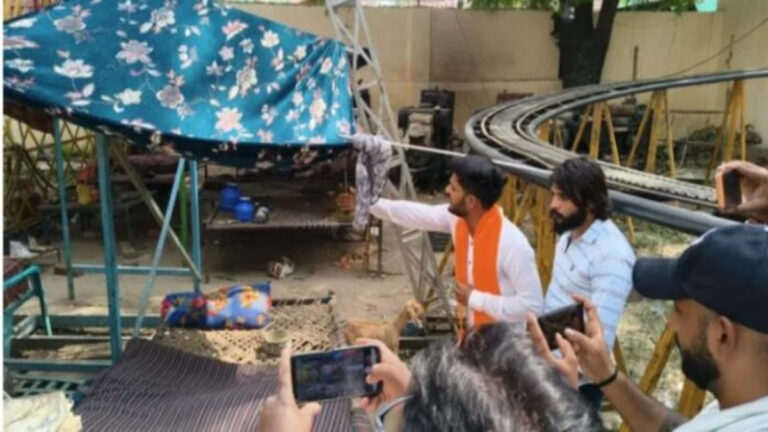
May 29, 2026: Local authorities have initiated a strict investigation and registered a formal criminal case following an incident at Meerut’s historic Nauchandi Fair, where individuals were allegedly caught cooking meat inside a prominent temple complex. The incident, which unfolded on the afternoon of May 28, 2026, triggered swift protests from local devotees and right-wing cultural groups, prompting heavy police deployment to maintain communal harmony in the area.

According to senior police officials, the controversy began when emergency services received an alert via the Dial 112 hotline. Callers reported that staff members operating commercial swings and amusement rides inside the Chandi Devi/Durga Temple compound had slaughtered a goat and were actively preparing a meat-based meal on the sacred premises.

Swift Police Intervention Prevents Escalation

Upon receiving the distress call, a large police contingent—headed by Civil Lines Circle Officer (CO) Suchitra Singh and Nodal Officer Inspector Jitendra Singh—immediately rushed to the temple site. Law enforcement personnel discovered the cooking setup within the religious perimeter and recovered portions of meat as physical evidence.

The primary accused, identified by police as Gada Khan, a resident of Rajasthan who was working as a swing operator at the fair, was promptly taken into custody.

Outrage and Local Demonstrations

The Nauchandi Fair is deeply rooted in local history, celebrated for over four centuries as a symbol of cultural convergence, sitting adjacent to both the historic Chandi Devi Temple and the Hazrat Bale Miyan Dargah. Because the fairground grounds hold deep spiritual value, the acts inside the temple complex on Thursday caused immense friction.

News of the incident spread rapidly across the district, drawing members of local Hindu organizations, including activists from the Narsingh Vahini and Kartik groups, to the temple gates. Protesters staged a sit-in demonstration, chanting slogans and demanding absolute accountability from both the fair organizers and municipal administrative staff. The groups expressed anger over the perceived desecration of a worship space and raised concerns regarding the vetting and behavior of seasonal workers hired for the annual fair.

To pacify the escalating crowds, senior administrative and police officers engaged directly with the demonstrators. Authorities provided firm assurances that strict legal measures would be enforced, and that security guidelines inside the religious sectors of the fairgrounds would be re-evaluated and tightened immediately.

Administrative Action and Future Steps

City Superintendent of Police, Vinayak Gopal Bhosale, confirmed that the accused was formally processed and scheduled to be presented before a local court on May 29. Investigators are currently gathering circumstantial evidence, interviewing eyewitnesses, and examining CCTV footage from the surrounding stalls to ascertain whether others were complicit in the act.

The incident has also placed a spotlight on the overall management of the Nauchandi Fair. The event is a massive municipal undertaking co-managed by the Meerut Municipal Corporation and the District Panchayat. Local representatives, including Meerut Mayor Harikant Ahluwalia, have previously voiced concerns regarding the logistical and administrative handling of the fairgrounds this season. Following this controversy, municipal leaders are demanding stricter zoning laws within the fair, ensuring that areas immediately flanking religious structures maintain an absolute prohibition on non-vegetarian elements and undergo rigorous oversight.

While the situation remains calm but vigilant under monitored security, district authorities have appealed to the public to refrain from circulating unverified videos or inflammatory messages on social media platforms. Security personnel remain stationed across vital junctions of the Nauchandi Fair area to prevent further civil unrest and ensure the traditional event continues smoothly.

XIAOMI 17T Series Debuts in Europe Ahead of India Launch

New Delhi, May 29, 2026: Xiaomi has officially taken the wraps off its highly anticipated Xiaomi 17T Series in Europe, introducing the standard Xiaomi 17T and the premium Xiaomi 17T Pro at a global launch event in Vienna. The release sets the stage for the lineup’s imminent arrival in India on June 4, breaking a multi-year hiatus for the “T” sub-brand in the country. However, early marketing strongly indicates that while European consumers get access to both devices, the Indian market will focus heavily on the standard 17T, positioned as a flagship-grade photography specialist.

The headline achievement of this generation is the democratization of premium optics. For the first time, Xiaomi has integrated a Leica-tuned 5x periscope telephoto camera across the entire lineup, eliminating the traditional practice of withholding elite zoom capabilities for the more expensive Pro variant.

Shared DNA: Leica Optics Across the Board

Historically, sub-flagship lineups create a sharp divide between standard and Pro models, usually leaving the base model with a generic macro lens or a low-magnification zoom. Xiaomi is flipping that script by giving both the 17T and 17T Pro an identical 50MP Leica 5x telephoto lens featuring a 115mm equivalent focal length and Optical Image Stabilization (OIS).

This setup allows for up to 10x “optical-quality” hybrid zoom and pushes out to a massive 120x AI Ultra Zoom. For close-up photography, the lens functions as a telemacro shooter capable of focusing on subjects from just 30cm away.

A New Era of Mobile Motion: Leica Live Moment

Alongside hardware upgrades, the 17T series introduces Leica Live Moment. Rather than capturing just a frozen, singular frame, this software pipeline records the micro-movements, fleeting facial expressions, and emotional context immediately leading up to a shot. Think of it as a highly stylized, color-graded live photo that retains Leica’s signature aesthetic across all rear cameras.

Xiaomi 17T Pro: The Uncompromised Global Heavyweight

While the camera systems share major similarities, the Xiaomi 17T Pro earns its title through industrial-grade performance, an upgraded main sensor, and a massive battery system.

Display and Visual Comfort

The 17T Pro features a expansive 6.83-inch 1.5K AMOLED display protected by Corning Gorilla Glass 7i. It delivers a 144Hz refresh rate and a peak brightness of 3,500 nits, ensuring legibility under harsh sunlight.

Crucially, this panel debuts Xiaomi Vision Care, a display architecture developed using medically guided research. It dynamically regulates blue light emissions, minimizes flicker through full-brightness DC dimming, and scales down to an ultra-dim 1-nit for night reading. The phone is the first to achieve TÜV Rheinland’s Quadruple Eye-Care certification.

Under the Hood Performance

Powering the Pro model is the MediaTek Dimensity 9500, built on a cutting-edge 3nm architecture. Combined with up to 12GB of LPDDR5X RAM and up to 1TB of UFS 4.1 storage, it handles heavy tasks like sustained 3D gaming and on-device AI generation effortlessly.

The pro-grade performance extends heavily into videography. The 17T Pro introduces 4K 60fps cinematic recording on the telephoto lens, a milestone for the brand. It also allows for Ultra-HD 4K Live Moments, log video recording, and custom movie modes featuring seamless, algorithmic zooming.

Battery Innovations

To fuel these power demands, Xiaomi packed a massive 7,000mAh silicon-carbon battery into the unibody aluminum chassis. By leveraging high-density silicon chemistry, the phone remains relatively slim (8.25mm) while offering multi-day battery life. The 17T Pro replenishes quickly via 100W wired HyperCharge and 50W wireless HyperCharge, while a 22.5W wired reverse charging protocol allows it to act as a power bank for accessories.

Xiaomi 17T: The Tailored Sub-Flagship

Positioned right below the Pro, the standard Xiaomi 17T balances cost and capabilities, forming the exact blueprint for the upcoming India release.

Screen and Build

The device moves to a slightly more compact 6.59-inch 1.5K display, retaining the fluid 144Hz refresh rate, flat aluminum mid-frame, and advanced Vision Care eye protection.

Camera Alterations

While it keeps the elite 50MP 5x periscope telephoto lens and a 12MP ultra-wide shooter, the primary camera relies on a slightly smaller 1/1.55-inch 50MP main sensor compared to the Pro’s Light Fusion 950. Nevertheless, the main shooter features an upgraded Leica Summilux lens structure with a 1G + 6P hybrid design (one glass element plus six plastic elements) to boost light absorption and decrease chromatic aberration.

Silicon and Battery Efficiency

The standard 17T swaps out the top-tier Dimensity chip for the highly efficient MediaTek Dimensity 8500-Ultra processor. Battery metrics remain highly competitive: a 6,500mAh silicon-carbon cell paired with 67W wired HyperCharge capability. The phone retains an IP68 dust and water resistance rating, ensuring high durability alongside its premium glass-and-metal design.

Looking to June 4: The Indian Market Dynamics

The European launch has set an interesting precedent. In the EU, the base Xiaomi 17T launches at an estimated €749 (around ₹71,000) for the 12GB/256GB model. However, European pricing traditionally accounts for steeper regional taxes, and industry analysts expect Xiaomi India to choose a much more aggressive pricing strategy to square off against dominant mid-premium competitors.

By omitting the 17T Pro and launching “The Telephoto Master” (the standard 17T) as a standalone hero product, Xiaomi is intentionally shaking up the sub-₹50,000 landscape. They are gambling on the idea that high-end Leica zoom capabilities, a giant 6,500mAh battery, and robust eye-protection software matter more to everyday users than raw synthetic benchmark victories.

Full local pricing, ecosystem pre-order bundles, and launch-day offers will be formally detailed during the official Indian broadcast next week. Both variants ship out of the box with Xiaomi HyperOS, built on top of Android 16.

Tata Tiago EV Facelift Launched At Rs 6.99 Lakh, Here A DETAILED Look At What New

0

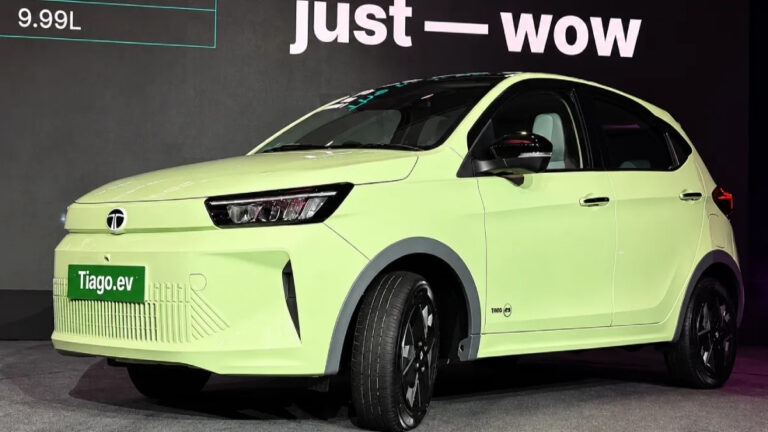
New Delhi, May 29, 2026: Tata Motors has officially shaken up the Indian electric vehicle market once again by launching the highly anticipated 2026 Tata Tiago EV facelift. Starting at an aggressive introductory price of Rs 6.99 lakh (ex-showroom), the updated electric hatchback brings a major visual overhaul, premium cabin technology, and significantly upgraded safety features.

With this mid-life refresh, Tata has not only made the Tiago EV more affordable than its predecessor—which used to start at Rs 7.99 lakh—but has also packed it with segment-first features that make it feel like a car from a category above. The company has also shifted to its new “Persona” nomenclature, offering the vehicle in three main trims: Smart, Pure+, and Creative+.

Here is a detailed breakdown of everything that is new on the 2026 Tata Tiago EV facelift.

Exterior Design: Shaper, Sportier, and More Modern

The first thing you will notice about the new Tiago EV facelift is its matured and sharper front profile. Tata’s design team has dropped the softer lines of the older model in favor of a more aggressive look.

  • New Front Fascia: The front features sleeker LED headlamps paired with stylish eyebrow-style LED Daytime Running Lamps (DRLs). True to its electric identity, it retains a closed-off grille finished in body color, but it is now accented by a new gloss-black strip that stretches across the front, giving the car a wider stance.
  • Revised Bumpers: The lower bumper has been fully redesigned with new vertical black faux air intakes and pixel-pattern LED fog lamps pushed out to the edges.
  • Side and Rear Profiles: Moving to the side, the silhouette looks sharper thanks to the addition of contrasting black wheel arch cladding and newly designed 15-inch aerodynamic alloy wheels. The car features a dual-tone look with a black roof, black pillars, and black ORVMs. At the back, the standout feature is the addition of a connected LED tail-lamp bar—a massive trend in modern automotive design—complemented by a roof-mounted spoiler and a clean, redesigned rear bumper.

Tata is offering the facelift in six fresh color options: Dehradun Dew, Sobo Surge, Pangong Pulse, Matheran Monsoon, Pure Grey, and Pristine White.

Interior and Technology: A Massive Digital Leap

Inside the cabin, the changes are even more dramatic. The dashboard has been entirely reworked with a clean, upright layout and a premium dual-tone black and light grey theme.

The old rotary gear knob is still there on the revised gloss-black center console, but it is now surrounded by modern tech, including dual wireless smartphone chargers. The driver is greeted by a new two-spoke steering wheel that features an illuminated central Tata.ev logo.

Comfort has also received a boost with redesigned door trims, a front center armrest, premium grey fabric upholstery, a cooled glovebox, and the much-requested addition of rear AC vents alongside a powerful 65W Type-C fast-charging port for rear passengers.

Safety: Six Airbags Standard and Segment-First Camera Tech

Tata Motors has always positioned safety as a core brand pillar, and the 2026 Tiago EV facelift takes this commitment to a new level for budget hatchbacks.

Furthermore, the vehicle’s structural rigidity has been improved. The electronic safety suite has been expanded to include:

  • Electronic Stability Control (ESC) with Traction Control
  • Hill Hold Assist
  • Tyre Pressure Monitoring System (TPMS)
  • ABS with EBD
  • Torque Vectoring by Braking

The biggest tech surprise, however, is the inclusion of a 360-degree surround-view camera system combined with a blind-view monitor. When you turn on your indicator, the digital instrument cluster displays a live feed of your blind spot, a premium feature typically reserved for SUVs costing twice as much.

Powertrain, Range, and Enhanced Charging Efficiency

Mechanically, the Tiago EV facelift carries forward its reliable Ziptron architecture with two distinct lithium-ion battery pack choices, but Tata has optimized the energy management and charging speeds.

While the claimed MIDC range for the 24 kWh pack has dipped slightly from 293 km to 285 km due to realistic re-calibration, the 19.2 kWh version sees a slight bump up to 226 km. The car retains its multiple drive modes (City and Sport) and four adjustable levels of regenerative braking to help drivers maximize efficiency.

Breakthrough in Charging Speeds

Where Tata has made a monumental leap is in charging convenience. The updated Tiago EV features enhanced DC fast-charging capabilities. It can now juice up enough to add 100 km of range in just 18 minutes. When connected to a standard 30kW DC fast charger, both battery versions can zip from 10% to 80% charge in approximately 35 minutes. Buyers can choose between 3.3kW and 7.2kW AC home chargers depending on the variant chosen.

Variant-Wise Pricing (Ex-Showroom)

The restructuring of the variants makes the entry point to EV ownership incredibly accessible:

  • Tiago EV Smart (19.2 kWh): Rs 6.99 Lakh
  • Tiago EV Pure+ (19.2 kWh): Rs 8.49 Lakh
  • Tiago EV Pure+ (24 kWh): Rs 9.49 Lakh
  • Tiago EV Creative+ (24 kWh): Rs 9.99 Lakh

To completely eliminate long-term ownership anxiety regarding battery degradation, Tata Motors has introduced a lifetime unlimited kilometers battery warranty on select long-range versions.

Additionally, for buyers looking to lower their upfront acquisition cost even further, Tata is expanding its Battery-as-a-Service (BaaS) program. Under this scheme, buyers can purchase the car at a lower initial price and pay a battery rental EMI of just Rs 2.6 per kilometer based on their usage.

The Verdict

With the entry-level hatchback segment facing stiff competition from compact SUVs, Tata Motors has given the Tiago EV a new lease on life. By slashing the entry barrier to Rs 6.99 lakh, adding standard six airbags, introducing a 360-degree camera, and speeding up charging times, the 2026 Tata Tiago EV facelift cements its position as the undisputed king of affordable, feature-rich urban electric mobility in India. It will continue to aggressively rival the likes of the MG Comet EV and the Citroen eC3.

Sensex Drops 280 Points; Nifty Slips Below 23,800 Amid Volatility

0

New Delhi, May 29, 2026: The Indian equity benchmarks, BSE Sensex and NSE Nifty 50, experienced a highly volatile trading session today as investors navigated conflicting domestic triggers and fluid global macroeconomic developments. After being closed on Thursday for a local holiday, the domestic market opened on a relatively optimistic note but quickly gave up its early gains. The headline indices witnessed intense intra-day fluctuations, reflecting the deep uncertainty lingering in international markets.

During the session, the 30-share BSE Sensex dropped by more than 280 points from its early visual peak, while the broader 50-share NSE Nifty slipped below the psychological support level of 23,800. This downward momentum highlighting the market’s ongoing struggle comes despite localized pockets of immense strength, particularly across major Information Technology (IT) counters. The market breadth fluctuated constantly, leaving retail investors and institutional players alike trying to balance changing geopolitical headlines against sharp moves in the currency and commodity markets.

Geopolitical Headlines Drive Volatility

The primary catalyst driving early market behavior was a significant development in global geopolitics. Reports emerged that the United States and Iran are close to finalizing a diplomatic breakthrough to extend their temporary ceasefire by an additional 60 days. Crucially, the proposed agreement includes lifting strict restrictions on commercial shipping lanes through the highly critical Strait of Hormuz.

This update initially triggered a wave of optimism across global equity markets, filtering into India’s opening trade. The prospect of stabilized shipping lanes immediately cooled off anxieties regarding prolonged supply chain disruptions and escalating war premiums. Consequently, international oil benchmarks reacted swiftly, with Brent crude futures sliding below $93 per barrel and U.S. West Texas Intermediate (WTI) falling toward $88 per barrel.

For an import-dependent economy like India, which relies heavily on overseas crude to fulfill its energy requirements, falling oil prices generally provide massive relief. Lower crude values help keep the nation’s fiscal deficit under check, reduce the financial burden of fuel subsidies, and ease domestic inflationary pressures. However, while the initial response to the cooling commodity prices was overwhelmingly positive, underlying concerns about the sustainability of the ceasefire and mixed data from Western economies soon re-introduced caution into the trading ecosystem, sparking a wave of mid-day selling.

Sectoral Performance: IT Rallies as FMCG Slumps

Beneath the choppy headline numbers, a sharp divergence emerged across major sectoral indices. The Information Technology sector turned into the undisputed hero of the trading session, single-handedly preventing a deeper rout in the broader indices. The Nifty IT index surged over 2.2%, adding substantial points in a powerful display of sectoral strength.

Several factors converged to fuel this massive IT rally. First, the Indian Rupee exhibited a highly notable trend, stabilizing around the 95.42 to 95.70 per US dollar range following recent interventions by the Reserve Bank of India (RBI). For India’s premier software exporters, a highly competitive exchange rate acts as a direct structural tailwind, enhancing earnings per share (EPS) realizations from foreign clients. Second, a visible narrative shift surrounding Artificial Intelligence (AI) from a threat to an incremental business opportunity prompted significant bargain hunting, given that many top-tier IT stocks had been trading considerably below their 52-week highs.

In sharp contrast, other heavyweights dragged the market lower. The Nifty FMCG sector emerged as a prominent laggard, facing selling pressure as investors worried about near-term consumption patterns and rural demand trajectory. Banking and financial services, represented by the Nifty Bank and Nifty Financial Services indices, gave up their morning gains to trade flat-to-negative, weighed down by localized profit booking in major private banking counters.

Coal India OFS Takes Center Stage

Beyond the secondary market movement, corporate primary actions grabbed significant institutional attention. The government’s high-stakes Offer for Sale (OFS) for Coal India Limited entered its retail bidding phase today, drawing immense interest from all corners of the market.

The institutional and non-retail portion of the stake sale, which opened prior to the retail phase, witnessed an extraordinary response, getting oversubscribed by more than eight times the reserved quota and drawing bids worth nearly Rs 19,000 crore. Recognizing this massive institutional appetite, the Ministry of Coal officially exercised its oversubscription, or greenshoe, option.

As a result, the total size of the divestment doubled from the initial 1% stake (6.16 crore equity shares) to a comprehensive 2% stake, representing 12.32 crore shares of the Maharatna public sector undertaking (PSU). While the long-term outlook for the energy giant remains structurally sound given its robust production volumes, the massive supply of new shares entering the market created a temporary overhang, keeping the stock price under visible pressure during today’s volatile session.

Domestic Factors and Global Cues

On the domestic macroeconomic front, market participants are processing a multi-layered economic environment. India’s latest consumer inflation print came in at a manageable 3.48% for the preceding month, while the benchmark interest rate remains steady at 5.25%. These indicators suggest that the domestic macroeconomic foundation is largely stable, which has prevented a complete capitulation in stock prices despite foreign institutional investors (FIIs) executing continuous outflows over the past several weeks.

Market Outlook: What Lies Ahead?

As the domestic indices approach the final hours of the trading week, market analysts are advising a highly stock-specific and cautious strategy. The breach of the 23,800 level on the Nifty 50 indicates that short-term momentum has temporarily leaned in favor of the bears, and the index will need to decisively reclaim the 24,000 threshold to revive strong bullish sentiment across the broader market.

The underlying structure of the market is currently caught in a classic tug-of-war. On one hand, cooling crude oil prices and a resilient domestic IT sector are providing solid defensive pillars. On the other hand, persistent foreign fund outflows, corporate supply pressures like the massive Coal India divestment, and lingering skepticism over international geopolitical resolutions are capping upside attempts. Moving into the upcoming sessions,

Kirti Kulhari Slammed for Demanding Lower Domestic Help Wages

New Delhi, May 29, 2026: A massive online storm has erupted following a casual comment made by actress Kirti Kulhari regarding the wages of domestic workers in Mumbai. In a clip from a recent interview that quickly went viral on social media, the Four More Shots Please! star expressed shock and annoyance over a housekeeper demanding Rs 10,000 per month for part-time work.

While the actress framed her experience as an example of being overcharged due to her celebrity status, the internet—spearheaded by prominent media personality Mini Mathur—fired back. What began as a routine celebrity interview snippet has transformed into a massive national conversation regarding minimum wage, inflation, class privilege, and the financial reality of informal workers in India’s metropolitan cities.

The Spark: What Did Kirti Kulhari Say?

The controversy stemmed from an interview with Bollywood Bubble, a snippet of which was cross-posted by Uncut India. During the conversation, Kirti shared an anecdote about her recent experience of relocating to a new apartment in Yaari Road, an upscale residential neighborhood in Andheri West, Mumbai.

Detailing her hunt for local domestic staff, Kirti revealed she was taken aback by the price quotes she received from a cook and a housekeeper. Laughing, she recalled asking her manager how the numbers could possibly make sense. When the interviewer pressed for details on the specific amounts being requested, Kirti explained that a helper had quoted her Rs 10,000 per month for roughly two hours of daily work.

According to Kirti, the requested duties during that two-hour window included sweeping, mopping, washing dishes, dusting, and doing the laundry. The actress voiced her frustration with the arrangement, questioning the value of the service for that price point.

The Backlash: Mini Mathur and Netizens School the Star

The clip did not sit well with netizens, who immediately called out the actress for what they perceived as a lack of empathy and basic economic awareness. Among the most prominent voices to challenge Kirti’s perspective was actress, television host, and model Mini Mathur. Leaving a direct comment on the viral video, Mini took a firm stance against the narrative of domestic workers “fleecing” their employers.

Mini’s response hit a chord with thousands of users, triggering a wave of supportive comments that dissected the sheer physical labor and systemic undervaluation inherent to the domestic workforce.

Comedian Vivek Samtani added a global mathematical perspective to the thread, noting, “That is barely $2 per hour, and that is too much? Wow.”

Other users called out the disparity between what creative professionals charge for short periods of their time versus what they expect to pay manual laborers. “So how much do you charge for two hours of your craft?” asked one highly-liked comment, while another added, “They deserve it! The maid deserves it and the cook deserves it too. Do you have any idea how expensive it is to survive in Mumbai?”

The Math Behind the Myth: Why Rs 10,000 Isn’t “Too Much”

The crux of the backlash lies in the fundamental misunderstanding of how part-time domestic work is structured, especially in a hyper-expensive metropolitan city like Mumbai. Observers and labor advocates quickly dismantled the notion that Rs 10,000 for two hours of daily work constitutes an exorbitant sum or an attempt to exploit a celebrity.

  • The Content of the Labor: The duties Kirti listed—sweeping, mopping, washing dishes, dusting, and doing laundry—constitute a complete deep clean and maintenance cycle of an entire household. Compressing those heavy physical tasks into a strict two-hour window requires intense, unbroken physical exertion.
  • The True Value of Time: While the employer views it merely as “two hours,” a domestic worker’s day is fragmented. Traveling between multiple homes in a city like Mumbai takes a massive physical toll and involves hidden transit costs. A worker cannot realistically string together eight continuous two-hour shifts in a day; travel constraints limit them to a maximum of three or four houses.
  • The Cost of Living Crisis: In an era defined by high inflation, skyrocketing grocery prices, and escalating rent in urban centers, Rs 10,000 per month is barely a survival wage. When viewed through the lens of a single household, it may seem high to someone operating on outdated salary mindsets, but as social media users pointed out, it represents a standard liveable wage for a worker attempting to support a family in Mumbai.

A Microcosm of a Larger Class Divide

The fierce reaction to Kirti Kulhari’s interview highlights a deep-seated cultural friction in urban India. For decades, middle- and upper-class Indian households have relied heavily on an informal network of domestic workers, often operating on an archaic “patronage system” where wages are determined by the whims, generosity, or negotiation skills of the employer rather than regulated legal standards.

However, as living costs in tier-1 cities soar, the demographic of domestic help is increasingly asserting its financial worth. Modern housekeepers, cooks, and nannies in major hubs like Mumbai, Bengaluru, and Delhi-NCR are setting firm, non-negotiable rates based on the intensity of the workload and local market realities.

The backlash against Kirti shows that a significant portion of the public now views domestic labor not as a casual “favor” to be bargained down, but as a critical professional service. As Mini Mathur accurately summarized, the labor provided by a housekeeper in those two hours frees up an elite professional’s time, allowing them to focus on careers where they potentially earn tens of thousands of rupees in that exact same window.

Ultimately, the controversy has served as a reality check for many. It underscores the urgent need for a shift in perspective—moving away from viewing domestic staff through a lens of entitlement and toward treating their time, energy, and survival needs with structural, financial dignity. Kirti Kulhari has yet to issue an official statement or clarification regarding the viral uproar.

How Anupam Kher Love Letters Ended Up at Kirron House Before Marriage

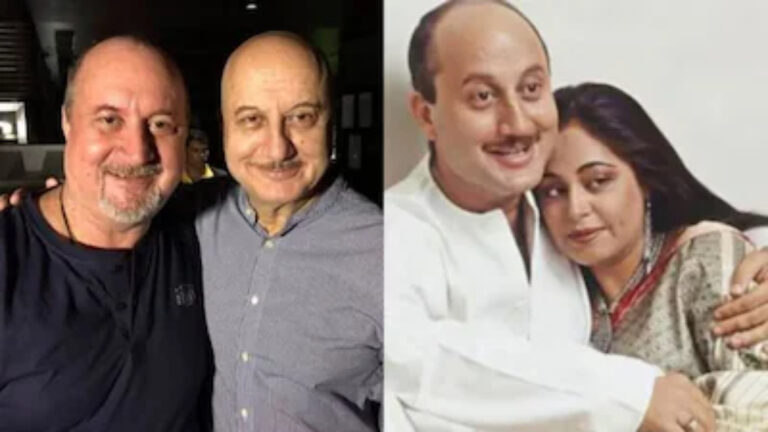
New Delhi, May 29, 2026: In the glitz and glamour of Bollywood, relationships often seem fragile and fleeting. However, the four-decade-long marriage of veteran actors Anupam Kher and Kirron Kher stands out as a remarkable testament to companionship, resilience, and serendipity. Over the years, the couple has frequently spoken about their unique journey, but a recent reflection by Anupam Kher sheds light on just how unpredictable their union truly was. Long before they became a couple, their lives were intertwined in the most platonic ways—so much so that Anupam’s love letters from another girlfriend used to be delivered directly to Kirron’s house.

Looking back at those days, Anupam admitted that he never could have anticipated how their lives would unfold, famously summarizing the twist of fate with his iconic catchphrase: “Kuch bhi ho sakta hai” (Anything can happen).

The Early Days in Chandigarh: A Star and a Struggler

The story begins in the 1970s at the Department of Indian Theatre in Chandigarh. At the time, Kirron was a year senior to Anupam and was already a well-known, multi-talented figure on campus. Not only was she a brilliant actress performing in English plays, but she had also represented India in badminton doubles alongside her sister. Anupam, on the other hand, was a passionate but low-profile theater student trying to find his footing.

Reflecting on his initial impression of her, Anupam recalled that Kirron always felt completely out of his reach. He confessed that he never imagined a romantic future with her during their college days, though he deeply admired her large heart and vibrant personality. The two built a solid foundation of platonic friendship, working extensively together on stage, sharing their deepest secrets, and navigating the early stages of their creative careers side-by-side.

The Mumbai Struggle and a Surprising Mailbox

Following their theater days, both actors eventually migrated to Mumbai to pursue their cinematic dreams, but their personal lives moved in entirely different directions. Kirron married Mumbai-based businessman Gautam Berry and gave birth to her son, Sikandar. Meanwhile, Anupam was in a long-term relationship with another woman and was facing severe financial hardships as a struggling actor trying to break into Bollywood.

Despite their changing circumstances, their friendship remained unwavering. Anupam, along with his close friend and fellow actor Satish Kaushik, became a frequent visitor to Kirron’s house. In interviews, Anupam fondly remembered the humor of those difficult days. He recounted how he and Satish would playfully demand that Kirron provide them with return taxi fare before they would even agree to visit her. Kirron, ever the generous friend, would give them the money. To save cash, the duo would pocket the taxi fare, take a cheap city bus instead, and use the extra money to survive the rest of the week.

It was during this specific period of deep platonic trust that a highly unusual arrangement took place. Because Anupam was constantly on the move and lacked a stable mailing address during his days as a struggler, he had his personal correspondence routed through Kirron’s home. Strikingly, this included passionate love letters written to him by his then-girlfriend. Kirron took it all in stride, acting as the ultimate confidante who knew everything about Anupam’s romantic life, down to the details of which women he was hoping to impress. At the time, the idea of the two of them getting married was completely beyond their wildest imaginations.

When Chemistry Exploded: Shifting from Friends to Lovers

The turning point in their relationship came in the early 1980s, when both individuals hit emotional rock bottoms simultaneously. Anupam experienced a painful heartbreak after being abruptly left by his girlfriend of three years. Around the same time, Kirron’s marriage to Gautam Berry was going through a very difficult and unresolvable phase.

As they leaned on each other for emotional support, the dynamic between them began to shift subtly. The definitive spark occurred when they traveled to Kolkata to perform in a play directed by Nadira Babbar. Anupam had recently shaved his head for an upcoming film role, giving him a completely different look. Kirron later recalled that as Anupam was walking out of a room, he turned back to look at her, and an undeniable, intense wave of unspoken understanding passed between them.

Shortly after that moment, Anupam knocked on her door and confessed directly, “I think I have fallen in love with you.” Almost instantly, the heavy weight of their decade-long friendship transformed into a powerful romantic chemistry. After finalizing her divorce from her first husband, Kirron married Anupam in a very simple, intimate ceremony at an ashram in Gurgaon on August 26, 1985—just a year after Anupam’s breakthrough performance in the film Saaransh.

The Secrets to a Four-Decade Marriage

More than forty years later, the Khers remain one of Indian cinema’s most enduring couples. However, they are remarkably candid about the fact that a long marriage requires constant work, adaptation, and realistic expectations rather than a fairytale mindset.

Anupam has openly shared that he and Kirron do not maintain a traditional or overly formal “filmy” husband-wife dynamic. They treat each other as absolute equals, completely bypassing formal language or artificial pleasantries. He describes Kirron as hilariously blunt, fiercely confident, and fiercely protective of her family.

Over the decades, the couple has successfully weathered severe financial crises—including heavy debts when Anupam’s early production ventures failed—and serious health battles, such as Kirron’s diagnosis and treatment for multiple myeloma. They have also adapted their living arrangements over time, even maintaining separate rooms within their home to accommodate their individual daily routines, habits, and personal space.

Ultimately, both Anupam and Kirron agree that when the initial flames of romance evolve over forty years, it is the underlying bedrock of deep, unconditional friendship that keeps a couple together. Because they started as two theater students sharing tea and counting taxi change in Chandigarh, they have been able to navigate the highest peaks of fame and the toughest valleys of life as an unshakeable team.