Home Blog Page 44

How a Viral Garba Video Rekindled the Debate on Indian Tourist Etiquette

0

New Delhi, May 29, 2026: A recent viral video featuring a group of Indian tourists performing an impromptu garba dance on an airport tarmac in Vietnam has taken social media by storm. In the footage, a dozen travelers form a lively circle, clapping and moving to traditional rhythms right beside a parked VietJet Air aircraft. While some onlookers watched with curiosity, the video has sparked an intense, widespread debate across platforms like X (formerly Twitter), Instagram, and Reddit regarding the public behavior, safety awareness, and etiquette of Indian tourists traveling abroad.

For many, the incident is a joyful expression of cultural pride. For others, it represents a troubling disregard for international safety protocols and public decorum. As India’s outbound tourism market grows at a record-breaking pace, the incident has forced a deeper conversation about how the actions of a few can shape the global image of an entire nation.

Joyful Culture or Security Risk?

The primary point of contention surrounding the Vietnam airport video is the specific location chosen for the dance. An airport tarmac is not a standard public square; it is a highly regulated, restricted operational zone. Ground crew, fueling vehicles, and heavy machinery move continuously, and passengers are strictly expected to walk directly between the shuttle bus and the aircraft under close supervision.

Critics online were quick to point out that lingering on the runway to dance poses severe security and safety risks. Many travelers expressed embarrassment, arguing that such behavior invites unnecessary scrutiny and negative stereotypes. “Culture and sharing traditions is a beautiful thing, but it must be done with respect to local rules,” wrote one user on social media. “An airport runway is a hazardous environment, not a dance floor.”

Conversely, defenders of the group argue that the backlash is an overreaction to a harmless moment of celebration. They view the garba as an innocent, spontaneous burst of happiness that harmed no one and brought life to a sterile airport environment. To them, it exemplifies the vibrant, communal spirit that Indian travelers carry with them wherever they go.

The Rise of the Outbound Indian Traveler

To understand why this debate has escalated so rapidly, one must look at the sheer scale of modern Indian travel. Propelled by a rising middle class, increased disposable income, and simplified visa processes—including e-visas and visa-free entry to Southeast Asian destinations like Vietnam and Thailand—Indians are exploring the world like never before.

According to data from the Reserve Bank of India (RBI) and tourism ministries, Indian travelers spent tens of billions of dollars on international travel recently, making them one of the most lucrative target markets for global tourism boards. Airlines have launched direct flights to secondary cities across Asia and Europe to keep up with the massive demand.

However, this rapid democratization of travel means that millions of first-time international tourists are stepping onto foreign soil. While group tours offer comfort and affordability to families and senior citizens, they also create a distinct group dynamic. Tourism experts note that individuals traveling in large, familiar cohorts often feel more emboldened to act as they would at home, sometimes remaining insulated from the local behavioral norms of their host country.

Stereotypes and the Unfortunate Reality of “The Ugly Tourist”

The tarmac incident does not exist in a vacuum. It has reignited a broader, often painful discussion regarding the “ugly tourist” stereotype. On travel forums, frequent flyers and travel guides have shared long lists of grievances concerning disruptive behavior abroad. These range from playing loud music on public transportation and skipping queues at major tourist sights, to loudly chanting slogans in inappropriate settings.

A table of common friction points highlighted by international hospitality staff and frequent travelers reveals where cultural habits often clash with international expectations.

When these friction points manifest in sensitive environments—like premium airport lounges, historical monuments, or quiet scenic trains—they frequently get recorded, uploaded, and amplified online. This digital trail can lead to ethnic typecasting, causing responsible Indian travelers to face subtle biases or harsher scrutiny from foreign immigration authorities and hospitality staff.

Balancing Cultural Pride with Civic Responsibility

The core challenge highlighted by the Vietnam incident is finding the balance between celebrating one’s heritage and respecting global civic boundaries. Carrying home-packed snacks, traveling with extended family, and finding moments of collective joy are defining, beautiful aspects of the Indian travel experience. The goal of travel etiquette is not to erase these cultural traits or mimic Western norms completely, but to develop a sense of situational awareness.

As Indian tourists become vital pillars of the global hospitality economy, there is a growing consensus that awareness must start before boarding the aircraft. Travel agencies, social media influencers, and airlines have a unique opportunity to educate travelers on destination-specific rules. Simple guidelines—such as respecting quiet zones, understanding photography bans, and adhering to strict airport protocols—can go a long way in ensuring smooth journeys.

Ultimately, the viral garba video serves as a gentle wake-up call. As India continues to leave a powerful, unforgettable footprint on global tourism, the conduct of its citizens abroad will dictate how the country is perceived. By pairing their signature warmth and enthusiasm with a deep respect for local regulations, Indian travelers can ensure they are celebrated not just for their spending power, but for their exemplary global citizenship.

Hero MotoCorp to Unveil India’s First 100% Ethanol-Powered Motorcycle on June 3

0

New Delhi, May 29, 2026 — In a historic move for the Indian automotive industry, Hero MotoCorp, the world’s largest two-wheeler manufacturer, has officially announced the debut of India’s very first 100% ethanol-powered motorcycle. Scheduled for a grand unveiling on June 3, 2026, in New Delhi, the launch marks a monumental shift toward sustainable, alternative-fuel mobility.

The high-profile event will be attended by Union Road Transport and Highways Minister Nitin Gadkari alongside Petroleum and Natural Gas Minister Hardeep Singh Puri, highlighting the immense economic and environmental significance the Indian government attaches to the project. This launch formalizes Hero MotoCorp’s entry into the clean biofuel space and signals a structural evolution in mass-market transportation.

Driving Into the Commuter Segment: Splendor or HF Deluxe?

While Hero MotoCorp has guarded the official model name under wraps, industry insiders and regulatory filings hint at a highly strategic choice. The company has recently secured regulatory clearances for flex-fuel variants of its absolute market leaders: the Hero Splendor and the Hero HF Deluxe.

Introducing groundbreaking E100 technology directly into the budget-conscious, high-volume commuter segment is a bold, calculated move. Hero previously showcased an early HF Deluxe flex-fuel prototype at the Bharat Mobility Global Expo in January 2025, developed entirely at its state-of-the-art Centre for Innovation and Technology (CIT) in Jaipur. By utilizing its most accessible, trusted platforms, Hero intends to ensure that green mobility is not restricted to high-end, premium experimental bikes, but is immediately available to millions of everyday Indian riders.

The Evolution to E100: Why This Matters

India’s journey with flex-fuel engines has been steadily gaining traction, but Hero’s upcoming release pushes past previous technical boundaries.

An E100 engine represents a profound engineering leap compared to an E85 system. Operating seamlessly on 100% pure ethanol means the engine must handle a fuel with entirely different chemical and physical properties than standard petrol.

Ethanol is highly corrosive to certain metals and rubber compounds, requiring redesigned fuel lines, specialized coatings, and robust fuel pumps. Furthermore, because denatured ethanol contains roughly 30% less energy density than petrol, fuel systems require highly sophisticated Electronic Control Units (ECUs) and smart sensors. These advanced sensors instantly calculate the exact air-fuel ratio, adjusting ignition timing and fuel injection levels automatically. This clever calibration allows the bike to function perfectly whether it is running on standard petrol, a mid-tier blend, or absolute pure ethanol.

A Twin Pillar of Resilience: The Economic and Environmental Impact

The push for a 100% ethanol two-wheeler isn’t just about reducing what comes out of the exhaust pipe; it’s a structural play for India’s economic sovereignty.

Because ethanol is an alcohol produced locally through the fermentation of agricultural biomass—primarily sugarcane, corn, and broken food grains—every liter of ethanol burned directly benefits the domestic rural economy instead of foreign oil conglomerates. It creates a robust, cyclical economic pipeline for Indian farmers, converting surplus agricultural yields into sustainable fuel revenue.

On the environmental front, moving toward E100 slashes tailpipe greenhouse gas emissions dramatically. It allows India to make tangible progress toward its aggressive net-zero carbon goals while lowering the choking smog levels frequently blanketing major urban metros.

Flex-Fuel vs. Electric Vehicles: A Balanced Strategy

For a long time, the green transition narrative focused almost exclusively on Electric Vehicles (EVs). However, Hero MotoCorp’s corporate leadership has voiced an alternative, pragmatic perspective regarding India’s unique infrastructure challenges.

Speaking on the upcoming launch, senior company representatives pointed out that while Hero is concurrently expanding its electric portfolio under the Vida brand, EVs are not a singular cure-all. Electric mobility continues to grapple with intense supply chain bottlenecks, heavy dependency on specific foreign nations for critical battery minerals (like lithium and cobalt), and a charging infrastructure network that will take years to mature across rural India.

Flex-fuel technology emerges as a parallel, highly achievable path. It relies on internal combustion engine layouts that Indian mechanics already know how to service inside out. Furthermore, manufacturers can ramp up flex-fuel production at scale almost instantly. As Hero’s leadership highlighted, as soon as the government makes the fuel widely available across local pumps, the manufacturing industry can matching that supply with compatible vehicles in the exact same month.

Looking Ahead to June 3 and Beyond

Hero MotoCorp’s milestone launch arrives just days before World Environment Day, turning the first week of June 2026 into a defining moment for clean automotive tech (with automakers like Maruti Suzuki also preparing related E100 announcements).

The success of Hero’s newest offering will ultimately hinge on how fast the government scales up specialized E100 dispensing stations across the country, alongside how the fuel is priced at the pump to compensate for ethanol’s lower fuel economy. Nevertheless, by engineering an uncompromising 100% ethanol motorcycle for the mass commuter market, Hero MotoCorp is firmly establishing itself as a proactive architect of India’s green, energy-independent future.

Retired IAS Officer Dhanendra Kumar Dies in Delhi House Fire

0

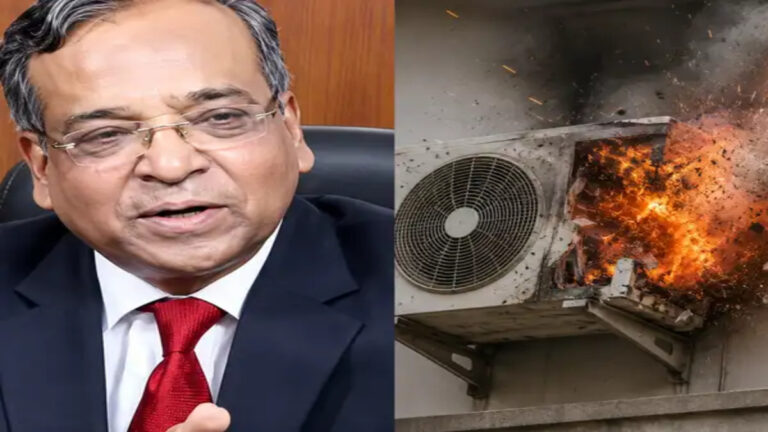
New Delhi, May 29, 2026: In a tragic incident that highlights growing concerns over household appliance safety during peak summer, Dhanendra Kumar, an 80-year-old retired Indian Administrative Service (IAS) officer and the prominent first chairman of the Competition Commission of India (CCI), lost his life after a devastating fire broke out at his south Delhi residence. The blaze, which tore through the ground floor of his three-storey home in the upscale Hauz Khas neighborhood, is heavily suspected to have been triggered by an explosion in an indoor air conditioning unit.

According to senior Delhi Police officials, the emergency call reporting the fire was received at the Hauz Khas police station at approximately 11:10 PM on Wednesday night. Fire services and local police units rushed to the scene immediately, deploying two fire tenders to battle the encroaching flames. At the time of the incident, five individuals—including Mr. Kumar, his wife, his son, and two domestic helpers—were inside the house.

High-Risk Midnight Rescue Efforts

As the fire broke out, dense smoke quickly enveloped the ground floor, cutting off easy exit routes. Domestic staff on the property immediately attempted to rescue the family members as the fire began to feed on wooden furniture, decorative elements, and structural fixtures, quickly sending toxic smoke billowing upward to the higher floors.

Firefighters and police teams pulled Mr. Kumar and his son from the burning building. Both were rushed to the nearby AIIMS Trauma Centre. While Mr. Kumar’s son sustained injuries, medical professionals confirmed he is stable and out of danger. However, despite the best efforts of the emergency medical team, the octogenarian former bureaucrat succumbed during treatment. Doctors stated that the primary cause of his death was severe smoke inhalation rather than thermal burns, a common and lethal consequence of modern residential fires where burning synthetic materials and wood release thick carbon monoxide.

Technical Investigation Focuses on Overheating

Forensic experts and electrical inspectors have been brought in to examine the remains of the ground-floor room where the fire originated. Initial inquiries strongly point to a sudden technical failure or a localized blast within the indoor unit of the air conditioner.

While a formal technical report is still awaited, investigators are closely analyzing two main possibilities: an electrical short-circuit or catastrophic overheating of the compressor system. Local authorities noted that the capital’s extreme summer heat frequently pushes power grids and household appliances beyond their intended limits.

Police officers involved in the case noted that running air-conditioning units uninterrupted for prolonged periods, especially at low temperature settings like 18°C, demands high energy consumption. This intense load can cause internal components to overheat, and if the electrical wiring or the unit’s internal circuitry is old or poorly maintained, it can rapidly spark a fire or lead to a pressurized component blowout. Statements from eyewitnesses and neighbors have been recorded, and Delhi Police have explicitly ruled out any foul play at this stage of the investigation.

A Distinguished Career in Public Service

The sudden passing of Dhanendra Kumar marks the end of a highly distinguished public service career spanning more than four decades. A member of the 1968 batch of the IAS from the Haryana cadre, Kumar was widely respected as one of India’s most capable and seasoned economic bureaucrats.

Throughout his career, he held several high-profile portfolios within both the central government and the Haryana state administration. He served with distinction as the Principal Secretary to the Chief Minister of Haryana, and later transitioned to critical roles at the national level, serving as the Union Secretary in the Ministry of Defence, the Ministry of Road Transport and Highways, and the Ministry of Culture.

Internationally, Kumar represented India on the global stage as the Executive Director at the World Bank from 2005 to 2009, representing a constituency that included India, Bangladesh, Sri Lanka, and Bhutan.

Perhaps his most enduring institutional legacy came in 2009, when he was appointed as the founding Chairman of the Competition Commission of India (CCI). As its first chief, Kumar was instrumental in breathing life into India’s modern competition law framework, shaping antitrust regulations, preventing monopolistic trade practices, and fostering a fair market environment during a period of rapid economic expansion. Following his formal retirement, he continued to actively advise on corporate governance and public policy, charting a legacy that heavily influenced India’s contemporary economic regulatory architecture.

Rising Seasonal Appliance Risks Highlighted

This tragic incident has reignited urgent conversations surrounding residential safety and appliance maintenance across urban India during the peak summer months. As temperatures routinely hit extreme highs, the reliance on air conditioners surges exponentially, causing massive spikes in power demand and stretching household electrical systems to their breaking points.

Safety experts warn that many residential properties feature outdated wiring systems that are not rated to handle the simultaneous power load of multiple modern high-tonnage appliances. Furthermore, the lack of periodic servicing for air conditioners—such as checking for proper refrigerant levels, cleaning clogged filters, and ensuring stable voltage connection lines—significantly increases the risks of mechanical malfunction.

The fire department has reiterated the necessity of giving appliances periodic operational rests, utilizing voltage stabilizers where power fluctuations are common, and ensuring that certified technicians review home wiring layouts to mitigate the threat of short-circuits. As the local community in Hauz Khas mourns the loss of a revered civil servant, the investigation remains ongoing to precisely trace the exact mechanical chain of events that turned a standard household convenience into a fatal hazard.

Kangana’s First Look in 26/11 Drama ‘Bharat Bhagya Vidhata’

0

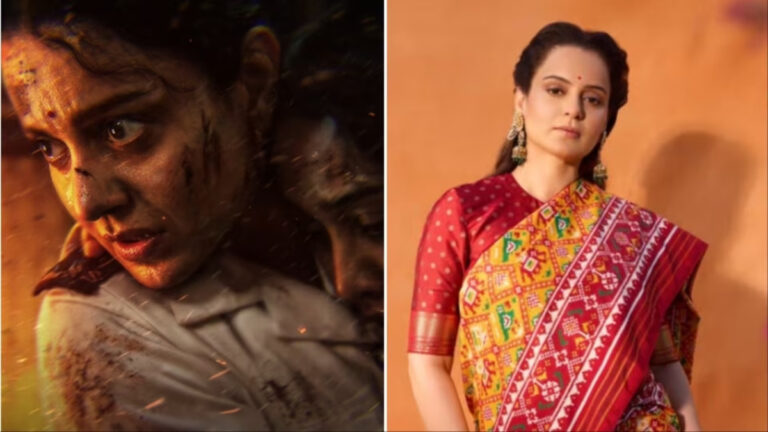
New Delhi, May 29, 2026 — Actor and politician Kangana Ranaut has officially unveiled the highly anticipated first look from her upcoming film, Bharat Bhagya Vidhata (also spelled Bharat Bhhagya Viddhaata). Stepping away from her recent grand historical and political avatars, Ranaut is set to portray an ordinary, real-life savior. She will play a dedicated nurse caught in the terrifying crossfire of the November 26, 2008 (26/11) Mumbai terror attacks.

The makers dropped a gripping motion poster titled “The Unseen Heroes.” It immediately caught the attention of fans and film critics alike, generating significant buzz across social media platforms.

A First Look Filled with Fire and Fortitude

The newly released motion poster offers a raw and intense glimpse into the film’s chaotic setting. Kangana Ranaut is seen dressed in a traditional nurse’s uniform, navigating a backdrop filled with thick smoke, flying ash, and roaring fire. Her face tells a story of survival—it is visibly bruised, smeared with soot, and marked with streaks of blood on her cheeks.

Despite the evident physical injuries, her eyes project a fierce determination as she actively guides a patient away from danger. Sharing the look on her Instagram handle, Ranaut paired the visual with a poetic and poignant caption honoring ordinary workers.

The Untold Story of Cama Hospital’s Resilient Staff

Directed and written by debutant Manoj Tapadia, Bharat Bhagya Vidhata is firmly rooted in real, historic events. While much of the media coverage around the 26/11 tragedies focused on the elite commandos and major landmarks like the Taj Mahal Palace Hotel, this project shines a bright light on a quieter pocket of incredible bravery: Mumbai’s Cama and Albless Hospital.

During the horrific 2008 siege, heavily armed terrorists entered the hospital grounds, tragically killing six security guards and injuring multiple staff members. In the midst of the sudden gunfire and panic, the hospital staff—including nurses, ward boys, cleaners, lift operators, and security personnel—refused to abandon their posts. Instead, they acted quickly to lock down buildings, block entrances, and shield the vulnerable. Through their quiet, collective coordination under immense pressure, they successfully protected and saved the lives of over 400 patients, including mothers and newborn infants.

Production and an Ensemble Cast

The film boasts a strong ensemble cast dedicated to bringing the reality of that fateful night to life. Alongside Ranaut, the movie features acclaimed actors such as Girija Oak, Smita Tambe, Amrutha Namdev, Esha Dey, Priya Berde, Asha Shelar, Suhita Thatte, Rasika Agashe, Aditya Mishra, and Zahid Khan.

The project is backed by a collaborative production effort involving heavyweights like Pen Studios (led by Dr. Jayantilal Gada), Manikarnika Films, Paramhans Creations, Eunoia Films LLP, and Floating Rocks Entertainment. Dr. Gada noted that the film reflects India’s core strength, which lies in its deep “empathy and collective compassion.” Director Manoj Tapadia echoed this sentiment, emphasizing that the narrative purposefully avoids focusing strictly on the violence of war. Instead, it centers entirely on “silent bravery”—how average citizens transformed into a human shield for others.

A High-Stakes Box Office Clash Awaits

The theatrical release for Bharat Bhagya Vidhata is locked in for June 12. However, the movie will not have a solo window at the box office. Film trade analysts are anticipating a very busy and competitive weekend, as Ranaut’s film is set to clash with three other distinct major Hindi releases arriving on the exact same date:

  • Main Vaapas Aaunga: A drama directed by the acclaimed filmmaker Imtiaz Ali.
  • Governor: The Silent Saviour: A gripping, performance-driven film starring veteran actor Manoj Bajpayee.
  • Haunted 3D: Echoes of the Past: A supernatural horror film directed by Vikram Bhatt.

This competitive environment makes the stakes incredibly high for Ranaut. Over the past few years, her mainstream Bollywood theatrical releases—including Tejas, Dhaakad, Thalaivii, and Chandramukhi 2—struggled to make a significant impact at the box office. With her last major undisputed commercial hit being Manikarnika: The Queen of Jhansi back in 2019, industry insiders are eager to see if this emotionally driven, true-event drama will mark a major cinematic comeback for the actor.

Fans React with High Expectations

The initial public reaction to “The Unseen Heroes” motion poster has been overwhelmingly positive. Fans have praised Ranaut for using her platform to highlight real-life figures who are often left out of history books. Social media comments flooded her profile, with users calling the look “intense” and expressing immense respect for the medical community.

By stepping into the shoes of a wounded but unyielding nurse, Ranaut looks poised to deliver a grounded, highly emotional performance that pays a long-overdue tribute to the frontline workers of Mumbai.

Father of Indian Student Stabbed in Canada After Extortion Refusal

0

New Delhi, May 29, 2026 — A horrifying act of violence in broad daylight has left an immigrant family deeply shaken and raised urgent questions regarding the safety of international students and their families in Canada. Tejinder Singh, a 57-year-old father visiting his daughter from India, became the victim of a brutal, unprovoked stabbing during a routine morning walk in Kelowna, British Columbia.

While initial reports left the community grasping for answers, recent updates point to a sinister backdrop of localized criminal elements. According to statements and community reports, the family believes the targeted aggression may be linked to a chilling reality: his daughter, an international student from India, had actively refused to comply with financial demands or extortion attempts from local street-level drug dealers.

The Morning Walk That Turned Into a Nightmare

The nightmare began on what should have been a peaceful morning. Tejinder Singh was walking north near the intersection of Highway 97 and Highway 33 in Kelowna—a prominent commercial and transit hub in the region. Singh, who was in Canada on a temporary visitor visa to spend quality time with his family, was enjoying a quiet stroll when a young man approached him.

The stranger attempted to strike up a conversation. Because Singh does not speak or understand English, he politely tried to dismiss the encounter.

Despite the clear communication barrier, the suspect persisted, attempting to speak to Singh a second time. Singh repeated his statement, and the young man seemingly turned and began walking away. Singh assumed the interaction had ended peacefully and turned to continue his walk.

Seconds later, Singh felt a massive, sudden impact in his upper back. The force was so immense that he initially believed he had merely been punched or shoved from behind by an angry stranger. It was only when he reached behind his back to touch the painful area that his hand came away drenched in deep red blood. The suspect had driven a blade into his back before fleeing the scene on foot.

A Desperate Plea for Help

Bleeding heavily and suffering from shock, Singh managed to maintain his footing. He desperately staggered toward a group of nearby construction and commercial workers, gesturing for assistance. The bystanders acted rapidly, administering basic first aid to stem the bleeding while dialling emergency services.

Paramedics arrived shortly after and rushed the 57-year-old to a local hospital. The weapon had narrowly missed vital organs, but the wound was deep and required intensive medical intervention. Singh spent nearly a week in the hospital undergoing treatment before doctors deemed him stable enough to be discharged. While his physical wounds are beginning to heal, the emotional trauma inflicted on Singh and his family remains raw.

The Investigation and the “Drug Dealer” Connection

The Royal Canadian Mounted Police (RCMP) in Kelowna immediately launched an active investigation. Law enforcement personnel have been canvassing the neighborhood, pulling closed-circuit television (CCTV) footage, and interviewing witnesses to identify the attacker. As of late May 2026, no arrests have been made, and the suspect remains at large.

However, it is the developing motive that has sent shockwaves through the local South Asian diaspora. Emerging reports indicate that the unprovoked attack on the father may not have been an entirely random act of street violence. Instead, information circulating from the family’s network suggests a retaliatory attack. Singh’s daughter, an international student navigating the high costs of living and studying in Canada, had allegedly been approached or harassed by local drug elements demanding money.

In many mid-sized Canadian cities, international students have increasingly reported being targeted by local gang affiliates or low-level drug dealers running “dial-a-dope” operations. These criminal networks often use intimidation tactics, extortion, or fraudulent schemes to exploit vulnerable students who are isolated from their traditional support systems. According to community insiders, the student’s firm refusal to pay off these predatory elements or get entangled in their monetary demands directly preceded the violent ambush on her visiting father.

A Community Gripped by Fear

The incident has highlighted a growing undercurrent of anxiety regarding the safety of international students in Canada. Over the last few years, a massive influx of students from India—particularly from Punjab and Gujarat—have migrated to Canadian provinces seeking higher education and better opportunities. However, they increasingly find themselves facing harsh economic pressures, housing crises, and occasionally, local criminal networks looking to exploit them.

For Manvir Sandhu and her family, the attack has entirely stripped away their sense of security. Going for a simple walk in the neighborhood now feels like an existential risk.

Local advocacy groups for international students have called upon the British Columbia provincial government and local law enforcement to take stronger measures against street-level extortion and violence. They argue that immigration status and language barriers often prevent victims from reporting harassment early on, allowing criminal elements to grow bolder.

Next Steps and Warnings

The Kelowna RCMP continues to urge anyone who was driving near Highway 97 and Highway 33 on the morning of the attack, or anyone who possesses dashcam footage from the area, to come forward immediately.

For now, the family remains locked inside their home, nursing an injured father whose long-awaited vacation turned into a bloody brush with death, and worrying about a suspect who is still walking the streets.

Siddaramaiah Meets Gandhis; Mega Karnataka Reshuffle Next

0

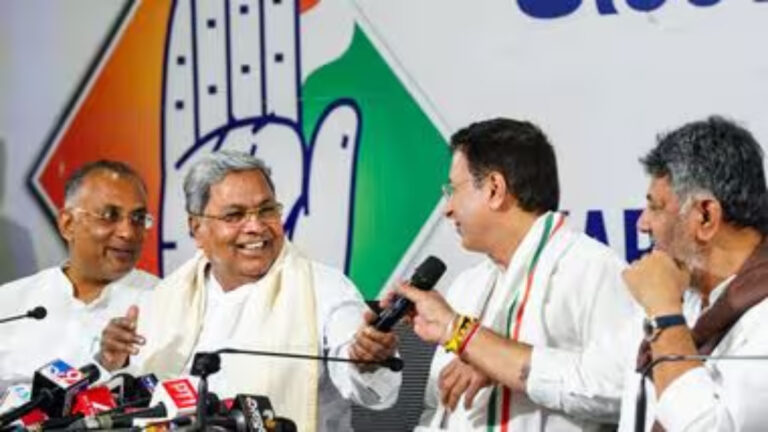
New Delhi, May 29, 2026: In a move that marks a massive political shift in Karnataka, veteran Congress leader Siddaramaiah arrived at 10, Janpath in New Delhi on Friday morning. The visit came less than twenty-four hours after his high-profile resignation as Chief Minister. Accompanied by his son, Yathindra, and Congress General Secretary Randeep Singh Surjewala, Siddaramaiah held detailed discussions with Congress Parliamentary Party chairperson Sonia Gandhi and senior leader Rahul Gandhi. The high-stakes meeting was framed not as a rebellion, but as a deliberate transition of power.

The atmosphere around the meeting was a blend of gratitude and hard political bargaining. Siddaramaiah used the opportunity to formally thank Sonia Gandhi for her long-standing trust, dating back to 2006 when he broke away from the Janata Dal (Secular) to join the Congress rank and file. However, sentiment quickly gave way to strategy. The central talking points of the meeting focused entirely on managing the fallout of his exit, securing the political future of his loyalists, and outlining an extensive cabinet reshuffle that will fundamentally alter the state’s governance.

Deciphering the Resignation: Why Now?

Siddaramaiah’s resignation on Thursday afternoon concluded a quiet but intense multi-year internal power struggle within the Karnataka Congress. Since the party’s landslide victory in May 2023, rumors of a mid-term leadership pact between Siddaramaiah and his powerful deputy, D.K. Shivakumar, had consistently hovered over the state. By stepping down now, Siddaramaiah honored an organizational understanding brokered by the Congress high command, a move the party publicly praised as “selfless.”

Timing played an essential role in this transition. With the next Assembly elections scheduled for 2028, the party leadership recognized that the 78-year-old veteran would be past 80 by the time the state votes next. Passing the baton to a younger leader gives the next administration adequate runway to stabilize. Furthermore, upcoming local body elections for five major municipal corporations under the Greater Bengaluru Authority (GBA) mean the party needs a highly mobilized organizational machine—a specialty associated with D.K. Shivakumar.

The Cabinet Reshuffle and Balancing the Power Scales

Because the resignation of a Chief Minister legally dissolves the entire Council of Ministers, the state government must be completely reconstructed. This reality has thrown open the gates for a sweeping cabinet reshuffle, which served as the primary agenda item during Siddaramaiah’s Delhi visit. The outgoing Chief Minister is working hard to ensure his camp does not lose its influence under the incoming administration.

The high command is walking a tightrope. To maintain political stability and avoid creating a disgruntled alternative power center around Siddaramaiah, the party must give his camp an equitable share of power. Reports suggest that several low-performing ministers from the outgoing cabinet will likely be dropped to make way for fresh faces, while up to four Deputy Chief Ministers could be appointed to maintain a delicate social equilibrium.

Staying Back in Karnataka: Declining the Center

One of the most defining aspects of Siddaramaiah’s post-resignation strategy is his absolute refusal to step away from state politics. The Congress high command initially offered him a prestigious Rajya Sabha seat and a prominent organizational role in New Delhi to facilitate a clean break. However, the veteran leader firmly declined the offer.

Siddaramaiah has made it clear to both Rahul Gandhi and Congress President Mallikarjun Kharge—whom he met later on Friday—that his heart remains in Karnataka. By choosing to stay in Bengaluru as a legislator, he ensures that his immense political clout remains a factor on the ground. While this guarantees that his massive voter base stays tethered to the party, it also introduces a delicate challenge for his successor, who will have to govern under the watchful eye of one of the state’s most formidable political operators.

Looking Ahead: D.K. Shivakumar’s Big Moment

As Siddaramaiah finalized his exit strategy with the Gandhis, his long-time rival and current Deputy Chief Minister, D.K. Shivakumar, traveled separately to Delhi. Shivakumar is widely expected to succeed Siddaramaiah as the next Chief Minister of Karnataka. Known as the party’s ultimate troubleshooter, Shivakumar is scheduled to hold distinct, intense negotiations with Congress General Secretary (Organisation) K.C. Venugopal to finalize the blueprint of his new government.

The transition marks a classic changing of the guard in southern politics. While Siddaramaiah built his legacy as a mass leader representing backward communities, Shivakumar brings unmatched organizational skill, financial muscle, and deep support from the influential Vokkaliga community.

However, Karnataka’s political history shows that mid-term leadership changes are historically difficult to manage. Only three Chief Ministers in the state’s history have ever completed a full five-year term. The Congress high command has managed a smooth and remarkably civil handover on paper, symbolized by images of the two leaders embracing before Siddaramaiah left office. The true test of this transition will unfold over the coming weeks, as the party attempts to announce a reshuffled cabinet that satisfies both factions without fracturing the unity that brought them to power.

Ankita Lokhande Trolled for Wearing Hijab During Abu Dhabi Vacation

New Delhi, May 29, 2026: Popular television and Bollywood actress Ankita Lokhande has found herself at the center of a heated social media controversy. The Pavitra Rishta star, who is currently holidaying in the United Arab Emirates (UAE) with her businessman husband Vicky Jain, faced severe backlash from a section of netizens after sharing pictures of herself wearing a hijab during a visit to a prominent mosque in Abu Dhabi.

The couple, who are currently participating in the popular entertainment show Laughter Chefs, recently took some time off from their busy schedules for a scenic getaway to Dubai and Abu Dhabi. While Ankita shared several cheerful glimpses of their travels, it was her attire at the religious site that rapidly sparked debate across digital platforms, dividing internet users into opposing factions.

A Scenic Vacation Turns Contentious

Ankita Lokhande, always active on Instagram, uploaded a beautifully curated transition video and a photo carousel documenting her time in Abu Dhabi. Her post was accompanied by a warm and casual caption.

The visual collection showcased the couple exploring various landmarks, including Warner Bros. World, and capturing romantic moments together. However, the controversy broke out over images taken at a renowned Abu Dhabi mosque. To respect the traditional guidelines of the religious site, Ankita covered her head with a traditional black headscarf, pairing the hijab with a casual jeans and t-shirt ensemble. Vicky Jain was also seen alongside her in the photographs, posing inside the majestic architectural premises.

Within minutes of the post going live, the comment section became flooded with critical remarks. A significant portion of the backlash originated from users questioning her choice of attire based on her religious identity, with several comments demanding to know why she felt the need to wear a hijab. Others expressed discomfort over a perceived shift in her presentation, particularly given her prominent roots in the industry as a Maharashtrian actress.

The Contrast With Recent “Gau Seva”

What intensified the public scrutiny was the stark contrast internet users drew with the couple’s activities just a few days prior to their vacation. Before jetting off to the UAE, Ankita and Vicky had visited spiritual leader Sri Sri Ravi Shankar’s Sri Sri Gaushala ashram.

During that visit, the couple shared videos of themselves participating in traditional rituals and “Gau Seva” (serving and feeding cows). At the time, fans and followers widely praised Ankita for promoting traditional values and expressing deep reverence for Sanatan Dharma.

Because of this recent public appearance, conservative sections of the internet reacted sharply to her mosque visit. Trolls accused the actress of altering her stances too quickly, with some comments accusing her of superficial secularism. Netizens left pointed remarks asking why Hindu public figures often adapt to cultural norms abroad while claiming alternative values at home, creating a massive digital debate over religious expressions and personal freedom.

Fans and Defenders Step In

Despite the heavy wave of trolling, Ankita’s loyal fanbase and fair-minded netizens quickly stepped forward to defend her actions. Many users pointed out that her choice of clothing was not a religious conversion or a statement of faith, but a simple adherence to the strict dress codes mandatory for all tourists entering mosques in Islamic countries.

Defenders noted that historical and religious monuments worldwide maintain decorum guidelines that visitors must respect regardless of their personal faith. To support this point, fans highlighted that in the very same post, Ankita had shared separate photos outside the mosque where she did not wear the headscarf, proving that the clothing was entirely situational.

Other internet users drawing parallels added that dressing modestly or covering one’s head is a practice commonly shared across multiple religious structures in India as well, including temples and gurudwaras. For many, Ankita’s decision was viewed as a mature mark of respect toward local global cultures rather than a controversial act.

A History of Clothing-Related Trolling

This is notably not the first time Ankita Lokhande has faced the wrath of online moral policing regarding cultural aesthetics. In late 2025, the actress faced a similar wave of social media criticism after she was spotted by paparazzi at the Mumbai airport wearing a headscarf and politely greeting onlookers with a traditional “Adaab.” At that time, social media users had raised similar questions regarding her cultural representation.

Celebrities frequently navigate a razor-thin line on social media, where personal holiday choices are routinely scrutinized through a socio-political lens. As of now, neither Ankita Lokhande nor Vicky Jain has issued an official statement or responded directly to the ongoing trolling on their profiles. The actress continues to keep the photos on her feed, prioritizing her vacation memories over the digital noise.

On the professional front, Ankita’s popularity remains exceptionally high. After a highly discussed stint on Bigg Boss 17 and reality shows like Smart Jodi, she and Vicky are currently winning hearts with their comedic timing and lighthearted chemistry on Laughter Chefs, proving that despite the occasional internet storm, their screen presence continues to engage millions.

IPL 2026: What Happens if GT vs RR Qualifier 2 Is Washed Out?

0

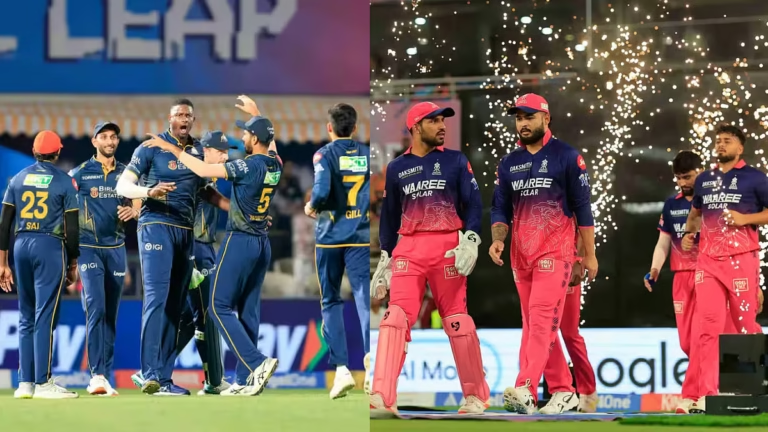
New Delhi, May 29, 2026 — The stage is set for a massive, high-stakes showdown at the Maharaja Yadavindra Singh International Cricket Stadium in Mullanpur, New Chandigarh. Today, Friday, May 29, 2026, the Gujarat Titans (GT) are scheduled to lock horns with the Rajasthan Royals (RR) in Qualifier 2 of the Indian Premier League (IPL) 2026. The ultimate prize? A coveted spot in the grand finale against the already-qualified Royal Challengers Bengaluru (RCB) at the Narendra Modi Stadium in Ahmedabad.

However, with unpredictable weather patterns frequently threatening cricket matches across the country this season, a burning question has captured the minds of fans and franchise owners alike: What happens if heavy rain completely washes out Qualifier 2?

For Rajasthan Royals, the answer to that question is quite grim, while the Gujarat Titans might breathe a quiet sigh of relief. Here is a breakdown of the official Board of Control for Cricket in India (BCCI) playoff rules, the hidden advantage of the league-stage points table, and why one team holds all the cards without even swinging a bat.

The Harsh Reality: No Reserve Day for Qualifier 2

When the BCCI outlined the playing conditions for the IPL 2026 postseason, they made a clear and structural distinction between the preliminary playoff matches and the grand finale. While the final match scheduled for Sunday, May 31, has a designated Reserve Day to combat weather disruptions, there is absolutely no Reserve Day allocated for Qualifier 1, the Eliminator, or Qualifier 2.

Because the schedule is packed tightly ahead of the final, the entire outcome of Qualifier 2 must be decided tonight. If nature opens the floodgates and a full 20-over match becomes an impossibility, match officials will be forced to look at alternative, shortened options before pulling the plug.

Step-by-Step Back-Up Rules: How Officials Will Try to Save the Game

Before declaring a total washout, the on-field umpires and ground staff will exhaust every single technical avenue available to ensure that cricket determines the winner rather than weather paperwork. The tournament organizers have laid out a strict hierarchy of contingency plans that will be implemented in a race against the clock:

  • The 120-Minute Extra Window: To accommodate weather delays or lengthy ground drying procedures, an extra two hours (120 minutes) of cut-off time has been added to the match day. This gives the ground staff maximum flexibility to prepare the outfield.
  • The Five-Over Sprintfest: If the clock ticks down and a full game cannot be played, the umpires will cut overs dramatically. The minimum requirement for a valid, completed cricket match in the IPL playoffs is a five-overs-per-side game.
  • The Midnight Super Over: If the rain clears up incredibly late and the ground is deemed safe, but there isn’t even enough time to bowl ten total overs, the rulebook allows the entire fixture to be condensed into a single, standalone Super Over. If the pitch can be prepared for just two overs of explosive action before the ultimate cut-off time, a Super Over will decide who advances to the final.

The Ultimate Washout Scenario: League Standings Decide the Finalist

If the rain is relentless and the outfield remains waterlogged—meaning not even a single ball of a Super Over can be bowled—the match will be officially abandoned as a washout.

In the event of a total abandonment, the IPL rules state that the team that finished higher on the official points table at the end of the 14-match league stage will automatically advance to the final.

When we look back at how the league stage unfolded over the last two months, this rule directly penalizes the late-surging Rajasthan Royals and richly rewards the consistent regular season engineered by Shubman Gill’s Gujarat Titans.

As shown in the standings, the Gujarat Titans enjoyed a stellar league campaign, finishing comfortably in second place with 18 points. This high finish initially earned them a double-chance safety net. Even though they lost Qualifier 1 to a dominant Royal Challengers Bengaluru squad in Dharamshala a few days ago, their regular-season excellence shields them here.

On the other side of the boundary, Sanju Samson’s Rajasthan Royals had to take the hard road. After finishing fourth on the table with 16 points, they had to fight for their lives in the Eliminator, where they put up a masterful performance to eliminate Sunrisers Hyderabad. However, because they sit two points behind GT in the structural standings, a washout would instantly break the hearts of the pink army. Rajasthan would be knocked out of the tournament without ever getting a chance to fight on the field in Mullanpur.

What to Expect and Current Weather Update

Thankfully for the fans packed into the New Chandigarh stadium and the millions watching at home, the immediate weather forecast offers a glimmer of hope. While early evening cloud cover is expected, meteorologists indicate that extreme, match-canceling downpours are unlikely to persist through the entire night, despite a scorching and unpredictable summer season.

For Rajasthan Royals, the equation is simple: they desperately need the rain to stay away so they can win a standard cricket match on the field. For the Gujarat Titans, while they would prefer to enter the finals on the back of a resounding, morale-boosting victory, the rulebook provides them with the ultimate peace of mind.

If the skies break open and the rain refuses to stop, the hard work Gujarat put in during April and May will pay off in the most dramatic way possible—sending them straight to Ahmedabad for a shot at the IPL 2026 trophy.

Chandrayaan-2 Radar Finds Deep Ice Hidden at Moon South Pole

0

New Delhi, May 29, 2026: Nearly six years after its launch, India’s second lunar mission, Chandrayaan-2, has achieved a monumental breakthrough that could reshape the future of international space exploration. While the mission’s robotic lander, Vikram, suffered a tragic crash landing on the lunar surface in September 2019, its trailing companion—the Chandrayaan-2 orbiter—remained perfectly healthy and operational in a circular polar orbit.

Scientists from the Physical Research Laboratory (PRL) in Ahmedabad, working in coordination with the Indian Space Research Organisation (ISRO), have published a definitive study confirming strong evidence of hidden water ice buried beneath the surface of the Moon’s South Polar Region. The landmark discovery, published in the prestigious Nature portfolio journal npj Space Exploration, marks a major leap forward in our understanding of lunar resources and provides vital data for establishing permanent human bases on the Moon.

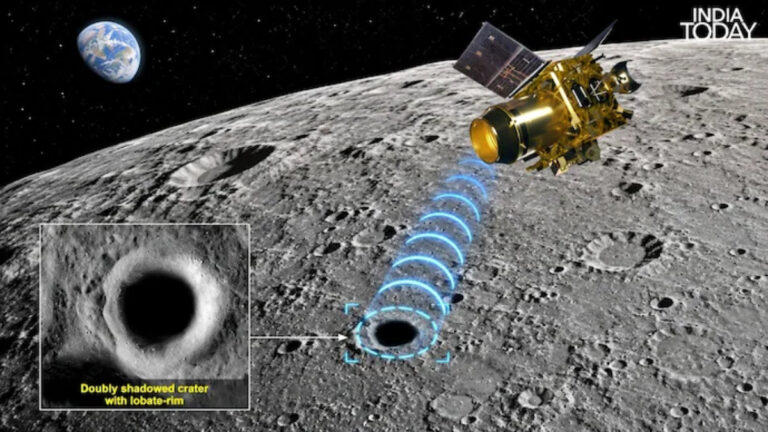
Exploring the Deepest Darkness: “Doubly Shadowed” Craters

The breakthrough focuses on some of the most hostile, extreme, and dark environments in the entire solar system: Permanently Shadowed Regions (PSRs) at the lunar south pole. Because the Moon is only slightly tilted relative to the sun, the deep floors of certain polar craters never receive a single ray of direct sunlight.

Because these regions have remained frozen in absolute darkness for billions of years, scientists have long suspected them to be the ultimate celestial refrigerators—capable of trapping and preserving volatile compounds like water ice over vast geological timescales. Finding concrete proof, however, required peering through the pitch-black darkness without relying on visual cameras.

The Technology Behind the Discovery

To see into these abysses, scientists bypassed traditional photography entirely and relied on the orbiter’s crown jewel: the Dual Frequency Synthetic Aperture Radar (DFSAR). The DFSAR is a highly sophisticated microwave imaging instrument that operates across L- and S-band radio frequencies. Crucially, it stands as the first fully-polarimetric radar ever sent to map the Moon.

Instead of needing light, the radar fires specialized microwave signals directly into the dark craters and meticulously reads how those signals bounce back to the orbiter. When radar waves hit ordinary, dry lunar dust and jagged rocks, they bounce back scattered in a specific, predictable pattern. However, when those waves encounter solid water ice buried beneath the dirt, they experience “volumetric scattering,” meaning the signals bend and bounce around inside the ice layer before reflecting back in a completely different arrangement.

To ensure they weren’t accidentally misidentifying rough rocky terrain as ice, the PRL research team established a strict, refined radar metric. They calculated two critical polarimetric parameters:

  • Circular Polarization Ratio (CPR): Values had to be greater than 1.
  • Degree of Polarization (DOP): Values had to drop lower than 0.13.

The DOP essentially measures how much of the bounced radar signal manages to hold onto its original structural state. When the radar signals encountered these specific boundaries, it provided an unmistakable, definitive signature of subsurface water ice, separating genuine ice deposits from false alarms caused by rough boulders.

The 1.1-Kilometer Smoking Gun

Out of nine primary target craters analyzed in the South Polar Region, the advanced radar signatures confirmed the presence of buried ice beneath the floors of four specific doubly shadowed craters. One particular crater emerged as the undisputed “smoking gun” of the study.

Nestled inside the expansive and ancient Faustini crater, scientists isolated a smaller, unnamed crater measuring roughly 1.1 kilometers in diameter. Not only did this mini-crater exhibit the exact high-CPR and low-DOP radar data required to prove the existence of ice, but it also revealed a fascinating physical characteristic known as lobate-rim morphology.

A lobate rim describes a unique, flow-like or petal-shaped outline around the edge of a crater. In planetary geology, this occurs when a stray meteorite slams into a surface that contains a dense underground layer of ice. The sheer kinetic energy of the crash briefly melts or destabilizes the frozen subsurface, causing the slushy material to ooze outward like thick mud before instantly flash-freezing back into place in the vacuum of space. This visual blueprint, combined with the matching radar readouts, leaves little doubt that a rich reservoir of ice lies just inches beneath the lunar dust.

Why the Discovery Changes the New Space Race

The confirmation of subsurface water ice completely alters the economics and strategy of deep space exploration. Water is incredibly heavy and expensive to launch out of Earth’s steep gravity well. Shipping enough water to support a long-term colony would cost billions of dollars and consume massive amounts of rocket payload capacity.

By mapping localized, accessible ice deposits that can be mined directly from the lunar crust—a concept known as In-Situ Resource Utilization (ISRU)—future astronauts can theoretically live off the land.

With lunar ice processed into fuel, the Moon transforms from a barren destination into a cosmic “gas station.” Spacecraft will be able to launch light from Earth, land on the Moon to fill up their fuel tanks with lunar-derived hydrogen and oxygen, and blast off toward Mars or the outer solar system at a fraction of the current cost.

Conclusion: A Triumph of Longevity

This major breakthrough cements India’s place as an indispensable pioneer in the global lunar race. While international space agencies—including NASA with its Artemis program, China, and Russia—are actively racing to stake claims and plot landing zones around the highly coveted south pole, they will be relying heavily on the map provided by India’s aging but brilliant orbiter.

The Chandrayaan-2 mission has proven that a partial setback on the surface does not mean defeat. By turning a localized engineering tragedy into a multi-year masterclass in orbital science, ISRO has given humanity the keys to unlocking the Moon’s deepest secrets, paving a clear path forward for the next generation of space explorers.

For a detailed visual breakdown of how India detected this ice, you can watch this Chandrayaan-2 Lunar Ice Analysis which provides an insightful look into the radar data and the global implications for the south pole space race.

Fact Check: Did Italian PM Meloni Unfollow Modi Over ‘Melody’ Video?

0

New Delhi, May 28, 2026: In the age of digital-first diplomacy, a single click on a smartphone can trigger a global media frenzy. Recently, social media platforms erupted with a sensational claim: Italian Prime Minister Giorgia Meloni had abruptly “unfollowed” Indian Prime Minister Narendra Modi on Instagram. The rumor spread like wildfire, capturing the attention of millions of internet users, sparking endless political debates, and generating countless memes. This digital meltdown came right on the heels of a highly publicized, warm bilateral meeting between the two leaders in Rome, where PM Modi even gifted Meloni a packet of iconic Indian “Melody” toffees.

Given the massive public interest and the sheer volume of speculative reports floating across the internet, it is time to cut through the digital noise. Did Giorgia Meloni actually unfollow PM Modi, or is this entire episode a classic case of social media misinformation? Here is an in-depth, updated look at the absolute truth behind the viral controversy.

The Origin of the Meltdown: From ‘Melody’ Toffees to a Digital Storm

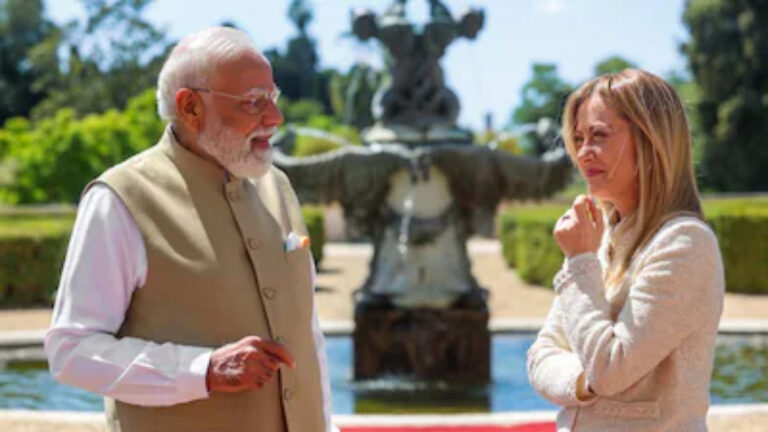
The backdrop to this internet drama was anything but hostile. PM Modi recently concluded a high-profile visit to Italy as part of a five-nation tour. During his time in Rome, the diplomatic engagement took an incredibly light-hearted and viral turn. In a nod to the wildly popular internet moniker “Melodi” (a blend of Meloni and Modi created by netizens), PM Modi presented the Italian Prime Minister with a packet of Parle’s Melody toffees near the historic Colosseum.

Meloni enthusiastically leaned into the joke. She posted a cheerful video reel on her official Instagram and X accounts, showing off the gift and playfully quoting the iconic Indian advertising slogan, stating that Prime Minister Modi had brought her a “very, very good toffee—Melody.”

The video instantly exploded online, gaining millions of views within hours. It triggered an unprecedented surge in real-world demand, causing Melody toffees to go completely “out of stock” on Indian quick-commerce apps like Blinkit and Zepto. Even the Indian stock market felt a minor tremor, as eager retail investors accidentally pumped money into unrelated stocks due to the viral hype.

However, within forty-eight hours, the internet’s celebratory mood took a sharp U-turn. Rumors began circulating on X (formerly Twitter) and YouTube that Meloni had suddenly removed PM Modi from her Instagram “Following” list. In an era where a digital unfollow is interpreted as the ultimate sign of a personal or diplomatic rift, mainstream commentators and casual users alike began speculating whether the “Melodi” friendship had suffered a sudden, dramatic collapse.

Fact-Check: Did Meloni Actually Unfollow PM Modi?

To understand the truth, we must look closely at how these global leaders manage their digital footprints. When the rumor hit its peak, digital sleuths and fact-checkers immediately went to work, analyzing the official Instagram handles of both prime ministers.

The investigation revealed a crucial piece of evidence that completely dismantles the viral controversy: Italian PM Giorgia Meloni was never following PM Narendra Modi’s official handle on Instagram in the first place.

On Instagram, Giorgia Meloni maintains a highly curated account with over 3.3 million followers, but she follows fewer than a hundred specific accounts—mostly consisting of Italian government officials, local political party accounts, and domestic institutional pages. While she has frequently tagged PM Modi in her posts, uploaded joint selfies, and interacted with his content, she had never officially hit the “Follow” button on his Instagram profile.

Therefore, the narrative that she actively “unfollowed” him following a disagreement or a change of heart is entirely fabricated. You cannot unfollow an account you were never following to begin with. The entire “meltdown” was built on a false premise, weaponized by internet users who mistook her standard following list for a sudden diplomatic snub.

Understanding the Tech Side: Why Modi Doesn’t Follow Back Either

On the other side of the digital equation, Prime Minister Narendra Modi commands one of the largest social media audiences in the world. On Instagram, his follower count recently crossed the massive milestone of 100 million (10 crore) followers, making him the most-followed world leader on the platform.

Despite his massive reach, PM Modi’s Instagram strategy follows a very strict protocol: he follows exactly zero accounts. A quick glance at his official profile shows that his “Following” count stands firmly at zero. He does not follow foreign heads of state, Indian cabinet ministers, or official government portals on this specific platform.

Because neither leader formally follows the other on Instagram as part of their standard social media policy, looking at their “Following” tabs to judge the health of India-Italy relations is fundamentally flawed.

The Illusion of “Reel Diplomacy”

This entire episode highlights a fascinating modern phenomenon: the “reelification” of international relations. Today, complex foreign policy, trade agreements, and defense pacts are often reduced to short-form video clips, background music, and parasocial dynamics engineered by algorithms.

While the internet was obsessing over Instagram follower lists and chocolate boxes, the actual diplomatic achievements of the Rome summit were highly substantial. During the visit, India and Italy officially agreed to elevate their bilateral ties to a Special Strategic Partnership.

The Final Verdict: Safe and Sound

The widespread rumors suggesting a social media fallout between Italian PM Giorgia Meloni and Indian PM Narendra Modi are entirely false and baseless. The narrative was born out of a misunderstanding of how world leaders manage their official social media curation.

Far from a digital cold war, the personal rapport and strategic alliance between the two leaders remain robust. The viral “Melodi” trend continues to be a potent tool for soft-power diplomacy, proving that while rumors can travel halfway around the world before the truth can put its boots on, a solid strategic partnership isn’t easily shaken by an internet hoax.