Home Blog Page 42

Blast Day 2 Box Office: Arjun Sarja Actioner Surges with ₹5.95 Cr Worldwide

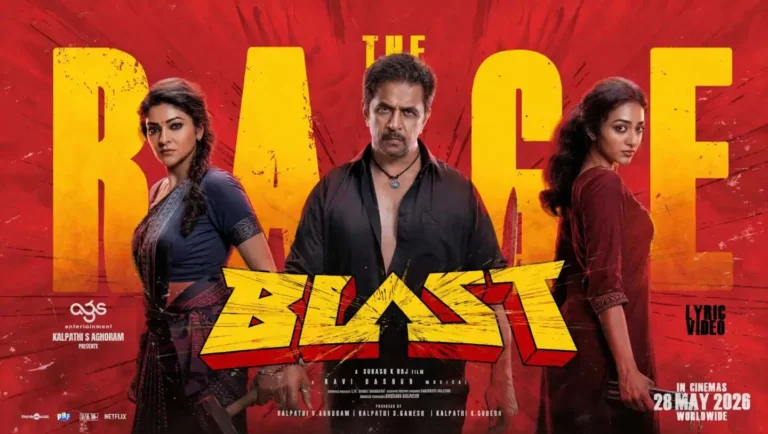
New Delhi, May 30, 2026: The action-packed martial arts family entertainer Blast, starring the “Action King” Arjun Sarja, has witnessed an impressive surge in momentum. Following its theatrical debut, the film has capitalized on strong word-of-mouth and solid critical reception, triggering a massive wave of footfalls during its second day across cinema halls.

Box Office Growth and Net Earnings

The domestic box office numbers indicate that Blast enjoyed a substantial 56% growth on its second day. After hitting screens with a reliable opening day net collection of ₹1.25 crore, the film drew major numbers on Friday, bringing in ₹1.95 crore net in India. This upward trajectory pushes its total two-day India net collection to ₹3.20 crore, while the overall India gross collection has comfortably scaled past ₹3.67 crore.

Industry insiders highlight that total global cumulative numbers and gross revenue streams are steadily inching toward the ₹5.95 crore milestone worldwide.

The positive shift in box office tracking can be heavily attributed to an expansion in show listings. Responding to heightened demand, distributors successfully pushed theater listings from 1,728 screenings on Day 1 to 1,889 shows on Day 2.

Regional Performance and Language Breakdown

The home territory of Tamil Nadu naturally spearheads the commercial success of the project, though neighboring states are showing steady interest.

  • Tamil Version: The original Tamil release took the absolute lion’s share of the profit. It brought in ₹1.60 crore net on its second day alone, averaging an impressive 35% occupancy rate across 1,167 localized screenings.
  • Telugu Version: Dubbed tracking across Andhra Pradesh and Telangana contributed an additional ₹35 lakhs net from 722 shows.
  • Other Key Territories: Outside the primary sectors, steady collections trickled in from urban centers in Karnataka and Kerala, providing key financial reinforcement to the film’s regional footprint.

Dynamic Occupancy Shifts

Audiences responded remarkably well to the evening and night showcases. While morning shows started slow with a conservative 15.69% occupancy, afternoon slots quickly rallied to 36.08%.

The momentum peaked drastically after sunset: evening shows boasted 46.15% occupancy, while night screenings reached a striking 59.62% occupancy. This progression indicates that family audiences and working professionals are choosing the project as their weekend entertainer of choice.

Cast Performances and Directorial Impact

Marking the directorial debut of Subash K. Raj, Blast follows a tight-knit middle-class family of karate practitioners—Rajaraman (Arjun Sarja), his wife Neelaveni (Abhirami), and their daughter Nila (Preity Mukhundhan). Their world gets upended when they collide with a hostile corporate gang led by Varun Dayalan (John Kokken) and a cold-blooded assassin named Abraham (Arjun Chidambaram).

Critics and viewers have highlighted that the film’s strength lies in its refreshing subversion of typical action tropes. While Arjun Sarja delivers his trademark commanding screen presence, a large share of the praise has shifted to the women of the film.

Backing up the visuals is a thunderous background score by composer Ravi Basrur in his highly anticipated Tamil cinema debut, giving the movie an energetic pulse that hits every five to ten minutes.

The Road Ahead: Overcoming Direct Competition

While the second-day surge breathes massive confidence into the crew at AGS Entertainment, Blast is navigating a highly competitive theatrical landscape. The movie is sharing a crowded marquee with Suriya’s critically acclaimed powerhouse Karuppu, which continues to dominate screens even in its third week.

Despite going head-to-head with an established box office juggernaut, Blast has successfully carved out its own space. Outperforming Arjun Sarja’s previous recent releases, the movie is positioned uniquely as a clean, action-heavy family outing. With the primary weekend days of Saturday and Sunday fully underway, trade analysts expect the occupancy rates to scale even higher, paving the way for a highly profitable extended first-week run.


Divyanka Tripathi Pre-Delivery Anxiety: “It Feels Like an Exam”


New Delhi, May 30, 2026: Television’s beloved couple, Divyanka Tripathi Dahiya and Vivek Dahiya, recently stepped into the most beautiful chapter of their lives by welcoming twin baby boys. While the couple has been over the moon since the arrival of their newborns, a newly released delivery-day video vlog has given fans an intimate, raw, and highly relatable look at the intense emotional rollercoaster the actress went through just hours before entering the operating theater.

In a deeply candid moment captured on camera inside the hospital room, Divyanka confessed to experiencing severe pre-delivery anxiety and physical discomfort. Comparing the impending childbirth to a high-stakes examination, she admitted that despite all the preparation, the anticipation of motherhood felt overwhelmingly tense, capturing the exact blend of nervousness and excitement that many expecting mothers face.

From Home to Hospital: The Delivery Day Vlog

The couple, widely known as “Divek” by their massive fandom, documented their journey from their Mumbai residence to the hospital in a newly uploaded vlog on their YouTube channel. The footage captures the final countdown to their parenthood journey, tracking the couple’s shifting emotions as the reality of welcoming two babies set in.

Upon arriving at the hospital, Divyanka’s immediate priority was managing her physical uneasiness. She openly shared her discomfort with the camera, explaining that she needed to change into a loose, comfortable nightgown to better cope with the physical strain of carrying twins late into her third trimester.

The physical challenge became even more evident as the medical staff began monitoring the infants. To keep track of the babies’ health, the attending nurse hooked Divyanka up to a fetal monitor to chart their heartbeats and active movements. As the machine emitted rhythmic thumping sounds, Vivek and the medical staff playfully joked that the synchronized heartbeats of the twin boys sounded like a galloping horse. While the lighthearted moment brought brief smiles to the room, the underlying reality of the major surgical procedure ahead kept Divyanka highly alert and visibly anxious.

“Lekin Ye Exam Jaisa Hai”: Coping with Late-Stage Anxiety

The true depth of the actor’s vulnerability came to light when the camera focused closely on her as she rested on the hospital bed. Divyanka revealed that she had been given a monitoring tool and was instructed by the medical team to meticulously track the movements of both babies alongside their heartbeats. For an expecting mother of twins, this responsibility brought a significant psychological weight.

Divyanka also pointed out that she was experiencing noticeable difficulty in breathing. The breathlessness was primarily driven by the specific, rigid position she was required to maintain on the bed so that the medical equipment could accurately read the vitals of both babies simultaneously.

The preparation for the delivery had actually commenced the previous night, long before her scheduled morning operation. Because her surgery was lined up early in the morning, hospital protocols required early monitoring, leaving her with minimal rest and an extended window of time to think about the upcoming procedure. Beyond the clinical environment, Divyanka expressed a deep longing for the comforting presence of her family members, who were en route to the hospital. She admitted that seeing her loved ones before heading into the operation theater would give her the psychological anchor she desperately needed, stating that once she saw everyone, she would find a sense of calm amidst her current worries.

The Joyous Arrival: “Mere Karan Arjun Aa Gaye!”

Despite the intense anxiety and physical distress detailed in the vlog, the story culminated in absolute celebration. On Tuesday, May 26, 2026, Divyanka and Vivek officially announced the successful birth of their healthy twin boys through a heartwarming joint post on Instagram.

In the caption of the announcement, which featured an adorable creative graphic of two infants clad in blue outfits, Vivek Dahiya shared his absolute delight. He wrote that the long wait was finally over, adding that life already felt infinitely more beautiful than they had ever imagined. Injecting a bit of classic Bollywood humor into the momentous occasion, Vivek joyfully quoted an iconic cinematic line, proclaiming, “Mere Karan Arjun aa gaye!” He concluded the announcement by asking fans, well-wishers, and industry peers for their continuous love and blessings as they navigate this brand-new parenting phase.

The announcement triggered an immediate wave of celebrations across the television and film industries. Prominent celebrities including Akanksha Puri, Shraddha Arya, Ankita Lokhande, Maahi Vij, and Parampara Tandon quickly flooded the comment section with congratulatory notes, praising Divyanka’s strength and celebrating the double blessing.

Navigating a Private Pregnancy Journey

The birth of the twin boys marks an incredible milestone for the couple, who have been happily married since July 2016 after initially falling in love on the sets of their hit Star Plus serial, Yeh Hai Mohabbatein. Throughout their decade-long relationship in the public eye, they have consistently been regarded as one of Indian television’s most grounded pairs.

Interestingly, Divyanka and Vivek managed to keep the pregnancy entirely under wraps for the first six months. It wasn’t until March 2026 that the actress formally shared the news with her fans by posting pictures beautifully showcasing her baby bump. Divyanka later explained in a media interview that the privacy was a conscious choice. The couple had decided that they wanted to start a family at this specific juncture in their lives, and once they conceived, they chose to focus entirely on her health away from the media spotlight.

To maintain this privacy, Divyanka stepped back from public appearances and spent the majority of her time resting at home, which allowed them to enjoy the initial trimesters in complete peace. The news only began circulating within the industry after Vivek attended a solo event, where colleagues and friends naturally questioned her prolonged absence from the social circuit.

Stepping Into the Future: Heading Home

Following a successful delivery and a standard post-operative recovery period, the new parents made their very first public appearance with their newborns upon being discharged from the hospital. As they exited the facility to head home, the paparazzi captured heartwarming scenes of a swanky family car beautifully decorated with blue balloons waiting to pick them up.

Maintaining a calm and structured environment for their newborns, Divyanka and Vivek happily paused to interact with the gathered media. While they graciously posed for photographs, they made a formal, polite request to the media personnel to refrain from clicking or displaying the faces of their infants on public platforms. The paparazzi completely respected the couple’s boundaries, prompting Vivek to bring out the babies to show the crowd from a safe distance. To celebrate the joyous occasion with the people who have chronicled their careers for years, the couple also distributed traditional sweets to the media representatives on-site.

With traditional welcoming rituals, including an aarti and nazar removal performed by ecstatic family members at their home, Divyanka and Vivek have officially commenced their daily lives as a family of four, turning their pre-delivery “exam” into a triumphant life milestone.

Hummer Presence, Fortuner Budget: The Shocking Trend

New Delhi, May 30, 2026: The Indian automotive landscape is experiencing a massive shift in how buyers view luxury, power, and street presence. For over a decade, the Toyota Fortuner has remained the undisputed king of full-size premium SUVs in India. It commands a loyal following, holds its resale value like gold, and acts as a definitive status symbol. However, consecutive price hikes by Toyota have pushed the top-end Fortuner GR-Sport and Legender variants past the ₹50 lakh mark ex-showroom, translating to an eye-watering on-road price close to ₹60 lakh in several states. This soaring valuation has triggered a fascinating trend in the enthusiast community: buyers are now realizing they can own a vehicle with the legendary, boxy, road-clearing presence of an American Hummer for the exact same budget.

The Rising Cost of the Toyota Fortuner Dynasty

To understand why car buyers are looking for alternatives, it helps to look closely at the numbers. Toyota recently introduced yet another price correction across its line-up. The entry-level petrol 4×2 variants now start at a base price of ₹34.76 lakh ex-showroom. If you want the true high-performance experience—the 2.8-litre diesel engine pushing 201 bhp and a massive 500 Nm of torque mated to an automatic 4×4 drivetrain—the price tag easily scales up to ₹50.46 lakh ex-showroom.

While the Fortuner offers uncompromised reliability, incredible off-road mechanicals, and a bulletproof network of service centers, the luxury on the inside has not quite kept pace with the price tag. The cabin continues to feature an older-style dashboard layout, basic infotainment options, and materials that many critics feel do not justify a ₹60 lakh on-road investment. This stark gap between premium pricing and standard cabin features is forcing Indian consumers to cross-shop in entirely new ways.

Turning Heads: The Pre-Owned Hummer and Radical Customization Trend

When people say you can get a “Hummer at the price of a Fortuner,” they are referring to two distinct options growing in popularity across the country. The first is India’s thriving luxury pre-owned car market. Iconic, imported left-hand and right-hand drive conversions of the Hummer H2 and the slightly more compact Hummer H3 frequently enter the used market. Because these classic American beasts are expensive to maintain and heavy on fuel, their market value eventually drops, matching the price of a brand-new top-spec Fortuner. For buyers looking for pure, unmatched celebrity status and an unforgettable street presence, choosing a used Hummer over a standard showroom Fortuner has become a highly tempting option.

The second part of this trend involves high-end aftermarket modification houses based in major automotive hubs like Delhi, Mumbai, and Punjab. Enthusiasts are taking more affordable ladder-frame lifestyle vehicles—such as the Mahindra Bolero, Force Gurkha, or Mahindra Thar—and stripping them down completely. By using custom-fabricated steel body panels, wide track suspension setups, signature multi-slot vertical grilles, and massive 22-inch alloy wheels, these custom shops build highly accurate Hummer replicas. A complete, professional modification project, combined with the cost of the base vehicle, generally sums up to anywhere between ₹35 lakh and ₹45 lakh. This allows a passionate buyer to drive home a vehicle that looks exactly like a military-grade monster while spending significantly less than the price of a new Fortuner.

Comparing the Driving Realities

While a Hummer or a dedicated custom replica easily wins the battle for pure visual drama, the practical daily driving experience tells a very different story. The standard Toyota Fortuner is highly optimized for Indian conditions. It comfortably fits seven passengers across three rows, navigates narrow city lanes without breaking a sweat, and delivers a reliable fuel efficiency figure of around 11 to 14 km/l.

An imported Hummer, by contrast, is notoriously difficult to maneuver through tight Indian traffic due to its immense width. Finding genuine replacement parts can turn into a logistical headache involving weeks of waiting for international shipping, and the massive engines struggle to deliver even 5 to 7 km/l in standard stop-and-go city driving.

New Competitors Entering the ₹40 Lakh+ Luxury Segment

The market space once completely dominated by Toyota is no longer a one-horse race. Recognizing that buyers want maximum luxury and size for their money, rival manufacturers are introducing competitive global products. JSW MG Motor India recently shook up the market by launching its new flagship SUV, the MG Majestor, starting at an aggressive price point of ₹40.99 lakh ex-showroom. The Majestor directly challenges the Fortuner by offering advanced Level-2 ADAS (Advanced Driver Assistance Systems), a panoramic sunroof, massage seats, and a modern cabin experience that makes the Fortuner feel a generation behind.

At the same time, other premium offerings like the feature-loaded MG Gloster, the highly refined Skoda Kodiaq, and the rugged Jeep Meridian are constantly giving buyers luxury-focused alternatives in the ₹35 lakh to ₹50 lakh bracket. The current market condition ensures that if an Indian buyer is ready to spend half a crore on a vehicle, they have an incredible array of choices—ranging from reliable Japanese engineering and ultra-modern tech-laden cabins to classic American muscle.

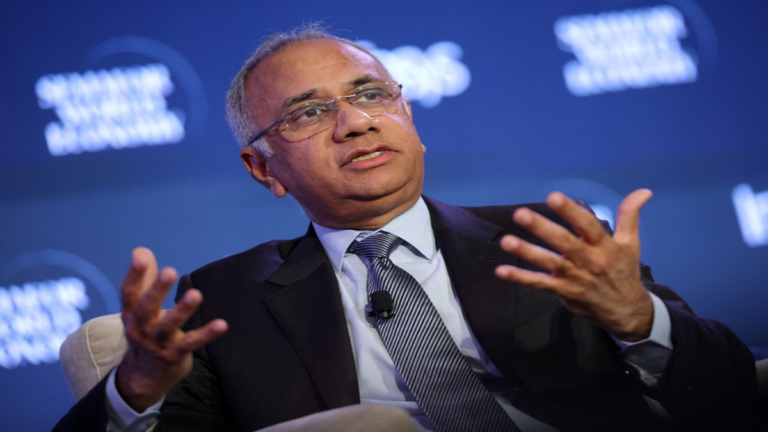
Infosys CEO Salil Parekh’s Pay Rises to $8.7 Million

0

New Delhi, May 30, 2026: Infosys Chief Executive Officer and Managing Director Salil Parekh saw his annual compensation rise by a modest 2.5% to ₹82.6 crore (approximately $8.69 million) for the fiscal year 2025–26 (FY26), according to the company’s newly released annual report. The small bumps in executive pay reflect a highly calculated approach to cost discipline as India’s $315-billion IT services industry navigates a transformative era marked by slowing legacy growth and heavy artificial intelligence (AI) disruptions.

Parekh, who is already the longest-serving non-founder CEO at the Bengaluru-headquartered firm, saw his package edge up from ₹80.62 crore in the previous fiscal year. Interestingly, while the compensation rose in terms of the Indian Rupee (INR), the overall valuation in U.S. dollars dipped slightly from last year’s $9.44 million. This discrepancy is entirely due to macroeconomic currency shifts, as the Indian Rupee depreciated by nearly 10% against the U.S. dollar over the course of the fiscal year.

Breaking Down the $8.7 Million Compensation Structure

Like most top-tier tech executives, the vast majority of Parekh’s take-home pay is directly tied to performance and equity milestones rather than a rigid base salary. By tying leadership wealth directly to shareholder value, Infosys ensures its executive team remains intensely focused on long-term corporate health.

The true driver of Parekh’s package was the exercise of stock options. During fiscal 2026, the CEO exercised 272,400 Restricted Stock Units (RSUs) under the company’s 2015 incentive framework and an additional 64,690 RSUs under its 2019 plan. The perquisite value of these exercised shares amounted to ₹50.75 crore—accounting for more than 61% of his total earnings.

Furthermore, the board approved an array of fresh, forward-looking stock grants. These include 230,621 performance-based RSUs tied directly to strict revenue and operational targets, 13,273 RSUs anchored to Environmental, Social, and Governance (ESG) milestones, and 33,183 RSUs tethered closely to cumulative total shareholder returns.

The Executive vs. Employee Pay Gap

Unsurprisingly, the disclosure of multi-million dollar executive pay packages frequently brings attention to internal income disparities. The annual report revealed that Salil Parekh’s overall earnings stood at 742 times the Median Remuneration of Employees (MRE) at Infosys. If you filter out the massive gains he made from exercising legacy stock options, that ratio drops significantly to a more standard 289 times the median worker’s salary.

Meanwhile, the broader workforce at Infosys experienced stable upward mobility:

  • Median Employee Pay: The median remuneration for an Infosys employee reached ₹11,13,024 ($11,716), marking a clear 4% climb from the previous year’s median of ₹10,72,008.
  • Domestic Salary Revisions: Indian employees saw an average annual salary increase of roughly 11%, a figure that factor in standard promotions, annual evaluations, and role-based pay revisions.
  • Global Workforce Trends: For the tech major’s international workforce spanning across North America, Europe, and Asia-Pacific, salary adjustments were deployed dynamically to stay in step with respective local market trends.

At the very top of the hierarchy, unique leadership dynamics remain at play. Infosys co-founder and Chairman Nandan Nilekani voluntarily chose to forgo any form of remuneration or sitting fees for his services during the fiscal year—a continuous trend for the veteran leader.

Strong Financials Meet a Cautious Horizon

The slight 2.5% acceleration in executive pay aligns with a steady, if cautious, financial performance by the IT giant. Infosys closed out the 2025–26 fiscal year with an impressive global workforce of over 328,000 employees, reporting the following financial outcomes:

  • Revenue from Operations: Touched ₹1,78,650 crore ($18.8 billion), logging a 9.6% growth rate compared to the previous year.
  • Net Profit: Scaled up 10.2% to land at ₹29,440 crore ($3.1 billion).
  • Free Cash Flow: Concluded at a highly resilient ₹33,097 crore ($3.48 billion).

The final quarter of the fiscal year (January to March) was particularly robust, yielding a 20.8% surge in quarterly net profits. However, looking ahead into fiscal 2027, the company has offered a conservative revenue growth forecast of 1.5% to 3.5% in constant currency terms. This projection falls slightly short of the 2% to 4% growth window Wall Street and local analysts were aggressively hoping for.

Navigating the Tech Industry’s “Deployment Gap”

The conservative outlook issued by Infosys is a direct reaction to systemic changes shaking up global tech spending. Enterprise clients are rapidly pivoting away from traditional, labor-intensive legacy software maintenance, moving their tech budgets toward artificial intelligence, automation, and intelligent agents.

In his annual letter to shareholders, Chairman Nandan Nilekani highlighted that trillions of dollars in enterprise capabilities remain locked inside vulnerable, rigid legacy environments built for an entirely different era. He noted that this “technical debt” is no longer just a backend line item—it has evolved into a strategic liability that drags down the precise agility required to successfully scale modern AI frameworks.

According to Nilekani, the primary bottleneck holding companies back isn’t the AI technology itself, but rather the internal complexity of enterprise data silos and undocumented software dependencies.

As corporate clients rethink their technology budgets in response to AI innovators, enterprise leaders like Parekh are tasked with completely reinventing their business models. While competitors like Tata Consultancy Services (TCS) also posted modest CEO pay hikes—with TCS head K Krithivasan taking home $2.96 million (₹28 crore) in FY26—the tech sector’s leadership is clear: executive rewards will remain strictly anchored to how successfully they steer their organizations through the looming AI frontier.

Aamna Sharif Real-Life Tragedy: From Childhood Loss to Stardom

New Delhi, May 30, 2026 — Television icon Aamna Sharif, who permanently etched her name into Indian pop culture with her performance as Kashish in the definitive mid-2000s drama Kahiin To Hoga, has broken her silence on the intense personal trauma and financial instability that shadowed her rise to stardom.

In an emotionally charged appearance on the popular podcast Hauterrfly, the actress bared her soul regarding the dual tragedies that reshaped her childhood: the sudden death of her protective father when she was just 10 years old, and the subsequent 30-year physical confinement of her bedridden mother.

Sharif’s candid revelations offer a sobering glimpse into the stark contrast between her glamorous on-screen persona and the grueling realities she navigated behind closed doors. Speaking with palpable emotion, she admitted that processing these life-altering events at a tender age was an overwhelming ordeal, stating flatly, “It wasn’t easy.”

The Sudden Loss of a Protective Shield

Before tragedy struck, Aamna Sharif lived a sheltered and deeply secure life. She describes her late father as an exceptionally protective figure who went to great lengths to provide a safe, nurturing environment for his family. Growing up in a relatively orthodox and traditional household, her world was tightly knit, revolving almost entirely around her immediate family and close relatives.

“I lost my dad when I was just 10 years old,” Sharif recalled, her voice heavy with the memory. “I was very close to him, and I was completely lost after that. I think I was too young to even understand what was happening at the time.”

The suddenness of his departure compounded the trauma. Because of her age, family members shielded her from the grim reality of his terminal state. “I was only being told that my dad was not well and was being taken somewhere,” she shared. “It took me a very long time to process everything.”

The loss of her father didn’t just leave an emotional vacuum; it instantly shattered the protective bubble she had known. As an adolescent girl, she was thrust into a world where she suddenly felt exposed and unguided. The absence of a father figure was felt deeply as she navigated her teenage years, trying to understand her identity within a highly restrictive family framework where basic social milestones—such as having a school crush or interacting with boys—were strictly forbidden and severely penalized.

Financial Ruin and a Mother’s 30-Year Suffering

The emotional devastation of losing a parent was rapidly followed by a severe economic crisis. Sharif revealed that her father’s death was aggravated by betrayal from those he trusted most. Before his passing, he had been systematically cheated by several of his business partners. This corporate malfeasance left the grieving family in absolute financial ruin just as they faced an escalating medical catastrophe.

Under the immense stress of her husband’s demise and the collapse of their financial security, Aamna’s mother suffered severe health complications that left her bedridden—a condition she would endure for the next three decades.

This stark poverty completely altered the trajectory of Aamna’s youth. While her peers were planning their education and futures, her core focus narrowed down to raw survival and basic healthcare logistics. “My biggest priority became giving my mother a good life and making sure her medical treatment was taken care of properly,” she said. The immediate need to fund expensive surgeries and daily medical care became the sole driving force behind her ambition to enter the entertainment industry.

The Grueling Hustle for Stardom

Determined to pull her family out of financial despair, Sharif turned to modeling and acting, but the path to entry presented its own set of steep roadblocks. Because the family had no disposable income, even assembling the initial capital for a professional modeling portfolio became a six-month battle of endurance.

In the early 2000s, a portfolio was an indispensable gatekeeper for any aspiring actor. Sharif recalled begging and pleading with her ailing mother to somehow pool together enough money for a photoshoot, knowing instinctively that it was their only ticket out of poverty. Every rupee spent on photographs was a rupee taken away from household essentials or medical funds, making the stakes incredibly high.

When she finally broke into the industry, her stunning looks and undeniable screen presence quickly landed her the leading role in Ekta Kapoor’s Kahiin To Hoga. The show became an overnight phenomenon, and her chemistry with co-star Rajeev Khandelwal made them household names. Yet, even as millions of fans across the country envied her seemingly perfect life, Sharif was returning home from grueling 18-hour shoot schedules to act as a primary caregiver for her bedridden mother, quietly channeling her paychecks into hospital bills and long-overdue surgeries.

Navigating Deeper Traumas

Beyond her familial and financial obligations, Sharif also used the podcast platform to touch upon the systemic vulnerabilities young girls faced while growing up in Mumbai during that era. She recalled experiencing instances of inappropriate touch on public buses and trains—disturbing events that left a lasting imprint on her psyche.

“At that age, you don’t fully understand what is really happening to you,” she noted, pointing out the generational silence surrounding personal safety. “During our time, nobody really spoke about ‘good touch’ and ‘bad touch’.”

Furthermore, her battles didn’t end once she achieved stardom and financial independence. The actress admitted that the entertainment industry brought its own brand of psychological warfare. Years later, after taking a hiatus to marry distributor Amit Kapoor and give birth to her son, Areez, she attempted to return to mainstream acting. She was met with blatant regression from industry gatekeepers.

Sharif recounted a deeply demoralizing encounter where a prominent director looked her in the eye and callously declared, “Now you have a child, your career is over.”

“I walked out of that office crying,” she confessed. “My confidence was completely shaken.” The incident triggered a profound period of depression, forcing her to aggressively fight against the industry’s systemic ageism and the reductive “mother” stereotype often forced upon married actresses.

Also Read: PM Modi Invited to Khushbu Sundar Daughter Avantika’s Wedding

A Triumph of Resilience

Despite the compounding layers of grief, financial exploitation, and industry rejection, Aamna Sharif’s narrative is ultimately one of profound resilience. Through sheer grit, she managed to completely stabilize her family’s financial situation, ensuring her mother received the best possible medical care throughout her remaining years. She also fulfilled long-held personal dreams born out of childhood deprivation, proudly purchasing her first car as a symbol of her hard-won independence.

Today, Sharif views her past not with bitterness, but as the crucible that forged her inner strength. By opening up about her decades-long battle with family illness and childhood trauma, she joins a growing cohort of Indian celebrities dismantling the illusion of effortless stardom, reminding audiences that behind the flashing cameras often lies a story of relentless, quiet survival.

PM Modi Invited to Khushbu Sundar Daughter Avantika’s Wedding

0

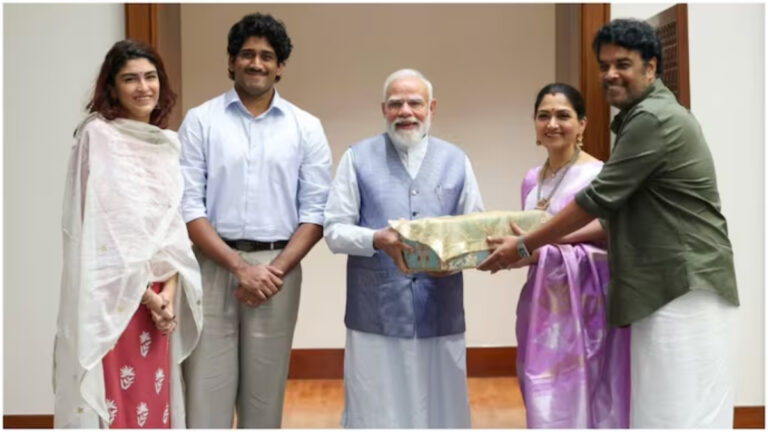
New Delhi, May 30, 2026 — In a perfect blend of cinema and national politics, actor-turned-politician Khushbu Sundar and her husband, acclaimed filmmaker Sundar C, recently met with Prime Minister Narendra Modi in New Delhi. The family visit was arranged for a deeply personal and joyous reason: to officially hand over the first wedding invitation for their elder daughter, Avantika Sundar, who is set to marry her fiancé, Shravan Sreenivasan.

The high-profile meeting quickly caught the internet’s attention after Khushbu shared glimpses of the special moment on her social media handles. The images feature a warm, smiling Prime Minister interacting with the family and blessing the young couple as they prepare to embark on their new journey together.

A Memorable Gathering in the Capital

The meeting in the national capital turned a private family milestone into a widely discussed public moment. Dressed elegantly for the occasion, Khushbu Sundar wore a stunning pink silk saree, while her husband Sundar C opted for a traditional white veshti and a green shirt. The bride-to-be, Avantika, and the groom, Shravan Sreenivasan, stood alongside them as they presented a beautifully wrapped, traditional wedding card to the Prime Minister.

Despite his packed political and administrative schedule in New Delhi, PM Modi took out dedicated time to host the family, receive the card, and engage in a lighthearted conversation. Reflecting on the profound honor, Khushbu expressed her immense gratitude online.

Who is Avantika Sundar?

With the wedding announcement taking center stage, fans and industry followers have been eager to learn more about Avantika Sundar. She is the elder daughter of one of South India’s most influential celebrity couples. Khushbu and Sundar C married in the year 2000 and share two daughters, Avantika and Anandita. Proving how central family is to their professional lives, the couple named their successful home production banner, Avni Cinemax, by combining the starting letters of both daughters’ names.

While Avantika comes from a legacy of massive stardom—her mother remains an iconic actress with a legendary fanbase across South India and her father is a master of commercial blockbusters—she has consistently sought to build her own identity.

Charting Her Own Path in Cinema

Rather than relying entirely on her parents’ immense industry network for an easy launch, Avantika chose a path of formal training and independent struggle.

  • Global Training: She moved to the United Kingdom to pursue a rigorous acting course at a prestigious drama school in London, graduating with high honors.
  • The Independent Stance: At the time of her graduation, Khushbu publicly made it clear that they would not be spoon-feeding her career, stating that Avantika wanted to earn her place on her own merit without nepotistic shortcuts.
  • The Mollywood Entry: True to her goal, Avantika is set to make her silver screen debut not in her parents’ native Tamil industry, but in Malayalam cinema (Mollywood). She is starring as the female lead in an upcoming film titled Aarambham, directed by debutant Sujesh Annie Eapen.

When asked about her daughter’s entry into acting, Khushbu explicitly requested audiences not to compare Avantika to her. “Let Avantika be Avantika,” she noted in a recent conversation. “Why should she be like me? She has her own unique style.”

Understanding the Political Context

The meeting also highlights the intersection of the entertainment world and public service. Khushbu Sundar is not just a veteran of over a hundred films; she is also a prominent political figure. Currently serving as a key leader and Vice President within the Bharatiya Janata Party (BJP) in Tamil Nadu, she has been a vocal advocate on numerous regional and national platforms. Her husband, Sundar C, has similarly supported the party’s vision in the state.

Given Khushbu’s active political standing and personal rapport with the party’s central leadership, inviting the Prime Minister underscores the mutual respect shared between the state’s cultural icons and national leadership. Political analysts note that such personal interactions reinforce the bridge between regional cinematic powerhouses and Delhi’s political corridors.

Public Warmth and Next Steps

As soon as the images surfaced on the internet, social media was flooded with congratulatory messages from fans, film industry colleagues, and political supporters. Well-wishers praised the family’s simple yet elegant presentation and extended their warmest blessings to Avantika and Shravan for their future.

While the exact dates and venue of the wedding ceremony remain tightly under wraps to maintain the family’s privacy, it is expected to be a grand affair drawing prominent personalities from politics, the Tamil, Telugu, and Malayalam film industries, as well as close family friends. For Khushbu and Sundar C, who have openly spoken about how much of a blessing their two daughters are in their lives, this upcoming wedding marks the beginning of a beautiful new chapter.

Iran War Live: Trump Evaluates ‘Final Determination’ On 60-Day Ceasefire Deal With Tehran

0

New Delhi, May 30, 2026 — The diplomatic stand-off over the 3-month-old war between the United States and Iran has reached a critical turning point. US President Donald Trump recently concluded a high-stakes, two-hour meeting with his top national security advisors in the White House Situation Room. The goal of the meeting was to make what he termed a “final determination” on whether to move forward with a tentative framework agreement with Tehran.

The proposed deal, brokered through international intermediaries including Pakistan and Oman, aims to formally extend a fragile seven-week ceasefire by an additional 60 days. This extension would provide a stable window for deeper negotiations concerning Iran’s nuclear program, regional military activities, and maritime security. While negotiators on both sides have hammered out a draft Memorandum of Understanding (MOU), a formal announcement remains on ice as President Trump evaluates if the terms align with his strict policy redlines.

What Is on the Table?

The emerging agreement focuses heavily on stabilizing global energy supplies and pausing the military exchanges that have disrupted the Middle East over the past quarter. According to US and international diplomatic sources, the framework outlines a series of synchronized, step-by-step actions intended to cool down the conflict:

  • The Strait of Hormuz: Iran must agree to a completely toll-free, unhindered passage for commercial shipping through the vital waterway. Tehran would also be required to completely remove all naval mines from the area within a 30-day window.
  • Lifting the Maritime Blockade: In return for opening the strait, the United States would gradually dismantle its naval blockade on Iranian ports, allowing standard commercial trade to resume.
  • Access to Frozen Funds: The draft framework suggests that Iran could gain managed access to approximately $12 billion in previously frozen overseas financial assets. This capital would be tied directly to compliance milestones.
  • Easing Oil Sanctions: The US would relax specific economic penalties, allowing Iran to legally export limited quantities of crude oil and petrochemicals to help stabilize volatile global markets.

The Crucial Battle Over Nuclear Uranium

While the immediate goal of the MOU is preventing a return to active combat, the underlying friction centers entirely on Iran’s rapid nuclear development. The UN’s watchdog, the International Atomic Energy Agency (IAEA), reports that Iran currently holds 440.9 kilograms (972 pounds) of uranium enriched up to 60% purity. This concentration is a short, technical step away from the 90% threshold required to build military weapons.

Under the proposed 60-day window, the first order of business would be determining the fate of this highly enriched stockpile. The Trump administration has demanded that this material be entirely turned over or safely neutralized. Furthermore, the US has proposed a joint operation alongside the IAEA to safely clear and neutralize residual “nuclear dust” generated during previous B-2 bomber strikes on Iranian facilities last year.

Tehran, however, remains highly resistant to surrendering its stockpiles permanently without sweeping, permanent economic rollbacks. Iranian Foreign Ministry spokesman Esmail Baghaei publicly stated that the text of the agreement is “not yet finalized nor confirmed,” downplaying assertions from Western media outlets that an agreement is ready to sign.

Extreme Distrust on Both Sides

The diplomatic push is playing out against a backdrop of deep military suspicion. The current ceasefire has repeatedly wavered over the past 48 hours. US Central Command (CENTCOM) recently confirmed that Iranian forces launched a series of one-way attack drones and missiles toward a US ally in the Gulf, resulting in a successful interception by Kuwaiti air defenses. In response, American F-16 fighters carried out targeted defensive strikes against an active drone control facility in Bandar Abbas, Iran.

This constant trading of blows has fueled aggressive rhetoric from political figures in Iran. The Speaker of the Iranian Parliament, Mohammad Bagher Qalibaf, expressed blatant skepticism regarding Washington’s intentions during a recent statement on social media.

Broader Regional and Global Implications

The economic and political fallout of this conflict is rippling far beyond the borders of the Middle East. Because the Strait of Hormuz serves as the highway for roughly 20% of the world’s petroleum liquids, the ongoing blockade has driven global oil prices past $100 a barrel, triggering sharp spikes in household energy bills and agricultural fertilizer costs worldwide. US Secretary of Agriculture Brooke Rollins noted that accelerating a resolution is vital for “farm security and national security,” predicting that global commodity prices will stabilize rapidly once shipping channels clear out safely.

Additionally, regional dynamics complicate the final text. Tehran has continually insisted that any long-term peace plan must be linked to a total cessation of Israeli military operations against Hezbollah in southern Lebanon. This condition remains highly controversial among US allies, as Israel argues it leaves their northern borders vulnerable to regrouping militant forces.

As the White House security team processes the data from the latest Situation Room briefing, the world watches to see if President Trump will sign off on the 60-day cooling-off period, or if the US military will pivot back to a strategy of maximum pressure. For now, US naval assets and Air Force patrols remain on high alert throughout the Persian Gulf, ready to respond if the diplomatic window slams shut.

Fact Check: Madhuri Dixit ‘Too Bold’ Black Gown Video Explained

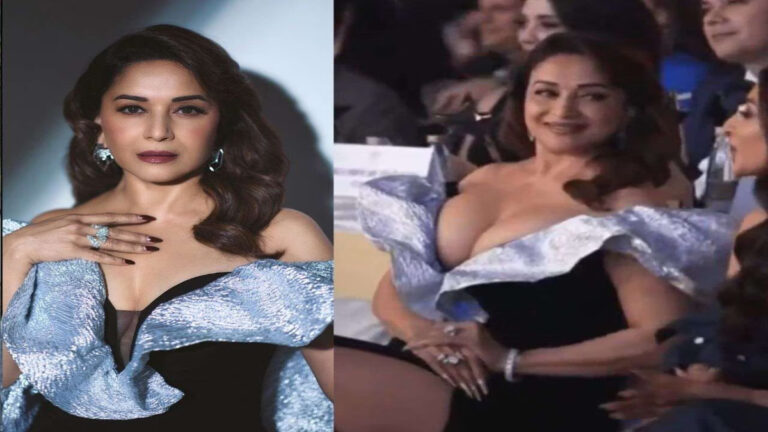
New Delhi, May 29, 2026: In an era where digital content spreads at supersonic speeds, Bollywood icon Madhuri Dixit Nene recently found herself at the center of a viral storm. A video circulating across social media platforms claimed that the Dhak Dhak girl made a “too bold” public appearance, allegedly wearing a highly revealing black gown with an incredibly deep, plunging neckline. The clip immediately triggered massive debates among netizens, drawing polarized comments about fashion choices and age-appropriate styling.

However, a closer look into the viral footage reveals a completely different reality. The sensationalist headlines and shocked reactions are the product of internet manipulation, proving once again how easily the public can be misled by selective editing, deceptive camera angles, or digital alteration.

Deconstructing the “Too Bold” Viral Video

The video in question shows Madhuri Dixit attending a high-profile red-carpet event, dressed in a floor-length, structured black evening gown. Sensational social media captions claimed the veteran actress had stepped outside her usual elegant comfort zone for a shockingly revealing look.

When media watchdogs and fact-checkers traced the origins of the video, the truth emerged. The footage was captured during her appearance at the IIFA Digital Awards, where she walked the green carpet alongside her husband, Dr. Shriram Nene.

What She Actually Wore vs. What the Video Showed

The outfit—designed by the luxury label Maryam Al Omaira—was a masterclass in classic evening wear, not a wardrobe controversy. A structural breakdown of the gown clarifies the discrepancy:

  • The Silhouette: A sophisticated, figure-hugging mermaid silhouette with a cinched bodice and an elegant floor-grazing hemline.
  • The Sleeves: Exaggerated, full-length sleeves featuring dramatic puffed shoulders.
  • The Bodice & Neckline: While the gown did feature a modern V-shaped neckline, it was structurally secure, balanced entirely by the high-fashion drama of the sleeves, and featured a subtle sheer illusion panel designed to maintain complete coverage while mimicking depth.

The viral clips relied heavily on poor video resolution, high-contrast filtering, and tightly cropped framing. By stripping away the context of the full gown—specifically the heavy, structured sleeves and the sheer protective fabric in the bodice—misleading uploads made the neckline look vastly different than it was in reality.

The Internet’s Reaction: A Polarized Divide

Before fact-checkers could clarify the context, the video took on a life of its own. The comment sections became a battleground showcasing the classic dichotomy of modern internet culture.

On one side, conservative trolls and sensationalist clickbait pages targeted the actress, using phrases like “too forward” or “inappropriate styling.” These critics frequently weaponized her age, arguing that a veteran star should stick strictly to traditional attire.

Conversely, the overwhelming majority of fans and fashion enthusiasts rushed to her defense. On her official Instagram handle, where she shared high-definition stills of the look captioned “Black never takes a backseat,” the reception was stellar. Comments flooded in calling her “The Queen,” “Timeless,” and celebrating how she carried the contemporary silhouette with unparalleled grace.

The Rising Menace of Digital Misinformation Targeting Celebrities

This incident highlights a much larger, more troubling trend in the digital entertainment landscape. Public figures—particularly veteran actresses—are increasingly targeted by automated engagement bots and malicious creators who alter genuine footage to create controversial narratives.

Creators often intentionally alter contrast or saturation to obscure sheer lining fabrics (which match the wearer’s skin tone for structural support), making an outfit look entirely sheer or missing sections of fabric. Combined with aggressive, deceptive headlines, these videos manipulate viewers into clicking, generating massive ad revenue at the expense of a celebrity’s reputation.

Madhuri Dixit’s Legacy of Grace and Fashion Evolution

For over four decades, Madhuri Dixit Nene has been an absolute blueprint for elegance in Indian cinema. From the iconic orange lehenga in Hum Aapke Hain Koun..! to her breathtaking archival sarees on reality TV shows, her style has evolved continuously without ever losing its core refinement.

Her recent appearances—including her prominent role in the box-office hit Bhool Bhulaiyaa 3—demonstrate an actress who is completely secure in her identity. She frequently experiments with western silhouettes, structural gowns by designers like Gaurav Gupta, and sharp pantsuits, proving that style has no expiration date or rigid boundaries.

Ultimately, the viral “fact check” surrounding her black gown serves as a reminder for internet users to practice digital skepticism. The “truth” behind the viral video isn’t an actress causing a controversy, but rather an internet culture still struggling to separate high-fashion evolution from cheap digital distortion. Madhuri did not go “too bold”; she simply did what she has always done—stepped out looking entirely spectacular.

Hospital Mocks Itself: Staff Examines Laddu Gopal Idol

0

New Delhi, May 29, 2026: A bizarre video showing healthcare workers conducting a formal medical examination on a metal idol of Laddu Gopal (the infant form of Lord Krishna) has ignited a fierce debate across social media, drawing a wave of mockery and raising serious questions about professional conduct in healthcare settings.

The incident occurred when an emotionally distraught devotee arrived at the hospital, weeping and claiming that the deity had fallen and suffered an injury. In a bid to console the deeply overwhelmed visitor, the medical team went beyond standard reassurance, initiating a full clinical examination of the metallic object.

The Video That Sparked the Storm

The footage, which rapidly gained traction across major social media platforms, captures a series of unusual events within the hospital premises:

  • The Admission: Hospital staff went as far as creating a patient registration log for the deity, treating the request with the administrative protocol typically reserved for human patients.
  • The Clinical Exam: A nurse and attending doctor are seen gently placing a stethoscope against the metal chest of the small idol, pretending to monitor a heartbeat and check its vitals.
  • The “Treatment”: To satisfy the weeping devotee, medical staff applied a small bandage to the idol’s arm where the devotee claimed it was injured.

While the staff reportedly acted out of empathy to calm a citizen experiencing an intense emotional or psychological episode, the video’s release online backfired dramatically.

Social Media Reacts: A Wave of Mockery and Concern

Once the clip hit the internet, it quickly became a lightning rod for criticism. The reaction from the public has been sharply divided, leaning heavily into sarcasm and concern over medical priorities.

The Critics: Concerns Over Healthcare Standards

Many internet users criticized the hospital staff for enabling what they viewed as extreme superstition. Commentators argued that healthcare professionals have a fundamental duty to uphold scientific temper and rationality. Critics pointed out that treating a metal object as a living patient blurs the line between personal faith and scientific reality, potentially setting a dangerous precedent for medical institutions.

The Cynics: Satire and Memes

The sheer absurdity of a stethoscope being used on metal led to a flood of satirical memes. Users joked about the idol’s blood pressure readings and questioned whether the deity had the right health insurance policy to cover the cost of the bandage.

The Counter-Perspective: Empathy vs. Rationality

Despite the widespread mockery, a smaller segment of the public has come to the defense of the hospital staff. Supporters argue that the medical team displayed commendable empathy and de-escalation skills.

In many cultural contexts, the attachment to Laddu Gopal is deeply personal, with devotees treating the idol not as a symbol, but as a living member of their household. Supporters believe the staff recognized that the devotee was in a state of severe psychological distress and concluded that a harmless “examination” was the quickest, most compassionate way to prevent a worsening mental health crisis on the hospital floor.

Healthcare Administration Weighs In

As the video continues to gather millions of views, medical analysts and hospital administration experts note that the incident highlights a tricky intersection between public faith, mental health, and institutional duty.

While hospital policies globally dictate that medical resources must be strictly reserved for human clinical care, frontline workers often find themselves managing complex human emotions that science alone cannot solve. However, institutional heads warn that documenting such interactions on camera often does more harm than good, exposing public infrastructure to unnecessary ridicule and diminishing public trust in scientific institutions.

The hospital administration has reportedly viewed the video and is reviewing its internal protocols regarding public engagement to ensure that empathy can be extended to distressed families without compromising scientific integrity or inviting public mockery.

Royal Enfield Launches the Bullet 650 in India at Rs 3.65 Lakh

New Delhi, May 29, 2026: For nearly a century, the Royal Enfield Bullet has stood as a towering symbol of rugged masculinity, old-school charm, and mechanical simplicity in the Indian motorcycling landscape. It is not just a motorcycle; it is an emotion passed down through generations. Now, Royal Enfield has taken that iconic legacy and propelled it into a brand-new era. The much-anticipated Royal Enfield Bullet 650 has officially been launched in India at a starting price of Rs 3,64,856 (ex-showroom). By dropping this powerhouse onto the market, the brand has created the most powerful, most refined, and largest-displacement “Bullet” ever to roll off its production lines, perfectly blending timeless nostalgia with modern performance engineering.

An Unmistakable Silhouette with Extra Muscle

At first glance, the Bullet 650 is instantly recognizable. Royal Enfield’s design team chose not to radicalize the classic styling, but rather to celebrate it. The motorcycle proudly displays the signature vintage silhouette, highlighted by the legendary teardrop-shaped fuel tank. Adorning the tank are the iconic, meticulously hand-painted gold pinstripes and a striking 3D winged badge that evokes the spirit of the mid-20th-century models. Up front, the unmistakable “casquette” cowl houses a bright round LED headlamp flanked by the beloved “tiger-eye” pilot lamps—a design language deeply rooted in Bullet history.

However, the Bullet 650 commands a significantly beefier and more substantial road presence than its smaller 350cc sibling. To support the massive twin-cylinder engine, the motorcycle features a wider stance, a squared-off, vintage-style rear fender, and a beautifully crafted long, single-piece “bench” seat that provides an imposing look. The visual balance is further perfected by a gleaming pair of chrome “peashooter” dual exhausts, giving the bike an authentic retro-roadster character that turns heads wherever it goes.

The Heart of a Cruiser: The Proven 650cc Twin

The most revolutionary upgrade lies beneath the vintage bodywork. The Bullet 650 adopts Royal Enfield’s critically acclaimed 647.95cc, air- and oil-cooled, parallel-twin engine platform. This is the exact same motor that has successfully powered global favorites like the Interceptor 650, Continental GT, and Super Meteor 650. Mated to a smooth 6-speed gearbox equipped with a light slip-and-assist clutch, this powerplant delivers a robust 47 PS of maximum power at 7,250 rpm and a peak torque of 52.3 Nm at 5,650 rpm.

What this means for the rider is an entirely transformed performance dynamic. While the traditional single-cylinder Bullets are famous for their slow, rhythmic “thump,” the new twin-cylinder configuration introduces a deeply satisfying, rhythmic “thrum” alongside effortless power delivery. The abundance of low-end and mid-range torque makes the bike incredibly tractable in heavy city traffic, allowing riders to cruise smoothly at low speeds in higher gears without any engine knocking. On the highway, the machine acts as a relaxed, unhurried cruiser, capable of sustaining triple-digit speeds all day long without breaking a sweat, effectively making it an excellent long-distance touring machine.

Under the Hood: Chassis, Suspension, and Handling

To safely manage the power and 243 kg kerb weight of this heavy-duty roadster, Royal Enfield has built the Bullet 650 around a sturdy steel tubular spine frame. The motorcycle’s suspension duties are expertly handled by premium Showa hardware, featuring 41mm telescopic front forks with 120mm of travel and twin-tube hydraulic shock absorbers at the rear with 112mm of travel. This setup is tuned for a soft, compliant, and plush ride quality, absorbing potholes, speed bumps, and road imperfections with utmost composure.

True to the traditional Bullet proportions, the bike rides on a 19-inch front and an 18-inch rear classic cross-spoke wheel combination. While these wire-spoke wheels look incredibly retro, riders should note that they come with tubed tires, requiring a bit of extra planning for long-distance puncture management. Braking performance is sharp and reassuring, courtesy of a large 320mm disc brake at the front and a 300mm disc at the rear, fully backed by a dual-channel Anti-lock Braking System (ABS) as standard to ensure maximum safety under hard braking conditions.

Ergonomics and Modern Creature Comforts

Royal Enfield has gone to great lengths to ensure that the Bullet 650 maintains its legendary commanding riding position. It features a set of tall, raised handlebars and neutral footpeg placement that result in an upright, relaxed, and highly comfortable posture. With an accessible seat height of 800mm, shorter riders will find it relatively easy to firmly plant both feet on the ground at stoplights. Additionally, a generous 14.8-liter fuel tank guarantees a healthy riding range between fuel stops.

While the packaging screams vintage, the feature list is thoroughly modern. The cockpit features a premium digi-analogue instrument cluster that displays a mix of classic style and practical information, including fuel levels, a trip meter, a gear position indicator, and service reminders. Adding to the convenience is Royal Enfield’s standard Tripper Navigation pod, which provides seamless, turn-by-turn directions via Bluetooth smartphone connectivity. For modern tech needs, an integrated USB Type-C charging port allows riders to keep their phones or navigation devices fully powered up during long journeys. The bike also benefits from premium aluminum switchgear with rotary dials and adjustable clutch and brake levers for a customized tactile feel.

Pricing, Colors, and Final Verdict

The Royal Enfield Bullet 650 arrives in the Indian market with two distinct, elegantly simple color options: the traditional, deep Cannon Black and the contemporary, India-exclusive Battleship Blue. Both variants share identical mechanical specifications and are priced equally at Rs 3,64,856 (ex-showroom). This clever pricing strategy places the Bullet 650 right alongside the newly launched Classic 650, giving buyers a clear choice between the chrome-heavy, rounded aesthetic of the Classic and the boxier, pinstriped, commanding heritage look of the Bullet.

Ultimately, buying a Bullet 650 is an emotional decision rather than a strictly logical choice based on spec sheets alone. It is a motorcycle designed for the purist who craves a massive road presence, timeless historical identity, and an easy-going riding philosophy, but wants it paired with the absolute mechanical reliability and highway cruising capabilities of a modern twin-cylinder motor. The big Bullet has officially grown up, and it stands ready to rule the roads once again.