Home Blog Page 57

Trishala Dutt: Storms Behind the Silver Spoon

New Delhi, May 22, 2026: The term “star kid” instantly brings up images of endless wealth, luxury, and a smooth path through life. We often think children of mega-celebrities have it easy. However, reality behind the closed doors of fame is often much more complex and painful.

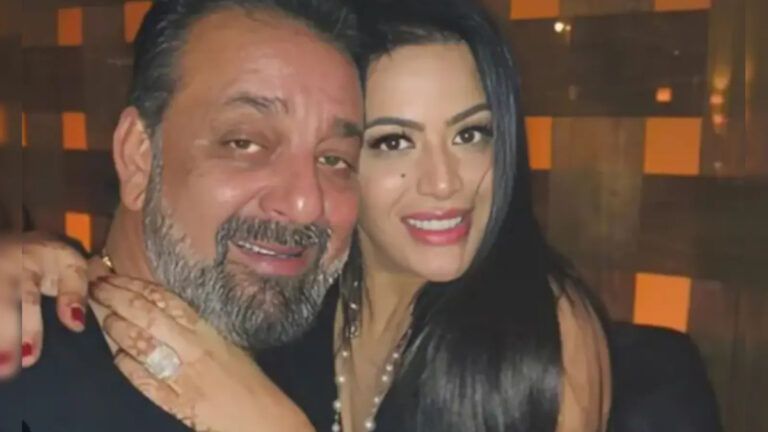
Trishala Dutt, the eldest daughter of Bollywood superstar Sanjay Dutt, recently opened up about this in a deeply personal interview. Speaking on the podcast Inside Thoughts Out Loud, Trishala broke down the biggest misconceptions about her life. She directly addressed the idea that she has lived a perfect life, sharing her painful journey of losing her mother at a tender age, facing severe childhood bullying, and coping with intense public scrutiny.

The Illusion of the Silver Spoon

During her conversation, Trishala was asked about the biggest misconception the public holds about her. Without hesitation, she noted that people assume she has always lived a life of absolute ease.

While she acknowledges the financial privileges and the famous family name she inherited, Trishala emphasized that wealth cannot shield a child from emotional trauma. She described her upbringing as a landscape that, despite its golden borders, was constantly surrounded by “many storms and a lot of dark clouds.”

Losing Her Mother at Age Eight

The most definitive and painful storm in Trishala’s life arrived when she was just a young girl. Born in 1988 to Sanjay Dutt and his first wife, actress Richa Sharma, Trishala’s early childhood was quickly overshadowed by tragedy.

Richa Sharma was diagnosed with a brain tumor in 1989, when Trishala was still a baby. Reflecting on the aggressive nature of her mother’s illness, Trishala shared the heartbreaking details of that time.

The tragedy was worsened by the physical distances separating the family during the crisis. While Richa underwent intense treatment at the Memorial Sloan Kettering Cancer Center in New York, Sanjay Dutt was forced to constantly split his time between India and the United States. He had to keep working in Mumbai to support the family financially while trying to be present for his dying wife. Trishala explained that it was incredibly difficult for her father to maintain his acting career back home while being there for the entirety of the medical treatments in the US.

A Lonely Childhood and the Battle with Bullying

Following her mother’s tragic passing in 1996, Trishala remained in New York, where she was raised by her maternal grandparents. With her father heavily tied down by his demanding film career and massive legal battles in India during the 1990s, Trishala often felt a profound sense of isolation.

She revealed that her struggles with bullying began when she was only five or six years old. Initially, the taunting was deeply rooted in her Indian identity, making her feel out of place in her American school environment.

As she grew older, the situation only intensified:

  • Middle School: Trishala began turning to food for comfort to cope with the immense grief of losing her mother. This emotional eating led to noticeable weight gain, which unfortunately made her a target for more severe bullying from classmates.

  • High School: The bullying reached a peak when her peers discovered exactly who her father was. The realization that she was the daughter of a famous Bollywood star brought unwanted attention, jealousy, and deeper isolation.

Trishala admitted that during those formative years, she felt she had no safe space and “no one to lean on.” She deeply wished she had someone to talk to or an emotional anchor to help her navigate the heavy burdens she was carrying completely alone.

Confronting Public Expectations and Paparazzi Scrutiny

Living as Sanjay Dutt’s daughter meant that even when Trishala traveled to India to visit her family, she could not escape judgment. The public and the paparazzi had a very specific, idealized image of what a Bollywood star’s daughter should look like. Because Trishala was dealing with a weight problem rooted in childhood grief, she faced harsh public criticism.

“People think that if you are a celebrity’s daughter, you have to look a certain way, and I just didn’t look the part of Sanjay Dutt‘s daughter,” she recalled.

The constant intrusion of the paparazzi during her childhood visits to India made her feel incredibly anxious and withdrawn. Seeing mean comments written about her physical appearance in magazines and online at such a young age forced her to grow up rapidly. However, Trishala views this painful period as the foundation of her current strength, stating, “Nobody has thicker skin than me because I have seen it all at a very tender age.”

From Personal Storms to Healing Others

Instead of letting her painful past define her or following her parents’ footsteps into the glamorous world of Bollywood, Trishala chose a completely different path. She consciously distanced herself from the film industry and dedicated her life to understanding human suffering. Today, she works as a practicing therapist and mental health advocate in the United States.

Trishala explained that her decision to become a therapist was directly inspired by her own inner battles. She wanted to use her experiences to create the safe space for others that she never had as a child.
By stepping forward to share her story, Trishala Dutt serves as a powerful reminder that pain, grief, and mental health struggles do not discriminate based on fame or fortune. Her journey from a lonely, grieving child surrounded by “dark clouds” to a professional healer shows that true strength isn’t about being born with a silver spoon—it is about having the courage to heal.

Box Office & Reviews: ‘Chand Mera Dil’ Flops in Execution Despite High Ambitions

The much-anticipated romantic drama Chand Mera Dil, starring Ananya Panday and Lakshya, has officially made its way to the big screen. Produced under Karan Johar’s Dharma Productions and directed by Vivek Soni, the film arrived with a massive weight of expectations. Promoted with the tagline “Pyaar mein thoda paagal hona hi padta hai” (You have to be a little crazy in love), the movie promised to subvert the traditional, glossy Bollywood fairytale by exploring the gritty, messy, and sometimes toxic realities of modern-day relationships.

However, despite its grand ambitions and important central themes, Chand Mera Dil ultimately buckles under its own weight. The film tries to address too many complex emotional issues simultaneously—including unexpected pregnancy, childhood PTSD, and relationship violence—but fails to give any of them the narrative depth they deserve. The result is a tonally confused, unevenly written, and exhausting viewing experience that proves that good intentions do not always translate into good cinema.

From Sweet College Romance to Sudden Relationship Turmoil

The story begins in an engineering college in Hyderabad, where Aarav (played by Lakshya) falls in love at first sight with Chandni (played by Ananya Panday). The first half-hour follows a familiar, sugary Bollywood template complete with stolen glances, library study sessions, and cute text messages exchanged during lectures. The vibrant college romance quickly hits a massive speed bump when Chandni faces an unplanned pregnancy.

This is the exact moment Chand Mera Dil attempts a bold tonal pivot, shifting from a lighthearted romantic comedy into a serious relationship drama. While Aarav initially panics and suggests an abortion to protect their budding careers, Chandni stubbornly decides to keep the child and navigate single motherhood alongside her professional goals. Driven by deep-seated childhood trauma from witnessing domestic abuse in her parents’ failed marriage, Chandni pushes forward with a rigid exterior.

Unfortunately, as the couple tries to make things work, their bond deteriorates. Financial stresses, parental disapproval, and mutual insecurities boil over into bitter arguments. The ultimate breaking point occurs during a heated confrontation when Aarav loses his temper and physically strikes Chandni. This act of violence shatters the relationship entirely, sending both characters into a downward spiral of heartbreak, pride, and unresolved grief.

A Movie Caught Between Too Many Ideas

The primary flaw of Chand Mera Dil is its absolute lack of cohesion. Director Vivek Soni and co-writer Tushar Paranjape evidently wanted to create a mature, “woke” romance that subverts standard romantic cliches. Yet, the screenplay treats deep psychological issues like Instagram therapy slides rather than lived-in human experiences. It wants to be simultaneously romantic, feminist, toxic, stylish, and grounded, leaving it suffocated by its own checklist.

The film’s pacing is deeply erratic. Crucial plot developments—such as a secondary character named Kevin (Paresh Pahuja) suddenly entering Chandni’s life and rushing toward marriage—happen without any organic buildup. Major family confrontations are left completely underdeveloped. Furthermore, the film drags significantly in its second half, trapping the characters in beautifully lit, neon-soaked rooms where they stare at each other in perpetual sadness, dragging out a conflict that could easily be resolved with simple communication.

By the time the movie reaches its underwhelming climax, it has completely run out of steam. The final resolution feels unearned and fails to deliver the cathartic emotional payoff that a two-and-a-half-hour drama demands.

Performance Analysis: Hits and Misses

On the performance front, the lead pair receives mixed results, primarily due to how their characters are written.

  • Lakshya: Following his highly praised, action-packed turn in Kill, Lakshya proves once again that he is a sincere performer. He brings charm to the early college days and handles the intense, emotionally turbulent scenes of the second half with genuine vulnerability. When his character breaks down on screen, his anguish feels authentic. Unfortunately, the script limits him by forcing him into a melodramatic mold.

  • Ananya Panday: Ananya’s portrayal of Chandni is significantly more polarizing. While she has shown growth in recent years, she struggles to find the right balance here. Chandni is written with an intense rigidity that often translates on screen as sheer stubbornness rather than a complex defense mechanism. In heavy emotional scenes, Ananya delivers a capable performance, but her chemistry with Lakshya is largely absent. The romantic segments feel forced, making it difficult for the audience to invest in their pain later on.

Production, Censorship, and Box Office Reception

Visually, Chand Mera Dil attempts to stand out by using a magical realism color palette. The cinematography transitions from natural daytime lighting into highly stylized, moody neon colors to mirror the growing psychological distance between Aarav and Chandni. The soundtrack by Sachin-Jigar provides a few high points, particularly with the emotional title track and Aitbaar, which beautifully captures the ache of longing and distance. However, these technical strengths are not enough to salvage the clunky narrative.

The film also experienced an uphill battle before it even hit theatres. The Central Board of Film Certification (CBFC) initially granted the movie a U/A 16+ certificate only after ordering severe cuts. The board trimmed nearly 96 seconds of intense “lip-lock” scenes from the original cut. In an unusual move, the filmmakers reportedly went back to the censors at the last minute to insert four minutes of alternate footage across eight new scenes, stretching the final theatrical runtime to 145.53 minutes (2 hours and 25 minutes).

This turbulent pre-release cycle has translated into a slow start at the box office. Despite promotional discount tactics—such as capping ticket prices at ₹149 for all morning and afternoon shows on opening day—advance bookings have been sluggish. Chand Mera Dil faces an uphill battle to convince audiences through word-of-mouth.

UPSC Releases Notifications for NDA/NA-II and CDS-II 2026

New Delhi, May 22, 2026: The Union Public Service Commission (UPSC) has officially released the highly anticipated notifications for the National Defence Academy and Naval Academy Examination (NDA/NA)-II 2026 and the Combined Defence Services (CDS)-II 2026 examination. For thousands of young defense aspirants across the country, this signals the commencement of one of the most prestigious recruitment cycles in India.

The online application portal is now active on UPSC’s official website. Candidates looking to secure a commissioned officer rank in the Indian Army, Navy, or Air Force can submit their registration forms online. The commission has detailed the complete schedule, branch-wise vacancies, and eligibility criteria across both official notifications.

Highlighting the Critical Deadlines

Aspirants need to keep a strict eye on the timeline, as UPSC maintains an unforgiving schedule with absolute cut-offs. The registration window opened simultaneously for both examinations on May 20, 2026, and will close promptly at 6:00 PM on June 9, 2026.

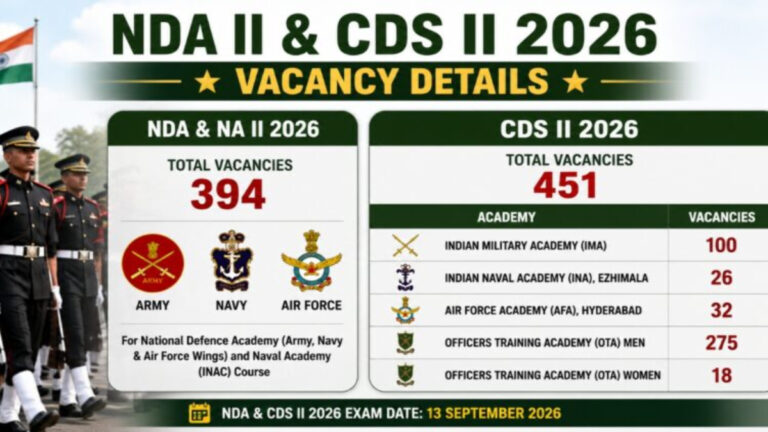
Both the NDA-II and CDS-II written examinations are scheduled to take place on a single day: September 13, 2026 (Sunday). The synchronized schedule gives candidates just under four months to consolidate their preparation, revise the core curriculum, and clear the intense competitive hurdle.

Event Details NDA/NA-II 2026 Schedule CDS-II 2026 Schedule
Notification Release Date May 20, 2026 May 20, 2026
Application Start Date May 20, 2026 May 20, 2026
Last Date to Apply (6:00 PM) June 9, 2026 June 9, 2026
Written Examination Date September 13, 2026 September 13, 2026
Admit Card Availability TBA (Usually 3 weeks before exam) TBA (Usually 3 weeks before exam)

UPSC NDA/NA-II 2026: Vacancy Breakdown and Eligibility

The NDA-II 2026 recruitment drive aims to fill a total of 394 vacancies across the primary wings of the National Defence Academy and the Indian Naval Academy Course (INAC). In line with progressive shifts in the defense landscape, these vacancies are open to both unmarried male and female candidates. Specifically, 370 seats are reserved for male candidates, while 24 seats are strictly allocated for female candidates.

Vacancy Distribution

  • NDA Army Wing: 208 positions (including 10 for female candidates)

  • NDA Navy Wing: 42 positions (including 5 for female candidates)

  • NDA Air Force Wing: 92 positions for Flying (2 for females) and 18 for Ground Duties Technical (2 for females)

  • Naval Academy (10+2 Cadet Entry Scheme): 34 positions (strictly for male candidates)

Age Limit and Marital Status

Candidates looking to apply must be unmarried. For the NDA-II 2026 cycle, applicants must have been born between July 2, 2007, and July 1, 2010 (both dates inclusive).

Educational Criteria

The academic benchmarks depend heavily on the specific branch you choose to join:

  1. Army Wing of NDA: Candidates must have passed their Class 12 (10+2 pattern) examination or its equivalent from any recognized state or central education board. Students from any academic stream (Arts, Commerce, or Science) are eligible.

  2. Air Force, Navy, and Naval Academy: Candidates must have passed Class 12 with a strict focus on Physics, Chemistry, and Mathematics (PCM) as compulsory subjects. Students currently appearing in their final year of Class 12 are also permitted to apply, provided they produce their passing certificates during the SSB interview phase.

UPSC CDS-II 2026: Vacancy Breakdown and Eligibility

For graduates and final-year college students, the CDS-II 2026 examination offers a direct route into premium military academies. UPSC has announced a total of 451 vacancies for this session, aiming to induct officers into both permanent and short-service commissions.

Academy-Wise Vacancy Matrix

  • Indian Military Academy (IMA), Dehradun: 100 vacancies

  • Indian Naval Academy (INA), Ezhimala: 26 vacancies

  • Air Force Academy (AFA), Hyderabad: 32 vacancies

  • Officers’ Training Academy (OTA), Chennai (Men): 275 vacancies (Short Service Commission)

  • Officers’ Training Academy (OTA), Chennai (Women): 18 vacancies (Short Service Commission)

Age Windows and Academic Qualifications

Because the training demands differ by academy, the eligibility parameters for CDS are strictly segmented:

  • IMA & INA: Open to unmarried male candidates aged 19 to 24 (born between January 2, 2003, and January 1, 2008). IMA requires a generic Bachelor’s Degree in any discipline, whereas INA mandates a Bachelor’s Degree in Engineering.

  • Air Force Academy (AFA): Open to male candidates aged 20 to 24 (born between January 2, 2003, and January 1, 2007). Applicants need a Bachelor’s degree with Physics and Mathematics at the 10+2 level, or a Bachelor of Engineering/Technology.

  • Officers’ Training Academy (OTA): Open to both men and women (including eligible unmarried individuals, issueless widows, or divorcees who have not remarried) aged 19 to 25 (born between January 2, 2002, and January 1, 2008). A standard graduation degree in any stream is the baseline qualification.

Step-by-Step Guide to Apply Online

UPSC handles all candidate profiles through its central One-Time Registration (OTR) platform. If you plan to submit an application for either exam, follow this established sequence to ensure your registration is processed without errors.

1.Complete the One-Time Registration (OTR):Prerequisite.

Go to the official portal at upsconline.nic.in. If you are a new applicant, register by providing your name, father’s name, active mobile number, and email ID. Verify these details using the OTPs sent to your devices to generate your unique OTR profile.

2.Log In and Access Active Notifications:Step 2.

Log in using your registered Email ID/Mobile Number along with the password, or use an OTP. Once on the dashboard, navigate to the ‘Latest Notifications’ tab and select either ‘NDA/NA-II 2026’ or ‘CDS-II 2026’.

3.Fill Part-I of the Application Form:Step 3.

Enter your personal, communication, and detailed academic qualifications. During this stage, you will also indicate your preferred service branches (e.g., Army, Navy, Air Force) in order of preference.

4.Process the Application Fee:Step 4.

Pay the required fee using net banking, credit/debit cards, or UPI. The application fee for the NDA exam is ₹100, while the CDS exam requires ₹200. Female candidates, SC, ST, and specific wards of defense personnel are fully exempted from fee payments.

5.Upload Scanned Documents and Choose Exam Centre:Step 5.

Upload a high-quality scanned photograph, your signature, and a valid government-issued photo ID card (such as an Aadhaar Card, PAN Card, or Voter ID) in the required dimensions. Select your preferred offline exam center from the listed locations.

6.Review and Final Submission:Step 6.

Thoroughly review the entire application layout to confirm accuracy. Once satisfied, click on the final ‘Submit’ button and print out the confirmation sheet for your personal records.


Understanding the Selection Architecture

Clearing the written test is only the initial hurdle in a multi-layered selection framework designed to evaluate both academic prowess and psychological temperament.

The NDA Written Exam features two core segments: Mathematics (300 marks) and the General Ability Test (600 marks), totaling 900 marks. The CDS Written Exam varies by academy. IMA, INA, and AFA candidates face three individual two-hour papers: English, General Knowledge, and Elementary Mathematics (100 marks each, totaling 300 marks). OTA candidates bypass the mathematics paper entirely, attempting only English and General Knowledge (200 marks total).

Candidates who manage to score above the minimum qualifying cut-offs are officially shortlisted for the extensive Services Selection Board (SSB) Interview. The SSB is an immersive, multi-day intelligence and personality evaluation system spanning intelligence tests, group tasks, psychological profiling, and personal interviews. Final merit lists are calculated by compounding the written exam aggregates with the SSB interview scores, closely followed by strict physical fitness and medical board clearance.

Given the limited application window, serious candidates are advised to complete their OTR and application profiles early to avoid heavy server traffic as the June 9 deadline approaches

High-Profile Dowry Death Investigation Handed Over to Central Bureau of Investigation

0

New Delhi, May 22, 2026: In a major development that shifts the direction of a case gripping public attention, the Madhya Pradesh government has officially recommended a Central Bureau of Investigation (CBI) probe into the tragic death of 33-year-old Twisha Sharma. Exercising powers under Section 6 of the Delhi Special Police Establishment Act, 1946, the state’s Home Department issued a formal notification granting consent to extend the CBI’s jurisdiction across the state to handle the high-profile inquiry.

The decision comes directly after Chief Minister Mohan Yadav met with the grieving family members of Twisha Sharma at the state secretariat. Yielding to intensive public pressure, family protests outside the chief minister’s residence, and systemic allegations of a heavily compromised local police investigation, the state government has completely bypassed local authorities to bring in the country’s premier central agency.

Background of the Tragic Incident

and former model who had worked in corporate marketing and regional cinema, was found dead on the night of May 12, 2026. Her body was discovered hanging at her marital home in the upscale Katara Hills locality of Bhopal, just five months after her marriage. She was rushed to the All India Institute of Medical Sciences (AIIMS), Bhopal, where doctors declared her brought dead and immediately alerted local law enforcement.

What initially began as a suspected suicide quickly erupted into a massive criminal controversy. Twisha’s family refused to perform her last rites immediately, launching an aggressive public campaign alleging brutal domestic abuse, continuous physical torture, and relentless dowry harassment. The primary accused named in the First Information Report (FIR) are her husband, Samarth Singh—a prominent Bhopal-based advocate—and her mother-in-law, Giribala Singh, a highly influential retired district judge.

Key Medical and Forensic Contradictions

The investigation has been highly contentious due to stark contradictions between the local police statements and the initial medical reports, which have fueled the family’s demands for a central probe.

The Autopsy Findings

Bhopal Police Commissioner Sanjay Kumar recently announced that preliminary forensic findings point toward “antemortem hanging,” suggesting that the hanging occurred while Twisha was still alive, thereby leaning heavily toward a suicide theory. However, the exact same post-mortem report noted multiple external injuries scattered across her body.

Family Demands and Medical Termination

Twisha’s family has aggressively challenged the local police’s suicide narrative, questioning how she sustained physical injuries prior to the hanging. They have openly alleged homicide and are currently moving the Madhya Pradesh High Court to demand a second independent post-mortem examination, preferably conducted at AIIMS Delhi, to ensure unbiased medical scrutiny. Furthermore, emerging investigation details reveal that Twisha had undergone a medical termination of pregnancy shortly before her death, adding another layer of physical and emotional trauma to the timeline.

Allegations of Extortion and Digital Evidence

According to criminal complaints filed by Twisha’s parents, she was subjected to extreme pressure to fulfill exorbitant dowry demands immediately after the wedding. The family alleges that her in-laws continuously demanded high-end luxury items, including a Toyota Fortuner SUV, alongside substantial monetary gifts.

The legal counsel representing Twisha’s family, Ankur Pandey, has presented critical digital evidence to the courts, including distressing WhatsApp chat logs between Twisha and her mother-in-law. The messages paint a bleak picture of severe isolation, mental cruelty, and daily hostility.

Legal Standby: Absconding Husband and Vulnerable Bail Status

The police have registered an FIR under Sections 80(2), 85, and 3(5) of the Bharatiya Nyay Sanhita (BNS), alongside strict provisions of the Dowry Prohibition Act.

  • The Husband: Samarth Singh has been completely absconding since May 12. Bhopal police have issued a formal lookout notice to prevent him from fleeing the country, initiated judicial proceedings to revoke his passport, and announced a cash reward of ₹10,000 for any actionable information leading to his arrest. His anticipatory bail plea was soundly rejected by a Bhopal district court, prompting him to approach the Jabalpur bench of the High Court.

  • The Mother-In-Law: Retired judge Giribala Singh managed to secure anticipatory bail within hours of the FIR being registered—a swift legal relief that Twisha’s family claims is clear proof of her utilizing her deep institutional influence to manipulate the local legal framework.

However, her legal protection is rapidly eroding. The state government has aggressively moved the High Court to challenge and cancel her anticipatory bail. Simultaneously, the police issued a “third and final notice” for her to record her statement, warning that continued non-cooperation will result in an immediate push for her custodial arrest.

State Level Actions and National Scrutiny

Beyond the impending criminal takeover by the CBI, the institutional backlash against the accused family has intensified across multiple government departments.

The National Commission for Women (NCW) has also intervened, taking suo motu cognisance of the model’s death within five months of marriage. NCW Chairperson Vijaya Rahatkar has formally issued a directive to the Madhya Pradesh Chief Secretary and Director General of Police, demanding a comprehensive Action Taken Report (ATR). The commission’s intervention ensures that digital forensics, CCTV footage, and call detail records (CDR) are strictly protected against any local tampering or systemic destruction of evidence.

With the state government officially clearing the path for the Central Bureau of Investigation, local jurisdiction is frozen, and federal investigators are set to take physical possession of all case files, electronic evidence, and forensic logs from the Katara Hills crime scene in the coming days.

Bengal Actors Face Legal Trouble Over Old 2021 Election Tweets

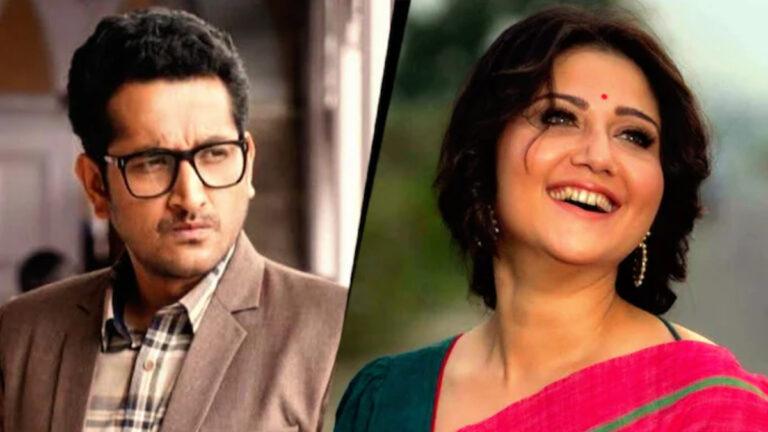
New Delhi, May 22, 2026 — A five-year-old social media exchange has come back to haunt two of Bengal’s most prominent film personalities. Actors Parambrata Chatterjee and Swastika Mukherjee are facing serious legal trouble after a criminal complaint was lodged against them at Kolkata’s Gariahat Police Station. The complaint links their old tweets to the brutal post-poll violence that tore through West Bengal following the 2021 Assembly Election results.

The First Information Report (FIR) stems from a legal complaint filed by advocate Joydeep Sen. He accuses the high-profile actors of “abetting, encouraging, and instigating” large-scale political violence during an incredibly volatile period in the state’s recent history.

The Social Media Trail

The controversy dates back to May 2, 2021—the exact day the West Bengal Assembly election results were announced, confirming a landslide victory for the ruling Trinamool Congress (TMC).

According to the police complaint, Parambrata Chatterjee posted a tweet in Bengali at approximately 4:00 PM that afternoon. Translated to English, the post read:

(Note: “Rogorani” is a local colloquial term often used in heated political rhetoric to mock or target opponents.)

Minutes later, acclaimed actress Swastika Mukherjee reportedly interacted with the tweet, replying with a laughing emoji and writing in Bengali, “Hahahah Hok Hok” (“Let it happen”).

Words vs. Real-World Consequences

While social media banter is common during major political events, the timing of these posts forms the core of the legal case against the actors. The complainant, advocate Joydeep Sen, argues that these statements cannot be brushed off as harmless commentary. Given that both individuals are highly influential public figures with massive followings, the complaint alleges their words had a devastating, real-world impact

The FIR points out a chilling chronological alignment. Roughly one hour after the tweet was posted, BJP worker Abhijit Sarkar was brutally murdered by political workers in Kolkata’s Beleghata area—a landmark case in which the culprits have since been tried and sentenced.

Furthermore, the complaint states that from the late afternoon of May 2, 2021, onward, organized, retaliatory violence erupted across multiple districts of West Bengal. Opposition supporters, primarily belonging to the BJP, faced targeted assaults, arson, extortion, and sexual violence.

“Their remarks directly instigated the murders of political workers, the harassment of women, and the widespread chaos carried out across the state,” the complainant stated, justifying the charges under Section 107 of the Indian Penal Code, which deals with abetment and incitement.

The Dark Shadow of the 2021 Elections

To understand why a five-year-old tweet is causing such a massive storm today, one has to look back at the sheer scale of the 2021 West Bengal election violence. Held across eight long phases, the election saw an incredible voter turnout of 82%. However, the democratic exercise was deeply marred by blood and intimidation.

Data from the election period reveals a shocking timeline of unrest:

  • April 2021 (Polling Phase): Recorded 123 severe violent events and 19 deaths.

  • May 2021 (Post-Result Phase): Recorded 88 violent events and 31 deaths, mostly retaliatory in nature.

The scale of the post-poll horrors eventually forced the Calcutta High Court to step in, taking strict cognisance of the human rights violations. The High Court subsequently ordered the Central Bureau of Investigation (CBI) to probe the cases of murder and sexual assault, while setting up a Special Investigation Team (SIT) to look into other cases of arson and property destruction.

Silence from the Film Fraternity

As the news of the FIR broke, a heavy silence settled over Tollywood (the Bengali film industry). Parambrata Chatterjee, internationally recognized for his roles in films like Kahaani, did not respond to repeated phone calls or text messages regarding the legal development. Swastika Mukherjee, known for her powerful performances and fierce social media presence, has also declined to comment on the matter.

The development has reignited a fierce debate regarding the responsibilities of celebrities on digital platforms. In a state as politically sensitive as West Bengal, where political rivalries frequently spill over into physical violence, legal experts suggest that public figures can no longer hide behind the defense of “digital sarcasm.”

A Recurring Theme in Bengal Politics

This is not the first time a major cultural icon in Bengal has faced legal heat over election-related rhetoric. Veteran actor and politician Mithun Chakraborty previously faced a similar legal battle when an FIR was filed against him by the TMC. Chakraborty was accused of inciting violence through his popular, aggressive movie dialogues—such as “I will hit you here and your body will fall in the crematorium”—during an election rally.

As the law catches up with past internet footprints, the case against Parambrata and Swastika highlights a sobering reality: in the internet age, deleted posts or passage of time do not guarantee immunity. For Bengal’s elite, the ghosts of the 2021 election violence continue to loom large, proving that words typed in a moment of political euphoria can carry a heavy price years down the line.

Viral App ‘Cockroach’ Sparks Parental Pani

0

New Delhi, May 22, 2026 — The rapid rise of the viral social media app ‘Cockroach’ has left millions of users hooked—and at least two parents completely sleepless. What began as a quirky tech project by a young developer has morphed into a global digital phenomenon, setting feeds ablaze and leaving the founder’s household in a state of late-night panic.

As the platform’s user base spikes exponentially by the hour, the sheer scale of the sudden fame and data infrastructure demands have turned the founder’s family home into a chaotic, 24-hour command center.

From Midnight Project to Global Frenzy

The app—uniquely named ‘Cockroach’ for its promised “indestructibility” against traditional algorithmic censorship and its chaotic, fast-moving user interface—went from a few thousand downloads to the top of global App Store charts over the week. For the founder, a young engineer still living at home, the sudden influx of millions of active users meant immediate server overloads, urgent investor calls, and non-stop debugging sessions.

However, the heaviest toll isn’t being paid in computing power, but in parental peace of mind. Neighbors report seeing the lights at the family residence burning straight through the night as the young creator scrambles to keep the platform online amid intense viral traffic.

“We Haven’t Slept in Days”

Speaking anonymously from their front porch, the founder’s parents expressed a mix of immense pride and sheer terror regarding the sudden explosion of the app.

The psychological strain on families of overnight tech successes is a growing talking point in Silicon Valley. When a backyard project scales into a multi-million-user ecosystem in mere days, parents often find themselves thrust into roles they never auditioned for—acting as makeshift technical assistants, security coordinators, and emotional anchors for their overwhelmed children.

Navigating the Tech Wave

For now, the ‘Cockroach’ app shows no signs of slowing down, continuing to dominate social media discourse with its hyper-interactive, fast-paced format. Tech analysts suggest that the platform’s unique resilience to data fatigue is exactly why it is spreading so rapidly.

As specialized tech legal groups and potential buyers begin circling the young founder, the household is preparing to scale operations out of the living room and into a formal corporate space. Until that transition happens, however, the founder’s parents will likely keep the coffee brewing and continue losing sleep as their child’s creation continues to conquer the internet.

SSC CGL 2026: Apply Now for 12,256 Posts at ssc.gov.in

The Staff Selection Commission (SSC) has officially released the highly anticipated Combined Graduate Level (CGL) 2026 examination notification. This recruitment drive aims to fill an estimated 12,256 tentative vacancies for coveted Group ‘B’ and Group ‘C’ posts across various ministries, departments, and organizations within the Government of India. With thousands of administrative, inspector, and auditor roles on the line, the online application window opened on May 21, 2026, kicking off one of the country’s largest competitive recruitment cycles.

Aspirants looking to secure a central government job must submit their forms through the commission’s official website at ssc.gov.in. The deadline for online application submission is June 22, 2026, by 11:00 PM, while the last date to complete online fee payments is June 23, 2026. For applicants who make formatting errors or mistakes during submission, the SSC will provide a correction window from June 29 to July 1, 2026, allowing them to edit their details after paying a nominal correction fee.

Core Eligibility Criteria & Important Changes

To apply for the CGL 2026 exam, candidates must understand the multi-layered eligibility framework baseline set by the commission:

  • Educational Qualifications: A Bachelor’s Degree from a recognized university or institute is the fundamental requirement. Final-year graduation students are permitted to apply provisionally, provided they successfully obtain their qualifying degrees before the crucial cutoff date of August 1, 2026. Notable structural updates this year include expanded eligibility for Statistical Investigator roles, which now includes graduates with backgrounds in Artificial Intelligence (AI), Data Science, Computer Science, and Information Technology (IT).

  • Age Limits & Cutoff: The age requirements range between 18 to 32 years, scaling based on the specific designation of the post. The definitive reference date for calculating a candidate’s age is fixed as August 1, 2026. Government-mandated age relaxations remain active for reserved categories, offering a 5-year relaxation for SC/ST and a 3-year relaxation for OBC candidates.

  • Application Fees: The processing fee remains a nominal ₹100 for General, OBC, and EWS male candidates. Conversely, all female applicants along with candidates belonging to SC, ST, PwBD, and Ex-Servicemen (ESM) categories are completely exempted from payment.

Examination Structure and Strategy

The SSC CGL selection process continues to heavily rely on its structured two-tier system, though candidates should note a few subtle administrative adjustments this year. The Tier-I computer-based test, acting as a qualifying gateway, is slated for August–September 2026. This stage features 100 multiple-choice questions spread equally across General Intelligence & Reasoning, General Awareness, Quantitative Aptitude, and English Comprehension. Success in this preliminary stage is critical, as it unlocks access to the high-stakes Tier-II exam in December 2026, which serves as the ultimate benchmark for creating the final merit rank and bringing you one step closer to your desired government career.

Aishwarya Rai Flies to Cannes with Aaradhya, Silencing Rumors

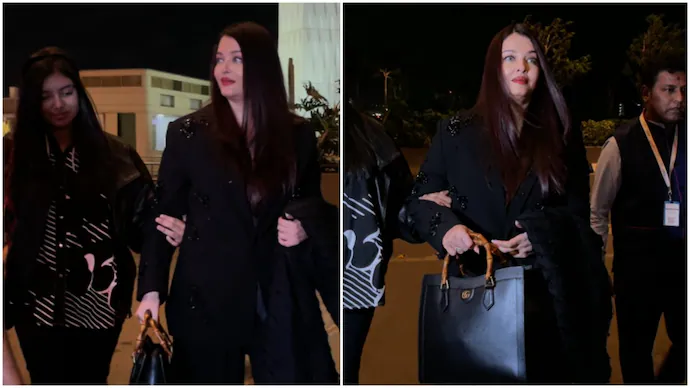
New Delhi, May 22, 2026: The “Queen of Cannes” has officially boarded her flight, putting to rest days of anxious speculation. Bollywood icon Aishwarya Rai Bachchan was spotted at Mumbai’s international airport late Thursday night, jetting off to the French Riviera for the 2026 Cannes Film Festival. Maintaining her long-standing tradition, the actress was accompanied by her daughter and favorite travel partner, Aaradhya Bachchan. The duo instantly sent the paparazzi into a frenzy, smiling warmly and confirming that the festival’s most anticipated Indian regular is indeed returning for her 23rd year on the global stage.

The unexpected travel update serves as a major relief for global fashion and cinema enthusiasts. Rumors had been swirling that Aishwarya might skip this year’s prestigious event after fans noticed her absence from L’Oréal Paris’s recent high-profile promotional campaigns, which prominently featured fellow global ambassadors like Alia Bhatt, Viola Davis, and Eva Longoria. The sudden lack of promotional materials featuring the veteran star had sparked widespread debate across social media, with many worrying that the festival would feel incomplete without her signature red-carpet moments.

Turning the airport departure gates into a literal prequel to the Cannes red carpet, the mother-daughter duo arrived in perfectly coordinated, ultra-chic black ensembles. Aishwarya opted for sophisticated power dressing, wearing a structured black blazer adorned with intricate, shimmering floral sequin embroidery that caught the flashing camera lights. Aaradhya mirrored her mother’s sleek aesthetic, pairing a black leather jacket over a black-and-white buttoned top and trendy flared jeans. Before heading past security, Aishwarya shared lighthearted moments with the press, pausing to take a photo with a young fan and even playfully alerting a chaotic photographer that he had dropped his footwear.

Representing L’Oréal Paris, Aishwarya is reportedly slated to make her major red-carpet appearance on the closing day of the festival, capping off the international celebration in style. Ever since her historic debut at the French Riviera in 2002 alongside Shah Rukh Khan and director Sanjay Leela Bhansali for Devdas, she has built an unparalleled international rapport. While recent years have seen a surge of newer Indian celebrities making their debuts at the festival, the overwhelming fan reaction to her airport appearance proves that Aishwarya Rai Bachchan remains the definitive, ultimate centerpiece of India’s legacy at Cannes.

Living with Legends: Inside India’s Cobra Village

0

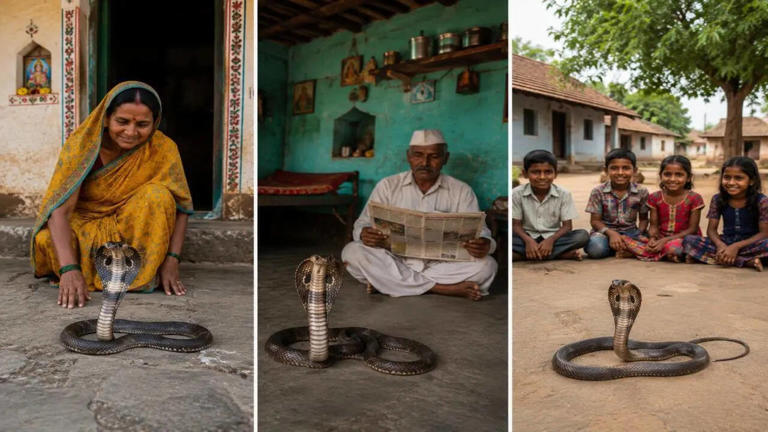
Deep in the arid plains of Maharashtra’s Solapur district, about 200 kilometers from Pune, lies the unassuming village of  Shetphal.To an outsider, it looks like any other rural Indian settlement with its narrow lanes and modest houses. Step inside any doorstep, however, and you are likely to be greeted by a sight that defies human instinct: a fully grown, highly venomous Indian Cobra (Naja naja) slithering across the living room floor or resting quietly near the kitchen rafters. Known globally as the Snake Village of India, Shetphal is home to a community of roughly 2,600 residents who live in absolute, fearless harmony with hundreds of wild cobras.

What makes Shetphal truly extraordinary is not just that snakes reside here, but how intentionally the villagers accommodate them. By long-standing custom, when building a new house, residents are required to construct a Devasthan (a dedicated sacred alcove or hollow space within the ceiling or walls) specifically for the snakes to seek shelter, rest, and escape the harsh afternoon heat. The reptiles are not caged, defanged, or kept as pets; they are treated as free-roaming, revered guests closely linked to Lord Shiva and the serpent deity Nag Devta. It is entirely common to see cobras gliding through school classrooms or lounging in courtyards while toddlers play just inches away.

Wildlife biologists and behaviorists who visit the village point to a deeply ingrained understanding of reptile psychology rather than divine intervention. Because the arid Solapur climate offers a perfect natural habitat for rodents and reptiles, encounters were historically inevitable. Over generations, the people of Shetphal learned to replace fear with calculated calm. They avoid sudden, threatening movements, never intentionally harm a snake, and deeply understand the creatures’ warning signs. Because the snakes are never cornered or provoked, their defensive strike reflex remains untriggered, resulting in an informal, peaceful coexistence.

Today, this ancient covenant has transformed Shetphal into an emerging hub for ecotourism and cultural documentaries. Travelers and thrill-seekers flock to the village to witness this surreal dynamic firsthand, especially during the annual festival of Nag Panchami, when the entire community gathers to offer milk and prayers to their slithering neighbors. While wildlife authorities continue to urge caution when dealing with venomous species, Shetphal stands as a fascinating living proof of how mutual respect and deep ecological awareness can completely bridge the gap between human survival and the wild.

Weekend OTT Watchlist: What to Stream This Week

New Delhi, May 22, 2026: The digital streaming landscape is buzzing as major OTT platforms roll out a stacked lineup of releases for the weekend of May 18 to May 24, 2026. Audiences looking to sink into their couches have a buffet of genres to choose from, spanning intense courtroom standoffs and gritty crime sagas to glamorous reality television and high-concept Hollywood satire. Leading the charge are highly anticipated domestic titles alongside star-studded international projects on platforms like Netflix, Amazon Prime Video, and ZEE5.

The Headline Acts: Legal Battlegrounds and Rural Vengeance

At the forefront of this week’s Indian originals is System, streaming on Amazon Prime Video. Directed by Ashwiny Iyer Tiwari, this gritty courtroom thriller pairs Sonakshi Sinha with powerhouse performer Jyotika. Sinha portrays Neha Rajvansh, an ambitious public prosecutor from a powerful legal family who faces a strict challenge from her father (Ashutosh Gowariker) to prove her worth outside his shadow. Teaming up with a humble courtroom stenographer played by Jyotika, Neha is thrown into a high-stakes legal case where the rising moral dilemmas and power struggles ask a poignant question: does power ultimately shape the truth?

For fans of raw, socio-political crime thrillers, ZEE5 delivers Satrangi: Badle Ka Khel. Set deep within rural Uttar Pradesh, the series is directed by Jai Basantu Singh and stars Anshumaan Pushkar as Bablu Mahto. Following the brutal murder of his father, a traditional Launda Naach performer, Bablu is forced to step into his father’s shoes while secretly engineering a cold, calculated plot of revenge against a ruthless, upper-caste feudal family. Boasting a heavy-hitting supporting cast that includes Kumud Mishra and RJ Mahvash, the narrative promises an uncompromising look at institutional corruption, caste politics, and personal humiliation.

Glitz, Glamour, and Gender Reversals

Shifting gears to unscripted drama, Netflix serves up luxury and social warfare with Desi Bling. The reality series tracks the opulent, fast-paced lives of ultra-wealthy Indian expats navigating the elite social circuit of Dubai. Popular television couple Karan Kundrra and Tejasswi Prakash anchor the chaos, steering viewers through extravagant parties, underlying rivalries, and deep personal tensions. With promised guest appearances from Bollywood A-listers like Tiger Shroff and Shilpa Shetty, the show offers a heavy dose of guilty-pleasure viewing.

On the international front, Netflix also dropped Ladies First, a sharp satirical comedy headlined by Sacha Baron Cohen and Rosamund Pike. The film takes a brilliant, high-concept approach to modern social commentary by imagining a parallel world where traditional gender roles are completely reversed. Cohen plays Damien Sachs, a chauvinistic, arrogant executive who suffers a freak accident and wakes up in a matriarchal society where women hold all systemic wealth and political leverage. As he tries to claw his way back to the top, he finds himself repeatedly outmaneuvered by a formidable leader played by Pike.

The Expanded Binge-Watch Guide

Beyond the major headlines, the weekend features several other heavy hitters that shouldn’t be overlooked.

Whether you are in the mood for the heavy emotional gravity of a rural vendetta, the intellectual sparring of a legal battle, or a brain-turning Hollywood satire, the streaming slate for the week ensures you won’t run out of quality content to binge.