Home Blog Page 83

Isha Ambani Reimagines “Quiet Luxury” at Venice Biennale 2026

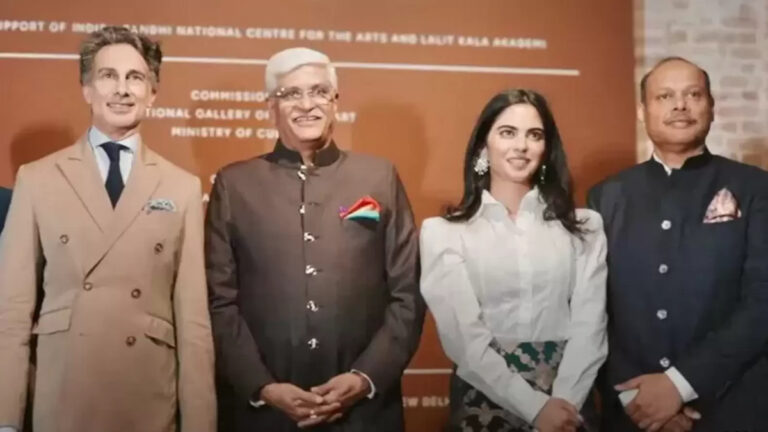
New Delhi, May 7, 2026 — Fresh off the high-octane glamour of the Met Gala in New York, Isha Ambani has once again proven why she is a global fashion force to be reckoned with. Arriving in the “Floating City” for the prestigious 61st Venice Biennale, the Director of Reliance Industries skipped the avant-garde theatrics of the red carpet in favor of a timeless silhouette: the classic shirt-and-skirt combination.

By pairing a crisp, tailored white shirt with a rich, artisanal Indian textile, Isha didn’t just attend an art event; she curated a fashion moment that bridged the gap between 2010s “IT girl” nostalgia and modern “Quiet Luxury.”

The Return of an Iconic Duo

For fashion enthusiasts, the shirt-and-skirt combo evokes memories of the early 2010s, a period where the “effortless chic” aesthetic dominated street style and runways. However, Isha Ambani’s 2026 version is a far cry from the casual cotton pairings of the past. Her ensemble is a masterclass in indo-western fusion, balancing structured Western tailoring with the soulful weight of Indian heritage.

Decoding the Look: Art on the Body

The Venice Biennale is often called the “Olympics of the Art World,” and Isha’s outfit reflected that spirit of curation.

  • The Foundation: She opted for a tailored white cotton poplin blouse. The shirt featured a sharp collar, front button closures, and sophisticated puffed sleeves that added a touch of drama to an otherwise minimalist piece.
  • The Showstopper: The centerpiece was a high-waisted Banarasi silk skirt in a deep, emerald green shade. The skirt featured intricate gold brocade embroidery—a signature of Indian craftsmanship—and was cut with a modern above-the-ankle hem and a subtle back slit for ease of movement along the Venetian canals.
  • The Jewels: Keeping with her trend of “sentimental styling,” Isha accessorized with family heirlooms. She wore diamond-encrusted flower-shaped earrings and statement rings that caught the soft Italian sunlight.
  • The Finish: Her beauty look was intentionally understated to let the textures of the silk speak. She wore her hair in a simple center part with loose waves, paired with “clean girl” makeup—mascara-coated lashes, feathered brows, and a glossy pink lip.

A Global Stage for Indian Craft

Isha Ambani’s presence in Venice is more than just a personal appearance; it is a significant cultural milestone. The Nita Mukesh Ambani Cultural Centre (NMACC) has partnered with India’s Ministry of Culture to bring the India Pavilion back to the Venice Biennale after a seven-year hiatus.

The pavilion, titled “Geographies of Distance: Remembering Home,” is curated by Dr. Amin Jaffer. It explores the themes of heritage and identity in a country undergoing rapid transition. By wearing a Banarasi silk skirt—a textile deeply rooted in the soil of Uttar Pradesh—Isha acted as a living extension of the pavilion’s mission.

“The India Pavilion is a truly collaborative effort,” Isha remarked during the inauguration. “It ensures that India’s voice—complex, layered, and unmistakably its own—is heard clearly in the global conversation of art.”

From the Met Gala to the Arsenale

This Venetian appearance follows Isha’s viral moment at the 2026 Met Gala, where she wore a custom Gaurav Gupta sari woven with pure gold threads and a blouse featuring over 1,000 diamonds. While the Met Gala was about “Couture as Art,” her Venice look is about “Fashion as Lifestyle.”

Experts suggest that the shirt-and-skirt trend is poised for a massive comeback because of its versatility. It allows the wearer to highlight high-quality textiles (like Banarasi silk or Kanjivaram) without the complexity of a traditional drape, making it perfect for international events where mobility and elegance are equally important.

Why the “Shirt-and-Skirt” Works in 2026

In an era where “fast fashion” is increasingly criticized, Isha Ambani is championing a move toward sustainable luxury and investment pieces.

ElementModern Appeal
White ShirtThe ultimate wardrobe staple; represents clarity and professionalism.
Artisanal SkirtSupports local weavers and preserves traditional techniques.
SustainabilityBoth pieces can be styled separately, increasing the garment’s lifecycle.
Cultural PrideSubtly introduces ethnic identity into a global corporate/art setting.

Conclusion: The Ambani Influence

As the 61st Venice Biennale kicks off, Isha Ambani has set the sartorial tone for the season. She has demonstrated that you don’t need a ten-foot trail or a gravity-defying headpiece to command a room. Sometimes, the most powerful statement is a return to the basics—elevated by the hands of master craftsmen and the confidence of a woman who knows her roots.

Whether she is navigating the steps of the Met or the bridges of Venice, Isha Ambani continues to be India’s unofficial fashion ambassador, proving that the most enduring trend of all is heritage.

James Cameron and Disney Face Legal Battle Over Teen Actor Likeness in ‘Avatar’

New Delhi, May 7, 2026: The world of Pandora is known for its breathtaking bioluminescence, towering Hallelujah Mountains, and the Na’vi—the blue-skinned, ten-foot-tall inhabitants created through groundbreaking motion-capture technology. However, a new legal storm is brewing on Earth that threatens to overshadow the cinematic achievements of the Avatar franchise. Legendary director James Cameron, his production company Lightstorm Entertainment, and media giant Disney have been dragged into a high-stakes lawsuit involving allegations of the unauthorized use of a teen actor’s likeness.

The Core of the Controversy

The lawsuit, filed recently in a California Superior Court, centers on claims made by a young performer (whose identity is being protected in some filings due to their age at the time of production) and their legal guardians. The plaintiff alleges that the production team behind Avatar: The Way of Water and subsequent sequels used the actor’s physical features, facial expressions, and unique movements to create a prominent Na’vi character without proper compensation, consent, or a valid contract.

At the heart of the dispute is the distinction between “performance capture” and “likeness theft.” While most actors in the Avatar universe are credited and compensated for their motion-capture performances—such as Zoe Saldaña or Sam Worthington—the plaintiff claims their likeness was “harvested” during early workshops and technical tests, then integrated into a digital character without them being officially cast or paid for the final product.

The Allegations: Beyond “Digital Makeup”

The legal complaint paints a picture of a complex production environment where hundreds of hours of reference footage are captured to train the AI algorithms and rendering engines that bring the Na’vi to life. The plaintiff’s legal team argues that their client’s “biometric data”—the specific geometry of their face, the way their eyes move, and their skeletal proportions—was used as the primary blueprint for a character that has since become a central figure in the franchise’s marketing and merchandise.

“This isn’t just about a background extra,” said a legal analyst familiar with the case. “The plaintiff is claiming that the character’s ‘soul’—the micro-expressions that make a digital character feel human—was taken directly from a teenager who was led to believe they were just participating in a screen test.”

The lawsuit seeks unspecified damages, citing breach of contract, violation of “Right of Publicity” laws, and “unjust enrichment.” The latter suggests that Disney and Lightstorm have profited to the tune of millions of dollars from a character whose appeal is built on the plaintiff’s inherent physical traits.

Disney and James Cameron’s Defense

In preliminary statements and filings, the legal teams representing Disney and James Cameron have remained firm, dismissing the claims as “meritless.” Their defense likely rests on several pillars:

  1. Work-for-Hire Agreements: Studios typically have ironclad contracts that grant them the rights to any footage or data captured during auditions, rehearsals, or tests.
  2. Creative Transformation: The defense is expected to argue that the Na’vi characters are “transformative” works of art. Because the characters have blue skin, tails, and feline features, they argue that the final digital asset is a creation of the visual effects (VFX) artists, not a direct copy of any single human.
  3. The Scale of Production: With thousands of artists at Wētā FX working on these films, the studios argue that no single person’s likeness is the sole basis for a character, but rather a composite of various references.

James Cameron, known for his perfectionism and deep involvement in the technical aspects of his films, has long championed motion capture as a “pure form of acting.” He has yet to comment personally on the litigation, but his production company has indicated it will vigorously defend its creative processes.

Why This Case Matters: The “Digital Twin” Era

This lawsuit arrives at a pivotal moment for the entertainment industry. The rise of Artificial Intelligence (AI) and “Deepfake” technology has made it easier than ever for studios to create digital humans. This has sparked a massive debate in Hollywood about “digital rights.”

During the 2023 SAG-AFTRA strikes, one of the primary sticking points was the protection of an actor’s likeness against AI replication. Actors expressed fear that studios could pay them for one day of work, scan their bodies, and then use their digital likenesses forever without further pay or permission.

The Avatar case is a “canary in the coal mine.” If the court finds in favor of the teen actor, it could set a massive legal precedent. It would signal to major studios that even “reference data” or “test footage” carries significant value and requires explicit, long-term licensing.

The Human Element in a Digital World

While the legal battle unfolds in courtrooms, the case also raises ethical questions. The plaintiff was a minor during the alleged “harvesting” of their likeness. Legal experts are questioning whether a minor—or even their parents—can fully grasp the long-term implications of signing away their “digital soul” for a franchise that may span decades.

As seen in the image above, motion capture involves placing dozens of markers on an actor’s face to track every twitch of a muscle. To the studio, this is data. To the actor, it is their identity. The lawsuit argues that for a teen actor, seeing their own smile or “look” on a global superstar character can be a confusing and exploitative experience if they aren’t part of the journey.

Potential Outcomes

There are three likely paths this case could take:

  • A Quiet Settlement: Disney is known for protecting its brand image. If the plaintiff’s evidence (such as side-by-side facial comparisons or internal emails) is strong, the studio may choose to settle out of court for a significant sum to avoid a public trial and a potentially restrictive legal precedent.
  • A Landmark Trial: If Disney and Cameron choose to fight, this could become one of the most important intellectual property cases in cinema history. A victory for the studio would solidify their right to use digital tools with broad creative freedom. A victory for the actor would force a total overhaul of how motion-capture contracts are written.
  • Dismissal: If the studio can prove the actor signed a comprehensive waiver or that the character is sufficiently different from the human source, the case may be thrown out before it ever reaches a jury.

Conclusion

The Avatar franchise has always been about the tension between the natural world and industrial expansion. It is ironic, then, that the films are now at the center of a real-world conflict between human identity and corporate technology.

As James Cameron prepares for the release of Avatar 3, the shadow of this lawsuit looms large. It serves as a reminder that behind every shimmering digital character is a human being—and in the modern age, the most valuable thing an actor owns isn’t just their talent, but their very likeness. Whether the courts see a “blue alien” or a “digital stolen identity” remains to be seen, but the result will undoubtedly change Hollywood forever.

Apple Green Revolution: A ₹100 Crore Leap into India Renewable Future

0

New Delhi, May 7, 2026: In a significant move that underscores the growing intersection of global technology and sustainable energy, Apple has announced a strategic investment of ₹100 crore (approximately $12 million) into India’s renewable energy sector. This investment, made in partnership with CleanMax, one of India’s leading renewable energy developers, marks a pivotal moment in Apple’s ambitious “Apple 2030” roadmap—a plan to become carbon neutral across its entire global supply chain and product life cycle by the end of this decade.

The Partnership: Powering More Than Just iPhones

The collaboration between the Cupertino-based tech giant and Mumbai-headquartered CleanMax is designed to boost India’s clean energy capacity significantly. The primary goal of this ₹100 crore venture is to develop 150 megawatts (MW) of new renewable energy projects.

To put that number into perspective:

  • Household Impact: The energy generated is expected to power nearly 1.5 lakh (150,000) Indian households annually.
  • Commercial Scale: The projects will focus on the Commercial and Industrial (C&I) sector, providing a blueprint for how large corporations can transition from fossil fuels to clean power.

This isn’t the first time these two giants have shaken hands. Apple and CleanMax previously collaborated on rooftop solar installations that currently power Apple’s corporate offices and its flagship retail stores in Mumbai and Delhi. This new investment, however, shifts the scale from “rooftop” to “utility-grade,” signaling a much deeper commitment to the Indian power grid.

Why India? Why Now?

India has emerged as a cornerstone for Apple, not just as a burgeoning consumer market but as a critical manufacturing hub. As the company shifts more of its iPhone production to Indian soil—through partners like Foxconn and Tata—the carbon footprint of its supply chain in the region has naturally increased.

Sarah Chandler, Apple’s Vice President of Environment and Supply Chain Innovation, highlighted the dual benefit of this move:

“At Apple, our commitment to the environment is also a driving force for innovation. We are proud to expand our efforts to invest in India’s clean energy economy and protect the country’s precious natural resources.”

By investing in local renewable infrastructure, Apple is effectively “cleaning up” the electricity that its Indian suppliers use, ensuring that an iPhone “Assembled in India” is as green as one designed in California.

Beyond Solar: A Holistic Green Strategy

While the ₹100 crore investment in CleanMax grabbed the headlines, it is only one piece of a larger environmental puzzle Apple is assembling in India. On the same day as the energy announcement, the company unveiled several other initiatives:

1. Tackling Plastic Pollution with WWF-India

Apple is expanding its partnership with the World Wildlife Fund (WWF) to address the growing crisis of plastic waste. The initiative focuses on:

  • Traceable Recycling: Setting up systems to collect and sort plastic waste with full transparency.
  • Local Impact: After a successful pilot in Goa, the program is being expanded to cities like Coimbatore, working directly with municipal authorities and waste workers to prevent plastic from leaking into the ecosystem.

2. Supporting “Green” Startups via Acumen

Through a partnership with the non-profit Acumen, Apple is providing grants and mentorship to six early-stage Indian enterprises. These startups are working on innovative solutions like:

  • Saptkrishi: Developing low-cost cold storage to help farmers reduce food waste.
  • MOWO Fleet: Promoting electric mobility by training women to drive and own EV taxis.
  • Yotuh Energy: Creating electric-powered refrigeration for transport.

The Road to 2030: The Global Context

Apple’s latest report shows that the company has already reduced its total greenhouse gas emissions by over 60% since 2015, even as its business has grown. However, the final 40% is the hardest to tackle, as it involves the “Scope 3” emissions—the carbon generated by thousands of third-party suppliers.

The India-CleanMax deal serves as a model for Apple’s global strategy. By co-investing in energy projects, Apple helps its suppliers overcome the high upfront costs of switching to renewables, creating a “win-win” where the supplier gets cheaper, cleaner energy, and Apple meets its climate targets.

What This Means for India’s Energy Sector

For the Indian renewable energy market, a ₹100 crore injection from a company with Apple’s prestige is a massive vote of confidence. It encourages other multinational corporations to look at Power Purchase Agreements (PPAs) and co-investment models.

Kuldeep Jain, Managing Director of CleanMax, expressed optimism about the future of corporate decarbonization:

“We see ourselves as a long-term net-zero partner to corporates. Apple continues to push the ecosystem to think bigger and move faster.”

Key Takeaways of the Investment:

FeatureDetails
Total Investment₹100 Crore
PartnerCleanMax Enviro Energy Solutions
Target Capacity150+ Megawatts
ImpactPowering ~150,000 households annually
FocusDecarbonizing the Indian supply chain

Final Thoughts: A Greener “Make in India”

The partnership between Apple and CleanMax is more than just a financial transaction; it is a signal that the “Make in India” initiative is maturing into a “Green Make in India” movement. As India strives to reach its own national goal of 500 GW of non-fossil fuel capacity by 2030, private investments from global tech leaders will be the catalyst that turns ambitious climate goals into reality.

For the average consumer, this means the next iPhone you buy might not just be a feat of engineering, but also a product of a cleaner, more sustainable Indian power grid.

Volatile Tug-of-War: Stock Markets End Flat

0

May 7, 2026: After a week of high-octane swings and record-shattering rallies, global stock markets took a collective breath on Thursday. Investors navigated a choppy session that saw major indices flicker between green and red, ultimately settling into a flat line as the tug-of-war between geopolitical optimism and macroeconomic caution intensified.

The market’s “wait-and-see” mood follows a euphoric Wednesday, where the S&P 500 and Nasdaq notched fresh all-time highs on hopes of a diplomatic breakthrough in the Middle East. However, as the sun rose on Thursday, that momentum hit a wall of reality: markets have priced in a “perfect” peace scenario, and any delay is now being viewed as a risk.

The Morning Rollercoaster

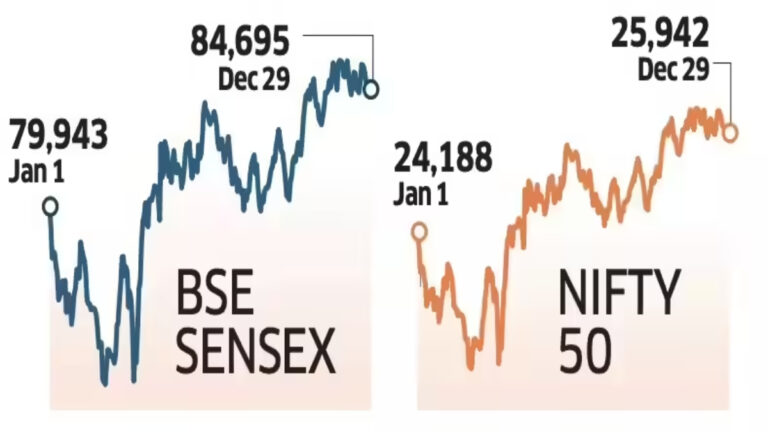
The trading day began with a distinct sense of hesitation. In the U.S., the Dow Jones Industrial Average hovered just below the historic 50,000 mark, a psychological barrier that has proven difficult to crack. Meanwhile, in Asian markets, the story was much the same. India’s BSE Sensex and NSE Nifty 50 opened with marginal losses before recovering to trade near their “flat” lines.

Key Index Performance (Mid-day Snapshots)

IndexLevelChangeSentiment
S&P 5007,364-0.05%Neutral
Dow Jones49,909+0.02%Testing 50k
Nasdaq Composite25,834-0.12%Tech Consolidation
BSE Sensex77,836-0.16%Cautious

The volatility index, often called the market’s “fear gauge,” ticked slightly higher as traders balanced strong corporate earnings against the looming deadline for a formal response from Tehran regarding the U.S.-led peace proposal.

Geopolitics: The “Hope vs. Fear” Seesaw

The primary driver of today’s erratic movement remains the situation in the Middle East. Markets surged earlier this week on reports that a one-page memorandum to end the conflict was nearing completion.

On Thursday, however, the narrative shifted from “if” to “when.” As mediators in Pakistan await Iran’s formal response, the market has entered a period of cautious consolidation.

“The market is swinging between hope and fear,” says VK Vijayakumar, Chief Investment Strategist at Geojit Investments. “The see-saw political game has been going on for some time, and until there is a definitive conclusion, we should expect these sudden pivots in sentiment.”

Crude oil serves as the most sensitive barometer for this tension. After Brent crude plunged nearly 8% on Wednesday to trade near $101 per barrel, it edged slightly higher on Thursday morning. For investors, higher energy prices act as a “shadow tax” on growth, complicating the Federal Reserve’s path toward cutting interest rates.

Earnings: The Reliable Anchor

While geopolitics provided the drama, corporate earnings provided the floor. The Q1 2026 earnings season has been remarkably robust, with a blended growth rate of over 15%.

Tech and AI Lead the Way

Technology remains the engine of the market. AMD and Nvidia continue to see high demand for AI infrastructure, while Alphabet (Google) recently posted its strongest monthly gain in over two decades.

However, even within Tech, there is a new “show me the money” attitude. Investors are no longer rewarding companies just for spending on AI; they are looking for evidence of revenue.

  • Winners: Companies like Microsoft and AMD that are showing direct cloud and chip revenue.
  • Laggards: Firms like Meta, which saw shares soften after significantly raising capital expenditure guidance for 2026 without an immediate corresponding jump in profit.

The Fed’s Conundrum

Adding to the volatility is the persistent cloud of inflation. While the Federal Reserve has hinted that the “neutral” rate is within reach, the recent energy shock caused by the maritime blockades has kept them in a hawkish stance.

Currently, the U.S. labor market remains resilient, with unemployment at a stable 4.3%. For the Fed, this is a double-edged sword: it proves the economy isn’t in a recession, but it also means there is no urgent pressure to cut rates, leaving markets to grapple with “higher for longer” borrowing costs.

What to Watch Next

As we head into the closing sessions of the week, three factors will determine whether markets can break out of this flat pattern:

  1. The Peace Response: Any headline regarding the U.S.-Iran memorandum will cause immediate, 100-point swings in the Dow.
  2. Oil Price Stabilization: If Brent crude stays below $100, it will provide the “inflation relief” the Fed needs to consider a summer rate cut.
  3. The 50,000 Milestone: All eyes are on the Dow Jones. A move above 50,000 could trigger a “FOMO” (fear of missing out) rally, while a failure to hit it might lead to short-term profit-taking.

The Bottom Line

Today’s flat trade isn’t a sign of weakness, but rather a sign of a market that is hyper-aware. After the massive gains of early May, the “easy money” has been made. From here, the path higher will require more than just optimism—it will require signatures on peace treaties and continued strength in the bottom lines of the world’s largest companies.

For the average investor, the message is clear: keep your seatbelt fastened. In 2026, the only constant is that things can change in the blink of a headline.

Iran Conflict Live: Trump Eyes “Possible” Deal as Israeli Airstrikes Hit Beirut

0

May 7, 2026: The geopolitical landscape of West Asia reached a fever pitch this week as a high-stakes “carrot and stick” strategy unfolded on the global stage. While U.S. President Donald Trump signaled a breakthrough in negotiations with Tehran, characterizing a peace deal as “very possible,” the reality on the ground remained starkly violent. On Wednesday evening, Israeli warplanes shattered a weeks-long relative calm in the Lebanese capital, bombing southern Beirut in a targeted strike that killed a top Hezbollah commander.

Trump’s Oval Office Optimism: A Deal in Sight?

Speaking from the Oval Office, President Trump told reporters that the last 24 hours of diplomatic engagement with Iran have been “very good.” His comments suggest that the two-month-old war between the United States and Iran—which has crippled global oil markets and sent gas prices soaring—could be nearing a diplomatic off-ramp.

“Iran wants to make a deal badly,” Trump asserted, emphasizing that any agreement would hinge on a permanent moratorium on Iran’s nuclear ambitions. “They cannot have a nuclear weapon, and they won’t. They’ve agreed to that.”

While the President’s tone was optimistic, it was underscored by a characteristic threat of escalation. Trump warned that if negotiations fail to produce a signed memorandum, the U.S. is prepared to resume a bombing campaign at a “much higher level and intensity” than previously seen. As a show of continued pressure, the U.S. military recently disabled an Iranian oil tanker in the Gulf of Oman after it allegedly attempted to breach a maritime blockade.

The Beirut Strike: A Message to Hezbollah

As Washington talked peace, Jerusalem intensified its military pressure. For the first time since a shaky ceasefire took effect on April 17, Israeli missiles struck the Ghobeiry area in Beirut’s southern suburbs.

The Israel Defense Forces (IDF) confirmed the strike targeted and killed Malek Ballout, the operations commander of Hezbollah’s elite Radwan Force. Prime Minister Benjamin Netanyahu was quick to take credit, stating, “No terrorist has immunity. We promised to bring security to the residents of our north, and we are doing exactly that.”

The timing of the strike is critical. Analysts suggest the assassination serves two purposes:

  1. Strategic Degradation: Neutralizing the leadership of the Radwan Force, Hezbollah’s most capable offensive unit.
  2. Diplomatic Leverage: Sending a clear signal to Tehran—Hezbollah’s primary benefactor—that Israel will not be bound by U.S.-led negotiations if it perceives an immediate threat on its border.

Economic Ripples: Oil and the Strait of Hormuz

The conflict’s most immediate global impact remains the closure of the Strait of Hormuz. With the vital waterway largely blocked, crude oil prices have hovered stubbornly above $100 a barrel.

However, Trump’s recent optimism sparked a relief rally in Asian markets. The Nikkei 225 jumped 4.6% as investors bet on a deal that would reopen shipping lanes for oil, natural gas, and fertilizer. The U.S. has reportedly paused “Project Freedom”—a naval effort to forcibly escort merchant ships through the strait—to give the current diplomatic push room to breathe.

The Proposed “One-Page” Peace Plan

According to reports, the proposed deal mediated through Pakistani channels is a concise “one-page memorandum.” While the full details remain under wraps, the core pillars include:

  • Nuclear Halts: A strict moratorium on Iranian uranium enrichment.
  • Economic Relief: Lifting specific U.S. sanctions and releasing frozen Iranian funds.
  • Maritime Security: The immediate reopening of the Strait of Hormuz to international shipping.

Tehran has reacted with characteristic caution. Foreign Ministry spokesperson Esmaeil Baghaei stated that the proposal is “still under review,” dismissing some reports of an imminent breakthrough as “media speculation.” Within Iran, hardline voices in the Parliament have mocked the U.S. efforts, calling them an attempt to save face after failing to break the blockade militarily.

A Region at a Crossroads

Despite the talks, the humanitarian toll continues to mount. In Lebanon, the Ministry of Health reports over 2,700 dead and 1.6 million displaced since March. In Gaza, despite a nominal ceasefire, skirmishes continue to claim civilian lives.

The coming 48 hours are viewed as a “make-or-break” window for the region. If Iran accepts the memorandum, it could signal the end of the most direct confrontation between Washington and Tehran in decades. If the deal collapses, the “bombing starts” threat from the White House, combined with Israel’s “decisive steps” in Lebanon, suggests a shift from a limited conflict to an all-out regional war.

For now, the world watches the diplomatic cables coming out of Islamabad and the smoke rising over Beirut, waiting to see which side of the “possible” deal the coin lands on.

Mallika Sherawat at 49: The Secrets to Her Ageless Flat Belly

New Delhi, May 7, 2026: At 49, Mallika Sherawat continues to be a fitness icon, proving that age is truly just a number when backed by unwavering discipline. While many celebrities often trend for quick-fix surgeries or “miracle” weight loss drugs, Mallika has attributed her toned physique—and that enviable flat belly—to a lifestyle rooted in ancient tradition and modern consistency.

From her early days in Murder to her recent fitness updates in 2026, here is a deep dive into the secrets behind her ageless transformation.

1. The Yoga Foundation: Iyengar Style

The centerpiece of Mallika’s fitness journey is not a high-intensity gym session, but Iyengar Yoga. Unlike faster-paced Vinyasa flows, Iyengar Yoga is a precise, alignment-focused practice developed by B.K.S. Iyengar.

  • Engineering the Body: Mallika often describes it as an “engineering approach” to fitness. She uses props like blocks, straps, and ropes to ensure her posture is perfect.
  • The Flat Belly Secret: Many of her favorite poses, such as Adho Mukha Svanasana (Downward-Facing Dog) and Urdhva Mukha Svanasana (Upward-Facing Dog), specifically engage the core and lengthen the spine. By holding these poses for longer durations, she builds deep muscle endurance that naturally tightens the abdominal wall.
  • Consistency over Intensity: For Mallika, yoga is a “daily ritual of self-love.” She avoids trendy workouts, preferring the long-term benefits of a 100% committed daily practice.

2. A Decade of Veganism

Mallika Sherawat has been a strict vegan for over ten years, a choice she made not just for ethics, but for her own metabolic health. By removing all animal and dairy products, she has effectively eliminated the heavy fats and hormones often found in dairy that can contribute to bloating and inflammation.

What’s on Her Plate?

Her diet is simple, seasonal, and largely home-cooked:

  • Fruits for Breakfast: She starts her day with a colorful mix of fresh fruits, with mangoes being her absolute favorite.
  • The “Clean” Lunch: Her midday meals typically consist of salads, quinoa, and Indian staples like bhindi (okra).
  • The Thai Green Curry Habit: One of her go-to comfort meals is vegan Thai green curry, which uses coconut milk and fresh vegetables to satisfy cravings without the heavy calories of cream-based gravies.
  • Dessert with a Twist: Mallika famously claims she “doesn’t eat dessert.” Instead, her “sweet treat” is a single date. By avoiding refined sugar entirely, she prevents the insulin spikes that are a primary cause of belly fat storage.

3. Resistance Training: Building “Rep by Rep”

While yoga provides her flexibility and core strength, her recent 2026 updates show a deeper commitment to the gym. Mallika believes in “building the body day by day, rep by rep,” especially on days when she doesn’t feel like working out.

  • Cardio Kickstart: She often begins her sessions with cycling to boost her heart rate and prepare her muscles.
  • Lower Body Strength: She incorporates leg curls and resistance exercises to maintain muscle mass, which naturally begins to decline in one’s late 40s.
  • Rope Pulls: For her upper body and core, she uses rope pulls to tone her arms and shoulders while keeping her midsection engaged.

4. The Science of a Flat Tummy after 40

Maintaining a flat stomach at 49 is biologically more difficult due to shifting hormones and a slowing metabolism. Mallika’s “secret” isn’t a secret at all—it’s a holistic approach to biology:

  1. Sleep is Non-Negotiable: She prioritizes at least 7-8 hours of sleep, which regulates cortisol (the stress hormone known to cause “belly pooch”).
  2. Fiber-Rich Intake: Her focus on leafy greens and legumes ensures high soluble fiber, which helps reduce visceral fat—the dangerous fat stored around internal organs.
  3. Mindful Eating: She avoids distractions while eating, allowing her to listen to her body’s hunger cues and prevent overeating.

The Takeaway

Mallika Sherawat’s message to her followers is clear: “No luck. No shortcuts. Her flat belly at 49 is the result of thousands of yoga sessions, a decade of plant-based eating, and the mental grit to show up even on her bad days.

As she approaches 50, she serves as a powerful reminder that the body responds exactly how the mind decides. For anyone looking to replicate her results, the formula is simple: prioritize alignment, embrace a plant-heavy diet, and remember that consistency is the only “magic pill” that actually works.

Peak Bengaluru: Viral ‘Premium Auto’ Driver Offers Fan, Water, and Charging for Extra Fee

0

May 7, 2026 — In a city where innovation is usually associated with billion-dollar tech unicorns and high-speed fiber optics, a humble three-wheeled vehicle is proving that the “startup spirit” of India’s Silicon Valley knows no bounds. A Bengaluru auto-rickshaw driver has taken the internet by storm after a photograph of his “Premium Service Menu” went viral, sparking a massive debate on social media about entrepreneurship, convenience, and the evolving nature of public transport.

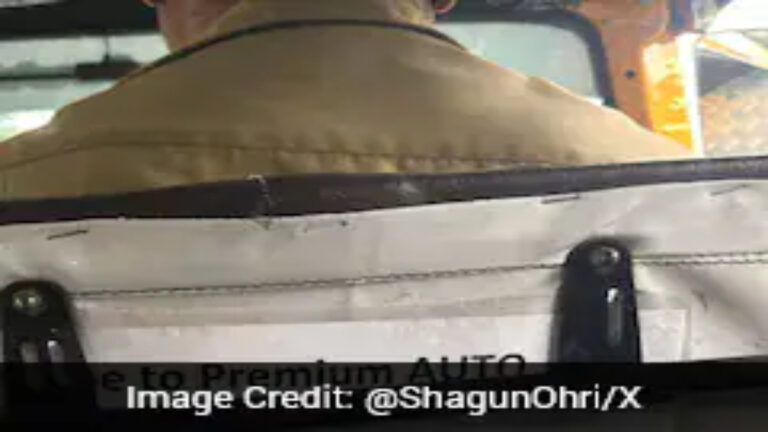
The buzz began when X (formerly Twitter) user Shagun Ohri shared a photo of a printed notice pasted behind the driver’s seat. While most commuters are used to seeing fare charts or QR codes for payment, this particular driver has introduced a menu of optional amenities available for a small fee, effectively turning his rickshaw into a “Premium Auto.”

What’s on the Menu?

The viral “Premium Auto” menu offers a range of services designed to tackle the common discomforts of commuting in Bengaluru’s notorious traffic and rising summer heat. The services listed include:

  • Electric Fan: ₹10 for 30 minutes of usage.
  • Chilled Drinking Water: ₹12 for a 500 ml bottle.
  • USB Mobile Charging: Chargeable for any pin type (multiple cables provided).

The presentation of the menu—clean, professional, and welcoming—immediately caught the eye of thousands online. For a city that frequently complains about auto drivers refusing rides or overcharging, this transparent, service-oriented approach felt like a breath of fresh air.

The Internet Reacts: Innovation or ‘Enshittification’?

The post has triggered a wave of reactions across platforms like X, Instagram, and Reddit, with the term Peak Bengaluru trending alongside the image. The responses have been largely positive, though some users raised interesting questions about the future of public commuting.

1. The Fans of the Fan

Many users praised the driver’s ingenuity. One social media user quipped, “The fan option is genius. I’ve always wanted someone to be a fan of me, even if it’s just for 30 minutes.” Others pointed out that during Bengaluru’s peak afternoon heat, a ten-rupee charge for a cool breeze is a bargain most commuters would happily pay.

2. Side-Hustle Culture

Business enthusiasts and local entrepreneurs hailed the driver as a “solopreneur.” Supporters argued that with rising fuel costs and the high commission rates taken by app-based aggregators, finding creative ways to supplement income is essential for survival.

“This is the kind of innovation I want to see,” wrote one commenter. “He isn’t forcing anyone to pay; he’s offering value-added services that solve real problems like a dead phone battery or thirst.”

3. The “Cabbification” of Autos

However, not everyone was sold on the idea. A segment of the internet debated whether this sets a precedent for “pay-to-play” public transport. Some users drew parallels to app-based cab services that charge premium rates for air conditioning.

“Next, we’ll be paying for Wi-Fi by the kilometer or a silence fee,” joked one user on Reddit. Others raised concerns about the legality of selling bottled water and extra services inside a commercial transport vehicle without specific permits.

The Context: A Changing Bengaluru

The viral “Premium Auto” comes at a time when the city’s transport landscape is under heavy scrutiny. Recent hikes in base auto fares—now standing at ₹36 for the first 2 kilometers and ₹18 per kilometer thereafter—have left many citizens looking for better value for their money.

The struggle between traditional “metered” autos and app-based aggregators like Uber, Ola, and Namma Yatri has also intensified. By offering “premium” features typically reserved for private cabs, this driver is bridging the gap between a budget auto ride and a luxury taxi experience.

Expert Take: The Customer-Centric Driver

Marketing experts suggest that the driver’s success isn’t just about the fan or the water; it’s about Customer Experience (CX).

“He has identified his ‘Ideal Customer Profile’ (ICP),” noted one marketing professional on LinkedIn. “A tech worker stuck in Silk Board traffic with a dying phone and no water is his perfect customer. By providing these solutions on the spot, he’s not just a driver; he’s a service provider.”

Is This the Future of Commuting?

While most Bengaluru auto drivers are still struggling with the basics of GPS and digital payments, the “Premium Auto” driver has set a new benchmark for personalization. Whether this remains a viral one-off or becomes a standard for “luxury” auto rides remains to be seen.

One thing is certain: in the city of startups, even an auto-rickshaw can be a laboratory for new business models. For now, if you find yourself stuck in a two-hour jam on the Outer Ring Road, keep an eye out for the “Premium Auto”—it might just be the most comfortable ₹10 you’ll ever spend.

From Thalapathy to CM: Vijay Final Film Title Card Goes Viral

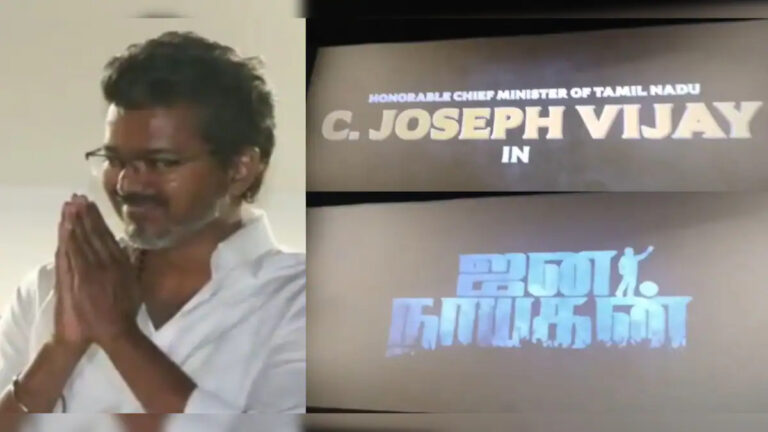
New Delhi, May 7, 2026: In a moment where life is truly imitating art, the Tamil film industry and the political landscape of Tamil Nadu have been set ablaze by a viral “title card” from Thalapathy Vijay’s highly anticipated final film, Jana Nayagan.

The video, which has been circulating like wildfire across X (formerly Twitter) and Instagram, depicts a cinematic introduction unlike any other in Indian history. Instead of the familiar, pulsing “Thalapathy” neon letters that have greeted fans for decades, the screen flashes a bold, regal title: “Honourable Chief Minister of Tamil Nadu C. Joseph Vijay.”

The clip, reportedly captured during a private screening or a leaked post-production session, shows a theater erupting into absolute pandemonium. But as the “Jana Nayagan” star prepares to hang up his acting boots for a full-time seat at the political table, the question remains: Is this the end of the ‘Thalapathy’ era?

The Viral Sensation: Fact or Fan-Made?

The timing of the leak couldn’t be more cinematic. Following the 2026 Tamil Nadu Legislative Assembly elections, Vijay’s party, Tamilaga Vettri Kazhagam (TVK), has emerged as a seismic force, securing 108 seats and ending decades of bipolar dominance by the DMK and AIADMK.

With Vijay now positioned as the state’s next Chief Minister, the viral title card has been hailed by fans as a “prophetic” moment. However, industry insiders and digital forensic experts suggest a note of caution.

  • The AI Theory: Several reports indicate the clip might be a high-quality AI-generated fan edit.
  • The “GOAT” Connection: Fans have pointed out that Vijay’s previous film, The Greatest of All Time (GOAT), subtly teased this reality with a car number plate reading “TN 07 CM 2026.
  • Official Silence: Neither the director, H. Vinoth, nor the TVK leadership has officially confirmed if the “Chief Minister” tag will replace the “Thalapathy” brand in the final theatrical cut.

Dropping the ‘Thalapathy’ Tag: A Strategic Move?

For over 30 years, “Thalapathy” (Commander) has been more than just a nickname; it was a badge of loyalty for millions. To drop it now would be a monumental shift in branding.

Why the change makes sense:

  1. A New Identity: As a Chief Minister-elect, continuing to use a “Commander” title might feel redundant or even subordinate. Moving to “Jana Nayagan” (People’s Leader) or “Chief Minister” aligns his screen presence with his constitutional reality.
  2. The “MGR” Path: Historically, stars like M.G. Ramachandran transitioned their screen titles to reflect their political stature. By adopting a “Chief Minister” title card, Vijay isn’t just an actor; he is a statesman appearing on screen.
  3. Finality: Jana Nayagan is widely regarded as Vijay’s “Farewell to Cinema.” Replacing the iconic tag serves as a symbolic “passing of the torch” from the entertainer to the administrator.

The Political Earthquake of 2026

The frenzy surrounding the title card is fueled by the unprecedented success of TVK. Just two years after launching the party in 2024, Vijay has managed to:

  • Defeat Incumbency: Push the DMK government into a minority position.
  • Capture the Youth Vote: TVK’s digital-first campaign and anti-corruption stance resonated deeply with first-time voters.
  • Build a Coalition: Vijay is currently in talks with the INC and other allies to reach the majority mark of 118, essentially reshaping the “INDIA” bloc’s dynamics in the South.

“In Sarkar (2018), he showed us how to disrupt the system. In 2026, he actually did it,” says a Chennai-based political analyst. “The ‘Chief Minister’ title card isn’t just a movie intro; it’s a victory lap.”

What’s Next for Jana Nayagan?

Despite the political triumph, Jana Nayagan has faced its share of hurdles. The film was recently caught in a certification battle with the CBFC, which flagged its heavy political themes during the election season. Now, with the elections concluded and Vijay heading toward the Secretariat, the film is expected to receive a massive global release.

Starring Pooja Hegde, Bobby Deol, and Mamitha Baiju, the film is directed by H. Vinoth, known for his gritty, realistic take on social issues. Fans are now expecting the movie to serve as a “policy manifesto” in cinematic form.

The Verdict

Whether the “Chief Minister” title card is a clever marketing leak, a fan’s AI dream, or the official new reality, one thing is certain: The era of Vijay the Actor is ending, and the era of Vijay the Leader has begun.

While the “Thalapathy” tag will forever be etched in the history of Kollywood, the viral roar from the theaters suggests that fans are more than ready to call him by his new title. As the state waits for the official swearing-in ceremony, the silver screen might just provide the ultimate dress rehearsal.

Viral Video of TVK Cadres and Police Predates Recent Election Results

0

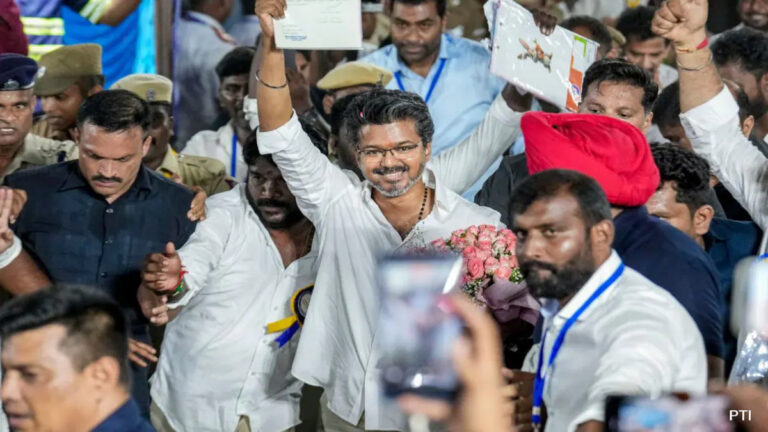
New Delhi, May 6, 2026 – In the wake of the historic 2026 Tamil Nadu Legislative Assembly election results, which saw actor-turned-politician Vijay’s Tamilaga Vettri Kazhagam (TVK) emerge as the single largest party, social media platforms have been flooded with various clips and political discussions. Among these, a viral video purportedly showing TVK women cadres in a heated argument with a police officer has resurfaced.

However, investigations confirm that this footage is not recent and has no connection to the post-election atmosphere or the counting process currently unfolding across the state.

The Context Behind the Video

The viral clip, which depicts an intense confrontation between party supporters and law enforcement, originated well before the May 2026 election results were finalized.

While the exact date of the specific incident captured in the video is earlier in the campaign cycle, it belongs to a period marked by high political friction and public scrutiny. Throughout the months leading up to the election, TVK’s rapid rise in popularity—coupled with massive campaign rallies across Tamil Nadu—led to frequent, localized interactions between party volunteers and police over crowd management, security protocols, and rally permits.

Why the Misinformation Spreads

The post-election period is a sensitive time characterized by high public interest and a hunger for news regarding the formation of the new government. Misleading posts often exploit this climate by resharing older, unrelated footage to create a narrative of post-poll unrest or controversy.

Fact-checkers and observers have noted that:

  • The Incident is Old: The specific confrontation in the viral video does not match the timeline or the security protocols currently in place at vote counting centers.
  • No Connection to Counting: Local police and election officials have confirmed that the counting process for the 2026 Assembly elections has been conducted with high security, and no such violent outbursts between party cadres and police have been reported at counting facilities.

2026 Election: A Historic Shift in Tamil Nadu

The resurfacing of such videos comes at a time when Tamil Nadu is witnessing a major political transition. For the first time since 1967, the state’s political landscape has shifted significantly, moving away from the traditional dominance of the two major Dravidian parties.

Key Highlights of the Election Performance:

  • TVK’s Milestone: In its first electoral outing, the Tamilaga Vettri Kazhagam secured 108 seats out of 234, positioning itself as the single largest party.
  • The New Assembly: The result has triggered intense political negotiations, as the party currently holds just under the majority mark required to form a government independently.
  • A New Era: The mandate reflects a strong desire for change among the electorate, with voter turnout and support for new political movements signaling a shift in the state’s long-standing political dynamics.

A Note on Responsible Consumption of Media

In the digital age, particularly during sensitive times like election result declarations, it is crucial for citizens to verify the authenticity of viral media before sharing it.

Government authorities and independent fact-checkers advise the public to:

  1. Check the Source: Rely on established news outlets rather than unverified social media handles.
  2. Examine the Timeline: Look for original timestamps or metadata that indicate when the video was first uploaded.
  3. Analyze the Content: Consider if the context (e.g., uniforms, crowd size, location details) matches the current event being reported.

As Tamil Nadu enters this new political chapter, officials continue to appeal for calm and suggest that stakeholders verify news through official election commission channels and reputable media organizations to avoid the spread of misinformation.

Vietnam President To Lam Receives Ceremonial Welcome on First India State Visit

0

New Delhi, May 6, 2026 – In a significant boost to the deepening bond between New Delhi and Hanoi, the President of Vietnam, To Lam, was accorded a grand ceremonial welcome at the forecourt of Rashtrapati Bhavan today. The reception marks a milestone in his maiden state visit to India, underlining the robust and evolving strategic partnership between the two Asian nations.

President To Lam, who assumed office as the President of Vietnam in April 2026, was received by President Droupadi Murmu and Prime Minister Narendra Modi. The atmosphere at the presidential palace was one of warmth and diplomatic significance, as children from local schools greeted the visiting leader while waving the flags of both India and Vietnam.

This high-level engagement occurs at a pivotal moment, as both countries celebrate the 10th anniversary of their Comprehensive Strategic Partnership, a relationship that has transformed significantly since its elevation in 2016.

A Journey Rooted in Heritage

Before his arrival in the national capital, President To Lam began his three-day state visit on Tuesday by traveling to the historic city of Bodh Gaya in Bihar. His visit to the Mahabodhi Temple—a site of profound spiritual importance—highlights the deep-rooted civilizational and Buddhist connections that have long linked the two countries.

In Bihar, President To Lam was welcomed by Chief Minister Samrat Choudhary, who remarked on the spiritual significance of the visit. The trip to Bodh Gaya served as a reminder that the India-Vietnam relationship is not merely built on contemporary geopolitical interests, but also on enduring cultural and historical foundations.

Strategic Discussions in New Delhi

Following the ceremonial reception at Rashtrapati Bhavan, President To Lam and Prime Minister Narendra Modi proceeded to Hyderabad House for intensive, delegation-level bilateral talks.

The Ministry of External Affairs (MEA) noted that these wide-ranging discussions are designed to inject fresh momentum into the bilateral agenda. Key areas of focus include:

  • Defence and Maritime Security: As both nations look to secure the stability of the Indo-Pacific region, collaboration in defence—including the landmark partnership involving BrahMos supersonic cruise missiles—remains a cornerstone of their cooperation.
  • Economic and Trade Expansion: With bilateral trade exceeding USD 14 billion, both leaders are exploring new avenues to bolster economic ties. This includes enhancing investment opportunities and energy cooperation, particularly involving hydrocarbon projects in Vietnamese offshore blocks.
  • Regional and Global Issues: The leaders are engaging on critical regional topics, including stability in the South China Sea, ASEAN-India relations, and broader reforms within international institutions like the United Nations.

Prior to the formal talks with the Prime Minister, National Security Advisor (NSA) Ajit Doval met with President To Lam on Tuesday to lay the groundwork for these strategic conversations, emphasizing the multifaceted nature of the Comprehensive Strategic Partnership.

Looking Toward the Future

President To Lam’s visit, which spans from May 5 to May 7, is not limited to diplomatic corridors in New Delhi. Following his engagements in the capital, the President is scheduled to travel to Mumbai. In the financial capital, he is expected to engage with top industry leaders and participate in a business forum at the National Stock Exchange (NSE).

This focus on business and trade highlights a shift toward more tangible economic outcomes, reflecting the aspirations of both governments to further integrate their economies.

A Milestone for Bilateral Ties

As the world watches the evolving geopolitical dynamics in Asia, the visit of President To Lam is widely viewed as a reaffirmation of mutual trust. By balancing spiritual engagements in Bihar with high-stakes policy discussions in New Delhi and business outreach in Mumbai, the visit underscores a holistic approach to diplomacy.

For India, the visit strengthens its “Act East” policy, while for Vietnam, it represents a continued commitment to deepening ties with a key strategic partner that shares its vision for a secure and prosperous Indo-Pacific.

As the state visit concludes on Thursday, the outcomes of the meetings between President To Lam and India’s top leadership are expected to outline a roadmap for the next decade of cooperation, signaling a new chapter in the friendship between the two nations.