Home Blog Page 40

Nifty & Sensex Soar on IT Surge and Strong Economic Data

0

New Delhi, June 1, 2026: The Indian equity markets kicked off the first trading day of June on a highly optimistic note, breaking away from the intense selling pressure seen at the end of the previous week. On Monday morning, the benchmark indices staged a strong recovery, driven by positive global cues, excellent corporate earnings, and strong domestic economic data.

The National Stock Exchange (NSE) NIFTY 50 crossed the crucial technical threshold, opening well above the 23,650 mark at 23,654.50, up nearly 0.45%. Simultaneously, the Bombay Stock Exchange (BSE) SENSEX surged by over 420 points to touch an early high near 75,200. This sharp upward movement brought immense relief to investors, following a brutal Friday session where the market had shed over 1%.

Technical Indicators & Market Breadth

The morning rally was backed by broad-based buying across multiple sectors. Out of the 50 stocks tracking the NIFTY 50 index, 35 were trading firmly in the green, showcasing healthy market breath. The market’s “fear gauge,” the India VIX, cooled down by roughly 3.6% to hover around the 15.5 to 16 mark. This drop in volatility indicates that while traders remain cautious about external geopolitical factors, the immediate panic that plagued Dalal Street last week has started to dissolve.

Sectoral Heatmap at Open

Top Corporate Movers of the Morning

The morning momentum was primarily anchored by structural heavyweights and stocks reacting to strong fundamental developments.

1. InterGlobe Aviation (IndiGo) Takes Flight

Aviation major IndiGo emerged as the standout performer of the morning, with its shares soaring between 4% and 5% in early trade. The massive spike came on the heels of the company’s robust Q4 financial results, which outpaced street expectations. The airline benefited significantly from strong passenger yields and dominant domestic market share, prompting major global brokerages to issue positive updates. Additionally, a government decision to cut export duties on aviation turbine fuel (ATF) starting June 1 further boosted investor sentiment for the aviation sector.

2. IT Giants Lead the Charge: Infosys & TCS

The IT pack acted as the primary growth engine for both the Nifty and Sensex on Monday morning. Infosys shares gained 2.6%, while Tata Consultancy Services (TCS) surged 1.6 to 1.8%. The sudden bullishness in the IT domain is heavily tied to global artificial intelligence (AI) tailwinds and critical structural expansions.

Wipro’s expanded partnership with ServiceNow to scale enterprise AI workflows boosted confidence across the entire Indian tech ecosystem. Furthermore, TCS’s brand-new partnerships—including becoming the first global systems integrator to bring Mistral Forge to worldwide enterprises and securing a global AI-led transformation contract from SKF—have assured investors that Indian IT firms are effectively securing high-value, modern tech contracts.

3. Asian Paints and Heavyweights Lift Sentiment

Consumer giant Asian Paints also found its way to the top five gainers list, rallying over 3.7% in early trade. On the flip side, some prominent defensive and cyclical stocks faced minor profit-booking. Mahindra & Mahindra (M&M), Hindustan Unilever (HUL), and power monolith NTPC opened lower, dragging down the otherwise cheerful market breath.

Global Catalysts: Geopolitical Thaw and Strong Data

The upbeat opening on Dalal Street didn’t happen in a vacuum; it was beautifully supported by macro environments both globally and domestically.

The US-Iran Ceasefire Hopes

A significant driver behind the global risk-on sentiment was the reporting of a potential 60-day ceasefire framework between the United States and Iran. Just last week, market capitalization took a hit due to localized US military strikes in southern Iran. However, the prospect of diplomatic talks over the weekend immediately calmed global nerves. This development pushed Asian regional peers higher—with South Korea’s KOSPI hitting record highs and Hong Kong’s Hang Seng index jumping nearly 1.2%.

Domestic Manufacturing Hits a 3-Month High

On the home front, India’s macroeconomic fundamentals continue to flash green. The HSBC India Manufacturing Purchasing Managers’ Index (PMI), managed by S&P Global, rose to 55.0 for May, beating the flash estimate of 54.3 and rising from April’s 54.7.

While manufacturers reported higher input costs due to elevated energy and transport expenses, they largely absorbed these costs rather than passing them directly to consumer output prices, keeping broader inflation fears at bay.

What Lies Ahead for Investors?

While the morning started with absolute celebration, market analysts suggest that the sustainability of this rally rests on two critical domestic events scheduled later this week:

  • The RBI Monetary Policy Committee (MPC) Meeting: Scheduled to take place from June 3 to June 5, the market is broadly pricing in a status quo scenario. The Reserve Bank of India is widely expected to keep the repo rate unchanged at 5.25%, retaining a cautious stance to battle persistent structural food inflation and high global crude prices (Brent crude is currently hovering around $93 per barrel).
  • India-US Trade Talks: Chief negotiators from the US and India are commencing a vital four-day negotiation round on June 1 to finalize the finer details of an interim trade pact. Any positive breakthrough regarding export relaxations or tariffs will directly impact import-export heavy industries.

The Bottom Line: Monday’s morning surge proves that the underlying structural appetite of the Indian retail and institutional investor remains incredibly resilient. As long as the Nifty maintains its support zones above 23,500, the technical outlook for June looks constructively placed, even amidst shifting geopolitical tides.

Lucknow Influencer Booked for Dowry Death After Wife Found Hanging

0

New Delhi, June 1, 2026: A shocking incident has emerged from Uttar Pradesh’s capital city, where a young woman has been found dead under deeply suspicious circumstances at her marital home. The tragedy unfolded in the Saadatganj area of Lucknow, sending shockwaves through the local community and triggering a intense police investigation into allegations of severe dowry harassment. The case highlights a dark reality: even in households that project a modern, high-profile image online, regressive and illegal practices like dowry demands continue to claim young lives.

The victim was married just five months ago, on December 9, 2024, to Sagar Rajput, a popular social media influencer with a massive following of nearly 8 lakh (793,000) users on Instagram. While the marital household enjoyed substantial visibility and a glamorous reputation on digital platforms, the reality behind closed doors was allegedly plagued by traditional disputes over bridal gifts and financial expectations. Over the weekend, the young bride’s body was found hanging inside the residence, prompting immediate intervention from local authorities and the victim’s extended family.

Allegations of Extortion and Abuse

According to the official police complaint filed by the victim’s uncle, Sunil Kumar Verma, a resident of Kanpur, the family had extended themselves financially to ensure a respectable wedding. The bride’s side reportedly spent heavily during the nuptials, providing approximately ₹7 lakh in cash alongside expensive gifts, custom jewelry, and traditional household items to ensure their daughter’s comfort in her new home.

Despite these substantial contributions, the victim’s family alleges that the husband and his relatives were profoundly dissatisfied with the arrangement. Shortly after the wedding celebrations concluded, the atmosphere within the household allegedly soured, transforming into an environment of persistent emotional and physical distress.

The victim had reportedly reached out to her parents and relatives in Kanpur multiple times over the last five months, detailing the regular psychological torture and physical abuse she was enduring. In response to her distress calls, family members traveled to Lucknow on several occasions to mediate, holding discussions with her in-laws in hopes of resolving the marital friction and ensuring her safety. However, the family notes that the pressure and demands for a four-wheeled vehicle never ceased.

Sudden Death Sparking Murder Accusations

The situation escalated to a tragic conclusion over the weekend when the victim’s family received a phone call from distant relatives informing them that she had passed away. Upon rushing to the Saadatganj residence, they discovered that her body had been found hanging inside the house.

While the in-laws immediately characterized the incident as a tragic case of suicide, claiming she took her own life while locked inside her room, the victim’s maternal family has vehemently rejected this narrative. In their statements to investigators, they formally accused the in-laws of orchestrating a violent crime. They allege that the young woman was murdered because her family failed to fulfill the demand for a car, and that her body was subsequently suspended from the ceiling to stage a suicide scene and mislead forensic investigators.

Legal Actions and Police Investigation

Following a formal complaint by the aggrieved family, the Lucknow Police acted swiftly to initiate a legal probe. Saadatganj Police Inspector Santosh Arya confirmed that a comprehensive FIR (First Information Report) has been registered against six individuals.

  • Accused Named: The husband, Sagar Rajput; his father, Rajesh; his sisters, Barkha and Chandni; his brother-in-law, Anu; and his aunt, Asha.
  • Legal Provisions Applied: The suspects have been booked under strict sections of the Bharatiya Nyaya Sanhita (BNS) relating to Section 80(2) (Dowry Death) and Section 85 (Cruelty by Husband or Relatives), alongside relevant clauses of the Dowry Prohibition Act.
  • Current Status: Police teams have carried out initial site inspections and conducted the preliminary panchnama (inquest proceedings) under the direct supervision of Additional Deputy Commissioner of Police (Central), Jitendra Kumar Dubey.

The Lucknow Police have formed dedicated search teams to track down the accused individuals, as family members have reportedly fled or remained unavailable for questioning following the discovery of the body. Senior officials have emphasized that the exact nature of the crime—whether it constitutes a case of driven suicide or direct homicide—will be determined conclusively once the post-mortem report and forensic examinations of the crime scene are officially handed over to the investigative team.

A Persistent Societal Shadow

This heartbreaking incident has reignited intense public debate across Uttar Pradesh regarding the persistent shadow of the dowry system in modern India. Social media users and local community advocates have expressed profound grief and anger, pointing out the stark, disturbing irony of a lifestyle influencer—whose public persona revolves around aspirational living and modern connectivity—being entangled in a criminal case rooted in outdated dowry expectations.

As the investigation continues, local authorities have assured the public that a transparent, evidence-backed probe is underway to ensure justice for the deceased. The community now awaits the autopsy findings, which will serve as the foundational blueprint for further legal proceedings against the accused family members.

Supreme Court Hits Highest Ever Working Strength as Center Appoints 5 New Judges

0

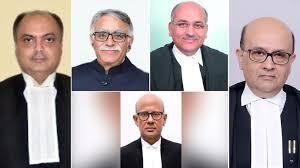
NEW DELHI , June 1, 2026 — In a major move aimed at tackling judicial backlog and clearing bottlenecks at the highest tier of the Indian judiciary, the Central Government has cleared the appointment of five new judges to the Supreme Court of India. Announced by the Union Ministry of Law and Justice, this development pushes the functional strength of the apex court to 37 judges, just one short of its newly upgraded total sanctioned capacity of 38.

The breakthrough comes a mere four days after the Supreme Court Collegium, headed by Chief Justice of India (CJI) Surya Kant, formally recommended the names. The swift executive clearance emphasizes a coordinated push between the judiciary and the executive to handle the massive volume of pending litigations.

The New Faces of the Apex Court

The five new appointees represent a balanced blend of seasoned judicial leadership from across major regional High Courts and direct expertise from the Supreme Court Bar. The group includes four sitting High Court Chief Justices and one prominent Senior Advocate:

  • Justice Sheel Nagu: Moving to the top court from his role as the Chief Justice of the Punjab and Haryana High Court. He originally hails from the Madhya Pradesh High Court, where he built a prominent reputation handling complex civil, constitutional, and service matters.
  • Justice Shree Chandrashekhar: Elevated from his current position as the Chief Justice of the Bombay High Court. Known for structural efficiency, his judicial background spans several critical branches of civil and criminal law.
  • Justice Sanjeev Sachdeva: The Chief Justice of the Madhya Pradesh High Court, bringing over a decade of extensive experience on the bench to New Delhi.
  • Justice Arun Palli: Elevated from his position as the Chief Justice of the High Court of Jammu & Kashmir and Ladakh.
  • Senior Advocate Venkita Subramani Mohana: A landmark appointment from the Supreme Court Bar. Senior Advocate Mohana breaks new ground by being elevated directly from the Bar to the Supreme Court bench, making her only the second woman in Indian history to achieve this direct transition, following Justice Indu Malhotra.

Once these five legal minds take their formal oaths of office under CJI Surya Kant, the court will function at an unprecedented 37 judges.

Why Now? The Fight Against 93,000 Pending Cases

This rapid expansion follows an executive ordinance promulgated by President Droupadi Murmu, which amended the Supreme Court (Number of Judges) Act, 1956. The amendment formally replaced the maximum limit of “thirty-three” with “thirty-seven” puisne judges—raising the overall sanctioned ceiling (which includes the Chief Justice of India) from 34 to 38.

The driving catalyst behind this expansion is a mountain of unresolved litigation. Data from the National Judicial Data Grid highlights that the total case pendency in the Supreme Court crossed a staggering 92,800 cases.

The strain on the court stems largely from its dual identity. The Supreme Court of India does not just act as a federal Constitutional Court to resolve vital questions of law; it also functions as an expansive Court of Appeal. Under Article 136 of the Constitution, thousands of citizens file Special Leave Petitions (SLPs) every year, appealing rulings from local high courts and tribunals. This double burden has left fewer benches available to sit for complex constitutional matters, resulting in lengthy delays for landmark verdicts.

Understanding the Historical Growth

The expansion of the Supreme Court bench is not a frequent event. Since the inception of the Republic in 1950, Parliament has had to periodically step in to scale the judiciary alongside India’s growing population and rising litigation rates.

Prior to this change, the last structural increase occurred in 2019, when the total cap was raised to 34. However, judicial experts have long argued that simply adding a few seats every decade is a temporary fix for a much larger structural challenge. India currently has a low judge-to-population ratio—standing at roughly 21 judges per million people across all court tiers combined. This is a sharp contrast to developed nations like the United States, which operates with over 100 judges per million citizens.

Will More Judges Solve the Backlog?

While the legal fraternity has widely welcomed the filling of these seats, critics and judicial scholars point out that numbers alone will not completely eliminate case delays.

Back in 2009, the 18th Law Commission of India, led by Justice A.R. Lakshmanan, cautioned that scaling up the number of judges without tweaking court practices would provide minimal long-term relief. The commission recommended splitting the apex court into a dedicated Constitution Bench in New Delhi and establishing four regional Benches of Appeal (Cassation Benches) in major geographical hubs like Mumbai, Chennai or Hyderabad, and Kolkata. This would allow regional benches to handle routine civil and criminal appeals, leaving the core Supreme Court to focus entirely on constitutional issues. Although the Full Court of the Supreme Court rejected this proposal in 2010, the ongoing backlog crisis keeps the debate active among legal scholars.

Furthermore, court capacity faces constant pressure from an impending wave of retirements. While the 5 new appointments reduce active vacancies to just one, the relief could be short-lived. Three senior sitting judges are already scheduled to retire over the coming months, meaning the Supreme Court Collegium will need to maintain this quick pace of recommendations to prevent falling back into empty-seat bottlenecks.

For the moment, the addition of these 5 fresh voices brings much-needed reinforcements to Tilak Marg. With more judges available to form multiple division benches, the Supreme Court is better equipped to conduct daily hearings, clear long-standing backlogs, and deliver speedier justice to millions of litigants across the nation.

US Conducts Major Air Strikes in Southern Iran as Attacks Shake Kuwait

0

MON, JUN 1, 2026 — The conflict in West Asia has escalated sharply following intensive military actions over the weekend. The United States launched precision air strikes against strategic military positions in southern Iran, while neighboring Kuwait reported defending against an influx of hostile missile and drone attacks.

The developments mark the third time a fragile, weeks-old ceasefire between Washington and Tehran has been broken. The flare-up occurs against the complex backdrop of concurrent, backdoor diplomatic negotiations and a broadening theater of war across the region.

Precision Strikes on Qeshm and Goruk

United States Central Command (CENTCOM) confirmed late Sunday that American fighter aircraft carried out what they termed “measured and deliberate self-defense strikes” against strategic locations on Qeshm Island and in the coastal city of Goruk, Iran.

According to military officials, the operation was triggered by aggressive actions from Iran’s Islamic Revolutionary Guard Corps (IRGC), specifically the recent shootdown of a US MQ-1 drone operating over international waters.

The targets chosen by the US military were highly specific. CENTCOM reported that the strikes successfully destroyed:

  • Iranian coastal radar networks used to track regional maritime traffic.
  • A key drone ground control station.
  • Antiaircraft missile systems.
  • Two one-way attack drones prepared for launch.

Qeshm Island, positioned at the narrowest point of the Strait of Hormuz, has long been identified by intelligence agencies as a fortified stronghold equipped with underground missile networks. By striking infrastructure here and in nearby Goruk, Washington aimed to neutralize immediate threats to both military assets and commercial shipping vessels navigating the world’s most critical energy transit choke point.

Kuwait Under Fire: Interceptions and Casualties

Simultaneously, the theater of conflict spilled directly into neighboring Gulf states. On Monday morning, air defense sirens blared across Kuwait as the General Staff of the Kuwaiti Army announced that its defensive networks were actively engaging hostile missile and drone attacks breaching the country’s airspace.

While Kuwaiti air defense forces successfully intercepted incoming projectiles, falling debris caused notable damage on the ground. A ballistic missile, identified by analysts as an Iranian-engineered Fateh-110, was brought down over the Ali Al Salem Air Base—a key installation hosting American personnel.

The resulting debris field caused minor injuries to approximately five individuals, including active-duty military personnel and contractors. Furthermore, the impact resulted in serious material damage to US assets stationed at the facility, completely destroying an MQ-9 Reaper drone valued at $30 million and heavily damaging another.

The Economic War for the Strait of Hormuz

Beyond the immediate kinetic exchanges, a complex financial and logistical conflict is playing out over regional shipping lanes. The US recently imposed a fresh wave of sanctions targeting Iran’s newly instituted Persian Gulf Strait Authority. Washington has accused Tehran of weaponizing its geographic control over the Strait of Hormuz by implementing a “managed-access regime” to extract massive transit fees from international commercial shipping.

Intelligence reports from maritime outlets reveal that Iran has instituted a highly tiered access system:

  • Targeted Restrictions: Chinese-linked vessels transporting Saudi crude oil are reportedly being forced to pay transit fees as high as $2 million per passage through the Strait.
  • Bilateral Exceptions: Indian-flagged tankers are being permitted to navigate the waterway completely free of charge under separate, pre-arranged bilateral agreements.

US officials have fiercely condemned this system, calling it an illegal revenue-generation scheme designed to fund Iranian military operations and regional proxy activities. In response, Iranian naval forces have reportedly fired warning shots at multiple international vessels attempting to cross the Strait without coordinating directly with local authorities.

A Drastic Strain on Defense Stockpiles

The protracted nature of what the Pentagon has designated Operation Epic Fury is beginning to cause concern among military logisticians in Washington. The intensive campaign against Iranian infrastructure and the continuous interception of retaliatory barrages have significantly depleted US stockpiles of high-end munitions.

According to latest Department of Defense casualty and logistics data, the conflict has resulted in 14 American fatalities and 409 injuries to date. More critically for long-term readiness, the continuous deployment of interceptors has severely strained inventories of specific, premium defensive and offensive hardware, including:

  • THAAD (Terminal High Altitude Area Defense) interceptors.
  • Patriot PAC-3 air defense missiles.
  • SM-3 Block IIA naval interceptors.
  • Tomahawk and JASSM-ER long-range cruise missiles.

Paradoxical Diplomacy: War Amid “Good Deals”

The sudden spike in open warfare presents a jarring contrast to the political rhetoric emerging from Washington. Just as these strikes were being executed, US President Donald Trump stated that discussions regarding a comprehensive, long-term agreement with Tehran were actively moving forward, claiming the administration was close to securing a “very good deal.”

According to diplomatic sources, these backdoor negotiations focus heavily on two main pillars: the formal reopening and stabilizing of the Strait of Hormuz to international commerce, and strict new limits on Iran’s nuclear enrichment capabilities.

However, the reality on the ground appears far less optimistic. Iranian Foreign Minister Abbas Araghchi confirmed that messages are still being actively passed through neutral intermediaries in Doha, Qatar, but he flatly dismissed claims that a resolution is imminent. “Nothing is certain until a final agreement is officially signed,” Araghchi stated, warning that outside actors—including Israel, which is currently expanding its own ground operations in Lebanon—are actively trying to sabotage a bilateral US-Iran truce.

With both sides continuing to trade heavy blows while simultaneously talking through intermediaries, the region remains trapped in a highly volatile cycle of retaliation. The coming days will prove critical in determining whether the back-channel diplomatic tracks can successfully implement a durable ceasefire, or if the conflict will expand into a full-scale regional war.

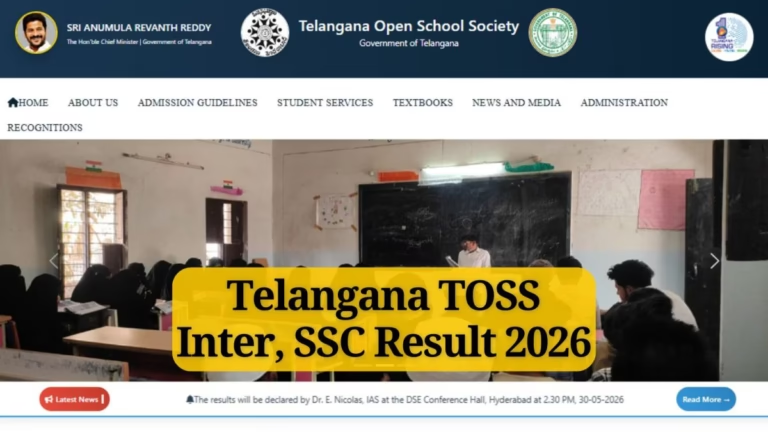
Telangana TOSS Results 2026: SSC and Intermediate Results

0

New Delhi, May 30, 2026 — The Telangana Open School Society (TOSS) has officially declared the results for the SSC (Class 10) and Intermediate (Class 12) Public Examinations today, May 30, 2026. The formal announcement was made by Dr. E. Nicolas, IAS, during a press briefing at the Directorate of School Education (DSE) Conference Hall in Hyderabad.

Thousands of students who enrolled in the state’s flexible learning program can now access their subject-wise marks, grades, and qualifying status online. The open school board conducted the written theory examinations between April 20 and April 27, 2026, while the Intermediate practical exams wrapped up on May 5, 2026. The digital scorecards are live on the official portal, letting students download their marks memos immediately for future academic pursuits.

Where to Check TOSS Results 2026

To prevent heavy web traffic from crashing a single page, TOSS has activated dedicated result servers on its official platform. Students should avoid unauthorized third-party websites to ensure their data privacy.

Step-by-Step Guide to Download TOSS Scorecard

The online checking process has been kept simple and accessible. Students will need their original hall ticket details, specifically their Roll Number or Admission Number, to access the portal.

1.Visit the Official Website:Prerequisite: Keep roll number ready.

Open your web browser and go directly to the official homepage: telanganaopenschool.org.

2.Locate the Results Section:Home Page Navigation.

On the main homepage menu, look for the flashing notification banner or distinct tab titled “Results of TOSS SSC Public Examination 2026” or “Results of TOSS Intermediate Examination 2026”. Click on your relevant course link.

3.Enter Login Credentials:Authentication Window.

A secure login interface will open up. Carefully enter your assigned Admission Number or Roll Number exactly as it appears on your examination hall ticket.

4.Submit and Download:Final Verification.

Double-check the numbers entered, then click the Submit” button. Your complete Telangana Open School digital marks memo will display on the screen. Download the document in PDF format and save it securely.

Timeline of Key TOSS 2026 Academic Events

The release of the results marks the culmination of the spring academic cycle. Below is the timeline tracking the entire schedule of the April/May session, alongside upcoming key milestones for students looking to re-evaluate their papers or clear backlogs.

Theory Examinations Conducted

April 20 – April 27, 2026

Board examinations for Class 10 and 12 were held statewide in dual shifts. The morning session ran from 9:00 AM to 12:00 PM, and the afternoon session ran from 2:30 PM to 5:30 PM.

Practical Sessions

April 28 – May 5, 2026

Class 12 Intermediate practical exams and Class 10 Vocational Skill Training Tests were finalized at designated testing centers.

Public Declaration of Results

May 30, 2026

Official press release by the Directorate of School Education, Hyderabad at 2:30 PM. The digital links were simultaneously enabled for general student access.

Revaluation & Recounting Applications

June 2026

TOSS will open an online window for students who are dissatisfied with their scoring to apply for a verification or recount of their answer scripts.

Supplementary Exams & Results

September 2026

A second exam cycle will take place for students who failed to achieve passing grades or were absent, allowing them to clear their subjects within the same academic year.

Important Information Listed on the Marks Memo

The results published today on the website are provisional. While they are fully valid for short-term institutional applications, they serve as temporary scorecards until physical certificates are printed. TOSS officials will ship physical copies of the original Memoranda of Marks (MoM) directly to the students’ respective accredited study centers within the next 10 days.

When reviewing the digital marks memo, students are advised to thoroughly cross-verify the following details to ensure there are no clerical errors:

  • Full Name of the Candidate (matching school registry)
  • Correct Roll Number and Admission Number
  • Parent/Guardian Details
  • Subject-wise Distribution of Marks (Theory score + Practical score, if applicable)
  • Final Aggregated Grades
  • Qualifying Status (Indicated clearly as “Passed” or “Failed”)

Passing Criteria and Future Horizons

The Telangana Open School Society follows strict grading metrics. For subjects that feature practical components (such as science disciplines at the intermediate tier), the overall grade is calculated by combining the student’s output in both the written theory paper and the hands-on practical lab exam.

The open schooling network provides a crucial lifeline for diverse learners, working professionals, and individuals who had to pause their traditional schooling due to personal, geographical, or financial circumstances. By securing passing marks today, successful Class 10 (SSC) candidates achieve eligibility to seamlessly transition into Class 11 or intermediate paths. Simultaneously, graduating Class 12 (Intermediate) students can now officially begin applying for regular university undergraduate programs, professional diplomas, vocational courses, or competitive government employment screenings.

Details regarding the precise process of mark recounting, application fee structures for re-verification, and the explicit calendar for the autumn supplementary examination cycle will be published by the board in a standalone administrative circular within the coming week.

Balancing Act: Myanmar President Min Aung Hlaing Visits India to Counter Beijing Shadow

0

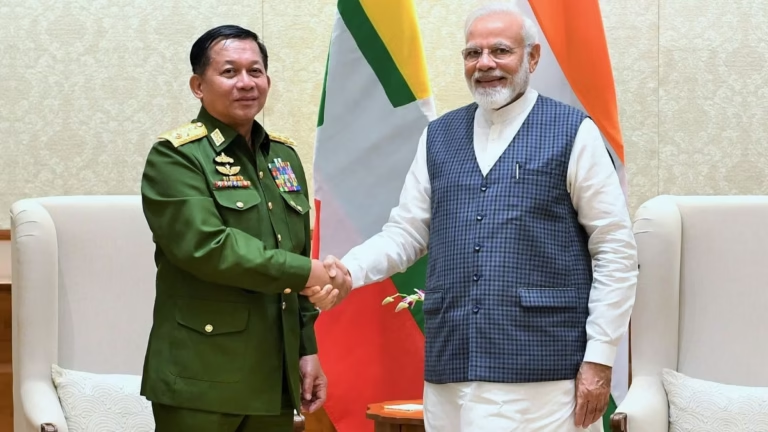
New Delhi, May 30, 2026 — In his first official overseas trip since transitioning from military junta chief to civilian president, Myanmar’s U Min Aung Hlaing arrived in India on Saturday, May 30, 2026. The high-profile, five-day state visit, undertaken at the personal invitation of Indian Prime Minister Narendra Modi, signals an aggressive push by Naypyidaw to reclaim regional legitimacy. However, beneath the standard diplomatic protocols lies a deeper, urgent geopolitical reality: Myanmar is looking to India as a critical counterweight to dilute China’s overwhelming influence over its sanction-choked economy.

For the international community, the visit marks a stunning shift from isolation to strategic re-engagement. Five years after Min Aung Hlaing led the February 2021 coup—ousting the democratically elected government of Aung San Suu Kyi and drawing widespread Western sanctions—the newly minted president is shedding his military uniform for civilian attire. Accompanied by a heavyweight delegation of cabinet ministers, senior bureaucrats, and prominent business leaders, his arrival on Indian soil underscores a pragmatic calculated risk by New Delhi to safeguard its own national interests, even if it means rolling out the red carpet for a deeply controversial leader.

The China Factor: Escaping Beijing’s Embrace

For Myanmar’s military-backed administration, over-dependence on Beijing has become an increasingly uncomfortable reality. While China remains Myanmar’s most powerful ally and a critical economic lifeline, Beijing’s deep pockets have come with immense strategic strings. China has aggressively pushed its Belt and Road Initiative (BRI) projects across Myanmar to secure a direct energy corridor to the Indian Ocean, bypassing the Malacca Strait.

Furthermore, Naypyidaw has grown increasingly uneasy over Beijing’s dual-track diplomacy. While China publicly supports the junta, it maintains close tactical ties with powerful ethnic armed organizations operating along the China-Myanmar border. By heading to New Delhi, Min Aung Hlaing is explicitly attempting to diversify Myanmar’s foreign policy portfolio. Establishing stronger bonds with India gives the Myanmar regime a valuable regional alternative, reducing its vulnerability to unilateral economic and political leverage from Beijing.

India’s Strategic Calculus: Borders, Security, and Rare Earths

From New Delhi’s perspective, hosting the Myanmar leader is less about endorsing his domestic political record and more about cold, hard realism. India shares a porous 1,643-kilometer land border and a critical maritime boundary in the Bay of Bengal with Myanmar. The ongoing armed conflict within Myanmar has repeatedly spilled over into India’s northeastern states, resulting in a complex humanitarian crisis and a massive influx of refugees into states like Mizoram and Manipur.

Security analysts emphasize that India cannot afford a chaotic, ungoverned vacuum on its eastern flank. Deeper cooperation with the Myanmar government is essential for India to crack down on insurgent groups that exploit the dense border jungles. Additionally, the economic stakes are incredibly high. India is determined to protect its flagship infrastructure projects, including the Kaladan Multi-Modal Transit Transport Project and the India-Myanmar-Thailand Trilateral Highway.

Furthermore, as the global race for technology supply chains intensifies, India is eyeing Myanmar’s massive, untapped deposits of heavy rare earth elements. These minerals are vital for semiconductors, electric vehicles, and defense technology—an industry currently dominated almost entirely by China. Secure access to these resources would give India a monumental economic boost.

A Packed Itinerary: From Sacred Sites to Corporate Boardrooms

The carefully structured visit blends spiritual diplomacy with high-level economic negotiation. President Min Aung Hlaing commenced his journey on Saturday by landing at Gaya International Airport in Bihar, proceeding directly to the UNESCO World Heritage site of Bodh Gaya. By visiting the sacred Mahabodhi Temple, the Myanmar leader is actively playing to his domestic image as a devout protector of Buddhism, leveraging the shared civilisational and religious ties that have bound India and Myanmar for centuries.

The political core of the visit will take place on Monday, June 1, in New Delhi, where Min Aung Hlaing will sit down with Prime Minister Narendra Modi and President Droupadi Murmu. According to India’s Ministry of External Affairs spokesperson, Randhir Jaiswal, the talks will comprehensively cover border management, enhanced connectivity, maritime security, and a revitalization of trade. Following the political consultations, the Myanmar delegation will participate in a business forum in the capital before flying to Mumbai on June 2 for extensive interactions with captains of Indian industry.

Backlash and Regional Reverberations

Unsurprisingly, the visit has drawn sharp condemnation from human rights organizations and Myanmar’s parallel civilian government, the National Unity Government (NUG). Activist groups like Justice For Myanmar have fiercely criticized New Delhi, arguing that hosting the former general grants unearned international legitimacy to an authoritarian regime. Protest groups and Myanmar diaspora networks in New Delhi are already organizing demonstrations to coincide with the bilateral meetings.

Yet, despite the fierce domestic and international pushback, New Delhi is sticking firmly to its neighborhood priorities. Myanmar sits perfectly at the intersection of India’s “Neighborhood First” and “Act East” policies. For India, keeping the channels of communication open with whoever holds power in Naypyidaw is an unavoidable necessity to check China’s naval expansion in the Bay of Bengal.

As President Min Aung Hlaing transitions his regime into a civilian-facing facade, this trip serves as a litmus test for his broader diplomatic survival strategy. By engaging with the world’s largest democracy, Myanmar’s leadership is signaling to Beijing that it has options, while India is making it clear that it will do whatever it takes to protect its eastern frontier.

Bhooth Bangla OTT Release: When & Where to Watch Akshay Kumar Horror-Comedy

New Delhi, May 30, 2026: Following a highly successful theatrical run that revitalized the box office, director Priyadarshan and Bollywood star Akshay Kumar’s latest collaborative effort, Bhooth Bangla, is officially making its transition to home screens. Movie enthusiasts and fans who missed the cinematic release—or those eager to rewatch the chaos—will soon have the chance to stream the horror-comedy online.

The digital rights for the film have been acquired by Netflix, setting up the platform to host one of the most anticipated post-theatrical digital premieres of the season.

Streaming Details & Release Date

Bhooth Bangla is scheduled to premiere exclusively on Netflix on June 12, 2026. This release follows the standard window after its initial theatrical launch on April 17, 2026.

While the streaming giant and production houses (Balaji Motion Pictures and Cape of Good Films) are finalizing the official countdown promotional banners, trade analysts and industry trackers have locked in mid-June as the definitive digital arrival date. The movie will be available to all subscribers globally, presented in its original Hindi audio with multi-language subtitles.

Box Office Context & Critical Reception

The film arrived in theatres with massive expectations, primarily because it reunited the iconic duo of Akshay Kumar and Priyadarshan 14 years after their last film together, Khatta Meetha (2010), and nearly two decades after their landmark horror-comedy Bhool Bhulaiyaa (2007).

Despite a competitive theatrical landscape—sharing cinema halls with major action releases like Ranveer Singh’s Dhurandhar: The RevengeBhooth Bangla successfully carved out its market share.

  • Opening Day: The movie secured a strong start, pulling in ₹12.25 crore on its opening day, supplemented by ₹3.75 crore from early paid previews.
  • First Week: Positive word-of-mouth among family audiences pushed its first-week domestic earnings to ₹84.40 crore.
  • Total Collections: By the end of its theatrical window, the movie grossed approximately ₹175 crore net in India, pushing its global worldwide box office gross to an impressive ₹239.98 crore, securing its status as a certified hit.

While the film emerged as a major commercial success, critical feedback was more divided. Reviews highlighted that while the signature slapstick humor and nostalgia of the cast delivered strong moments, the screenplay leaned heavily on loud background scores and extended mythological explanations that stretched the runtime to nearly 164 minutes. However, the sheer entertainment value and star-studded ensemble proved more than enough to satisfy general audiences.

Plot Overview: Chaos in Mangalpur

The narrative follows Arjun Acharya (played by Akshay Kumar), a financially troubled man in his late 30s who unexpectedly inherits a sprawling, ancestral mansion from his grandfather. Located in the remote, folklore-heavy rural town of Mangalpur, the property seems like the perfect solution to Arjun’s financial woes, and he quickly plans to use the grand location to host his sister’s upcoming wedding.

However, the celebratory atmosphere evaporates almost immediately upon arrival. Mangalpur is a town shadowed by a dark local legend concerning Vadhusur—a demonic entity prophesied to target newly married brides.

As Arjun attempts to renovate the old estate, the mansion turns into a playground for bizarre paranormal activities. What follows is a frantic race against time where Arjun, alongside a chaotic group of locals, must unravel the mansion’s dark history, protect his family, and survive the supernatural forces trapped within the walls.

Cast and Production Credits

The backbone of Bhooth Bangla’s mass appeal lies in its sprawling ensemble cast, which serves as a reunion for some of Indian cinema’s finest comedic talents.

The film also features performances from veteran actors Asrani, Manoj Joshi, and Rajesh Sharma.

Behind the scenes, the project was produced by the powerhouse duo of Shobha Kapoor and Ekta Kapoor under the Balaji Motion Pictures banner, alongside Akshay Kumar’s Cape of Good Films. The screenplay was co-written by Priyadarshan, Rohan Shankar, and Abilash Nair, with the official soundtrack composed by Pritam.

Why the Digital Premiere is Highly Anticipated

The transition to Netflix is expected to provide Bhooth Bangla with a massive second wave of viewership. Horror-comedy has consistently ranked as one of the most consumable genres on Indian streaming platforms, offering a mix of jump scares and light-hearted situational comedy ideal for casual home viewing.

For audiences who steered clear of theatres due to the crowded summer release schedule, the June 12 premiere offers a chance to experience the signature Priyadarshan universe from their living rooms. The film’s pre-release marketing, including a YouTube trailer that amassed over 54 million views, indicates a strong digital appetite that will likely translate into a top-trending spot on Netflix upon release.

Tanishaa Mukerji Reveals How Kajol Backed Her Vintage Mumbai Dream Home

New Delhi, May 30, 2026: In the glamorous, fast-paced world of Bollywood, stories of sibling rivalry often dominate headlines. However, the deep bond between actress Tanishaa Mukerji and her superstar older sister, Kajol, stands as a refreshing exception. Tanishaa recently offered an intimate look into her beautiful Mumbai residence, sparking widespread admiration across social media. During a candid conversation, she shared a heartwarming revelation about the financial mechanics behind her home: her elder sister, Kajol, completely funded the property.

The revelation came to light during an episode of filmmaker and choreographer Farah Khan’s popular YouTube vlog series. Farah, accompanied by her longtime cook Dilip, visited Tanishaa’s home for an afternoon of cooking, conversation, and a house tour. As they explored the expansive, uniquely designed property, Farah was struck by the structure’s distinct character—a rarity in Mumbai’s real estate landscape. When the host jokingly asked what Kajol’s contribution to the gorgeous house was, Tanishaa quipped with a proud smile, “She paid for it! She signs the cheque books.”

A Blend of Old-World Kolkata and Turkish Aesthetics

Tanishaa’s home stands out in a city known for sleek, ultra-modern glass high-rises. Moving away from contemporary minimalist trends, her residence embraces a soulful, historical charm. The home’s design features a seamless blend of traditional old-world Kolkata architecture and subtle Turkish design elements. Visitors are instantly greeted by dramatic, winding staircases that evoke the grandeur of a classic film set, gothic-inspired artwork, and an array of warm candles that enhance its vintage appeal.

Farah Khan, a resident of Mumbai herself, was visibly awestruck by the scale and personality of the space, noting that the ambiance transported her entirely out of the bustling financial capital. “I am loving this vibe,” Farah remarked during the vlog. “You cannot find a house like this in Mumbai. I feel like I have arrived in Kolkata.”

A major reason for this authentic, historic feel is the origin of the furniture. Tanishaa revealed that she moved into the home roughly 14 years ago and decorated it almost entirely with heirloom pieces belonging to her mother, the legendary veteran actress Tanuja.

Redefining Family Boundaries and Financial Support

Beyond the aesthetics of the property, the interview struck a chord with fans due to its transparency regarding family dynamics. In many South Asian households, finances can become a point of friction, particularly among siblings who have independent careers. By openly stating that Kajol manages the heavy financial lifting and acts as the primary backer for her housing dreams, Tanishaa highlighted a relationship built on absolute trust and mutual support.

Farah Khan reacted to the disclosure with her trademark humor, laughing and replying, “Okay, well done. That’s the only kind of contribution we want.”

The lighthearted exchange reveals a deeper truth about the Mukerji-Devgn family’s tight-knit structure. Kajol, who has enjoyed a prolific and highly successful decades-long career in Indian cinema, has frequently stepped into protective, supportive roles for her younger sister. Rather than viewing the financial backing as a matter of dependence, Tanishaa spoke of it with immense gratitude, showcasing the healthy, unconditional support system maintained by the sisters.

Navigating the Financial Uncertainties of Showbiz

The conversation between Farah and Tanishaa took a more reflective turn as they discussed the volatile financial nature of the Indian film industry. While modern Bollywood is heavily supported by massive corporate studios, streaming giants, and structured production houses, previous decades relied entirely on personal equity and high-stakes gambling by independent producers.

Farah shared a humorous yet poignant anecdote about how her own family faced severe financial ruin during her childhood because of an absolute box-office failure. She jokingly teased that the father of modern director Ayan Mukerji (who is Tanishaa and Kajol’s cousin) was responsible for her family’s sudden shift in fortune after a 1971 color film bombed on its opening weekend.

Tanishaa deeply sympathized with Farah’s story, revealing that her own childhood was marked by similar cyclical financial stress due to the unpredictable career of her father, Shomu Mukherjee.

  • The Reality of Independent Production: Tanishaa noted that when her father’s movies performed well, the family thrived, but box-office failures meant tightening their belts for years.
  • The Sibling Safety Net: “We also went through these phases,” Tanishaa admitted. “When daddy’s pictures came out, if they didn’t run, we used to be poor for two to three years.”

This shared history of navigating the financial highs and lows of entertainment puts the sisters’ current financial solidarity into perspective. Having witnessed the unpredictability of the business early on, Kajol’s willingness to secure a permanent, stable, and luxurious sanctuary for her sister highlights a protective instinct forged through lived experience.

Hidden Gems: The Sprawling Terrace and Conscious Living

As the house tour continued, Farah was led to the property’s crown jewel: a massive, sprawling terrace filled with vibrant greenery. In a space-starved city like Mumbai, an expansive open terrace is considered an absolute luxury. Tanishaa shared that the terrace serves as the primary bonding zone for the family. Her mother, Tanuja, visits every morning to take her walks, and the family regularly gathers there for their morning tea and coffee.

The outdoor area is heavily decorated with potted plants and meticulously curated greenery, which Tanishaa proudly revealed she cultivated herself. The actress also noted that she loves hosting sundowner parties and intimate gatherings for close friends and family on the terrace, particularly during festivals like Holi.

In an interesting turn toward modern, sustainable living, Tanishaa also showed off her kitchen, revealing a conscious shift in her household management. She shared that they have completely transitioned to induction cooking to conserve Liquified Petroleum Gas (LPG), aligning with environmental preservation efforts.

Looking Toward the Future

Tanishaa Mukerji, who first made her acting debut in 2003 with Sssshhh and later appeared in projects like Sarkar and various high-profile reality TV shows like Bigg Boss 7 and Khatron Ke Khiladi 7, is currently expanding her horizons. During the vlog, she revealed that she has transitioned into writing, having quietly penned a web series script and a full-length film screenplay.

As the video concluded, Tanishaa dropped one final exciting update for her fans: she is currently in the process of constructing an entirely new house. While her current vintage sanctuary remains a beloved family hub funded by her sister’s generosity, her upcoming architectural project marks the next chapter in her evolving creative and personal journey.

NTA Delays CUET-UG 2026 Shift Timings Over Technical Glitch

NEW DELHI: In a major development affecting hundreds of undergraduate aspirants across India, the National Testing Agency (NTA) confirmed that the Common University Entrance Test Undergraduate (CUET-UG) 2026 faced significant delays at several examination centres on Saturday, May 30, 2026. The delays, which reportedly stretched for over two hours at certain venues during the morning session, triggered widespread panic and anxiety among students and parents alike. Following intense social media outcry and reports of chaotic scenes outside test venues, the NTA broke its silence by issuing an official public notice on its social media handles and online portal.

According to the official communication released by the apex testing body, the disruption was caused by an unexpected “technical glitch” originating on the side of its corporate technology partner, M/s Tata Consultancy Services (TCS), which manages the digital server infrastructure and computer-based test (CBT) systems for the national exam. The NTA assured students that the problem has since been completely resolved, and strict measures have been implemented to protect the academic interests of every affected candidate.

NTA Issues Clarification and Promises Full Compensatory Time

The trouble began early on Saturday morning when candidates arriving for the first shift—originally scheduled to commence promptly at 9:00 AM—found themselves waiting for hours outside or inside computer labs without the exam loading. Reports surfaced from multiple states, including Delhi-NCR, Haryana, and Punjab, showcasing long queues of frustrated students waiting for administrative clarity.

In response to the mounting pressure, the NTA took to X (formerly Twitter) to publish an official statement clarifying the nature of the delay and mitigating candidate anxiety.

The testing agency explicitly guaranteed that students who lost valuable minutes due to server lag or systemic startup failures would receive minute-for-minute compensatory time. The NTA clarified that morning-session candidates are being permitted to sit for the full duration of their allotted paper and will only be allowed to exit the server hall after completing their full test time.

Afternoon Session Schedules Revised to Prevent Further Disruption

To accommodate the domino effect of the morning delays and give on-site technicians ample time to double-check system readiness, the NTA took the preemptive step of revising the afternoon session timings for May 30. The second shift of the day was originally designed to kick off at 3:00 PM, with candidate entry lines opening as early as 1:00 PM.

Under the updated schedule issued in the emergency notice, the NTA pushed back the afternoon session timelines by an hour:

  • Revised Candidate Reporting & Entry Time: From 2:30 PM onwards
  • Revised Examination Commencement Time: 4:00 PM (Instead of the original 3:00 PM schedule)

The NTA and TCS monitoring teams confirmed that by delaying the afternoon rollout, they could guarantee a smooth, synchronized login process across all functional digital nodes nationwide, effectively insulating the second batch of test-takers from similar infrastructure bottlenecks.

Growing Frustration and Political Reaction Highlight Exam Pressures

Despite the NTA’s rapid technical remediation, the disruption sparked immense distress for families waiting outside the gates in the sweltering late-May heat. Social media platforms were flooded with videos of packed crowds outside testing facilities in cities like Ambala and New Delhi. Parents expressed deep frustration, noting that structural irregularities and sudden delays only worsen the intense psychological pressure already placed on teenage university aspirants.

The situation quickly caught political traction. Prominent leaders, including the Leader of the Opposition in the Delhi Assembly, Atishi, criticized the central administration and the Ministry of Education for what they deemed recurring systemic failures in national competitive exams. Taking to social media to share live footage from an disrupted exam centre in Ambala, Atishi highlighted the administrative stress, pointing out that lakhs of students across India were left stranded for hours awaiting official updates.

A Look at the Massive Scale of CUET-UG 2026

The technical setback highlights the immense logistical burden of organizing an assessment of this magnitude. Introduced in 2022 under the mandate of the National Education Policy (NEP) 2020, the CUET-UG has grown into India’s definitive, single-window evaluation portal for undergraduate entry into central, state, deemed, and elite private universities nationwide.

The 2026 iteration of the examination is one of the largest academic exercises in the country’s history. According to statistical data provided by the NTA:

  • Total Registered Candidates: 15,68,866 aspirants
  • Testing Window: Spans 21 days, commencing on May 11, 2026, and concluding on May 31, 2026
  • Total Shifts Managed: 35 distinct shifts across hundreds of mapped technological testing nodes

Managing an enterprise-grade digital architecture that accommodates over 1.5 million students across dynamic domain-specific subject choices requires a perfectly synchronized server network. Saturday’s glitch stands out as a rare but highly visible breakdown in an otherwise tightly scheduled testing calendar. This incident follows a separate logistical adjustment made on May 24, where the NTA had to step in to postpone both shifts originally scheduled for May 28 due to the shifting of the official Id-ul-Zuha (Bakrid) gazetted holiday. Those postponed May 28 papers have since been rescheduled to alternate slots on May 31, June 6, and June 7, 2026.

Official Support Channels for Affected Candidates

The NTA concluded its public notice by expressing sincere regret for the unexpected physical and mental inconvenience caused to the student community and their accompanying guardians. To ensure transparent communication and offer rapid assistance to any student experiencing isolated lingering technical errors, the agency re-shared its dedicated national student support desk details.

Aspirants and educational institutions seeking direct support are encouraged to utilize the following official help channels:

  • National Help Desk Telephone Line: +91-11-40759000
  • Official NTA Support Email Address: cuet-ug@nta.ac.in
  • Official Portals for Real-Time Updates: nta.ac.in and cuet.nta.nic.in

Candidates scheduled to appear for the final legs of the examination over the coming days are highly advised by education experts to keep a close eye on these official channels for any spot announcements regarding center arrangements or modified shift timings.

Lakhs of Devotees Throng Tiruchendur Temple for Vaikasi Visakam

0

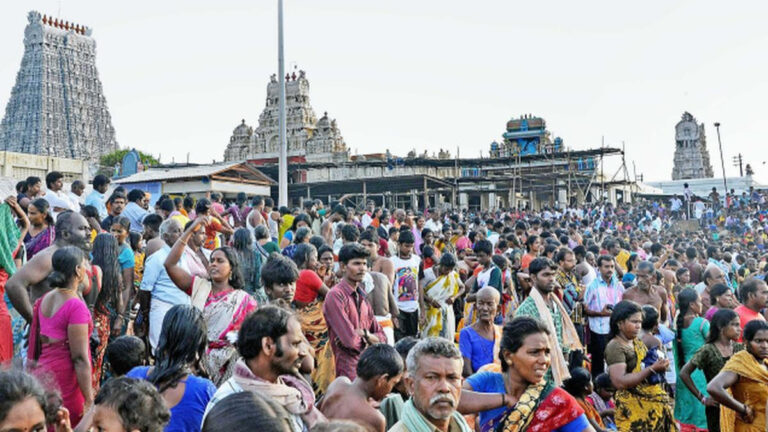
May 30, 2026: A magnificent sea of humanity converged upon the historic shores of Tiruchendur today as the Arulmigu Subramaniya Swami Temple celebrated its grandest annual event, Vaikasi Visakam. Hundreds of thousands of pilgrims from across India and the global Tamil diaspora filled the coastal town to observe the divine birth anniversary of Lord Murugan. The atmosphere reverberated with spiritual fervor, intense penance, and chanting, marking a vibrant resurgence of faith that packed the temple premises from the early hours of the morning.

A Dawn of Rituals and Sacred Traditions

The day’s religious proceedings commenced well before dawn, breaking the pitch-black sky with the ringing of heavy brass temple bells. To accommodate the unprecedented influx of devotees, temple authorities adjusted the traditional schedules, throwing open the massive sanctuary doors at 1:00 AM.

By 1:30 AM, thousands of fortunate early risers witnessed the highly auspicious Viswaroopa Darshan, a ritual that grants pilgrims a serene, spiritually elevating viewing of the deity. Following this, the Udayamarthanda Abhishekam took place at 6:00 AM, where the ancient moolavar (presiding deity) was bathed in holy waters and milk.

The spiritual peak of the morning was achieved during the Uchikkala Abhishekam at 10:00 AM. Priests meticulously bathed the grand bronze idols of Lord Shanmugar and his consorts, Valli and Deivanai, in sacred components:

  • Fresh cow’s milk (Paal) representing purity.
  • Sandalwood paste (Sandhanam) symbolizing peace and cooling energy.
  • Panchamritam (a traditional blend of five sweet ingredients).
  • Fragrant rosewater and vibhuti (sacred ash).

As the high priests waved the multi-tiered camphor lamps during the final Deeparadhana, a unified roar of “Vetrivel Muruganukku Harohara!” (Victory to the Lord of the Spear) erupted from the crowds, echoing all the way out across the adjacent ocean.

The Ultimate Sacrifice: Kavadi and Padayatra

The true heart of Vaikasi Visakam lies in the remarkable penance undertaken by ordinary devotees. For days leading up to the festival, highways leading into Tiruchendur were populated by Padayatra pilgrims—devotees walking hundreds of kilometers barefoot under a scorching summer sun, carrying nothing but their devotion.

By Saturday morning, the beach surrounding the seaside shrine transformed into a colorful mosaic of vows fulfilled. Thousands of pilgrims plunged into the Bay of Bengal for a mandatory purifying holy dip before entering the temple lines.

The sight of Kavadi bearers dominated the landscape. Many carried Paal Kavadi (decorated wooden arches bearing pots of fresh milk) or Panneer Kavadi (scented with rosewater). In acts of severe asceticism, hundreds of devotees arrived with their cheeks, tongues, and skin pierced with small silver spears (Alagu Kuthi), silencing physical pain through deep meditation. Others performed Angapradakshinam, a ritual where they roll their bodies across the hot stone corridors of the temple prakaram (outer courtyard) to display absolute surrender.

The Mythological Roots of the Celebration

To understand the emotional and cultural weight of this festival, one must look at its ancient roots. Vaikasi Visakam is celebrated during the Tamil month of Vaikasi when the full moon aligns perfectly with the Visakha nakshatra (birth star).

What makes the Tiruchendur celebration uniquely poetic is its location. Unlike the other five prominent hill-abodes (Arupadai Veedu) of Lord Murugan, Tiruchendur is built directly onto the shoreline. It is believed to be the exact base camp where Murugan stationed his army before launching his campaign against evil, making the ocean breeze and crashing waves an organic part of the worship experience.

District Management and Crowd Infrastructure

Managing an event of this magnitude required meticulous inter-departmental coordination. Recognizing the high volume of traffic expected this year, Indian Railways operated several “Festival Special Trains” connecting Chennai Egmore, Madurai, and Tirunelveli directly to Tiruchendur.

The Tamil Nadu Hindu Religious and Charitable Endowments (HR & CE) Department, alongside local district administration, set up extensive arrangements to safeguard the pilgrims:

  • Temporary Shelter & Queue Gates: Miles of shaded canopies were erected to protect queueing families from heatstroke.
  • Medical Assistance: Round-the-clock medical tents with emergency teams and ambulances were stationed along the beach and outside the main Gopuram (temple tower).
  • Annadanam (Free Feast): Massive community kitchens operated continuously, feeding hundreds of thousands of tired travelers sweet pudding (Paal Payasam), rice, and traditional curries.
  • Safety Barriers: Lifeguards and coastal police patrolled the shoreline with continuous megaphone warnings to prevent accidental drownings during the mass holy baths.

Temple Thakkakar (Trustee) Arulmurugan and Joint Commissioner Ramu monitored the crowds through a central CCTV grid to ensure that despite the dense queues, moving lines remained fluid and peaceful.

A Nocturnal Finale

As night fell over the coastal town, the energy shifted from arduous penance to joyous celebration. The temple structures were brilliantly illuminated by thousands of colorful LED matrices, casting a shimmering neon reflection over the dark ocean waters.

The climax of the festival takes place during the late-night hours, featuring the grand procession of the deities. Lord Sri Jayanthinathar (the processional deity of Subrahmanyam), beautifully decorated in silk vests, emerald jewelry, and fresh jasmine garlands, is placed on a golden chariot alongside Valli and Deivanai. Accompanied by traditional Nagaswaram (wind instrument) musicians and rhythmic Thavil drummers, the deity travels through the town square to bless those who could not squeeze into the inner sanctums.

Vaikasi Visakam 2026 has once again proven that ancient traditions are not dying out; instead, they are thriving. The young, the old, the affluent, and the poor stood side-by-side on the sands of Tiruchendur today—united entirely by a single spear, a shared chant, and an enduring cultural heritage.

For those who wish to see the scale of the devotional gatherings firsthand, this Tiruchendur Vaikasi Visakam Video Documentation captures the massive sea of devotees and the miraculous atmosphere during the chariot procession.