Home Blog Page 39

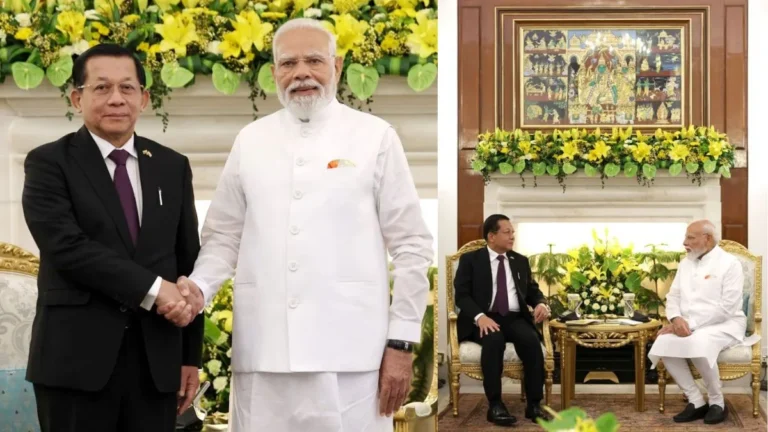
PM Modi and Myanmar President Min Aung Hlaing Hold High-Stakes Talks at Hyderabad House

0

New Delhi, June 1, 2026 — In a major diplomatic event highlighting India’s “Neighbourhood First” policy, Prime Minister Narendra Modi met with Myanmar President U Min Aung Hlaing at the historic Hyderabad House in New Delhi. The high-profile bilateral meeting marks a crucial juncture in regional politics, as it is Min Aung Hlaing’s first official international visit since assuming office as President.

Accompanied by a high-level delegation of Myanmarese Cabinet ministers, senior officials, and prominent business leaders, the President’s visit runs from May 30 to June 2. The extensive discussions between the two leaders aimed at deepening longstanding bilateral relations, enhancing border security, accelerating infrastructure connectivity projects, and expanding economic cooperation between the neighboring nations.

A Warm Welcome and Deep Spiritual Connections

The official talks at Hyderabad House were preceded by a series of high-level diplomatic engagements. Upon his arrival in India, President Min Aung Hlaing first traveled to Bodh Gaya in Bihar, a gesture that emphasizes the profound civilizational and spiritual roots shared by India and Myanmar. The President paid his respects at the sacred Mahabodhi Temple, a UNESCO World Heritage Site, where he offered prayers and meditated under the revered Bodhi Tree.

Ministry of External Affairs (MEA) spokesperson Randhir Jaiswal warmly welcomed the visit, noting that it reflects the “strong spiritual, historical, and people-to-people ties” that bind the two nations. Following his spiritual retreat in Bihar, the President arrived in the national capital, where External Affairs Minister Dr. S. Jaishankar and National Security Advisor Ajit Doval held preliminary meetings with him to lay the groundwork for the prime ministerial talks.

Key Focus Areas: Security, Connectivity, and Trade

During their private and delegation-level discussions at Hyderabad House, Prime Minister Modi and President Min Aung Hlaing reviewed the entire gamut of India-Myanmar relations. Security along the shared 1,640-kilometer border emerged as a primary focus point. With India’s northeastern states—particularly Manipur and Nagaland—facing distinct security and stability challenges, both leaders emphasized the critical need for close bilateral coordination to maintain peace, counter transnational militancy, and curb illegal smuggling across the porous border.

Beyond defense and border management, infrastructure connectivity was high on the agenda. Myanmar serves as India’s gateway to Southeast Asia, making it a cornerstone of New Delhi’s “Act East” policy and the broader “MAHASAGAR” vision (Mutual and Holistic Advancement for Security and Growth Across Regions). The leaders discussed the progress of vital, long-delayed initiatives, including:

  • The Kaladan Multi-Modal Transit Transport Project: Designed to connect the eastern Indian seaport of Kolkata with the Sittwe seaport in Myanmar, opening a strategic shipping route.
  • The India-Myanmar-Thailand Trilateral Highway: Aimed at establishing direct land connectivity from Moreh in India to Mae Sot in Thailand via Myanmar, drastically boosting regional commerce.

Economic cooperation formed the third major pillar of the Hyderabad House summit. Alongside the political talks, the Myanmarese delegation participated in a dedicated India-Myanmar Business Forum in New Delhi. The two countries explored avenues to ramp up bilateral trade in essential sectors such as agriculture, energy, and information technology, creating new opportunities for direct investment.

Navigating a Complex Political Landscape

The visit carries substantial geopolitical weight given Myanmar’s internal political transition. President Min Aung Hlaing effectively helmed the nation under a military junta following the February 2021 coup that ousted the democratically elected government of Aung San Suu Kyi. Following parliamentary elections held across parts of Myanmar late last year and early this year, a transition to a civilian presidency took place, culminating in Min Aung Hlaing being sworn in as President.

India has consistently maintained a balanced and pragmatic approach toward its strategic neighbor. While western nations have largely isolated Myanmar’s leadership, New Delhi has chosen proactive diplomatic engagement to safeguard its security interests in the Northeast, counter growing Chinese influence in the region, and support structural stability along its borders. India’s presence at the presidential inauguration earlier this year underscored this calibrated stance of constructive engagement.

Looking Ahead: Expanding Business Horizons in Mumbai

As the high-stakes diplomatic chapter in New Delhi draws to a close, the focus of the state visit shifts toward heavy industry and economic partnerships. President Min Aung Hlaing and his business delegation are scheduled to travel to Mumbai. The final leg of the trip will feature intensive interactions with top Indian industry leaders, site visits to manufacturing hubs, and discussions centered on investment frameworks.

By seamlessly blending spiritual diplomacy, hard-nosed security calculus, and forward-looking economic forums, the meeting at Hyderabad House has successfully set a updated roadmap for India-Myanmar relations. Both nations look to move past years of regional instability toward a shared framework of economic development and secure borders.


UP Home Guard Result 2026: Written Exam Results

New Delhi, June 1, 2026 — The Uttar Pradesh Police Recruitment and Promotion Board (UPPRPB) is in the final stages of preparing the written examination results for the massive Uttar Pradesh Home Guard recruitment drive. Aimed at filling 41,424 vacant positions across the state, this recruitment drive represents one of the largest departmental expansions in recent years. Following a high-level review meeting chaired by Chief Minister Yogi Adityanath, expectations are high that the written exam results will be officially announced in early June 2026.

The massive recruitment drive kicked off late last year, with the formal application process concluding in December. After months of anticipation, the UPPRPB successfully conducted the statewide written examinations on April 25, 26, and 27, 2026. Tens of thousands of eager candidates from all over Uttar Pradesh appeared at various high-security test centers, hoping to secure a stable and honorable position within the state’s security apparatus.

Quick Progress Following the Exam

In a strong push toward transparency and speed, the recruitment board did not delay its next steps. Just days after the conclusion of the written exams, the UPPRPB released the provisional answer keys on May 7, 2026. Candidates were given a window until May 10, 2026, to review their answers, calculate their tentative scores, and submit any online objections against discrepancies.

Currently, an expert panel is reviewing those objections to compile the final answer key. During a recent administrative review meeting, Chief Minister Yogi Adityanath evaluated the ongoing enrollment process of the Home Guard department. He issued strict directives to state officials to ensure the selection process remains completely transparent, fair, and bound to a strict timeline. Following this meeting, reports indicate that while the final joint merit list and appointments are projected for September 2026, the preliminary hurdle—the written exam results—will be made public on the board’s official website within the first week of June.

Understanding the Expected Cut-Off Marks

Because a vast number of candidates took the exam, competition is fierce. However, feedback from educational experts and test-takers suggests that the April written test was structurally challenging. Due to the high difficulty level of the paper, experts believe the qualifying cut-off scores might remain relatively moderate.

While the official cut-off marks will be published alongside the results, academic mentors have provided a breakdown of the expected scores needed to qualify for the next stage:

What Comes Next? Preparing for the Physical Test (PET/PST)

Candidates should keep in mind that clearing the written exam is only the first step. The UP Home Guard selection methodology relies heavily on physical capability. Those who meet the official category cut-offs will automatically qualify for the Physical Efficiency Test (PET) and Physical Standard Test (PST).

Because the physical evaluation is physically demanding, experts advise candidates not to wait for the final scorecard and instead begin their field practice immediately.

Alongside the physical trials, candidates will undergo a mandatory Document Verification (DV) process. To avoid last-minute panic or disqualification, applicants are highly encouraged to organize their original files today. Essential documents include 10th-grade (High School) certificates, valid identity proofs (Aadhaar Card/PAN Card), recent passport-sized photographs, and valid Domicile and Category Certificates (OBC/SC/ST/EWS) issued by the competent state authority.

25 B.Ed Students Fall Into Kanpur Drain Ahead of Exam

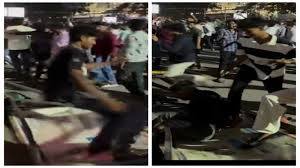
June 1, 2026 — A shocking incident unfolded in Kanpur on Sunday morning when roughly 25 B.Ed (Bachelor of Education) aspirants and their family members unexpectedly plunged into a sewage-filled drain. The group was heading to their designated exam center for the Uttar Pradesh B.Ed Joint Entrance Examination.

The incident, which took place outside the H.N. Mishra PG College in the MacRobertganj area, was captured on camera. The video has since gone viral on social media, sparking nationwide outrage over the poor condition of public infrastructure and last-minute administrative pressure on students.

The Last-Minute Rush That Triggered the Collapse

According to local authorities and eyewitnesses, the accident occurred during the morning hours just before the first shift of the highly anticipated B.Ed entrance exam. Hundreds of students had reached the H.N. Mishra PG College center, anxious and focused on their upcoming test. However, chaos erupted when the examinees were allegedly informed at the very last minute that they needed to present and submit physical photocopies of their Aadhaar cards to enter the venue.

This unexpected announcement triggered a sudden panic among the students, who had not prepared the extra copies. Desperate to comply with the rules before the gates closed, dozens of candidates and their accompanying guardians rushed across the street to a nearby photocopy shop located in the Nagar Nigam (municipal corporation) market area.

As a massive crowd gathered outside the shop, many people stood on an old, dilapidated concrete slab that was covering a wide sewage drain. The heavy, sudden weight of 20 to 25 eager applicants proved too much for the neglected, aging structure. Without warning, the concrete slab gave way and caved in entirely, sending the students crashing into the filthy water and muck below.

Panic, Rescue Efforts, and Viral Footage

The sudden collapse was met with loud screams and immediate panic. Those who fell into the drain found themselves trapped in sewage, with their clothes, personal belongings, essential study materials, and crucial exam admit cards instantly soaked and ruined.

Hearing the cries for help, local shopkeepers, passersby, and fellow candidates quickly rushed to the edge of the collapsed drain. Showing immense community spirit, locals formed human chains and reached down into the filth to pull the shaken students and their guardians out to safety one by one.

A video recorded by a bystander captured the frantic rescue operation. The footage shows people covered in sludge being lifted out of the broken concrete trap while others try to salvage their damaged paperwork. The video quickly found its way onto platforms like X (formerly Twitter) and YouTube, where it went viral within hours. Social media users and citizen groups rapidly shared the clip, using it to highlight the hazardous state of urban infrastructure and slamming local authorities for failing to maintain basic civic safety.

Injuries and the Determination of the Candidates

While the accident could have taken a far more tragic turn, local police confirmed that there was no loss of life. However, four candidates sustained direct injuries from the falling concrete and debris. Reports indicate that at least two individuals suffered severe fractures to their hands and legs, while others escaped with minor cuts, deep scrapes, and bruises. One injured guardian, who had accompanied their child to the center, required immediate medical attention and was rushed to a nearby hospital by local authorities.

Despite the physical injuries, ruined clothes, and immense psychological shock, the determination of the teaching aspirants stood out. After being pulled from the drain, local residents helped the students wash off the sewage and clean up as much as possible. Nearby shops and kind strangers assisted them in quickly drying or replacing their clothes.

Remarkably, despite losing their original admit cards to the sewage, the affected candidates managed to dry their documents or print emergency copies and walked back into the examination hall. Supported by their families and local volunteers, every single one of the affected students pushed through the trauma to sit for their exam.

Public Outrage and Administrative Responses

The viral video has put a harsh spotlight on the Kanpur Municipal Corporation and the state’s educational authorities. Outraged parents and student unions have staged minor protests, pointing out that public spaces surrounding major examination centers should be thoroughly inspected and secured ahead of time, especially when thousands of young people are expected to gather.

Many are questioning why a mandatory requirement like an Aadhaar card photocopy was communicated so late, creating a dangerous bottleneck at a single local shop. Critics argue that if the instructions had been clearly stated days in advance, the sudden stampede-like rush onto the fragile drain cover could have been easily avoided.

Responding to the growing public anger, Kanpur Police Commissioner Raghubir Lal addressed the media to clarify the situation. He noted that the drain and its concrete slab cover were quite old and collapsed primarily due to sudden overcrowding.

“The old drain slab gave way under the unexpected weight of the crowd. Our police teams and local residents moved very quickly to assist everyone. One guardian was hospitalized for treatment, but thankfully all the students are safe,” the Police Commissioner stated. He added that the issue regarding the structural failure has been formally brought to the attention of the municipal corporation for immediate repair.

A Broader Reflection on Student Welfare

The Kanpur drain incident has triggered a wider conversation across India regarding the systemic stress and physical hazards that students frequently face during major competitive and entrance examinations. Observers have pointed out that this event adds to a highly stressful year for Indian students, following recent high-profile structural and technical glitches across other major national exams like NEET and CUET.

Educational experts and civil society members are now calling for stricter safety protocols at designated exam venues. They emphasize that candidate welfare should extend beyond the walls of the examination room. Safe approach roads, sturdy footpaths, clear communication of guidelines, and basic medical emergency teams on standby are being demanded as essential requirements for any future public examinations.

Local administration officials have assured the public that a thorough investigation into the structural integrity of the market’s pathways will be conducted to ensure such a hazardous collapse never happens again. Meanwhile, the B.Ed entrance exam successfully concluded across all 19 designated centers in Kanpur under heightened security and administrative supervision.

RCB Fans’ Post-Win Street Chaos Sparks Huge Backlash

0

New Delhi, June 1, 2026: The passionate celebration of Royal Challengers Bengaluru (RCB) fans took an unruly turn following a high-stakes Indian Premier League (IPL) victory, leading to widespread traffic chaos, public disturbances, and intense backlash on social media. What was supposed to be a joyous occasion for the cricket franchise’s massive fanbase quickly escalated into public disorder across major thoroughfares in Bengaluru and Hyderabad. Local residents and commuters were left stranded for hours, prompting heavy criticism of the fans’ behavior and raising serious concerns over public safety and traffic management during major sporting events.

The commotion began immediately after the match concluded, as thousands of ecstatic fans flooded the streets to celebrate the win. Dressed in the team’s iconic red and gold jerseys, supporters blocked major intersections, waved large franchise flags, and set off firecrackers directly on congested roads. In Bengaluru, key areas known for heavy traffic—including MG Road, Indiranagar, and Koramangala—witnessed massive gridlocks. Commuters reported being trapped in their vehicles as jubilant crowds surrounded cars and public buses, climbing onto vehicle roofs and bonnets to chant team slogans. The sheer volume of people occupying the driving lanes brought vehicular movement to a complete standstill, turning regular commutes into hours-long ordeals.

The celebrations were not restricted to the team’s home base. In Hyderabad, a city known for its fierce cricket rivalry with Bengaluru, similar scenes unfolded. Groups of fans gathered in prominent commercial and residential hubs, aggressively chanting and blocking traffic. The situation in Hyderabad grew particularly tense as local residents and rival supporters expressed frustration over the sudden disruption. Observers noted that the celebrations felt less like sportsmanship and more like intentional public provocation, which heightened friction on the streets.

The unrest quickly gained national attention after several videos of the incidents went viral across platforms like X (formerly Twitter), Instagram, and Reddit. The footage painted a chaotic picture: rows of bikers performing dangerous stunts without helmets, individuals hanging out of moving car windows, and dense crowds blocking ambulances trying to navigate through the gridlock. One widely shared video showed a group of boisterous fans bouncing a small hatchback car by lifting its bumper, terrifying the passengers inside. Another clip captured heated arguments between frustrated motorists and fans who refused to clear the right-of-way.

The digital footprint of the chaos triggered an immediate wave of severe backlash from the general public, internet users, and prominent city commentators. Many netizens called out the lack of civil sense among the celebrating crowds, pointing out that true sports fandom should never come at the expense of public safety and daily civic life. Residents of both cities expressed outrage over the vulnerability of ordinary citizens, especially families, elderly commuters, and emergency service vehicles caught in the crossfire of the unregulated street revelry.

In response to the growing public anger and the undeniable evidence circulating online, local law enforcement agencies were forced to step in. Traffic police departments in both Bengaluru and Hyderabad deployed additional personnel to clear the blocked choke points and restore a semblance of order. Using the viral video footage and CCTV camera feeds, the police began identifying registration numbers of vehicles involved in reckless driving, stunt riding, and public nuisance. Multiple fines were issued, and authorities confirmed that several vehicles were impounded for violating traffic regulations and endangering public safety. Statements from police officials emphasized that while citizens have the right to celebrate sports victories, breaking laws and disrupting public order would face strict legal consequences.

The incident has reignited a broader conversation regarding the responsibilities of sports franchises and local administrations during high-profile tournament windows. Cultural critics argue that IPL franchises possess incredibly influential platforms and should actively utilize their star players and social media handles to educate fans on responsible behavior. Many believe that brief public service announcements from team captains or management prior to major matches could go a long way in curbing unruly street celebrations. Simultaneously, urban planners and civic activists are calling for stricter standard operating procedures (SOPs) from city administrations, suggesting designated celebration zones and pre-planned traffic diversions around known gathering spots to protect the city’s infrastructure and its citizens from future disruptions.

Viral Hanoi Train Street Dance Sparks Tourism Debate

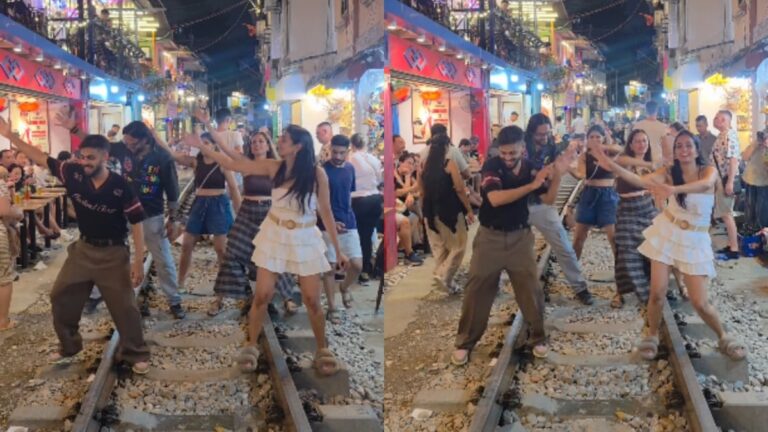
New Delhi, June 1, 2026: A viral video showing a group of Indian tourists dancing on Vietnam’s iconic Hanoi Train Street has ignited a massive debate across social media. The incident has left netizens divided, with many raising tough questions about tourist etiquette, public safety, and the modern obsession with creating “reels” everywhere across the globe.

The video was originally shared on Instagram by Shweta Jain, the founder of a Mumbai-based jewelry brand, during a holiday with her close friends. In the clip, the group can be seen breaking into a synchronized dance routine on the active railway tracks of Hanoi Train Street. They chose the classic Bollywood track Chaiyya Chaiyya—a song famously filmed on top of a moving train in India. The video featured an overlay text that read, “If you’ve visited Vietnam’s Train Street but didn’t do Chaiyya Chaiyya, did you really visit Train Street at all?” with a caption reading “Filmy heart, global streets.”

Hanoi Train Street is globally renowned as a highly photogenic but potentially hazardous location. It is a narrow residential corridor where a functional train line passes inches away from local houses, doorsteps, and cafes. Because of the extreme safety risks of overcrowding on active tracks, Vietnamese authorities have repeatedly enforced strict regulations and temporary closures. Visitors are strictly expected to stay alert, respect local guidelines, and clear the tracks entirely when a train approaches.

While the creators likely intended the dance routine as harmless, light-hearted vacation fun, its rapid spread across social media platforms like X (formerly Twitter) triggered severe backlash. Critics heavily reprimanded the group for what they called “main character syndrome”—a term describing people who treat shared, public spaces as their personal stages for digital content production. Many commentators argued that turning an active public infrastructure site into a makeshift Bollywood set is disrespectful to the local culture and disrupts other travelers trying to peacefully enjoy the historic landmark.

Furthermore, the video struck a sensitive nerve within the Indian digital community. Scores of users expressed extreme frustration, stating that such behavior reinforces negative stereotypes about Indian travelers abroad. Critics noted that hard-working, respectful expats often have to deal with the fallout of casual racism or increased visa scrutiny when localized instances of disruptive tourism make international headlines. Commenters pleaded with fellow citizens to exhibit greater “civic sense” when representing their country on international soil.

Interestingly, this incident unfolded just twenty-four hours after another controversial clip involving Indian travelers in Vietnam made rounds online. In that separate video, a large tour group was spotted performing an impromptu Garba (a traditional Gujarati folk dance) in a circular formation right on an airport tarmac next to a parked VietJet Air aircraft. The back-to-back incidents fueled an overarching internet inquiry: “Why do we feel the need to dance everywhere?”

However, the online response was not entirely critical. A notable segment of social media users rose to defend the holidaymakers, questioning the severity of the internet’s outrage. Supporters pointed out that dance is a deeply ingrained form of joyful expression in Indian culture. They argued that foreign tourists frequently organize flash mobs or artistic performances in public spaces globally without facing systemic cultural condemnation, asking why Indian travelers should be uniquely judged for celebrating their vacation with music.

Ultimately, the Hanoi Train Street controversy highlights a growing, global tension in modern tourism. As social media platforms continue to incentivize short-form video creation, the line between authentically experiencing a new culture and performing for a digital audience has become increasingly blurred. The viral debate serves as a stark reminder for travelers worldwide to strike a balance between personal enjoyment and respecting local safety laws and cultural norms.

“Fire Reaches Eiffel Tower,” Claims Viral Video: A Fact-Check

0

New Delhi, June 1, 2026: A terrifying video showing France’s most iconic landmark, the Eiffel Tower, engulfed in roaring flames and thick black smoke recently took social media by storm. The clip spread rapidly across platforms like TikTok, X (formerly Twitter), and Facebook, racking up millions of views and leaving viewers worldwide in a state of shock. Accompanying text posts dramatically claimed that the “centre of Paris is on fire” and that “firefighters are still unable to control the blaze.”

However, an extensive investigation reveals that the entire event is an elaborate hoax. The Eiffel Tower did not catch fire, nor has it suffered any recent structural damage. The viral video is actually a highly sophisticated piece of computer-generated imagery (CGI) and visual effects (VFX) that was taken entirely out of context to manipulate public emotions.

Digging Into the Roots of the Rumor

To understand how this panic started, fact-checkers traced the digital footprint of the viral footage. The investigation revealed that the short, hyper-realistic clip was originally created and published by a 3D visualization studio known as Augmented_One. The creator had uploaded the nine-second animation to YouTube with the explicit title “Eiffel Tower burning VFX.”

In the filmmaking and digital design world, VFX stands for visual effects—imagery created or manipulated outside of a live-action shot. The studio designed it purely as a demonstration of their technical skills. In fact, as the video began causing unintended mass confusion online, the creators pinned a public comment to clarify their work, stating, “To all the viewers, this is VFX (visual effects).”

Unfortunately, bad actors and automated bot accounts stripped the original video of its labels, captions, and context. They republished the brief snippet on TikTok and X, framing it as an active, real-time emergency. Because the physics of the fire and smoke looked incredibly realistic, millions of users fell victim to the illusion, sharing the post without verifying its authenticity.

The Total Absence of Official Records

When a major global monument faces an emergency, the real world reacts immediately. A genuine fire at the Eiffel Tower—which welcomes more than seven million visitors every year—would trigger massive, round-the-clock coverage from standard-based international news outlets. Yet, when the video went viral, not a single reputable media organization reported an incident.

Furthermore, official channels in France maintained complete silence regarding any disaster, instead operating business as usual.

  • The Eiffel Tower Management: The official website and social media channels for the monument released no alerts. Instead, their updates continued to promote tourism tips, ticket sales, and even shared pictures of the tower covered beautifully in winter snow.
  • Emergency Services: The Paris Fire Brigade (Brigade de sapeurs-pompiers de Paris) and local police departments recorded absolutely no fire incidents at the Champ de Mars, where the tower stands.
  • Government Officials: No statements or emergency press conferences were issued by French public figures, including the Mayor of Paris or the French President.

By comparison, when the historic Notre-Dame Cathedral caught fire, the entire world witnessed real-time, multi-angle journalism from hundreds of verified reporters on the ground. The complete absence of such coverage is the strongest proof that a breaking news claim is entirely fake.

The Anatomy of Modern Misinformation

The viral Eiffel Tower hoax highlights an alarming trend in online misinformation: the dangerous intersection of advanced digital generation tools and poor media literacy. It has become incredibly easy for creators to construct hyper-realistic images using Artificial Intelligence (AI) generators like Midjourney or traditional VFX software. While these tools are fantastic for art and cinema, they present a massive challenge to public truth when weaponized out of context.

This is not the first time Paris has been targeted by digital fabrications. Fact-checkers have previously debunked widely shared videos claiming to show escaped zoo animals roaming Parisian streets, military tanks parading through the city, and artificial explosions near historical sites. Often, these hoaxes rely on a single, dramatic visual angle. Because a digital fake is usually rendered from just one pre-calculated perspective, it stands alone; you rarely see secondary videos or alternative angles from bystanders, which would naturally exist during a real public event.

Pop Icon Dua Lipa Weds Actor Callum Turner in Secret London Ceremony

New Delhi, June 1, 2026 — In a move that perfectly mirrors the blend of high-fashion edge and low-profile romance that has defined their relationship, global pop sensation Dua Lipa and British actor Callum Turner are officially married.

The couple, who have kept fans guessing since their public engagement last year, officially tied the knot on Sunday, May 31, 2026. The two exchanged vows during an incredibly intimate, legal civil ceremony at the historic Old Marylebone Town Hall in central London.

Surrounded by a tiny inner circle of just eight close family members and friends, the 30-year-old “Levitating” singer and the 36-year-old Masters of the Air star managed to pull off the ultimate celebrity feat: a secret wedding right under the noses of the paparazzi.

An Intimate Ceremony with Major Style

The low-key legal affair lasted a brief 30 to 40 minutes, but it did not lack the high-fashion drama that the world expects from Dua Lipa. Moving away from standard, voluminous bridal gowns, the pop icon opt for a highly tailored, ultra-chic aesthetic.

Dua stepped out onto the town hall steps wearing a custom white Schiaparelli Haute Couture ensemble. The outfit featured a perfectly structured blazer and a matching skirt that artfully combined a modern midi-length cut at the front with a dramatic, flowing maxi-length trail at the back, mimicking a contemporary faux-veil. She accessorized the avant-garde look with a matching wide-brimmed white sunhat, sleek white gloves, a stunning statement diamond necklace, and a modest bouquet of seasonal yellow and white daffodils.

Beside her, Turner radiated classic leading-man charm. The actor, who is currently heavily rumored to be in the final running to take over the mantle of James Bond, wore a sharp, dark navy Ferragamo suit paired with a coordinating shirt and tie.

As the newly wedded couple exited the iconic venue—which has previously hosted the weddings of music royalty like Sir Paul McCartney and Liam Gallagher—their handful of guests showered them in a stream of colorful confetti. Keeping things completely grounded, the newlyweds skipped the luxury limousines, opting instead to hop into a classic black London cab to make their getaway, followed quietly by a single security vehicle carrying their immediate family.

From a Café Coincidence to a Lifelong Promise

The quiet nuptials mark a major milestone for a couple whose two-and-a-half-year romance has captivated both the music and film industries.

The duo first sparked dating rumors back in January 2024, when they were spotted sharing a slow dance at a high-profile Hollywood afterparty for the premiere of Turner’s Apple TV+ war drama, Masters of the Air. While initial insiders reported that the pair were instantly “mad about each other,” the couple preferred to let their romance bloom away from the immediate glare of the spotlight.

They slowly dropped hints over the course of 2024, soft-launching their relationship through shared social media posts and quiet dates in London and New York. By the time they walked the red carpet together at the 2025 Met Gala, they had cemented their status as one of entertainment’s most powerful and stylish pairings.

Dua later revealed the sweet, remarkably normal story of how they originally crossed paths. The two first met through mutual friends while dining at London’s famous River Café. A year later, they accidentally ran into each other at another dinner, only to discover they were both reading the exact same book: Hernán Díaz’s Pulitzer Prize-winning novel, Trust.

That literary coincidence laid the foundation for something permanent. In June 2025, Dua officially confirmed their engagement during an interview with British Vogue, showing off a custom-made diamond engagement ring that Turner had secretly designed with the help of her sister and closest friends.

The Main Event: A Three-Day Italian Extravaganza

While the London registry wedding was a beautifully quiet, legally binding affair, sources close to the couple reveal that the real party hasn’t even started yet.

Following a trend set by other modern pop icons—such as their close friend Charli XCX, who also utilized a quick city hall ceremony before a massive celebration—Dua and Callum are reportedly heading straight to Italy for a lavish, multi-day wedding extravaganza.

The couple has booked out the stunning, 17th-century Villa Valguarnera and the hyper-luxurious Villa Igiea (a Rocco Forte Hotel) in Palermo, Sicily. The choice of location holds deep personal meaning for the pair, who fell in love with the sun-drenched Italian island during a summer vacation there last year.

Unlike the eight-person guest list in London, the Sicilian celebration is expected to host a star-studded lineup of cultural icons, fashion elite, and close industry friends.

Rumored Sicilian Guest List & Details

Insiders say that despite the grandeur of the upcoming Italian estate party, the core ethos of the wedding remains focused on intimacy. “This is going to be the coolest wedding, and so glam,” a source told reporters. “Both Dua and Callum have been so excited and have been really involved with the planning. They want it to be epic, but they want to keep it to their nearest and dearest so it’s not a cold, showy corporate occasion. All of their favorite people will be there.”

With her international tour wrapping up, Turner’s filming schedules aligning, and a fresh marriage certificate in hand, Dua Lipa and Callum Turner are officially stepping into their next chapter as husband and wife. While the world eagerly awaits the upcoming photos from the cliffs of Palermo, the couple’s quiet, joyful exit down the steps of a rainy London town hall proved that behind the massive pop anthems and Hollywood premieres, their bond is as real as it gets.

Taapsee Pannu Warns Girls: “Don’t Torture Yourself” For a Flat Stomach

New Delhi, June 1, 2026: In an era where social media feeds are saturated with “picture-perfect” fitness influencers and chiseled physics, Bollywood actor Taapsee Pannu has stepped forward to break the illusion. Known for her powerhouse performances and athletic roles in films like Rashmi Rocket and Shabaash Mithu, Taapsee recently took to Instagram to share a deeply personal and candid truth about her own fitness journey.

In a series of raw and honest stories, the actress revealed that she spent years “torturing” her body in an obsessive pursuit of a perfectly flat midriff. Now, she is issuing a vital warning to young women and girls everywhere: stop punishing your bodies for the sake of an Instagram aesthetic.

The Illusion of the “Perfect” Stomach

Growing up, Taapsee was always highly active and exceptionally fit. Yet, despite her intense physical lifestyle, she noticed a persistent layer of lower belly fat that refused to go away. Like millions of girls worldwide, she viewed this natural feature as a flaw that needed to be erased.

Driven by the societal obsession with flat stomachs, Taapsee admitted to pushing her workouts to dangerous extremes.

However, instead of achieving the sculpted look she desired, her body did the exact opposite. Taapsee explained that overworking the body signals a biological alarm in the brain, sending a message that the body is under attack and needs protection. Instead of burning away fat, extreme over-exercising forces the body to go into survival mode, triggering intense water retention (where the body holds onto fluids). What she thought was stubborn fat was actually her body frantically trying to protect itself from exhaustion.

The harder she pushed, the more her lower belly held onto water, proving that extreme physical stress can completely backfire on fitness goals.

Why a Lower Belly Bulge is Biological, Not a Flaw

It was only after consulting with her nutritionist, Munmun Ganeriwal, that Taapsee underwent a major perspective shift. She learned that a slight softness or bulge in the lower abdomen isn’t a sign of being out of shape—it is a vital biological feature.

For women, the lower abdomen houses crucial reproductive organs. The female body is genetically programmed to maintain a small layer of fat and fluid in that exact area to cushion, insulate, and safeguard these organs.

Furthermore, Taapsee reminded her followers that a woman’s body goes through constant hormonal fluctuations due to menstrual cycles, stress, and lifestyle variations. Expecting a midriff to look perfectly flat, lean, and unaltered every single day of the month is biologically impossible.

Reclaiming Health Over Aesthetics

The realization forced Taapsee to completely re-evaluate her relationship with her body.

Her primary message to young women today is to stop measuring their self-worth against curated, filtered, and heavily posed social media photographs. Achieving a temporary “shredded” look for a photo shoot often requires dehydration and severe caloric deficits—states that are fundamentally unsustainable and unhealthy for everyday life.

Taapsee, who was recently seen in the critically acclaimed courtroom drama Assi and is gearing up for her next action-thriller Gandhari, emphasizes that true fitness is about strength, stamina, and functionality—not achieving a hollow aesthetic at the cost of your mental and physical peace.

Moving Beyond “Snapback” Culture

Taapsee’s bold statement comes at a crucial time. Fitness experts and psychologists have long warned against the dangers of “snapback” culture and the relentless pressure on women to maintain hyper-lean bodies. When public figures drop the airbrushed facade and speak openly about biological realities, it paves the way for a healthier generation.

A slight lower belly bulge isn’t a failure of discipline; it is a sign of a healthy, functioning female body doing exactly what nature intended it to do. Taapsee’s final plea to her fans serves as an essential daily mantra: “It’s supposed to be healthy to have that bulge and to have that little bit of fat there. Please don’t torture yourself.”

Massive Influx Chokes Badrinath Route: 30,000 Daily Pilgrims Face Multi-Hour Gridlocks in Uttarakhand

0

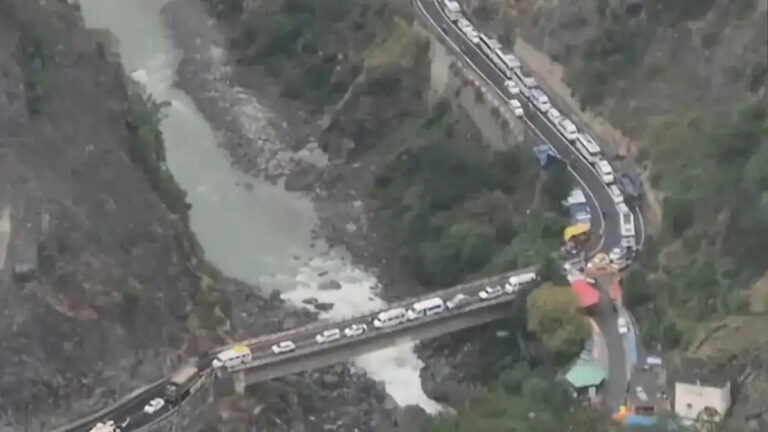
New Delhi, June 1, 2026 — The ongoing Char Dham Yatra has hit a critical peak as a staggering influx of over 30,000 pilgrims daily pushes Uttarakhand’s fragile mountain infrastructure to its absolute limit. Severe traffic congestion has paralyzed major stretches of the Badrinath National Highway, leaving thousands of devotees stranded inside their vehicles for hours. Visuals emerging from the ground show bumper-to-bumper gridlocks snaking across the narrow Himalayan terrain, with the impact felt most severely on the high-altitude choke points leading to the holy shrine.

The Anatomy of the Gridlock

The crisis reached its peak on the crucial eight-kilometer stretch between Joshimath and the Marwari Bridge. This area has been highly vulnerable since a major landslide in 2023 damaged sections of the highway. While the Border Roads Organisation (BRO) has been working continuously on restoration, various technical challenges in the rugged terrain have delayed completion.

The uneven, single-lane patches and persistent potholes have caused multiple vehicle breakdowns over the past few days, acting as immediate triggers for multi-kilometer jams. The gridlock, which originates near the ‘Zero Band’ area, has frequently lasted throughout the day and spilled late into the night.

Compounding the problem is a massive, simultaneous surge in tourism. Scorching, record-breaking heatwaves across northern India’s plains have driven a dual wave of travelers up into the mountains: devout pilgrims bound for Badrinath and Hemkund Sahib, alongside general tourists seeking respite in hill stations like Mussoorie and Nainital. This explosive mix of regional vehicular traffic has severely tested local management.

Impact on Stranded Pilgrims

For the families and elderly devotees caught in the traffic, the delays have brought significant hardships. Vehicles remain stationary for hours under a blazing mountain sun or chilling night temperatures, and accessing basic necessities has become a challenge.

  • Supply Shortages: Finding adequate food, clean drinking water, and functional restrooms on the narrow ledges of the highway is increasingly difficult.
  • Vulnerable Travelers: Families traveling with children and elderly relatives face prolonged physical exhaustion inside stalled buses and private cars.
  • Logistical Delays: The delays have disrupted carefully planned itineraries, causing missed hotel bookings and scheduled darshan (holy viewing) windows at the temple complex.

Despite the gridlock, local community groups and administrative teams are working along the route to distribute water and basic refreshments to those stuck in the longest queues.

Administration Responds with the ‘Gate System’

To restore order and prevent complete paralysis of the route, the Chamoli district administration, led by local police and sub-divisional magistrates, has enforced an aggressive traffic-rationing strategy known locally as the Gate System.

Under this one-way system, vehicles are allowed to proceed from only one direction at a time through the narrowest bottlenecks, while oncoming traffic is temporarily held at designated safe zones. Movements from both sides are strictly regulated in alternating intervals of approximately 30 minutes to an hour.

Additionally, the police have integrated a staggered stoppage plan at historical and spiritual sites. For instance, vehicles returning down from Badrinath Dham are being systematically halted at Vishnuprayag. According to Chamoli Superintendent of Police, Surjeet Singh Pawar, this measure is designed with religious sentiments in mind—allowing descending pilgrims to comfortably explore the first Prayag (river confluence) and visit the nearby Narsingh Temple while waiting out their designated travel slot.

Official Stance vs. Social Media Reports

While dramatic videos of kilometer-long lines and frustrated travelers continue to trend across social media platforms, state authorities maintain that the situation is being managed successfully under close supervision.

Administration officials emphasize that while intermittent traffic delays of one to three hours are inevitable given the sheer volume of 30,000 daily visitors, the pilgrimage itself remains continuous and structured. The implementation of the timed gate system has successfully prevented permanent highway blockages, ensuring that wheels keep turning—albeit slowly. Authorities have actively cautioned the public against reacting to exaggerated or misleading panic posts online, assuring the public that the ground teams are fully equipped to handle the crowd volumes safely.

Crucial Travel Advisories for Upcoming Visitors

With the peak pilgrimage season showing no immediate signs of slowing down, transport authorities and experienced tour operators have issued an updated set of guidelines for anyone planning to embark on the Badrinath or Hemkund Sahib route:

The Uttarakhand government continues to monitor registration numbers closely, hinting that stricter daily caps on vehicle entries could be deployed if the highway pressure crosses safe thresholds in the coming weeks. For now, patience and early planning remain the most important tools for any devotee journeying to the Himalayas.

Commercial LPG Hiked by Rs 42; Domestic Rates Unchanged

0

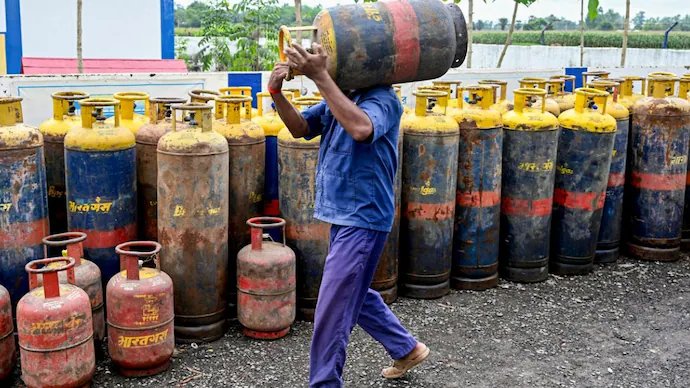
New Delhi, June 1, 2026 — In a move that is expected to trigger a ripple effect across the food, hospitality, and commercial sectors, state-owned Oil Marketing Companies (OMCs) have announced an upward revision in the prices of commercial Liquefied Petroleum Gas (LPG) cylinders. Starting today, the price of a standard 19-kilogram commercial LPG cylinder has been hiked by Rs 42. Meanwhile, providing major relief to millions of kitchens nationwide, the rates for domestic household gas cylinders (14.2 kg) remain strictly untouched.

The price modification, which takes effect immediately on the first day of the month, follows the routine monthly review cycle conducted by public sector fuel retailers like Indian Oil Corporation (IOC), Bharat Petroleum Corporation Limited (BPCL), and Hindustan Petroleum Corporation Limited (HPCL). According to the updated price notification, a 19-kg commercial cylinder will now cost significantly more in major metropolitan hubs and urban markets. Retailers, restaurant owners, and small-scale food manufacturers are bracing themselves for immediate operational cost escalations as energy inputs become costlier.

Industry analysts point out that this latest price hike is heavily intertwined with shifting dynamics in international energy markets. India relies on imports for over 85 percent of its crude oil requirements and a massive chunk of its LPG consumption. Over the past few weeks, a combination of geopolitical tensions in supply corridors, localized transport bottlenecks, and variations in the international cost-and-freight benchmarks have put upward pressure on Saudi Aramco’s LPG contract prices—which serve as the primary baseline for pricing in the domestic Indian market. The OMCs, which absorb or pass on these global fluctuations, felt compelled to adjust the commercial segment to protect their refining and marketing margins.

Following the Rs 42 hike, exact retail prices vary from state to state due to localized Value Added Tax (VAT) and state-level distribution freight charges. In Delhi, the commercial cylinder price shifts closer to the Rs 1,700–1,800 range, while Mumbai, Chennai, and Kolkata see proportional escalations relative to their previous baselines.

While the business community navigates this new spike, ordinary households have voiced immense relief. The decision to keep domestic 14.2-kg LPG cylinder rates unchanged is seen as a deliberate, stabilization measure by the administration. Household budgets are highly sensitive to variations in essential commodities, and cooking gas is a primary indicator of inflation for the middle- and lower-income demographics. By keeping domestic cylinders stable, the government and OMCs have shielded retail consumers from immediate inflationary stress, ensuring that everyday kitchen expenses remain highly predictable.

Impact on the Food and Hospitality Sector

The immediate brunt of the Rs 42 hike will undoubtedly be borne by the commercial food services sector, ranging from high-end restaurants and hotels to local tea stalls, street food vendors, and sweet shops. For these establishments, cooking gas constitutes a massive portion of daily operational overheads. A sudden increase of Rs 42 per cylinder means that high-volume businesses utilizing dozens of cylinders every week will face a substantial surge in their weekly expenditures. Industry representatives have already expressed concern that consecutive input cost increases might eventually force them to alter menu prices.

Historically, when commercial fuel rates rise, small-scale businesses face a tough dilemma: absorb the costs and watch their profit margins shrink, or pass the burden onto the end consumer. For a local eatery, a prolonged spike in fuel costs usually translates to small but noticeable increases in the prices of regular meals, snacks, and catering services. While a Rs 42 hike might seem manageable in isolation, businesses note that it adds to a cumulative burden of rising costs for other essential ingredients like edible oils, vegetables, and labor, making macroeconomic management tricky for small business owners.

Why Domestic and Commercial Rates Diverge

Many consumers wonder why commercial gas rates fluctuate frequently while household gas prices enjoy long periods of absolute stability. The reason lies in the structurally distinct regulatory frameworks governing the two sectors. The commercial LPG sector operates on a largely deregulated, market-linked model. Prices are directly linked to international import parity rates, changing dynamically on the first of every single month based on global trends. This ensures that public sector oil companies do not run up massive under-recoveries or losses on fuel sold for corporate and commercial profit-generating activities.

Conversely, the domestic LPG segment is deeply connected to public welfare and social safety networks. The government closely coordinates with oil marketing companies to absorb international volatility on behalf of household consumers. Through targeted subsidies, structural cushions, and strategic pricing interventions, domestic LPG rates are kept artificially insulated from sudden global spikes. This structural separation ensures that while businesses face market-driven fluctuations, citizens are protected against sudden shocks that could disrupt household stability or impact nutritional security across the country.

Macroeconomic Outlook and Future Trajectory

Looking ahead, market experts suggest that LPG prices will remain sensitive to global oil production quotas and broader macroeconomic indicators. The current hike reflects temporary supply-side adjustments, but any stabilization in international crude markets could pave the way for a correction or a rollback in the upcoming months. OMCs continue to monitor international freight indices, foreign exchange rates, and geopolitical shifts daily to determine the next phase of pricing updates.

In summary, the latest pricing restructure highlights a balanced approach by energy distributors. It addresses the commercial realities of international supply chains by raising rates for businesses, while simultaneously reaffirming consumer protection by keeping domestic kitchen budgets secure. As the market adapts to these updated rates, all eyes will remain on international oil benchmarks to see whether this upward trajectory continues or stabilizes before the next monthly review cycle.