Home Blog Page 45

Shraddha Kapoor Goofy Dance Video with Beau Rahul Mody Goes Viral

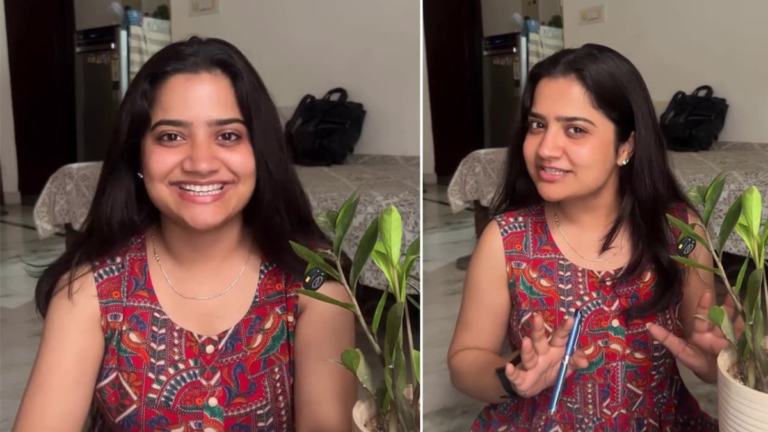
New Delhi, May 28, 2026: Bollywood actress Shraddha Kapoor has once again proven why she is hailed as one of the most relatable and charming celebrities on social media. Known for her unfiltered personality, love for street food, and witty interactions with fans, the Stree 2 actress recently set the internet abuzz with a hilariously candid video. Stepping away from the glamorous, heavily styled reels typical of B-town stars, Shraddha shared a clip of herself letting loose in the comfort of her home. However, it wasn’t just her high-energy dance moves that caught the public’s attention—it was the mystery person behind the camera and a deeply affectionate caption that triggered widespread speculation about her relationship with rumored boyfriend Rahul Mody.

Pyjamas, Michael Jackson, and Pure Chaos

Taking to Instagram, Shraddha posted a short, raw video that quickly gathered millions of views. Dressed in comfortable, everyday pyjamas, the actress can be seen breaking into a series of goofy, spontaneous fusion steps. The track of choice was none other than the King of Pop, Michael Jackson’s iconic 1987 anthem, Bad.

With zero filters, no green screens, and completely messy hair, Shraddha danced with pure, unadulterated joy. While she threw in her own comedic twists to the legendary pop choreography, a distinct voice could be heard off-camera cheering her on and saying, “Do na” (Do it), right before she burst into her routine. By the end of the video, both Shraddha and the person holding the camera were left laughing hysterically at the sheer chaos of the moment.

The Romantic Caption That Stole the Show

While the impromptu living room concert was entertaining enough, her choice of words for the caption truly sent fans into overdrive. Shraddha wrote:

Netizens immediately connected the dots. Given that the camera was being held by someone sharing a deeply intimate, relaxed space with her, fans instantly deduced that the cameraman was her rumored beau, writer-director Rahul Mody. The caption was widely interpreted as a soft confirmation of their bond—celebrating a relationship built on comfort, laughter, and the freedom to be completely ridiculous around each other.

Furthermore, hawk-eyed fans noticed that Shraddha subtly tagged Rahul in the post, confirming that he was indeed the one occupied with a script on the couch before being thoroughly interrupted by her sudden performance.

Netizens React: “I Just Want Someone Who Brings Out My Chaotic Side”

The comment section under the post exploded within minutes, transforming into a mix of adoration, relationship envy, and lighthearted teasing. For many fans, the video represented modern relationship goals.

One user beautifully summed up the internet’s collective sentiment, writing:

“In the era of almost relationships and almost people, I just want someone who brings out this version of me — chaotic, free, and completely myself.”

Another fan playfully commented, “I love whatever is wrong with her,” appreciating her willingness to look silly online, while a third stated, “It is so fun watching you. No filter, nothing. I absolutely loved it!”

Dealing with the “Messy Room” Trolls with Signature Wit

Of course, no viral celebrity post is complete without a few internet critics. A handful of commentators looked past Shraddha’s infectious energy and focused on her background, noting that her room looked a bit untidy and lacked the pristine aesthetic usually maintained by top-tier actors.

One user commented, “Very untidy home, at least you could have done the video with a green screen.”

When another follower chimed in with, “But first clean up the mess behind!” Shraddha effortlessly quipped, “What do you think I’ve been inviting you home for?”

Her defensive yet comedic comebacks won even more praise from her followers, who love her ability to normalize everyday clutter rather than projecting an unattainable, perfect life.

Tracking the Shraddha Kapoor and Rahul Mody Timeline

Though the couple has fiercely guarded their privacy and avoided explicit public declarations, their relationship has been an open secret in Bollywood for over two years.

Professional Highlights and What’s Next

On the career front, Shraddha Kapoor remains one of Bollywood’s most bankable commercial stars. Her massive box-office pull was recently solidified with the historic blockbuster success of the horror-comedy Stree 2, which smashed several domestic records. She also expanded her horizons globally by lending her voice as Judy Hopps for the official Hindi dub of Disney’s highly anticipated animated feature, Zootopia 2.

Looking forward, Shraddha has an incredibly diverse lineup of films currently in production:

  • Pahadpangira: A heavily anticipated dark fantasy film reported to be an official prequel to the cult classic Tumbbad.
  • Naagin: A modern, VFX-heavy supernatural drama centered around the shape-shifting serpent folklore.
  • Eetha: A prestigious biographical drama where Shraddha is set to essay the role of the legendary Marathi folk and Lavani artist, Vithabai Narayangaonkar.

As she navigates massive cinematic projects on the big screen, it is clear that Shraddha Kapoor has cracked the code to social media longevity. By choosing authentic, messy, and joy-filled moments over curated perfection, she continues to secure her place not just at the box office, but in the hearts of millions of everyday internet users.


How Sushmita Sen Silenced the Critics and Rewrote Bollywood’s Rules of Motherhood

New Delhi, May 28, 2026: Bollywood has always been an industry governed by strict, unwritten laws—especially for its leading ladies. For decades, the conventional wisdom dictated that an actress’s shelf life was bound to her youth, her single status, and her availability. To defy these norms was considered career suicide. Yet, in the year 2000, a 24-year-old Sushmita Sen decided she was not going to play by anyone else’s rules. Fresh off the success of her hit film Biwi No. 1, the former Miss Universe made the groundbreaking decision to adopt her first daughter, Renee, as a single woman.

While the world today looks back at that moment as a pioneering act of empowerment, the immediate reality inside the Hindi film industry was vastly different. In a candid interview, Sushmita opened up about the immense professional pushback she faced, revealing a startling anecdote: the moment she adopted Renee, her own talent manager abandoned her.

‘Good Riddance to Bad Rubbish’

Recalling the incident, Sushmita shared the blunt ultimatum her manager gave her before walking out on their professional contract.

In the theatrical ecosystem of commercial cinema at the turn of the millennium, “character roles” was industry code for being sidelined. It meant transitioning from the glamorous, high-billed leading lady to playing the mother, the sister, or the supportive aunt of the male protagonist. Her manager was thoroughly convinced that a young, unmarried woman choosing motherhood had effectively extinguished her star power.

Instead of panicking or pleading, Sushmita met the abandonment with her trademark poise and a healthy dose of humor. “He ran away, and I was like, good riddance to bad rubbish,” she said. “I was quite okay with it.”

The Harsh Reality of 90s Cinema

While she laughed off her manager’s exit, Sushmita acknowledged that his reaction was a symptom of a deeply entrenched systemic bias. The film industry at the time was hyper-focused on an actress’s perceived marketability, which was intimately tied to her personal life.

Before the explosion of Over-The-Top (OTT) streaming platforms, theatrical cinema was the only stage that mattered, and it came with rigid boundaries. The prevailing belief was that audiences would not accept a woman as a romantic lead if they knew she had a child at home. Actresses routinely hid their marriages and delayed families to prolong their careers.

Sushmita was also battling other industry biases. Standing tall at a time when many leading men preferred shorter co-stars, she was already labeled as a “difficult heroine to cast.” Furthermore, as a self-made woman who entered acting directly after her global pageant win, she didn’t have industry godfathers or a film lineage to cushion her fall. When she chose to become a single mother, the industry’s initial response was to corner her, questioning her commitment to the craft.

Shattering the Glass Ceiling with Blockbusters

The true measure of Sushmita’s legacy is how spectacularly she proved her doubters wrong. The narrative that motherhood would dilute her box-office appeal crumbled almost immediately. In the years following Renee’s adoption, Sushmita delivered some of the most memorable and commercially successful performances of her career.

She held her own alongside titans like Amitabh Bachchan and Akshay Kumar in the slick thriller Aankhen (2002). She took creative risks in Meghna Gulzar’s directorial debut Filhaal…, a film that ahead-of-its-time tackled the taboo subject of surrogacy. And in 2004, she completely redefined the modern Bollywood heroine as Miss Chandni in Farah Khan’s mega-blockbuster Main Hoon Na, creating an iconic cinematic persona that is celebrated to this day.

Far from being relegated to minor character roles, she remained a highly sought-after leading lady, proving that true talent and screen presence could easily bypass arbitrary societal expiration dates.

A Legacy of Fearless Choices

Looking back at that turbulent phase, Sushmita attributes her survival to her refusal to let outsiders dictate her worth. “What it did take was to say, ‘these are the rules—you take them, or you leave them,'” she explained. “Nobody gave me a platform. I did everything on my own. So your rules don’t apply to me. My rules apply to me.”

Her rulebook prioritized building a meaningful life over maintaining an unblemished corporate image. Ten years after adopting Renee, Sushmita expanded her family by adopting her second daughter, Alisah, in 2010. She raised both girls as a proud single mother, balance-shifting her career priorities whenever her daughters needed her attention.

In recent years, as the entertainment landscape evolved, Sushmita seamlessly transitioned into the digital space, proving her longevity once again. Her roaring comeback in the crime-thriller series Aarya and her powerhouse performance as transgender activist Shreegauri Sawant in Taali earned widespread critical acclaim.

Sushmita Sen’s journey is a powerful reminder that an individual’s career trajectory isn’t defined by the fears of their managers or the biases of their industry. By treating the exit of cynical voices as “good riddance,” she didn’t just save her own career—she cleared a path for future generations of women in Indian cinema to embrace both motherhood and stardom on their own terms.

The ₹25,000 Blueprint: How a Delhi Officer Saves 72% of Her Salary

0

New Delhi, May 28, 2026: The debate surrounding the true cost of living in India’s metropolitan hubs has taken an intriguing turn on social media. In a digital landscape where conversations often center around the crushing weight of inflation, skyrocketing rental markets, and the near-impossibility of living comfortably on a mid-level salary, a 28-year-old government officer in New Delhi has flipped the script.

Kritika, an Assistant Section Officer (ASO) who cleared the SSC CGL examination in 2022, recently sparked a major online discussion by revealing her meticulous monthly budget. Working as a Level 7 central government employee, she brings home a substantial in-hand salary of ₹90,000 per month. Yet, her total monthly expenditure sits at just ₹25,000. By choosing a lifestyle of intentional frugality, she successfully saves and invests nearly 72% of her earnings, challenging the prevailing narrative that tier-1 cities inevitably drain every rupee an individual makes.

Breaking Down the ₹25,000 Budget

Managing expenses in a capital city notorious for high living costs requires conscious planning. Kritika’s viral budget breakdown reveals a highly strategic approach to fixed costs, daily utilities, and discretionary spending.

Rent and Domestic Help (The Fixed Anchors)

For most young professionals moving to Delhi, housing constitutes the single largest monthly drain. Kritika optimizes this by sharing a 2BHK apartment with a flatmate. By splitting the bills down the middle, her individual share of the rent comes out to ₹11,500 per month.

To manage nutrition and time efficiently, the flatmates employ a daily domestic help for cooking and cleaning. The maid charges a flat monthly fee of ₹5,000, bringing Kritika’s individual share for dedicated household help to an incredibly affordable ₹2,500. Combined, housing and essential domestic help require a fixed baseline of ₹14,000.

Groceries and Daily Staples

Food and household essentials are managed through quick-commerce and delivery applications like Blinkit and Zepto. By focusing purely on raw materials, fresh produce, and kitchen staples rather than high-end gourmet imports or processed items, her monthly grocery bill fluctuates between ₹4,000 and ₹5,000.

The Power of Subsidies and Resource Sharing

One of the most notable aspects of Kritika’s budget is how she manages to minimize utility costs to a bare minimum of ₹1,000, which covers her split share of Wi-Fi, kitchen gas cylinder refills, and RO water maintenance.

  • Electricity at Zero Cost: Her residential electricity consumption falls safely under the subsidized bracket provided by the Delhi government, effectively rendering her power bill ₹0.
  • Zero Subscription Overhead: In an era where digital entertainment packages can easily add thousands to a budget, her entertainment expenditure is non-existent. She relies entirely on shared family accounts for platforms like Netflix, systematically eliminating minor capital leaks.

Transport and Mobility

Commuting in Delhi via ridesharing apps or app-based aggregator cabs frequently drains the wallets of daily commuters. Kritika circumvents this systemic cost by relying entirely on her personal two-wheeler. Avoiding premium cabs and heavy public transit fares, her monthly fuel expenditure for her scooty hovers at an enviable ₹1,500.

Personal Discretionary Spending

Even with a strict financial framework, the 28-year-old allocates a combined ₹5,500 to ₹6,000 for personal care and entertainment:

  • Lifestyle & Retail: She spends roughly ₹3,000 to ₹4,000 on lifestyle and clothing through online retail platforms like Myntra and Nykaa.
  • Socializing: Her dining out budget is capped strictly at ₹2,000 per month. Admitting with a smile that she prefers being a “good kid” who consumes home-cooked meals, she keeps weekend restaurant visits intentional rather than impulsive.

Social Media Reacts: Realism vs. Idealism

When these figures hit the internet, they instantly sparked a wider cultural debate on personal finance and city living. Urban living discussions are often dominated by tech professionals claiming that even a combined household income of ₹1.5 lakh to ₹2 lakh feels tight in the National Capital Region (NCR). Consequently, a sub-₹30,000 budget from an elite government officer was bound to draw intense scrutiny.

Many online users praised her financial discipline, highlighting her approach as an excellent masterclass in lifestyle design. In a society prone to “lifestyle inflation”—the tendency to increase spending as income rises—retaining a baseline budget while earning a Level 7 salary allows an individual to build a substantial investment corpus very early in their career.

Conversely, skeptics pointed out that her budget represents a specific, frictionless scenario. Kritika herself explicitly acknowledged that her monthly ledger omits irregular, one-time expenditures such as out-of-city vacations, festival gifting, or major durable purchases like a new mattress or electronics. Critics also note that her formula relies heavily on structural privileges: being young, single, having no dependents or medical liabilities, and benefiting from a shared housing arrangement that divides utility bills exactly in half. For a professional with family obligations, an independent apartment requirement, or a workplace requiring long four-wheeler commutes, surviving on ₹25,000 in Delhi would be functionally impossible.

The Broader Lesson in Modern Personal Finance

Beyond the viral numbers, this real-life breakdown highlights an important economic lesson for young working professionals in metropolitan cities. It proves that the cost of living in an urban environment is not always a fixed, unyielding mathematical law; rather, it is highly elastic and deeply influenced by personal choice.

By rejecting the pressure to rent a premium standalone apartment, swap her two-wheeler for an expensive sedan, or frequent high-end cafes every weekend, this central government officer has safeguarded her financial independence. She has successfully decoupled her self-worth from her spending power. Her financial blueprint serves as a stark reminder to India’s corporate workforce: it isn’t just about how much money you make every month, but fundamentally about how much of it you manage to keep.

Pooja Bhatt Sets the Record Straight on Her Family’s Unconventional Bond

New Delhi, May 28, 2026: The personal lives of the Bhatt family have kept Bollywood tabloids busy for decades. From whirlwind romances to highly publicized separations, filmmaker Mahesh Bhatt’s unconventional choices have frequently dominated entertainment headlines. Recently, veteran actor-filmmaker Pooja Bhatt addressed one of the most long-standing narratives surrounding her family: whether her father changed his religion to Islam to marry his second wife, actress Soni Razdan.

In a candid, deep-dive interview, Pooja stripped away the decades of media sensationalism, offering an intimate look at her parents’ relationship dynamic. Rather than focusing on legal loopholes or religious paperwork, she redefined the conversation by emphasizing a foundational truth about her father: “He never left my mom.”

The Reality Behind the ‘Religion Change’ Rumors

For years, archival Bollywood reporting and legal biographies have asserted that when Mahesh Bhatt fell in love with Soni Razdan in the mid-1980s, he chose to convert to Islam. Under India’s Special Marriage Act and personal laws, a legally married Hindu man cannot wed a second time without divorcing his first spouse. Media narratives at the time claimed that Mahesh bypassed this hurdle by adopting his mother’s faith (his mother, Shirin Mohammad Ali, was a Muslim, while his father was a Hindu Nagar Brahmin), allowing him to enter a parallel marriage with Soni without legally severing ties with his first wife, Kiran Bhatt (born Lorraine Bright).

When asked directly about this religious transition during a recent interview with entertainment journalist Vickey Lalwani, Pooja shifted the spotlight away from legal strategy to the emotional reality of her father’s character.

Through her explanation, Pooja contextualized the decision not as a calculated maneuver to abandon his past life, but rather as an effort to legitimize his new relationship without discarding the old one. To the Bhatts, the arrangement wasn’t about legal technicalities—it was about a lifelong commitment to emotional responsibility.

A Childhood Informed by Radical Honesty

Growing up in a household where standard societal norms were routinely challenged wasn’t seamless. Pooja admitted that her father’s second marriage caused immense pain to her mother, Kiran. However, what saved the family from toxic fractures was a policy of complete transparency.

Mahesh Bhatt did not hide his changing affections behind a “conspiracy of silence,” a trait Pooja notes is all too common in patriarchal setups. Reflecting on how her father broke the news of his relationship with Soni Razdan, Pooja shared:

  • No Hiding: The relationship blossomed during the making of the seminal 1984 family drama Saaransh, which Soni frequented.
  • Direct Communication: One night, Mahesh woke an adolescent Pooja up to tell her directly that he had met Soni and would be establishing a new home.
  • The Reassurance: He promised her that moving out did not mean he loved her any less or that she was being abandoned.

“Many people later questioned whether such honesty was appropriate for a child,” Pooja remarked, defending her father’s transparency. “But I say, if he wasn’t going to tell me, who would? I would rather have heard it from my father’s or mother’s mouth than read it in Stardust magazine, Cine Blitz, or hear it from the neighborhood gossip.”

Navigating Guilt and Evolution: The Bond with Soni Razdan

Pooja’s modern relationship with her stepmother, Soni Razdan, and her half-sisters, Alia and Shaheen Bhatt, is often praised for its warmth. Yet, Pooja openly acknowledged that this harmony was hard-won. In past throwbacks, she admitted to resenting Soni during her teenage years, occasionally flaring up at the mere mention of her name. It was her mother, Kiran, who stepped in to offer a broader perspective, constantly reminding her children that Mahesh was fundamentally a good man whose romantic relationship had simply run its course.

Over time, this maturity allowed a deep friendship to form between Pooja and Soni. Pooja recalled a pivotal, emotional moment between them under the stars in Ooty during the pre-production of a shelved film project titled Love Affair.

Soni approached Pooja, carrying years of unspoken heavy-heartedness, confessing, “Pooja, I too feel so guilty… I felt very guilty.”

“There Are No Villains in Life”

Today, the Bhatt family operates less like a traditional hierarchy and more like an interconnected ecosystem built on mutual respect and forgiveness. Pooja highlighted that her parents have managed to maintain an elegant decorum. They never pitted their children against each other, and Kiran forgave Mahesh decades ago.

Demonstrating the unique warmth that exists between her parents today, Pooja shared an anecdote of a recent afternoon. Mahesh visited her home in Bandra, hungry, and Kiran willingly made poha for him. While eating, Kiran read sections of Mahesh’s book, The Ashes Are Warm, which details his turbulent past, including his intense relationship with the late actress Parveen Babi.

Upon reading about the painful moments of Parveen’s arrest, Kiran closed the book, visibly moved, and told Mahesh, “I realized after reading this book that there are no villains in life.”

Ultimately, Pooja Bhatt’s reflections offer a refreshing counter-narrative to standard celebrity scandal. In a world obsessed with legal labels and finding someone to blame, she frames her family’s journey around emotional maturity and accountability. To her, love isn’t about rigid legal geography or maintaining societal appearances; it’s about standing by someone morally through thick and thin, even when the world stands on the other side.

BSNL JTO 2026 Notification Released: 100 Vacancies Announced, No GATE Required

New Delhi, May 28, 2026: Bharat Sanchar Nigam Limited (BSNL), a premier public sector undertaking (PSU) under the Government of India, has officially released its highly anticipated recruitment notification for the post of Junior Telecom Officer (JTO) – Telecom for the year 2026. Published under the advertisement number BSNLCO-11/12(11)/1/2026-RECTT-CO, this notification marks a major opportunity for engineering graduates and postgraduates across India looking to secure a stable and prestigious career in the telecom sector.

Unlike past iterations where entry was restricted through GATE rankings, BSNL has confirmed a direct recruitment drive utilizing its own autonomous online exam layout for 2026. A total of 100 vacancies have been sanctioned from the open market across various territorial circles. The online application link is set to go live on June 4, 2026, and eligible candidates can submit their forms up until July 3, 2026.

Crucial Timelines and Important Dates

Aspirants need to strictly align with the schedule outlined by BSNL management to avoid the last-minute server rush. The complete layout of important dates for the BSNL JTO 2026 recruitment process is structured as follows:

Comprehensive Eligibility Criteria

To successfully cross the initial shortlisting stage, candidates must fulfill rigorous academic parameters and age conditions set as of the application closing date (July 3, 2026).

1. Educational Qualifications

Candidates interested in applying for the Junior Telecom Officer post must possess one of the following qualifications from a recognized university or AICTE-approved institution:

  • A full-time Bachelor of Engineering (B.E.) or Bachelor of Technology (B.Tech) degree (or equivalent structural qualification) in any of the following disciplines:
    • Telecommunications
    • Electronics
    • Radio Engineering
    • Computer Science & Engineering
    • Information Technology (IT)
    • Electrical Engineering
    • Instrumentation Engineering
  • An M.Sc. degree in either Electronics or Computer Science.

2. Age Limits and Relaxations

The baseline age bracket requires a candidate to be a minimum of 20 years old and not exceed 30 years of age as of July 3, 2026. However, in accordance with standard government directives, upper age relaxations are granted to reserved categories:

  • OBC (Non-Creamy Layer): 3 Years relaxation (up to 33 years)
  • SC / ST: 5 Years relaxation (up to 35 years)
  • PwBD (Unreserved/EWS): 10 Years relaxation (up to 40 years)
  • Existing BSNL Internal Employees (UR/EWS): Relaxed up to 35 years

Step-by-Step Online Application Process

The full intake cycle will be managed through an online setup. Applications submitted via post or offline corridors will face outright rejection. Here is the explicit sequential methodology to register correctly:

1.Portal Access and Initial Registration:Prerequisite: Valid Email & Phone.

Navigate to the official BSNL recruitment web terminal at bsnl.co.in or directly visit their external exam portal. Locate the “CEN for JTO 2026” link and click on “New Registration”. Generate an active User ID and Password by verifying your OTP via mobile number and email.

2.Fulfilling Application Logistics:Personal & Academic Entries.

Log back into the profile using your new credentials. Accurately populate the structural fields including personal information, circle choices, communication addresses, and technical academic data. Note that you must carefully select your targeting circle as boundaries dictate final merit lists.

3.Document Uploading:Follow exact size specifications.

Upload scanned copies of required legal artifacts. This includes a recent passport-sized color photograph, clear signature, Class 10th certificate (serving as proof of birth), your engineering degree/provisional transcript, and valid caste/reservation certificates if claiming relaxations.

4.Fee Processing and Final Submission:Non-refundable payment execution.

Review your filled profile parameters through the preview mechanism. Proceed to the embedded secure payment gateway to clear the application fee using net banking, credit/debit instruments, or UPI. Submit the final form and print the generation receipt.

Application Fee Details

The application processing fee must be cleared exclusively through online transaction modes before the registration link expires on July 3, 2026. The financial matrix is categorized as follows:

  • General / OBC / EWS Candidates: ₹2,000/-
  • SC / ST / PwBD Candidates: ₹1,000/-

Selection Process and Exam Scheme

Candidates aiming to secure one of the 100 coveted positions will have to clear a direct Computer-Based Test (CBT). There will be no separate interview phase for the direct open-market quota, placing absolute dependency on your performance in the written terminal.

The test is scheduled for a 3-hour window featuring multiple-choice objective questions (MCQs). The architecture of the paper splits into technical core engineering segments alongside general awareness matrices.

BSNL enforces clear minimum qualifying benchmarks for shortlisting. Reserved categories (SC/ST/OBC-NCL/PwBD/EWS) must hit a minimum sectional score of 35% with an overall collective floor of 45%. Unreserved segments face higher bars to enter the document verification pipeline. Furthermore, a negative marking system applies to wrong attempts, reinforcing the need for precision.

Salary, Training, and Career Trajectory

Landing a JTO slot at BSNL comes with an executive-level pay profile under the Industrial Dearness Allowance (IDA) framework. Selected candidates are placed into the E-1 Pay Scale, which carries a base scale layout of ₹16,400 to ₹40,500 (historically governed by the 2nd PRC pay parameters, supplemented heavily with modern IDA increments, House Rent Allowance, and executive medical privileges). The estimated cumulative gross packages scale between ₹5.8 Lakhs to ₹8.4 Lakhs per annum depending on the city tier of deployment.

Upon clearance, all chosen junior telecom officers sign a mandatory 5-year service bond and undergo a rigid probationary track stretching for two years. This phase spans a highly structured training cycle:

  1. JTO Phase-I Training: 10 Weeks of theoretical and system simulation setup.
  2. Field Training: 4 Weeks of physical on-site deployment inside actual telecom exchanges.
  3. JTO Phase-II Training: 6 Weeks of advanced core networking methodologies.

Once established, JTOs handle the baseline management of state-of-the-art optical fiber frameworks, 4G/5G tower infrastructures, and regional exchange switches, offering a clear promotion roadmap toward Assistant General Manager (AGM) and higher executive management tiers.

For any further technical clarifications, candidates can view this BSNL JTO Notification Analysis which visually breaks down the entire direct recruitment roadmap, the circle allocation system, and structural updates for the 2026 examination cycle.

Yo Yo Honey Singh Reveals He is ‘Totally Bald’ Due to Bipolar Meds

New Delhi, May 28, 2026: Indian rapper and music producer Yo Yo Honey Singh has made a startling personal disclosure that has taken the internet by storm. Known for dominating the Indian pop music industry with his chart-topping tracks, the artist recently revealed that he is “totally bald” and has been wearing a hair system, or wig, for years.

Speaking candidly on the ABtalks podcast, the 43-year-old singer offered a raw, detailed account of his prolonged battle with bipolar disorder, a severe mental health condition characterized by extreme mood swings, ranging from depressive lows to manic highs. Honey Singh explained that the heavy psychiatric medications he took for seven consecutive years completely altered his physical appearance, causing immense weight gain and total hair loss.

Medical experts and psychiatrists have weighed in on his revelation, explaining the complex physiological link between long-term bipolar disorder treatments, chronic psychological stress, and the hair growth cycle.

From the Peak of Stardom to Absolute Isolation

The initial onset of Honey Singh’s mental health issues began at the absolute pinnacle of his career in the mid-2010s. At the time, he was actively hosting a major music reality television show in Mumbai, shooting regional films, and embarking on a high-profile international tour across the United States with Bollywood superstar Shah Rukh Khan.

Beneath the glamour of global fame, the rapper was privately enduring terrifying psychological distress. During his stay in Chicago, he began experiencing intense paranoia, hallucinations, and an overwhelming, irrational fear of death.

The mounting mental strain eventually forced him to walk off stage mid-performance after performing just two songs. This dramatic exit marked the beginning of a profound, seven-year withdrawal from public life. To shield his fans from his deteriorating condition, the singer locked himself inside his home, cutting off all communication with childhood friends, the media, and society.

For three of those seven years, the paranoia was so paralyzing that he barely stepped out of his bedroom, living in a constant mental loop of destructive thoughts. By 2018 and 2019, the illness had intensified to the point where he genuinely believed he was already dead and trapped in a state between heaven and hell.

The Physical Toll of Treatment: Weight and Total Hair Loss

While fighting the invisible battles of bipolar disorder and substance abuse—which he had successfully quit in 2014—the medical treatment intended to stabilize his mind began taking a heavy toll on his physical body. Honey Singh revealed that seven years of heavy psychiatric prescriptions caused his weight to skyrocket to 105 kilograms and stripped him of his natural hair.

Addressing long-standing speculation regarding his changing hairstyles and appearance, he stated bluntly:

The turning point in his recovery came when he finally decided to step out of isolation and seek a second medical opinion. After changing his doctor, adjusting his treatment plan, and modifying the dosage of his core psychiatric salts, Honey Singh began showing significant mental improvement within four weeks, allowing him to gradually face life and return to creating music.

Experts Explain: How Bipolar Medications Trigger Hair Loss

The rapper’s public admission has thrown a spotlight on a lesser-known side effect of psychiatric care. According to clinical psychologists and medical researchers, medication-induced hair loss (alopecia) is a well-documented clinical reality, primarily associated with specific mood stabilizers used to manage bipolar disorder.

Medical data indicates that the risk varies considerably depending on the exact pharmaceutical compounds prescribed, their dosage, and the duration of the treatment plan.

The Biological Mechanism

Human hair growth functions in continuous cycles: the growth phase (anagen), the transitional phase (catagen), and the resting/shedding phase (telogen). Heavy psychiatric medications can disrupt this internal clock.

Drugs like valproate are believed to interfere with cell division within the hair matrix and reduce levels of vital micronutrients like zinc and selenium, which are essential for follicle structural integrity. When these nutrients are depleted, or when the body undergoes severe physiological changes, large numbers of hair follicles are prematurely pushed out of the growth stage and into the shedding stage, resulting in widespread hair loss.

The Compounding Factors: Stress, Sleep, and Lifestyle

Medical experts emphasize that medication is rarely the sole culprit in cases of extreme hair loss during severe mental health crises. Bipolar disorder fundamentally destabilizes the body’s entire physiological balance, creating a perfect storm for hair shedding through multiple converging factors:

  • Chronic Psychological Stress: Prolonged periods of intense anxiety and paranoia trigger a massive, sustained release of cortisol (the stress hormone). High cortisol levels are known to disrupt hair follicle function, causing a condition known as telogen effluvium, where hair thins rapidly across the scalp.
  • Circadian Rhythm & Sleep Disruption: Manic episodes are universally characterized by severe sleep deprivation. Modern dermatological research shows that hair follicle cells are heavily governed by circadian rhythms; a lack of consistent, restorative sleep directly impairs cellular repair and hair growth cycles.
  • Nutritional Deficiencies: During deep depressive or highly manic phases, individuals often experience erratic eating habits, leading to severe nutritional neglect. A lack of essential proteins, iron, and vitamins prevents the body from supporting non-essential functions like hair production.

A Message of Caution and Hope

Despite the distressing physical side effects, psychiatrists strongly caution patients against abruptly stopping their psychiatric medications. Discontinuing treatment for bipolar disorder without strict clinical supervision poses a severe risk of immediate psychological relapse, mania, or deep depression.

Medical professionals stress that hair loss caused by psychiatric drugs is typically reversible. In most standard clinical scenarios, once a patient’s psychiatric state stabilizes, doctors can safely adjust dosages, switch to alternative medications, or prescribe targeted therapies like topical minoxidil, zinc supplements, or biotin to completely regrow the hair.

For Honey Singh, the journey back to health was long, painful, and exhausting—a process he compared to emerging from a scorching sauna. Now successfully re-establishing his identity on the music charts with albums like Honey 3.0 and Glory, and sharing his journey via his Netflix documentary Famous, the artist views his survival as a victory. By speaking openly about his wig and his baldness, he continues to shatter the stigma surrounding the heavy physical and mental costs of psychiatric recovery.

The “Don 3” Firestorm: Shobhaa De Slams Cine Body Actions Against Ranveer Singh

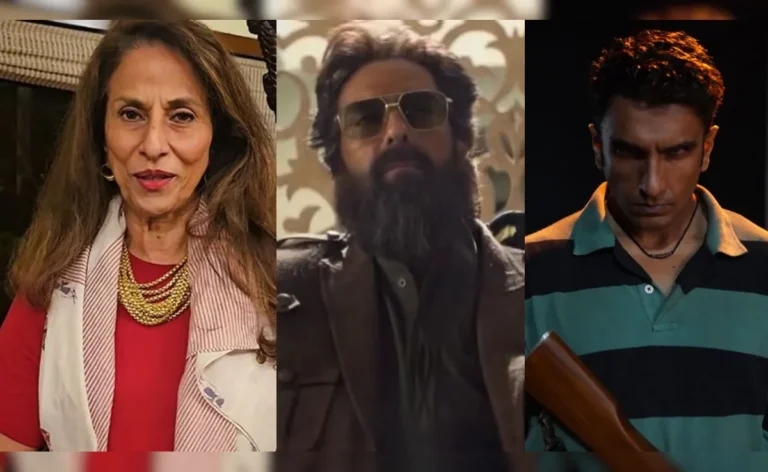
The ongoing battle between Bollywood superstar Ranveer Singh and the industry’s apex workers’ body has escalated into a full-blown war of egos and industry politics. Veteran author and columnist Shobhaa De has weighed in on the controversy with characteristic biting wit. Reacting to the non-cooperation directive issued against the actor by the Federation of Western India Cine Employees (FWICE), De took to social media to deliver a sharp critique. She compared the unfolding drama to the infamous elite disputes of the nation’s capital, declaring that “Ranveer Singh is like the Delhi Gymkhana of Bollywood.”

The dispute traces back to Ranveer’s abrupt, high-profile exit from Farhan Akhtar’s highly anticipated franchise film Don 3. This departure reportedly left Excel Entertainment facing heavy financial liabilities and unresolved contractual commitments. When the FWICE stepped in to demand answers, the situation dissolved into a territorial standoff. Far from viewing the federation’s resulting “ban” as a standard regulatory move, Shobhaa De has framed the entire saga as a textbook display of institutional bullying, power-tripping, and manufactured outrage that threatens the livelihoods of everyday film workers.

The Anatomy of a Power Struggle: What is the “Delhi Gymkhana” Analogy?

To understand De’s comparison, one must look at the culture of exclusive institutions. The Delhi Gymkhana Club is historically synonymous with old-money elitism, strict gatekeeping, and internal bureaucratic feuds aimed at keeping out perceived outsiders while preserving arbitrary authority. By calling Ranveer Singh the “Delhi Gymkhana of Bollywood,” De is highlighting a larger, systemic pattern of authority, exclusion, and punishment within the entertainment business.

She pointed out that while there might be a sense of overprivilege on one side, the reaction from the governing body is less about justice and more about a desperate bid to assert dominance over a massive, self-made superstar. However, while she linked the two controversies in terms of their underlying psychology, she drew a sharp contrast in how the targets have responded. De praised Ranveer for maintaining a dignified silence, letting his massive fanbase fight his battles for him, while mocking the institutional side of the Delhi Gymkhana row as being full of “stuffed old shirts sitting and sipping their gin and tonics, keeping the rest of the world out.”

Shobhaa De Questions FWICE’s Legitimacy and Authority

A major focal point of De’s critique was the sudden prominence assumed by the FWICE in what should fundamentally be a private corporate dispute. According to reports from within the industry, after Excel Entertainment raised concerns, FWICE Chief Advisor Ashoke Pandit reached out to Ranveer Singh to hear his side of the story. The actor allegedly responded via email, stating that the workers’ body did not hold jurisdiction over his specific contractual matters.

This defiance seemingly triggered the federation’s aggressive non-cooperation directive—a move De thoroughly panned. Check out her breakdown of the situation below:

  • A Lack of Institutional Weight: De openly questioned the authority of the council, stating, “Who is FWICE? I don’t think they’re all that important, but suddenly they have assumed the kind of importance to say, ‘Oh, we won’t allow this man, this superstar, the most successful actor in India, to get to the studios.'”
  • A Danger to Daily Wage Earners: De argued that by halting work or trying to isolate a top-tier star, the federation is actively alienating the very people it is sworn to protect—the ground-level crew, lighting technicians, and daily wage workers who lose employment whenever a massive production stalls.
  • The Legal Alternative: The columnist insisted that a fallout between Farhan Akhtar, Excel Entertainment, and Ranveer Singh is a corporate disagreement. The logical solution would be to hire lawyers or settle the damages in a court of law, rather than involving a trade federation to enforce an industry-wide blockade.

The Creative Fallout: A “Conspiracy” Against Success?

The timing of this industry-wide standoff has also raised eyebrows. Ranveer Singh is currently riding a massive wave of professional momentum, particularly driven by the immense anticipation surrounding his upcoming action film, Dhurandhar, directed by Aditya Dhar. De suggested that the aggressive campaign against Ranveer feels less like a routine labor dispute and more like a calculated takedown.

Describing the situation as inherently “ugly,” De remarked that Ranveer is an iconic, phenomenal movie star whose stupendous success should be celebrated. Instead, she hinted at a darker undertone to the ongoing drama, suggesting the sudden, aggressive escalation feels almost like a conspiracy designed to hurt not just Ranveer, but the director, producer, and entire creative team attached to Dhurandhar.

The entertainment industry remains heavily divided on the matter. Prominent filmmakers like Sanjay Gupta and Kunal Kohli have also spoken out against the harsh treatment of the actor, warning the fraternity not to judge or penalize a creative professional over a single project’s creative differences. As the non-cooperation directive looms, the question shifts from who will star in Don 3 to a much larger concern: who truly holds the keys to the kingdom in modern Bollywood?

High-Stakes ED Raids on Former Kerala CM Trigger Statewide Political Storm and Violence

0

New Delhi, May 28, 2026: High drama and violent clashes erupted in the capital city of Kerala on Wednesday following extensive raids conducted by the Enforcement Directorate (ED) at the residences of former Chief Minister and veteran CPI(M) Polit Bureau member, Pinarayi Vijayan. The central agency’s aggressive move, part of an ongoing money-laundering investigation, has sparked fierce political sparring, with Left leadership labeling the action a “planned attack” orchestrated by the Union Government, while opposition benches defend the scrutiny.

The central agency targeted approximately 10 locations across the state. This included Pinarayi Vijayan’s rented residence at Bakery Junction in Thiruvananthapuram—where he moved after vacating the official Cliff House—his permanent home in Kannur, and the Kozhikode residence of his son-in-law, P. A. Mohamed Riyas. The coordinated operation commenced just a day after the Kerala High Court dismissed a petition seeking to quash the ED proceedings, giving investigators the green light to push forward.

Chaos on the Streets: ED Vehicles Attacked

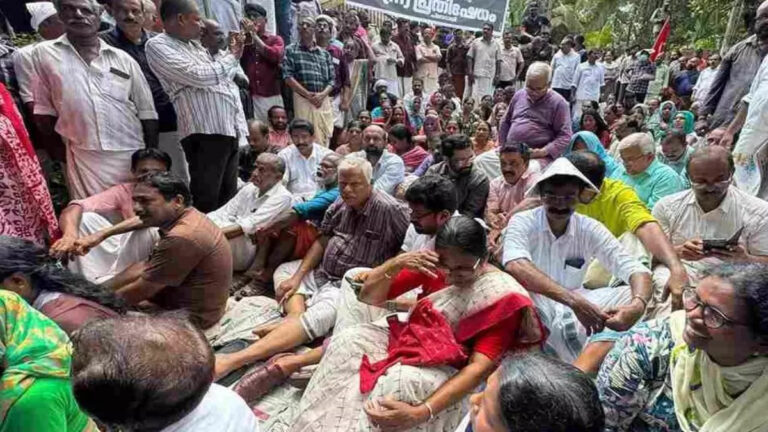
As news of the morning raid spread, the atmosphere outside Vijayan’s Thiruvananthapuram residence grew increasingly volatile. Hundreds of workers from the Communist Party of India (Marxist) [CPI(M)] alongside activists from the Students’ Federation of India (SFI) gathered outside the gates, which were heavily barricaded and guarded by armed central security forces. What began as a sit-in protest featuring anti-government slogans quickly deteriorated into physical confrontation as the hours ticked by.

The situation spiraled out of control later in the afternoon when the seven-hour-long raid concluded and the ED officials attempted to leave the premises. An angry mob surrounded the convoy of hired vehicles carrying the investigators, which included women officials. Protesters hurled stones, bricks, helmets, and water bottles at the vehicles.

One of the drivers sustained minor injuries before local police and central forces could manage a fragile exit path. The beleaguered ED officials subsequently drove straight to the Thampanoor police station to lodge a formal complaint, prompting law enforcement to arrest several CPI(M) workers under strict legal provisions.

A “Planned Attack”: CPI(M) Cries Political Vendetta

The Left Democratic Front (LDF) leadership reacted with intense fury, characterizing the simultaneous raids not as a legitimate legal exercise, but as a calculated assault on their top leadership. Addressing an emergency press conference, CPI(M) State Secretary M. V. Govindan slammed the action, calling it the latest instance of a “planned attack” designed by the central ruling dispensation to systematically dismantle and intimidate opposition voices.

Senior party figures also hinted at deep-seated political collusion, alleging that the timing of the raid—coming on the heels of recent political meetings between state United Democratic Front (UDF) leaders and central ministers—pointed to a combined effort by the Congress and the BJP to weaken the Left footprint in Kerala. In response to the day’s events, the CPI(M) organized mass torch-lit protest marches across every party branch and district headquarters in the state.

Context: The CMRL-Exalogic Financial Dispute

At the heart of the ED’s sweeping investigation is the controversial financial transaction involving Cochin Minerals and Rutile Limited (CMRL), a private mineral mining company, and Exalogic Solutions, an IT consultancy firm owned by Pinarayi Vijayan’s daughter, T. Veena.

The controversy originally surfaced following Income Tax department findings which alleged that CMRL had paid roughly ₹1.72 crore to Exalogic Solutions between 2017 and 2019. Central investigative bodies, including the Serious Fraud Investigation Office (SFIO) and now the ED, contend that these funds were disbursed under the guise of IT marketing and development services that were never actually rendered by the firm. The agencies suspect the transactions were part of an illegal payout ecosystem meant to secure smooth corporate operations.

Both T. Veena and Exalogic Solutions have categorically denied any wrongdoing, maintaining that the funds received were part of legitimate, legally bound business-to-business contracts. The CPI(M) has repeatedly reminded critics that the Kerala High Court had previously found no cognizable offense under the Prevention of Corruption Act in related petitions.

The Political Fallout and Road Ahead

Defiant in the face of the intensifying probe, former Chief Minister Pinarayi Vijayan briefly addressed reporters after the investigators cleared his home. He made it clear that neither he nor his party would back down under administrative pressure.

“This is only the beginning,” Vijayan remarked calmly. “No one should be under the illusion that such heavy-handed actions can scare us, intimidate us, or weaken the resolve of the CPI(M). We have survived worse political storms, and we will fight this both legally and politically.”

Meanwhile, the opposition parties have seized the momentum. Leaders from the Congress-led UDF rejected allegations of colluding with the BJP, arguing instead that the law was simply taking its natural course after years of institutional delay. They asserted that the state’s citizens deserve total transparency regarding the financial dealings of high-profile political families.

With the High Court refusing to block the central agency’s powers and the ED aggressively parsing through documents, digital devices, and financial ledgers seized during Wednesday’s raids, the political temperature in Kerala has reached a boiling point. The coming weeks are expected to see escalated legal battles in the courts and continued friction on the streets, as the investigation digs deeper into the financial matrix connecting corporate entities and state leadership.

Trump Draws Line at Strait of Hormuz: Warns Oman and Rejects Iranian Toll Proposal

0

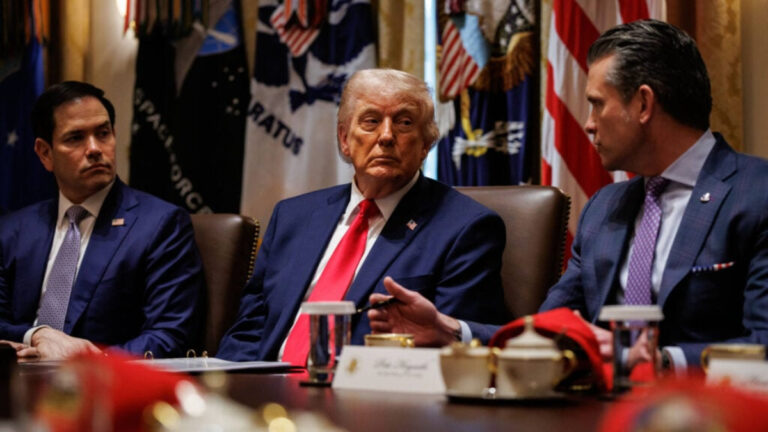
New Delhi, May 28, 2026 — In a dramatic escalation of rhetoric surrounding the ongoing Middle East maritime crisis, US President Donald Trump has declared the Strait of Hormuz to be strict “international waters.” Speaking directly to reporters during a White House Cabinet meeting, Trump issued a blunt, highly unconventional military warning to Oman, a long-standing American ally in the Gulf region. The President firmly rejected any diplomatic proposals that would grant regional nations regulatory control or the authority to collect transit tolls over the strategic choke point.

The controversy erupted following a volley of unconfirmed media reports out of Tehran, which suggested that a potential framework deal was being negotiated behind closed doors to end the month-long naval blockade of the region. Iranian state television had claimed that a draft memorandum of understanding (MoU) was on the table. Under this alleged proposal, the United States would lift its naval blockade on Iranian ports and withdraw forces from areas surrounding Iran. In exchange, Tehran would work alongside the Sultanate of Oman to jointly manage maritime traffic and restore commercial shipping to normal pre-conflict levels within 30 days. Part of this rumored setup reportedly involved the implementation of transit fees on shipping vessels passing through the narrow corridor.

The reaction from the White House was swift, aggressive, and uncompromising. When asked directly by reporters if he would accept a short-term arrangement permitting joint Iranian and Omani management of the waterway, President Trump did not mince words.

Trump then turned his focus to Muscat, delivering a harsh warning that shocked foreign policy analysts given Oman’s historical role as a trusted mediator between Washington and Tehran. “Oman will behave just like everybody else or we’ll have to blow ’em up,” Trump said during the televised portion of the meeting. “They understand that, they’ll be fine.”

While initial speculation pulsed through diplomatic circles that the 79-year-old president may have simply misspoken—perhaps intending to threaten Iran rather than America’s traditional partner—the US State Department intentionally published the official transcript and video clips of the remarks online without offering any corrections or clarifications, effectively cementing the hardline stance.

Understanding the Choke Point

The Strait of Hormuz is widely regarded as the most critical oil transit channel in the world. Its geography and economic significance explain why the situation has drawn such heavy global focus:

  • The Geography: A narrow bend of water separating Iran to the north from Oman and the United Arab Emirates to the south. At its narrowest point, the shipping lanes are only about two miles wide in either direction.
  • The Volume: Approximately one-fifth of the world’s total petroleum liquids—roughly 20 million barrels of oil per day—passes through this single passage from the Persian Gulf out to the Arabian Sea and global markets.
  • The Economic Stakes: Because major economies in Asia, Europe, and the Americas rely heavily on this daily flow of energy, any disruption instantly sends global crude oil prices surging, threatening to trigger a broader international energy crisis.

A Complex and Tangled Diplomacy

The President’s sharp commentary underscores the immense friction plaguing current diplomatic efforts. While Trump acknowledged that negotiations are technically proceeding, he signaled intense dissatisfaction with the terms put forward by Iranian representatives. Accusing Iran of intentionally stalling the peace process to “outwait” him ahead of the upcoming US midterm elections, Trump warned that the US military is fully prepared to switch back to offensive operations if diplomatic channels fail to yield a favorable outcome. “They want very much to make a deal. So far they haven’t gotten there. We’re not satisfied with it… either that or we’ll have to just finish the job,” he added.

Supporting this dual-track strategy of aggressive posturing, US Secretary of State Marco Rubio noted that while a diplomatic path remains the President’s preferred option, Washington retains an array of non-diplomatic choices. Meanwhile, US Defense Secretary Pete Hegseth echoed the administration’s resolve, stating that the military is entirely equipped to deploy the full might of the armed forces to complete objectives against hostile actors if required.

To further complicate the narrative, the White House officially dismissed the Iranian state media’s version of the draft agreement as “a complete fabrication.” White House spokeswoman Olivia Wales emphasized that President Trump would never agree to a deal that includes premature financial concessions or structural changes to maritime law. Trump himself explicitly ruled out releasing frozen Iranian funds or easing existing economic sanctions as incentives to secure the waterway’s reopening. “No sanctions, no money, no nothing,” Trump declared, insisting that any return of assets would remain entirely non-contingent upon the baseline maritime safety talks.

Ongoing Military Realities on the Water

Despite the active diplomatic back-and-forth and a fragile, nominal ceasefire, conditions on the ground remain highly volatile. Only hours before the Cabinet meeting, the US military carried out fresh overnight defensive strikes against an inside military asset in Iran, which Washington officials claimed posed an immediate, physical threat to American personnel and merchant shipping. US defense forces also successfully intercepted a wave of explosive drones launched from Iranian territory.

Currently, the United States is maintaining its naval presence through “Project Freedom,” a high-stakes operational campaign designed to securely escort commercial tankers through the high-risk zones of the Gulf. The operation was launched following stringent shipping restrictions and an ongoing American naval blockade established earlier this spring.

While regional stakeholders and international markets look on anxiously, the path forward appears increasingly fraught. Oman, a country of 5.3 million that has spent decades successfully balancing relationships between Western powers and regional neighbors, now finds itself caught squarely in the crosshairs of a highly volatile rhetorical showdown. For now, the United States has drawn its red line clearly: the Strait of Hormuz must return to an unmonitored, toll-free international shipping lane, or the threat of expanded military intervention remains firmly on the table.