Home Blog Page 46

MasterChef India Winner Pankaj Bhadouria Diagnosed With Breast Cancer

MAY 28, 2026 — In a heartbreaking yet deeply courageous revelation, celebrity chef Pankaj Bhadouria, widely recognized as the winner of the historic first season of MasterChef India, announced on Thursday that she has been diagnosed with breast cancer. The culinary icon took to her official social media platforms to share the health update directly from her hospital bed, sparking an immediate outpouring of love, prayers, and solidarity from fans, colleagues, and the entertainment industry alike.

The news has sent shockwaves through her massive digital community. Pankaj, who has spent over a decade inspiring millions with her recipes, warm screen presence, and incredible journey from a school teacher to India’s first-ever MasterChef, chose to confront the diagnosis with the same transparency and grace that defined her television career.

A Courageous Disclosure from the Hospital

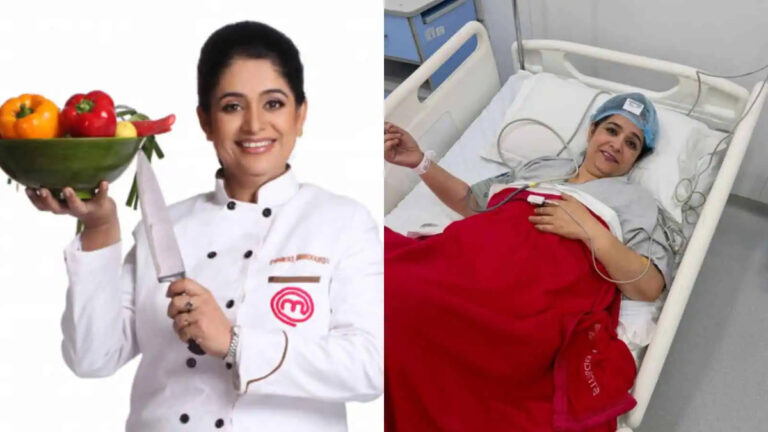
Pankaj shared a poignant photograph of herself clad in a patient gown, resting on a hospital bed with medical wires attached to her. Accompanying the image was a straightforward, emotionally raw caption:

Shortly after the initial post, the celebrity chef shared a video documenting her current reality. In the snippet, she is seen wearing a hospital robe with a medical cannula inserted into her hand, visibly undergoing a series of diagnostic procedures. The text overlaying the clip honestly captured her vulnerability: “Going for tests and more tests…..not a happy place to be.”

Despite the daunting environment of the hospital, Pankaj recorded a personal video message addressing her followers directly, choosing to speak to them not just as fans, but as an extension of her own home.

“I just wanted to share with you all that I have been diagnosed with breast cancer,” she said, maintaining her signature calm despite the weight of her words. “Since all of you are like an extended family to me, I wanted to share this with you personally. Right now, I truly need your prayers and support. As they say, prayers work miracles. So please keep me in your prayers.”

From the Classroom to Culinary Royalty

For millions of viewers across India, Pankaj Bhadouria represents the ultimate symbol of perseverance and a testament to the power of mid-life reinvention. Before becoming a household name, she spent 16 years working dedicatedly as an English school teacher. In 2010, driven by a profound passion for the culinary arts, she made the life-altering and risky decision to leave her established teaching career behind to participate in the inaugural season of MasterChef India.

Her exceptional culinary instincts, innovative flavor pairings, and unflappable demeanor under pressure captivated the judges and millions of viewers. Winning the title did more than just crown her the country’s first MasterChef; it broke barriers for homemakers and professional women across the country, proving that domestic culinary talent could scale global professional heights.

Following her monumental victory, Pankaj seamlessly transitioned into a prolific career as a television host and author. She became the face of several highly rated cooking shows, including Chef Pankaj Ka Zayka, Kifayati Kitchen, 3 Course with Pankaj, and Rasoi Se – Pankaj Bhadouria Ke Saath. Beyond traditional television, she successfully built a powerhouse digital brand, establishing a robust presence on YouTube and Instagram where she continues to mentor aspiring cooks and share accessible, everyday kitchen wisdom.

Outpouring of Support and the Global Fight Against Breast Cancer

The announcement was met with an immediate wave of support from the Indian culinary and entertainment fraternities. Fellow chefs, television personalities, and thousands of fans flooded her comment sections with messages of strength and recovery. Many praised her transparency, noting that when public figures speak openly about cancer, it helps demystify the illness and strips away the stigma often associated with medical battles.

Breast cancer remains one of the most frequently diagnosed cancers among women globally and in India. Medical experts consistently emphasize that early detection through regular screenings, self-examinations, and awareness of early symptoms remains the most critical factor in successful treatment and long-term survival. Modern advancements in targeted therapies, surgical oncology, and personalized medicine have significantly improved prognosis rates over the last decade.

By documenting her journey from the very beginning, including the tedious reality of “tests and more tests,” Pankaj is expected to shed light on the rigorous diagnostic phase that patients undergo. Her openness serves as a poignant reminder of the unpredictability of health, regardless of one’s public stature or success.

Standing Strong for the Journey Ahead

As Pankaj Bhadouria prepares to enter the next phase of her treatment, her massive community of “extended family” stands firmly behind her. Known throughout her life as a fighter—someone who risked a stable career to chase a dream and redefine the Indian food space—fans have expressed absolute confidence that she will approach this health battle with the same resilience.

The coming months will undoubtedly demand privacy and rest as she navigates her therapeutic protocol. However, by asking for “miracles through prayers” right at the onset, India’s first MasterChef has made it clear that she is leaning heavily on the collective love of the nation that once cheered her to victory in the MasterChef kitchen. The entire digital and culinary world continues to wish her a swift, complete, and powerful recovery

RRB NTPC Undergraduate Cut Off 2026 Released: Direct Link

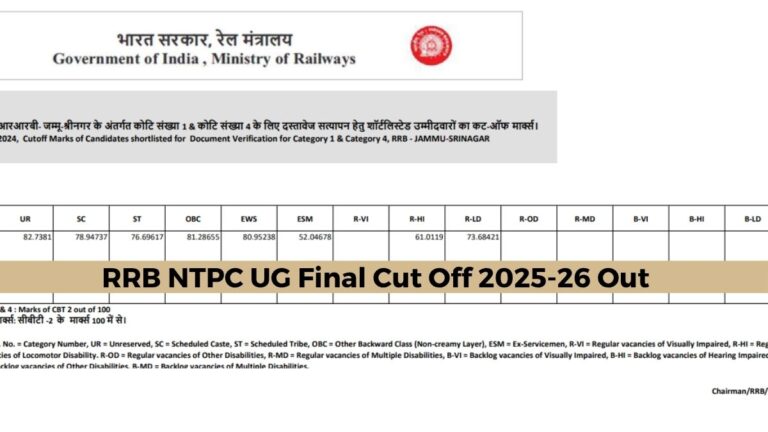
New Delhi, May 28, 2026: The Railway Recruitment Board (RRB) has officially released the highly anticipated RRB NTPC Undergraduate (UG) Final Cut Off marks alongside the official recruitment results. This crucial update pertains to the Non-Technical Popular Categories (Undergraduate) recruitment under Centralized Employment Notice (CEN) No. 06/2024. Candidates who have been waiting anxiously across the country can now check the qualifying cut-off scores and download the comprehensive zone-wise merit list PDFs through the official regional websites of the respective RRBs, as well as the central portal at rrbcdg.gov.in. The declaration of these results brings massive relief to lakhs of aspirants who appeared across multi-staged rounds of screening, including the Computer Based Test 1 (CBT 1), Computer Based Test 2 (CBT 2), and subsequent skill or aptitude assessments.

The newly declared final cut-off marks represent the lowest scaled scores secured by the last provisionally selected candidate in each category and region. This selection cycle fills highly sought-after 12th-pass (undergraduate) positions in the Indian Railways network, including Commercial cum Ticket Clerk (Category 1), Accounts Clerk cum Typist, Junior Clerk cum Typist, and Trains Clerk (Category 4). According to the formal board notifications, the roll numbers published in the selection lists are arranged systematically in ascending numerical order rather than according to merit position. This means that matching your roll number in the PDF signals a clear qualification for the final administrative rounds: Document Verification (DV) and the subsequent comprehensive Medical Examination.

Understanding the distinction between the qualifying phases is essential to analyze how this year’s final cut-off matrix was created. The first stage, CBT 1, is strictly qualifying in nature. Calculated out of a base scale of 100 marks, the CBT 1 score acts purely as a filter to short-list candidates for the second stage, and these initial marks are not compiled into the final merit calculation. In contrast, the subsequent CBT 2 evaluation—scored out of 120 marks—serves as the primary pillar for your final ranking. For clerical posts that mandated a typing element, candidates had to navigate the Typing Skill Test, ensuring a baseline speed of 30 words per minute (WPM) in English or 25 WPM in Hindi. The final integrated cut-offs seamlessly account for standardizations across these multi-tiered testing mechanisms.

Because the national railway exams are conducted across numerous sessions, varying dates, and distinct question papers, the RRB relies on a scientific normalization formula to maintain absolute fairness. The freshly updated student scorecards now explicitly itemize an applicant’s raw marks, pro-rata scores, and the final normalized numerical output. This normalization process balances out any differences in the difficulty levels of test papers across shifts. Furthermore, the mandatory institutional qualifying percentages for both CBT 1 and CBT 2 stood firm at a baseline of 40% for General and EWS applicants, 30% for OBC and SC candidates, and 25% for ST candidates. However, due to severe market competition, the actual competitive cut-off benchmarks required to secure placement in a zone have naturally soared far higher than these baseline minimums.

A closer look at the freshly published regional data demonstrates that the final cut-off trends vary heavily across different zones, influenced by the vacancy counts and localized applicant density. For instance, in the prominent RRB Chandigarh zone under Northern Railways, the Unreserved (UR) final cut-off for Category 1 (Commercial cum Ticket Clerk) settled at 84.79533, while the OBC and SC cut-offs reached 83.48083 and 81.54762 respectively. In the Western Railway jurisdiction handled by RRB Ahmedabad, the Category 4 (Trains Clerk) UR cut-off climbed up to 85.67252. Other vital zones like RRB Chennai showed a Category 1 UR cut-off of 84.21053, whereas Eastern strongholds like RRB Kolkata marked an even higher threshold with a Category 1 UR cut-off touching 87.43275. These numbers highlight the intense competition defining this year’s railway recruitment cycle.

For aspirants eager to extract their official score data, checking the regional cut-off charts remains a quick, user-friendly process. First, navigate your web browser to the official web domain of your applied regional Railway Recruitment Board (such as RRB Chandigarh, RRB Mumbai, or RRB Patna). On the home screen layout, locate and open the “Results” tab or scan the “Latest Notifications” scrolling banner. Click specifically on the link labeled “RRB NTPC UG Final Result & Cut Off Marks 2026 (CEN 06/2024)”. This action will instantly load the zone-wise score distribution sheet in a downloadable PDF format. Once downloaded, you can effortlessly activate the “Ctrl + F” command line to search for your individual roll number or review category thresholds across UR, OBC, SC, ST, and EWS windows.

Examining these cut-off statistics provides key strategic insights for future railway job seekers. These newly established metrics give future candidates a realistic baseline to gauge the difficulty level of the exam and understand general scoring patterns. By reviewing past score trends across different geographical zones, future candidates can make well-informed choices about which regions offer better vacancy ratios or alignment with their preparation strategies. It also highlights the importance of consistent mock testing and rigorous time management, as securing a spot in the Indian Railways clearly requires scoring well above the 80-point threshold in modern normalization cycles.

With the CBT 2 results and final cut-offs successfully declared, the Railway Recruitment Board will now transition to the final physical onboarding phases. All provisionally shortlisted candidates will soon receive direct communications via automated text messages, registered emails, and official web alerts containing their tailored Document Verification (DV) e-call letters. During the physical document verification phase, candidates must present their original 10th and 12th passing certificates, valid government-issued identity proofs, current passport-sized photographs, and relevant reservation or caste certificates if applicable. Following the authentication of certificates, candidates will undergo a strict medical fitness assessment conducted by railway medical officers to confirm they meet the health standards required for their designated posts before receiving final appointment letters.

Shamita Shetty Shuts Down Troll Questioning Her Single Status at 47

New Delhi, May 28, 2026: In today’s digital era, social media platforms have become a double-edged sword for celebrities. While it serves as an excellent medium to connect with millions of fans globally, it also exposes stars to unwarranted scrutiny, severe trolling, and moral policing. The latest Bollywood celebrity to bear the brunt of such regressive online behavior is actress and reality TV star Shamita Shetty. However, rather than ignoring the toxicity, the Mohabbatein actress decided to take the trollers head-on.

Shamita Shetty, who is 47 and proudly unmarried, recently gave an incredibly sharp, unapologetic, and “befitting” reply to a social media user who tried to target her age and single status. Her witty and bold retaliation—headlined by the fiery phrase, “Aapne shaadi karke kya ukhaad liya hai bhai?” (What miracle have you cracked after getting married, brother?)—has gone viral across digital platforms, winning hearts and igniting a major conversation around society’s obsession with a woman’s marital timeline.

How It Started: The Unsolicited Comments Exposed

The entire controversy unfolded on Instagram when Shamita decided to call out a specific user who had left deeply regressive and unsolicited remarks on her posts. Instead of deleting the comments or letting them slide, Shamita took screenshots of the profile and comments, sharing them directly onto her Instagram Stories for her followers to see.

The first derogatory comment directed at the actress focused entirely on her physical appearance and aging process. The troll wrote:

Not stopping there, the same user decided to lecture the actress on her personal life choices and motherhood, adding a second deeply patriarchal comment:

Embracing Aging: “Nothing Stays Forever”

Shamita addressed both comments systematically with ultimate grace, balance, and a clear reality check. Replying to the first comment regarding her age and changing looks, the actress didn’t deny the biological reality of time. Instead, she chose to embrace it, setting a phenomenal example of self-love and body positivity.

“Yes, I will look different,” Shamita penned in her note. “Things change with time; it’s the natural way of life. Nothing stays forever, including physical appearance! BUT for my age, I’m healthy, fit, and happy with a grateful heart for all that the Almighty has given me… and that’s all that matters to me.”

By highlighting that health, mental peace, and inner happiness carry far more weight than superficial youthfulness, Shamita effectively shut down the age-shaming narrative that many women in the public eye face daily.

The Ultimate Clapback: Dismantling the Patriarchal Mindset

While her response to the age-shaming comment was graceful, her reply to the unsolicited marriage advice was pure fire. Infuriated by the constant policing of single women, Shamita didn’t hold back.

Directly addressing the user’s logic that she missed the “right time” to have grown-up children, she wrote

Her direct question challenged the deeply ingrained societal notion that marriage is an ultimate achievement or a mandatory milestone for a woman’s life to be considered complete. By labeling the troll’s mentality as “cave-man-like” and “patriarchal,” Shamita highlighted a frustrating reality: independent, successful single women are continuously subjected to scrutiny by individuals who still view life through an outdated, male-centric lens.

A Stellar Career Beyond Marital Status

Shamita Shetty has never allowed her life to be defined solely by her relationship status. She made a roaring debut in the Indian film industry back in the year 2000 with Aditya Chopra’s multi-starrer blockbuster Mohabbatein, winning the IIFA Award for Star Debut of the Year (Female). Following her initial success, she went on to star in notable projects such as Zeher, Fareb, and Cash.

When she felt the film industry wasn’t offering her the creative satisfaction she desired, Shamita showed immense versatility by stepping away from the silver screen to explore interior design, establishing a highly successful career in that space.

In recent years, Shamita reinvented herself completely on television, emerging as a powerful, fierce, and highly loved personality through prominent reality shows. Her unforgettable stints in Fear Factor: Khatron Ke Khiladi 9, Jhalak Dikhhla Jaa, Bigg Boss OTT 1, and Bigg Boss 15 earned her an entirely new, massive fan base that respects her for her upfront honesty, emotional strength, and dignity. She was last seen playing a powerful, layered role in the critically acclaimed web show The Tenant.

The Broader Social Impact: Why Shamita’s Voice Matters

Shamita’s public takedown of the troll has struck a massive chord online, triggering a wave of support from fans, digital creators, and fellow industry colleagues. In a society where women are routinely pressured to marry and settle down by a specific age, her words act as a shield for millions of independent single women navigating similar societal pressures.

The actress’s sister, Bollywood superstar Shilpa Shetty (50), is married and has a family, but Shamita has always confidently maintained that she will only marry if and when she finds the right partner, rather than doing it just to conform to social expectations or tick a box. While she was previously in a well-documented relationship with actor Raqesh Bapat after meeting him on Bigg Boss OTT, the two gracefully announced their separation in 2022, and Shamita has happily embraced her single status ever since.

Through her savage yet highly logical response, Shamita Shetty has made one thing abundantly clear: a woman’s value is not determined by her marital status, her age, or her choice to not have children. In a world full of unsolicited opinions, staying happy, fit, and unapologetically independent is the greatest success of all.

Friday OTT Releases: 5 New Movies and Web Series to Stream This Weekend

New Delhi, May 28, 2026: The weekend is finally here, bringing a highly anticipated slate of digital releases across major streaming platforms. For digital entertainment enthusiasts, Friday represents the ultimate transition from a hectic workweek to a relaxing weekend binge. Streaming giants like JioHotstar, Netflix, Amazon Prime Video, and SonyLIV have updated their libraries with an impressive array of high-octane espionage thrillers, witty courtroom dramas, unique parallel-universe comedies, and deep-dive family sagas.

Whether you are looking for a massive Bollywood spectacle filled with superstar power, a lighthearted romantic drama spanning generations, or a Hollywood-grade superhero spin-off, this week’s lineup has something for everyone. Fire up your streaming devices, grab your popcorn, and explore the top 5 new movies and web series available to stream right now.

1. Jolly LLB 3 (JioHotstar)

Genre: Courtroom Drama / Satirical Comedy

Cast: Akshay Kumar, Arshad Warsi, Saurabh Shukla

The beloved, critically acclaimed legal satire franchise returns with its biggest and most chaotic installment yet. In Jolly LLB 3, audiences are treated to a cinematic dream matchup as the protagonists of the previous two films, Jagdishwar Mishra (Akshay Kumar) and Jagdish Tyagi (Arshad Warsi), finally square off against one another in the courtroom. Overseeing the madness is the iconic, perpetually flustered Judge Sunderlal Tripathi, played brilliantly once again by veteran actor Saurabh Shukla.

This time around, the narrative takes a more serious but equally humorous turn. The two lawyers, known for their drastically contrasting courtroom styles and moral boundaries, find themselves on opposite sides of a high-stakes battle. They are fighting over a case involving a farmer’s widow whose ancestral land was illegally seized by a ruthless corporate developer. As the legal strategies intensify, the film perfectly balances laugh-out-loud humor with sharp social commentary on systemic corruption and greed. Streaming exclusively on JioHotstar, this courtroom battle serves as a perfect weekend entertainer for the entire family.

2. Dhurandhar: Raw and Undekha (Netflix / JioHotstar)

Genre: Action / Espionage Thriller

Cast: Ranveer Singh, Sanjay Dutt, Akshaye Khanna, Arjun Rampal

For fans of raw, edge-of-your-seat action, Dhurandhar: Raw and Undekha arrives as a major blockbuster release. Directed by master storyteller Aditya Dhar, this high-budget espionage thriller boasts a powerhouse ensemble cast. Set against the gritty backdrop of the early 2000s, the plot centers on a deeply complex undercover operation.

The story follows a top-tier Indian intelligence operative who is tasked with the ultimate dangerous assignment: infiltrating the inner sanctum of Karachi’s violent criminal underworld. To neutralize a looming national threat, he must navigate an intricate web of deception, gang warfare, and constant betrayal. Ranveer Singh delivers an incredibly intense, physically demanding performance, while Sanjay Dutt and Akshaye Khanna bring formidable gravitas to their roles. The cinematic scale, explosive action sequences, and tight screenplay make this a must-watch title on Netflix and JioHotstar for anyone craving an adrenaline rush.

3. Cousins and Kalyanams (JioHotstar)

Genre: Romance / Family Drama

Cast: Nainita Maria, Nandita, Manaswini Ram, Siddharth Babu

If you prefer a heartwarming, emotionally rich story that celebrates love and family traditions, the Malayalam drama Cousins and Kalyanams is an excellent choice. Spanning an impressive timeline of 26 years, this beautifully crafted series explores the deeply woven lives of six cousins growing up in the picturesque landscapes of Kerala.

The narrative unfolds through the grand lens of seven family weddings and one deeply unforgettable love story. As the characters grow from carefree youngsters into mature adults, they face the inevitable trials of adulthood, changing relationship dynamics, and unexpected personal hardships. However, the unbreakable bond of their shared childhood keeps them anchored. It is a slow-burn emotional journey that highlights the beauty of Indian family values, making it an ideal watch for those who loved shows like Premalu or traditional coming-of-age Malayalam cinema.

4. Ladies First (Netflix)

Genre: Fantasy / Dark Comedy

Cast: Sacha Baron Cohen, Fiona Shaw, Richard E. Grant

Netflix brings a refreshing and fiercely original international comedy to the table with Ladies First. Led by the brilliant and unpredictable Sacha Baron Cohen, the film tells the story of Damien, an unapologetic, self-proclaimed “ladies’ man” who navigates life with an enormous ego and casual chauvinism.

Damien’s life takes a wild, surreal turn when an unexpected accident transports him into an alternate, parallel universe completely dominated by women. In this flipped reality, gender roles are entirely reversed, and Damien finds himself experiencing the world from a completely vulnerable perspective. Forced to adapt to a society where his old charms are useless, he goes through a series of hilarious, uncomfortable, and eye-opening situations. Supported by legendary actors Fiona Shaw and Richard E. Grant, Ladies First is a clever, satirical dark comedy that balances sharp societal critiques with laugh-out-loud moments.

5. Spider-Noir: Season 1 (Amazon Prime Video)s

Breaking away from traditional live-action superhero tropes, Amazon Prime Video delivers a gritty, stylized masterpiece with Spider-Noir. Reprising his fan-favorite vocal role from the animated universe into a live-action setting, Nicolas Cage stars as Ben Reilly, an aging, down-on-his-luck private investigator operating in the gloomy, rain-slicked streets of 1930s New York City.

Haunted by his past mistakes and his history as the city’s lone masked protector, Reilly has long retired from his superhero duties, preferring to drown his sorrows in cheap whiskey and low-profile cases. However, when an incredibly intricate, high-stakes mystery lands on his desk, he is forced back into action. The series blends classic Marvel lore with the aesthetic of classic Hollywood noir films—featuring cynical voiceovers, corrupt politicians, and shadowy villainous syndicates. It provides a unique, mature, and gripping comic book adaptation that will keep viewers hooked from the very first frame.

Bonus Watch: Madhuvidhu (SonyLIV)

For viewers looking for content beyond the top five, SonyLIV’s Malayalam comedy-drama Madhuvidhu is also gaining significant traction. Starring Sharafudheen, the series centers on a newly married couple whose dreams of a peaceful life are completely upended by the chaotic, comical interference of a traditional household run entirely by five eccentric men. It serves as an excellent blend of lighthearted situational humor and genuine emotional moments.

Conclusion

From the grand, explosive sets of Dhurandhar to the witty banter of Jolly LLB 3, this Friday’s digital roster leaves no stone unturned. The streaming ecosystem has evolved to offer theater-quality content right in the comfort of our living rooms. Depending on your mood, choose your favorite platform, set up your watchlist, and enjoy a weekend filled with premium digital entertainment!

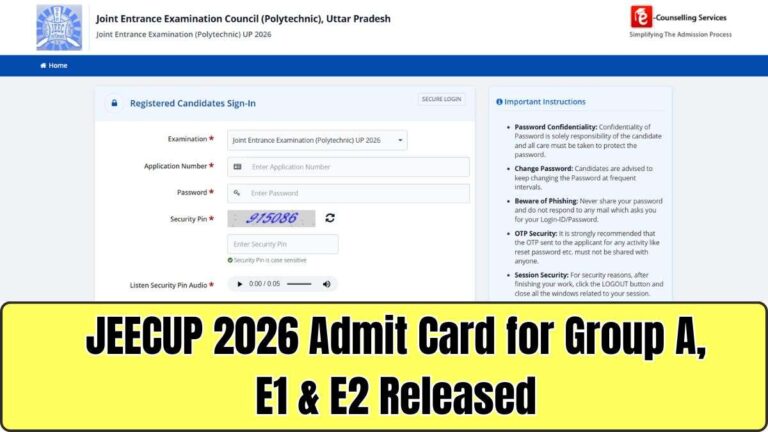
JEECUP 2026: Groups A, E1, & E2 Admit Cards Released; Download Link Here

New Delhi, May 28, 2026: The Joint Entrance Examination Council, Uttar Pradesh (JEECUP) has officially released the highly anticipated hall tickets for the Uttar Pradesh Joint Entrance Examination (Polytechnic) 2026. Aspirants who registered for the primary segments—specifically Group A (Engineering and Technology Diploma courses), Group E1 (Polytechnic Diploma in Pharmacy – Biology stream), and Group E2 (Polytechnic Diploma in Pharmacy – Mathematics stream)—can now access and download their hall tickets. The download window went live on May 27, 2026, bringing relief to hundreds of thousands of applicants preparing for this critical state-level entrance test. Candidates can immediately download their call letters by logging into the official portal using their exclusive application numbers and dates of birth.

The announcement marks a crucial phase for the state’s technical and pharmacy education departments. JEECUP serves as the definitive gateway for students seeking admission into various engineering, pharmacy, lateral entry, and post-graduate diploma programs offered across hundreds of government, government-aided, and private polytechnic institutions throughout Uttar Pradesh. According to preliminary reports and historical data, between 4.3 lakh and 4.5 lakh candidates have enrolled for the exam this year, making it one of the largest competitive state-level examinations for diploma courses in the country. While hall tickets for Groups A, E1, and E2 have been prioritized due to the high volume of applicants in these categories, the council has officially confirmed that the admit cards for the remaining categories (Groups B, C, D, F, G, H, I, K1 to K8, and L) will be issued progressively over the coming days.

The release of the admit cards follows a major adjustment in the structural timeline of the examination. Initially, the computer-based entrance tests were scheduled to take place between May 15 and May 22, 2026. However, accommodating multiple representations from candidates, public interest groups, and administrative requirements, the council chose to extend the online application registration window up until May 20, 2026. Consequently, the entire examination timeline was pushed forward. The revised schedule mandates that the JEECUP 2026 examination will be conducted from June 2 to June 9, 2026. The week-long testing window ensures smooth administrative operations across multiple digitized examination centers across Uttar Pradesh.

The entrance examination will be conducted entirely in a Computer-Based Test (CBT) mode, transitioning away from conventional paper-based formats to ensure maximum transparency, efficiency, and swift evaluation. To balance the massive turnout, the exam will run in two separate daily shifts. The morning shift is scheduled to commence at 9:00 AM and conclude at 12:00 PM, while the evening shift will take place from 2:30 PM to 5:30 PM. Each session gives students a total duration of 150 minutes (2.5 hours) to complete the test. The examination papers will be available bilingual—in both English and Hindi languages—enabling students from diverse educational backgrounds to navigate the curriculum comfortably.

Understanding the marking scheme and paper layout is critical for achieving a high percentile. The JEECUP CBT examination structure contains 100 multiple-choice questions (MCQs). For Group A, the paper focuses primarily on foundational subjects: Physics, Chemistry, and Mathematics. For the Pharmacy groups (E1 and E2), the curriculum balances core sciences with their specific domain specializations. According to the council’s designated evaluation rubric, every correct attempt rewards the candidate with four (+4) marks. Conversely, the exam incorporates a strict negative marking penalty: one (-1) mark will be deducted for every incorrect response recorded. Questions that are left unattempted or flagged for review without an explicit answer will incur zero marks, meaning no points will be subtracted. Candidates are highly encouraged to practice strategic elimination and precision rather than blind guesswork.

Candidates looking to download their hall tickets can do so through a simple, step-by-step process:

  1. Open a secure web browser and visit the official website designated by the council: jeecup.admissions.nic.in.
  2. Navigate the homepage to locate the notification banner or flashing text link labeled “JEECUP Admit Card 2026 Download”.
  3. Click the link to redirect to a secure, external candidate login portal hosted by the National Informatics Centre (NIC).
  4. Input your valid login credentials, which include the unique Application Number generated during registration, Date of Birth (in DD/MM/YYYY format) or account password, followed by the automated alphanumeric Security Pin (Captcha).
  5. Click on the ‘Submit’ or ‘Login’ tab to access your personalized student dashboard.
  6. The JEECUP 2026 Hall Ticket will immediately manifest on the screen. Download the official PDF file and secure a high-quality physical printout (preferably in color) for day-of-exam operations.

Upon downloading the document, students are advised to thoroughly inspect all printed information. The admit card acts as an official identity document inside the test hall and contains vital parameters including the candidate’s full legal name (matching their Class 10 or matriculation certificates), allocated roll number, date of birth, category designation (General/OBC/SC/ST/EWS/PwD), specified exam date, shift timing, exact reporting time, and the complete physical address of the allocated CBT center. Furthermore, it embeds the candidate’s digital photograph and signature uploaded during registration. If any discrepancy is noticed—such as typographical errors in names, mismatched photos, or incorrect group listings—candidates must report the issue to the JEECUP helpdesk immediately for administrative rectification.

The council has also issued stringent behavioral and logistical guidelines for the exam days. Candidates must arrive at their assigned testing facilities at least 1.5 to 2 hours before the official commencement of the test to allow for security frisking, biometric registration, and seat allocation. No candidate will be permitted inside the premises once the gates lock for a shift. To gain entry, students must present their physical JEECUP admit card accompanied by a valid, government-issued photo identification card (such as an Aadhaar Card, Passport, Voter ID, Driving License, or PAN card) and a recent passport-sized photograph identical to the one on the application.

Additionally, only minimal stationeries like a transparent ballpoint pen (for rough work calculations on sheets provided inside) and a clear, transparent water bottle are permitted inside. Electronic items—including mobile phones, smartwatches, digital calculators, Bluetooth earbuds, health bands, pagers, slide rules, loose textual materials, or wallets—are strictly prohibited. Following the conclusion of the tests on June 9, the council plans to release the answer keys and open a brief objection management window, with the final results and subsequent online multi-round counseling rounds slated to commence in late June and July 2026.

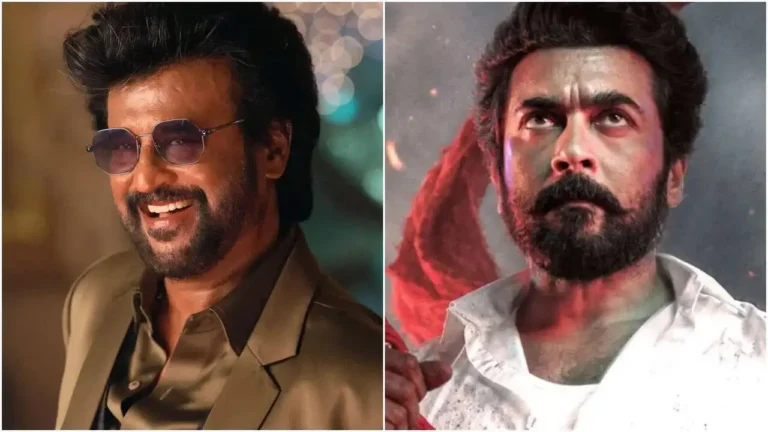
Superstar Rajinikanth Praises Suriya’s Karuppu in Special Call to RJ Balaji

New Delhi, May 28, 2026: Following its global theatrical release on May 15, 2026, the fantasy action-drama Karuppu has taken the box office by storm, cementing itself as one of the biggest blockbusters of the year. Starring Suriya and Trisha Krishnan, and directed by RJ Balaji, the film has not only resonated deeply with audiences but has also earned high praise from the ultimate titan of Tamil cinema—Superstar Rajinikanth. In a recent interview, director RJ Balaji enthusiastically shared details of an unexpected personal phone call he received from the Thalaiva himself, during which Rajinikanth offered a glowing review of the film and praised the director’s bold cinematic vision.

A Midnight Ring: “You’ve Achieved It, Balaji!”

According to RJ Balaji, the phone call came as a massive, pleasant surprise shortly after the film’s premiere. Rajinikanth, known for being a passionate film buff who regularly keeps up with new releases, reportedly watched Karuppu and was thoroughly gripped by its unique blend of social commentary and commercial mass appeal.

As soon as the credits rolled, the Superstar dialed RJ Balaji directly. Opening the conversation with his signature warmth, Rajinikanth reportedly exclaimed, “Saadhichitteenga Balaji!” (“You have achieved it, Balaji!”). He went on to praise how expertly the narrative marries ancient folklore with contemporary issues, seamlessly keeping the audience on the edge of their seats throughout the 152-minute runtime.

What Makes Karuppu Stand Out?

The core premise of Karuppu represents a major thematic pivot for RJ Balaji, who previously directed the satire Mookuthi Amman. While his earlier work focused on exposing the fraudulent nature of commercial godmen, Karuppu takes a vastly different path by using divine mythology to tackle systematic rot within India’s judiciary.

The story kicks off when a corrupt, power-hungry lawyer named Baby Kannan—portrayed with a delightfully antagonistic edge by RJ Balaji himself—manipulates the local court system to strip innocent citizens of their rights. When two simple, low-income robbery victims lose all hope of legal recourse, an earnest prayer at a courtroom shrine triggers a surreal, divine intervention. Lord Karuppuswamy (played by Suriya in full “God Mode”) descends from his spiritual realm to directly challenge the corrupt establishment.

Rajinikanth’s Deep Dive into Suriya’s Performance

During the phone conversation, Rajinikanth spent a considerable amount of time praising Suriya’s multi-layered performance. The Superstar noted that portraying an omnipotent deity requires a distinct physical screen presence and a commanding aura—traits that Suriya brought to life effortlessly.

Rajinikanth highlighted the monochromatic, anime-inspired grand entry of Suriya’s character, Karuppan, calling it a masterclass in mass elevation. He also commended the high-energy action choreography designed by Vikram Mor, particularly a standout sequence where Suriya’s character delivers justice with a massive, stylized sword. For Rajinikanth, seeing Suriya strike a flawless balance between intense, larger-than-life divine wrath and grounded emotional vulnerability was the true highlight of the viewing experience.

Technical Brilliance Earns Special Recognition

Beyond the lead acting, Rajinikanth didn’t hold back in appreciating the film’s technical crew. He specifically lauded the visual palette created by cinematographer G. K. Vishnu, whose experience on massive films like Jawan gave Karuppu an incredibly polished, dreamlike look during its supernatural sequences.

The film’s music, composed by rising sensation Sai Abhyankkar, also received a special nod. The tracks “God Mode” and “Raathu Raasan” have rapidly climbed global music charts, and Rajinikanth remarked that the booming background score played an irreplaceable role in amplifying the theatrical atmosphere, transforming simple courtroom drama into an epic battle of good versus evil.

A Historic Victory for Team Karuppu

The Superstar’s ringing endorsement comes at a time when Karuppu is breaking historic box office milestones. The film recently breached the monumental ₹130 crore mark in Tamil Nadu alone, making it the most successful film in Suriya’s career within the home state.

While the film received some mixed-to-positive critiques for navigating logical slips regarding supernatural rules in its second half, the overwhelming public consensus has been a celebration of its sheer entertainment value. Rumors are also circulating that due to its massive success, the production house, Dream Warrior Pictures, is considering releasing an extended cut in theaters that will re-integrate an emotionally heavy family court sequence that was initially edited out due to runtime constraints.

For RJ Balaji and his writing team, Rajinikanth’s phone call is the ultimate crown on an incredible cinematic journey. Proving that risky creative leaps can yield massive rewards, Karuppu continues its historic run, leaving a permanent mark on the summer box office landscape.

Dhinchak Pooja Gets Married? Fans Demand ‘Shadi Maine Kar Li Aaj’ Anthem

New Delhi, May 28, 2026: The internet has been set ablaze by the undisputed queen of Indian “cringe pop,” Dhinchak Pooja. Known for sending shockwaves across social media with her unapologetically off-key melodies, Pooja Jain (popularly known as Dhinchak Pooja) has pulled off her biggest surprise yet. Taking to her social media handles, the singer shared a series of pictures and videos declaring that she has tied the knot.

As expected, the announcement triggered an absolute avalanche of memes, nostalgic throwbacks, and a collective roar from internet citizens. The number one demand echoing across Twitter, Instagram, and YouTube? A brand new wedding anthem titled “Shadi Maine Kar Li Aaj” (I Got Married Today).

Inside the ‘Dhinchak’ Wedding: Red Lehengas and Mystery Grooms

The wave of speculation began when Dhinchak Pooja dropped a bombshell video on her Instagram feed. Dressed in a traditional, heavily embroidered bright red bridal lehenga, she paired the outfit with elaborate gold and stone jewelry, a massive maang tikka (forehead ornament), and a traditional nose ring. For someone known for wearing casual caps and riding basic scooters in her music videos, the dramatic ethnic transformation immediately caught her followers off guard.

In the shared clips, Pooja can be seen walking up to a wedding stage, holding hands with a man dressed as a traditional groom. The groom opted for a classy white coat-pant suit/sherwani, paired with a vibrant red turban (pagdi) and matching red wedding shoes. However, in true viral-celebrity fashion, Pooja chose to carefully hide her husband’s face. The videos and photos only show his side profile, keeping his identity completely under wraps.

To double down on the claim, the singer also uploaded snippets on her YouTube and Facebook channels showcasing what appeared to be her pre-wedding festivities, including traditional Haldi, Mehendi, and Sangeet ceremonies.

The Internet Reacts: Pure Nostalgia and Brutal Trolling

Within minutes of hitting the feed, the comment section transformed into a comedy goldmine. Dhinchak Pooja first shot to fame between 2015 and 2017 with viral tracks like Swag Wali Topi, Daaru, Dilon Ka Shooter, and the legendary Selfie Maine Leli Aaj. Her songs were universally labeled “cringe,” but their infectious nature racked up millions of views, eventually landing her a wild-card spot on Salman Khan’s Bigg Boss 11 in late 2017.

For millenials and Gen-Z users, seeing her get married felt like the end of a chaotic internet era. While many poured in genuine congratulations, others couldn’t resist rewriting her iconic lyrics to fit the occasion.

Top Fan Reactions & Lyircal Remakes:

  • The Ultimate Demand: “Ab naya gaana aayega—Shadi Maine Kar Li Aaj, Shadi Maine Kar Li Aaj!” (Now a new song will drop—I got married today!)
  • The Husband Anthem: “Dilon ka shooter hai mera SHOHAR, dilon ka shooter, ah-ah!” (My husband is the shooter of hearts!)
  • The Classic Remake: “Ohhh shadi meri ho gayi yehhhh, ohh shadi meri ho gayi reeee, maza aaya maza aaya!”
  • The Nostalgia Trip: “Our 2016 legend of YouTube got married, bhai! Her songs, her Bigg Boss entry—everything feels so nostalgic.”

Real Wedding or a Massive Publicity Stunt?

Despite the flood of congratulations, a massive section of internet detectives remains highly skeptical. Dhinchak Pooja is an expert at navigating the algorithms of the digital world. She understands exactly how to keep her name trending without formal marketing campaigns.

Because she added the hashtag #music to her wedding announcement, many believe that this entire setup is actually a high-budget promotional gimmick for an upcoming music video. It wouldn’t be the first time an influencer or singer faked a major life milestone like a pregnancy or marriage just to create hype for a new release.

Whether this turns out to be a genuine look into her private life or a clever marketing plot to launch her next viral track, one thing is certain: Dhinchak Pooja still commands the attention of the Indian internet. If this truly is a music video shoot, she already has the perfect marketing strategy lined up, courtesy of her fans. Millions are unironically waiting to see if she actually drops Shadi Maine Kar Li Aaj. If she does, it might just break the internet all over again.

Vande Mataram Row: Vijay Meets Modi over Tamil Anthem Protocol

0

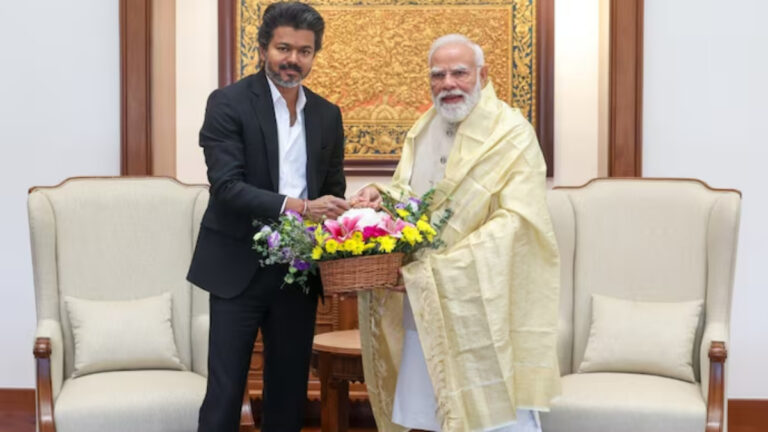
New Delhi, May 28, 2026 — In a highly anticipated political encounter, Tamil Nadu’s newly elected Chief Minister, C. Joseph Vijay, met with Prime Minister Narendra Modi in New Delhi on Wednesday. Coming less than three weeks after the superstar-turned-politician took the oath of office, the 10-minute meeting carried heavy symbolic weight. While framed as an official administrative visit, the dialogue front-centered the brewing “Vande Mataram” controversy, with Vijay strongly asserting that the state anthem, Tamil Thaai Vaazhthu, must maintain its customary priority at official events.

The meeting marks Vijay’s first official trip to the national capital since leading his party, the Tamilaga Vettri Kazhagam (TVK), to a historic victory as the single largest force in the state assembly. Amid shifting alliances and complex Centre-state relations, the discussion quickly moved beyond routine pleasantries to touch upon deep-seated regional anxieties, linguistic pride, and interstate disputes.

Navigating the Anthem Controversy

The core of the political friction stems from a major controversy during Vijay’s recent swearing-in ceremony in Chennai. Following new central government guidelines regarding the national song, the full six-stanza rendition of Vande Mataram was played before the national anthem, Jana Gana Mana. This departure from Tamil Nadu’s traditional practice—where state functions routinely open with the state anthem Tamil Thaai Vaazhthu—sparked immediate backlash. Allies and opposition leaders alike accused the event organizers of undercutting regional culture in a bid to align with central mandates.

During his meeting with Prime Minister Modi, Chief Minister Vijay addressed this friction directly. Submitting a formal petition, Vijay emphasized that Tamil Thaai Vaazhthu forms the bedrock of Tamil cultural identity. He sought explicit clarity from the Union government, pressing that the state anthem should be recited first at all central and state government-linked events within Tamil Nadu. By firmly advocating for this protocol, Vijay aimed to quell domestic political criticism and reassure voters that his administration remains fiercely protective of Tamil heritage, even while maintaining an institutional relationship with New Delhi.

Beyond Symbolism: Key State Demands

While the anthem dispute dominated the cultural narrative, the Chief Minister utilized his time with the Prime Minister to submit memorandums on critical economic and ecological challenges facing Tamil Nadu.

  • The Mekedatu Dam Dispute: Vijay expressed grave concern over Karnataka’s proposed bhoomi pooja (groundbreaking ceremony) for the Mekedatu reservoir project along the Cauvery River. He informed PM Modi that the project directly violates the rulings of the Cauvery Water Disputes Tribunal and the Supreme Court. Highlighting the “serious concern” spreading among Tamil Nadu’s farming community, the Chief Minister urged the Centre to withhold all clearances unless downstream states like Tamil Nadu, Kerala, and Puducherry give their explicit consent.
  • Fishermen Welfare and Geopolitics: Turning to coastal livelihoods, Vijay raised the pressing issue of Tamil Nadu fishermen repeatedly detained by the Sri Lankan Navy. He noted that 58 fishermen currently remain lodged in Sri Lankan prisons and hundreds of traditional fishing vessels have been confiscated. Vijay requested direct diplomatic intervention from the Prime Minister to secure their immediate release and establish permanent safeguards for local fishing communities.
  • Developmental Logistics: On the administrative front, the Chief Minister lobbied for strategic central investments, including the formal establishment of a new air navigation center and defense-linked aviation infrastructure in the state. He also took a moment to personally thank PM Modi for the central government’s efforts in facilitating the return of historically priceless Chola-era copper plates, including the Anaimangalam plates, from the Netherlands.

A Complex Political Balancing Act

The meeting in New Delhi underscores the delicate tightrope Vijay must walk as a modern leader in southern India. Back home, his TVK government relies on a newly stitched post-election coalition supported by Congress, CPI, CPI(M), the VCK, and the IUML—parties that originally contested against him but united post-verdict to ensure legislative stability. The political landscape grew even more dramatic when 25 rebel AIADMK lawmakers backed his recent trust vote, allowing his government to secure power with 108 seats.

Because his coalition partners are traditionally vocal critics of the central government’s policies, Vijay’s trip to Delhi was intensely scrutinized. While his discussion with PM Modi projected a professional, cooperative federal framework, his itinerary included subsequent meetings with Union Home Minister Amit Shah and Finance Minister Nirmala Sitharaman, alongside appointments with top Congress leaders Sonia Gandhi, Rahul Gandhi, and Mallikarjun Kharge.

By leading his Delhi agenda with a staunch defense of Tamil Thaai Vaazhthu, Vijay has signaled to both his allies and his electorate that administrative cooperation with the Centre will not come at the expense of regional autonomy or cultural pride. Whether this diplomatic stance will successfully resolve the anthem debate or permanently soothe tensions surrounding the Mekedatu dam remains to be seen, but the superstar-turned-Chief-Minister has made it clear that Tamil Nadu’s voice will be heard loudly in the halls of New Delhi.

RPSC Assistant Professor Recruitment 2026: Applications Invited for 121 Posts

New Delhi, May 27, 2026: The Rajasthan Public Service Commission (RPSC) has officially released a fresh recruitment notification inviting applications for the positions of Assistant Professor. In its latest drive, the commission aims to fill 121 vacant positions across various specialised disciplines within the state’s higher education system. This announcement has generated significant enthusiasm among academic aspirants across Rajasthan and neighboring states, offering a prestigious gateway into the state’s public university and college networks. For scholars and educators holding advanced degrees, this recruitment presents a stable, highly rewarding career path backed by the state government.

The online application window is scheduled to open shortly, and eligible candidates are encouraged to submit their forms well ahead of the deadline to avoid any last-minute technical difficulties. This article provides a comprehensive overview of the upcoming recruitment drive, covering essential details such as eligibility criteria, age limits, the selection mechanism, and the lucrative salary structure associated with the posts.

Vacancy Breakdown and Overview

The Rajasthan Public Service Commission is known for its highly competitive selection processes, ensuring that only the most qualified candidates enter the academic sphere. For this cycle, a total of 121 posts have been sanctioned. These vacancies are distributed across several core subjects and specialised disciplines, catering to the expanding educational infrastructure of Rajasthan.

While the exact subject-wise allocation is explicitly detailed in the formal notification on the official portal, sources indicate that positions span across traditional branches of Arts, Commerce, and Sciences, alongside specific technical or linguistics-based departments. The reservation policies mandated by the State Government of Rajasthan, including quotas for Scheduled Castes (SC), Scheduled Tribes (ST), Other Backward Classes (OBC), Economically Weaker Sections (EWS), and Persons with Benchmark Disabilities (PwBD), will be strictly implemented in the final seat matrix.

Crucial Eligibility Criteria

To ensure high standards of instruction in state institutions, the RPSC has laid down strict academic guidelines aligned with University Grants Commission (UGC) regulations. Aspirants must thoroughly check these parameters before logging into the application portal.

  • Academic Qualification: Candidates must possess a Master’s degree in the relevant subject with at least 55% aggregate marks (or an equivalent grade on a point scale wherever the grading system is followed) from an accredited Indian University, or an equivalent degree from an accredited foreign university. A relaxation of 5% marks is generally provided to candidates belonging to reserved categories (such as SC, ST, OBC non-creamy layer, and PwBD) to promote equity in higher education.
  • National/State Level Clearances: In addition to fulfilling the postgraduate requirements, candidates must have cleared the National Eligibility Test (NET) conducted by the UGC or the CSIR, or a similar test accredited by the UGC, such as the State Level Eligibility Test (SET) or State Eligibility Test (SLET) of Rajasthan.
  • Ph.D. Exemption: Candidates who have been awarded a Ph.D. degree in accordance with the University Grants Commission (Minimum Standards and Procedure for Award of M.Phil./Ph.D. Degree) Regulations, 2009 or 2016, are exempted from the requirement of clearing NET/SLET/SET. Furthermore, those registered for the M.Phil./Ph.D. programme prior to July 11, 2009, are governed by the provisions of the then-existing ordinances, subject to fulfillment of specific conditions regarding evaluation and viva-voce.

Age Limits and Relaxations

The Commission has specified a clear age bracket for the applicants to ensure a balance of youthful dynamism and seasoned expertise in classrooms.

  • Minimum Age: 21 Years
  • Maximum Age: 40 Years

The crucial date for determining the age limit is specified within the formal advertisement. In line with government mandates, upper age relaxations apply to various categories. Male candidates belonging to SC, ST, OBC, and EWS categories of Rajasthan receive an upper age relaxation of 5 years. Similarly, female candidates from the general category receive a 5-year concession, while female applicants belonging to SC, ST, OBC, and EWS categories of Rajasthan are granted a relaxed window of 10 years. Widows and divorced women face no upper age limit, ensuring ample opportunity for women across different socioeconomic backgrounds to restart or elevate their careers.

Robust Selection Process

Securing a position as an Assistant Professor through RPSC involves a rigorous, multi-layered selection methodology designed to evaluate both theoretical depth and pedagogical skill. The selection architecture consists of two primary stages:

  1. Written Examination: The initial shortlisting tool is a comprehensive written test consisting of multiple-choice questions (MCQs). The examination is typically structured into three distinct papers. Paper I and Paper II dive deeply into the specific subject area chosen by the candidate, testing advanced concepts and research-oriented logic. Paper III focuses entirely on the General Studies of Rajasthan, evaluating the applicant’s awareness of the state’s history, culture, geography, political structure, and economy. A good grasp of Rajasthan’s heritage is indispensable for clearing this segment.
  2. Personal Interview: Candidates who successfully bridge the cut-off thresholds in the written examination are called for the interview stage. The interview carries a designated weightage (historically around 24 marks) and evaluates the candidate’s teaching aptitude, communication style, current subject knowledge, and general disposition.

The final merit list is prepared by combining the scores of both the written examination and the personal interview. Document verification follows immediately after the merit list declaration to authenticate academic claims and caste certificates.

Salary Structure and Financial Perks

One of the primary driving factors behind the high number of applicants for RPSC recruitments is the highly attractive compensation matrix. The post of Assistant Professor falls under an elite pay band within the state public services.

  • Pay Scale & Level: The position is placed at Academic Pay Level 10 (with an initial rationalised entry pay of ₹57,700).
  • Pay Band: Historically, it aligns with the older pay band structure of ₹15,600 to ₹39,100 with a Grade Pay of ₹6,000. Under the current implementation of the 7th Pay Commission, the gross emoluments are highly competitive.
  • Probation Period: Newly recruited professors must serve a mandatory probation period of two years. During this timeframe, a fixed monthly remuneration is paid as per state government rules, and standard allowances are not active.
  • Post-Probation Allowances: Upon the successful completion of the probation period, candidates are integrated into the full regular pay scale. They become eligible for multiple allowances, including Dearness Allowance (DA), House Rent Allowance (HRA), Travel Allowance (TA), and comprehensive medical coverage under the state insurance schemes, ensuring long-term financial security and professional dignity.

Step-by-Step Application Procedure

Eligible candidates can fill out their applications digitally through the official RPSC web domain (rpsc.rajasthan.gov.in) or via the Single Sign-On (SSO) Rajasthan portal. The procedure entails a mandatory One-Time Registration (OTR) phase where candidates must enter basic identity parameters via an official ID card (like Aadhaar, PAN, or Voter ID).

Once the OTR profile is seamlessly created, aspirants can access the active recruitment link under the ‘Citizen Apps’ dashboard. Candidates are strongly advised to double-check their academic entries, upload clean, recent passport-size photographs, and verify signature clear-scans before hitting the final submit button. The application fee can be deposited securely via integrated net banking, debit/credit cards, or UPI channels. After successful fee realization, an application number will be generated, which should be printed out and saved for all upcoming examination references.

Night Flight: IndiGo Cockpit Video of Glowing India-Pak Border Goes Viral

0

New Delhi, May 27, 2026: A breathtaking video captured from the cockpit of an IndiGo flight has taken social media by storm, offering millions of viewers a mesmerizing and rare view of the India-Pakistan border illuminated against the pitch-black night. Shot from tens of thousands of feet in the air, the viral footage reveals a striking, continuous orange-yellow ribbon of light slicing cleanly through the dark landscape below. The video has sparked widespread fascination, bringing a unique perspective to one of the most heavily guarded and geopolitically sensitive regions on earth.

The footage was captured and shared on Instagram by IndiGo pilot Captain Pradeep Krishnan during a late-night flight. As the aircraft cruised at high altitude, the stunning view of the frontier prompted the captain to make a special announcement to the passengers on board. Over the intercom, Captain Krishnan can be heard saying, “Ladies and gentlemen, if you look outside the aircraft, you might capture a glimpse of one of the most sensitive, heavily guarded borders of the world—the India and Pakistan border.” The caption accompanying his social media post added to the allure, noting, “They say you can spot the India–Pakistan border from space at night, a glowing line of lights cutting across the darkness, visible even from orbit.”

The visual contrast captured in the video is nothing short of surreal. While the surrounding terrain on either side remains cast in deep shadow, the border itself is instantly identifiable as a razor-sharp line of brilliant yellow floodlights tracing the landscape. This glowing path outlines sections of the historic Radcliffe Line—the international boundary established between the two nations during the Partition of 1947. Interspersed along this glowing thread are bright, dense clusters of light marking border outposts, military checkpoints, and security infrastructure that monitor the frontier around the clock.

The Reality Behind the Radiance

While the view from the cockpit looks like a beautiful art installation, its origin is rooted entirely in intense national security and defense infrastructure. The glowing effect is the direct result of a massive, long-term engineering project undertaken by India’s Border Security Force (BSF) and the Ministry of Home Affairs to curb infiltration, smuggling, and cross-border terrorism.

Starting in the late 1990s and continuing through successive decades, India systematically erected high-intensity floodlights along thousands of kilometers of the border, particularly spanning across the states of Punjab, Rajasthan, and Gujarat. Thousands of closely spaced poles fitted with powerful lamps illuminate the perimeter wall and fencing, transforming the dangerous terrain into a highly visible zone. This heavy lighting allows security forces to monitor movement through remote desert stretches and marshy landscapes, creating a physical and visual barrier so bright that even NASA satellites have frequently captured it from space.

Social Media Reaction and Cultural Impact

Since its upload, Captain Krishnan’s cockpit video has exploded across various digital platforms, accumulating over 40 million views and more than a million likes on Instagram alone. The comments sections have turned into a melting pot of awe, emotional reflection, and lighthearted internet humor, drawing responses from citizens of both India and Pakistan, as well as global onlookers.

For many viewers, the video carries heavy emotional and historical weight. Netizens pointed out the poignant contrast between the beauty of the glowing line and the complex, often tense political realities it represents. Many expressed sadness that people sharing deeply intertwined cultures, histories, and languages are kept so strictly divided by a line of artificial light. One user beautifully summarized this sentiment, writing, “Beautiful people on both sides divided by the ugliness of border politics.” Others pointed out how closely and peacefully Indians and Pakistanis coexist when living abroad, making the stark dividing line below feel even more profound.

On the lighter side of the internet, the massive scale of the illumination prompted a wave of humor regarding the logistics of such an operation. A recurring joke among users focused on the sheer size of the utility bill required to keep thousands of kilometers of desert floodlit every single night. “Border pe light ka bill kaun bharta hai? India ya Pakistan? (Who pays the electricity bill at the border? India or Pakistan?)” questioned one viral comment, while others joked about the ultimate durability of the lightbulbs being used.

Ultimately, the viral success of Captain Krishnan’s video underscores the power of modern perspective. For decades, the India-Pakistan border has been viewed primarily through the lens of political standoffs, military history, and restricted land crossings like the Wagah border ceremony. By lifting the gaze to tens of thousands of feet in the air, this cockpit view has recontextualized the frontier—turning a rigid symbol of political partition into a breathtaking, glowing ribbon of light that, if only for a brief moment, leaves the internet united in collective wonder.