Home Blog Page 53

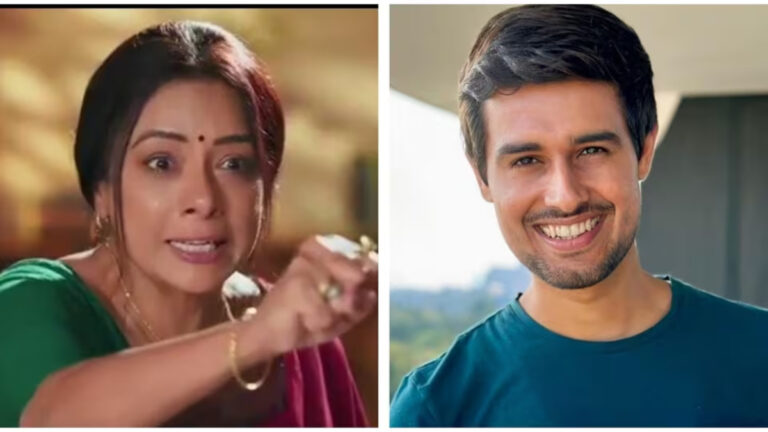
Rupali Ganguly Slams Dhruv Rathee Over ‘Humiliate PM Modi’ Remark

New Delhi, May 25, 2026: A major social media storm has erupted following a fierce exchange between popular television actor Rupali Ganguly and prominent YouTuber Dhruv Rathee. The controversy kicked off when Rathee made a highly provocative post on social media platform X (formerly Twitter), asserting that Prime Minister Narendra Modi “deserves to be humiliated everywhere he goes.” The statement quickly caught the attention of the Anupamaa actress, who launched a sharp counter-offensive, stating that the country does not need a “YouTuber sitting abroad” acting as its self-appointed spokesperson.

The digital clash has rapidly escalated into a wider public debate online, drawing in commentary from other entertainment figures, political observers, and thousands of social media users. It highlights a widening rift between digital creators who use foreign bases to critique Indian governance and domestic public figures who view such actions as disconnected, external interference.

The Spark: What Did Dhruv Rathee Say?

The confrontation began when Germany-based political commentator and content creator Dhruv Rathee posted a sharp critique regarding Prime Minister Modi’s accountability and transparency. In his post on X, Rathee expressed deep frustration with the lack of direct journalistic access to the country’s leader, specifically highlighting that the Prime Minister has not held a formal press conference in over a decade.

Rathee then turned his attention to international media, actively encouraging European journalists to confront and embarrass the Indian premier during his official state visits abroad. Citing a recent incident involving Danish journalist Helle Lyng, Rathee urged.

The Counter-Attack: Rupali Ganguly Fires Back

The call for foreign journalists to intentionally embarrass the leader of the world’s largest democracy did not sit well with Rupali Ganguly. The television star, who officially joined the Bharatiya Janata Party (BJP) in mid-2024, utilized her platform to issue a lengthy, passionate rebuttal, quoting Rathee’s original post and fiercely defending the Prime Minister’s global standing.

Ganguly began by calling out the irony of using the word “humiliation” for a leader who is routinely celebrated by foreign governments. She pointed out that rather than being embarrassed on the global stage, PM Modi has consistently received top civilian honors from various nations during his international travels.

Defending the Democratic Mandate

A core pillar of Ganguly’s defense rested on democratic legitimacy. She reminded the YouTuber and his followers that the Prime Minister’s authority comes directly from the Indian electorate, noting his unbroken streak of electoral victories spanning more than two decades across both state and national levels.

“Leave India’s Progress to Indians”

In the most stinging portion of her response, Ganguly directly questioned Rathee’s authority to speak on behalf of the country or define what constitutes “service for India’s progress.” She sharply criticized his physical and cultural distance from the country’s ground realities, alleging that his business model relies on creating division and fearmongering.

The Growing Backlash Against Rathee’s Post

Ganguly is not the only notable figure to call out Rathee’s remarks. The online discourse shows that the YouTuber’s call for intentional international embarrassment crossed a line for several public figures who otherwise maintain neutral or even critical stances on governance.

Actor Gul Panag also weighed in on the controversy, openly criticizing the nature of Rathee’s tweet. Panag, known for her measured social and political commentary, simple stated that calling for the public humiliation of a nation’s elected leader is “not cool.”

Many social media users echoed these sentiments, arguing that while criticizing governmental policy, inflation, unemployment, or press relations is entirely fair game in a democracy, actively inviting foreign bodies to humiliate the representative of one’s own country compromises national dignity. Critics have increasingly labeled Rathee’s approach as overly cynical, pointing out that his commentary often seems tailored to fuel online outrage rather than foster constructive domestic dialogue.

The Broader Context: A Clashing Digital Landscape

This high-profile spat mirrors a larger, systemic shift in how political messaging is fighting for dominance in India. Over the last few years, traditional news media has faced stiff competition from independent digital creators. YouTubers like Dhruv Rathee have amassed millions of viewers by positioning themselves as independent watchdogs, frequently releasing videos that challenge the ruling government’s policies and narratives.

However, this influence has drawn heavy scrutiny. Ground-level politicians and domestic celebrities frequently point out that influencers operating from European or Western nations enjoy the safety of foreign jurisdictions while throwing rhetorical stones at Indian institutions. The argument presented by Ganguly—that a digital creator shouldn’t build a lucrative career off the systematic degradation of the country that gave them an audience—is a sentiment that is resonating deeply with a significant portion of the Indian public.

As India navigates its complex socio-political landscape, the line between constructive political dissent and targeted character defamation remains a fiercely contested battleground. For now, the confrontation between the TV icon and the internet influencer stands as a textbook example of how deeply polarized the conversation surrounding national leadership and global image has truly become.

India’s Next-Level Warmth: A Traveler’s Story of Chai and Care

0

New Delhi, May 25, 2026: For decades, international travel brochures have painted India as a land of kaleidoscopic colors, architectural wonders, and bustling, chaotic streets. While its historic forts and crowded markets initially draw millions of globe-trotters each year, visitors often find that the country’s true essence lies in something far more intangible. Recently, a European traveler named Liz took to social media to share her profound, deeply emotional realization of what makes the nation truly extraordinary. Her heartfelt post, titled around the simple pleasures of “chai, snacks, and constant care,” has gone viral, igniting a widespread global conversation about the unparalleled warmth of Indian hospitality. Liz declared that while she had heard endless praise for the sub-continent’s welcoming culture before her arrival, experiencing it firsthand proved that Indian kindness operates on “another level.

Exceeding the Limits of Formal Courtesy

In her widely shared reflection, Liz confessed that she used to view the global acclaim surrounding Indian hospitality with a degree of skepticism, assuming it was an exaggerated marketing trope or standard tourist courtesy. However, living through daily interactions completely transformed her worldview. She pointed out that in many Western societies, social interactions and hospitality are governed by structural formalities, premeditated invitations, and strictly defined personal boundaries. In stark contrast, she found that the warmth extended by ordinary citizens across India is entirely spontaneous, deeply emotional, and profoundly instinctual.

Liz noted that the ancient Sanskrit ethos of “Atithi Devo Bhava”—which translates to “The Guest is God”—is not merely a historical slogan relegated to text-books or luxury hotel lobbies. Instead, it serves as an active, living blueprint for daily human connection that cuts across all socio-economic strata. Whether stepping into a modest rural household or interacting with urban dwellers, the reception she received was consistently marked by an immediate, unconditional eagerness to make her feel protected, nourished, and cherished.

The Sacred Ritual of Chai and Snacks

According to Liz, one of the most immediate and touching manifestations of this cultural fabric is the absolute refusal of any host to let a visitor sit empty-handed. She observed that the moment a guest crosses an Indian threshold, a clockwork sequence of genuine care is set into motion. Without fail, hosts immediately offer a steaming cup of masala chai, regional snacks, or ask with heartfelt insistence whether the visitor has eaten.

What struck Liz the most was that these gestures never felt performative, forced, or transactional. In her post, she emphasized that checking on a stranger’s comfort or hunger seems to be a natural reflex for Indians. This instinct bypasses the modern habit of over-calculating social boundaries, replacing it with an immediate desire to provide comfort. The simple, recurring act of sharing food and drink became a powerful symbol of acceptance, turning what could have been a standard transactional interaction into an intimate moment of human bonding.

Touching Moments on Train Journeys

The spirit of generosity Liz experienced was not confined to structured home visits; it overflowed into public spaces, most notably during her long-distance journeys on the Indian Railways. For many foreign travelers, navigating the sprawling, dense network of Indian trains can initially feel overwhelming. Yet, Liz recounted how these trans-continental train compartments frequently transformed into communal living rooms.

She fondly recalled instances where complete strangers, sitting adjacent to her on berths, would unwrap their home-cooked dabbas (tiffin boxes) and immediately offer to share their meals. Despite language barriers and the lack of any prior acquaintance, fellow passengers looked out for her throughout the journeys—ensuring she didn’t miss her stops, explaining the shifting landscapes outside the window, and treating her as an extended member of their own families. For Liz, these train journeys became a microcosm of India itself: a bustling, unpredictable environment tethered together by an unspoken sense of community and unconditional generosity.

A Safety Net of Everyday Kindness

Beyond food and hospitality, Liz expressed deep gratitude for the protective shield of care that seemed to envelop her whenever she felt vulnerable. Traveling alone in a foreign country can occasionally spark moments of confusion, directional disorientation, or mild anxiety. Liz noted that whenever she appeared visibly perplexed, uncomfortable, or stranded on a street corner, she never had to wait long for assistance.

Inevitably, a local resident would step forward to guide her, translate a phrase, or ensure she reached her destination safely. She highlighted that this protective instinct felt entirely effortless and pure, arising not from a sense of obligation, but from a genuine collective responsibility toward the well-being of a traveler. This constant, quiet vigilance from strangers provided her with a profound sense of safety and belonging that she admitted is becoming increasingly rare in the fast-paced, individualistic structures of the Western world.

Redefining Global Stereotypes and Social Media Reaction

Liz’s candid essay has sparked immense resonance online, drawing thousands of emotional responses from both global travelers and Indian citizens. The viral post triggered a wider discourse on how international narratives frequently over-index on India’s infrastructure challenges, noise, and poverty, while entirely missing the cultural wealth that defines its people. Commenters from across the globe chimed in with their own anecdotes, validating Liz’s observations. Many travelers recalled similar instances where local shopkeepers refused payment from foreign guests, or where families invited stranded tourists into their homes during heavy monsoons.

Simultaneously, the post served as a poignant mirror for Indian netizens. Many online commentators reacted with pride, stating that the habits Liz highlighted—such as sharing food with a stranger or offering a glass of water to anyone walking through the door—are so deeply ingrained from childhood that they rarely perceive them as extraordinary. Netizens from diverse cities like Ahmedabad, Mangalore, Kochi, and Kolkata extended open invitations to Liz, urging her to visit their hometowns to experience their specific regional variations of warmth.

Ultimately, Liz’s heartfelt testimonial underscores a timeless truth about modern travel. While monuments and landscapes form the backdrop of a journey, it is the profound kindness of everyday people that carves a permanent place in a traveler’s heart. By celebrating the magic of “chai, snacks, and constant care,” her story serves as a beautiful reminder that despite a rapidly modernizing world, India’s greatest asset remains its enduring heart—an open, hospitable spirit that continues to redefine what it truly means to welcome the world.

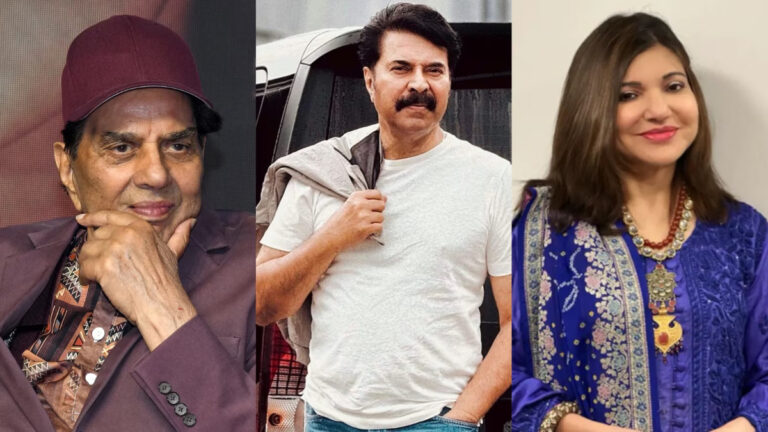
Padma Awards 2026: Playback Legend Alka Yagnik Conferred With The Padma Bhushan

New Delhi, May 25, 2026 — In a deeply emotional and star-studded civil investiture ceremony at the Rashtrapati Bhavan on May 25, 2026, President Droupadi Murmu conferred the prestigious Padma Bhushan upon legendary Indian playback singer Alka Yagnik.

The atmosphere inside the historic Ganatantra Mandap was charged with reverence as Yagnik, one of the most prolific and defining voices of contemporary Indian cinema, received the nation’s third-highest civilian honor. For over four decades, her soulful melodies have formed the emotional backbone of thousands of Indian films, making this recognition a long-awaited celebration for music lovers worldwide.

A Voice That Defined Generations

Alka Yagnik’s musical legacy is unmatched in modern Indian music history. Emerging as a powerhouse in the 1980s and completely dominating the 1990s and 2000s, her versatile vocals defined the sound of Bollywood. From the high-energy dance anthem “Ek Do Teen” (which catapulted her to superstardom) to the rain-soaked sensuality of “Tip Tip Barsa Paani” and the intense melancholy of “Agar Tum Saath Ho”, Yagnik has delivered thousands of solo and duet hits.

Her career numbers are staggering. Alongside icons like Lata Mangeshkar and Asha Bhosle, Yagnik holds the record for singing the maximum number of female solo tracks in Hindi cinema. Her work has consistently crossed international borders, with several of her movie soundtracks ranked among the BBC’s “Top 40 Bollywood Soundtracks of All Time.” Her timeless appeal is further underscored by global streaming metrics, where she has repeatedly topped Guinness World Records charts as one of the most globally streamed artists on YouTube.

‘It’s Such an Honour’: A Grateful Legend

Speaking after the ceremony, the 60-year-old maestro expressed her profound gratitude. The moment was especially poignant given that Yagnik has been privately battling a severe health setback over the past year. In a health update shared last month, she revealed that she was “still suffering” from a rare sensory illness but remains fiercely optimistic.

Her victory is seen not just as an individual milestone, but as a celebratory nod to the golden era of melodic Indian film music, where vocal purity and emotional depth reigned supreme.

The Grand Tapestry of the 2026 Padma Awards

This year’s official Padma list features 131 distinguished personalities spanning diverse fields like art, sports, public service, and science. Out of these, 66 awardees were presented with their medallions and citations during Monday’s ceremony in the national capital.

The entertainment industry was heavily celebrated, with South Indian megastar Mammootty receiving the Padma Bhushan alongside Yagnik, recognizing his monumental artistic contributions spanning half a century. From Bengal, cinema veteran Prosenjit Chatterjee was honored with the Padma Shri.

The sports contingent also walked away with significant honors. Fresh off monumental international achievements, Indian cricket captains Rohit Sharma (who led India to a T20 World Cup and a subsequent Champions Trophy victory) and Harmanpreet Kaur (who guided the women’s national team to a historic ODI World Cup title) were both conferred with the Padma Shri. Joining them was Indian hockey’s wall, goalkeeper Savita Punia, and legendary tennis maestro Vijay Amritraj, who received the Padma Bhushan for pioneering Indian tennis on the global stage.

A Healing Melody for Fans

For millions of fans worldwide, seeing Alka Yagnik accept her award at the Rashtrapati Bhavan was an emotional milestone. Her enduring presence at the forefront of Indian culture—despite her current physical ailments—served as an inspiring testament to her resilience.

As the curtains came down on the 2026 civil investiture ceremony, it was clear that while the physical medals symbolize state recognition, Yagnik’s true legacy remains permanently etched in the everyday lives of the people who find comfort, joy, and love in her voice.

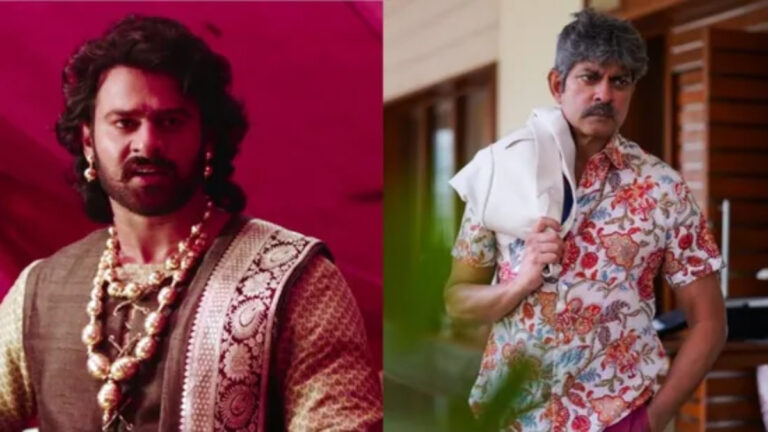
Prabhas Helped Me Beat Depression: Jagapathi Babu

New Delhi, May 25, 2026: The glitz and glamour of the Indian film industry often hide the deep emotional and mental struggles that actors face behind closed doors. While fans see their favorite stars leading seemingly perfect lives on the silver screen, the pressure of maintaining that image can take a massive psychological toll. Recently, veteran Telugu actor Jagapathi Babu opened up about a highly vulnerable chapter of his life, shedding light on his intense battle with depression. In a heartwarming revelation, he shared how global superstar Prabhas stepped forward as an unexpected pillar of support, helping him pull through his darkest days.

Jagapathi Babu, celebrated for his versatile performances and powerful screen presence in blockbusters like Salaar: Part 1 – Ceasefire, Pushpa 2, and Guntur Kaaram, spoke candidly during a recent media interaction ahead of the release of his upcoming sports drama, Peddi. The actor emphasized that while success and failure are part of showbiz, mental health struggles can completely hollow a person out. During one such agonizing phase of emotional distress, he felt a desperate need to talk to someone he could genuinely trust.

“Darling, I Am There”: A Lifeline from Georgia

Recalling the specific incident, Jagapathi Babu detailed how he reached out to the Baahubali star at a time when he felt completely overwhelmed. Prabhas was thousands of miles away, stationed on an intense international shooting schedule in Georgia. Despite the massive time difference, demanding work commitments, and his own chaotic schedule, Prabhas did not hesitate to answer the call.


According to Jagapathi Babu, as soon as he expressed his mental distress, Prabhas immediately brushed aside any professional distractions to comfort him. The superstar used his signature affectionate moniker, saying:

These simple, reassuring words acted as an immediate lifeline for the veteran actor. Jagapathi Babu noted that the sheer certainty and warmth in Prabhas’s voice gave him a massive surge of confidence and the courage to face his mental health struggles. In an industry where relationships can often feel transactional, having someone stand by you with zero hidden motives was incredibly moving.

Going the Extra Mile: Stardom Accompanied by Pure Humility

What truly set Prabhas apart, according to Jagapathi Babu, was that his support didn’t end with a comforting phone call. Many people offer temporary words of encouragement over the phone, but the pan-India star proved that his empathy ran much deeper.

Upon returning to India from his overseas shoot, Prabhas made it a point to personally visit Jagapathi Babu. He spent quality time with the veteran star, checking in on his well-being, keeping his spirits high, and continuously motivating him until he fully regained his emotional grounding.

Reflecting emotionally on Prabhas’s character, Jagapathi Babu expressed profound admiration for the younger actor’s massive heart:

The two actors share a close professional bond, having previously worked together on high-profile films like Radhe Shyam and Prashanth Neel’s action epic Salaar. However, this personal experience transformed their relationship from professional mutual respect into a deep, lifelong emotional bond.

Respect for a Golden Era of Humility: Praising SS Rajamouli

Prabhas was not the only titan of Telugu cinema praised by Jagapathi Babu for exceptional human values. The veteran actor also spoke highly of visionary filmmaker S.S. Rajamouli and his family, holding them up as standard-bearers of humility within Indian cinema.

Despite achieving unprecedented global success, winning an Academy Award, and putting Indian cinema on the international map, Rajamouli reportedly remains entirely grounded. Jagapathi Babu noted that the director’s entire family operates with a complete absence of ego, treating everyone they encounter with genuine affection and dignity.

“If people in the industry can learn and follow even 25% of the values practiced by Rajamouli’s family, they will easily succeed in life,” Jagapathi Babu stated, commending how the director strictly keeps professional decisions free from personal biases.

Looking Ahead: A Busy Slate for Both Actors

As these heartening stories of camaraderie surface, both actors continue to scale great professional heights. Jagapathi Babu is currently generating major buzz for his upcoming role as ‘Appalasoori’ in the sports drama Peddi, directed by Buchi Babu Sana. The highly anticipated film stars Ram Charan and Janhvi Kapoor in leading roles and features an ensemble cast including Shiva Rajkumar and Divyenndu.

Meanwhile, Prabhas remains one of the busiest and most sought-after icons in Indian cinema. Following his blockbuster run, the actor’s upcoming lineup is nothing short of spectacular:

Jagapathi Babu’s candid revelation serves as a gentle reminder that behind the larger-than-life personas on screen are real human beings fighting silent battles. More than that, it highlights how a timely gesture of empathy, a kind phone call, or a genuine check-in from a friend can completely alter someone’s path toward healing. In an era dominated by box office numbers and internet trends, it is the quiet stories of compassion, like the bond between Prabhas and Jagapathi Babu, that truly define the soul of the film fraternity.

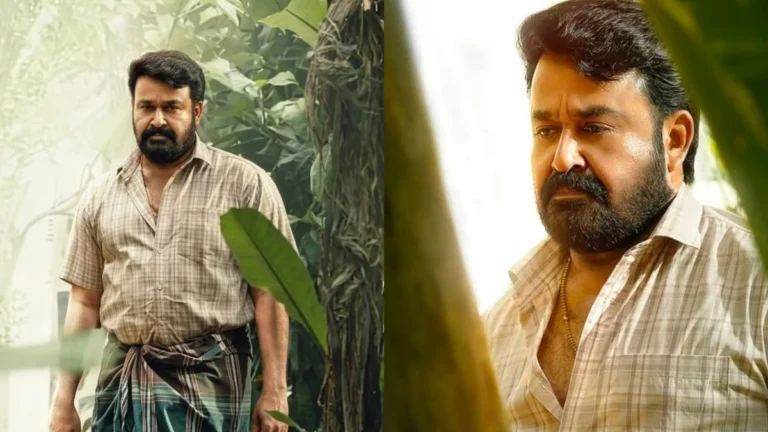
Drishyam 3 Rules Global Box Office: Earns Rs 141 Cr in 4 Days

New Delhi, May 25, 2026: The undisputed king of Mollywood’s box office has returned to reclaim his throne. Over its explosive four-day extended opening weekend, superstar Mohanlal’s highly anticipated crime-thriller Drishyam 3 has taken the global box office by storm. Directed by mastermind Jeethu Joseph, the final chapter of the iconic franchise generated a staggering Rs 141.34 crore worldwide gross, shattering numerous records along the way. Despite facing intense scrutiny from fans and industry veterans alike, the cinematic puzzle surrounding the elusive protagonist Georgekutty has proved to be an irresistible draw for global audiences.

While the thriller has established itself as an unmitigated blockbuster within just 96 hours of its theatrical release, it has narrowly missed achieving the single highest opening weekend in Malayalam cinema history. That ultimate distinction remains safely held by another Mohanlal powerhouse—the action epic L2: Empuraan, which brought in a record-shattering Rs 59 crore net domestically over its own initial four-day stretch. Nevertheless, Drishyam 3 rests comfortably in a secure second place, rapidly closing the gap with robust international legs and unwavering hold over regional markets.


Breaking Down the Domestic Box Office Numbers

According to data compiled by industry trade tracker Sacnilk, Drishyam 3 completed its first crucial weekend testing phase on Sunday (Day 4) by capturing Rs 13.95 crore net across Indian theaters. This represents a solid 1.8 percent growth compared to Saturday’s collection of Rs 13.70 crore net, indicating positive audience word-of-mouth driving families back to theater halls.

The film’s cumulative four-day domestic total has reached a highly impressive Rs 54.55 crore net, which translates to an aggregate domestic gross of Rs 63.34 crore. Unsurprisingly, the film’s homestate of Kerala continues to function as its economic spine. On Sunday alone, Kerala generated a remarkable Rs 9.70 crore gross, with theaters recording a spectacular 69.35 percent occupancy across 3,186 single screens and multiplex shows.

While the original Malayalam cut accounts for the vast majority of theater traffic, the pan-India dubbed releases successfully diversified the revenue stream over the weekend:

  • Telugu Version: Contributed Rs 1.20 crore on Sunday, benefiting from the strong localized brand equity established by its previous regional iterations.

  • Tamil Version: Brought in Rs 65 lakh, enjoying highly packed evening shows across metropolitan Chennai.

  • Kannada Version: Pulled in a modest Rs 35 lakh from a targeted, limited release pattern.

The Power of the Overseas Diaspora

What truly elevates Drishyam 3 into an international powerhouse is its sensational run across overseas territories. Over its four-day run, international markets have generated an astonishing Rs 78.00 crore gross, outperforming domestic receipts by a clear margin.


Audiences throughout the Gulf Cooperation Council (GCC) region, North America, the United Kingdom, and Western Europe turned out in historic numbers. In traditional Malayalam strongholds like the UAE and Qatar, exhibitors added late-night weekend screenings to meet unprecedented ticket demand. This dual-engine growth—unshakable dominance at home matched with aggressive distribution across the global diaspora—has already pushed Drishyam 3 beyond the entire first-week total of Mohanlal’s prior theatrical release, Thudarum, which earned Rs 51.4 crore over seven full days.

Critical Reception vs. Commercial Triumph

The runaway financial success of Drishyam 3 comes amidst a fascinatingly divided critical landscape. Unlike the universal critical acclaim that greeted the original film in 2013 and its subsequent sequel in 2021, the third installment has met with a mix of opinions.

Before the project arrived in theaters on May 21, both Mohanlal and director Jeethu Joseph made deliberate efforts in media interviews to manage audience expectations. Joseph explicitly clarified that the finale would lean heavily into emotional drama, closely tracking Georgekutty’s fraying psychological state following the traumatic fallout of Drishyam 2, rather than relying strictly on the jaw-dropping plot twists that defined earlier chapters.

While some critics questioned if the series truly required an additional chapter, general theatergoers have overwhelmingly embraced the emotional stakes. The tension of watching a desperate father continually shield his wife Rani (Meena) and daughters Anju (Ansiba Hassan) and Anu (Esther Anil) from the unrelenting legal system remains an unmatched cinematic experience for loyal fans.

The Global Drishyam Phenomenon

The stellar performance of the third Malayalam installment reinforces Drishyam as arguably India’s most successful native thriller intellectual property. The original film achieved legendary status not only in Kerala but across the entire Indian subcontinent through its highly lucrative remakes. The Hindi adaptation starring Ajay Devgn has built its own multi-crore legacy; trade analysts note that the Hindi version of Drishyam 3 is already slated for a massive nationwide theatrical rollout later this year in October.

Furthermore, the franchise’s footprint has officially gone global. Beyond standard regional Indian language remakes, an official Indonesian adaptation titled Ayah, Aku Mau Cerita… (“Dad, I Want to Tell You”) is currently in active production, demonstrating the universal human appeal of a father willing to outsmart the world to save his family.

As Drishyam 3 heads into its first weekday operational cycle, the focus now shifts to its stabilization trend. With Monday morning shows maintaining stable occupancy rates around 45 percent, the movie is positioned to breeze past the coveted Rs 150 crore milestone within days. Whether it possesses the legs to ultimately outpace L2: Empuraan over a lifetime run remains to be seen, but one reality is undeniable: Georgekutty has outsmarted the box office once again.

Motorola Edge 70 Pro+ India Launch Officially Set for June 4: A Premium Flagship Reimagined

New Delhi, May 25, 2026: Motorola has officially put an end to weeks of intense speculation by confirming the launch date for its highly anticipated ultra-premium smartphone, the Motorola Edge 70 Pro+. Through a series of official social media announcements and a newly updated teaser microsite, the Lenovo-owned brand revealed that the flagship device will make its grand debut in India on June 4, 2026.

Positioned as the definitive crown jewel of the acclaimed Edge 70 lineup, the Edge 70 Pro+ will arrive as the fourth entrant in the family, joining the existing Edge 70, Edge 70 Pro, and Edge 70 Fusion. By introducing a “Plus” variant, Motorola aims to bridge the gap between high-end mid-rangers and absolute tier-one flagships, directly taking on premium contenders in the Indian market. The smartphone is confirmed to be available digitally via Flipkart and Motorola’s official Indian e-store, alongside major offline retail chains across the country.

Masterclass in Craftsmanship: Pantone Collaboration and Textures

Motorola’s design philosophy for the Edge 70 Pro+ moves away from standard glass or generic faux-leather back panels. Instead, the company has heavily doubled down on its exclusive partnership with color authority Pantone, bringing an array of bespoke material finishes designed to emphasize tactile identity and luxury aesthetics.

The upcoming smartphone will be available in three meticulously engineered structural finishes, each carrying a signature look:

  • Satin-Luxe Finish (Pantone Zinfandel): A deep, dramatic maroon/wine color palette that offers a highly refined, frictionless matte surface. It is designed to resist fingerprint smudges while providing a velvety hand-feel.

  • Twill-Inspired Finish (Pantone Stormy Sea / Blue Surf): A distinctly textured variant featuring a microscopic, woven fabric-like pattern. This option offers a high-grip surface that mimics premium lifestyle gear and tailoring.

  • Sculpted Wood Finish (Pantone Chicory Coffee / Wood Gold): A striking design that integrates a natural, linear wood-grain aesthetic right into the phone’s rear matrix, giving the device an organic, high-end furniture-like finish.

Complementing these rear textures is Motorola’s signature symmetric quad-curved front panel. By curving the display seamlessly into a minimalist, ultra-thin frame on all four edges, Motorola claims to have achieved unparalleled ergonomics. The design ensures the phone remains comfortable to hold and easy to navigate with one hand, despite its massive screen real estate and dense internal hardware.

Breaking the Bulk: The Segment’s Thinnest Periscope Lens

Beyond its external styling, the absolute headline feature of the Motorola Edge 70 Pro+ is its radically re-engineered camera system. Historically, incorporating high-magnification telephoto sensors has forced manufacturers to use thick, protruding “camera islands” that make devices top-heavy. Motorola claims to have solved this layout constraint with the Edge 70 Pro+.

The flagship is officially confirmed to house a 50MP periscope telephoto camera, heavily marketed as the “thinnest implementation in its category.” By laying the lens elements horizontally and utilizing a prism to bend incoming light, Motorola has managed to implement a true telephoto system while keeping the phone’s overall profile remarkably sleek.

This advanced hardware arrangement is further amplified by a suite of cutting-edge optical capabilities:

  • 50x AI Super Zoom Pro: Backed by underlying moto AI algorithms, this hybrid digital zoom system enhances edge-to-edge clarity and fills in missing pixel details in real-time, allowing users to capture clear shots even at extreme distances.

  • 85mm Native Focal Length: The telephoto assembly utilizes an optimal portrait range, pairing an 85mm optical focal length with physical Optical Image Stabilization (OIS). This minimizes handshake blurs and produces a natural, hardware-level background bokeh that accurately separates subjects from the background.

  • Sony LYTIA 710 Main Sensor: Working in tandem with the periscope lens is a high-sensitivity 50MP primary sensor. This sensor utilizes advanced pixel-binning technology to balance high-contrast daytime lighting and pull maximum detail out of challenging low-light scenarios.

Flagship Display and Next-Gen Processing Power

While the camera and aesthetics take center stage in the marketing campaign, the core specifications of the Motorola Edge 70 Pro+ deliver a true flagship experience. The front of the device is dominated by a stunning 6.7 to 6.8-inch 1.5K Quad-Curved AMOLED display. Catering heavily to gamers and power users, the display features a fluid 144Hz refresh rate, ensuring ultra-smooth system animations, instant touch responses, and seamless scrolling performance.

Under the hood, the Edge 70 Pro+ is rumored to run on top-tier processing silicon, with industry indicators pointing toward either a flagship MediaTek Dimensity or a high-end Qualcomm Snapdragon 8-series platform. This powerful setup is paired with a robust thermal cooling system to ensure sustained peak performance under heavy loads.

On the software side, the device will debut with Motorola’s clean user interface layer, built on top of the latest Android operating system. True to its premium pedigree, the phone boasts an IP68/IP69 rating for comprehensive dust and water resistance, ensuring survival against sudden downpours or accidental submersions.

Rapid Charging Capabilities

Power delivery is another area where the Pro+ sets a clear boundary between itself and the standard Edge 70 Pro model. The device is confirmed to support high-velocity TurboPower wired charging, expected to hit speeds near the 100W/125W mark, capable of juicing up the large 5,000mAh battery from zero to full in under half an hour.

Crucially, Motorola has also confirmed the inclusion of high-speed wireless charging support for the Pro+ variant. This feature adds a layer of cable-free convenience that is increasingly demanded by premium consumers, making it a highly competitive flagship package.

Market Outlook and Anticipated Pricing

With the official launch scheduled for June 4, the only major remaining mystery is the final Indian price tag. Given that the standard Edge 70 Pro targets the upper-midrange market, industry experts predict the Edge 70 Pro+ will launch in the ₹55,000 to ₹65,000 price bracket, depending on the storage and RAM configurations.

By delivering a slim periscope camera, rare structural wood/fabric designs, and uncompromised display specifications, Motorola is looking to shake up the premium segment and pose a serious threat to established ecosystem players. Full confirmation on pricing, official launch offers, and retail availability timelines will be revealed next week when the device goes live.

SGPGIMS Lucknow Recruitment 2026: Official Notification Released

New Delhi, May 25, 2026: The Sanjay Gandhi Postgraduate Institute of Medical Sciences (SGPGIMS), Lucknow, has officially released its highly anticipated recruitment notification for 2026. Aspiring candidates looking for stable, reputable career paths in the government medical sector can now apply for various Group B and Group C backlog vacancies. Known nationwide as a premier destination for advanced medical care and research, SGPGIMS is offering a total of 47 critical technical positions, including Junior Engineers, diverse Medical Technicians, Pharmacists, and specialized officers.

The application window opened on May 19, 2026, and eligible candidates have until June 9, 2026 (11:59 PM) to submit their detailed profiles through the official institute portal. This article breaks down everything you need to know about the available seats, strict eligibility parameters, age restrictions, salary distributions, and the official step-by-step application framework.

Breaking Down the 2026 Vacancy Matrix

This specific recruitment phase targets vital technical support departments to streamline the institutional infrastructure and patient-care mechanics. Of the 47 total openings, the Technician (Dialysis) wing carries the highest volume, signaling an excellent window of opportunity for candidates specialized in renal and dialysis technologies.

The official notification details the post-wise distribution across these individual positions:

  • Technician (Dialysis): 24 posts

  • Technician (Radiology): 5 posts

  • Perfusionist: 3 posts

  • Junior Engineer (Telecom): 1 post

  • Junior Engineer (Electrical): 1 post

  • Medical Lab Technologist: 2 posts

  • Technician (Radiotherapy): 2 posts

  • Junior Occupational Therapist: 2 posts

  • Sanitary Inspector Grade-I: 2 posts

  • Receptionist: 2 posts

  • Technical Officer (Perfusion): 1 post

  • Technical Assistant (Neuro-otology): 1 post

  • Pharmacist Grade-II: 1 post

Who Can Apply? Detailed Post-Wise Educational Criteria

Because this recruitment encompasses highly specialized medical, administrative, and engineering domains, the eligibility rules are exceptionally strict and position-specific. General applicants cannot apply universally; you must possess a degree or diploma from a government-recognized board or university directly mirroring the desired field.

Age Limitations and Decisive Evaluation Timelines

To keep the recruitment process fair and uniform, the institute sets precise parameters governing candidate age brackets. The absolute decisive benchmark date for tracking age calculations is fixed on January 1, 2026.

  • Minimum Age Floor: 18 Years

  • Maximum Age Ceiling: 40 Years

However, in line with the standing statutory directives issued by the Government of Uttar Pradesh, extensive upper age relaxations are extended to specialized reserved groups. Candidates belonging to Scheduled Castes (SC), Scheduled Tribes (ST), and Other Backward Classes (OBC) carrying valid UP Domicile proof can claim an upper age relaxation up to a maximum period of 5 years. Additionally, Divyang (disabled/handicapped) applicants are eligible for extensive age relaxation expanding up to 15 years, while seasoned permanent government employees of Uttar Pradesh with a minimum of 3 years of unbroken service get up to 5 years of flexibility.

Salary Tiers and Financial Pay Structure

Appointees selected through this cycle will enjoy steady salaries scaled perfectly under the directives of the 7th Central Pay Commission (CPC). The structure ensures high financial stability along with associated central-grade institutional perks.

  • Level 7 Pay Matrix (Scale ₹44,900 – ₹1,42,400): Applicable for specialized commanding profiles such as the Technical Officer (Perfusion).

  • Level 6 Pay Matrix (Scale ₹35,400 – ₹1,12,400): Designated for Junior Engineers (Electrical & Telecom), Medical Lab Technologists, Occupational Therapists, and select Technicians.

  • Level 5 Pay Matrix (Scale ₹29,200 – ₹92,300): Assigned to entry-level domain specialists, including the Dialysis Technicians, Sanitary Inspectors, and Pharmacists Grade-II.

Step-by-Step Online Application Framework

The entire application setup is fully modernized and strictly restricted to digital channels. Offline submissions, manual postal forms, or hand-delivered printouts will not be evaluated. Eligible candidates should follow this precise sequence to successfully register:

1.Primary Portal Navigation:First Step.

Access the official primary web domain of the institute at www.sgpgims.org.in and click directly onto the specialized “Recruitment” or “Career” links on the home page.

2.Account Registration:Identity Initialization.

Select the active link titled “Group B & C Backlog Recruitment 2026”. Complete your preliminary digital registration by inputting a valid personal mobile number and a secure email ID to generate unique login credentials.

3.Profile Data Formulation:Form Completion.

Log back into the active system with your fresh credentials. Carefully fill out all mandatory spaces regarding personal background, definitive educational percentages, structural address logs, and caste parameters.

4.Document Upload Integration:Digital Verification.

Upload clean, high-resolution scanned digital copies of your passport-sized photo, clear signature, Class 10 certificate (for age validation), final graduation/diploma marks sheets, valid experience certificates, and UP state caste/domicile certificates (if claiming relaxation).

5.Application Fee Remittance:Financial Settlement.

Process the non-refundable processing fee through the integrated net banking, credit card, or UPI portal. General/OBC candidates must pay ₹1,180 (₹1,000 baseline + 18% GST), whereas SC/ST candidates are billed ₹708 (₹600 baseline + 18% GST).

6.Final Form Verification and Printing:System Submission.

Review your entire editable layout one last time before hitting the permanent submit button. Once the banking network registers and coordinates your payment status, lock the form and immediately download a printed hard copy for future physical examination verifications.


Crucial Directives for All Aspiring Applicants

Before sealing the digital application form, all candidates must take note of critical institutional terms. If you reside outside of Uttar Pradesh but belong to a reserved category (SC/ST/OBC) in your native state, you will be treated under the general Unreserved (UR) category guidelines and must fulfill the unreserved cutoffs and fee structures.

Furthermore, to clear the upcoming Computer Based Test (CBT), candidates must score above the rigid minimum qualifying threshold. The mandatory pass mark is scaled firmly at 50% for General/OBC applicants and drops slightly to 45% for SC and ST candidates. Ensure all uploaded documents are completely authentic—any mismatched credentials discovered during the formal document verification phase will attract instant disqualification and potential legal restriction from future state selections.

Madurai Temple Parking Lot Murder Sparks Fierce Political Row

0

New Delhi, May 25, 2026: A horrific act of violence has sent shockwaves through the temple city of Madurai, escalating political tensions across Tamil Nadu. A 17-year-old boy, identified as Kubendran, was brutally murdered by a five-member gang in the car parking area of the iconic Meenakshi Amman Temple. The broad-daylight killing, occurring in an area heavily frequented by thousands of devotees and tourists daily, has triggered severe public alarm. According to the Madurai City Police, preliminary investigations indicate that the brutal assault was the fallout of a deep-seated old enmity, tracing back to a violent clash that erupted during the recently concluded Chithirai festival.

The incident has immediately exploded into a major political flashpoint. Seizing on the tragedy, the Bharatiya Janata Party (BJP) launched a scathing offensive against the newly formed Tamilaga Vettri Kazhagam (TVK) government, led by Chief Minister C. Joseph Vijay. Taking to the social media platform X, state BJP chief K. Annamalai shared a video of the blood-stained crime scene, heavily criticizing the ruling administration’s handling of public safety. “What you see in this video is the blood stains of a young boy who was brutally murdered by a gang of five near the Meenakshi Amman temple in Madurai. Drug peddlers, sexual assaulters, and murderers have a free pass in Tamil Nadu,” Annamalai stated fiercely. The opposition leader further asserted that the state police force had failed to maintain basic vigilance, accusing CM Vijay’s administration of remaining in a “celebratory mode” following their recent electoral success rather than confronting grim law-and-order realities on the ground.

This high-profile murder comes at a particularly vulnerable moment for Chief Minister Vijay‘s young administration, which is already facing intense public scrutiny over another recent tragedy—the abduction and murder of a 10-year-old girl in Coimbatore. The back-to-back crimes have given opposition parties significant leverage to question the government’s competence. While Chief Minister Vijay has expressed “immense pain and shock” over these events, emphasizing that inhuman and criminal acts will face zero tolerance under his watch, pressure continues to mount. Local authorities in Madurai have deployed special teams to track down and apprehend the five assailants involved in the parking lot hacking, promising swift justice as they scramble to restore a sense of security around the historic temple premises.

Satellite Alerts: Heavy Cloud Surge Triggers Yellow Alerts across Several States

0

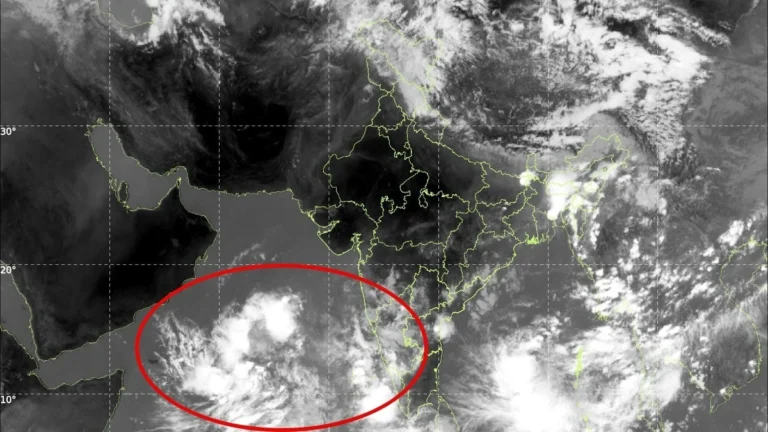
New Delhi, May 25, 2026: The India Meteorological Department (IMD) has issued critical weather warnings across both the northern and southern extremes of the country. Advanced meteorological imaging from the INSAT-3DS satellite reveals a dramatic visual dichotomy over the subcontinent: a massive, spiraling Western Disturbance is moving across the Himalayas, while deep convective cloud bands are gathering rapidly over the Arabian Sea. These highly active atmospheric conditions have prompted meteorologists to issue crucial yellow alerts across multiple states as significant pre-monsoon and early monsoon weather systems collide.


1. The Northern Frontier: Heavy Surge Over the Western Himalayas

In the northern reaches of the country, the latest INSAT-3DS thermal infrared imagery shows a prominent, dense spiral of cold cloud tops curling directly over the Western Himalayas. This classic signature indicates a highly active Western Disturbance—a low-pressure weather system originating from the Mediterranean region—colliding directly with the intense, rising heat of the Indian pre-monsoon summer.

The satellite data reveals bright white cloud bands over Jammu & Kashmir, Himachal Pradesh, and Uttarakhand. These highly developed vertical structures mean that towering thunderclouds have formed rapidly, bringing an immediate threat of heavy localized rainfall, lightning strikes, and localized hailstorms. The IMD has formalized yellow alerts for these regions, warning residents of sudden downpours and gusty winds reaching speeds of 40 to 50 km/h. Travelers and authorities in high-altitude zones are being urged to exercise caution due to the risk of sudden landslips, reduced visibility, and flash runoff in mountainous streams.

2. The Southern Front: Monsoon Onset Over Kerala and Karnataka

While the northern mountains grapple with turbulent winds, an entirely different—yet equally powerful—atmospheric shift is taking place over southern India. The same satellite tracking shows immense clusters of deep convective clouds building with exceptional speed across the south-east Arabian Sea, positioning themselves directly over Kerala and the Lakshadweep archipelago.


This thick buildup of equatorial moisture signifies an aggressive strengthening of the Southwest Monsoon, signaling its imminent arrival on the mainland. In response to this heavy cloud surge, weather officials have locked in a persistent five-day rainfall forecast for the region.

  • Kerala: A yellow alert dominates 11 districts across the state, including heavy-risk pockets like Pathanamthitta, Alappuzha, Kottayam, Idukki, Ernakulam, and Thrissur. The sudden spike in water levels has already forced authorities to open the barrage shutters of the Bhoothathankettu dam, keeping communities along the Periyar River on high alert.

  • Karnataka: Further north, a parallel yellow alert has been extended to Bengaluru and several interior districts, including Tumakuru, Hassan, and Chitradurga. The capital city has already faced severe pre-monsoon lashings, resulting in localized power disruptions, uprooted trees, and waterlogged commuter corridors.

3. Contrast in the Plains: Severe Heatwaves Remain

Paradoxically, the dramatic cloud surges on the northern and southern coastlines have left a vast gap across the central plains of India. Even as parts of the country prepare for immediate rain, the IMD has concurrently maintained a yellow alert of a very different nature for Delhi, Punjab, and Haryana.

In these regions, the absence of incoming moisture has allowed a severe heatwave to lock into place. Daytime temperatures are projected to soar between 44°C and 46°C over the coming days, offering a harsh reminder of the typical pre-monsoon atmospheric squeeze. Emergency management departments across all affected states—whether facing the threat of heavy thunder-showers or battling extreme thermal highs—have advised citizens to track real-time radar updates, secure loose outdoor structures, and minimize non-essential travel during peak alert windows.

Huawei’ New Tech Defies U.S. Chip Sanctions

0

New Delhi, May 25, 2026— In the high-stakes chess match of global technology, Huawei Technologies Co. has long been the primary target of U.S. export controls. Deemed a national security threat by Washington, the Chinese telecommunications giant was cut off from the lifeblood of modern computing: cutting-edge semiconductor chips and the multi-million-dollar machines required to make them.

Yet, rather than capitulating, Huawei is pushing the boundaries of physics and engineering. Through a series of groundbreaking patents, the company has unveiled a clever, “brute-force” manufacturing technique that allows it to bypass Western trade blocks. By maximizing older, readily available chipmaking equipment, Huawei is carving out a domestic path to next-generation semiconductors—challenging the global assumption that advanced technology cannot exist without Western approval.

The Technological Cage

To understand the significance of Huawei’s latest move, one must understand the technological wall the United States built around it. In the semiconductor world, the holy grail of manufacturing is Extreme Ultraviolet (EUV) lithography. Produced exclusively by the Dutch company ASML, these massive, $150 million machines use microscopic wavelengths of light to etch ultra-fine lines onto silicon wafers. This process allows manufacturers to pack billions of transistors onto a single, fingernail-sized chip, creating the ultra-efficient 5-nanometer (nm), 3nm, and 2nm processors that power modern smartphones and artificial intelligence.

Under heavy pressure from the U.S. government, the Netherlands banned the export of EUV machines to China. Washington’s strategy was clear: freeze China’s domestic chipmaking capability at the older 14nm threshold, effectively locking the country out of the future of AI and high-performance mobile computing.

For a time, the strategy seemed airtight. The consensus among global semiconductor experts was definitive: building sub-7nm chips without EUV lithography was a physical and economic impossibility.

Breaking the Laws of Physics

Huawei shattered that consensus. Teaming up with state-backed partners like chipmaking gear developer SiCarrier and China’s leading foundry, Semiconductor Manufacturing International Corporation (SMIC), Huawei began filing a series of revolutionary patents with the China National Intellectual Property Administration.

The centerpiece of Huawei’s strategy is a technique known as Self-Aligned Quadruple Patterning (SAQP).

Because Huawei cannot buy ASML’s advanced EUV machines, it is forced to rely on older Deep Ultraviolet (DUV) lithography machines, which China already possesses in abundance. DUV machines have thicker light beams, making them inherently incapable of etching the ultra-fine lines needed for advanced chips in a single pass.

Huawei’s SAQP technology solves this through a complex, repetitive masking and etching process. Instead of printing a fine line all at once, the DUV machine prints a wider line. Huawei’s process then deposits chemical “spacers” on the sidewalls of that line, etches away the original material, and repeats the process multiple times. By quadruple-patterning the silicon, Huawei can effectively divide the width of the lines by four.

The result? Huawei can etch transistor gates tight enough to achieve 5nm and even 3nm-class thresholds using machines that were never designed to go past 14nm. According to recent patent filings, Huawei has even outlined blueprints targeting a 2nm-class threshold—a development that shocked semiconductor executives worldwide.

The Cost of Innovation

While Huawei’s technological wizardry is a undeniable triumph of engineering, it comes with a catch. In the semiconductor industry, efficiency is measured by “yield”—the percentage of usable chips produced from a single silicon wafer.

When top-tier foundries like Taiwan Semiconductor Manufacturing Company (TSMC) use EUV machines, the process is streamlined, and yields are high, keeping the cost per chip low. Huawei’s SAQP method, by contrast, is a logistical marathon. Etching a wafer four times instead of once means many more steps in the cleanroom. If a single mistake occurs during any of those steps, the entire batch can be ruined.

Consequently, experts estimate that China’s domestic advanced chips suffer from lower yields and significantly higher production costs than their Western-allied counterparts. Furthermore, while SAQP works well for consumer hardware like smartphone processors, adapting it to massive, power-hungry AI processors at a commercial scale remains a massive hurdle. Huawei’s domestic AI chips, like the Ascend series, still face fierce competition from American giants like Nvidia, whose access to TSMC’s pristine EUV lines gives them a distinct advantage in raw computing power and supply volume.

A New Reality for Washington

Despite the economic penalties of the brute-force method, Huawei’s strategy is a resounding political and strategic success. For Beijing, the cost of the chips is secondary to the necessity of technological sovereignty. The Chinese government has poured billions of dollars into backing Huawei and its supply chain partners, viewing semiconductor independence as a matter of national security.

Huawei has already proved that this low-tech, high-ingenuity approach can yield commercial products. The sudden release of its Mate series smartphones, powered by domestically produced Kirin processors, caught Washington completely off guard.

Huawei’s ability to innovate around sanctions has sparked intense debate within the U.S. government. Some policymakers argue that export controls are failing and demand even harsher blacklists, targeting peripheral Chinese companies like SiCarrier. Others warn that aggressive sanctions have backfired; instead of halting China’s progress, they have inadvertently forced Chinese tech giants to stop buying American components and build a fully independent, parallel supply chain.

The Road Ahead

By utilizing SAQP and pushing older DUV machinery to its absolute physical limits, Huawei has effectively bought China time. It has proved that a nation backed by immense resources and political will can substitute raw engineering ingenuity for restricted machinery.

However, the “ceiling” of DUV manipulation is drawing closer. While quadruple-patterning can successfully simulate 5nm and 3nm structures, scaling further down will require China to eventually design and build its own native EUV machines—an objective Chinese research institutes are currently pursuing with frantic urgency.

For now, Huawei’s new chipmaking technology stands as a monument to resilience. It serves as a stark reminder to the global tech industry that in the era of weaponized trade, restrictions do not always eliminate capability—sometimes, they simply rewrite the rules of innovation.