Home Blog Page 38

Janhvi Kapoor Sparks Industry Debate Over Tollywood Human-Centric Schedules

New Delhi, June 2, 2026: The ongoing national conversation surrounding grueling work hours and labor reforms in Indian cinema has found a fresh, influential voice. While promoting her upcoming highly anticipated sports action drama Peddi—where she stars alongside Ram Charan as Achiyamma—actress Janhvi Kapoor sparked widespread discussion by drawing a sharp contrast between the work cultures of Mumbai and Hyderabad. Specifically, Kapoor lauded the Telugu film industry (Tollywood) for its strict adherence to human-centric schedules, emphasizing that the industry actively prioritizes the physical well-being of not just its stars, but its entire crew.

“What I really appreciate about specifically the Telugu film industry is their respect for everyone’s working hours,” Kapoor shared in an appearance on Times Now. “Not just the actors, but also the technicians and the crew members. A lunch break means everyone can go have lunch for 40 minutes and nap for 20 minutes, and come back to work feeling fresh.”

The actress further revealed that excessive 12-hour shifts were a rarity during her South Indian projects, occurring only once or twice across her filming experiences, which include Devara: Part 1 and the upcoming Peddi. Instead, a typical Tollywood workday spans a regulated nine to ten hours. Even notoriously difficult night shoots follow strict boundaries. “A night shoot always ends at 2:00 AM so you are rested,” Kapoor noted, adding that such boundaries are frequently “compromised back home” in Mumbai, where scheduling integrity largely depends on the whims of individual film sets.

Her remarks come at a highly sensitive time for the entertainment fraternity, following high-profile dropouts and growing pushback from major stars over systemic overwork. As the industry grapples with these labor dynamics, organizational and clinical psychologists have weighed in, validating Kapoor’s observations and warning that the entertainment industry’s historic glorification of sleeplessness is actively counterproductive.

The Anatomy of Rest: Why the 20-Minute Nap Matters

To the uninitiated, a 20-minute nap on a chaotic film set might sound like a luxury. However, workplace mental health experts view it as a critical physiological necessity, especially in high-stress, creatively demanding environments.

Gurleen Baruah, an organizational psychologist at That Culture Thing, explains that ultra-long work hours do not translate to better output. Instead, they systematically degrade the human operating system. “Very long work hours slowly exhaust the system,” Baruah says. “The brain doesn’t get time to reset, so focus drops and mistakes increase. Decision-making becomes rushed or rigid because the mind is tired, not sharp. Emotionally too, people become more irritable, numb, or reactive because there’s no space to process stress.”

Psychological research into sleep architecture supports this. A 20-minute rest—often referred to as a “power nap”—allows an individual to enter stage 2 sleep, which enhances alertness, memory consolidation, and motor skills without causing “sleep inertia,” the heavy, groggy feeling that occurs when waking up from a deeper sleep cycle.

Baruah notes that when an industry fails to build these micro-rests into its daily schedule, it enters a cycle of diminishing returns. “What starts as working more to get things done often becomes counter-productive. Burnout, poor judgment, and emotional fatigue follow, and performance actually goes down, not up. Humans are not machines. Even machines need charging.”

Creative Chaos vs. The Corporate ‘Excel Sheet’

Interestingly, Kapoor’s co-star, Telugu superstar Ram Charan, offered a counter-perspective during their joint promotions, expressing a deep admiration for Bollywood’s highly organized, time-bound corporate structure. He noted that Hindi cinema is often praised for completing projects swiftly and strictly “on time.”

Kapoor agreed that Mumbai sets are incredibly organized, but noted that this structure can sometimes border on a fault, leading to “creative compromises.” In contrast, she described Telugu film sets as being driven primarily by raw passion and a willingness to let the creative process breathe—paradoxically achieving this organic flow while strictly respecting the human limits of the crew.

The Psychological Toll of the “Always-On” Culture

The glamorized hustle of the entertainment industry often masks severe psychological vulnerabilities. Behind the scenes, technicians, light boys, and junior artists frequently bear the brunt of erratic schedules, working in environments where continuous 14-hour days are worn like a badge of honor.

According to Rima Bhandekar, a senior psychologist at the Mpower Helpline (Aditya Birla Education Trust), breaking away from this toxic cycle requires an intentional shift in perspective from leadership. “Making time for self-care, exercise, hobbies, and quality moments with loved ones can significantly contribute to emotional well-being and overall life satisfaction,” Bhandekar notes. She urges professionals across all high-pressure fields to mindfully embrace a sustainable rhythm of work and rest to ensure long-term progress without sacrificing mental and physical longevity.

Bhandekar also points out that breaking out of an overwork routine is incredibly difficult for individuals who have been conditioned to tie their self-worth strictly to endless productivity. “Sometimes, individuals find it difficult to come out of the rut of excessive focus on work, and may not know where to start,” she warns, suggesting that organizational interventions and expert guidance are often necessary to shift workplace momentum.

Ultimately, Janhvi Kapoor’s praise for Tollywood serves as a crucial case study for the wider Indian entertainment fraternity. By demonstrating that high-budget, commercially blockbuster cinema can be successfully produced within disciplined, respectful timeframes, the Telugu industry challenges the long-standing myth that great art requires human exploitation. True productivity, as the experts emphasize, is not born from exhaustion—it is fueled by rest.
Georgekutty Strikes Gold Again: ‘Drishyam 3’ Defies Weekday Slowdown to Race Past ₹200 Crore Mark

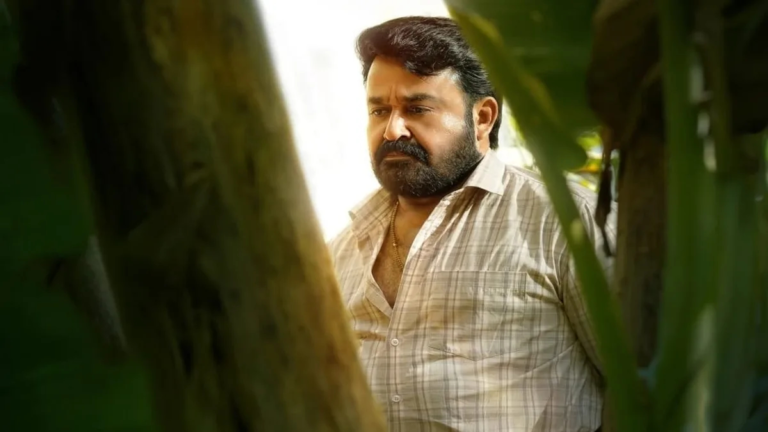
New Delhi, June 2, 2026: The legendary Georgekutty has done it again. Drishyam 3, the third and highly anticipated final installment of the iconic Malayalam thriller franchise, has officially shattered expectations by crossing the coveted ₹200 crore milestone at the global box office. Released worldwide on May 21, 2026—perfectly timed with superstar Mohanlal’s 66th birthday—the film hit the double-century mark in just seven days. Even as the high-octane energy of its opening week inevitably cooled into a typical working-week slowdown, the film’s incredible momentum has kept cash registers ringing globally, proving that the audience’s appetite for this edge-of-your-seat saga remains completely unmatched.

Superstar Mohanlal took to social media to celebrate the phenomenal achievement with fans, sharing a special commemorative poster. Reflecting on the incredible journey of the franchise, which began over a decade ago, he wrote a heartfelt caption: “Three films. Three chapters. One unbroken bond. Thank you for walking with Georgekutty and family.” The achievement cements Drishyam 3 as yet another massive entry into the ₹200-crore club for the veteran actor, following the unprecedented success of his prior blockbusters like L2: Empuraan.

The Box Office Breakdown: Where the Numbers are Flowing

According to trade analysts and box office tracking data, Drishyam 3 enjoyed a magnificent opening weekend, pulling in ₹15.85 crore on its very first day and closing its initial four-day weekend haul at a staggering ₹54.45 crore net in India alone.

While the film experienced a routine post-weekend drop—with daily net earnings dipping from Sunday’s high of ₹13.85 crore down to a more modest ₹4.30 crore by its second Friday—the global numbers tell a story of absolute dominance. The film’s structural holding is heavily supported by two major pillars: its home turf in Kerala and an incredibly loyal diaspora audience overseas.

Overcoming Delays and Living Up to the Hype

The road to the theaters wasn’t entirely smooth for Drishyam 3. Originally scheduled to debut on April 2, 2026, the producers made the strategic decision to postpone the global release due to shifting geopolitical tensions in the Gulf region. Given that the Middle East represents one of the largest and most lucrative territories for Malayalam cinema—and specifically for a Mohanlal-starrer—the delay was deemed essential to ensure a synchronized worldwide rollout.

When the film finally arrived in mid-May, backed heavily by multi-crore collaborations with major production houses like PEN Studios and Panorama Studios, it carried the immense weight of fan expectations. Director and writer Jeethu Joseph faced the daunting task of delivering a final chapter that could meaningfully conclude a story defined by layers of deception, legal loopholes, and extreme familial devotion.

A Franchise Built on Pure Suspense

The global phenomenon of Drishyam began in 2013, completely rewriting the rules of the Indian slow-burn crime thriller. The core premise—a semi-literate cable TV operator named Georgekutty who uses his vast knowledge of cinema to concoct the perfect alibi and shield his family from a murder investigation—captured the imagination of viewers far beyond the borders of Kerala. It became an unprecedented success story, prompting critically acclaimed, high-earning remakes in Hindi, Tamil, Telugu, Kannada, and even international adaptations in languages like Chinese.

Following the digital-first release of Drishyam 2 in 2021 during the pandemic, fans were desperate to see how Georgekutty would finally handle the relentless police pressure. Drishyam 3 reunites the beloved original ensemble cast, including Meena as Rani, Ansiba Hassan as Anju, and Esther Anil as Anu, alongside seasoned actors Siddique and Asha Sharath.

The master stroke of this latest chapter lies in how it intertwines the unresolved emotional trauma of the past films with a high-stakes legal battle, forcing Georgekutty into his tightest corner yet.

Looking Ahead: Will it Break More Records?

As Drishyam 3 cruises past the ₹225 crore mark globally, trade experts are keeping a close watch on its long-term theatrical legs. While the standard weekday dip is a natural part of modern cinematic runs, the film has managed to dodge a total collapse. It is currently maintaining a firm grip as the second highest-grossing Malayalam film of 2026 so far.

The true test for the film’s longevity will be how it fares against new theatrical arrivals in the coming weeks. However, given the deep emotional connection the audience shares with these characters, and the sheer cultural impact of the Drishyam legacy, Georgekutty’s final bow is comfortably on track to finish its run as one of the most profitable and celebrated triumphs in the history of South Indian cinema.

Lalit Modi on Sushmita Sen: ‘I Was Like a Kept Boyfriend’

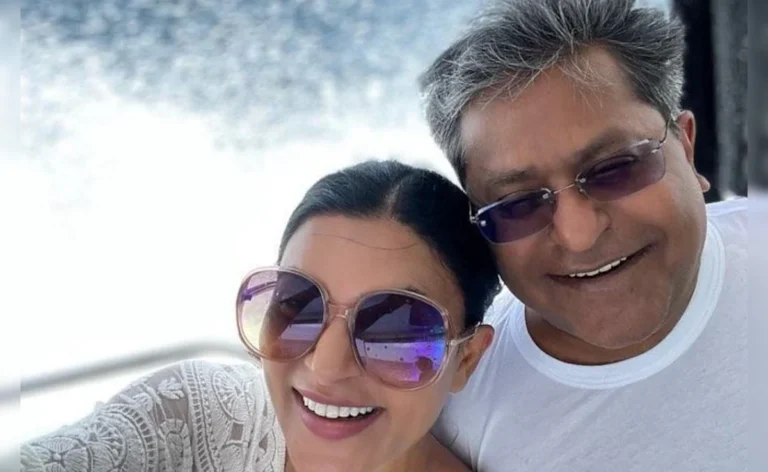
New Delhi, June 2, 2026: The internet can be a quick and harsh judge, especially when high-profile relationships make headlines out of nowhere. Back in July 2022, businessman and Indian Premier League (IPL) founder Lalit Modi shocked the world by dropping a series of cozy holiday photos with Bollywood star and former Miss Universe Sushmita Sen. The viral announcement instantly lit up social media, but alongside the curiosity came an wave of toxic trolling. Critics rapidly slapped the “gold digger” label on the actress, assuming her relationship with the wealthy entrepreneur was entirely transactional.

Now, years after the dust has settled on their whirlwind romance, Lalit Modi has stepped up to set the record straight once and for all. In a candid interview on the Humans of Bombay podcast, Modi vehemently defended his former partner. He didn’t just dismiss the sexist internet labels; he turned the entire narrative completely on its head by revealing that during their time together, he was practically the one being taken care of.

“I Was Like a Kept Boyfriend”

During his podcast appearance, Modi didn’t mince words when describing the financial dynamics of their relationship. He laughed off the idea that the Aarya star was relying on his fortune, explaining that she was fiercely independent whenever they spent time together.

Modi emphasized that the public perception of their romance was entirely disconnected from reality. Rather than looking for a payday, Sen actively refused to let anyone else foot the bill for her lifestyle. By sharing these private details, Modi aimed to highlight just how deeply misplaced and unfair the online backlash truly was.

A Self-Made Woman and Her Diamonds

To drive home his point about her financial independence, Modi pointed out that Sen has long been an incredibly successful entrepreneur and actress in her own right. He noted that her wealth, particularly her love for fine jewelry, is entirely a product of her own hard work.

  • Self-Built Wealth: “Sushmita is a beautiful, successful, and self-made woman,” Modi stated, noting that she has done everything on her own terms.
  • The Famous Diamonds: Flipping the script on the “gold digger” tag, he joked: “She has more diamonds than almost anyone I know on the planet, and she earned everything herself. She even had diamond stores.”
  • A New Label: Wittily reframing the insult, Modi added, “So when people called her a gold digger, that was completely wrong. If anything, Lalit was the diamond digger. She is truly a diamond.”

Anatomy of a Viral Moment: Breaking the Internet

Looking back, Modi also pulled back the curtain on how that infamous 2022 relationship announcement actually happened. Far from being a calculated PR move or a scripted strategy, the viral post was completely impulsive—and born out of a playful mid-flight argument.

Modi recalled that they were flying back to London together when he decided to post the pictures. Sen caught him mid-act and told him, “You’re not going to post this.” Laughing it off, Modi defied her and hit the upload button anyway right in front of her.

By the time their plane touched down, “all hell had broken loose.” The couple immediately shot to the top of Google’s trending lists, becoming two of the most searched personalities in India that year. Despite the intense media circus that followed, Modi stated he has zero regrets about the spontaneity of that moment. He noted that Sen never asked him to take the post down, and he never considered doing so because it represented a beautiful, genuine chapter of their lives.

Why They Parted Ways

While their bond was undeniably strong, the romance eventually fizzled out. For the first time, Modi opened up about the practical reasons behind their breakup, citing the classic hurdle faced by many high-profile couples: long distance.

“The distances got too much,” Modi explained, pointing out that her flourishing acting career kept her anchored to India, while his life and business operations were firmly rooted in London. Despite the logistical breakdown of their relationship, Modi spoke of Sen with immense warmth and respect. He described her as someone who helped him grow significantly during an important phase of his life, and he confirmed that they remain very close, dear friends today. He also took a moment to praise her character as a single mother, calling what she has done for her two daughters, Renee and Alisah, nothing short of remarkable.

A History of Standing Tall

This isn’t the first time the “gold digger” narrative has been dismantled. When the controversy initially erupted back in 2022, Sushmita Sen didn’t sit back and take the insults silently. She issued a powerful response on her own social media handles that won widespread acclaim from fans and industry peers alike.

At the time, Sen famously wrote that she didn’t need to dig for gold because she had always preferred buying her own diamonds. In subsequent interviews, she mentioned that she actually found the trolls amusing because an insult is only an insult if you choose to accept it—and she simply chose to ignore the noise.

Modi’s recent defense serves as a firm, final validation of what the actress has maintained all along. It highlights a frustrating, recurring trend where successful, self-made women are automatically assumed to be financially dependent the moment they date an affluent man. By publicly reclaiming his role as the “kept boyfriend,” Lalit Modi has effectively shut down a years-old internet rumor mill, replacing toxic gossip with a narrative of mutual respect, female independence, and genuine friendship.

iPhone Ultra: White Colorway & Vapor Chamber Cooling Tipped

New Delhi, June 2, 2026: The rumor mill surrounding Apple’s highly anticipated entry into the foldable smartphone market has shifted into overdrive. As the tech giant prepares for its traditional autumn hardware refresh, new leaks from highly reliable supply-chain insiders have shed light on what to expect from the premium device, widely rumored to be named the iPhone Ultra.

According to the latest information emerging from tech tipsters on Weibo, the iPhone Ultra is tipped to arrive in a minimalist white colourway. More importantly under the hood, Apple is reportedly defying the engineering limitations of an ultra-thin foldable chassis by integrating a sophisticated Vapor Chamber (VC) cooling system to manage the intense thermal demands of its next-generation silicon.

A Classic, Premium Aesthetic: The Return of All-White

For its first-ever foray into flexible displays, Apple is expected to adopt a conservative, ultra-premium color strategy reminiscent of the iconic iPhone X launch. Renowned industry tipster Ice Universe recently shared a purported image of a dummy unit displaying the iPhone Ultra in a clean, polished white finish. Following up on this leak, fellow insider Instant Digital noted that white is currently the only “confirmed” colorway passing through production channels.

While supply chain sources suggest Apple has actively tested a moody, indigo-blue alternative—similar to the Deep Blue hue found on the iPhone 17 Pro line—the initial launch lineup will likely remain incredibly streamlined. Bloomberg’s Mark Gurman has previously noted that Apple plans to steer completely clear of vibrant or “fun” colors for this tier, relying instead on sophisticated tones like silver/white and space gray.

Limiting the color choices isn’t just an aesthetic preference; it is a tactical business decision. Industry analyst Ming-Chi Kuo has repeatedly warned that the manufacturing yields for Apple’s complex folding hinge and dual-glass sandwich design are incredibly tight. Keeping the color combinations minimal helps streamline an already volatile assembly process, reducing overhead costs for a device that is expected to retail at a staggering starting price of roughly $2,000.

Vapor Chamber Cooling: Defying the Physics of Thinness

While a new coat of paint is visually exciting, the most significant revelation involves the device’s internal cooling architecture. Tipster Fixed Focus Digital revealed that Apple is equipping the iPhone Ultra with heavy-duty Vapor Chamber cooling.

To appreciate why this is a massive engineering feat, one must look at the rumored physical dimensions of the device. The iPhone Ultra is tipped to feature an astonishingly slim 4.5mm profile when unfolded (and roughly 11mm when closed). For context, foldable phones are notoriously difficult to keep cool because the motherboard and battery cells are split across two distinct halves connected by a mechanical hinge. Usually, an ultra-thin chassis forces manufacturers to sacrifice thermal performance, but Apple is reportedly “going all out” with its thermal engineering.

How the Vapor Chamber System Works

Unlike the standard graphite thermal sheets used in base-model iPhones, a vapor chamber relies on rapid liquid-to-gas phase changes to pull heat away from critical components.

  • The Heat Source: The phone’s main processor (expected to be the cutting-edge A20 chip) generates intense heat during heavy workloads like 4K video recording, AAA gaming, or localized Apple Intelligence AI processing.
  • Evaporation: Directly above the processor sits a sealed, flat metal plate containing a trace amount of deionized water under vacuum pressure. The intense heat causes this water to instantly flash-boil into vapor.
  • Dissipation: The hot vapor rapidly expands and rushes to the cooler edges of the chamber, spreading the heat energy across a massive surface area of the device’s aluminum-and-titanium frame.
  • Condensation & Return: As the vapor cools at the outer edges, it condenses back into liquid. An internal copper wick structure then uses capillary action to pull the liquid back toward the processor, restarting the cycle thousands of times per second.

Apple successfully introduced this technology into its premium tier with the iPhone 17 Pro lineup, resulting in a claimed 40% increase in sustained peak performance over older thermal designs. Bringing this to a folding form factor ensures that the iPhone Ultra can handle rigorous processing tasks without aggressive thermal throttling—where a phone deliberately slows itself down to prevent melting internal components. Furthermore, maintaining a cooler internal temperature slows down the chemical degradation of the phone’s lithium-ion battery cells over time.

Embracing Design Compromises for the Perfect Fold

To balance the inclusion of a high-end vapor chamber cooling array while maintaining a razor-thin 4.5mm footprint, Apple has reportedly made several controversial hardware concessions. The rumor mill indicates that the iPhone Ultra will completely omit at least five traditional flagship staples:

By letting go of these space-consuming hardware pieces, Apple can prioritize a truly expansive viewing experience. The device is expected to sport a 5.5-inch external cover screen for seamless one-handed use, which unfurls horizontally like a book into a massive, near-square 7.8-inch inner OLED display.

Production Hurdles and the Launch Timeline

Despite rumors pointing to complications in the pre-assembly manufacturing stages—specifically regarding surface-mount technology (SMT) and strict quality control tolerances for a “crease-free” folding panel—the iPhone Ultra’s launch timeline appears steady.

DigiTimes reported that while mass production timelines slid slightly from June to a late-summer window, the overall fall release track remains unhindered. Tech enthusiasts can expect Apple to officially debut the white iPhone Ultra alongside the mainstream iPhone 18 Pro and iPhone 18 Pro Max at its flagship September keynote. However, due to constrained initial shipping volumes, industry insiders hint that the actual retail availability might stagger into October or November, turning the first-generation foldable into a highly exclusive, luxury tech commodity.

Coca-Cola Eyes Massive $10B India Bottling IPO in 2027

0

New Delhi, June 2, 2026 — Global beverage giant The Coca-Cola Company has officially announced plans to explore a massive public listing for its flagship Indian bottling operation in 2027. The Atlanta-headquartered firm is initiating early preparations for an Initial Public Offering (IPO) of Hindustan Coca-Cola Holdings Pvt. Ltd. (HCCH), the parent entity of its largest manufacturing and distribution wing in India, Hindustan Coca-Cola Beverages (HCCB). The mega-offering is slated to hit India’s premier stock exchanges, the Bombay Stock Exchange (BSE) and the National Stock Exchange (NSE), pending regulatory nods and favorable market conditions.

Unlocking a Multi-Dollar Fortune

The upcoming public float is projected to unlock incredible value for the beverage titan in what has become its fifth-largest market globally. According to institutional analysts, the listing could value the bottling juggernaut at roughly $10 billion, with the company aiming to raise approximately $1 billion from the public. This would position the block-buster debut as one of the largest consumer-sector stock listings seen in India in recent years.

As part of the transaction, Coca-Cola is looking to sell off a minor slice of its own majority shareholding. The corporate restructuring comes on the heels of a massive deal finalized in July 2025, where the Indian consumer goods powerhouse, Jubilant Bhartia Group (the operators of Domino’s Pizza in India), snapped up a 40% equity stake in HCCH for an estimated ₹11,704 crore. Following the 2027 IPO, Coca-Cola will still retain a dominant, highly influential stake in the business alongside the Bhartia family.

To ensure a seamless transition to the public markets, the multinational has tapped the global financial services firm Rothschild & Co as its primary financial adviser.

The Push for an Asset-Light Blueprint

The strategic decision to transition to a public entity aligns perfectly with Coca-Cola’s overarching global “asset-light” strategy, known colloquially as refranchising. For the past decade, the global brand has systematically divested its heavily physical, capital-intensive bottling, packaging, and logistics assets across various continental markets.

By offloading the infrastructure to local partners and public equity, Coca-Cola can direct its laser focus entirely onto high-margin brand management, secret syrup concentrate manufacturing, and widespread marketing campaigns.

The strategy has already been playing out smoothly across India. In late 2024, the beverage leader divested its localized bottling operations across regional strongholds like Rajasthan, Bihar, Northeast India, and West Bengal to independent regional franchisees—including SLMG Beverages and Moon Beverages—netting around $290 million (₹2,420 crore) in the process. This broad corporate listing of the core south-and-west business will essentially put the finishing touches on its nationwide restructuring campaign.

An Omnipresent Retail Footprint

Established back in 1997, HCCB has spent nearly three decades building an incredibly robust, integrated distribution and manufacturing footprint across the Indian subcontinent. The company directly operates 14 state-of-the-art bottling plants scattered across 10 diverse states, bolstered by partnerships with eight external co-packers.

The scale of their daily operational footprint is massive:

  • Retail Reach: Serves over 1.7 million retail storefronts, from tiny neighborhood mom-and-pop shops to major supermarket chains.
  • Logistics Network: Managed by an expansive web of more than 2,000 localized primary distributors.
  • Headcount: Employs an internal workforce of over 5,000 staff members.
  • Portfolio Diversity: Produces and distributes 37 distinct products across 8 major beverage categories. This lineup features massive global brands like Coca-Cola, Sprite, Fanta, and Minute Maid, alongside deeply rooted localized cult favorites like Thums Up (India’s leading cola brand) and the mango-based drink Maaza.

Fierce Battles in the Beverage Aisle

The calculated decision to open the gates to public investors comes at a critical time when India’s hyper-competitive ready-to-drink beverage landscape is heating up. Billionaire Mukesh Ambani’s conglomerate, Reliance Industries, has aggressively revived the legacy brand Campa Cola, triggering a fierce, highly disruptive price war in rural and urban retail markets alike.

By leveraging public market funding and deep regional alliances via the Jubilant Bhartia Group, Coca-Cola is shoring up its financial and tactical defenses to maintain its commanding position over the country’s surging middle-class consumption.

Furthermore, public market investors will not have to guess at how to value the brand when it goes public. The Indian markets already boast a highly successful blueprint for an mega-bottler: Varun Beverages Limited (VBL), the exclusive bottling partner for arch-rival PepsiCo, which went public back in 2016 and has since evolved into a multi-billion-dollar stock market darling.

With rural infrastructure expanding rapidly, cooling technologies reaching the deepest corners of the country, and disposable income rising, Coca-Cola’s 2027 IPO looks less like a simple corporate divestment and more like a high-stakes play to institutionalize its immense growth engine for the next quarter-century.

Kangana Ranaut Recalls Family Heartbreak Over Bold Gangster Debut

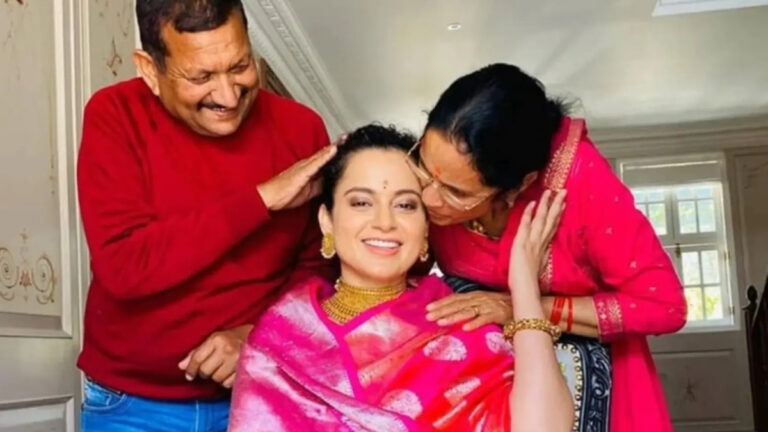
New Delhi, June 2, 2026: Two decades after storming into Bollywood with her explosive debut in Anurag Basu’s 2006 romantic-thriller Gangster, actor-politician Kangana Ranaut has opened up about the deep personal cost of her early success. In a candid promotional interaction for her upcoming film, Bharat Bhhagya Viddhaata, Ranaut walked down memory lane to recount how her family’s conservative upbringing clashed heavily with her cinematic breakthrough. Instead of celebration, her debut was met with a chilling silence from her father and heavy social anxiety from her mother—a reaction that the actress admits left her deeply heartbroken.

For an industry outsider who fought her way from a small village in Himachal Pradesh to the marquee lights of Mumbai, the initial lack of validation from her innermost circle left a lasting imprint on her fiercely independent career choices.

A Household Where Movies Were “Looked Down Upon”

To understand her parents’ reaction, one must look at the deeply traditional background Ranaut escaped. Born into an academic and politically inclined family, the arts—and cinema in particular—were viewed with immense skepticism. Her great-grandfather was an MLA, and her grandfather was associated with the Khadi Board. In their household, education and public service were the only true markers of respectability.

Ranaut revealed that during the 1990s and early 2000s, the Hindi film industry carried a highly negative reputation in rural India, frequently linked in headlines to the criminal underworld. Her parents were so fiercely opposed to the glitz of Bollywood that they would literally throw away newspapers containing film-related gossip or entertainment sections. For a young girl from Bhambla to venture into this “taboo” territory was a rebellion in itself; for her to debut in a dark, edgy film about a gangster’s lover was a cultural shock her family was entirely unprepared to handle.

The Debut That Sparked Parental Panic

When Gangster hit theaters, critics and audiences were spellbound by the raw, vulnerable performance of the teenage newcomer. Playing a deeply troubled, alcoholic woman caught between a criminal and a regular life, Ranaut’s acting was hailed as extraordinary. However, back home, the lens through which her work was viewed was entirely different.

Recalling the fateful day her parents watched the film, Ranaut shared the stark contrast in their reactions:

  • Her Father’s Reaction: Total, icy silence. He offered no feedback, no praise, and no acknowledgment of the film.
  • Her Mother’s Reaction: Pure social anxiety. When pressed for her thoughts, her mother voiced grave concerns regarding her age and the bold nature of certain scenes, stating:”Our society won’t accept this. You are underage and they have made you do all kinds of scenes.”

The response caught the young actress completely off guard. Instead of her performance being recognized, the conversation instantly shifted to “log kya kahenge?” (what will people say?). Ranaut admitted that she was utterly devastated that out of the entire two-hour cinematic narrative, her family only focused on a handful of intimate scenes. The realization that they valued societal gossip over her artistic dedication broke something within her. It was on that day that she made a conscious decision to stop seeking creative validation or reviews from her parents, realizing they lacked the artistic vocabulary to view films as an art form.

The Paradigm Shift: A Megastar’s Letter and the President’s Stamp

For years, the gap between Ranaut’s skyrocketing stardom and her parents’ disapproval remained wide. Even after she found footing in Mumbai, she recalled inviting her mother to live with her to combat her loneliness, only to be told, “You chose this life, now figure it out yourself.” The breakthrough in her relationship with her father came through two major external validations that her family could not ignore:

The first was a beautiful, handwritten letter from megastar Amitabh Bachchan, praising her legendary performance in Queen. Seeing an icon of Bachchan’s stature celebrate her talent helped Ranaut release her resentment toward her father. She realized that her father, not being an artist, simply couldn’t perceive cinema the way a veteran actor could.

The ultimate turning point, however, arrived when she won her first National Film Award for Best Supporting Actress for the 2008 film Fashion. For a traditional family from Himachal Pradesh, an honor bestowed directly by the President of India carried a weight that no box-office hit ever could. The official recognition legitimised her career choice in their eyes, transforming their anxiety into immense pride. This pride only deepened in the years that followed as she accumulated three more National Awards (for Queen, Tanu Weds Manu Returns, Manikarnika, and Panga) and the prestigious Padma Shri.

Shaping a Legacy on Her Own Terms

Reflecting on how her parents’ harsh criticism shaped her trajectory, Ranaut notes that coming from such a conservative background heavily influenced her professional choices. Driven by a deep desire to prove she was no less than anyone else and to protect her family lineage’s dignity, she made a strict rule never to perform in standard “item numbers” or accept superficial, two-minute roles that reduced women to mere eye candy.

Instead, she aggressively gravitated toward complex, woman-centric cinema that championed female empowerment and individuality. While she clarified that she doesn’t judge others for their career paths, her personal upbringing demanded that she seek respect over temporary glamour.

Today, as Ranaut gears up for the release of Bharat Bhhagya Viddhaata on June 12, she stands not just as an acclaimed artist, but as a Member of Parliament—fully bridging the gap between the political legacy of her ancestors and the cinematic universe she carved out entirely on her own terms. The girl whose parents once threw away entertainment newspapers has effectively forced her conservative world to rewrite the rules of what is acceptable.

JoSAA 2026 Registration and Choice Filling Begin Today at 5 PM

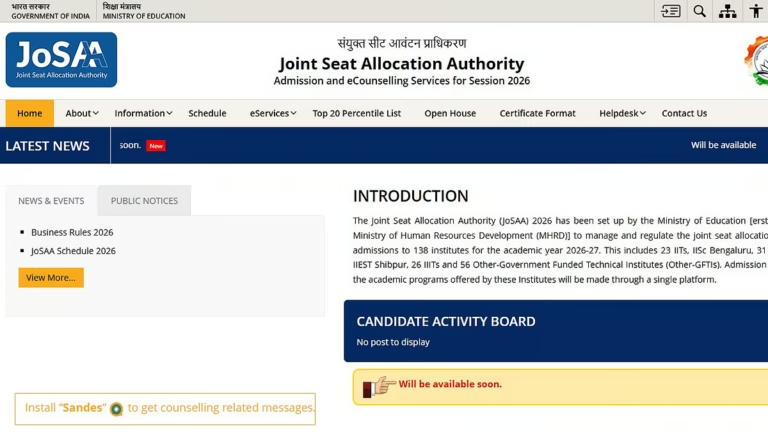
New Delhi, June 2, 2026: The Joint Seat Allocation Authority (JoSAA) will officially open its online registration portal and choice-filling interface today, June 2, 2026, precisely at 5:00 PM IST. This highly anticipated announcement follows the declaration of the Joint Entrance Examination (JEE) Advanced 2026 results yesterday, June 1. Eligible engineering aspirants who cleared the JEE Main 2026 or JEE Advanced 2026 exams can now log into the centralized portal at josaa.nic.in to launch their undergraduate admission journey into India’s premier technical institutes.

The single-window JoSAA counseling process regulates admissions for 129 premium institutions, including 23 Indian Institutes of Technology (IITs), 32 National Institutes of Technology (NITs), 26 Indian Institutes of Information Technology (IIITs), and 38 Government Funded Technical Institutes (GFTIs). Cumulatively, more than 63,000 engineering seats—including over 18,000 within the IIT network—are available this academic session. Because a candidate’s future career path heavily depends on this submission, understanding the technical deadlines and strategies is vital.

Key Deadlines for JoSAA 2026 Counselling

To avoid technical errors or sudden system rushes, candidates should keep a close eye on the official milestone dates. The absolute deadline for initial registration, preferred choice entry, and mandatory pre-upload of relevant credentials closes on June 11, 2026, at 5:00 PM IST.

  • June 2, 2026 (5:00 PM): Registration & Choice Filling Window Activates.
  • June 7, 2026: Architecture Aptitude Test (AAT) specific preferences unlock for qualified candidates.
  • June 8, 2026 (2:00 PM): Announcement of Mock Seat Allocation Round 1 (based on saved preferences as of June 7).
  • June 10, 2026 (1:00 PM): Announcement of Mock Seat Allocation Round 2 (based on saved preferences as of June 9).
  • June 11, 2026 (5:00 PM): Registration Closes; Final Choice Locking Deadline (Auto-locks if un-submitted).
  • June 13, 2026 (10:00 AM): Round 1 Official Seat Allocation Result.

Step-by-Step Guide to the Registration Process

Every candidate must strictly follow the online procedure to ensure their rank remains valid for seat allotment.

1.Portal Access and Verification:Step 1.

Navigate to the official JoSAA link at josaa.nic.in. Log in securely using your JEE Main 2026 application number and corresponding password. Candidates who cleared JEE Advanced should use their Advanced credentials. Upon entering, the portal automatically fetches your rank data, category status, and personal details from the central database. Check these details carefully before proceeding.

2.Strategic Choice Filling:Step 2.

Once logged in, the available academic programs and engineering branches will display based on your qualification profile. You can explore, sort, and add dozens of combination choices. There is no upper limit on the number of choices you can register. Arrange your choices in strict decreasing order of your personal priority.

3.Reviewing Mock Allotments:Step 3.

Do not prematurely lock choices on day one. Utilize the Mock Allotment results published on June 8 and June 10. These mock lists act as simulated practice runs, showing which seat you would get based on current peer choices. Use this feedback to re-order, add, or prune options.

4.Choice Locking and Submission:Step 4.

Before June 11 at 5:00 PM, you must click on the “Lock Choices” tab. If you accidentally forget to lock your choices, the automated system will lock the last modified and saved version. Print out a physical copy of the locked choices for your reporting records.

Strategy and Rules for Option Entry

Filing choices requires deep consideration rather than just tracking previous cut-off limits. Many students mistakenly limit their choices or list choices based only on what they expect to get. Instead, experts suggest using a “three-tier strategy” to build an optimal preference tree:

  1. The Dream Tier: Place top-tier dream institutes and premium branches (such as Computer Science or Electronics at old IITs/top NITs) at the very top, even if your rank sits slightly outside historical boundaries.
  2. The Realistic Tier: List colleges and academic programs that match the closing ranks of the last three seasons. This forms the foundation of your choices.
  3. The Backup Tier: Add choices where your rank safely outscores past cut-off trends to protect yourself from missing out completely.

Post-Allotment Options: Freeze, Float, and Slide

Once Round 1 allocations go live on June 13, candidates must complete an online reporting step. This involves uploading documents, paying the Seat Acceptance Fee (₹30,000 for General/OBC/EWS and ₹15,000 for SC/ST/PwD), and picking one of three operational pathways:

  • Freeze: Select this option if you are completely satisfied with the offered allocation and wish to claim it immediately. You will exit subsequent upgrade rounds.
  • Float: Select this if you accept the current offer but want to remain open to higher preferences across any institute in the upcoming rounds. If no upgrade occurs, your original seat stays secure.
  • Slide: Select this option if you accept the current institute but wish to upgrade to a preferred branch within that same college during subsequent rounds.

Candidates must monitor their dashboards daily after accepting a seat. If verifying officers detect a blurred document or an issue with an EWS/OBC-NCL certificate, you must respond to the query instantly within the allotted window, or the seat will be cancelled automatically.

For real-time visual assistance on registering preferences and navigating the online dashboard, candidates can tune into the comprehensive JoSAA 2026 Choice Filling and Registration Guide. This video explanation details the portal’s layout, demonstrates how to move choices within the menu interface, and walks through common entry mistakes to avoid before the system locking deadline.

Mahindra May 2026 Sales: SUVs Hit 58k, 3W Skyrockets 89%

0

New Delhi, June 1, 2026: Indian automotive giant Mahindra & Mahindra Ltd. (M&M) has kicked off the new fiscal year on a high note, posting an impressive 20% year-on-year (YoY) volume growth for May 2026. Driven by an insatiable domestic demand for its rugged sports utility vehicles (SUVs) and an exponential surge in its three-wheeler business, the homegrown manufacturer dispatched a staggering 99,636 vehicles globally last month, narrowly missing the coveted one-lakh monthly sales milestone.

The blockbuster performance highlights Mahindra’s fortified leadership in the Indian utility vehicle space. However, the victory comes with its share of modern manufacturing hurdles, as the brand continues to navigate tricky supply chain limitations to fulfill its massive backorder logs.

SUV Dominance Remains Unshaken

Mahindra’s domestic Passenger Vehicle (PV) segment—which now consists entirely of utility vehicles after the brand phased out traditional sedans and hatchbacks—recorded 58,021 units in May 2026. This marks an 11% growth compared to the 52,431 SUVs sold in May 2025. When factoring in overseas shipments, Mahindra’s overall SUV factory dispatches reached 59,573 units for the month.

This sustained growth is fueled by an incredibly diverse and refreshed product portfolio. Icons like the Scorpio-N, Scorpio Classic, and the Thar family (boosted by the highly popular five-door Thar Roxx) continue to see massive waiting periods. Concurrently, high-tech offerings like the XUV700 and the updated XUV 3XO are maintaining a steady grip on urban buyers. Interestingly, Mahindra’s newly introduced “Born Electric” EV lineup—comprising the avant-garde BE 6, XEV 9e, and XEV 9S—has also started reflecting healthily in the company’s dispatch sheets, showing that the company’s transition to electrification is steadily gaining ground.

Cumulatively, for the first two months of the 2026–27 financial year (April–May 2026), Mahindra’s domestic SUV sales stood at 1,14,352 units, a solid 9% climb from the 1,04,761 units recorded during the same period last year.

The Supply Chain Conundrum

Despite the celebratory numbers, top management revealed that Mahindra could have shipped even more vehicles had it not been for lingering logistical bottlenecks. Commenting on the monthly performance, Nalinikanth Gollagunta, CEO of the Automotive Division at M&M Ltd., stated:

Industry analysts note that while semiconductor chips are no longer the primary headache for automakers, localized component constraints—such as tier-2 vendor labor shortages and geopolitical conflicts impacting raw materials—continue to act as a speed governor on Mahindra’s production lines.

Three-Wheelers and Last-Mile Mobility Steal the Show

While SUVs usually grab the headlines, the real showstopper for Mahindra in May 2026 was its three-wheeler segment. Sales in this category skyrocketed by 89%, with dispatches zooming to 12,536 units, up from a modest 6,635 units in May 2025.

This explosive growth is heavily anchored by Mahindra Last Mile Mobility Limited, the subsidiary driving the company’s electric three-wheeler push (such as the Treo and Zor Grand models). The rapidly expanding e-commerce delivery networks and regional pushes for clean intra-city public transport across India have turned electric three-wheelers into a goldmine for the company. For the cumulative April–May 2026 period, three-wheeler sales jumped 85% to 22,435 units.

Commercial Vehicles and Global Footprint Expand

Mahindra’s commercial vehicle (CV) business also showed healthy resilience in May 2026. In the Light Commercial Vehicle (LCV) segment weighing under 2 tonnes, sales grew by 35% to 3,490 units. Meanwhile, the crucial 2-tonne to 3.5-tonne category—monopolized heavily by the ubiquitous Bolero Pik-Up and Bolero Maxx HD lines—recorded a 16% growth with 20,589 units moving to dealerships.

On the heavier side of logistics, Mahindra’s Trucks and Buses business (CVs greater than 3.5 tonnes) clocked 3,129 units, yielding an 18% YoY improvement. However, management in the heavy vehicle division remains cautiously optimistic, citing high input costs, fluctuating diesel prices, and broader macroeconomic uncertainties that continue to pinch independent fleet operators.

On the international front, Mahindra’s global outreach programs yielded phenomenal results. Total exports for the month rose 37% to 5,000 units, compared to 3,646 vehicles shipped in May 2025. This indicates a growing appetite for rugged Indian-made vehicles in markets across South Africa, Australia, and parts of Latin America.

Tractor Sales Paint a Golden Rural Picture

To complement its automotive success, Mahindra’s Farm Equipment Sector (FES) separately reported stellar tractor sales for May 2026. As the world’s largest tractor manufacturer by volume, Mahindra sold 47,845 tractors in the domestic market, registering a 23% YoY growth.

According to Veejay Nakra, President of the Farm Equipment Business, this massive rural push was catalyzed by the timely and highly successful completion of the Rabi harvest alongside favorable terms of trade for Indian farmers. Total tractor sales, including an export volume of 1,850 units, settled at 49,695 units for the month.

What Lies Ahead for Mahindra?

With the first two months of the financial year establishing a high-growth trajectory, Mahindra enters the rest of 2026 with enormous momentum. The company has lined up an aggressive product offensive for the next 12 to 18 months, which includes localized facelifts for the Scorpio-N, a heavily rumored mini-Scorpio variant, and structural updates to the Thar platform.

If the brand can successfully resolve its localized tier-2 supplier labor shortages and ramp up factory output, Mahindra is well on its way to routinely clearing the 100,000-unit monthly sales mark before the festive season arrives.

Taarak Mehta Fame Nehal Vadoliya Claims RR Cricketer Slid Into Her DMs

The intersection of Bollywood and cricket has always been a hotbed for juicy entertainment news, but a recent revelation has taken social media by storm. Actress and model Nehal Vadoliya, known for her brief appearance in India’s longest-running sitcom Taarak Mehta Ka Ooltah Chashmah (TMKOC) and several popular OTT web series, has dropped a massive bombshell. During a recent podcast appearance, the actress claimed that a divorced cricketer associated with the Indian Premier League (IPL) franchise Rajasthan Royals frequently sent her flirty direct messages (DMs) on Instagram, calling her “hot,” “beautiful,” and “pretty.” While she stopped short of naming the player, her explosive comments have triggered intense speculation across digital platforms.

The controversy erupted during Nehal’s appearance on the popular Suno India Podcast. During a casual chat, the host popped a question asking if any professional cricketers had ever reached out to her on social media. Nehal could not help but laugh before delivering a dramatic response that immediately went viral. “Naam le loon? (Should I name him?)” she teased, before adding crucial hints about the individual’s identity. She revealed that the player is not heavily famous but belongs to the Rajasthan Royals camp. Crucially, she added that the cricketer is currently divorced.

Persistent DMs Led to a Strict Block

Elaborating on the nature of these online interactions, Nehal explained that the cricketer’s messages were relentless. Instead of starting a formal conversation, he would regularly react to her Instagram Stories and personal status updates. According to the actress, his messages heavily revolved around physical compliments, repeatedly labeling her as “hot,” “pretty,” and “beautiful.”

Nehal made it clear that she gave no encouragement to these persistent digital advances. She shared that she grew increasingly uncomfortable and bored with the non-stop notifications. Whenever she confronted him by asking why he kept messaging her despite her lack of interest, the player would back off and stop texting for a few days. However, the hiatus never lasted long, and he would eventually slide back into her DMs the moment she posted a new photo or story. Fed up with the cycle, Nehal revealed that she chose to cut off communication entirely. She stated that if she replies even once, the cycle starts all over again, which ultimately drove her to block his profile permanently.

Social Media Launches a Mass Guessing Game

The moment clips of Nehal’s podcast interview hit platforms like X (formerly Twitter), Instagram, and Reddit, netizens instantly went into overdrive trying to unmask the anonymous sportsperson. Because the description pointed toward a “divorced cricketer from Rajasthan Royals,” the comment sections quickly transformed into a guessing game.

Fans threw out multiple names, speculating on both current and former squad members of the franchise. Some users half-jokingly tagged prominent spin bowler Yuzvendra Chahal, who has recently been at the center of separate gossip column rumors regarding his marriage. Other internet sleuths threw names like Shimron Hetmyer, Tushar Deshpande, or veteran bowler Dhawal Kulkarni into the mix, despite a total lack of supporting facts.

Since Nehal chose to keep the actual name under wraps, the frantic online finger-pointing remains entirely speculative and unverified.

A String of Recent Digital Altercations

Interestingly, this is not the first time Nehal Vadoliya has used her platform to call out inappropriate digital behavior by industry figures. Just days prior to this cricket-centric revelation, the actress grabbed headlines for a highly public spat with Gujarati actor Karan Joshi. In that specific dispute, Nehal went a step further by posting concrete screenshots and screen-recorded video proofs alleging that Joshi had sent her highly objectionable and offensive messages on Instagram.

When Joshi publicly defended himself by claiming that his social media account had been compromised by hackers during a film promotional campaign, Nehal refused to back down. She released a follow-up video openly questioning his explanation and calling it a calculated “drama” to escape public backlash. She claimed that mutual acquaintances tried to pressure her into deleting the call-out posts, but she stood her ground. This rapid succession of back-to-back controversies has firmly placed Nehal at the center of ongoing conversations surrounding digital boundaries, safety, and accountability in the entertainment space.

Tracking Nehal Vadoliya’s Career Curve

While mainstream television audiences might vaguely remember Nehal Vadoliya for her brief cameo appearance as a friend of Babita Ji (Munmun Dutta) in an episode of Taarak Mehta Ka Ooltah Chashmah, she has carved out a far more prominent footprint in the digital streaming ecosystem.

Beyond acting, Nehal has actively expanded her professional horizon by becoming a certified intimacy coordinator within the Indian film industry. In this specialized role, she helps direct and choreograph sensitive or bold scenes on set, ensuring that proper boundaries, legal consent, and actor safety are strictly maintained during shoots.

Given her professional background in advocating for on-set safety and physical boundaries, industry insiders note that her decision to publicly address unsolicited social media advances aligns with her outspoken stance on consent. As the podcast clip continues to accumulate millions of views, the public wait continues to see if the anonymous Rajasthan Royals cricketer will be officially named, or if the franchise will address the mounting online chatter.

Pure Aggression and Kisses: How Anushka Sharma Celebrated RCB’s Historic IPL 2026 Win

0

AHMEDABAD — The Narendra Modi Stadium in Ahmedabad witnessed history on Sunday night as the Royal Challengers Bengaluru (RCB) clinched their second consecutive Indian Premier League (IPL) title, defeating the Gujarat Titans (GT) in a high-octane final. While the stadium erupted into a sea of red and gold celebrations, the true emotional epicentre of the night belonged to Bollywood star Anushka Sharma and her husband, cricket icon Virat Kohli. In a moment that quickly sent social media into absolute meltdown, Anushka channeled her “inner Virat Kohli,” exhibiting an uncharacteristic, thrilling wave of raw aggression, passionate cheering, and heartfelt flying kisses that proved once again why they remain India’s ultimate power couple.

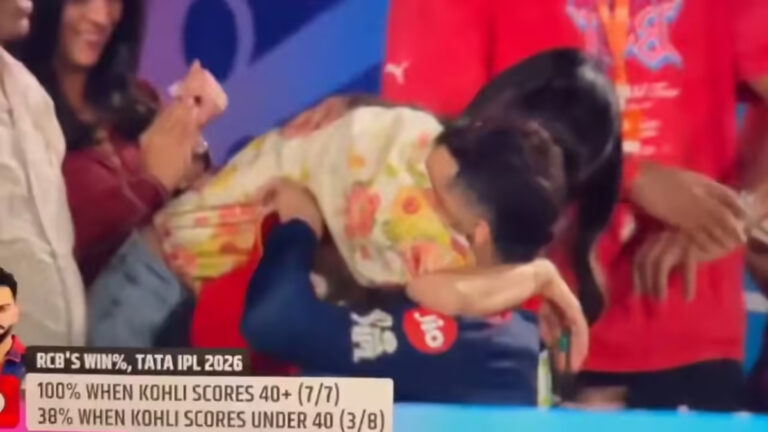
Throughout the tense run-chase, Anushka was spotted in the VIP stands, living and breathing every single delivery. Her anxiety was palpable, mirroring the high stakes of an IPL final. However, the tension evaporated in grand fashion when Virat Kohli, finishing the match in signature style, smashed the winning runs. The moment the ball crossed the boundary, the actor erupted in pure euphoria, leaping in joy, hugging those around her, and screaming with an intensity that fans jokingly noted was identical to her husband’s legendary on-field persona. Shortly after, the couple locked eyes across the massive arena, exchanging emotional flying kisses before Kohli pulled his lady love onto the field to share the grand stage.

The ‘Virushka’ Magic Takes Over Ahmedabad

As the final runs were scored, Virat Kohli immediately turned his gaze away from the pitch and looked up toward the stands, scanning for the one person whose support has anchored his career. Upon finding Anushka, he blew a series of emotional flying kisses. Anushka, beaming with pride and teary-eyed, instantly reciprocated, cementing a viral vignette that fans have already labeled the “defining image of IPL 2026.”

Later in the night, the celebration moved from the stands directly onto the playing surface and into the dressing rooms. Anushka joined Kohli on the field to pose with the glittering IPL trophy, surrounded by teammates, staff, and family members. She also took to her Instagram account to give fans an intimate glimpse into their post-match joy, sharing a candid photo of Virat proudly flaunting a custom team T-shirt with a cheeky tagline that read: “One time felt nice, we did it twice.”

A Masterclass on the Pitch: King Kohli Leads from the Front

The fairytale celebration was earned through a masterclass performance on the pitch by none other than Kohli himself. Chasing a target of 156 runs after the RCB bowling attack restricted Gujarat Titans to 155/8, the Bengaluru franchise found themselves under immense pressure as GT’s bowlers picked up timely wickets to reduce them to 132/5.

However, the grand stage belonged to the “Man of Mega Moments.” Standing tall as an unstoppable anchor, Virat Kohli hammered a spectacular, unbeaten 75 off just 42 balls*, decorated with nine boundaries and three towering sixes. Ably supported by an explosive opening cameo from Venkatesh Iyer (32 off 16 balls), Kohli guided his team across the finish line with two full overs to spare, successfully defending RCB’s status as the kings of the IPL. Kohli capped off an extraordinary tournament as the fourth-highest run-scorer of the season, amassed a staggering 675 runs across 16 innings at an impressive average of 56.25 and a lethal strike rate of 165.84.

Fans React to Anushka’s “Aggressive” Avatar

What truly stole the hearts of internet users was the stark transition in Anushka’s demeanor—from a supportive, anxious spouse to a fierce, fist-pumping fan. Netizens quickly flooded platforms like X (formerly Twitter) and Instagram with clips of her wild celebrations.

A Balanced Life Off the Field

The display of affection is a continuation of the deep-seated bond the couple shares, one that Kohli has frequently attributed to his evolution as both a cricketer and a person. Over the last couple of years, the duo has notably transitioned toward a deeply spiritual lifestyle, frequently making low-profile visits to Vrindavan to seek blessings from spiritual leaders. Kohli has openly credited Anushka for bringing immense balance, empathy, and calmness to his otherwise fiery nature, noting that her compassionate outlook even inspired him to adopt a vegetarian lifestyle.

While Anushka has taken a step back from mainstream cinema in recent years to raise their children, Vamika and Akaay, her presence at the stadium acts as a definitive lucky charm for the star batter and the RCB franchise. As Bengaluru bathes in the glory of back-to-back IPL triumphs, the night will be remembered just as much for the couple’s raw, unfiltered romance as it will be for the historic cricketing milestone.